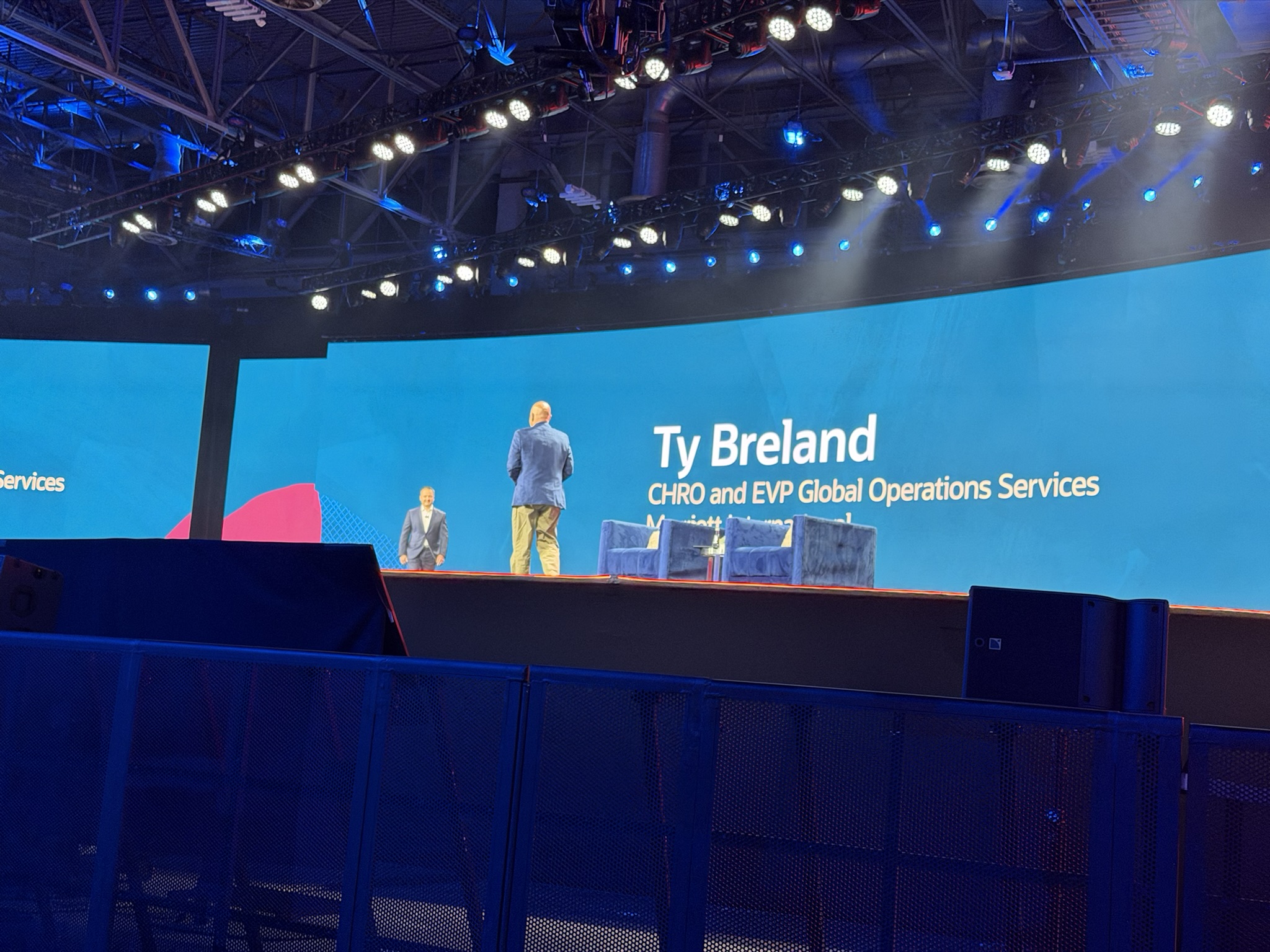
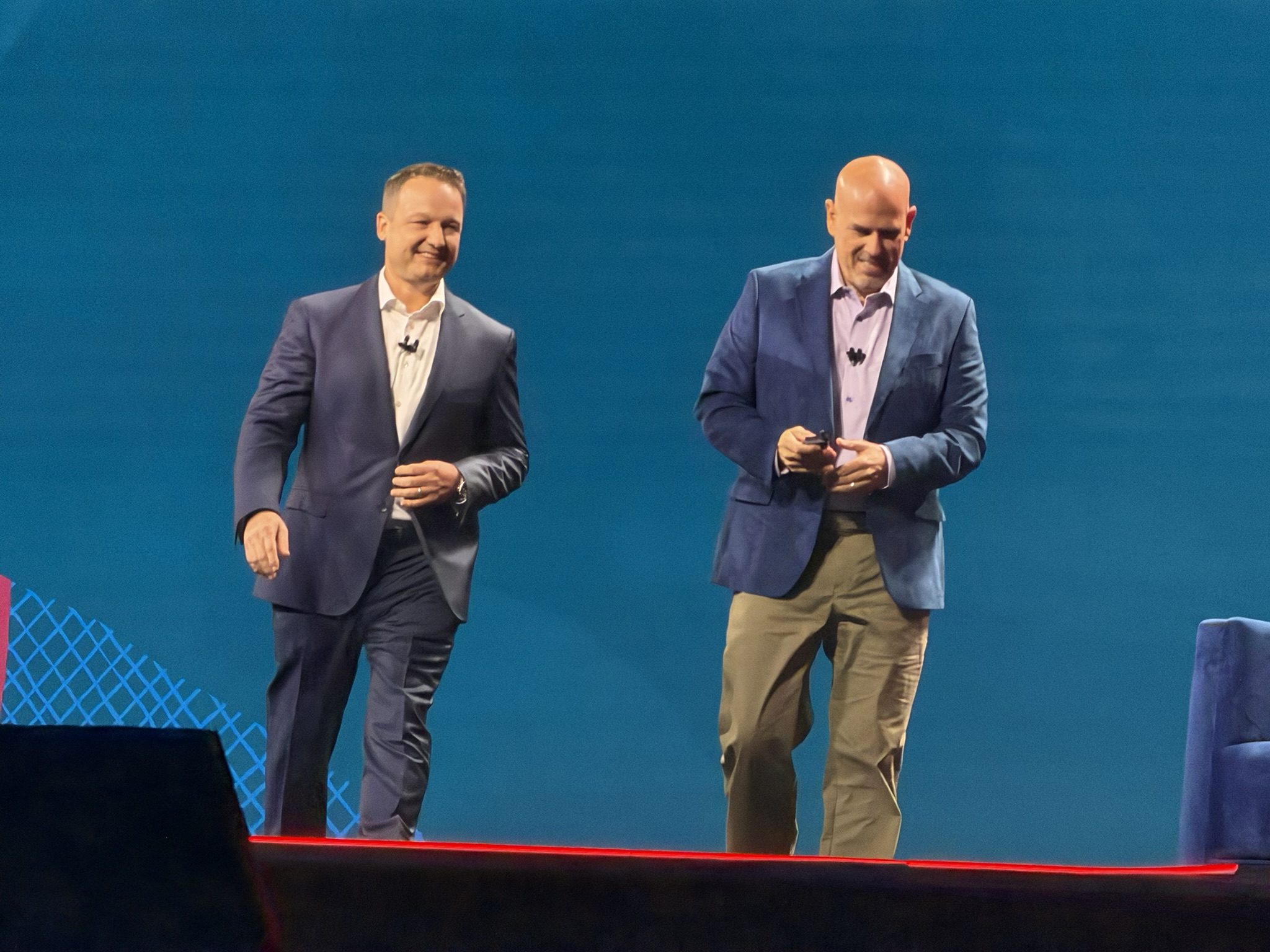
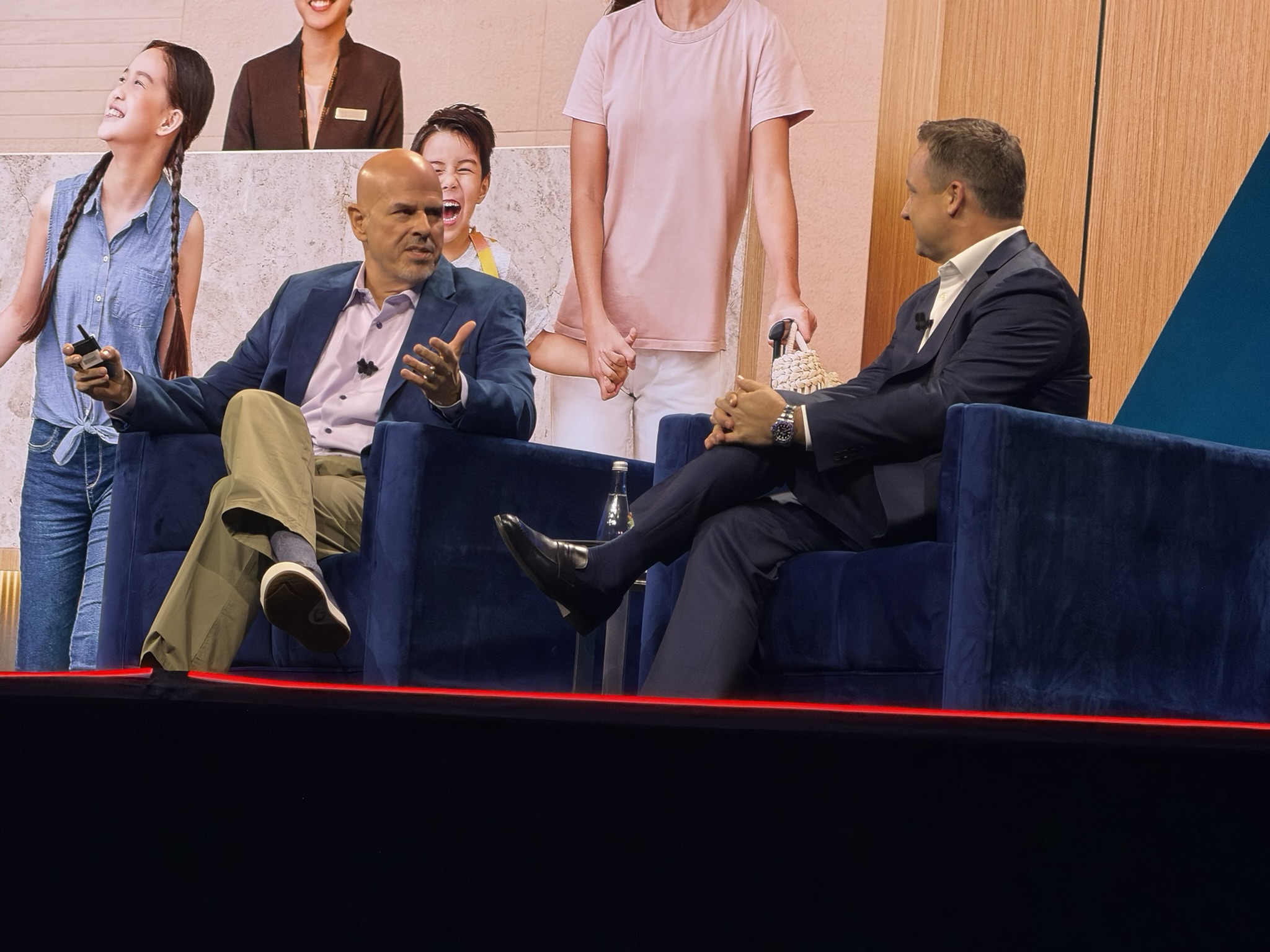
Oracle AI World 2025 Day 4 Part 1 – Keynote Building the Cloud for You

If you missed my day 3 part 3, you can view it here.

Keynote: Building the Cloud for You

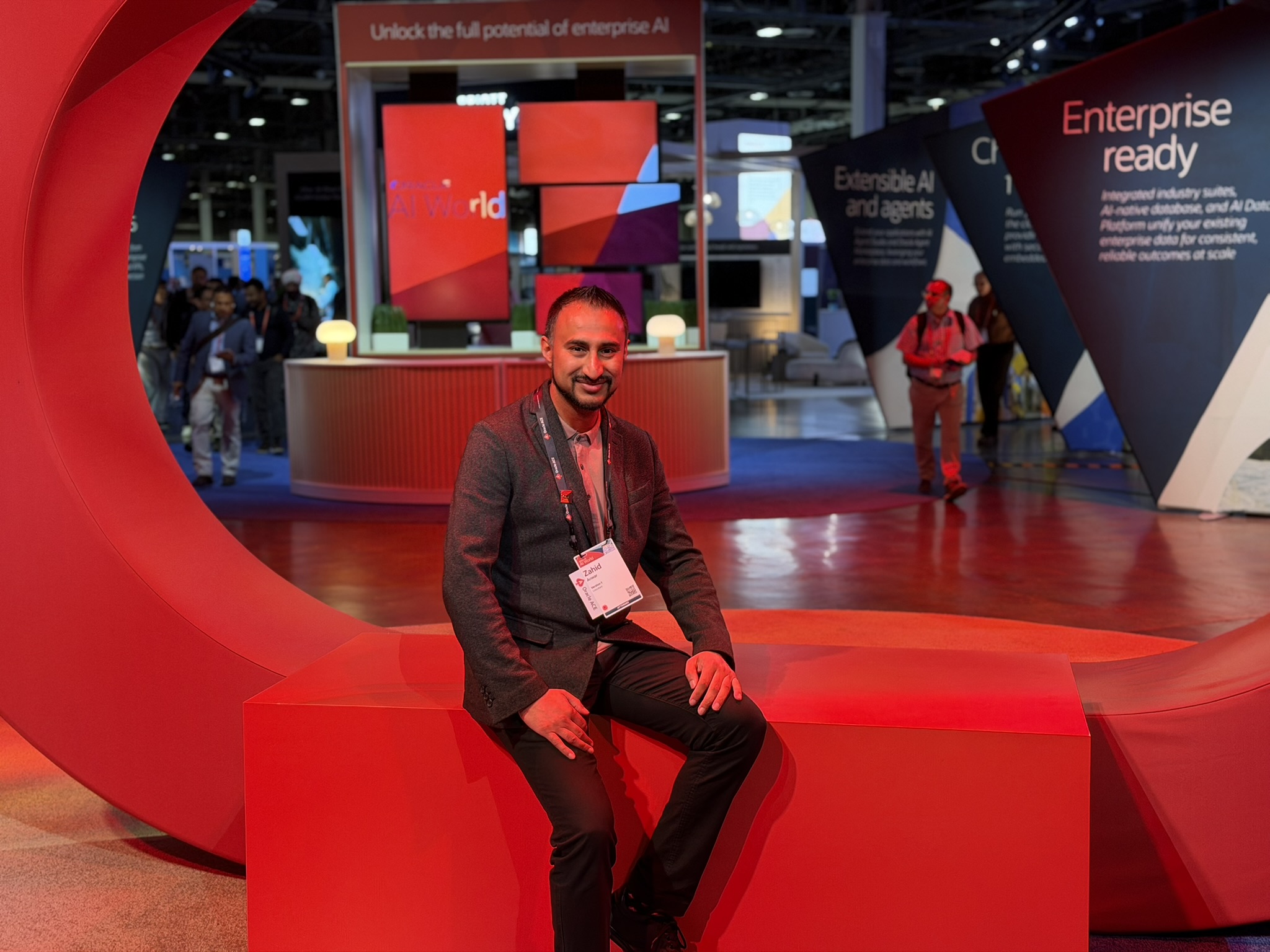
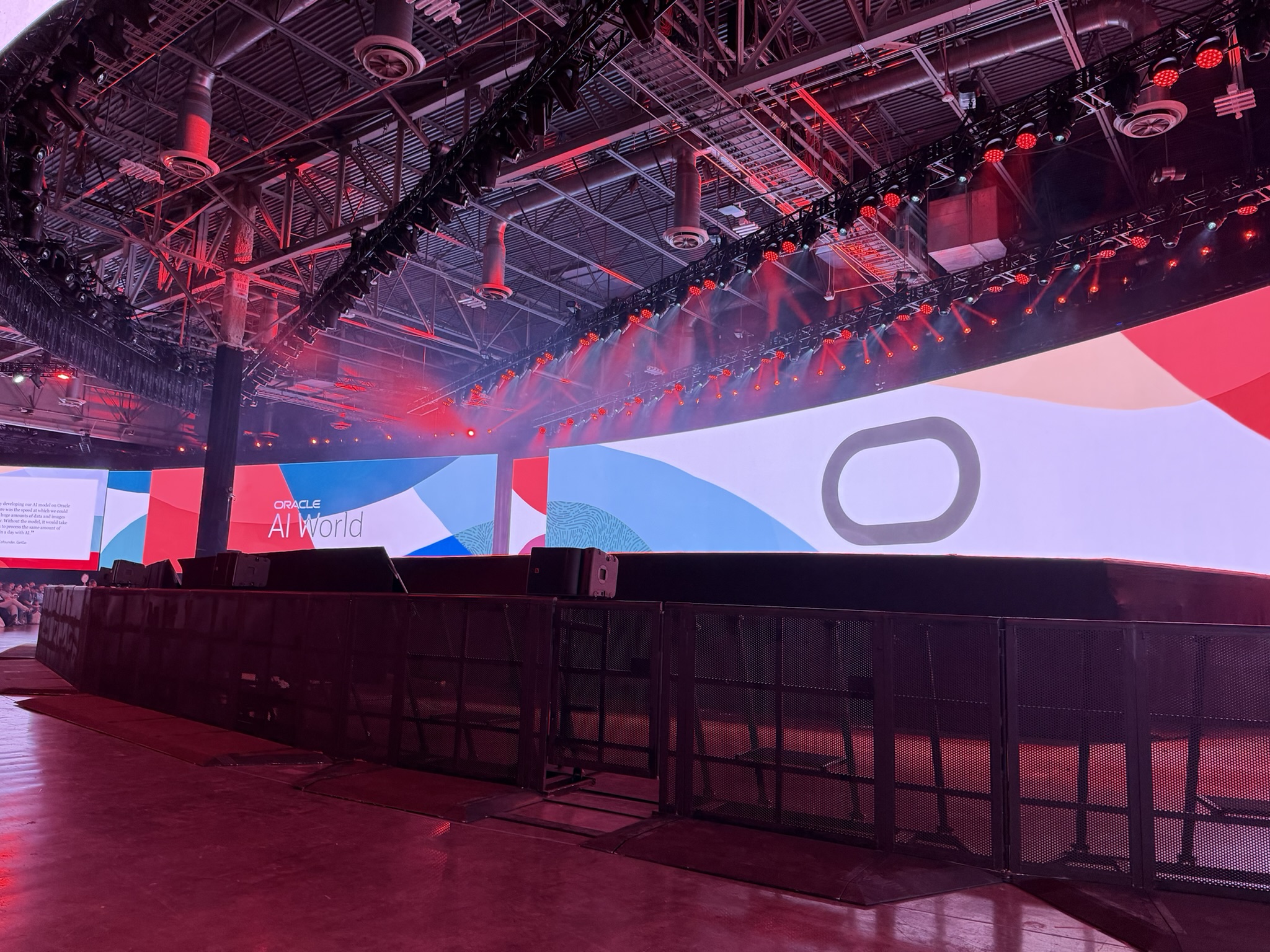
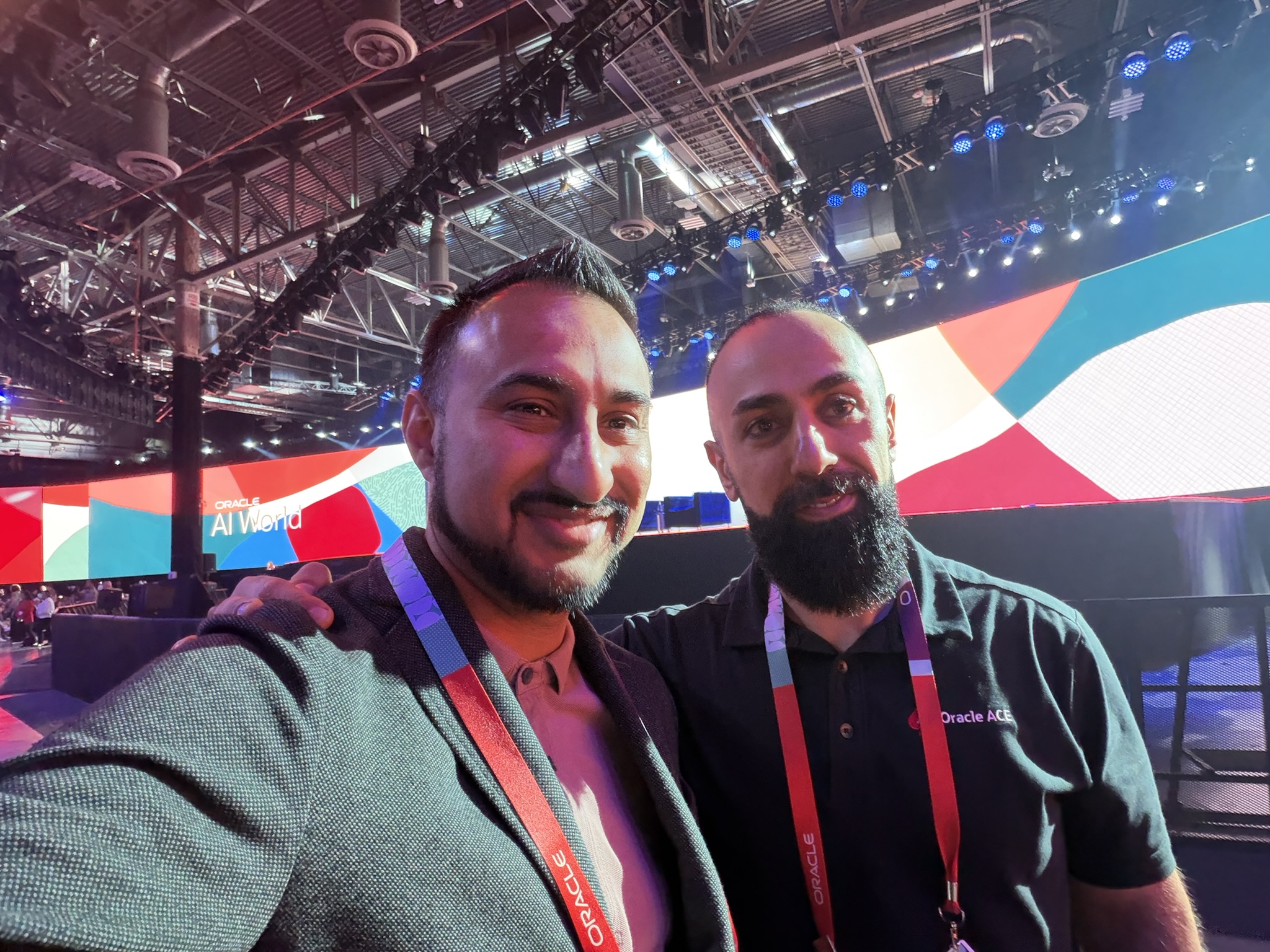
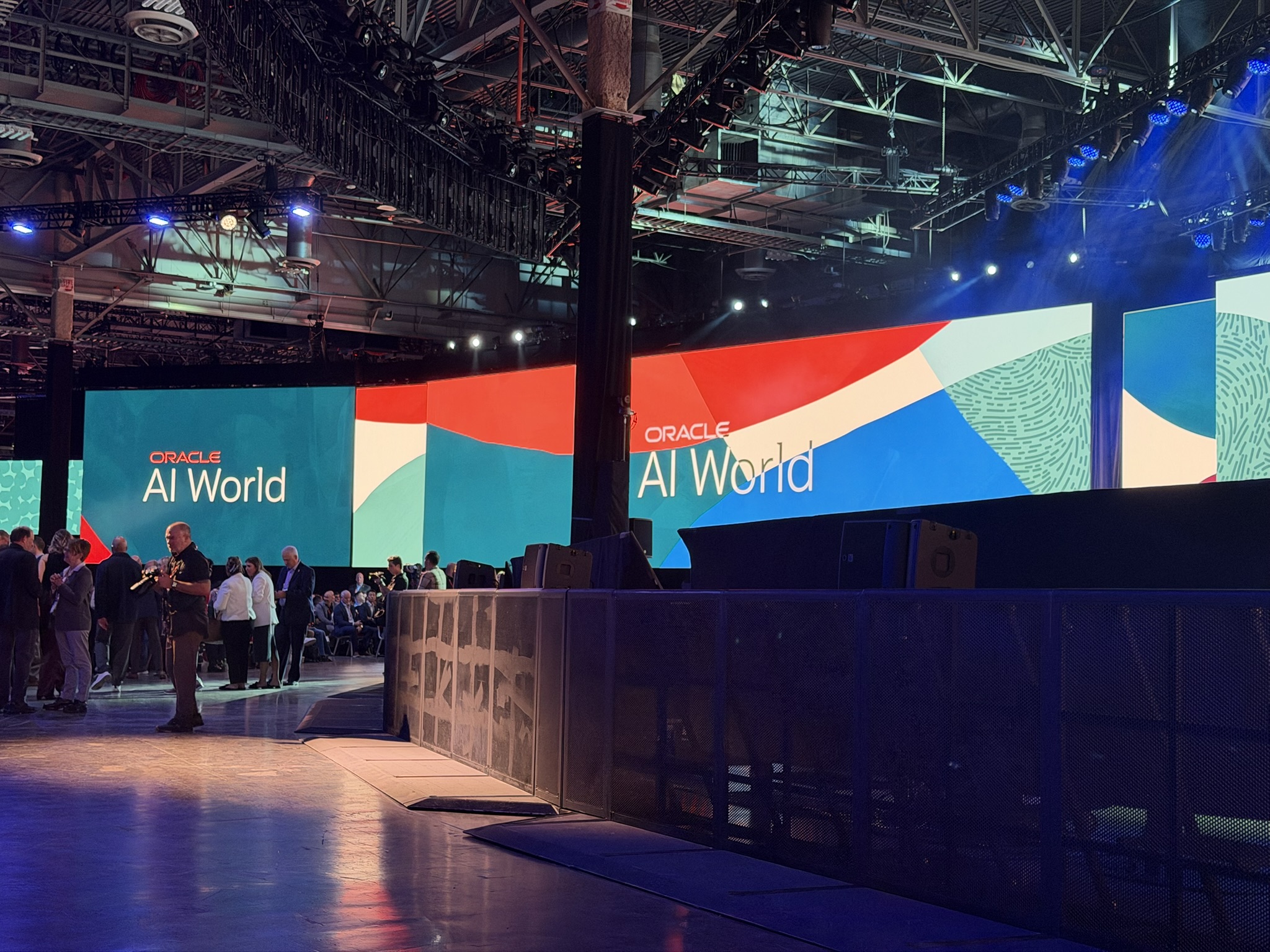
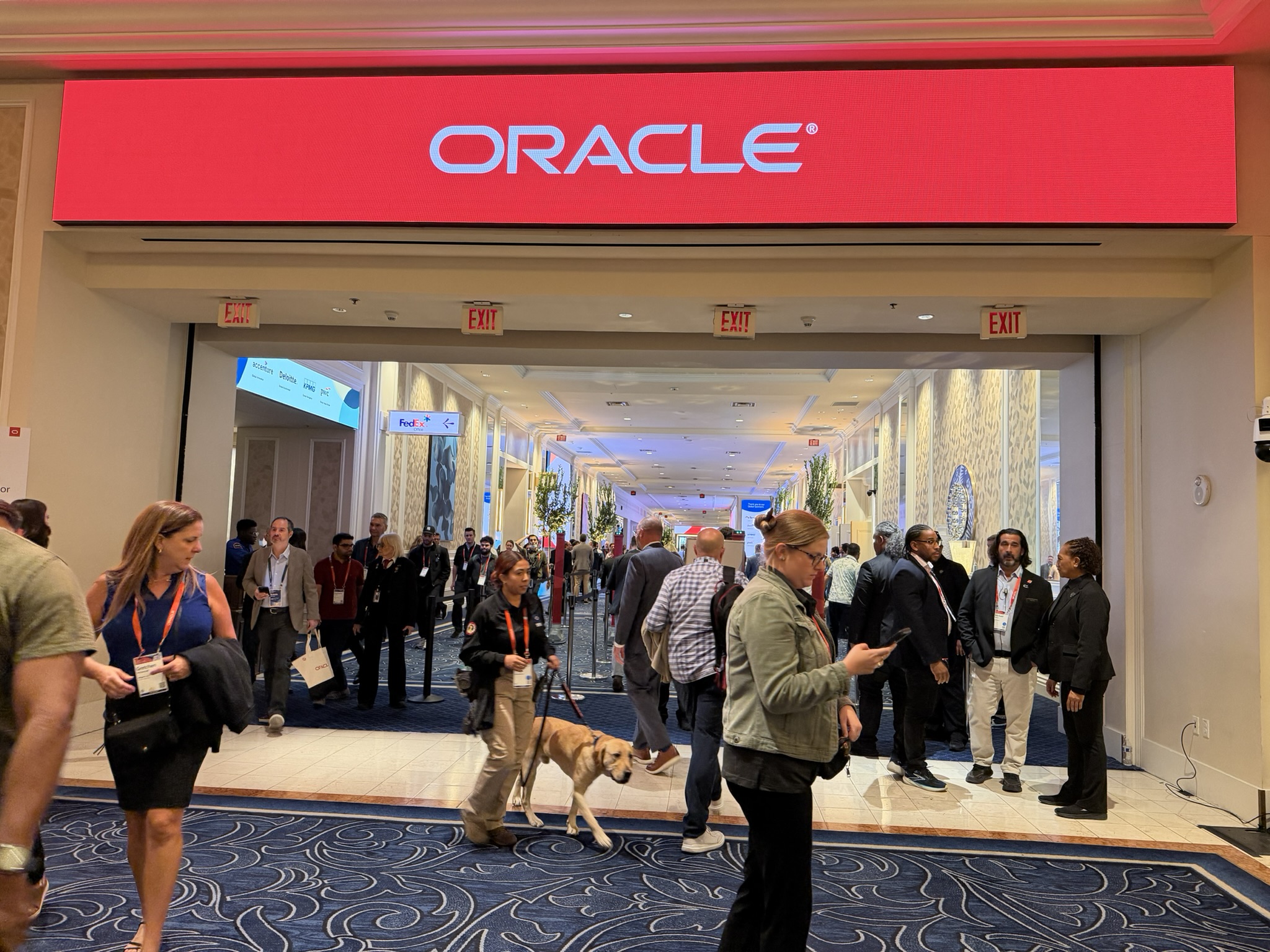
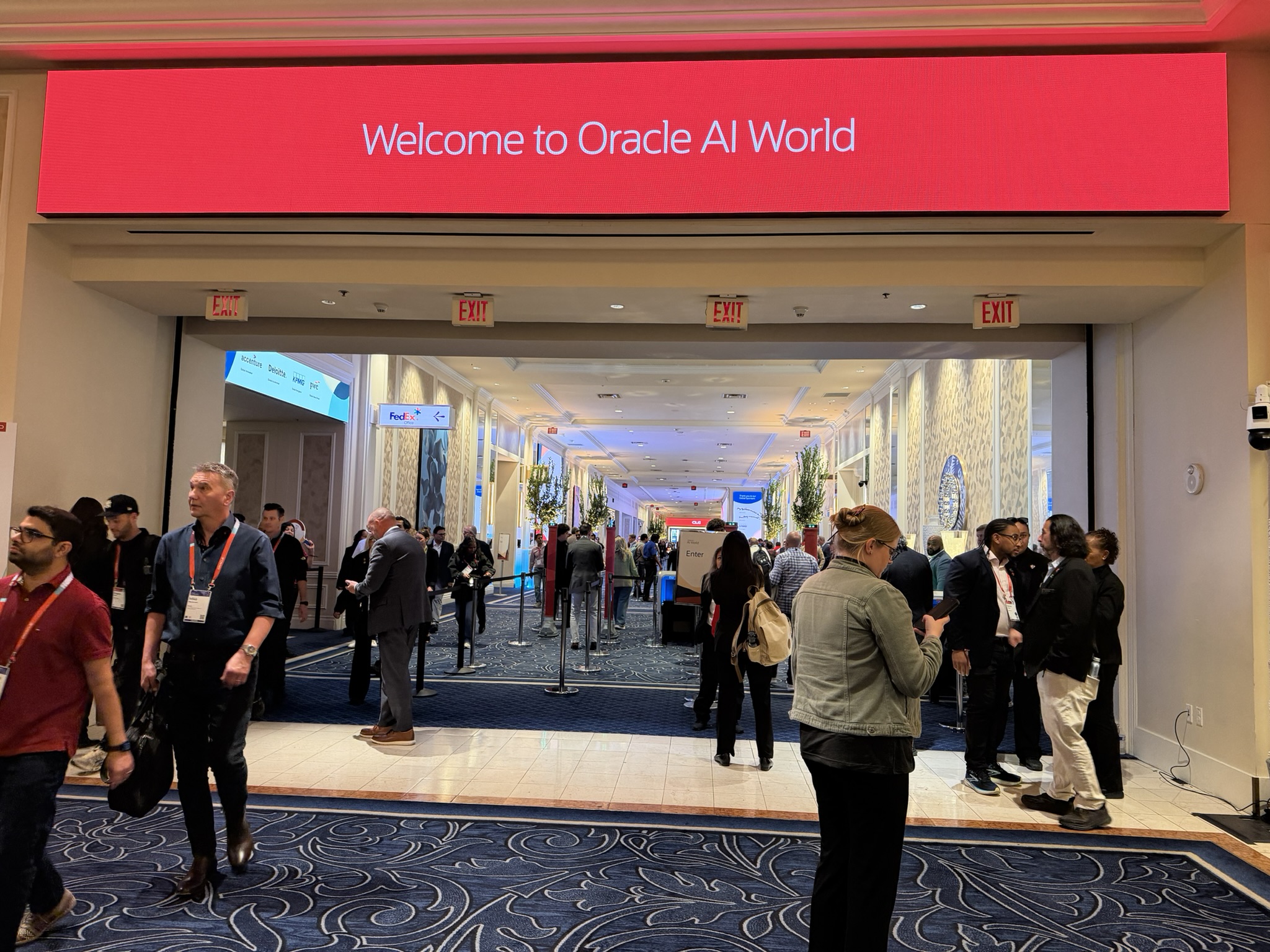
It was my final keynote at Oracle AI World, and I arrived early to secure my usual spot at the front.
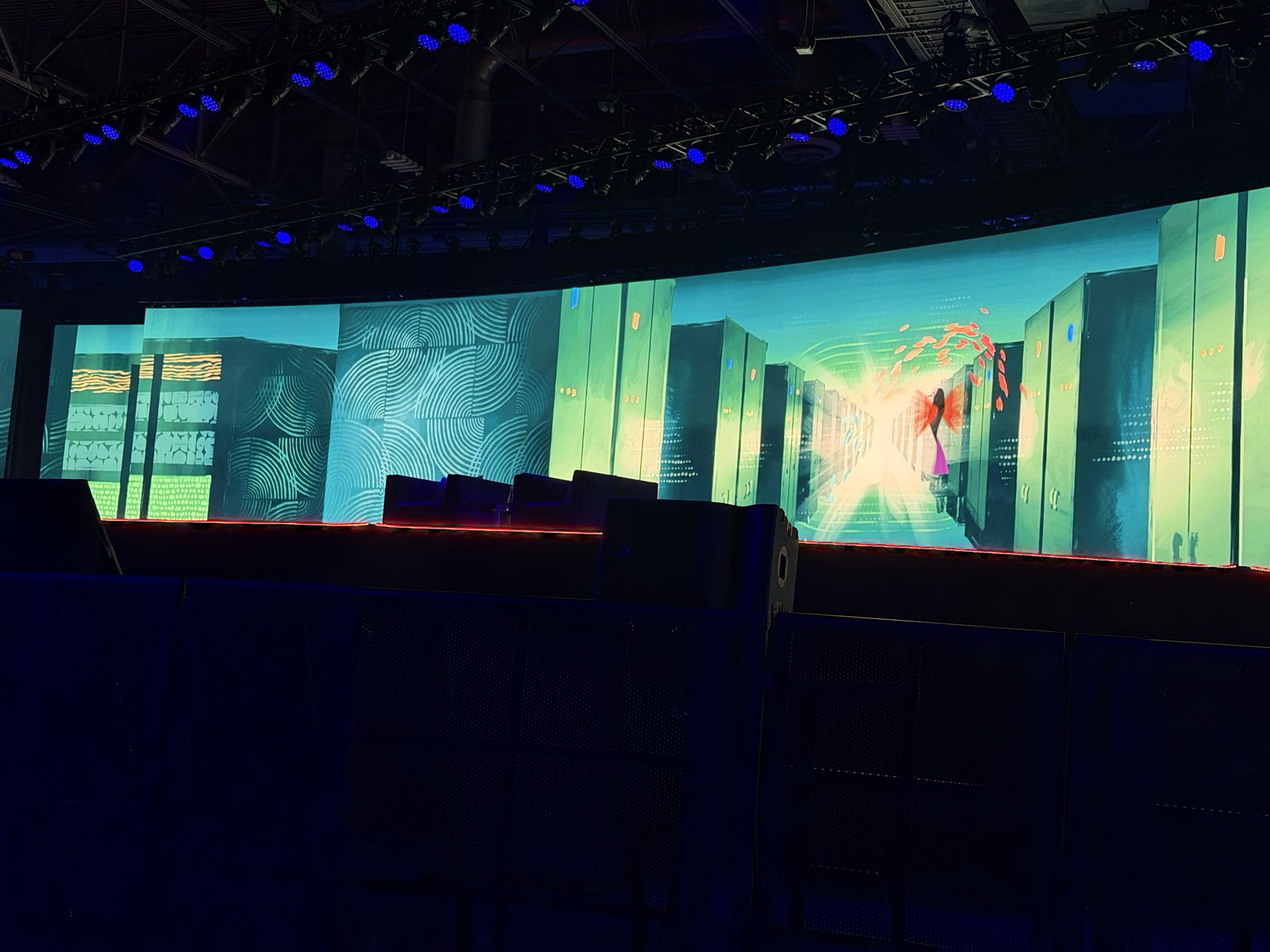
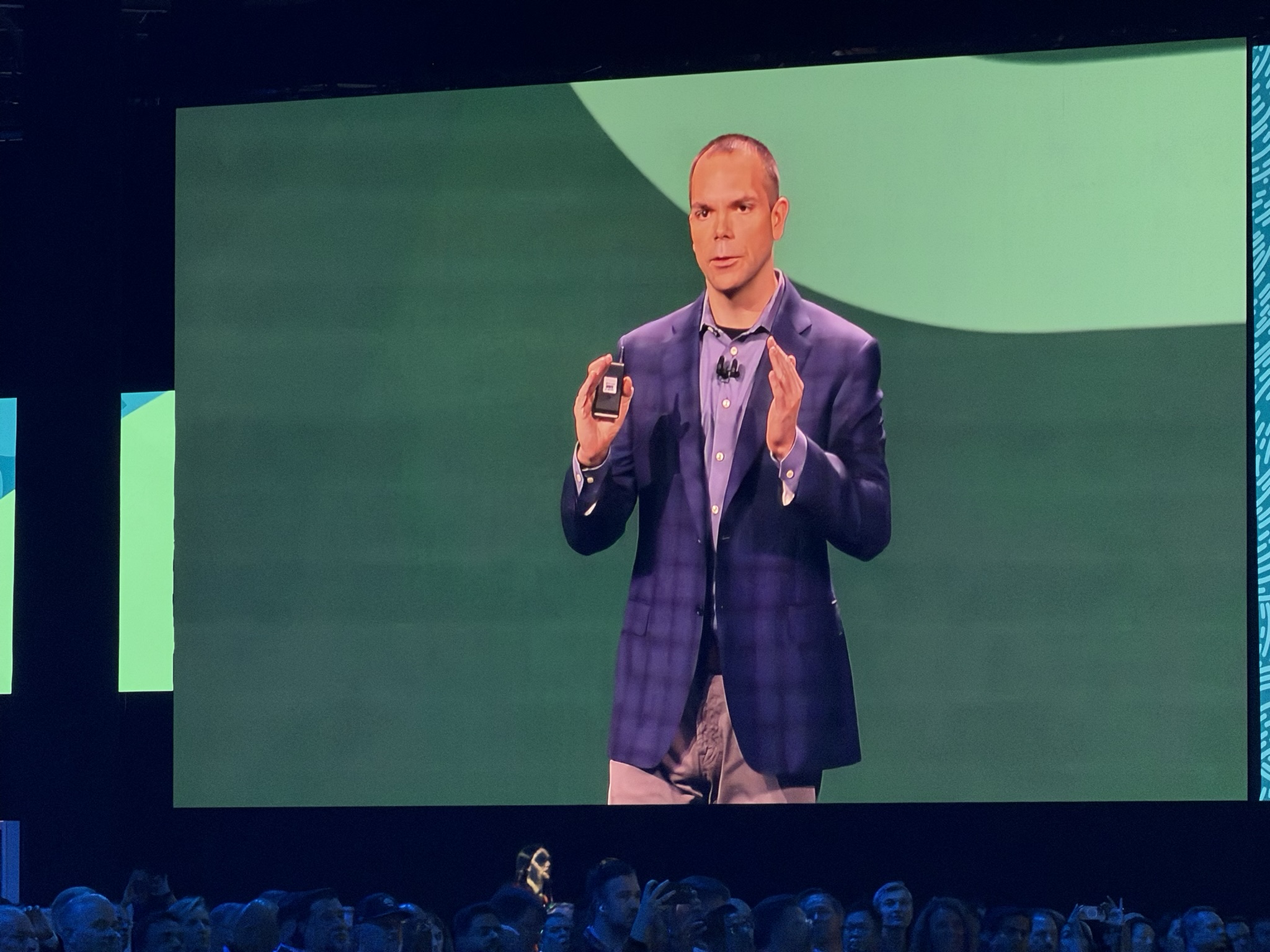
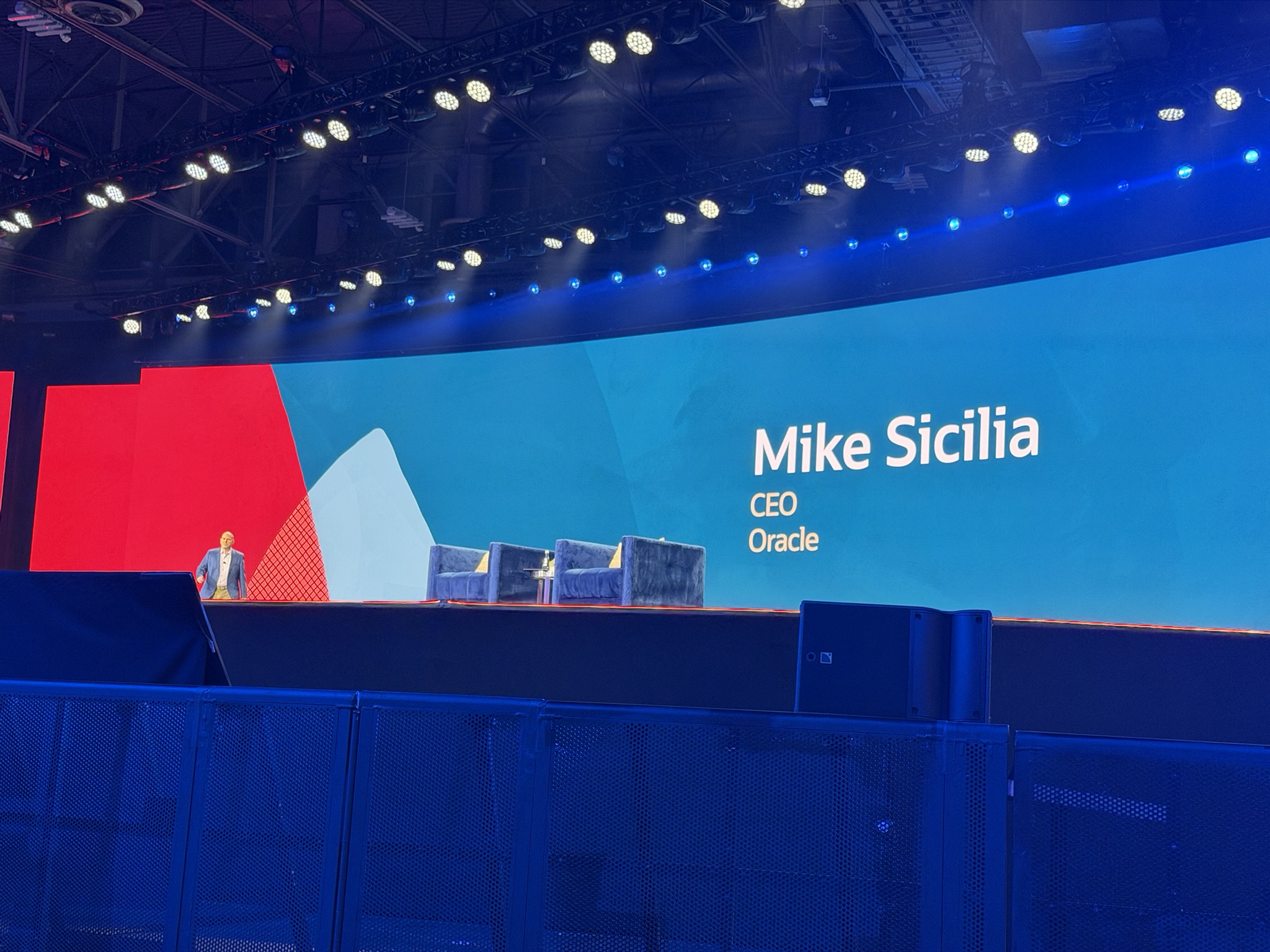
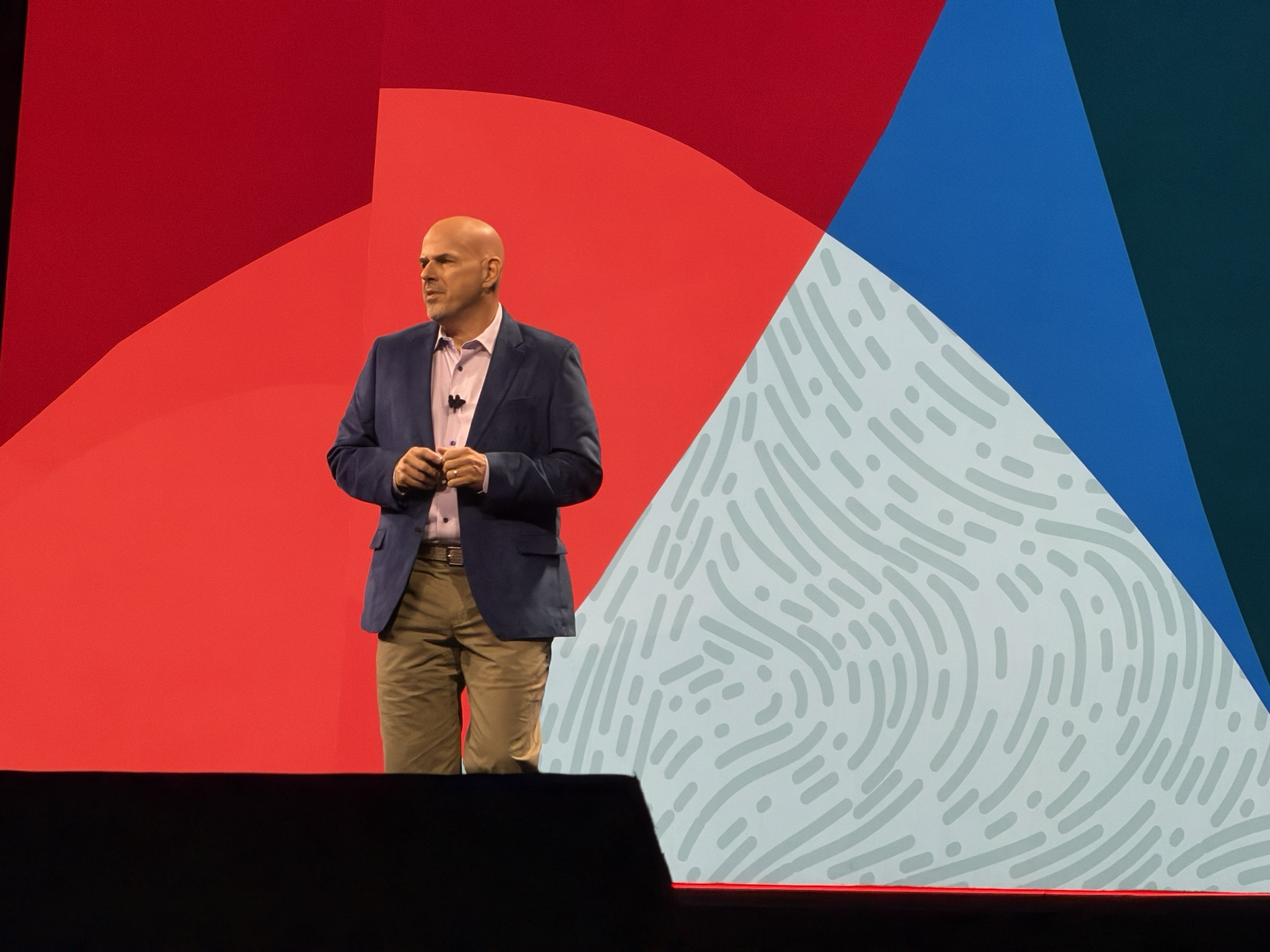
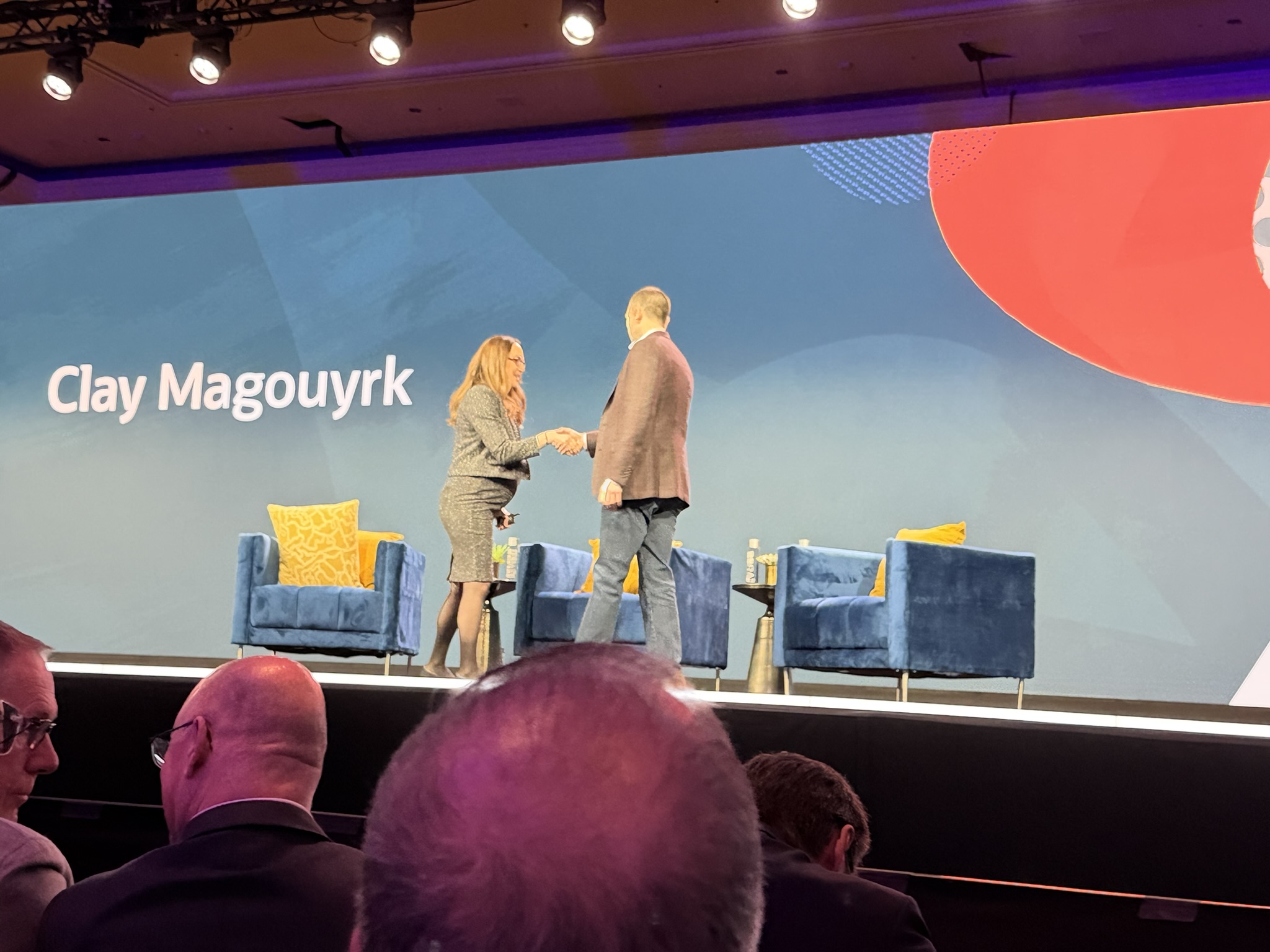
Clay Magouyrk, Oracle’s newly appointed CEO (formerly President of the OCI business), came onto the stage.
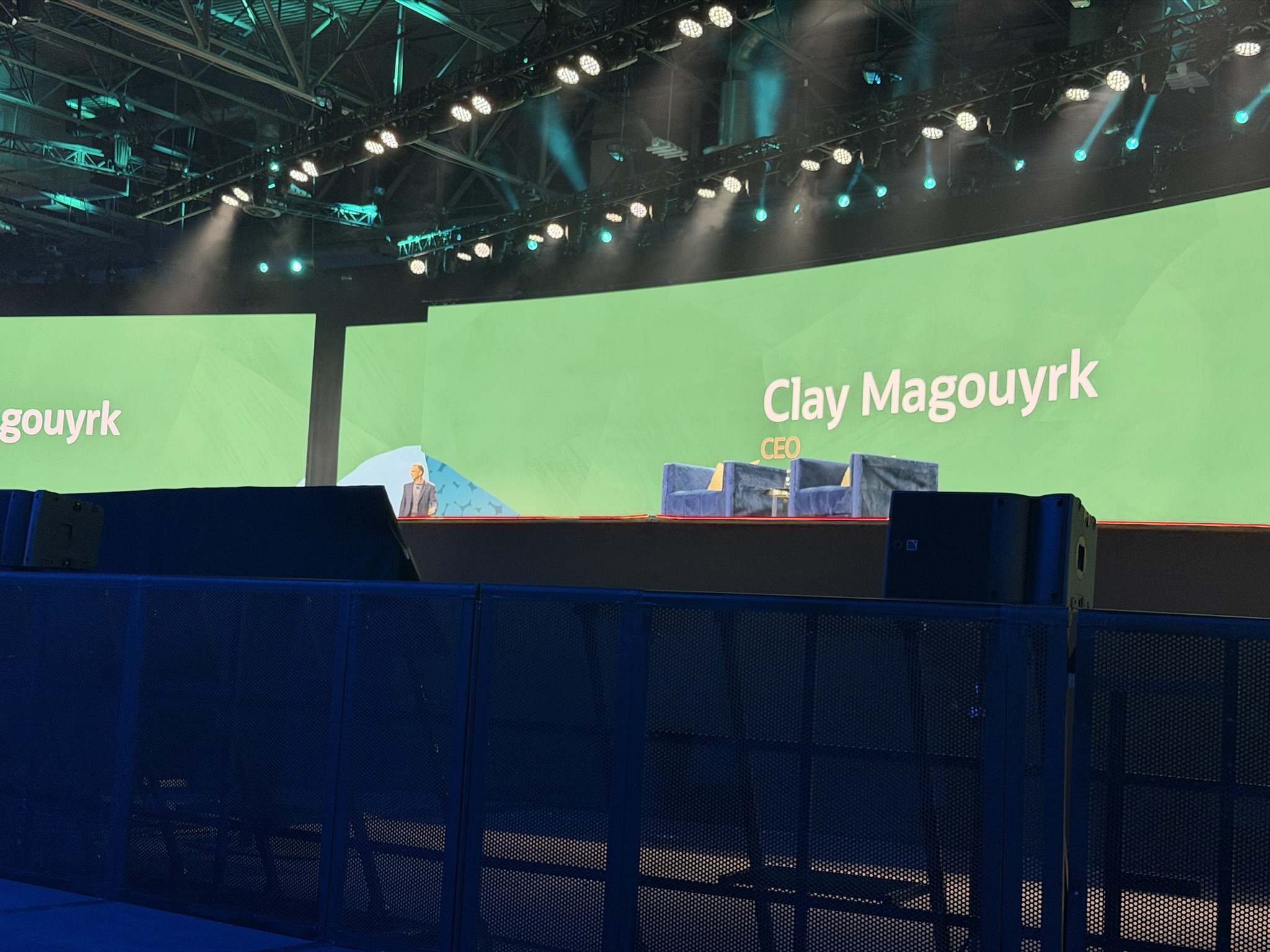
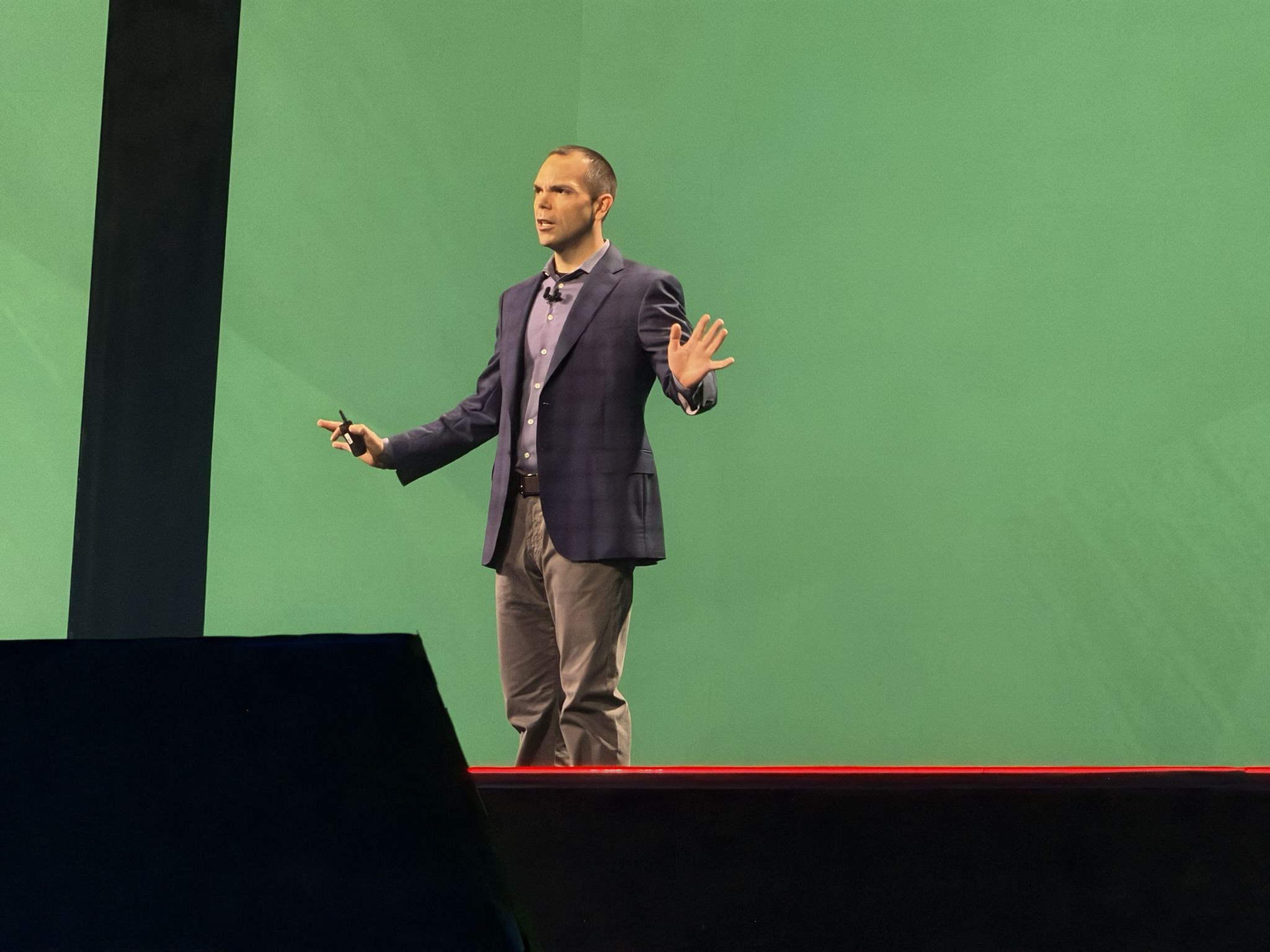
The OCI Mission and Foundational Principles

Clay explained that he joined Oracle to create the fourth major cloud provider by building Oracle Cloud Infrastructure (OCI). OCI was founded with a clear mission to deliver the highest performance, lowest cost, and most secure infrastructure possible, wherever the customers need it.

This is an absolute standard, not a relative benchmark against competitors. As Clay emphasised, “Our goal is not to be better than competitors. Our goal is to be the absolute best we can be.” This principle underpins OCI’s commitment to fundamental engineering and architectural purity.

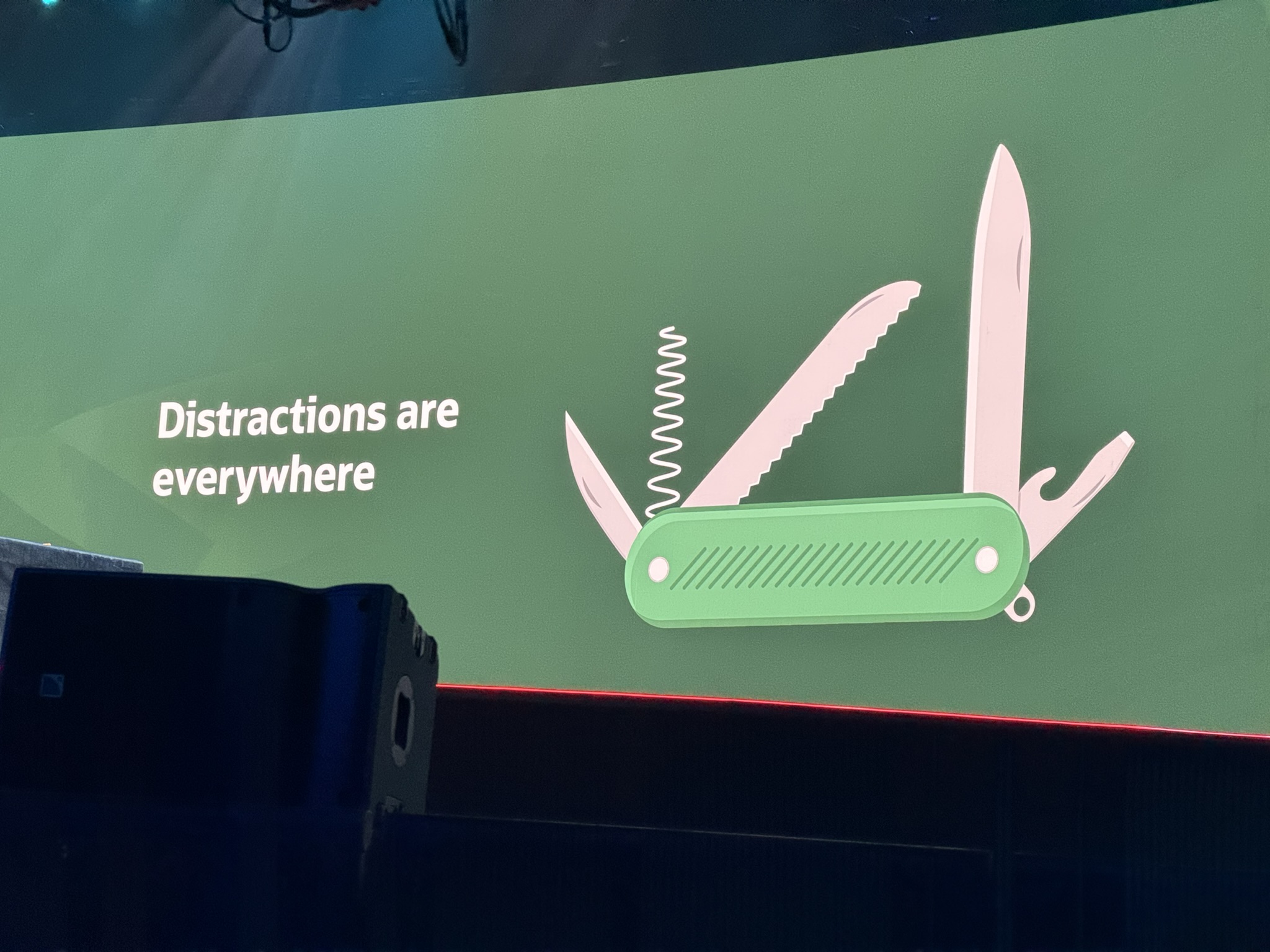
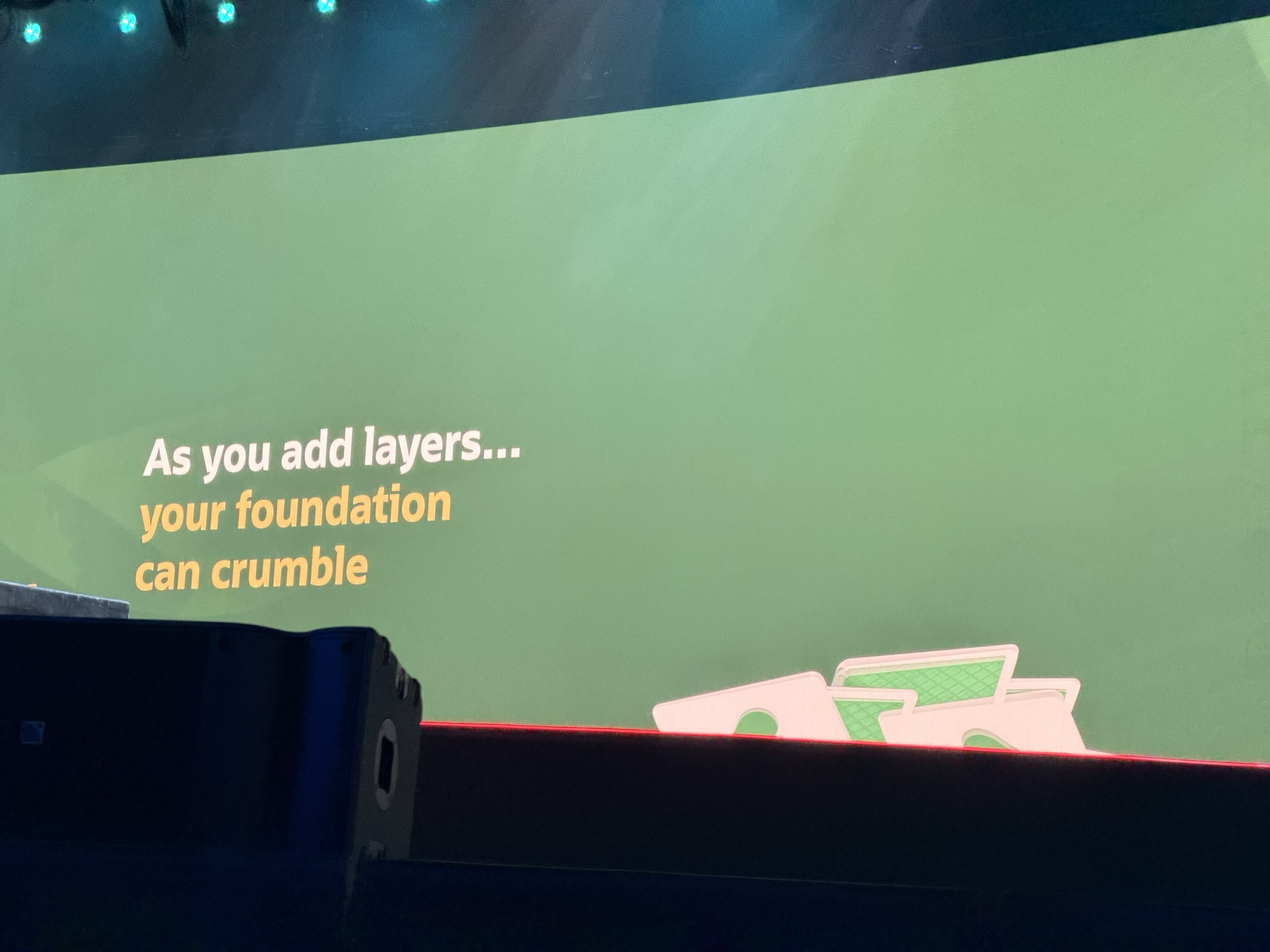
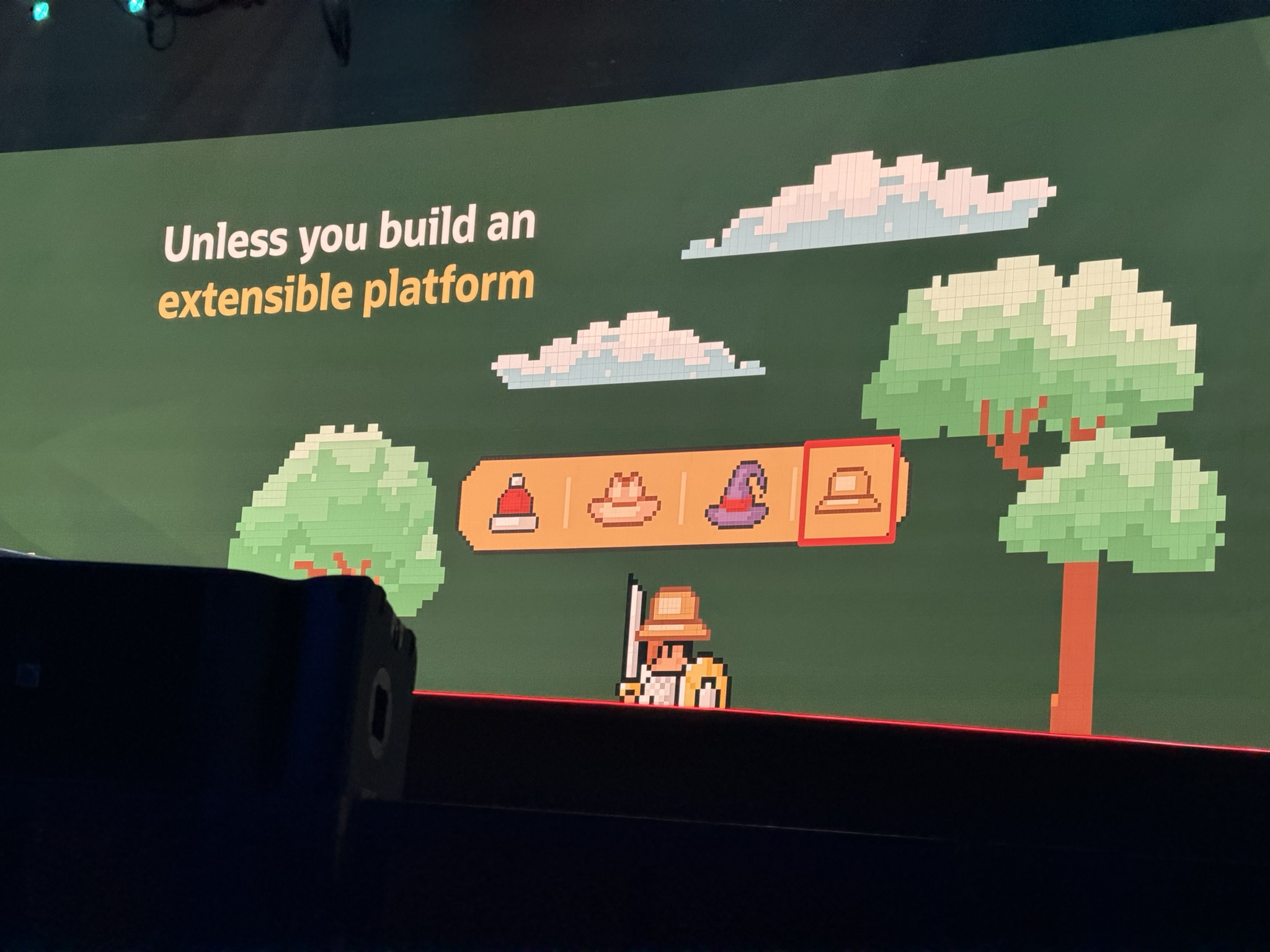
OCI adopts an architecture-first philosophy, prioritising the strength and extensibility of its foundational layers. Cloud infrastructure is seen as a series of interdependent layers, where the resilience of the entire stack depends on those beneath it. This approach demands an architecture that anticipates future requirements and accommodates unknown hardware and software advancements over time.
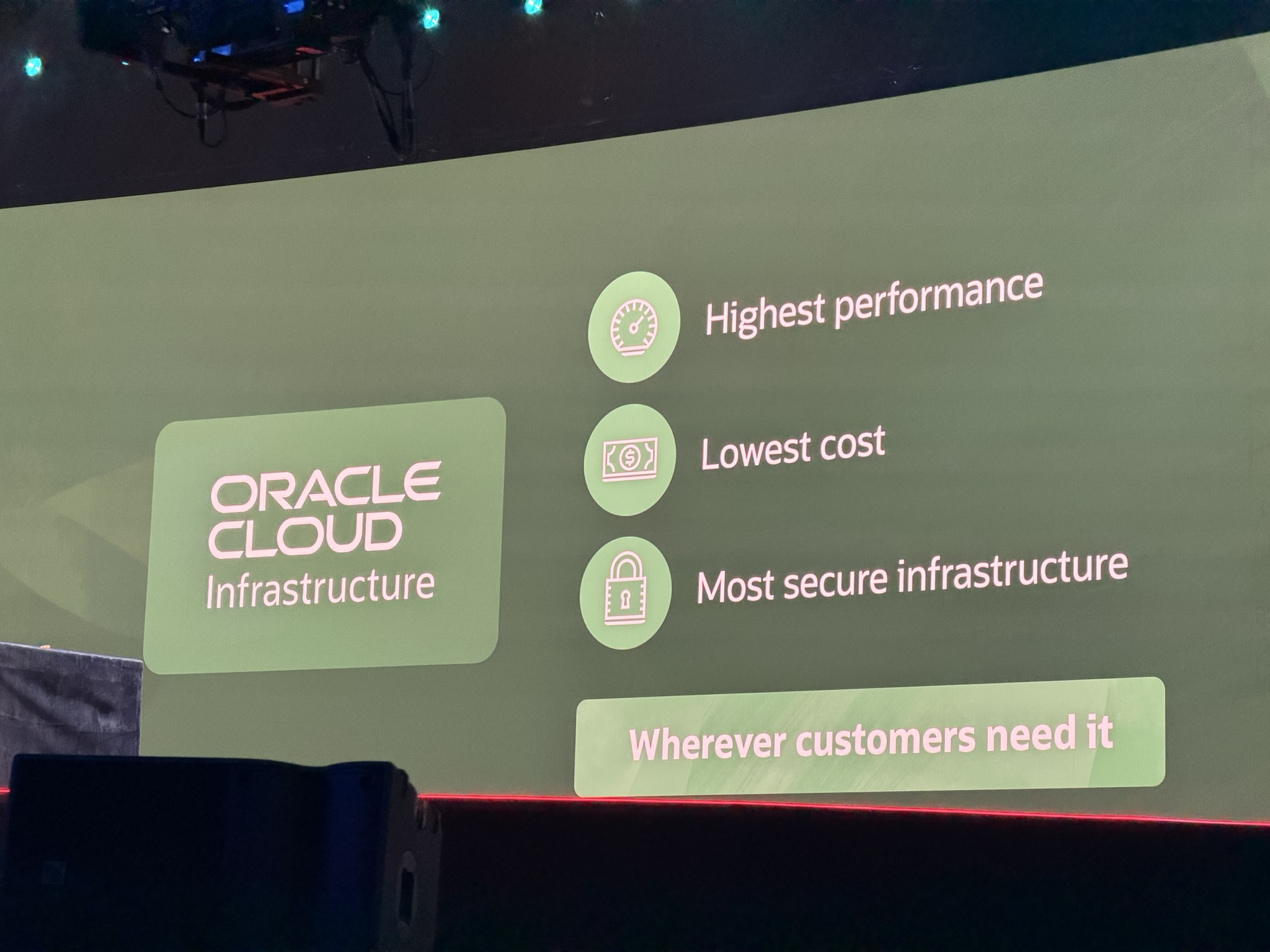
Core Architectural Decisions and Differentiators

OCI’s commitment to its mission is reflected in a series of key architectural decisions that distinguish it from other cloud providers.

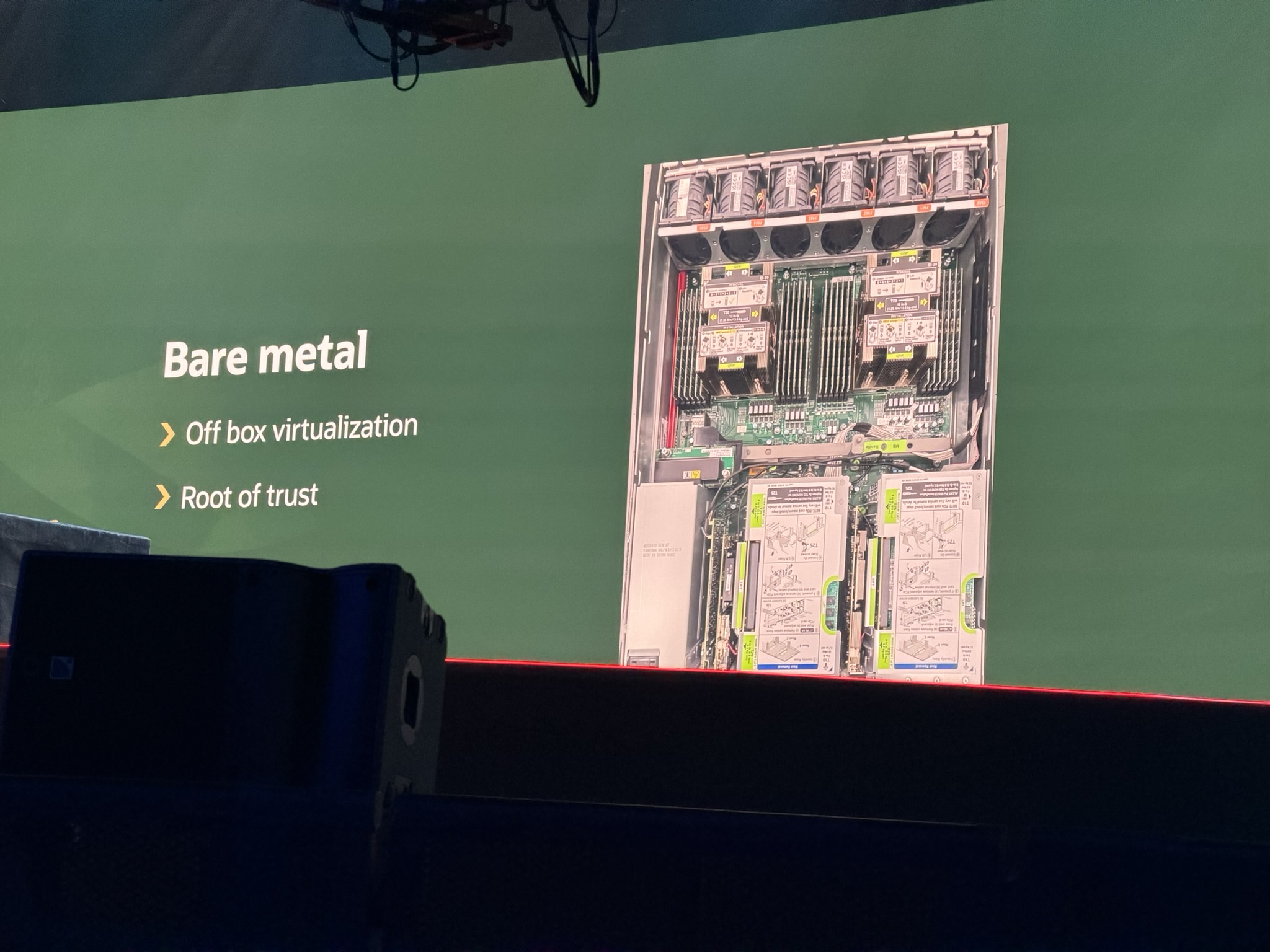
Bare Metal First: OCI was designed with bare metal servers as first-class citizens. This forced the invention of off-box network and storage virtualisation. The key benefits are: first, security, Oracle has no software on the customer’s machine, providing complete control; second, extensibility, OCI’s VM service is built directly on the bare metal service, enabling others to build platforms on top; third, flexibility, simplifies the integration of diverse hardware, including GPUs and other accelerators.
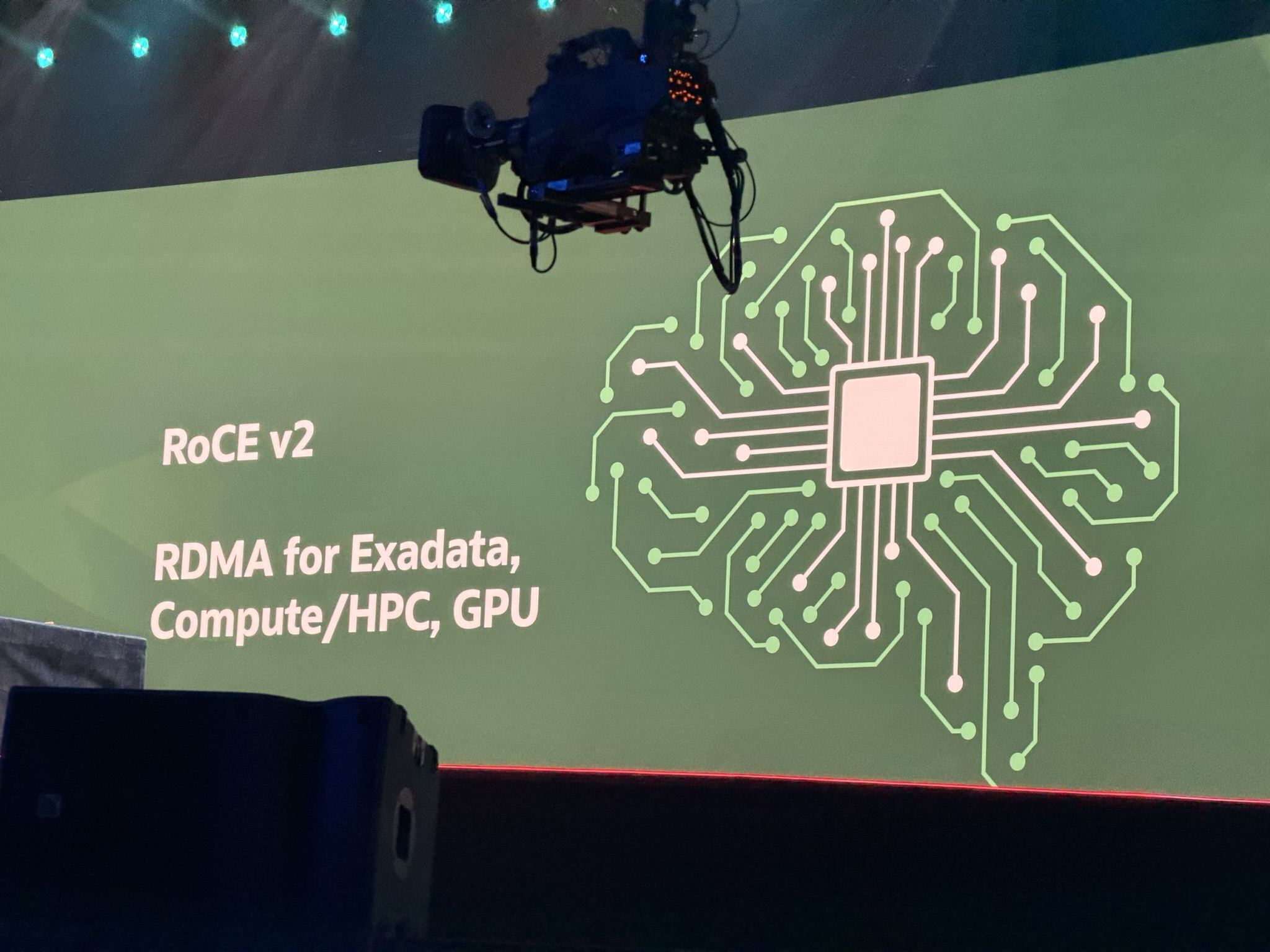
RDMA Networking: Early and comprehensive support for Remote Direct Memory Access (RDMA) networks was driven by Oracle Database requirements (RAC, Exadata) 😎. OCI developed a secure method to dynamically hard-partition RDMA networks. The key benefits are, first performance, delivers full RDMA benefits for High Performance Computing (HPC), GPU clusters, and high-performance database workloads, second security, provides multi-tenant security enhancements expected from a fully virtualised cloud.
Universal Service Availability: All OCI services and hardware types are available in all regions! This eliminates the model where availability varies by location. The key benefit is simplicity, customers have a predictable and consistent experience regardless of region.
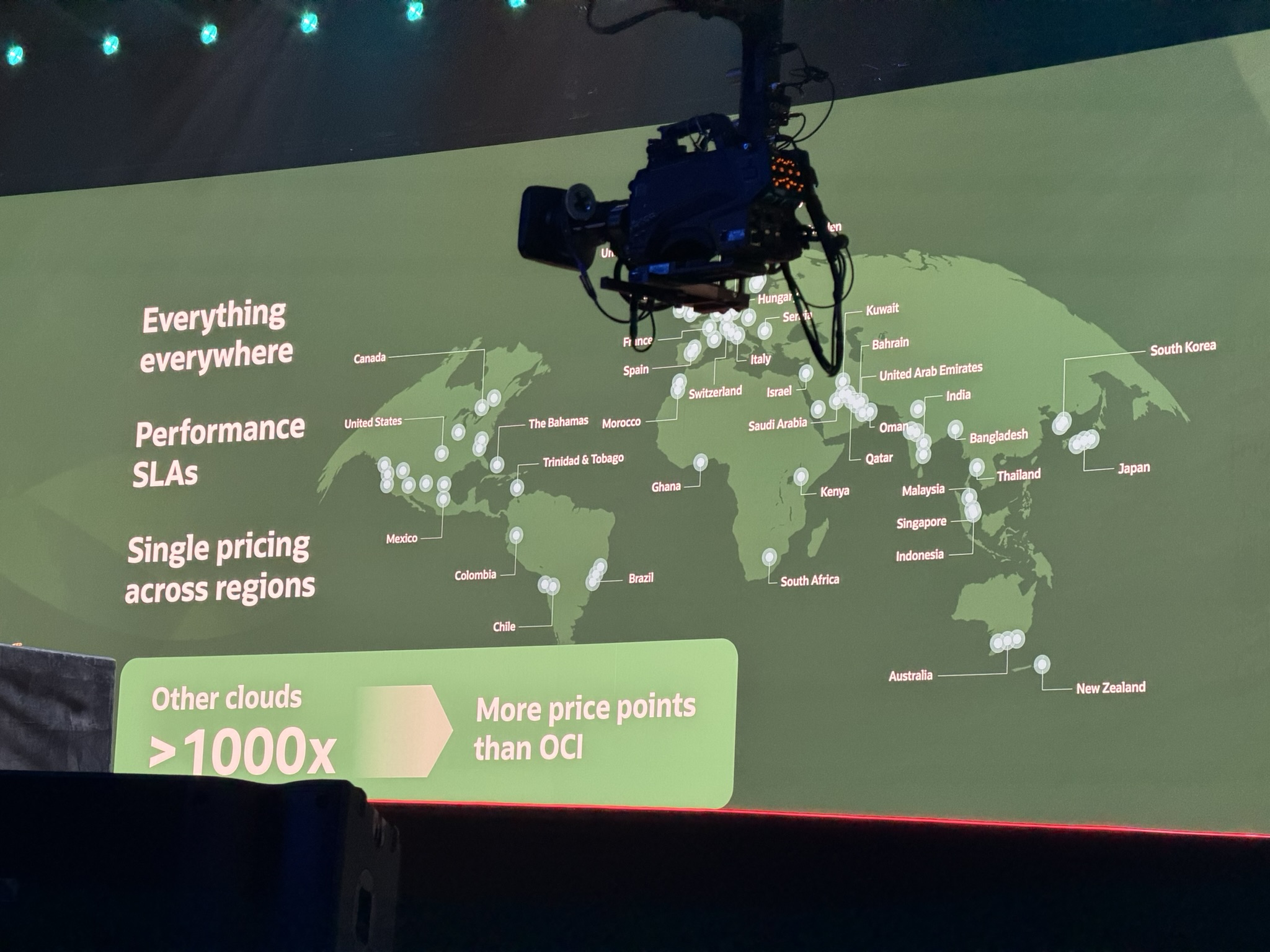
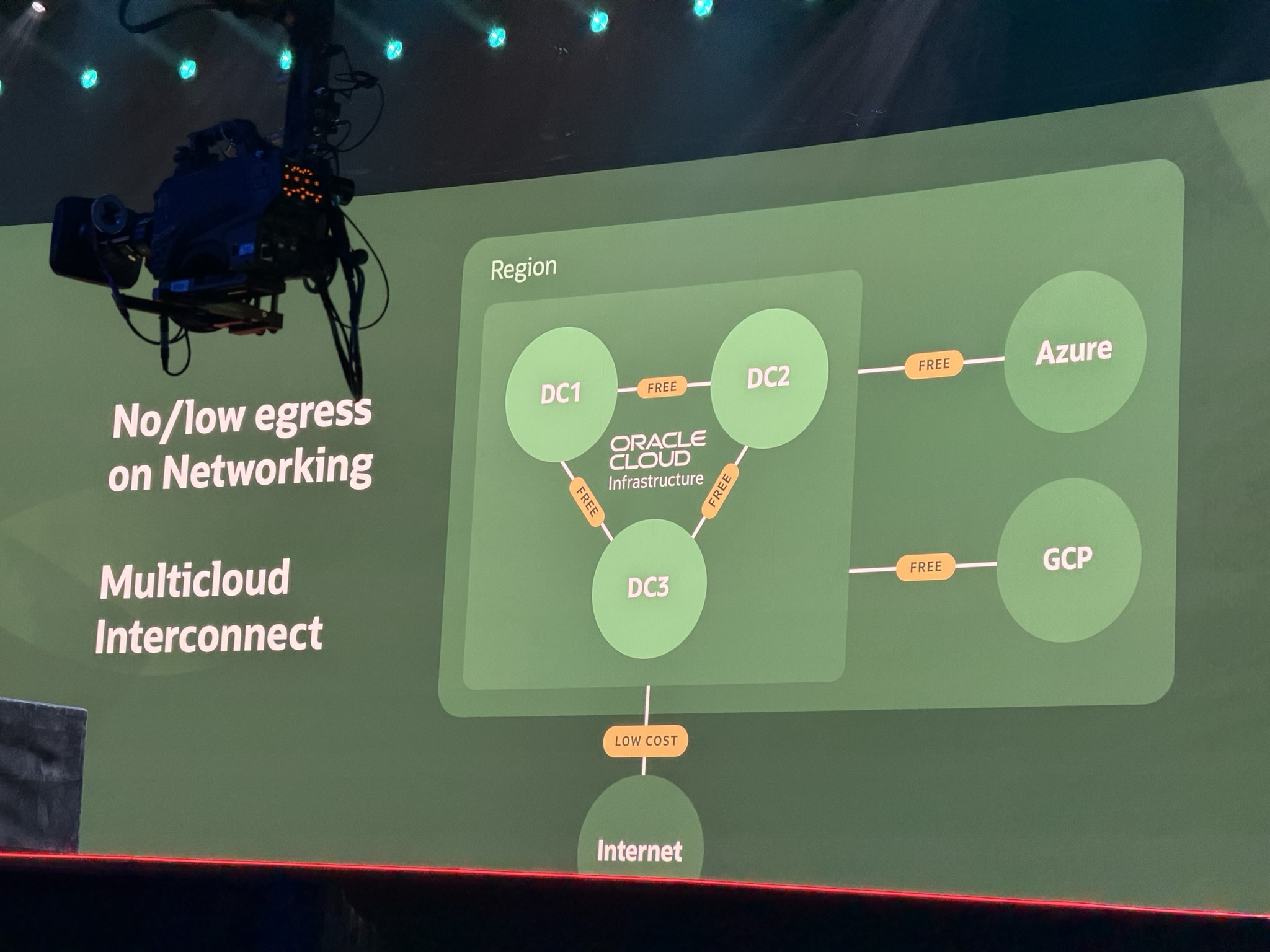
Simplified and Consistent Pricing: OCI employs a single, consistent price list across all regions. This approach extends to network costs. Key benefits are, first predictability, customers can easily understand and forecast their costs without complex tools/calculators, second cost savings, data transfer within a region is free! Internet egress fees are up to 10 times lower than competitors! Multi-cloud interconnects with partners like Microsoft and Google feature zero egress fees!
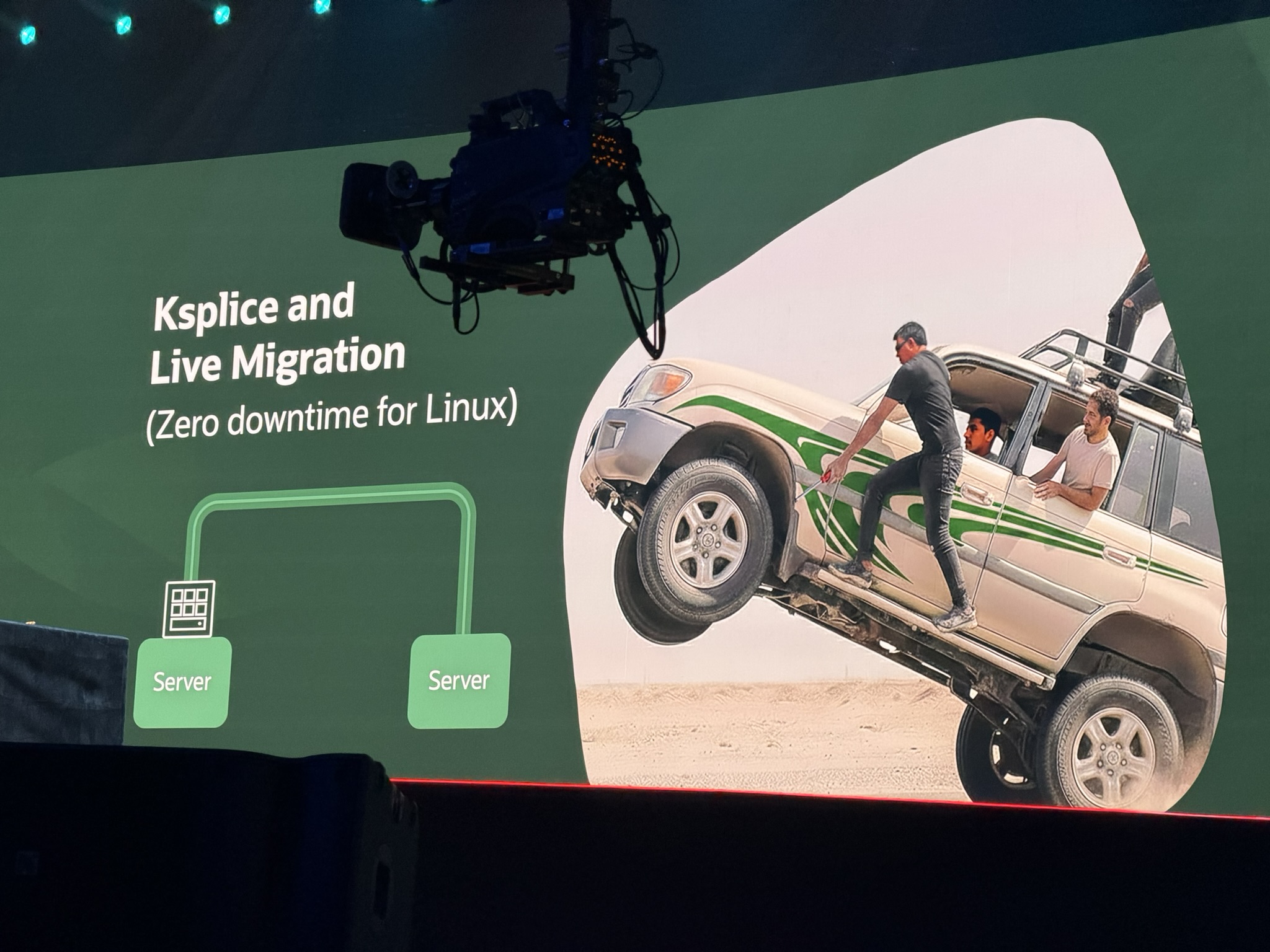
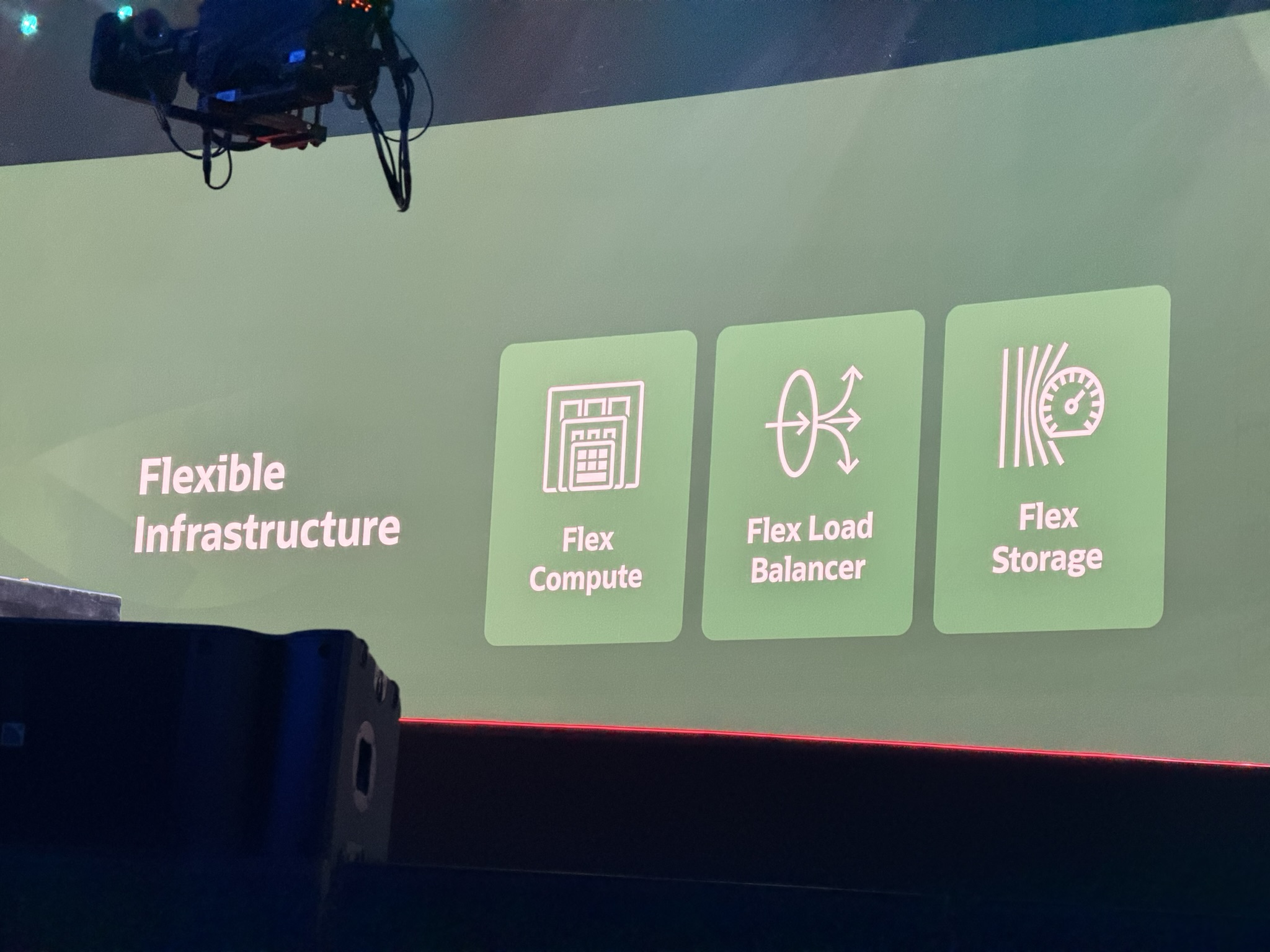
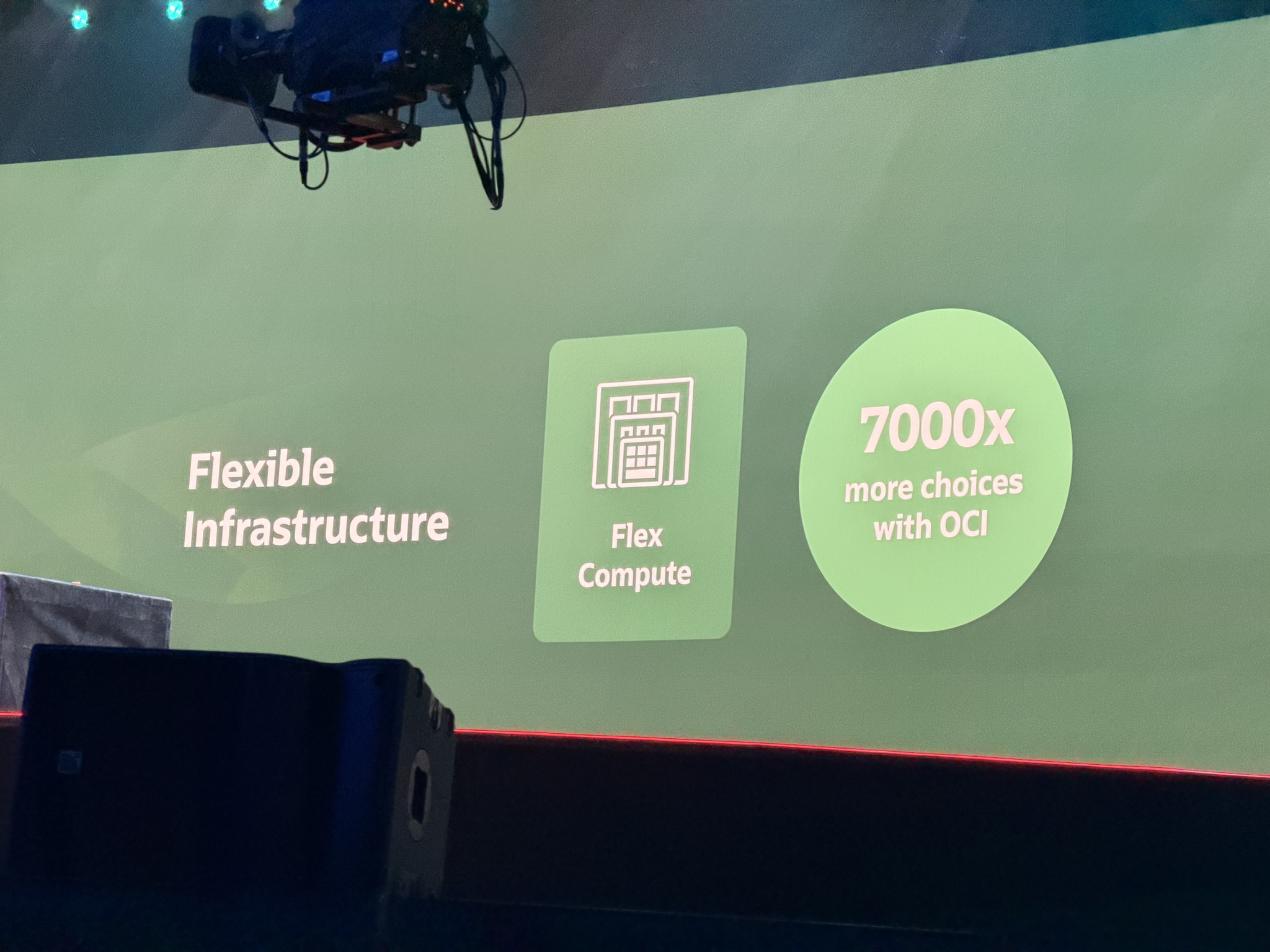
Flexible Infrastructure: Oracle designed its infrastructure building blocks for maximum flexibility. Customers can select exactly the cores and memory they need, with OCI offering 7,000 times more configuration options than competitors without added complexity, because each core and gigabyte of RAM is priced consistently. Storage is equally simple, instead of multiple block storage types, OCI provides a single option whose performance can be tuned dynamically in real time. This philosophy extends to VM availability. Oracle uses Ksplice for zero-downtime kernel upgrades and supports live migration for hardware maintenance without customer reboots, similar to VMware’s vMotion. These capabilities are also coming to Exascale for Exadata 😎.
Scalability (Up and Down): The architecture was designed to scale down as effectively as it scales up. This, combined with scalable operations, enables novel deployment models such as:

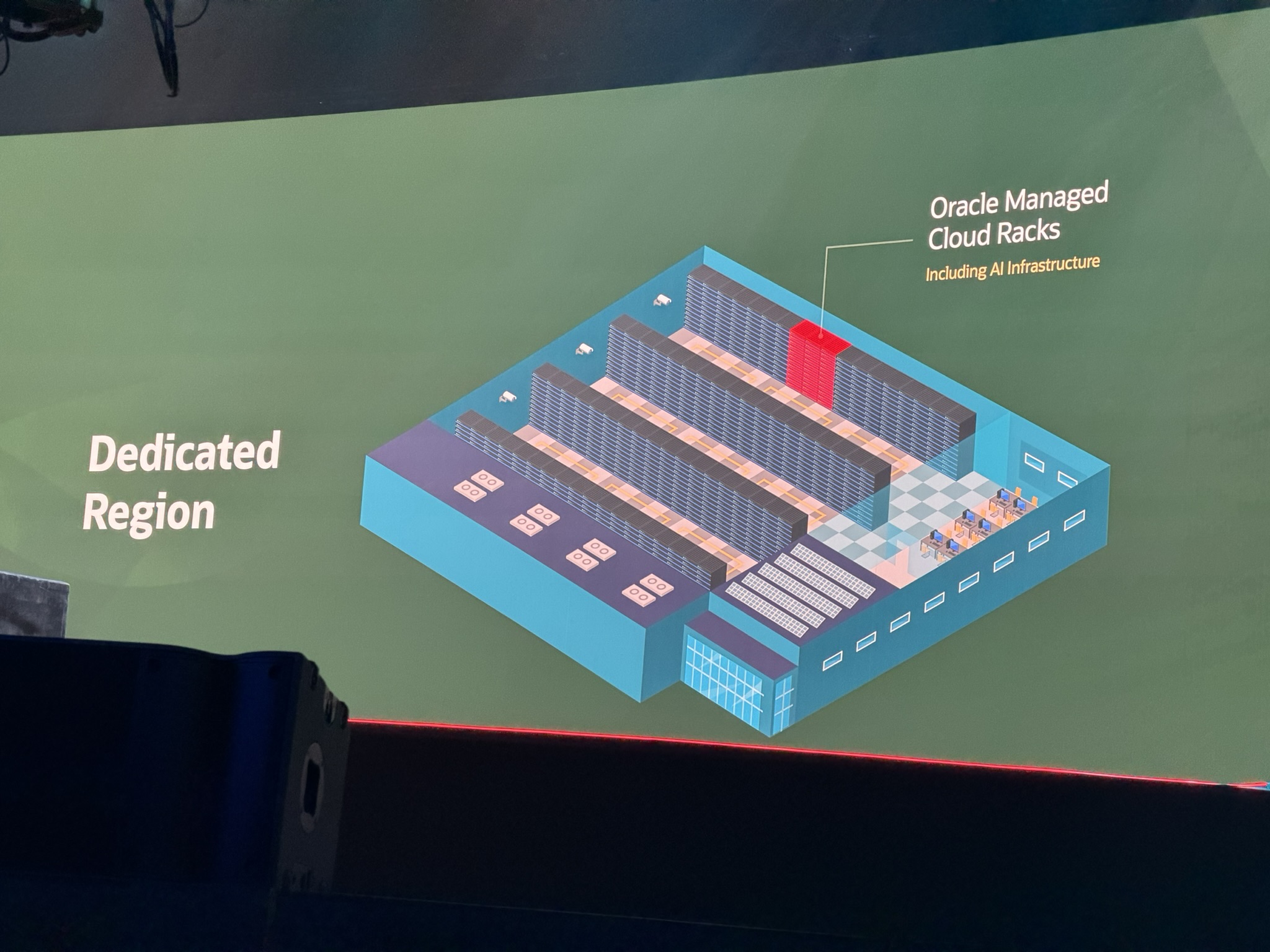
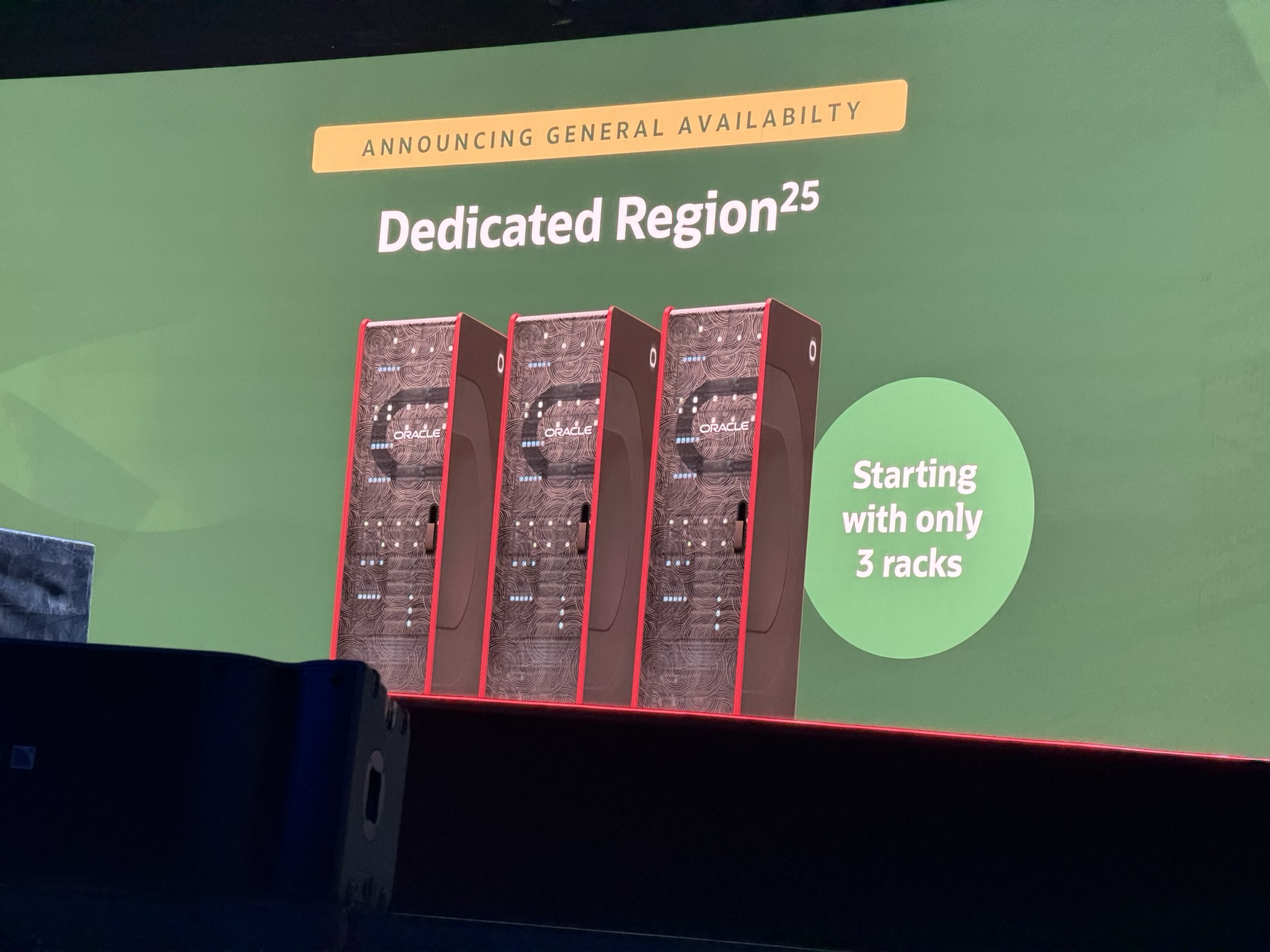
  • Dedicated Regions: the ability to scale down makes it feasible to provide dedicated cloud regions for individual customers in their own data centres with only three racks.
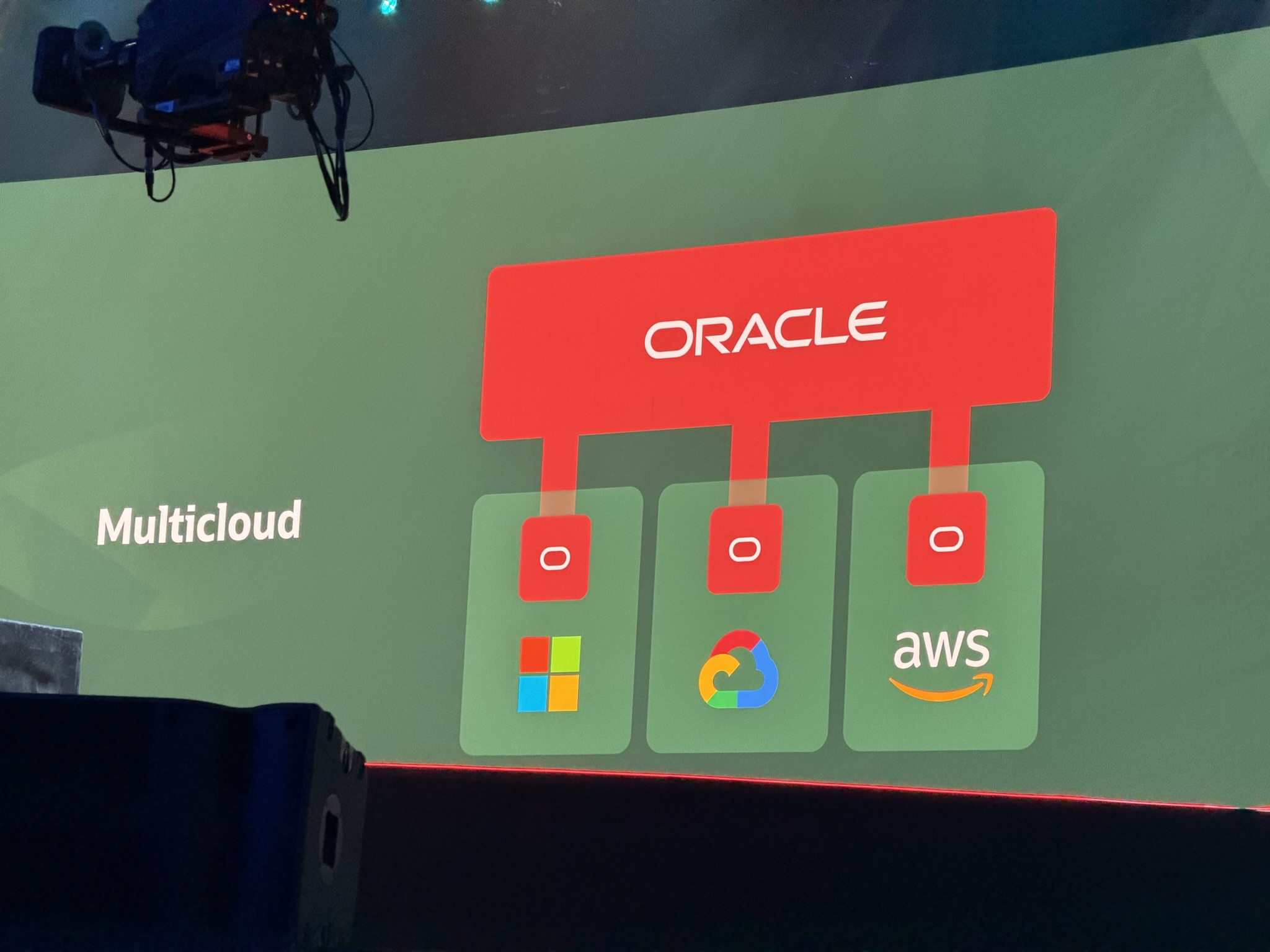
  • Multicloud presence: enables OCI to place its full data platform capabilities inside other cloud environments such as Azure, GCP and AWS.
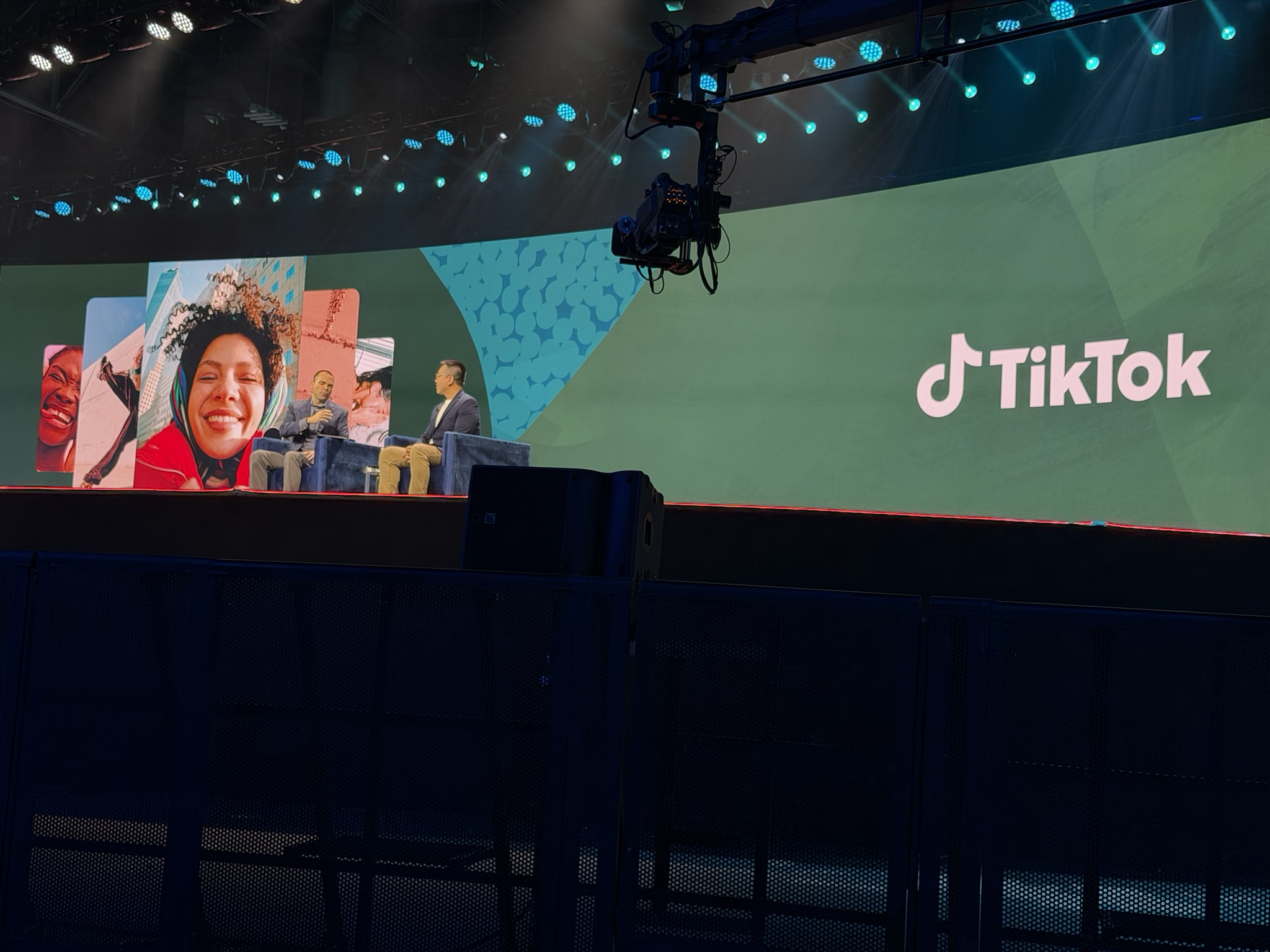
TikTok: Engineering for Global Scale and Reliability

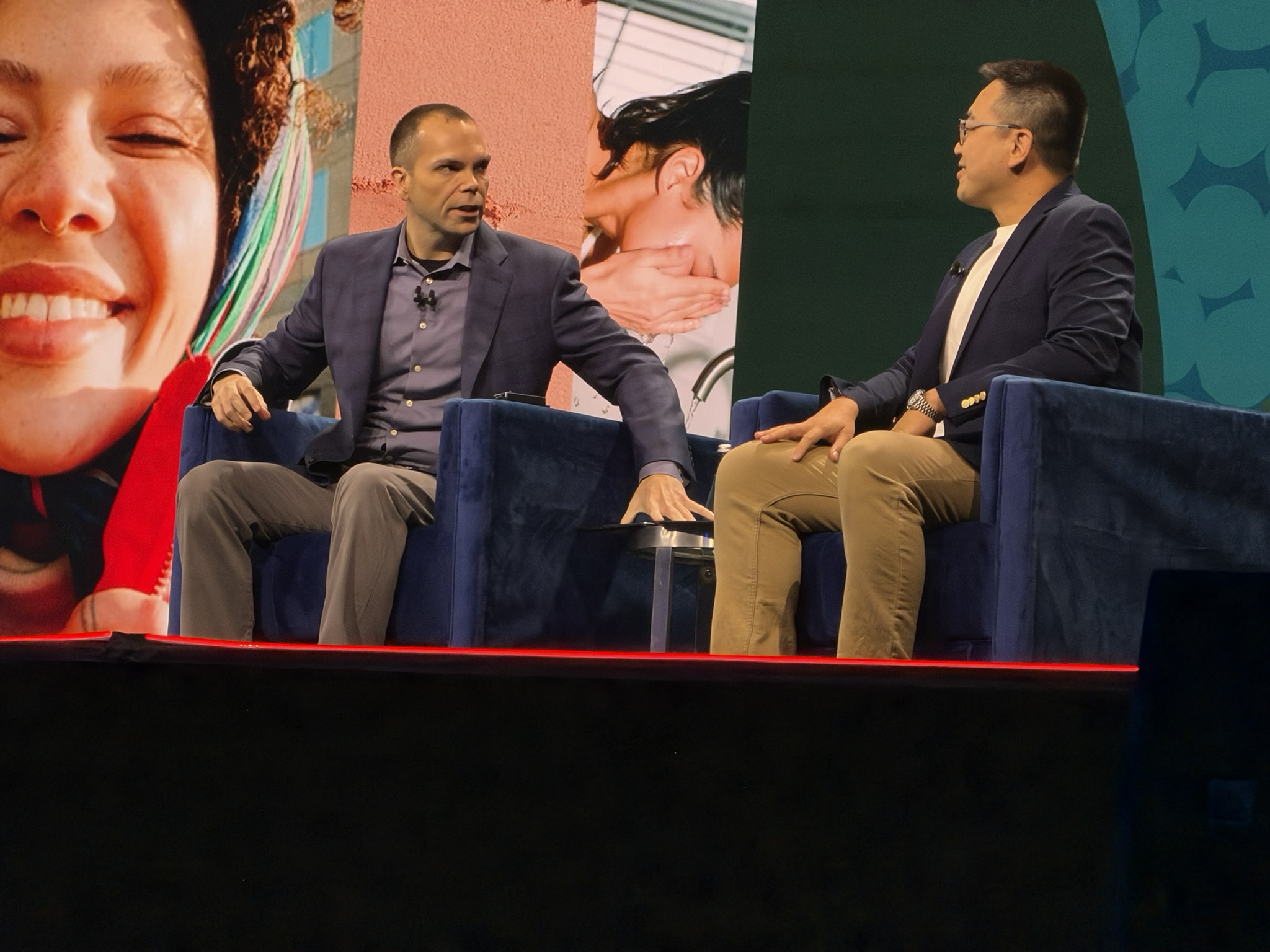
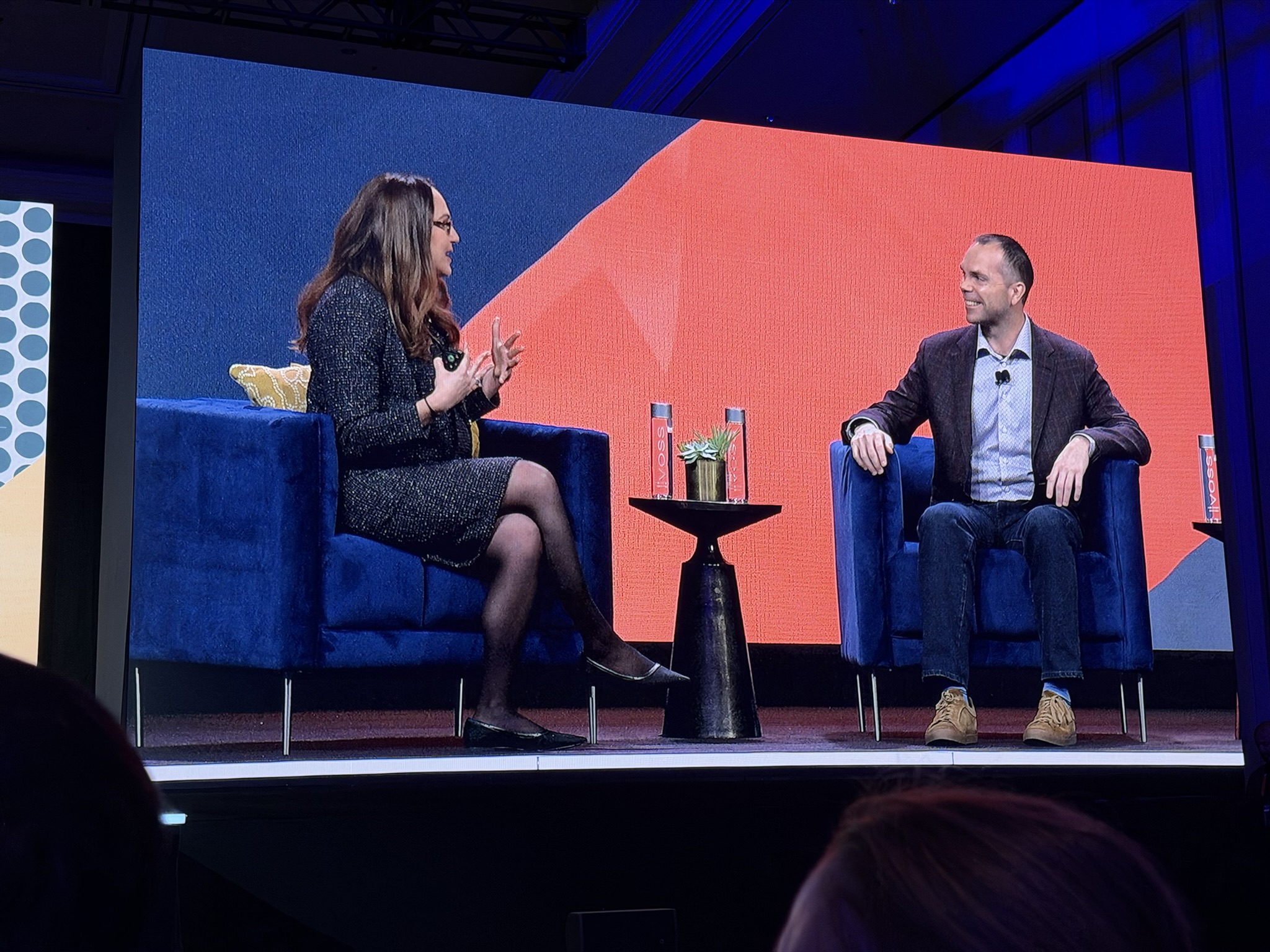
Clay then introduced Fangfei Chen, Head of Infrastructure Engineering at ByteDance, the company that owns TikTok to the stage.
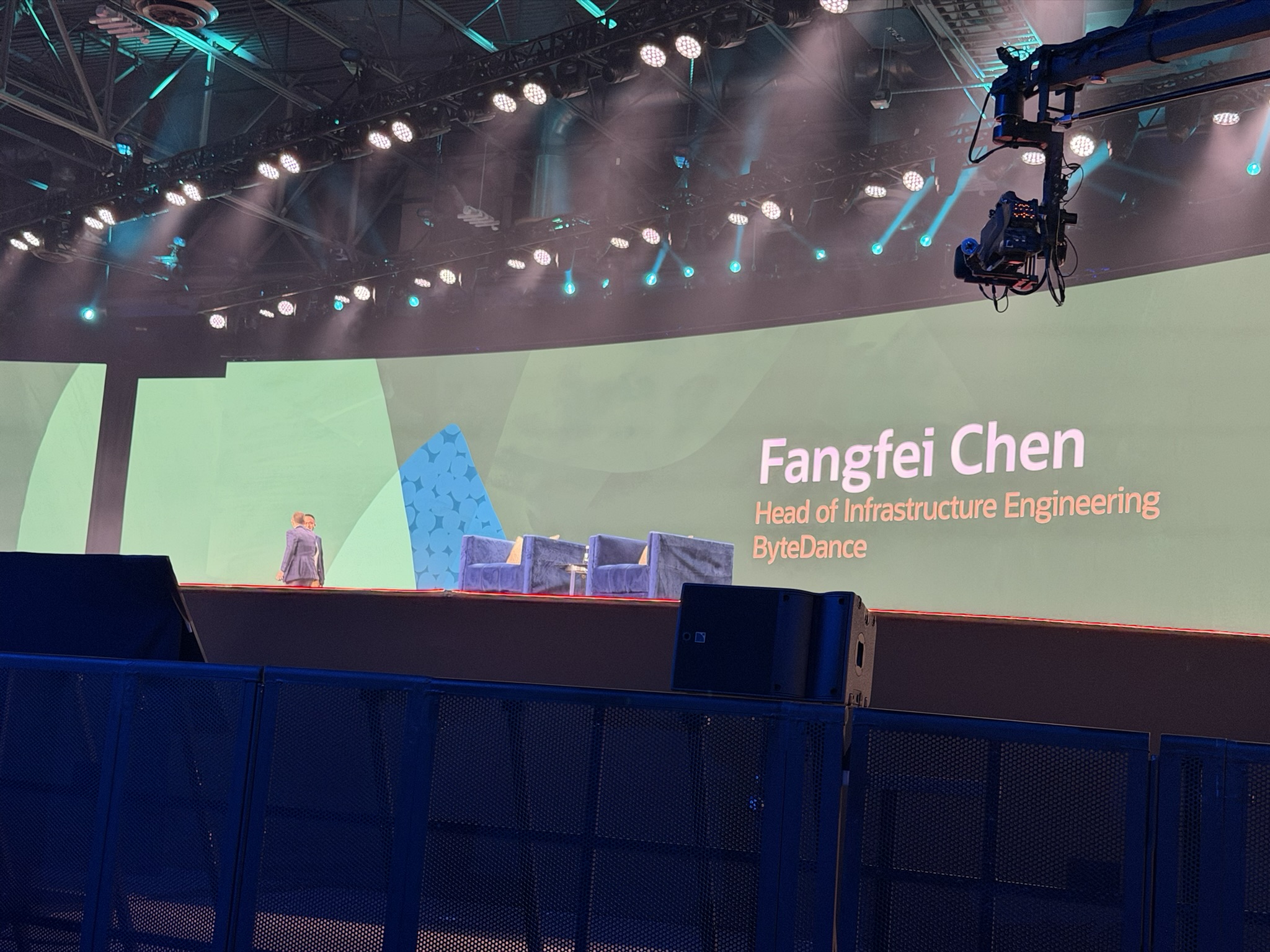
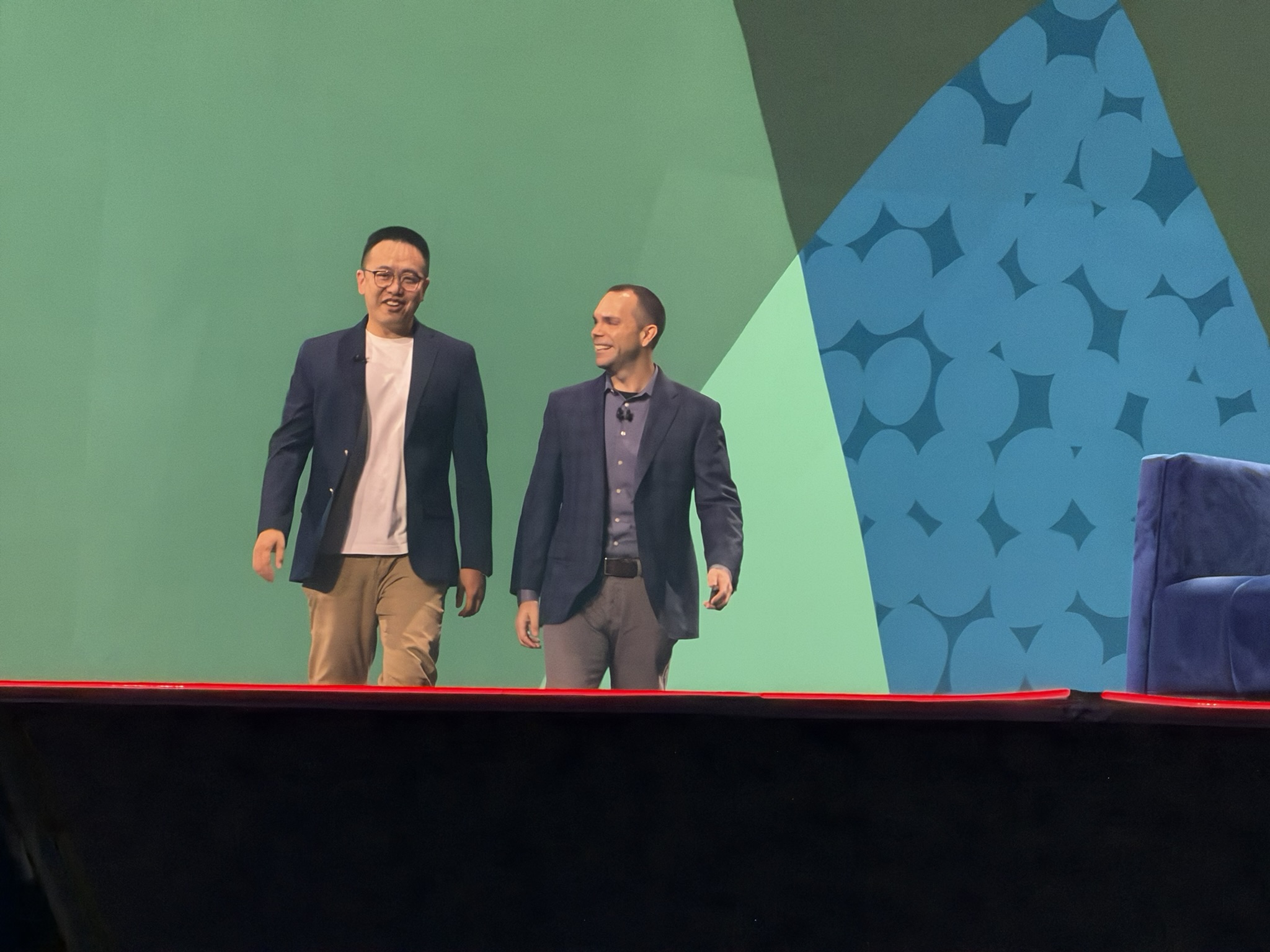
Oracle’s long-standing partnership with ByteDance, the parent company of TikTok, demonstrates OCI’s capability to operate and co-engineer at an extreme scale. Over nearly five years, Oracle has expanded OCI globally to deliver the performance, scalability, and reliability required by ByteDance.

TikTok is a platform for creativity, serving over one billion global users, including 170 million in the US, and generating around 20 million videos daily. To support this scale, TikTok requires millions of servers, zettabytes of storage, and hundreds of terabits per second of network capacity! This necessitated deep integration with OCI at the network layer, driving Oracle to become the first to launch 100 Gbps and later 400 Gbps FastConnect interconnects. They designed the network fabric together to maintain and operate reliably at this scale.

TikTok Shop offers a unique shopping experience centred on live streams. During events like Black Friday, shopping activity can double. ByteDance collaborates with OCI to plan capacity and demand, thanking Oracle for its flexibility in ensuring resources are available when needed. Oracle plays a key role in keeping TikTok customers happy. TikTok is obsessed with customer experience, users love video, watch video, and engage deeply. All telemetry flows from the infrastructure, enabling proactive operations where Oracle and ByteDance teams work closely together.

Clay concluded the segment by saying “OCI and Oracle would not be where we are today without all of the opportunity and the learnings that we’ve had from serving you and your customers.”

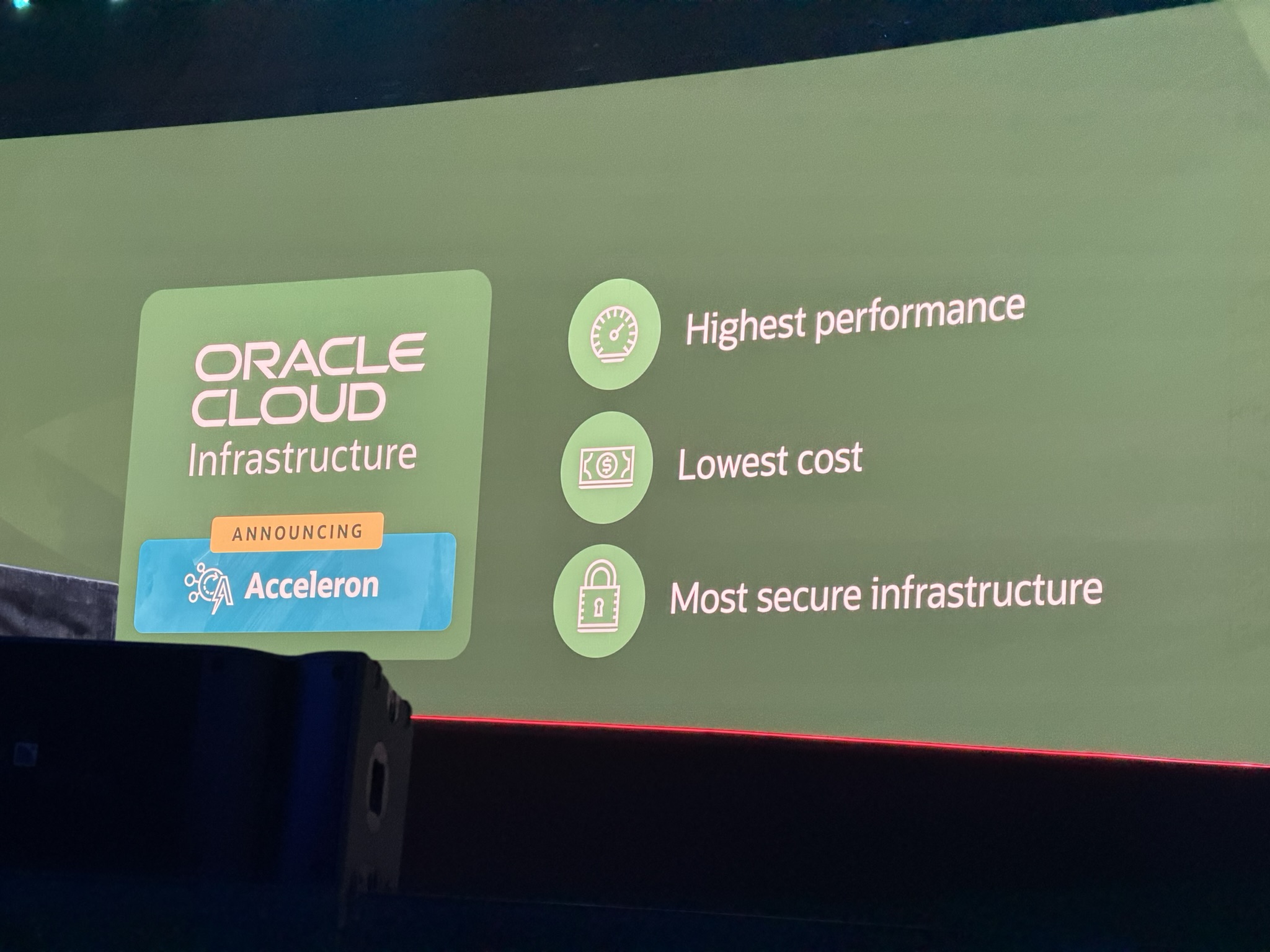
Announcing Acceleron

Acceleron is a multi-year project to upgrade OCI’s foundational software and architecture. It focuses on securing and accelerating input/output operations.
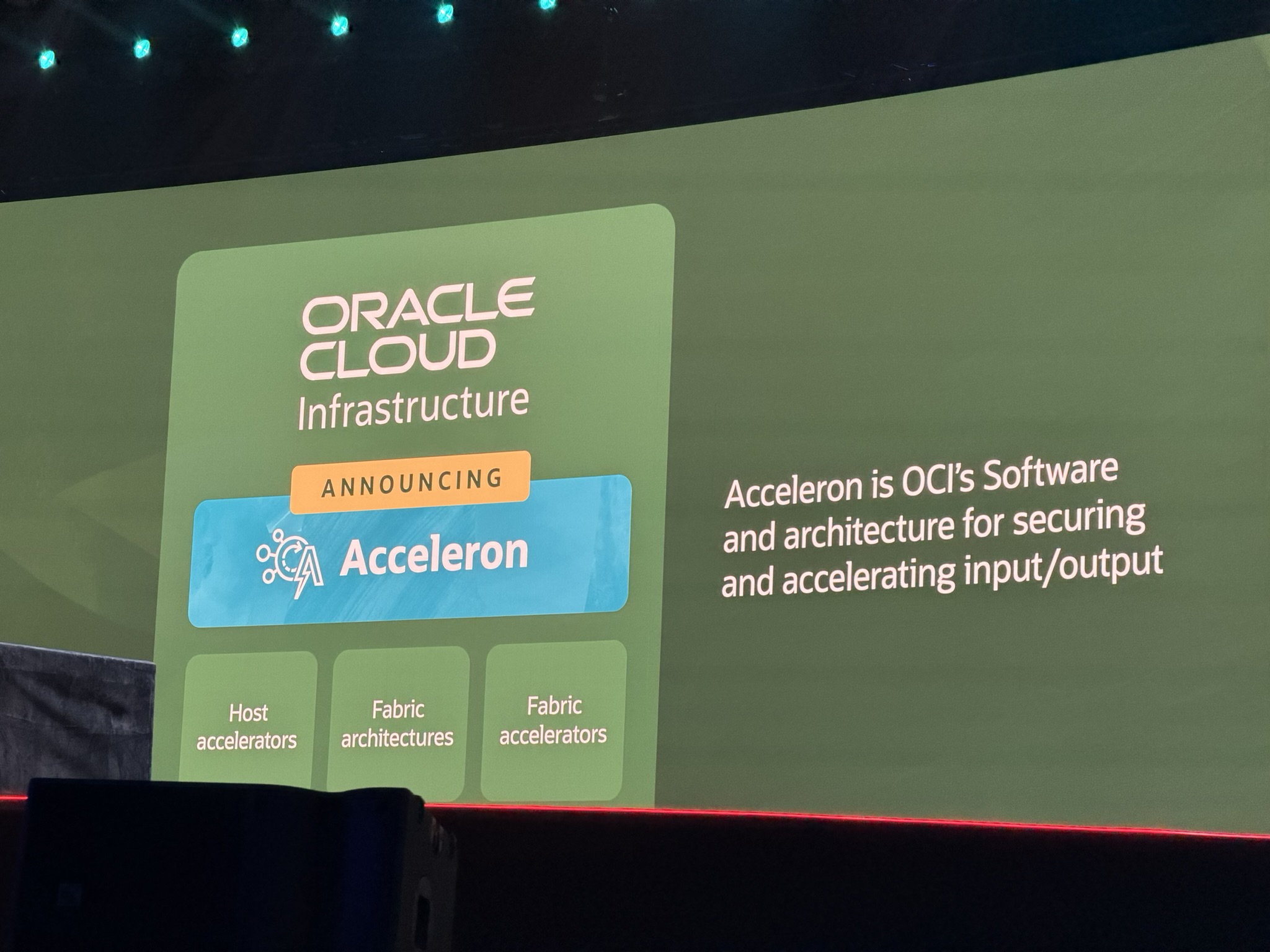
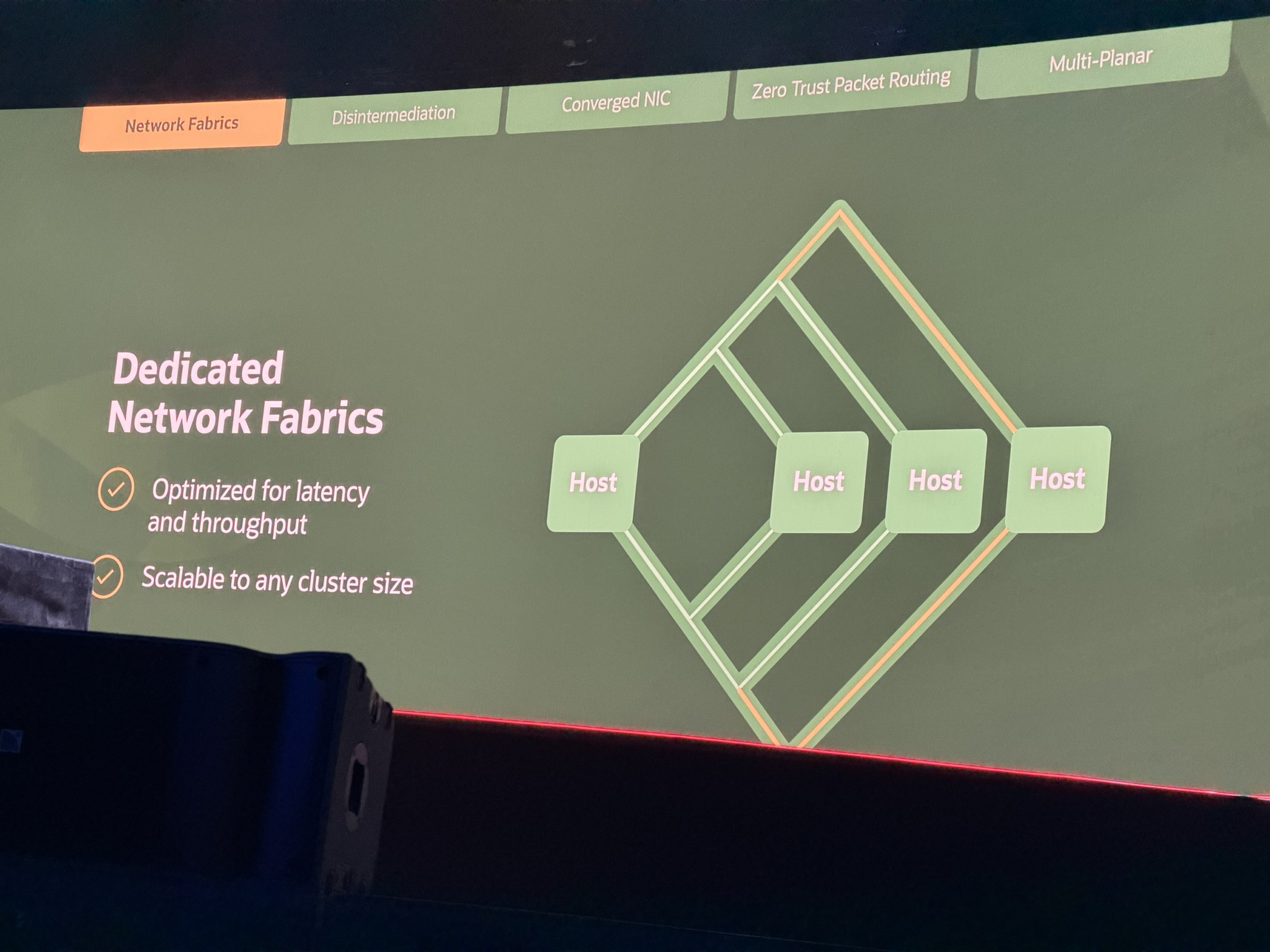
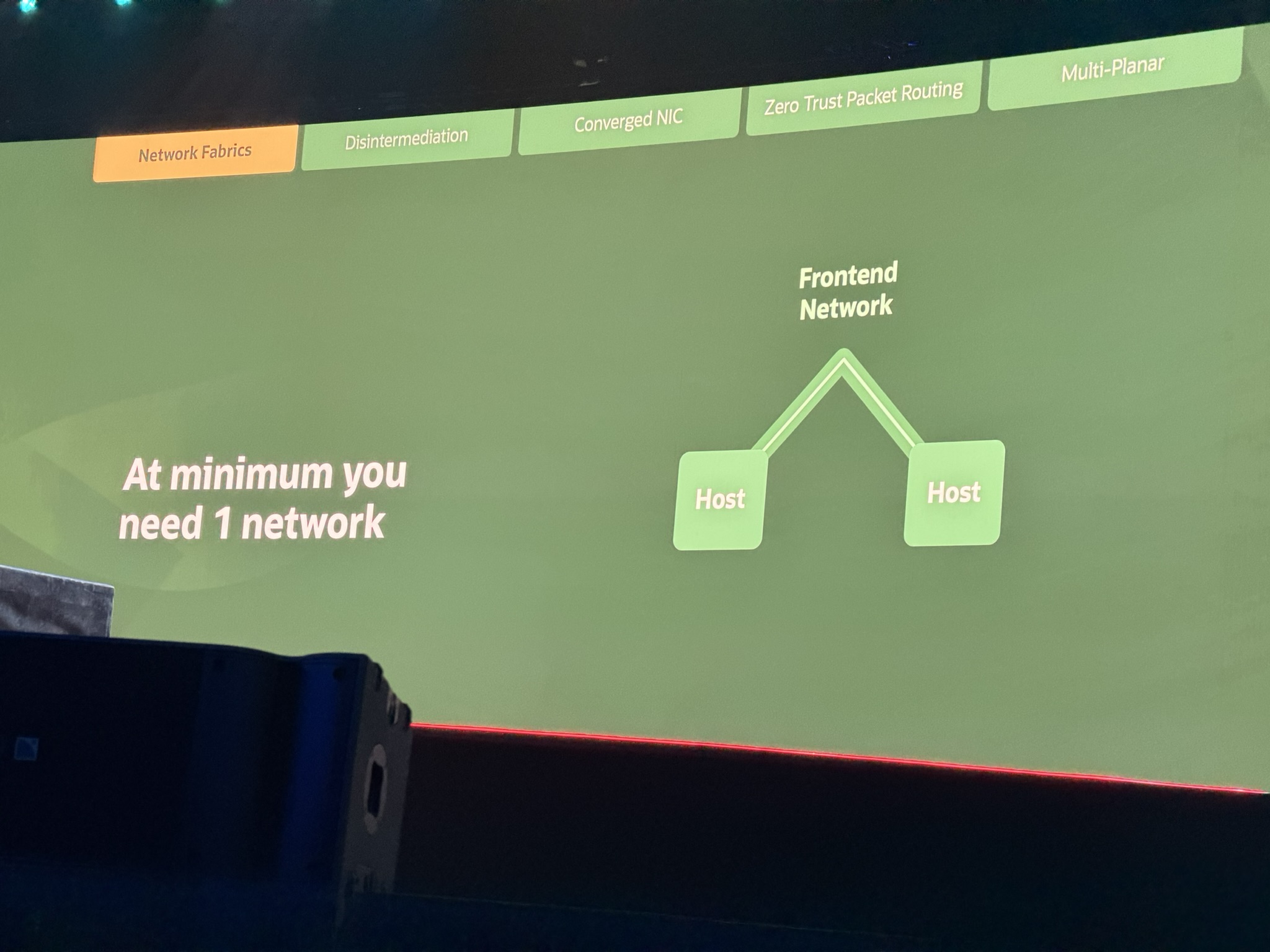
Dedicated Network Fabrics: OCI’s architecture provides a unified system for dedicated networks that can be optimised for either latency or throughput. These fabrics are securely hard-partitioned, delivering the performance of dedicated hardware with the security of a virtualised cloud. That scan scale to any cluster size.
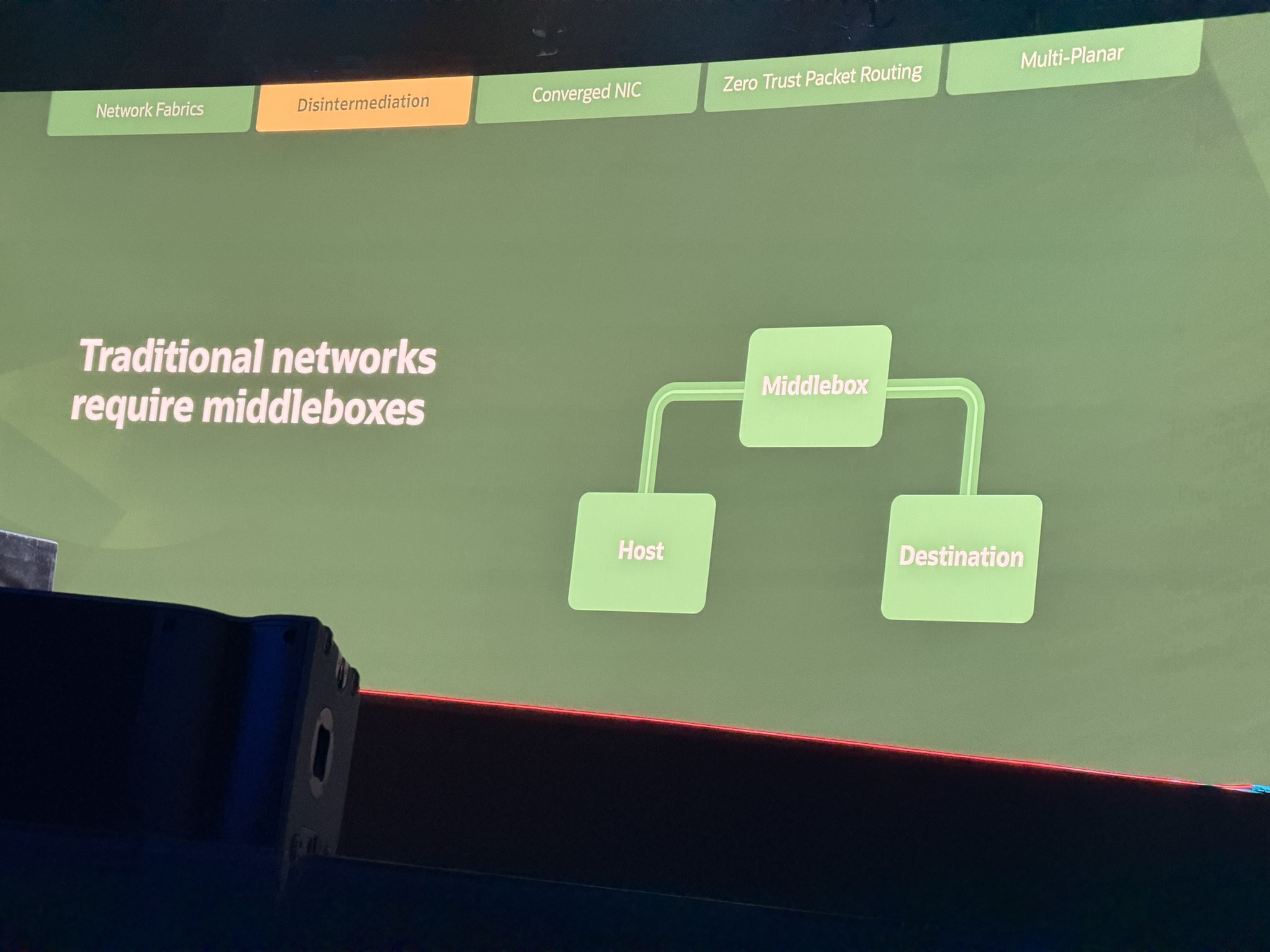
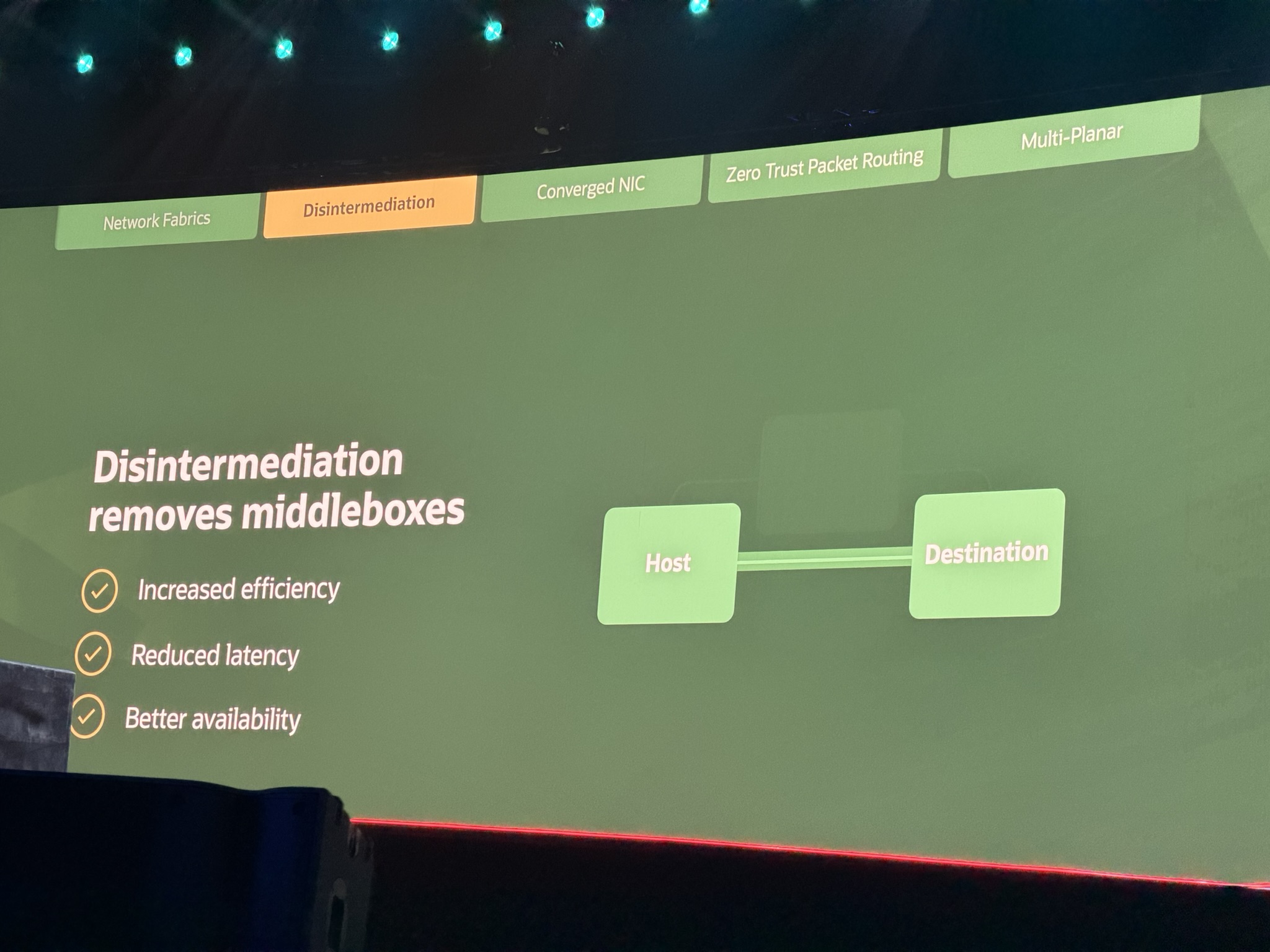
Disintermediation: This concept involves removing the “middle boxes” (physical or virtual) that traditionally handle advanced network functions. By integrating these functions into a flexible software architecture, OCI eliminates performance bottlenecks, reduces latency, and lowers costs, a key factor behind OCI’s low network pricing.
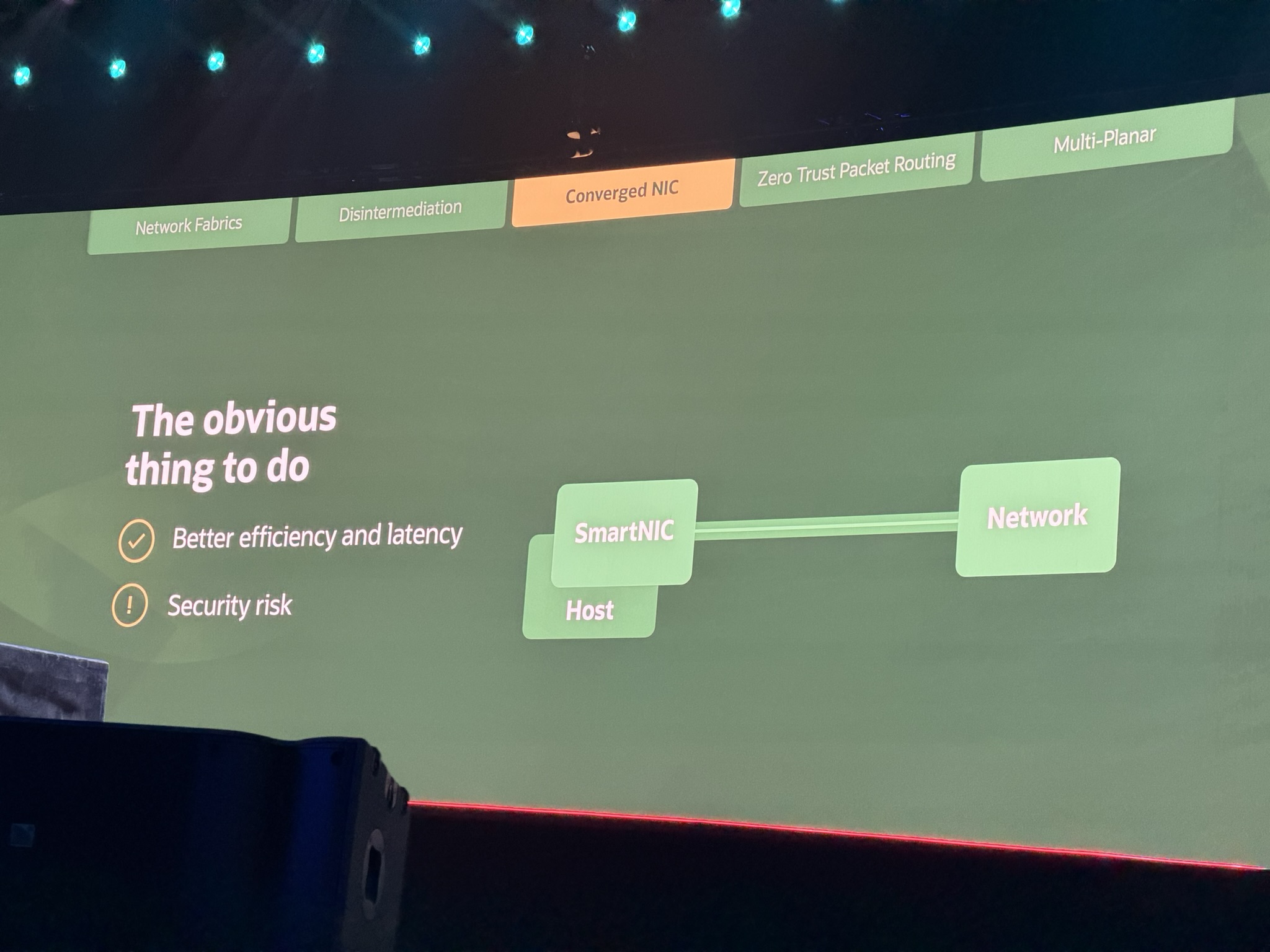
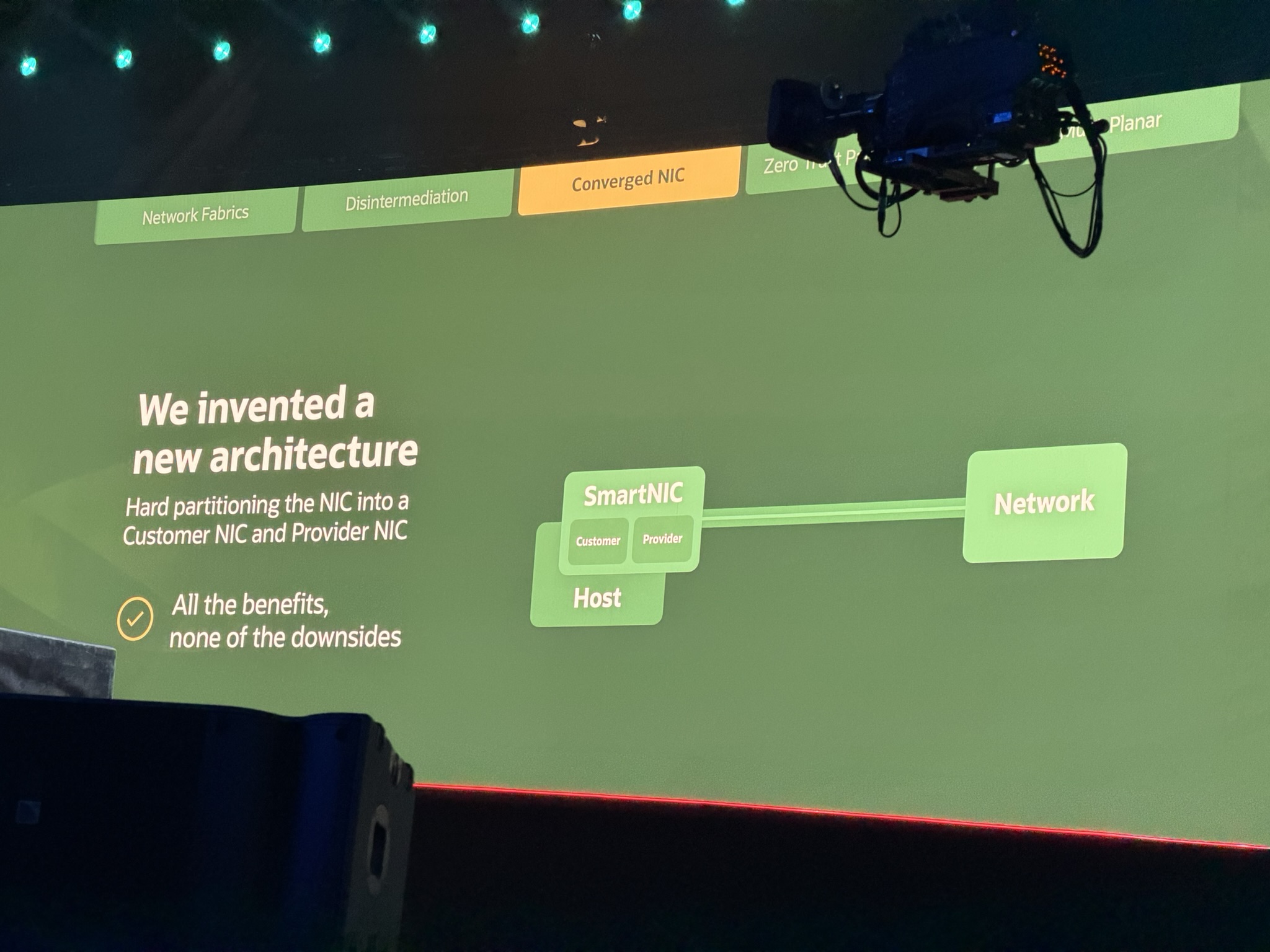
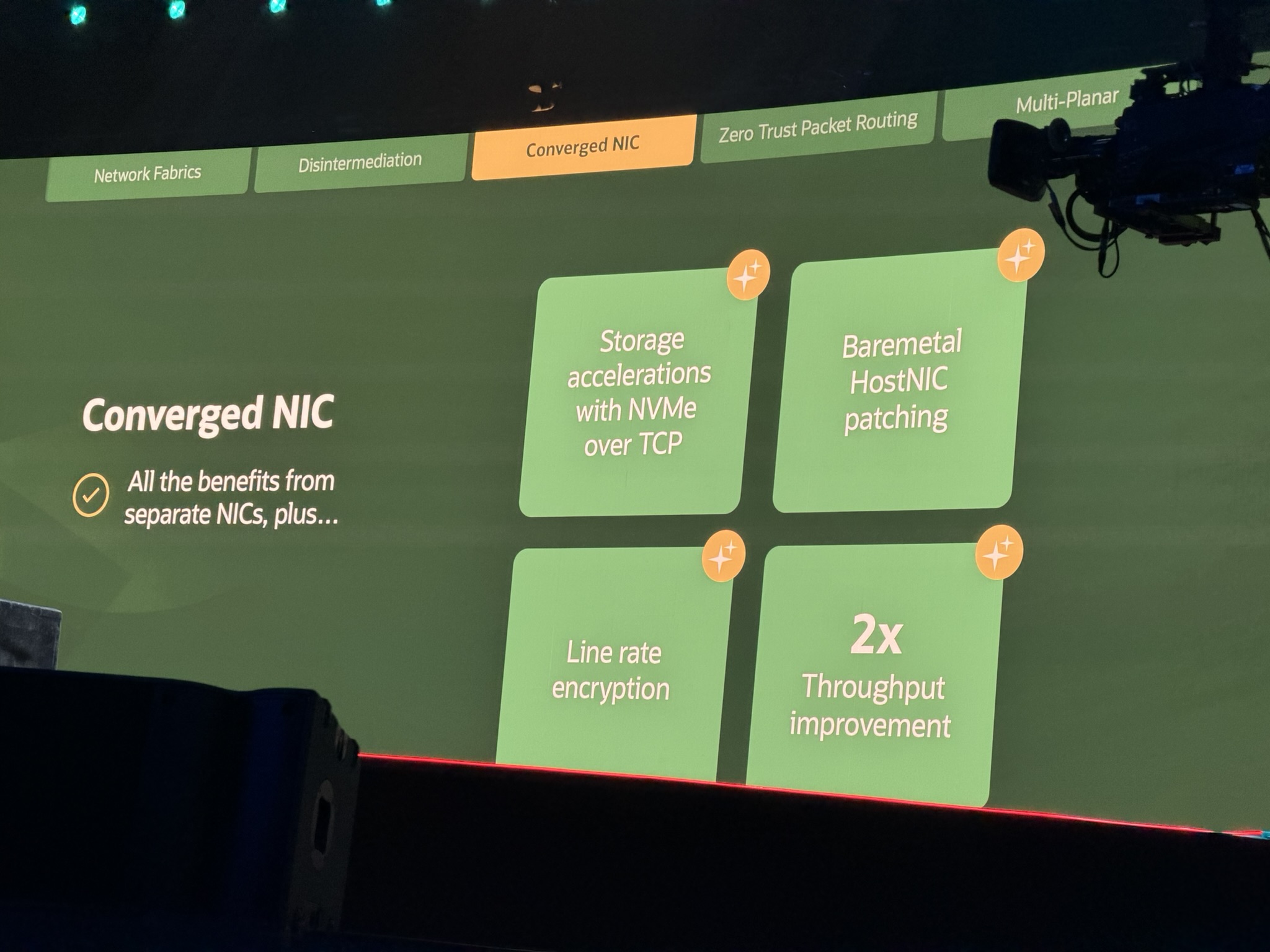
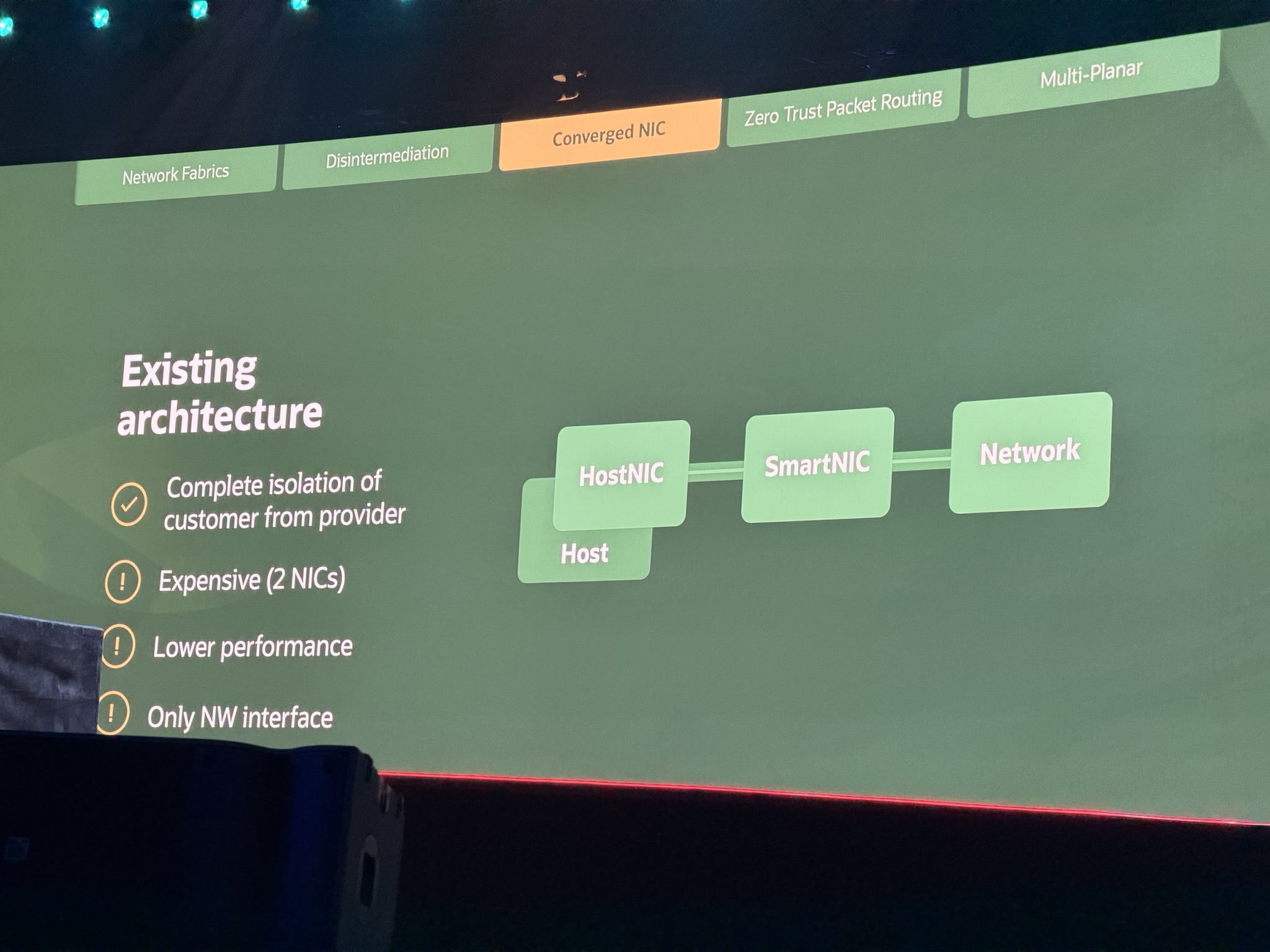
Converged NIC: In collaboration with AMD, OCI has designed a new architecture on a single smart NIC. It achieves security through hard partitioning, with dedicated cores and memory for both the customer-controlled NIC and the provider-controlled NIC. The benefits this provides:

  • Maintains the high security posture of a two-NIC system
  • Enables a direct NVMe interface for block storage
  • Provides line-rate encryption for all traffic
  • Allows for seamless patching of the host NIC, even on bare metal instances
  • Delivers up to twice the available throughput for compute instances
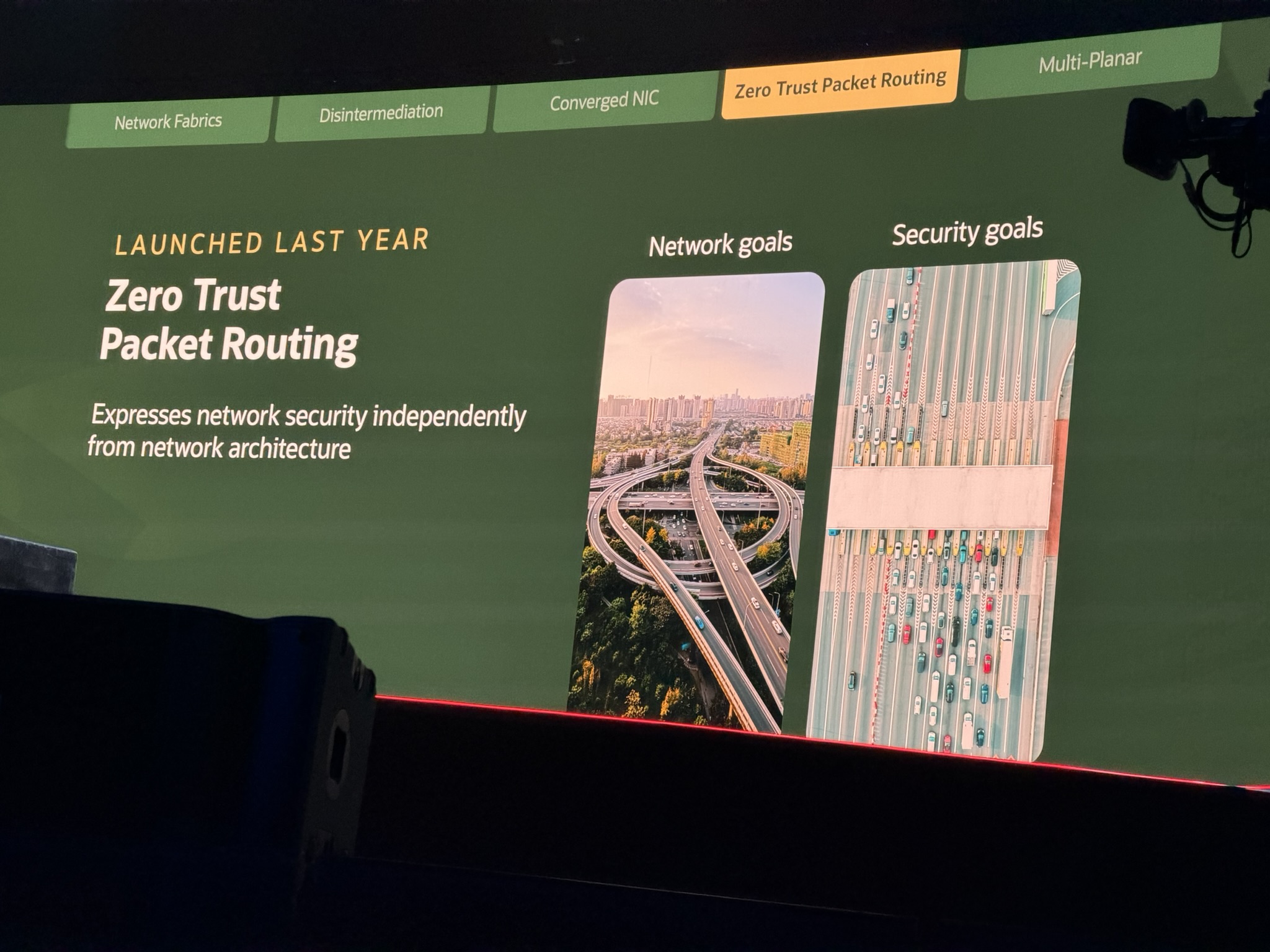
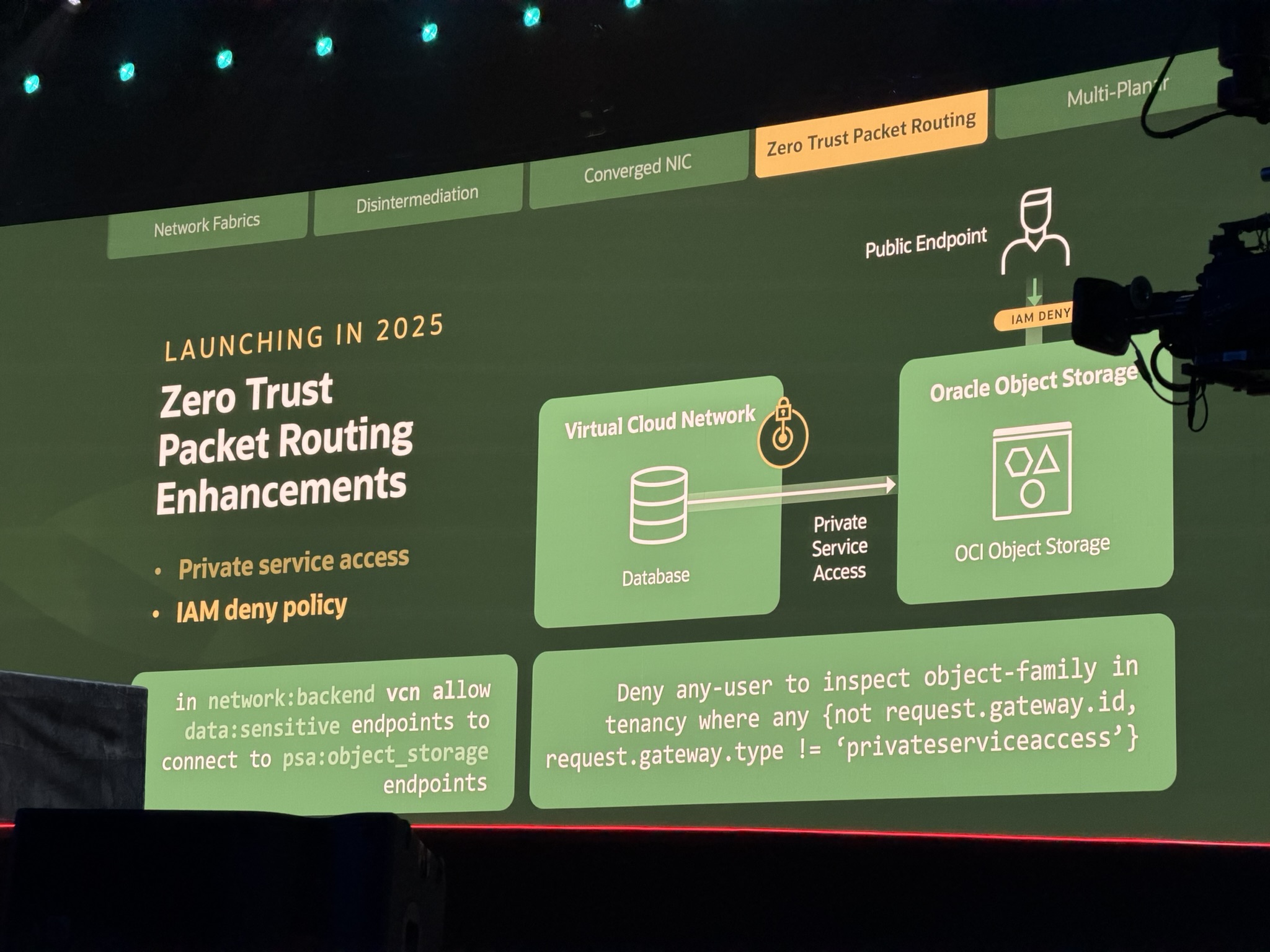
Zero Trust Packet Routing: This system decouples network security policy from the network architecture. Security rules are written in a dedicated policy language, making them easier to analyse and enforce. This prevents data exfiltration by creating explicit rules (for example allowing a database to access object storage only via a private endpoint) that are independent of network topology.
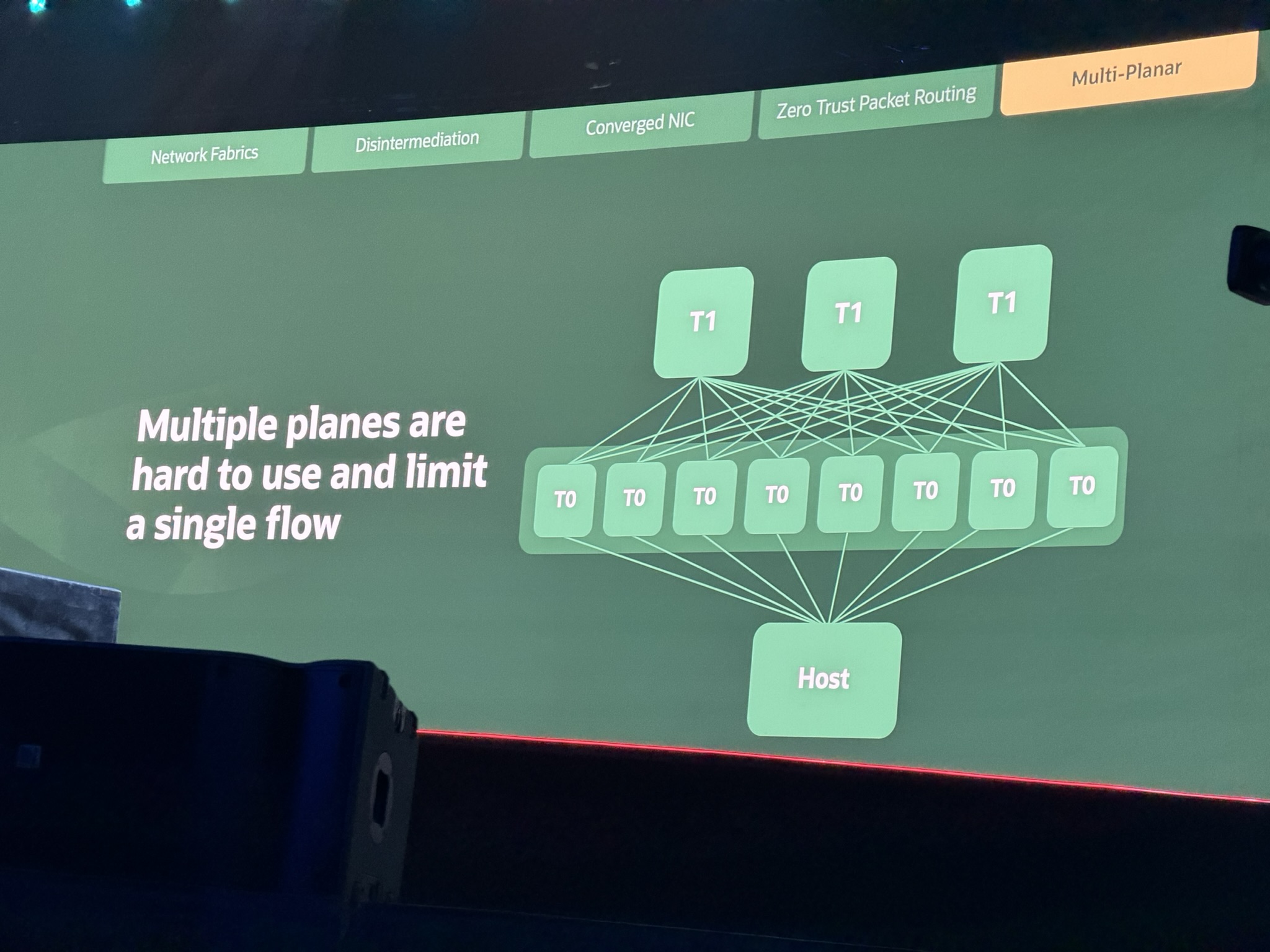
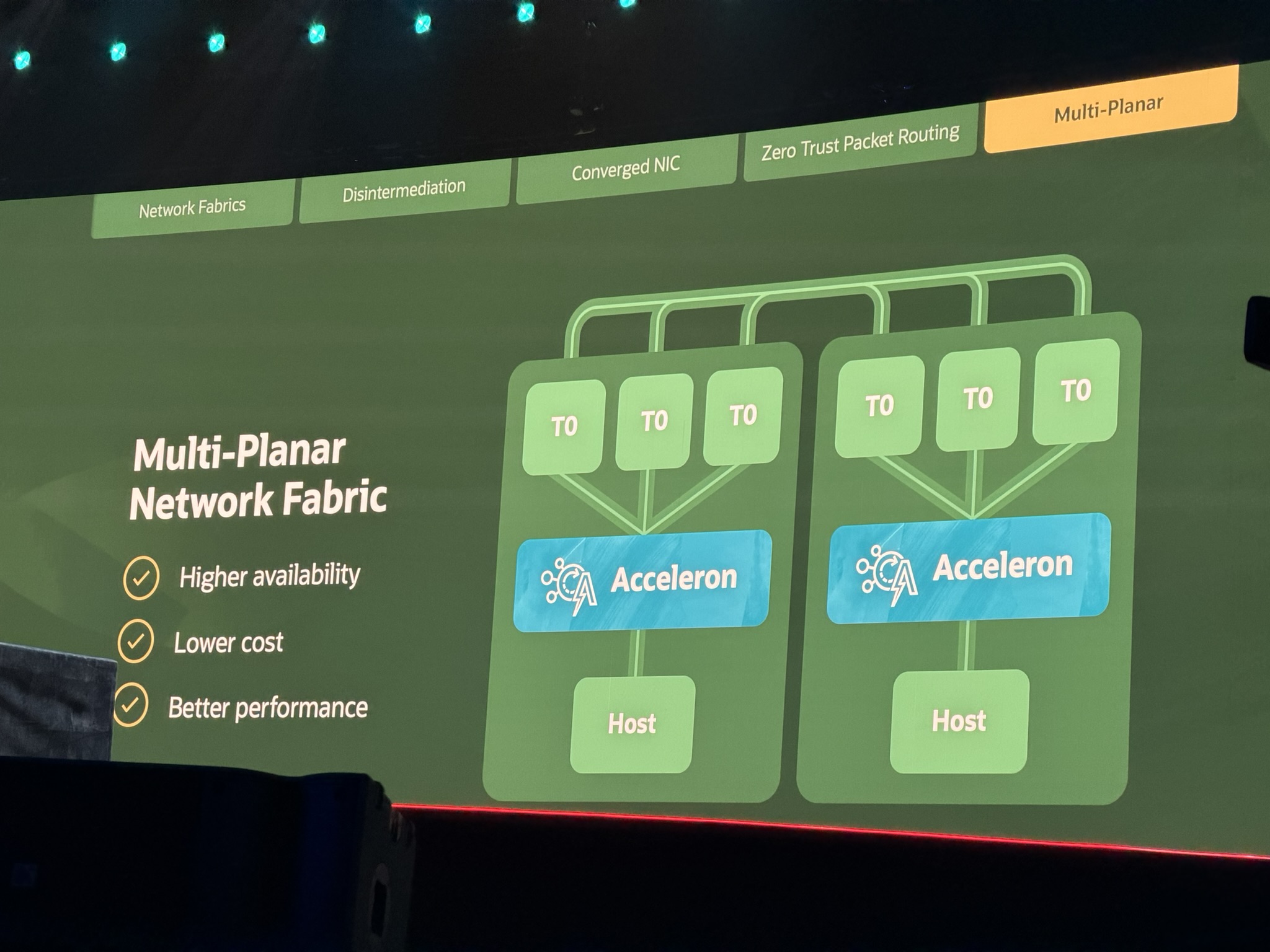
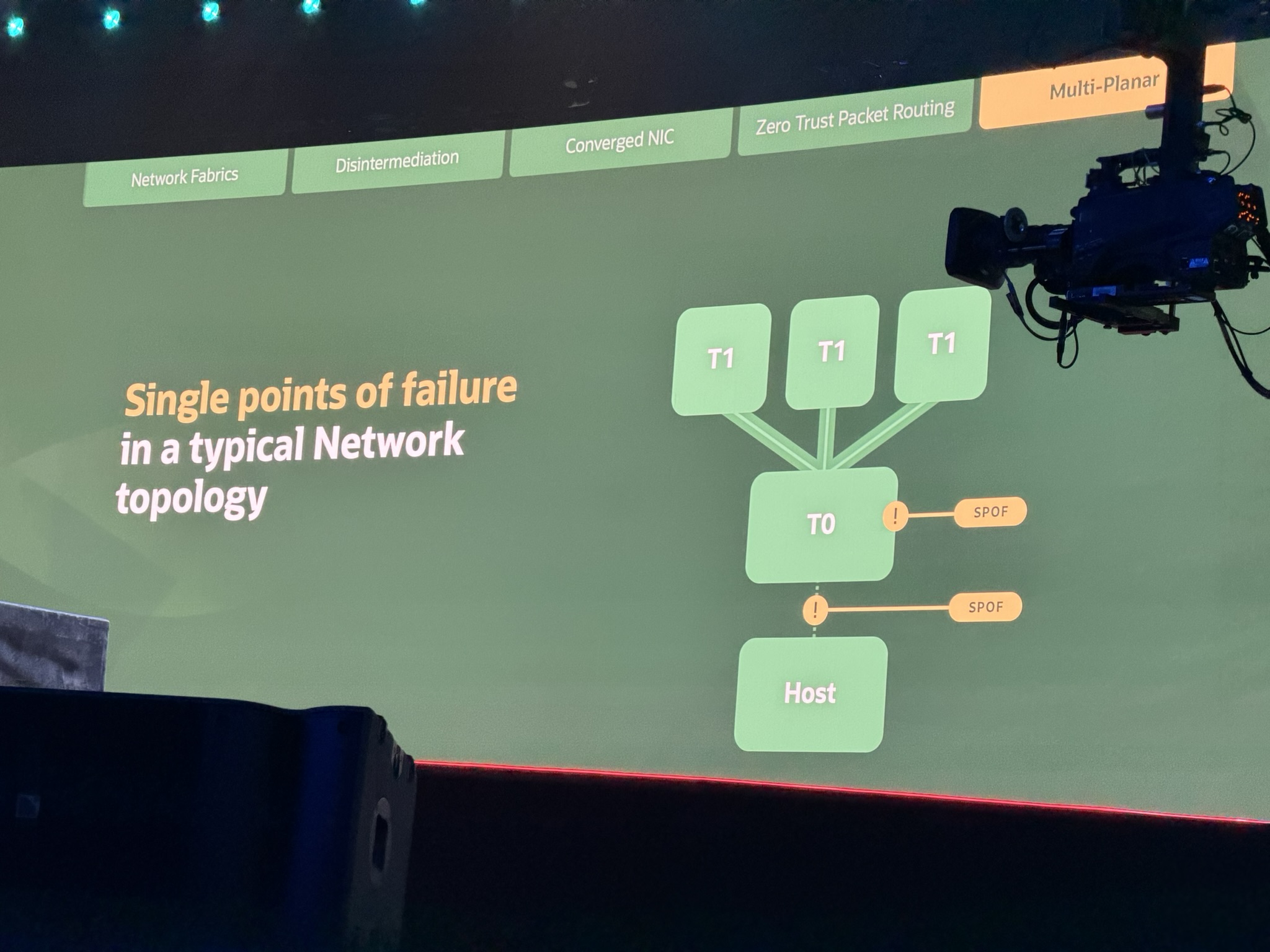
Multi-Planar Networks: OCI implements multiple redundant network planes behind the scenes while exposing a simple, single network plane to the host. The benefits this provides:

  • Higher Availability: Eliminates single points of failure
  • Lower Cost: Allows for the use of smaller switches
  • Better Performance: Results in fewer hops across the network
  • Ease of Use: Preserves simplicity for the user, who does not have to manage multiple interfaces
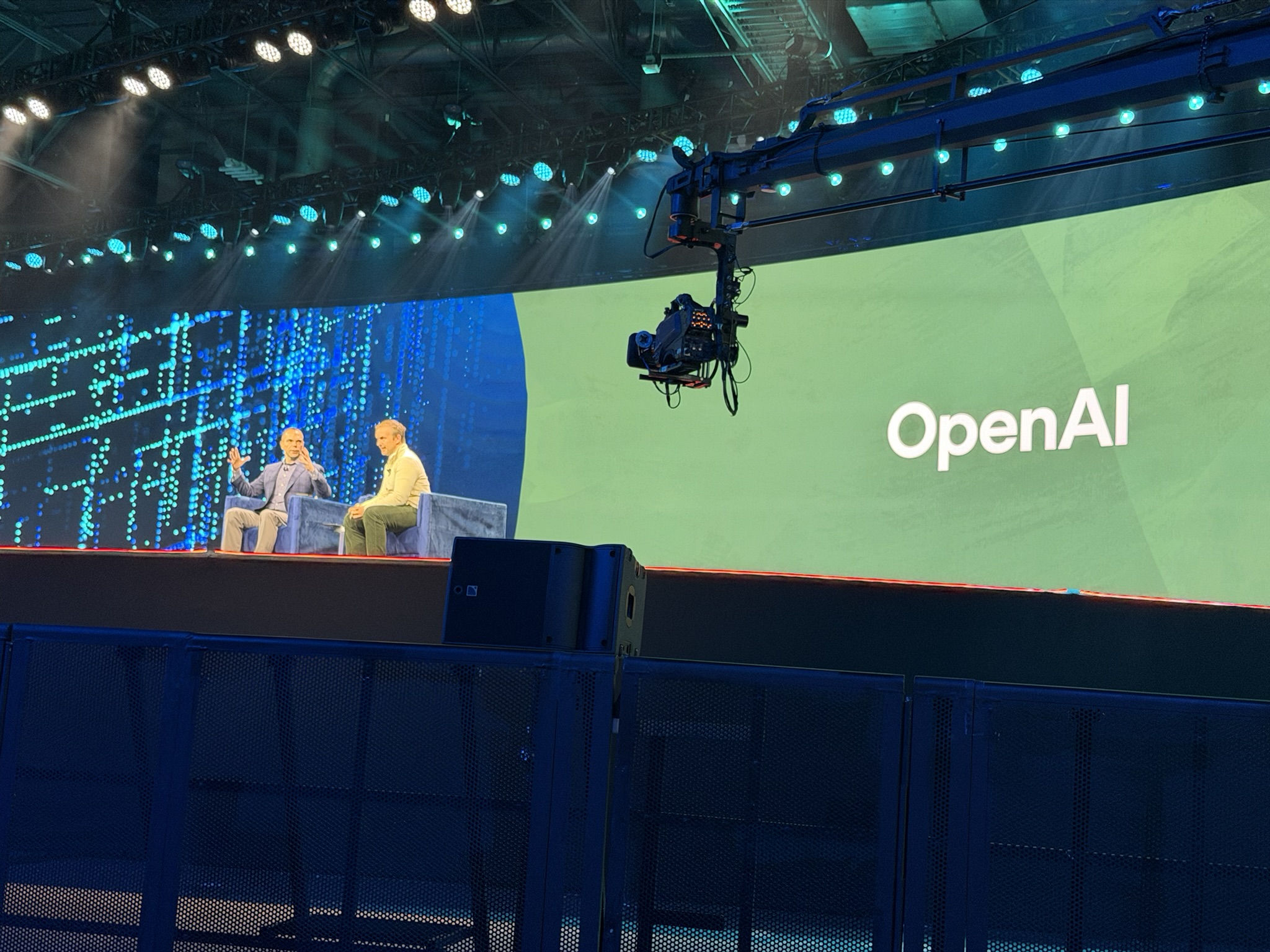
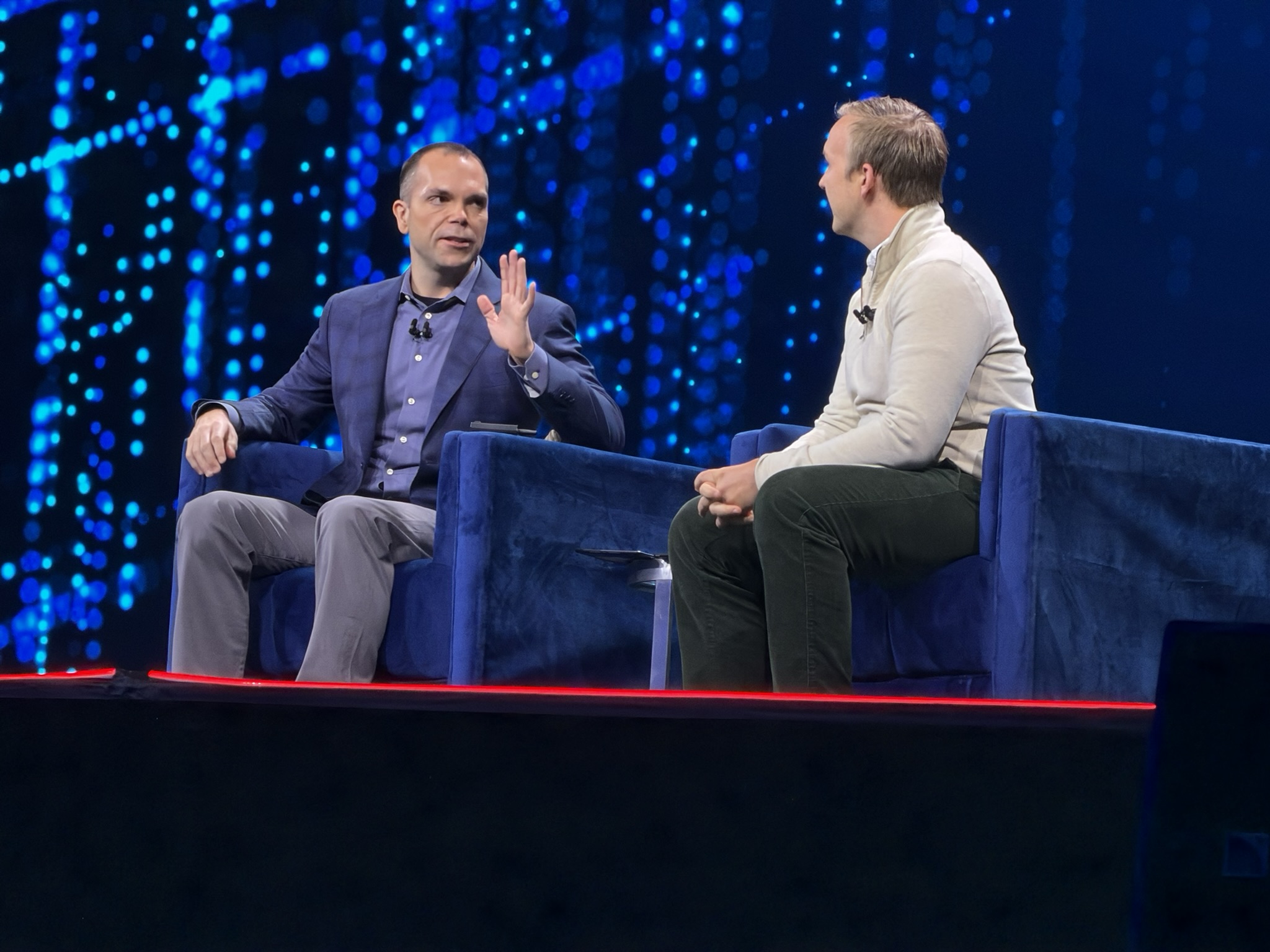
OpenAI: Industrialising Compute for the AI Frontier

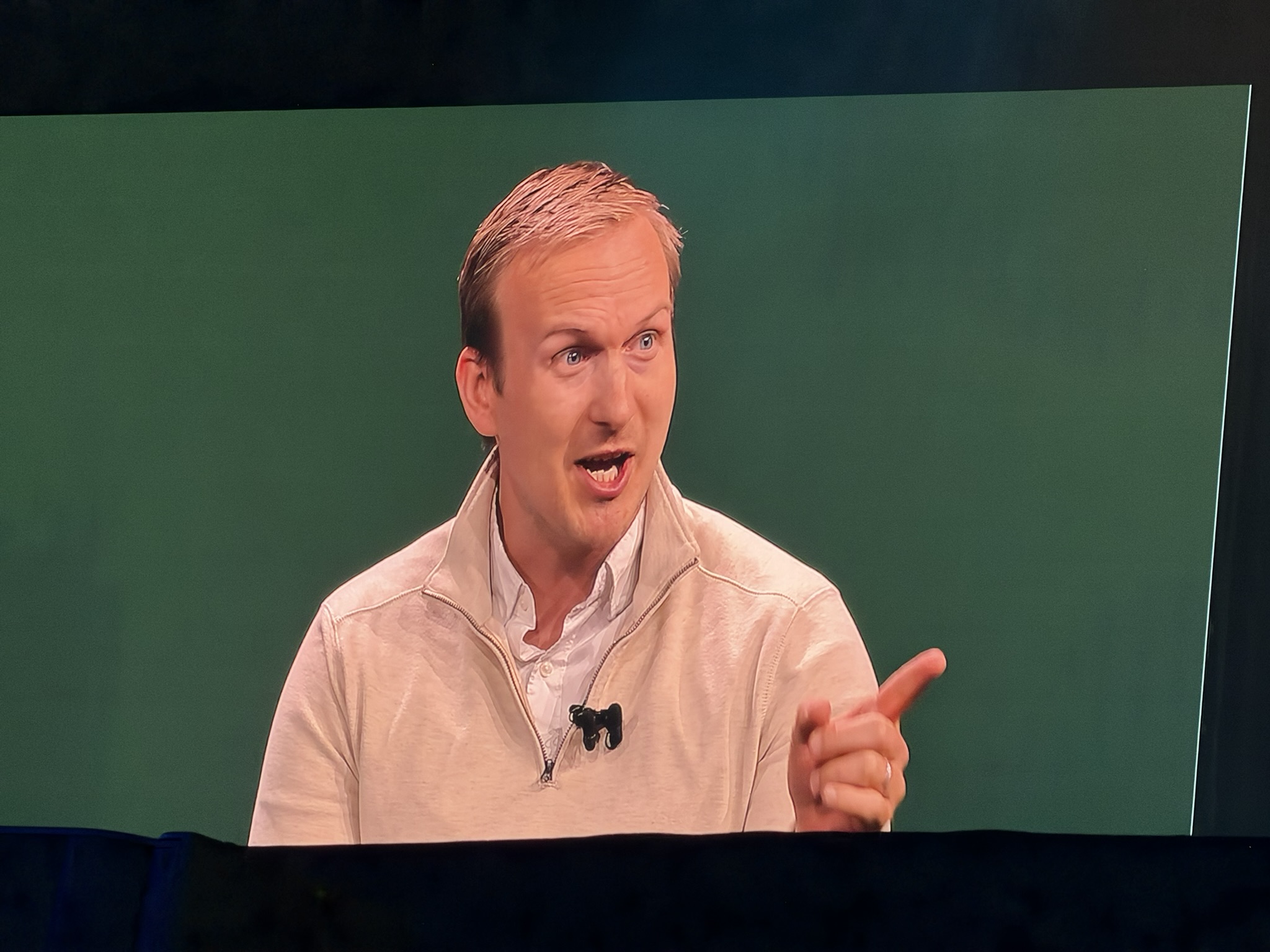
Clay then introduced Peter Hoeschele, Vice President of Infrastructure and Industrial Compute Engineering at OpenAI, to the stage.
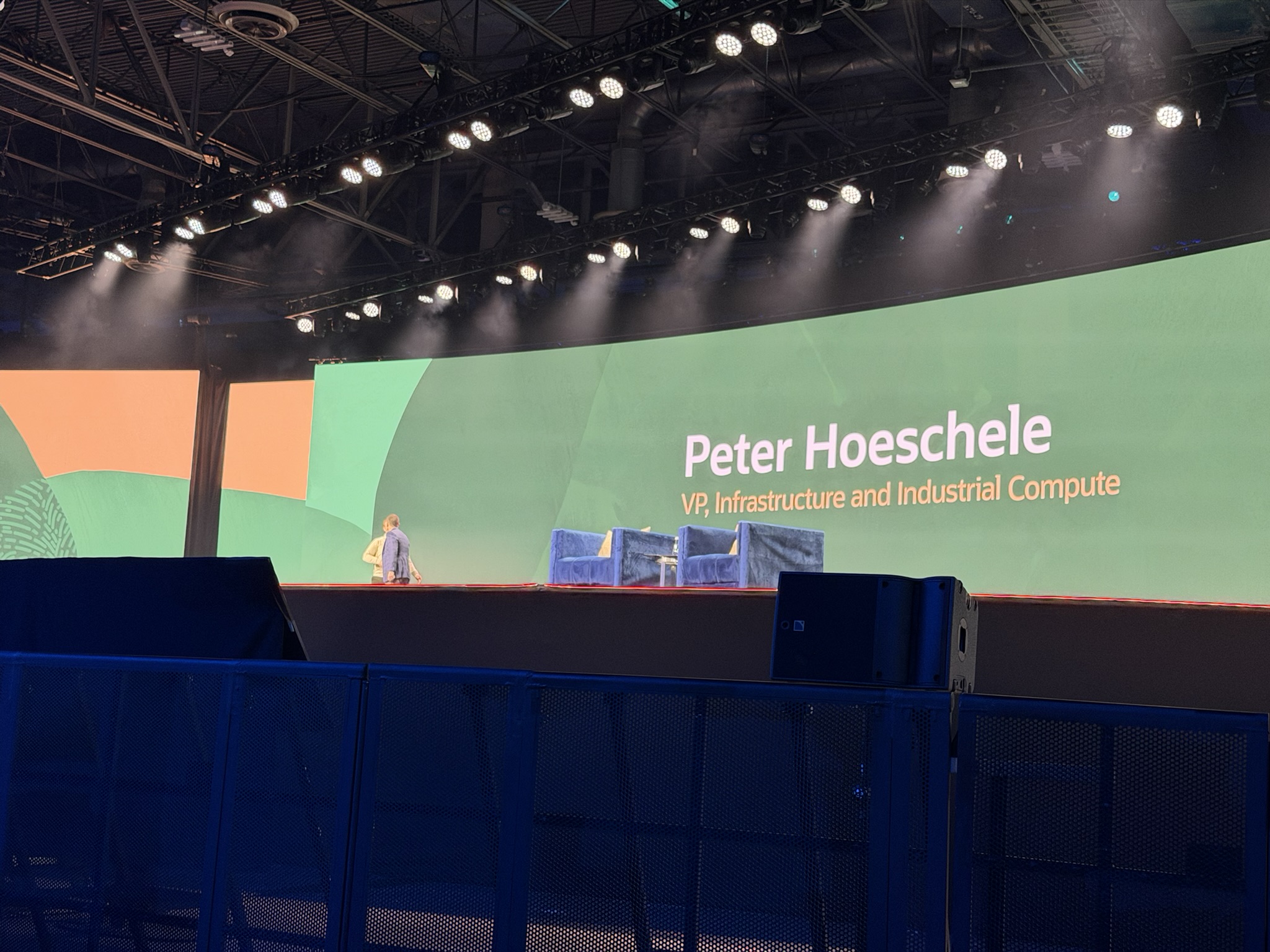
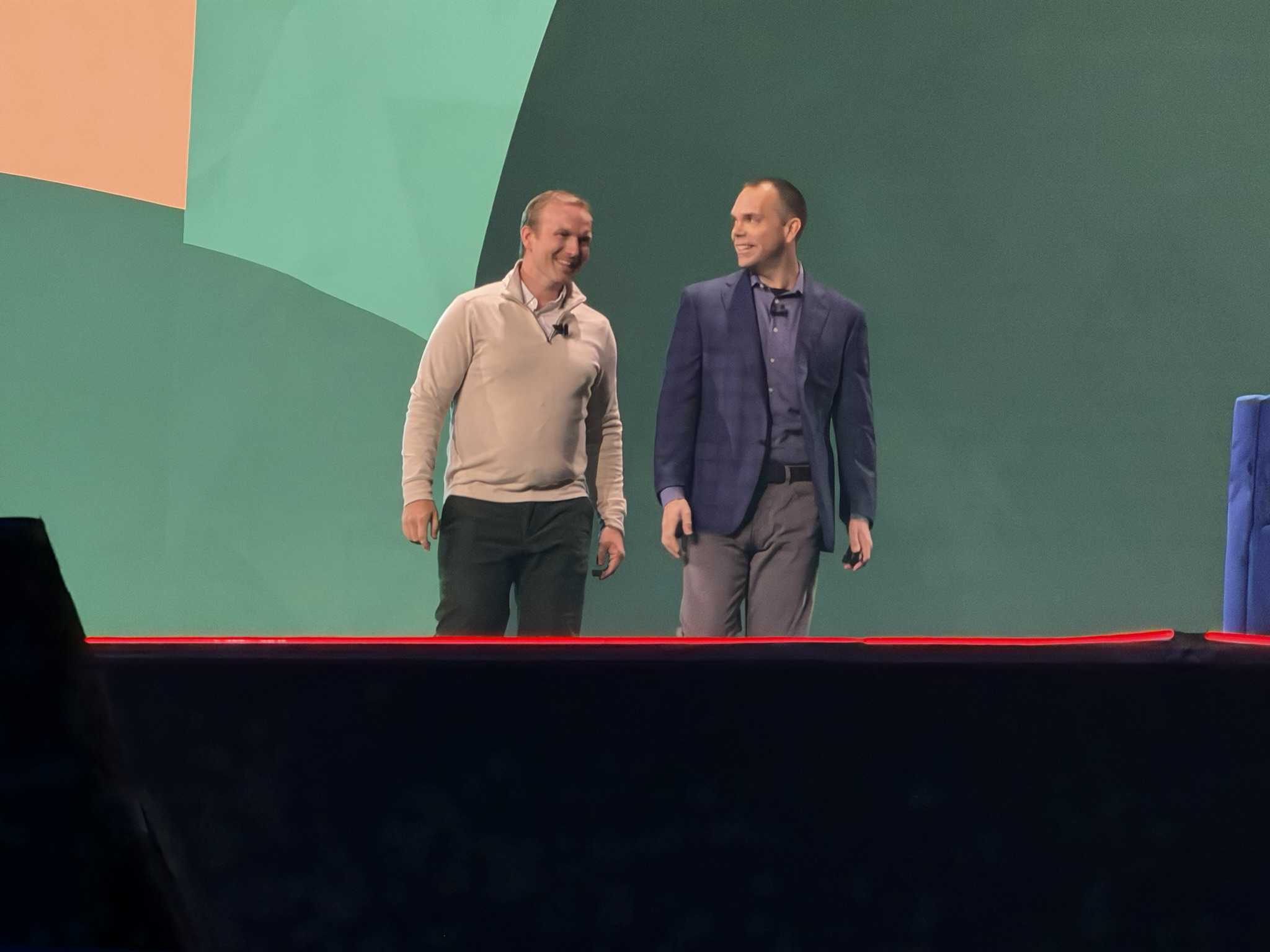
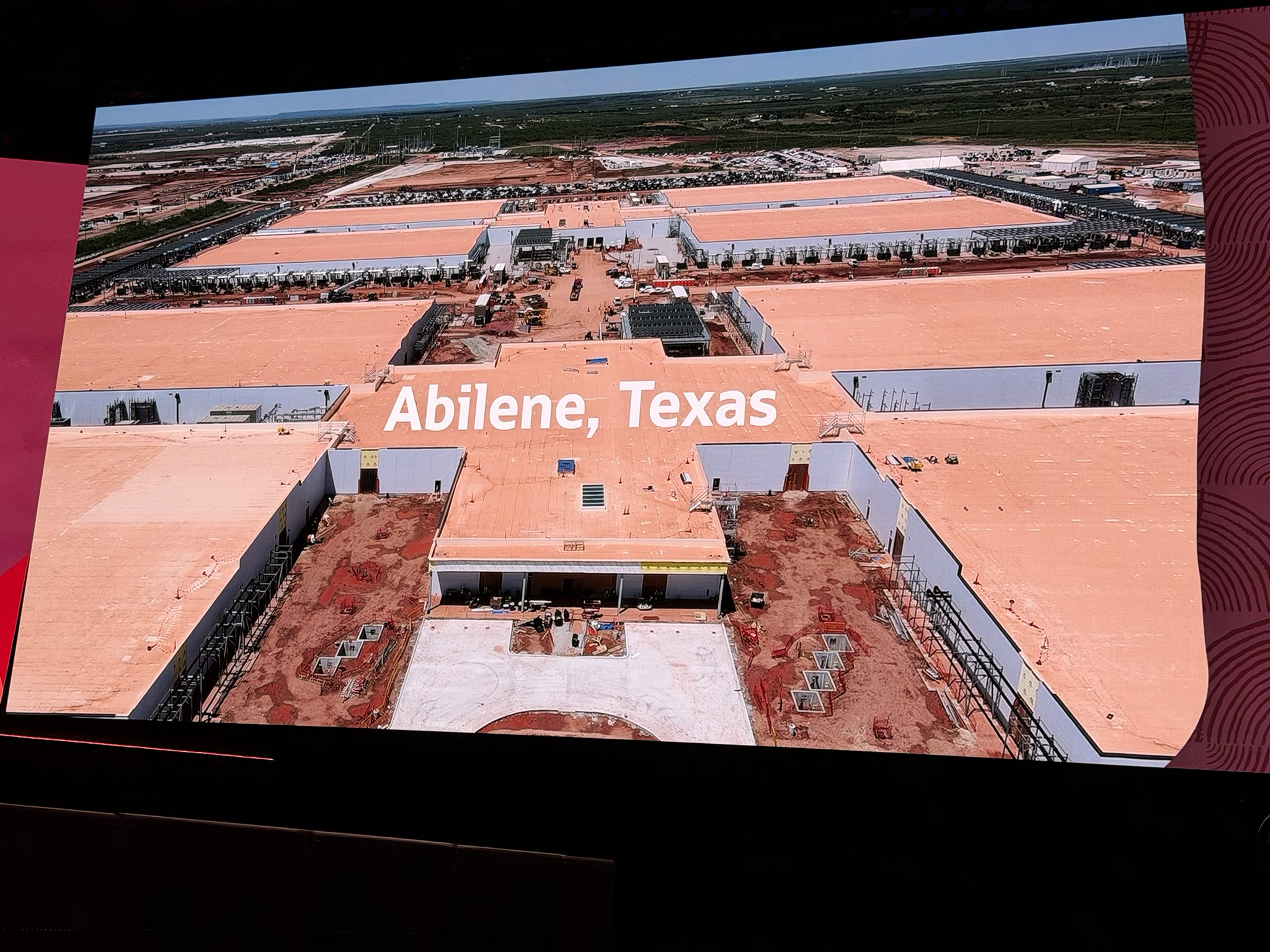
When OpenAI needed additional capacity, Oracle stepped in, understood the requirements, and delivered 200 megawatts of data centre capacity. Typically, a facility of this scale takes four years to build, but Oracle brought it online in just 11 months.

Peter described the collaboration as truly inspiring. OpenAI is targeting 10x growth over the next two years, with additional capacity dedicated to training models and serving customers. Their guiding principle is simple, more compute leads to better models. To achieve this, they sought the best GPUs and the largest clusters possible. When OpenAI wanted to develop a new model, they lacked the ability to scale internally, but with OCI, they can. As OpenAI expands globally, Oracle ensures compliance with security and policy requirements, enabling seamless deployment whenever OpenAI enters a new region.

AI Data Platforms

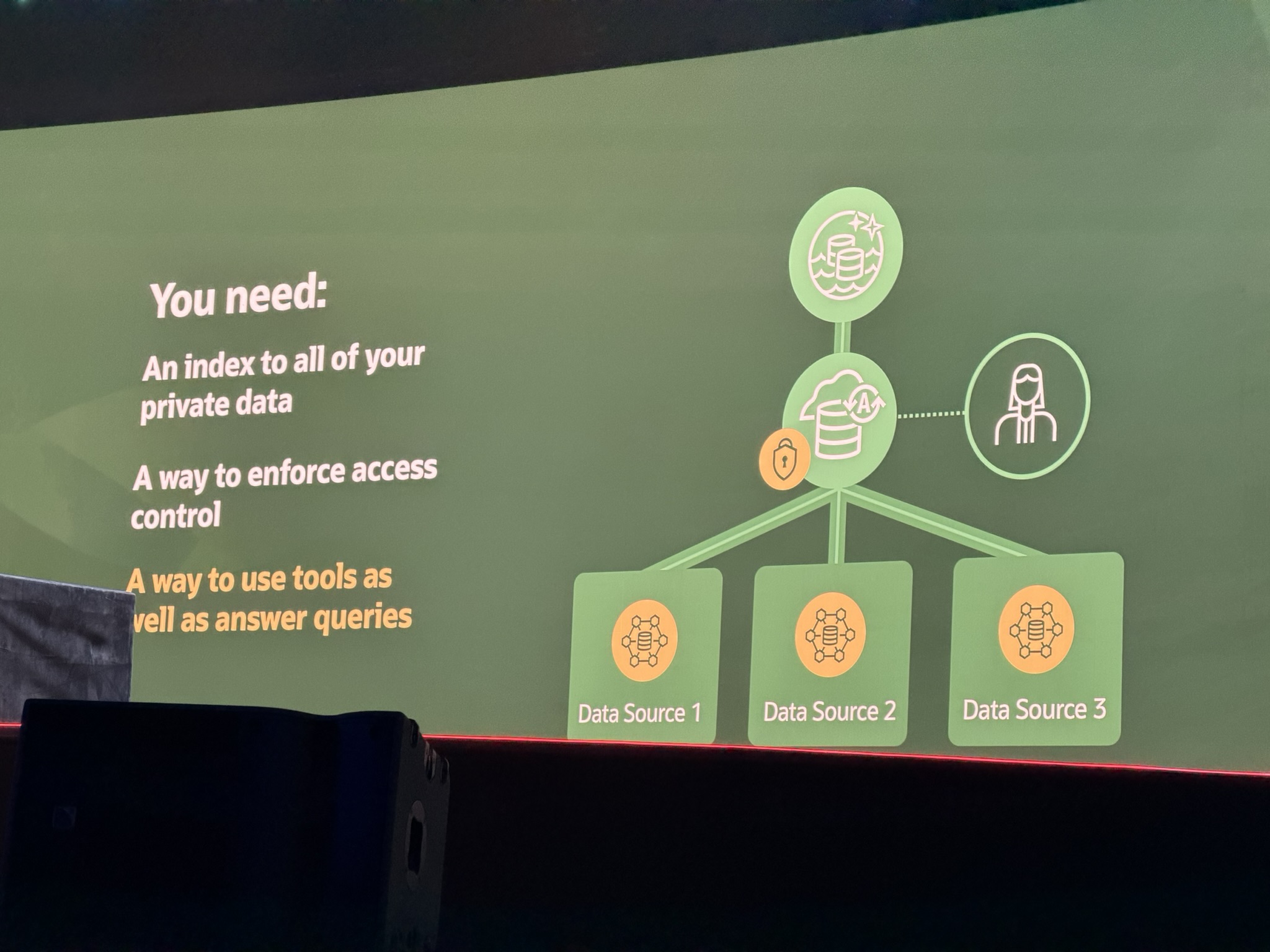
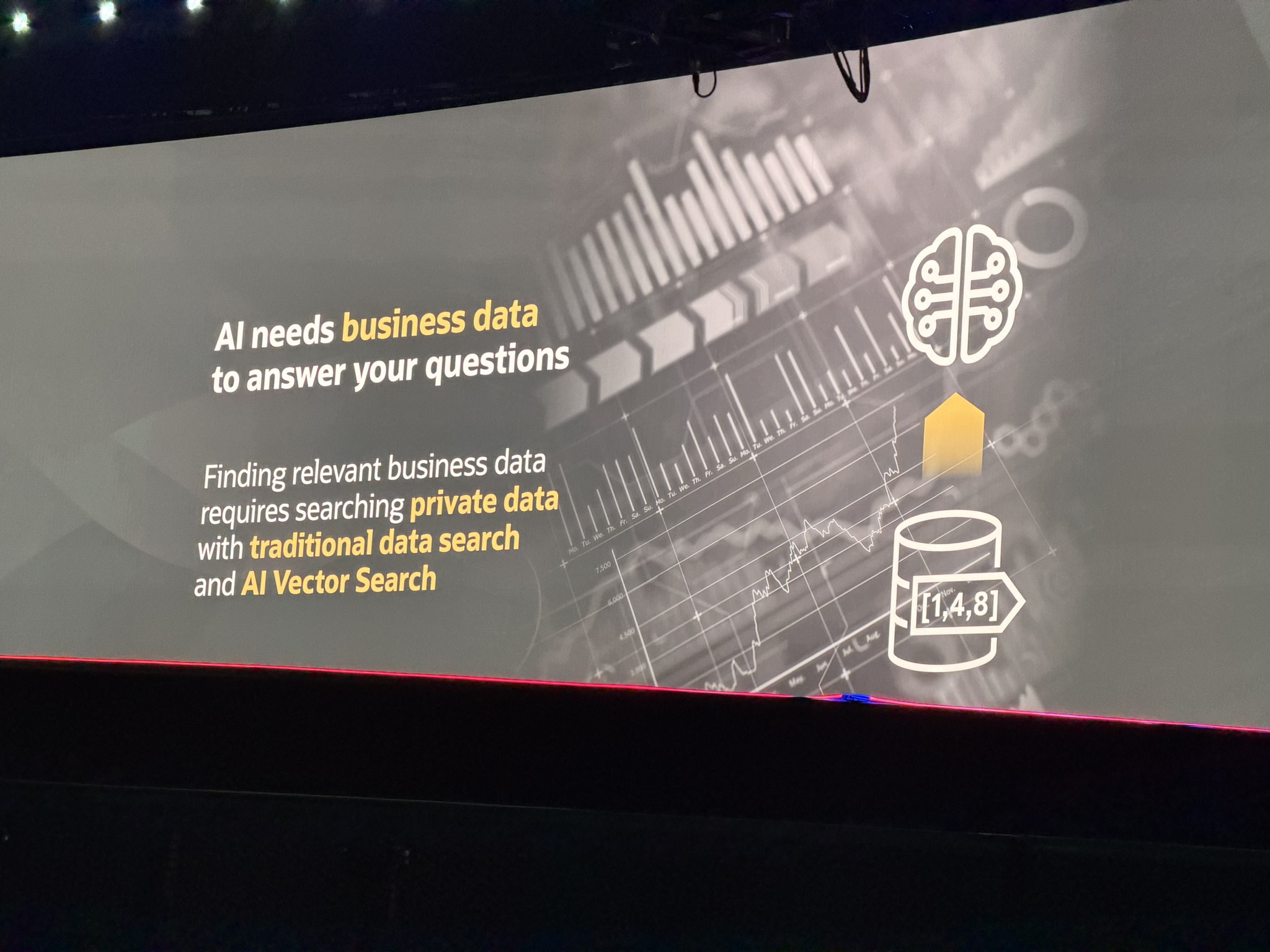
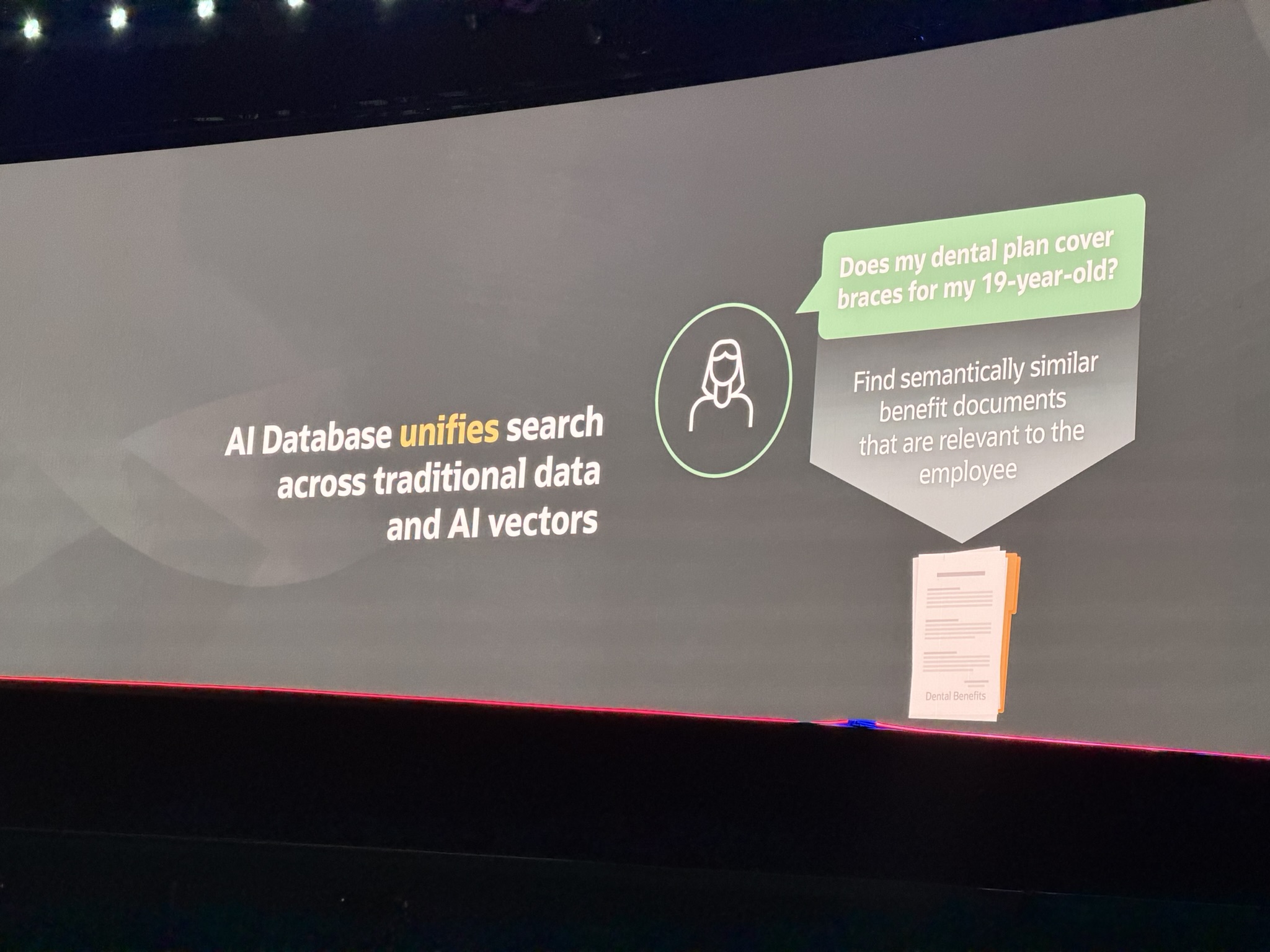
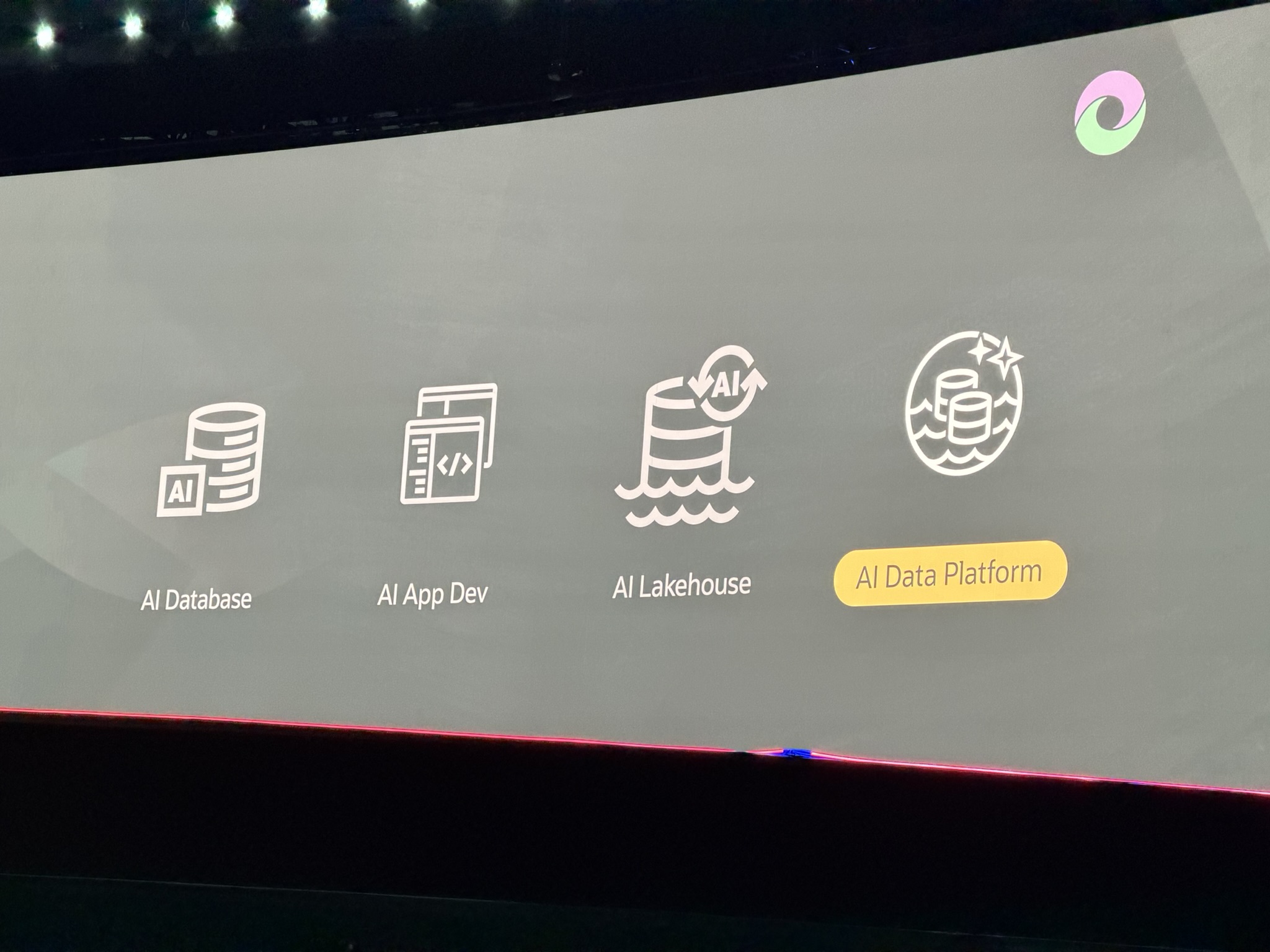
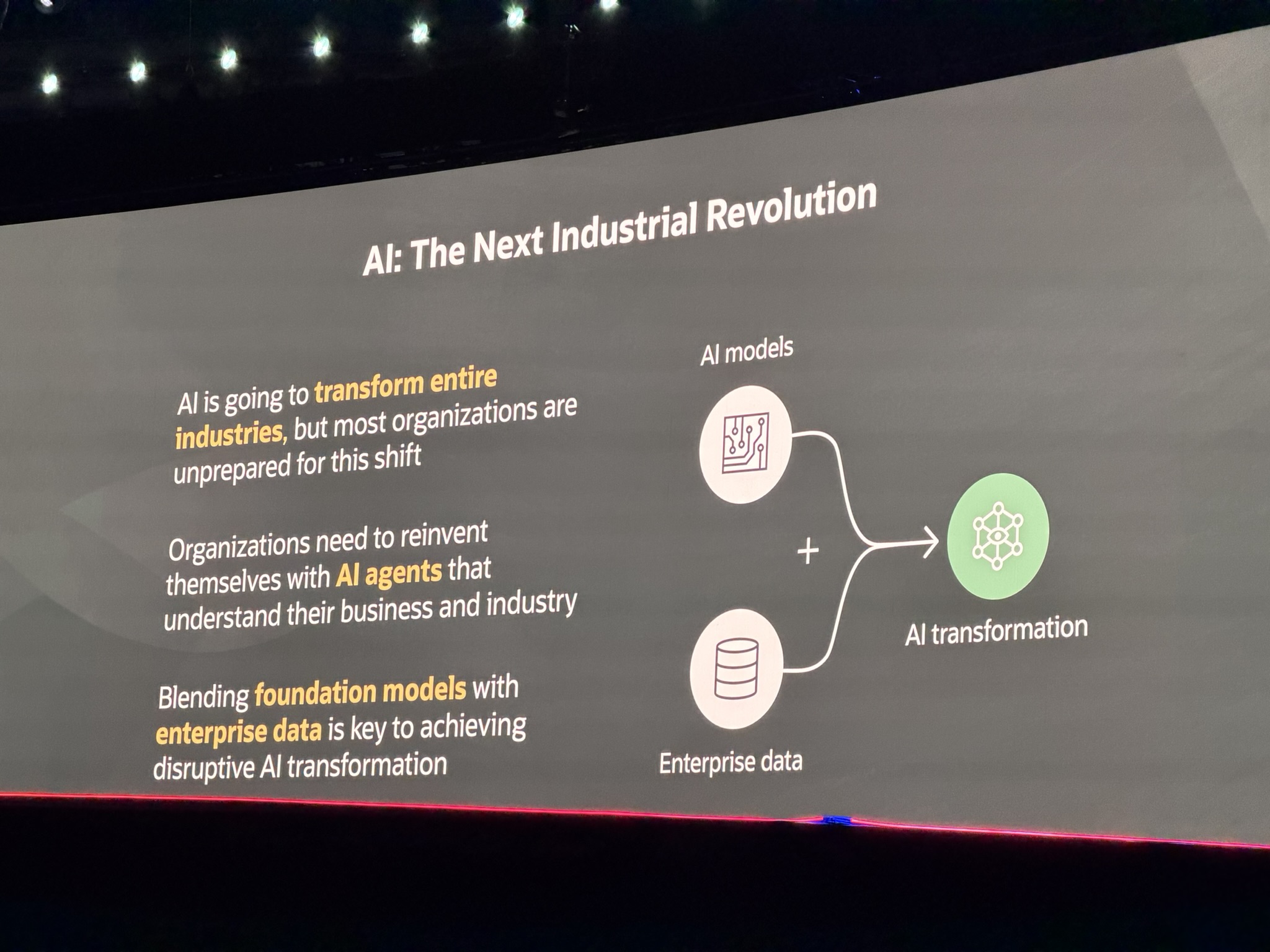
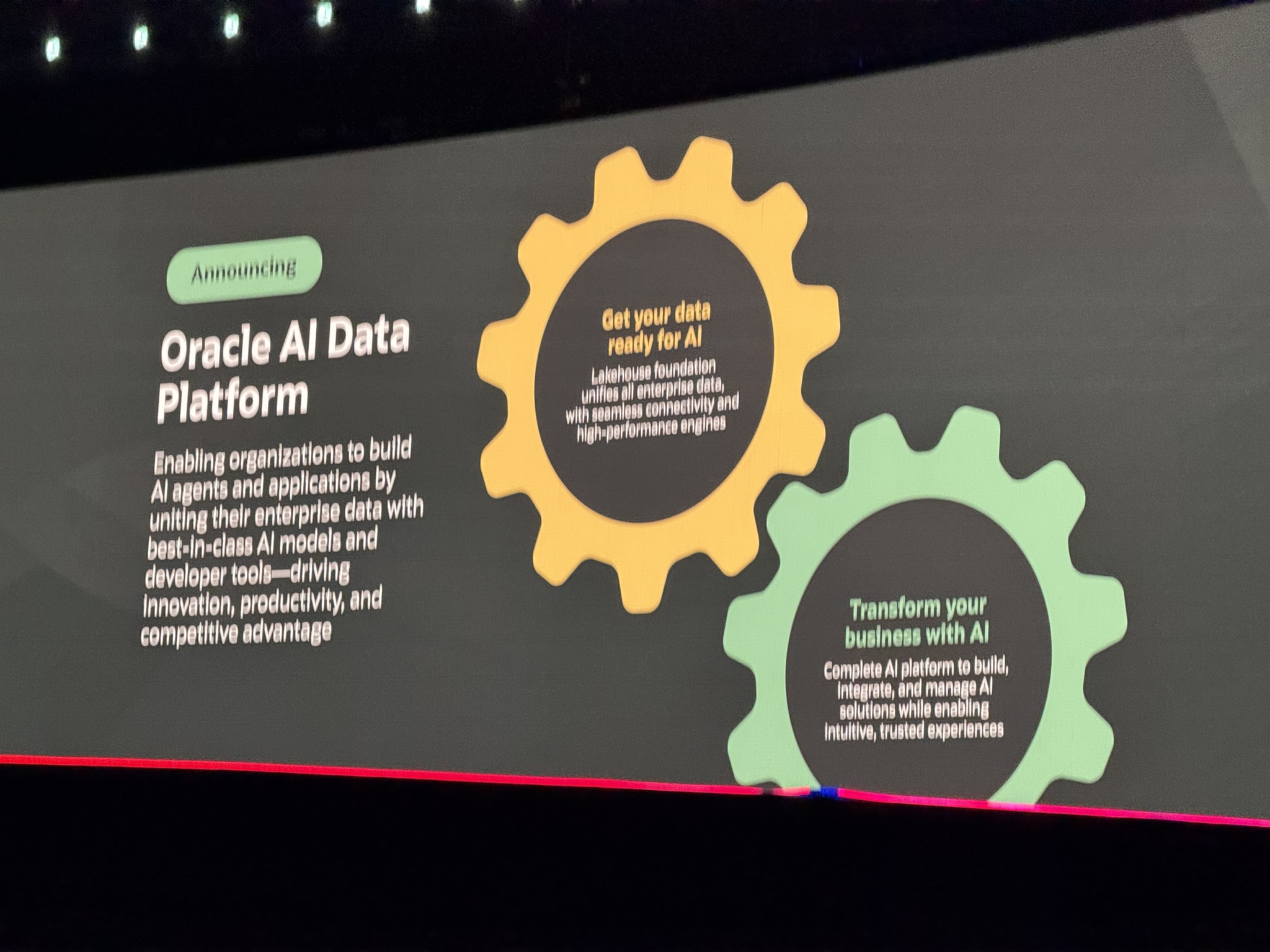
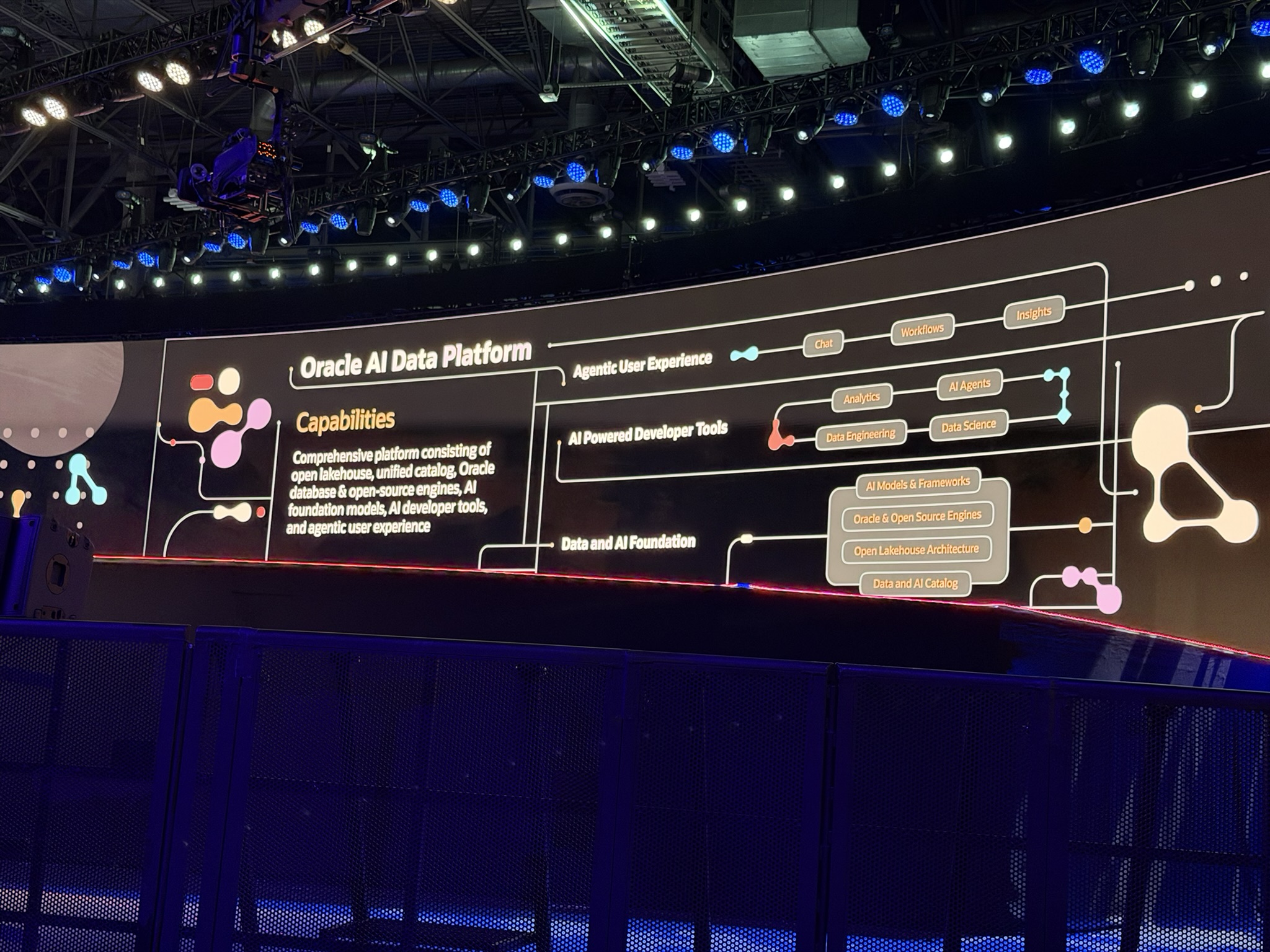
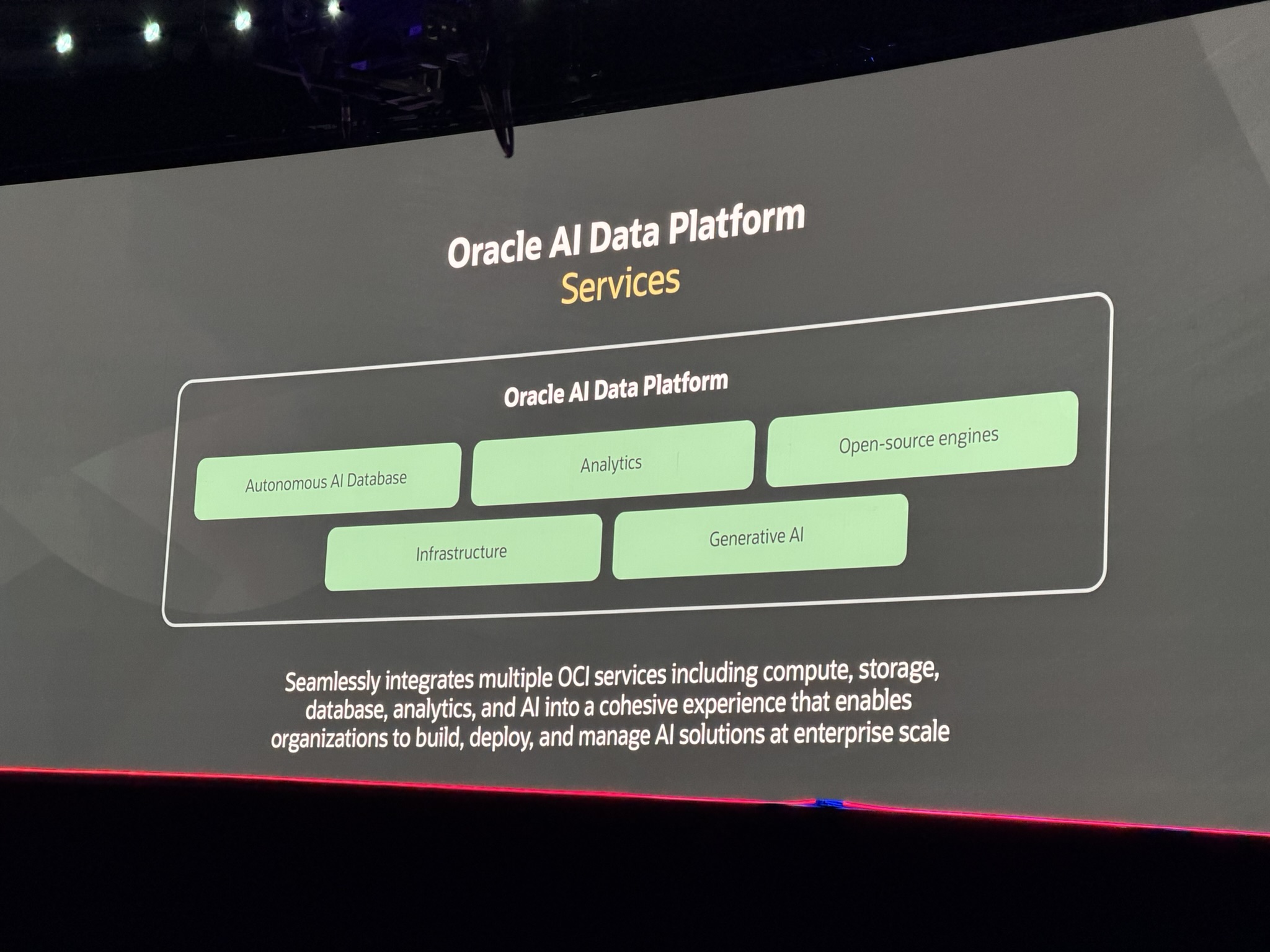
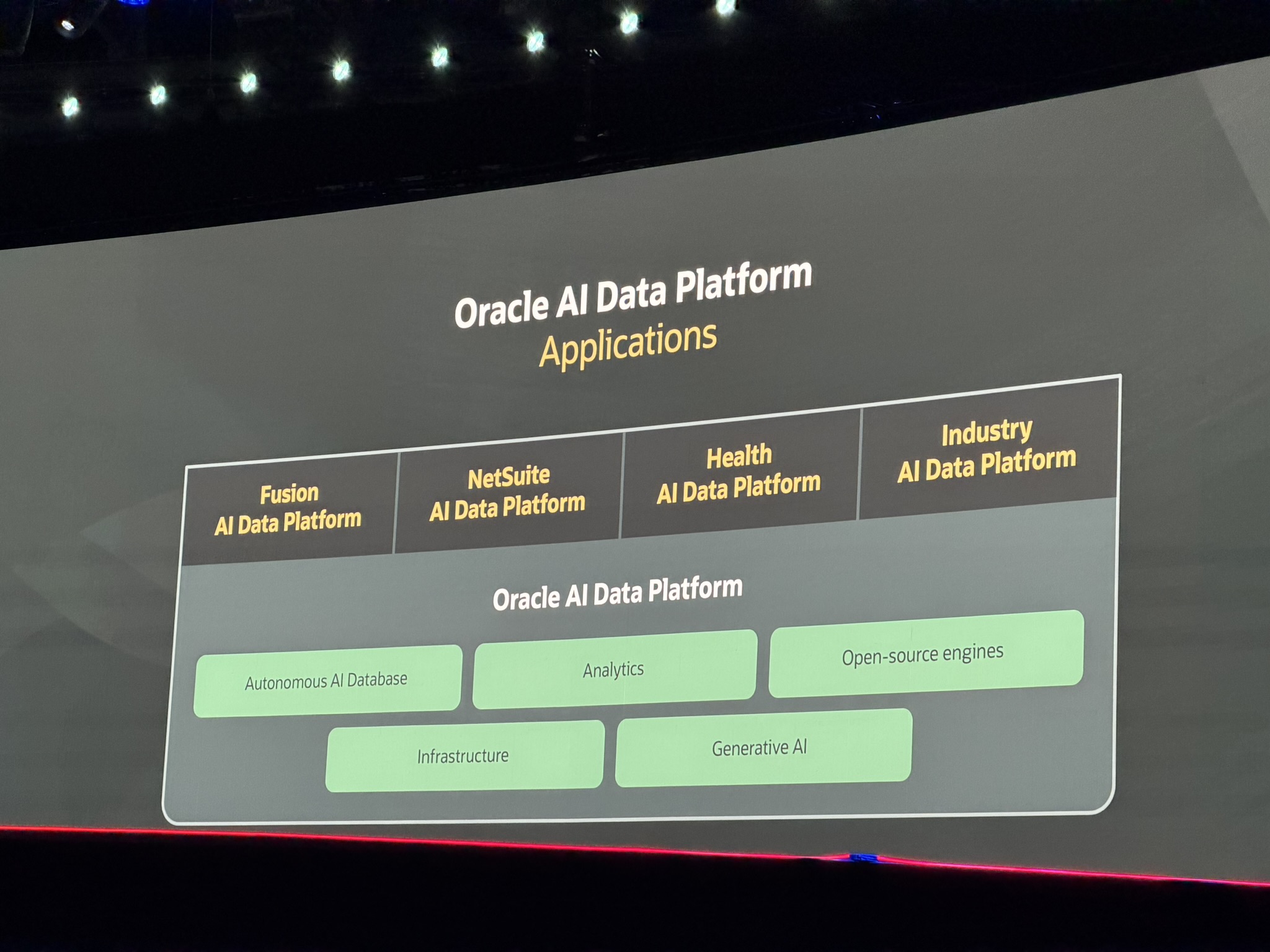
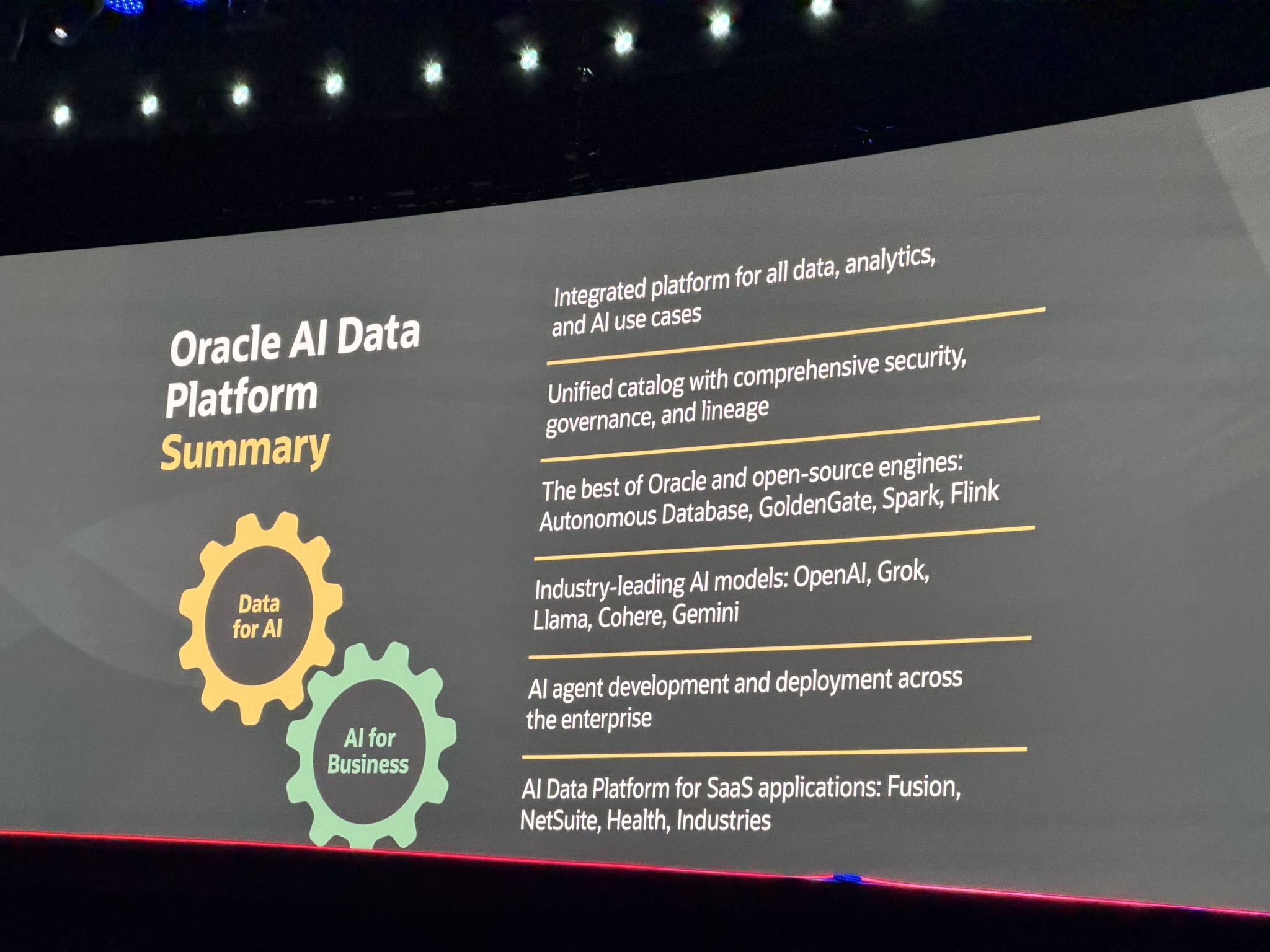
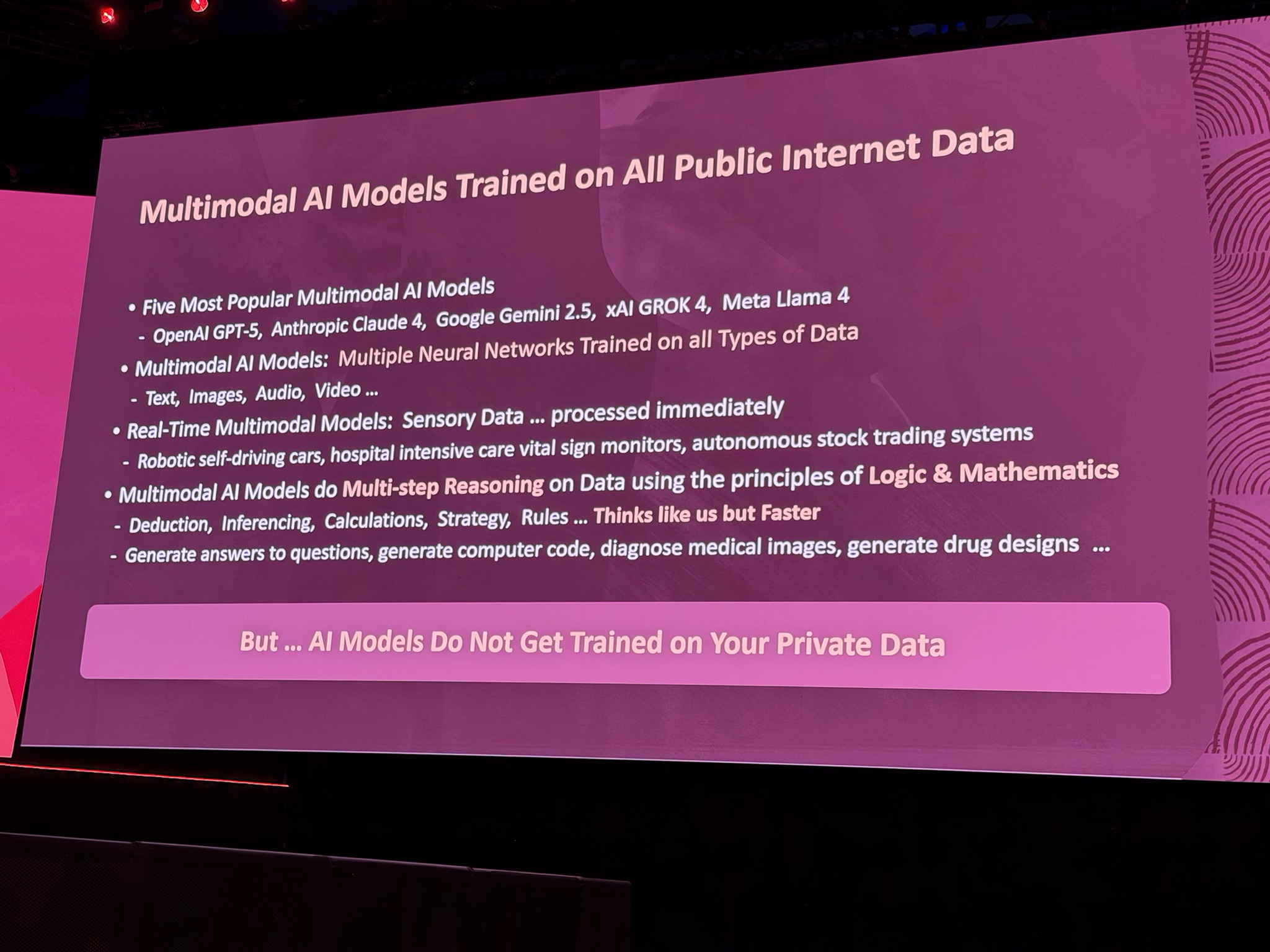
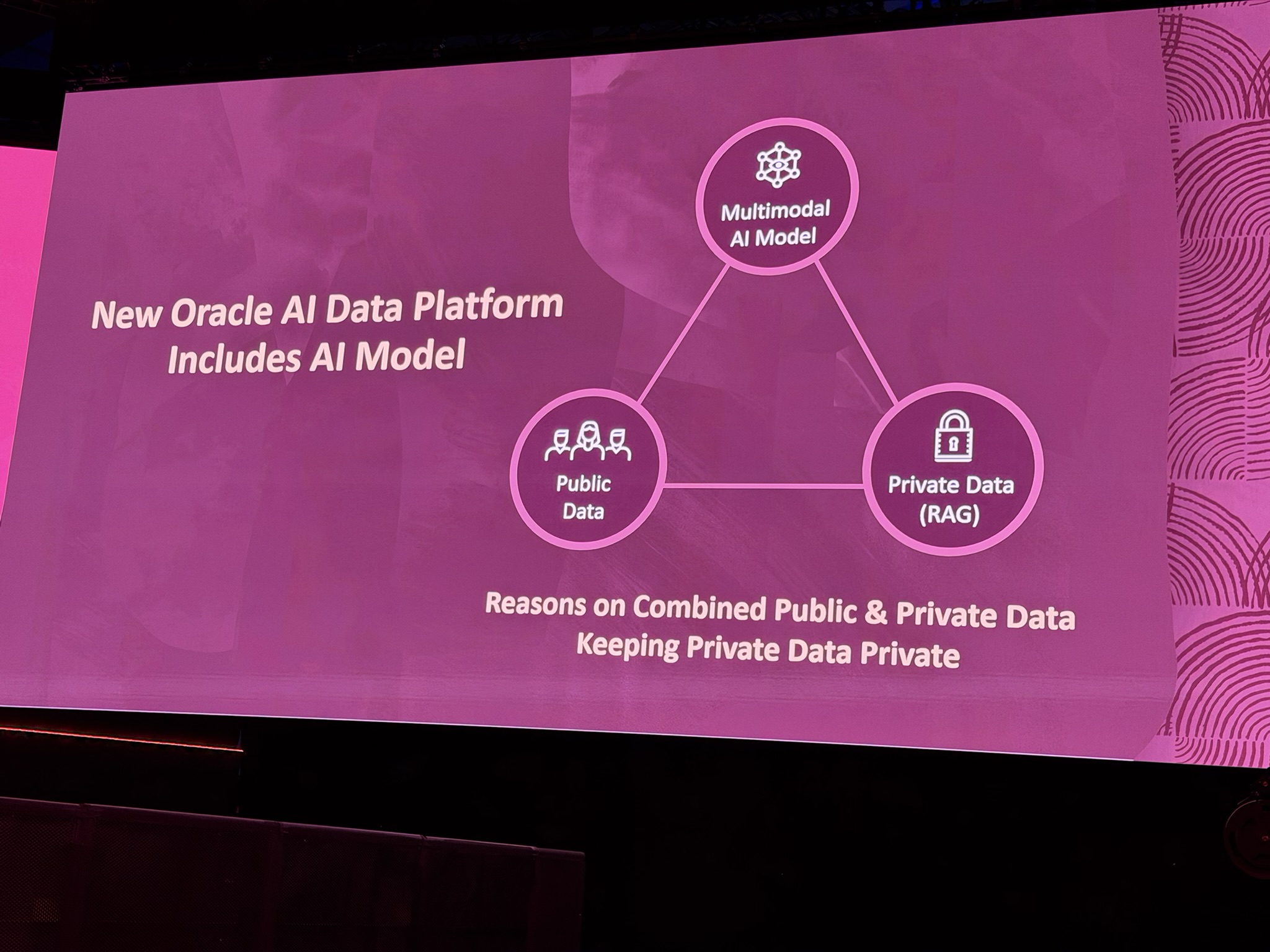
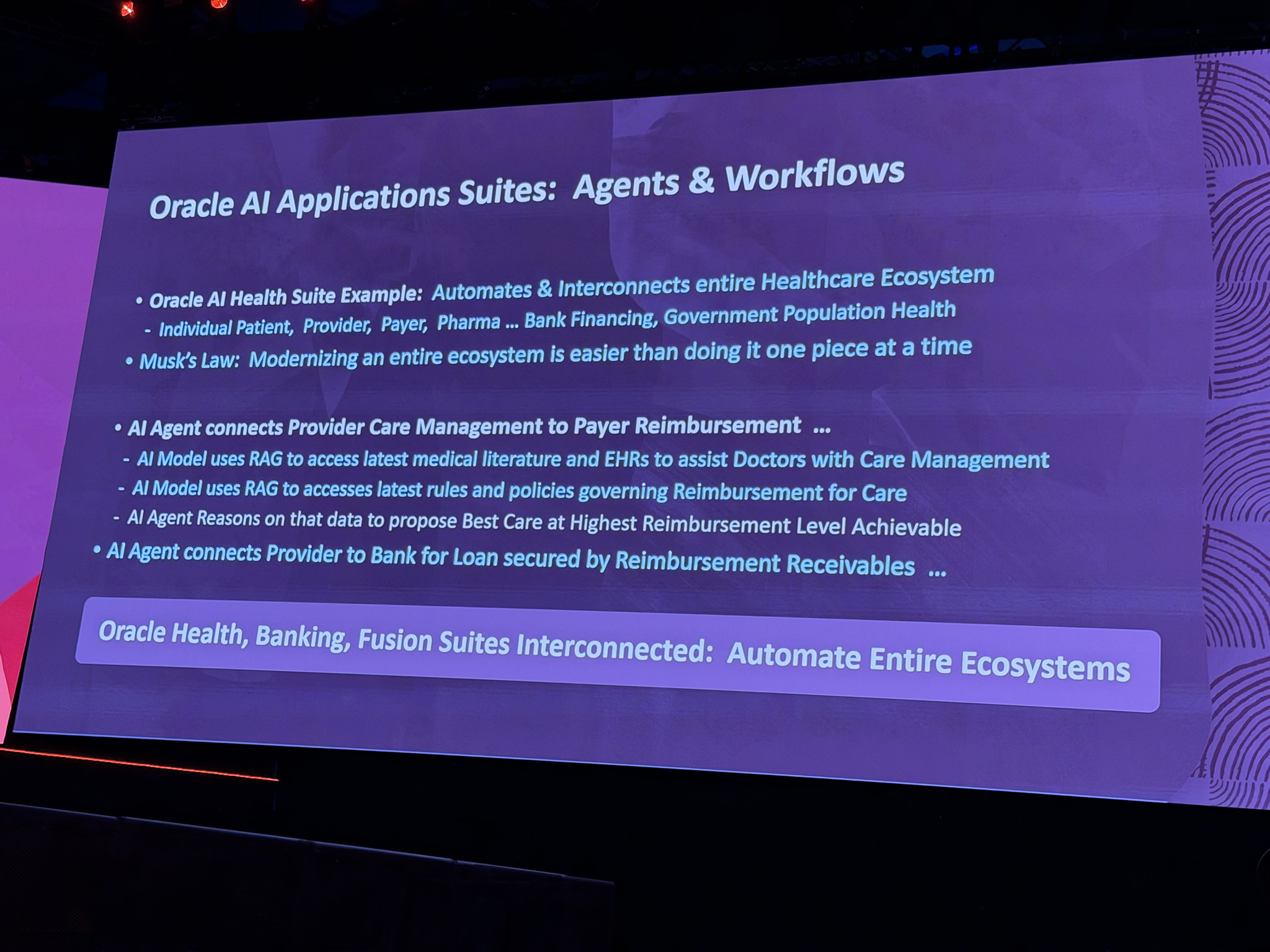
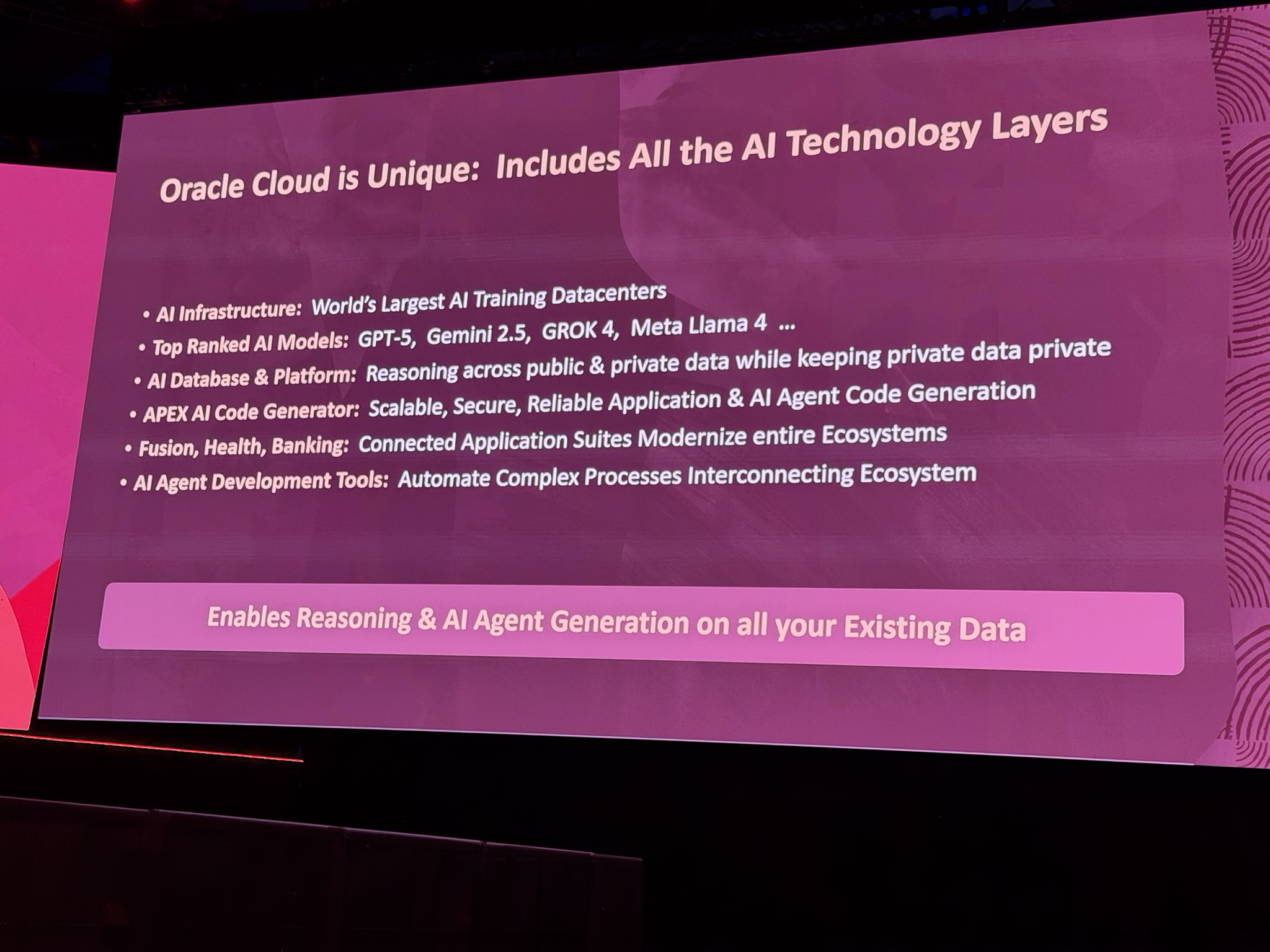
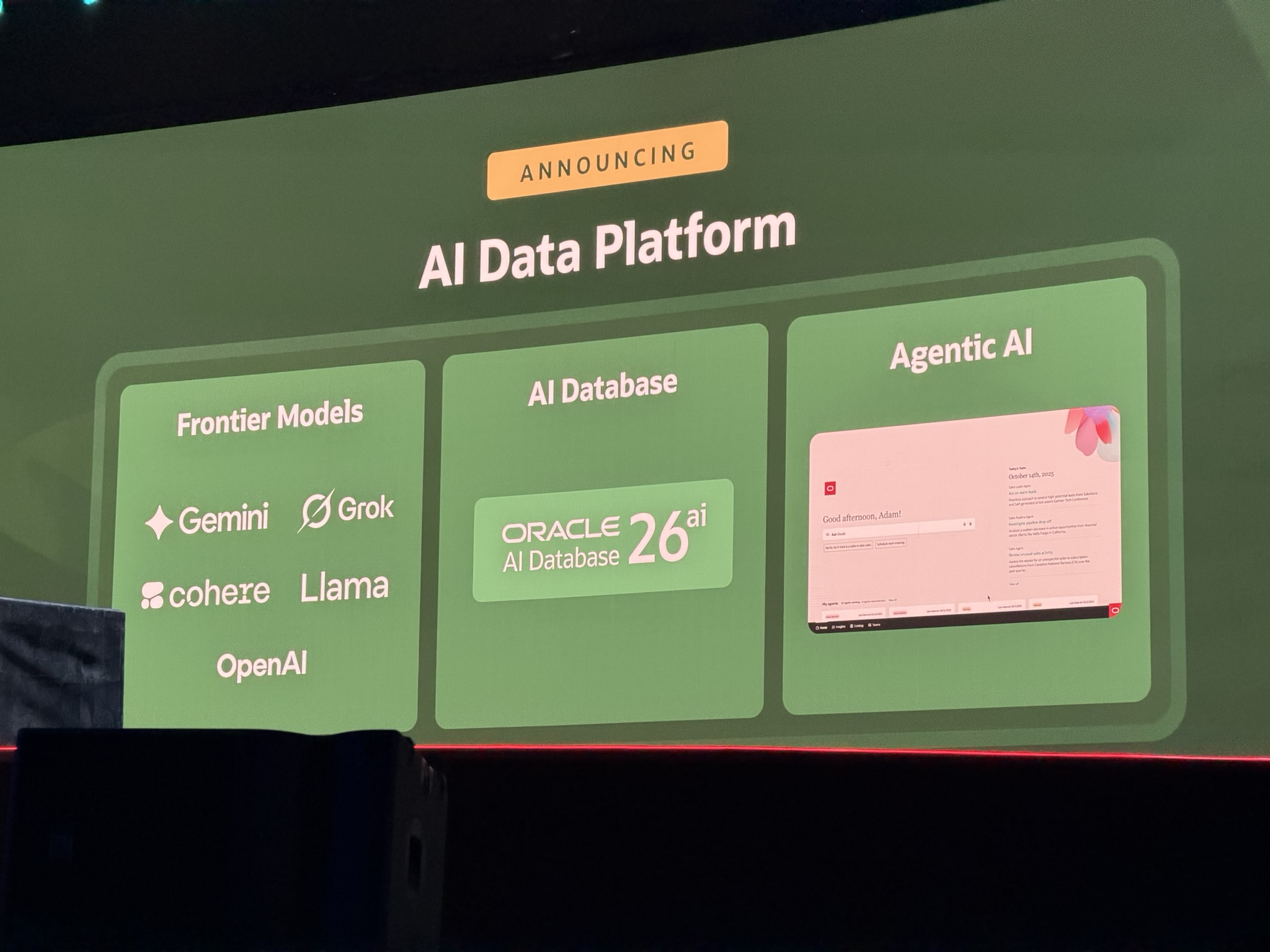
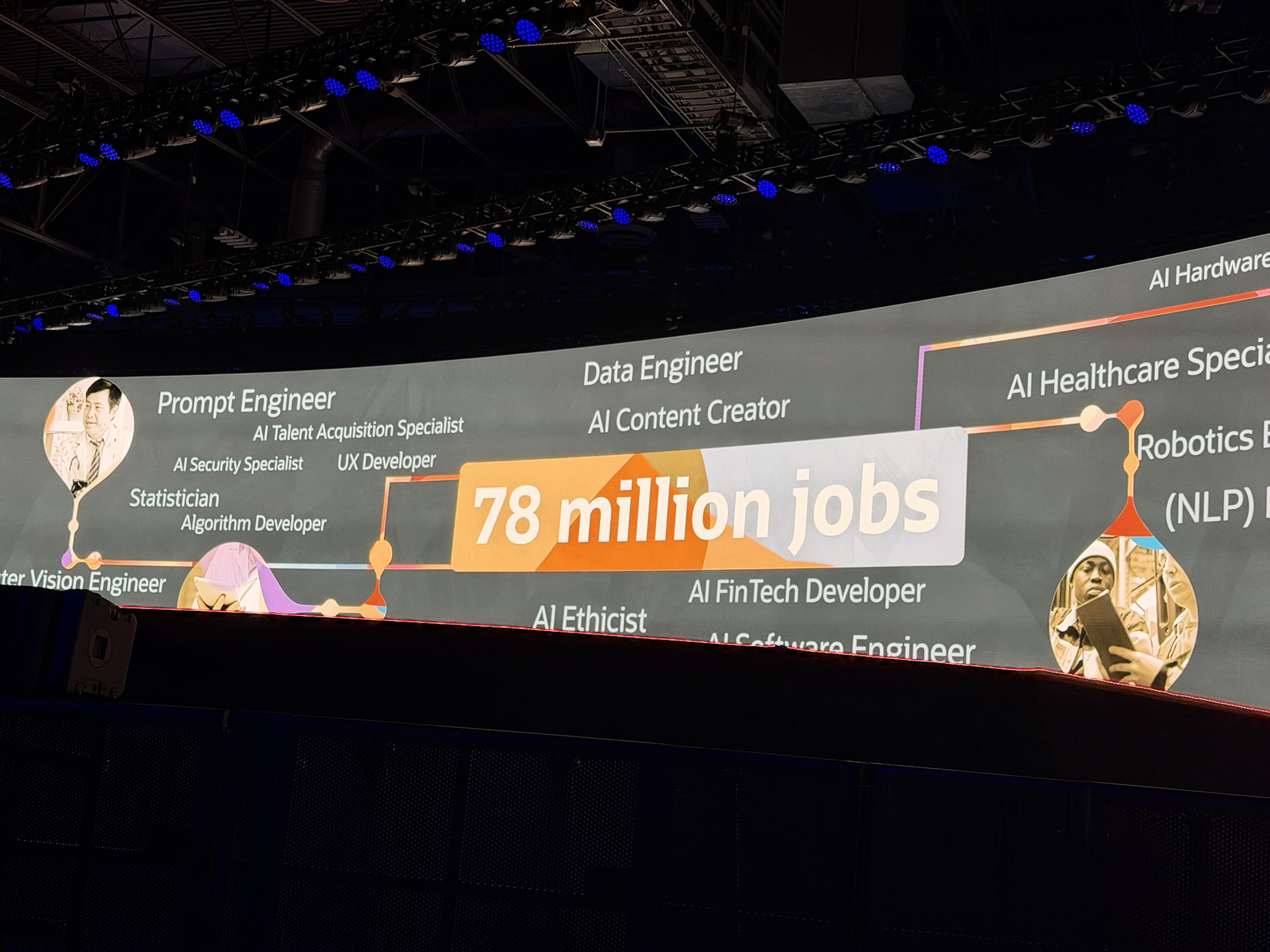
Clay concluded the keynote by announcing the AI Data Platform. He explained that unlocking AI requires both cutting-edge technology and access to data, both public and private.
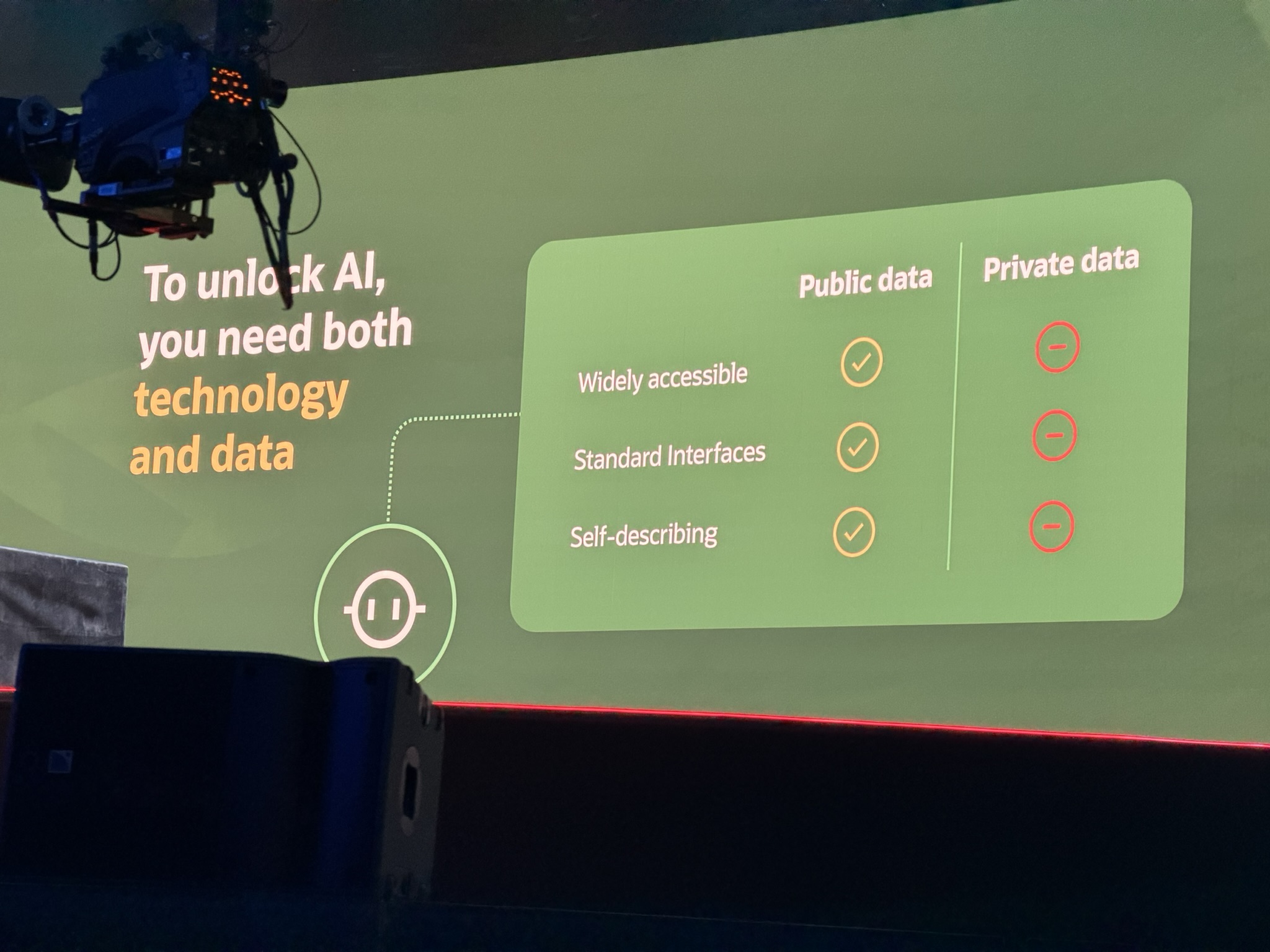
And how Oracle thinks there is an efficient way to integrate both.
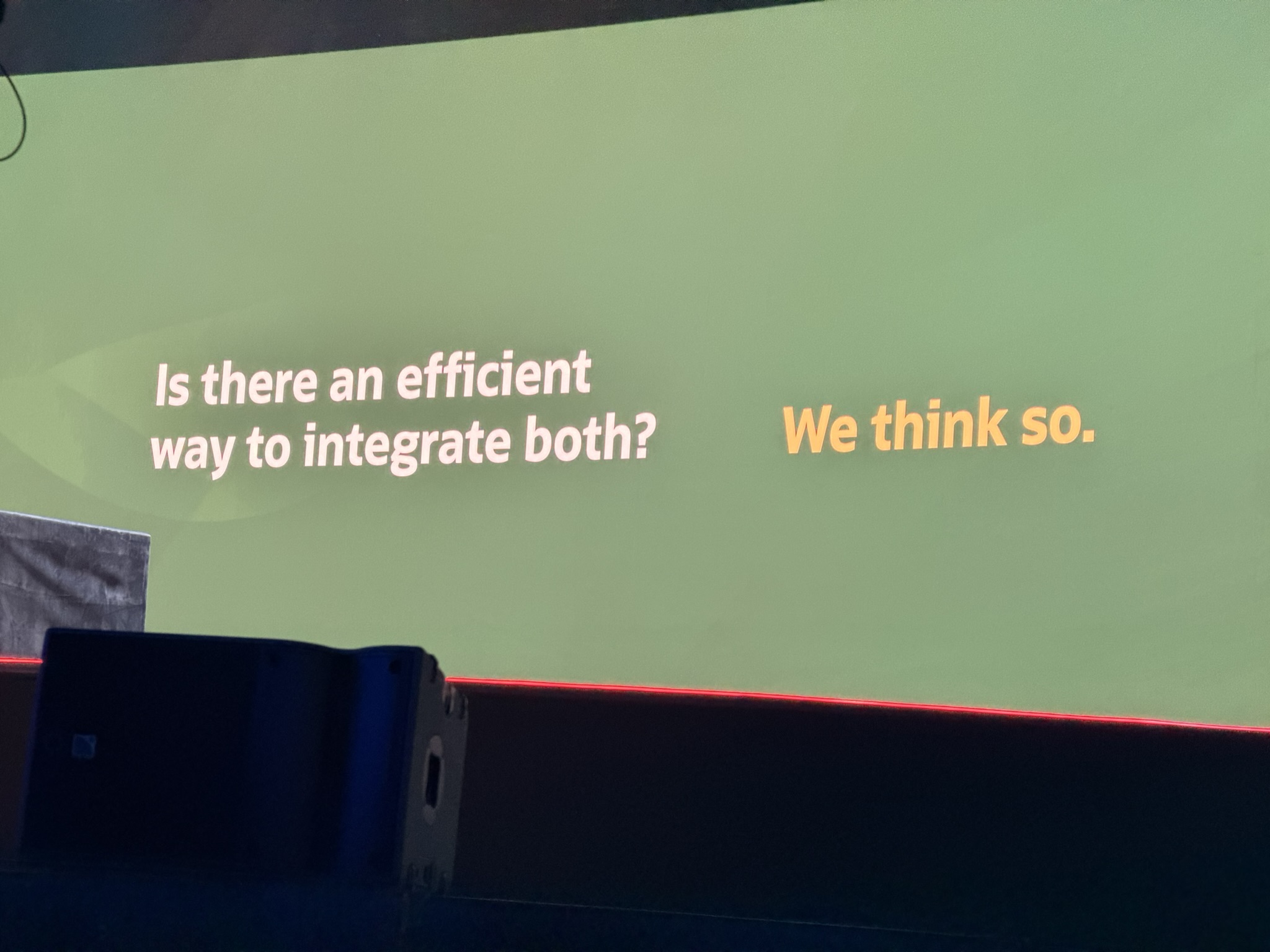
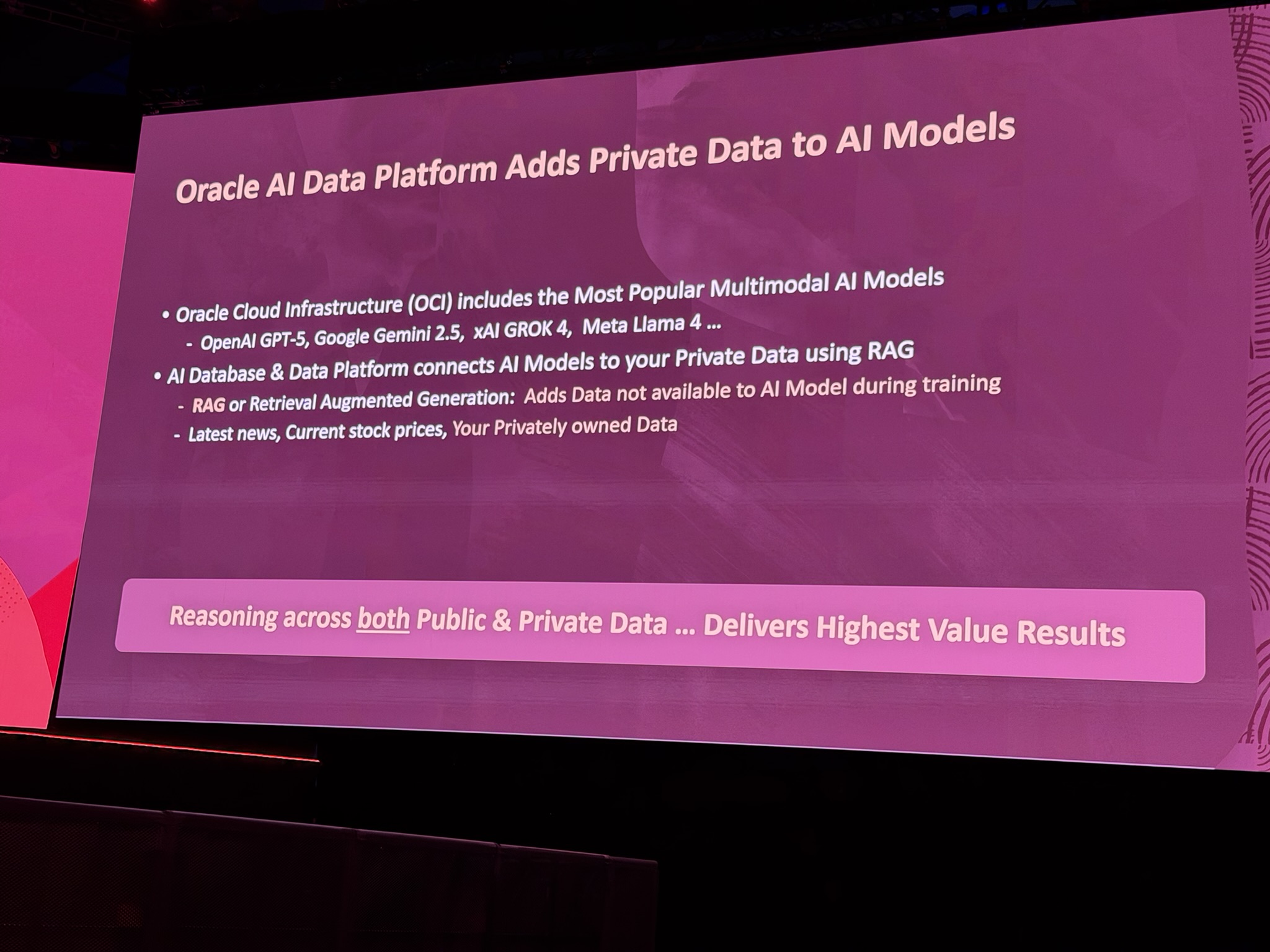
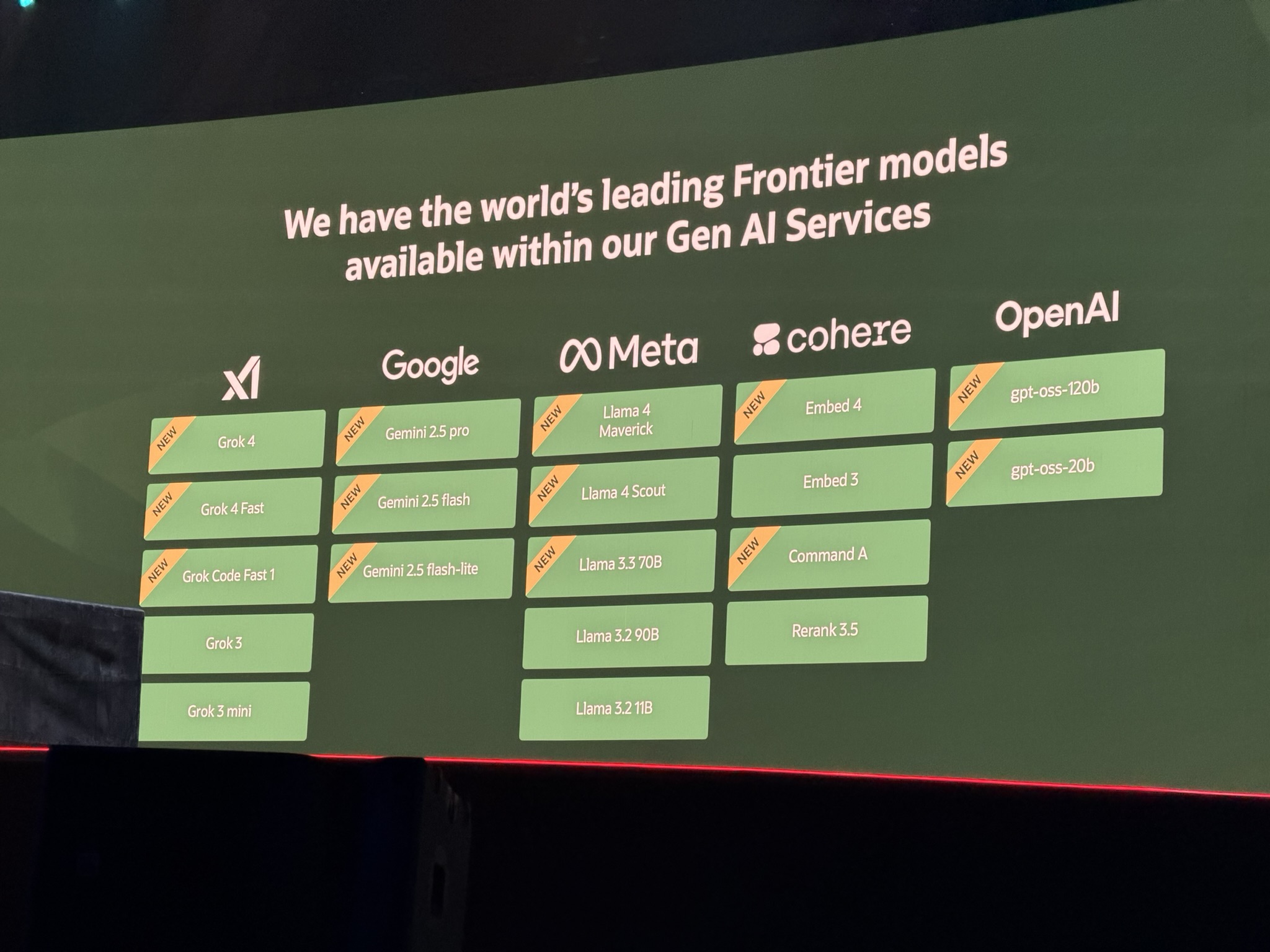
Firstly explaining how OCI has the world’s leading Frontier models available within OCI Gen AI Services.
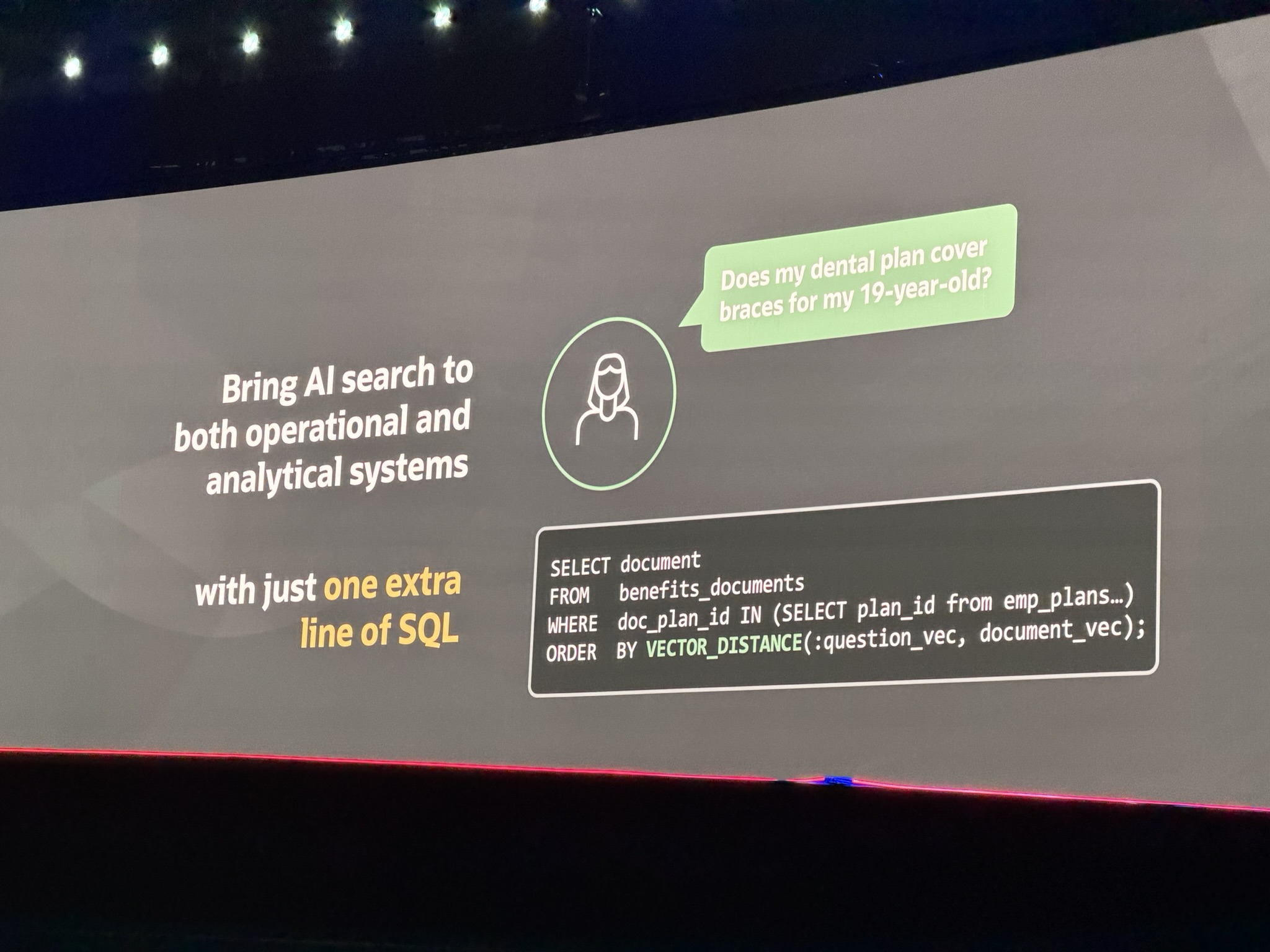
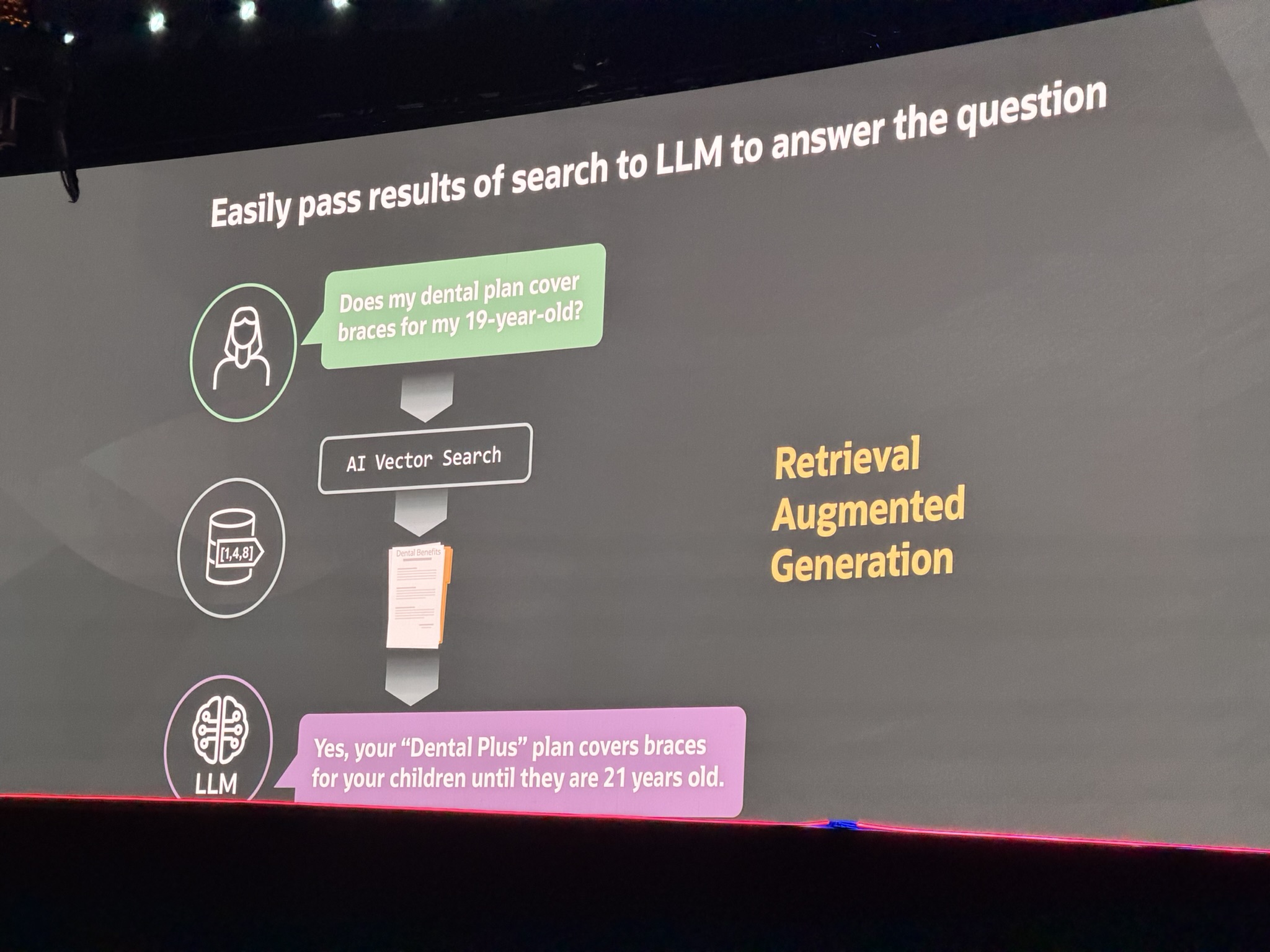
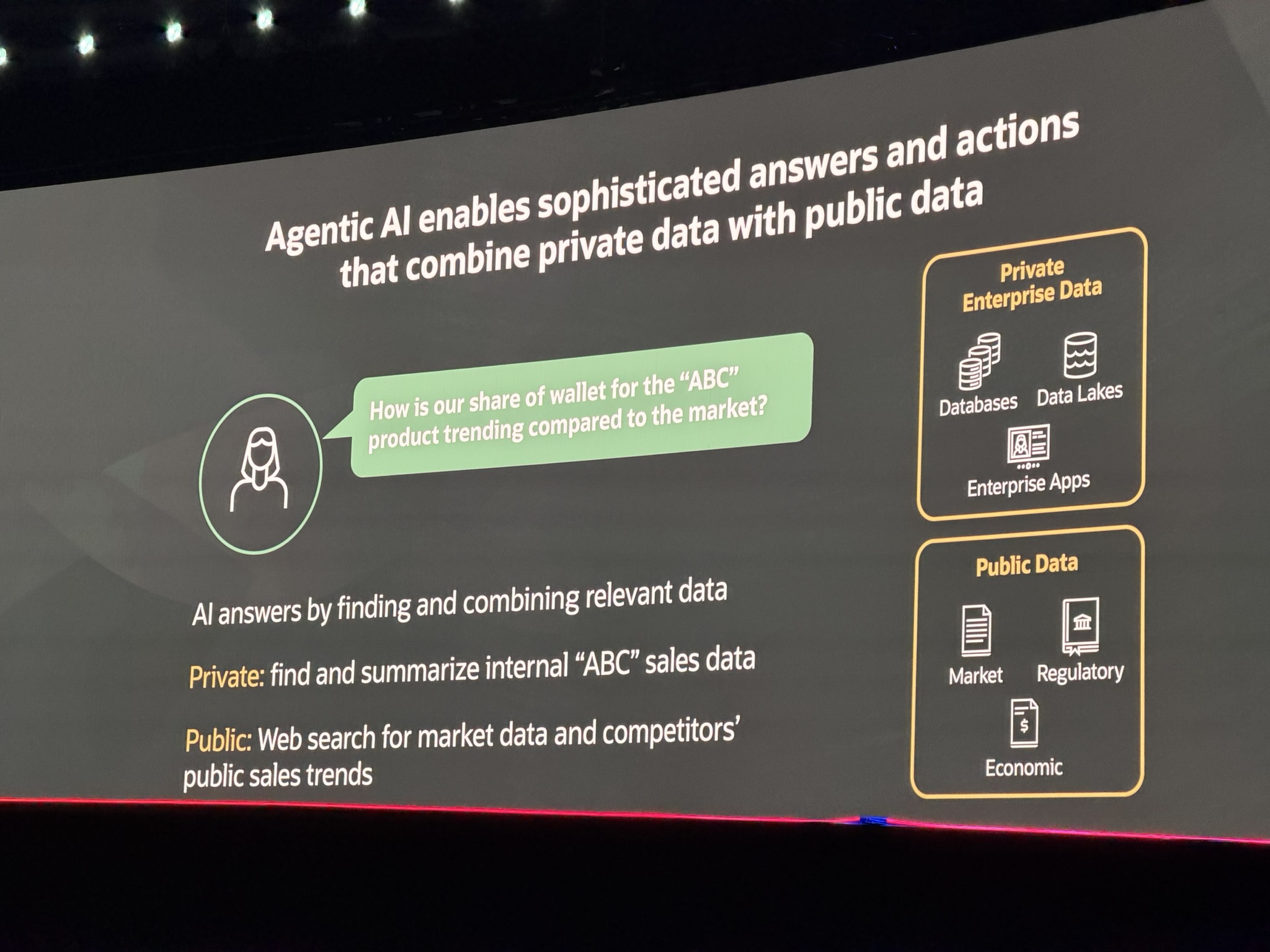
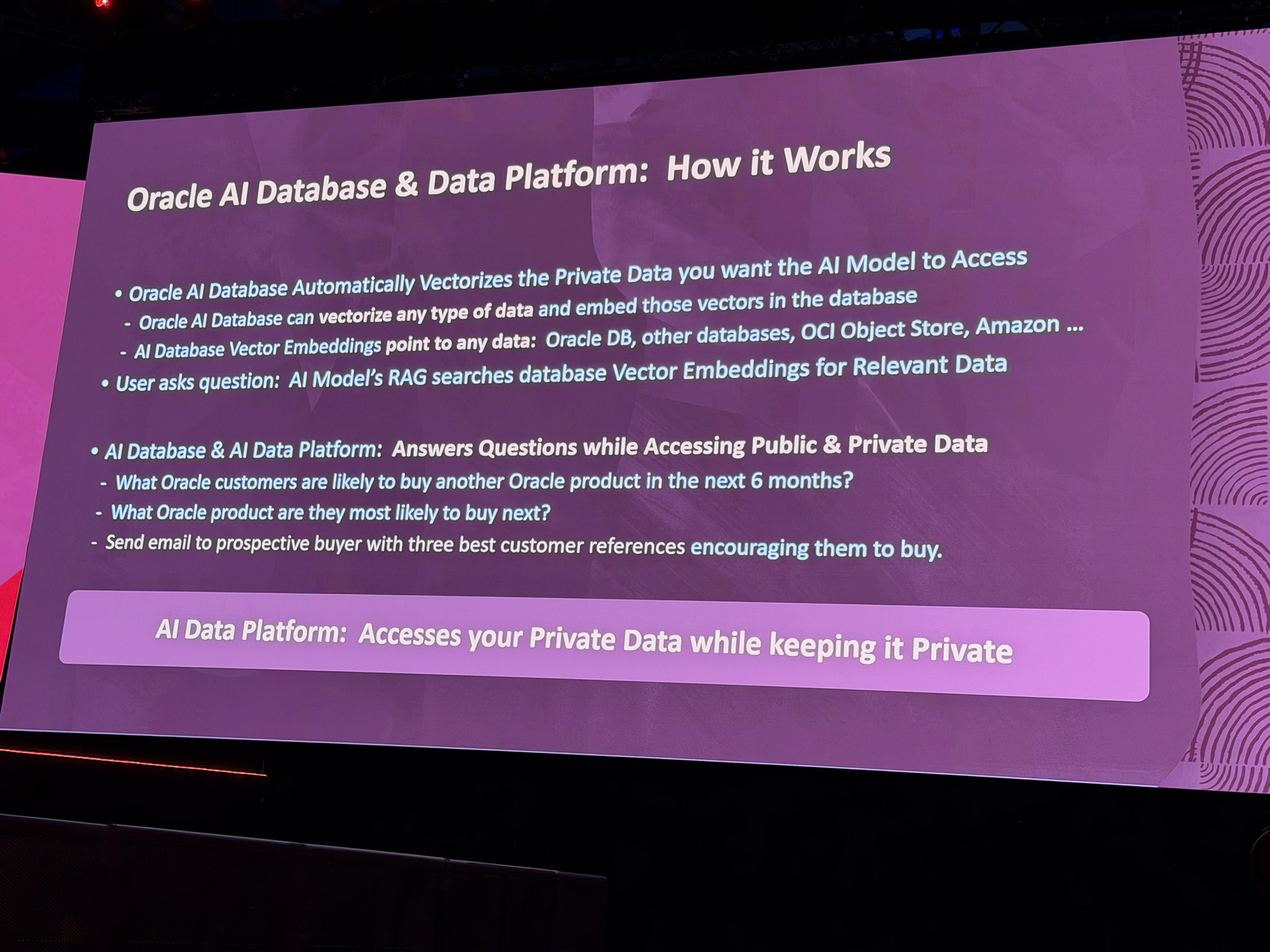
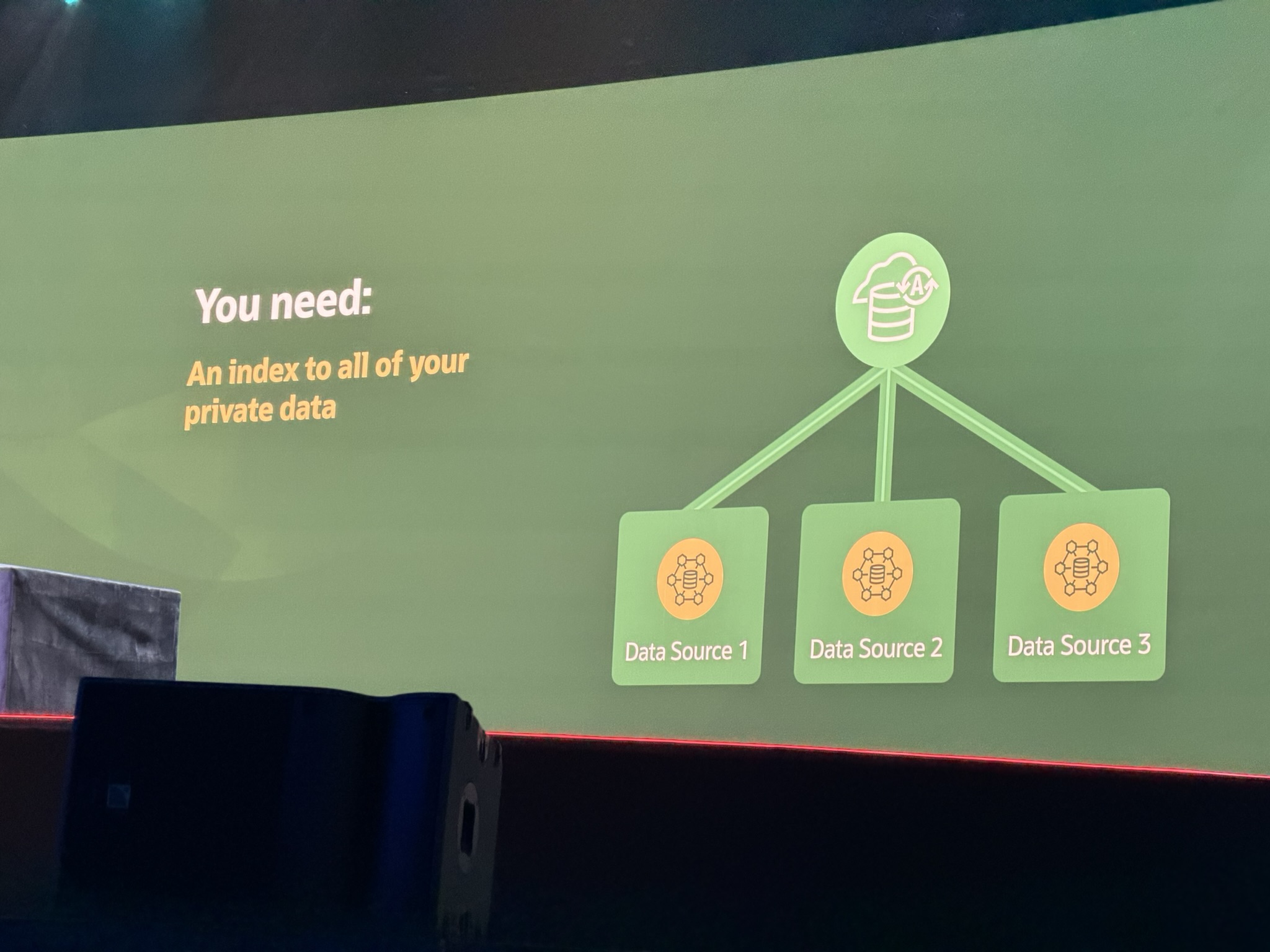
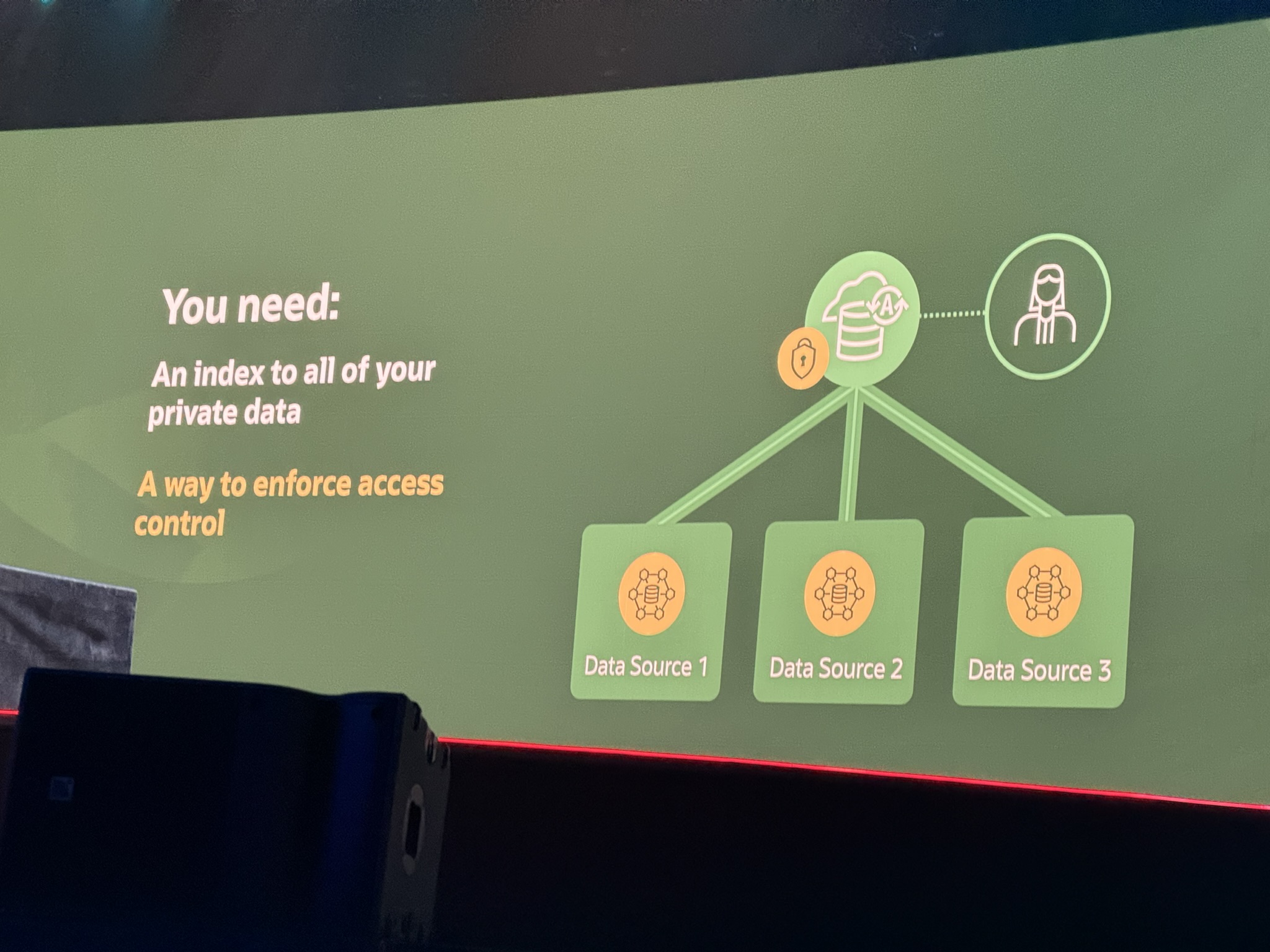
Your private data must be indexed, secured with enforced access controls, and integrated with Generative AI services to answer queries that combine public data overlaid with your private data powered by Oracle AI Database 26ai.
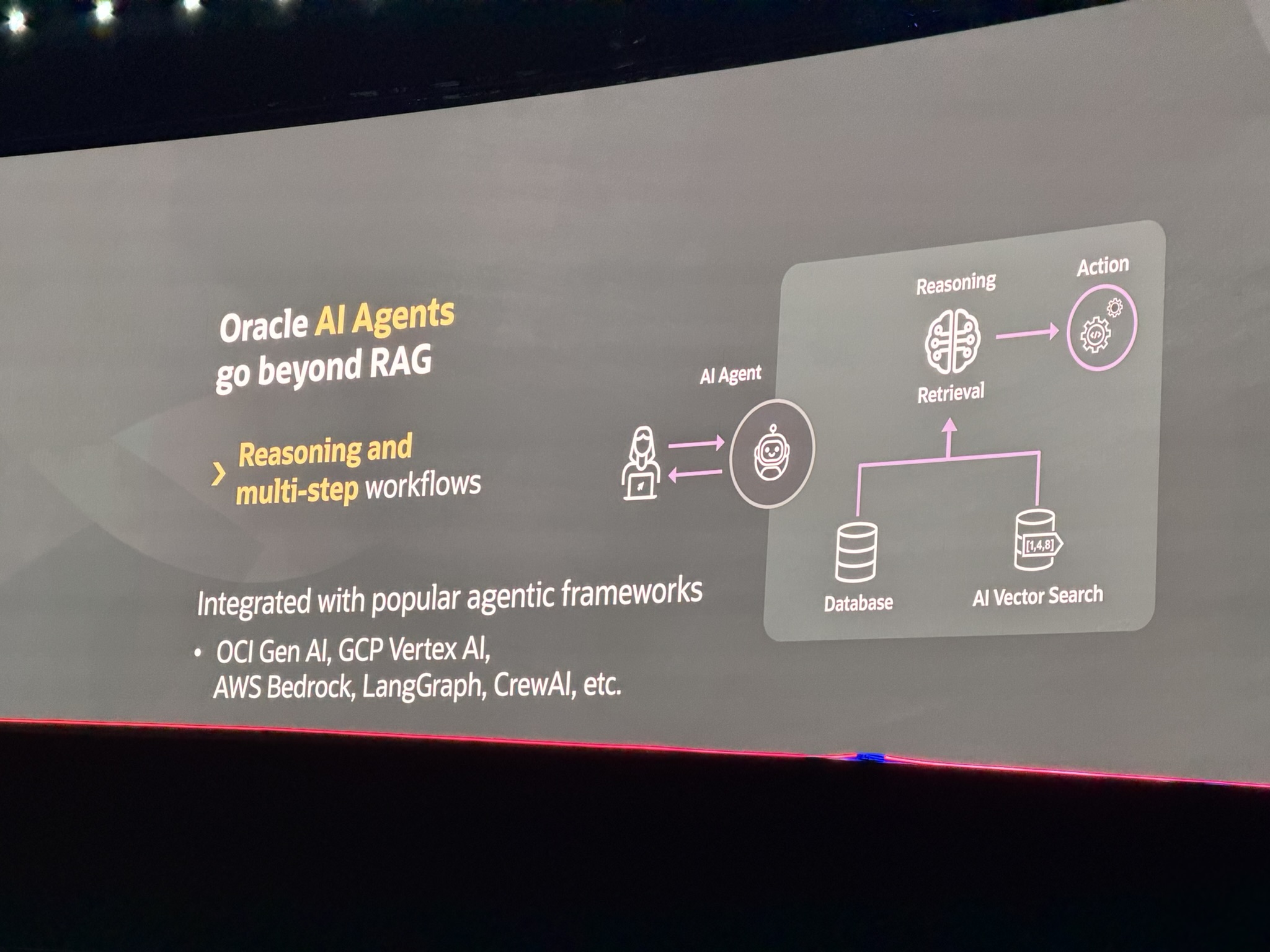
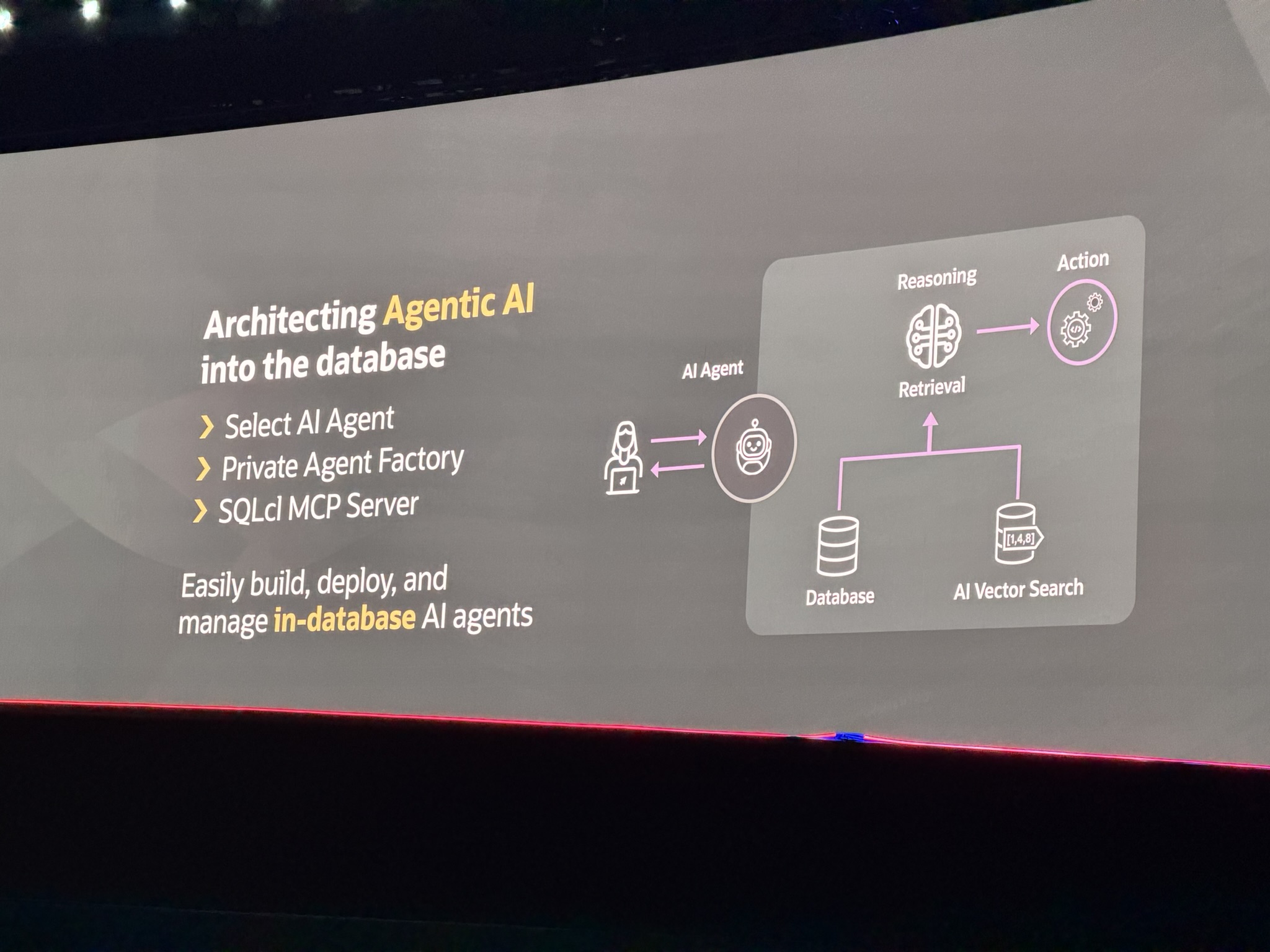
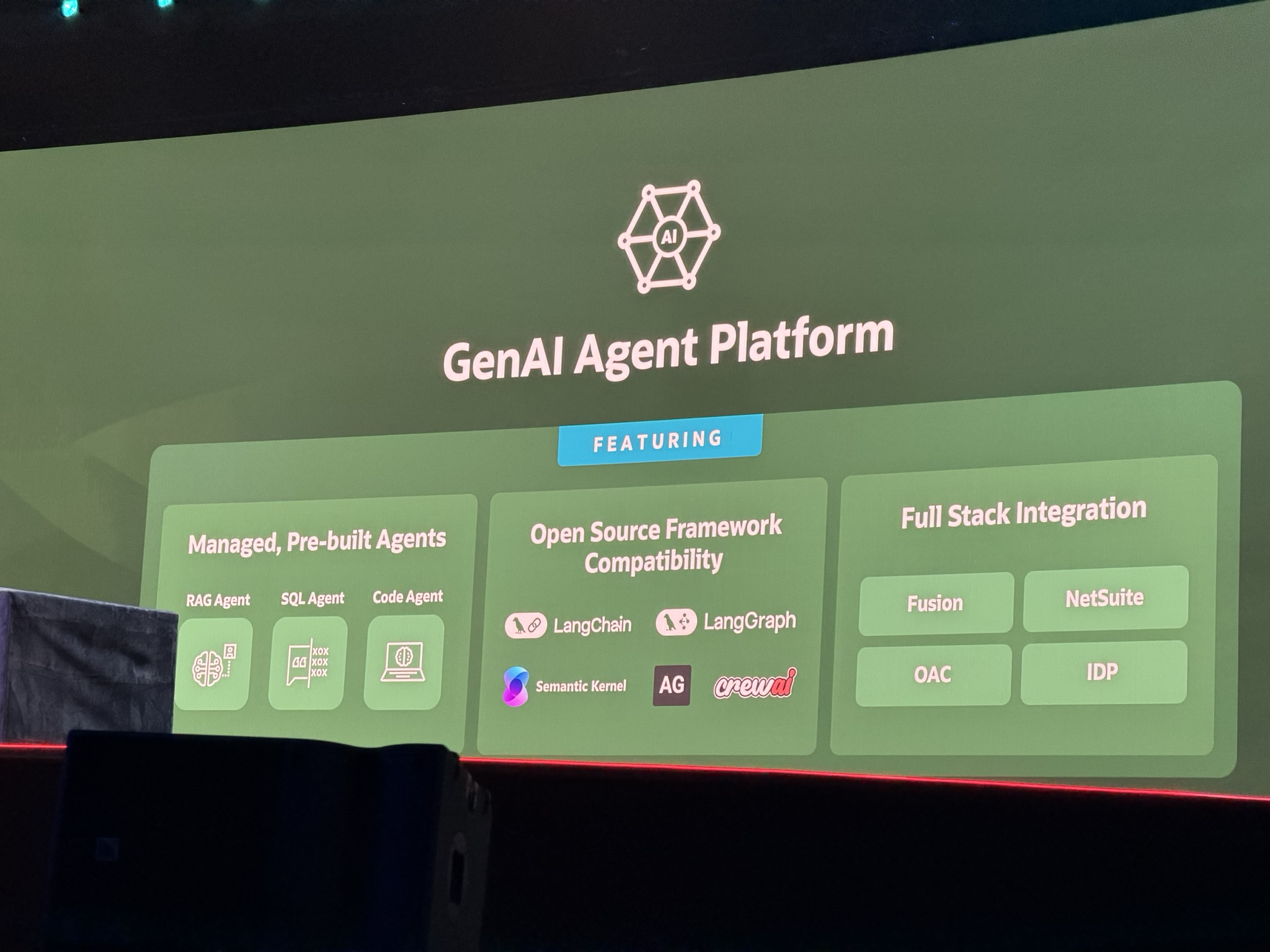
Clay also introduced the GenAI Agent Platform, which offers managed, pre-built agents for Retrieval-Augmented Generation (RAG), SQL, and code generation. It supports open-source frameworks such as LangChain, LangGraph, Semantic Kernel, AutoGen, and CrewAI, and provides full-stack integration with Oracle Fusion, Oracle Analytics Cloud (OAC), NetSuite, and Identity Provider (IDP) services.
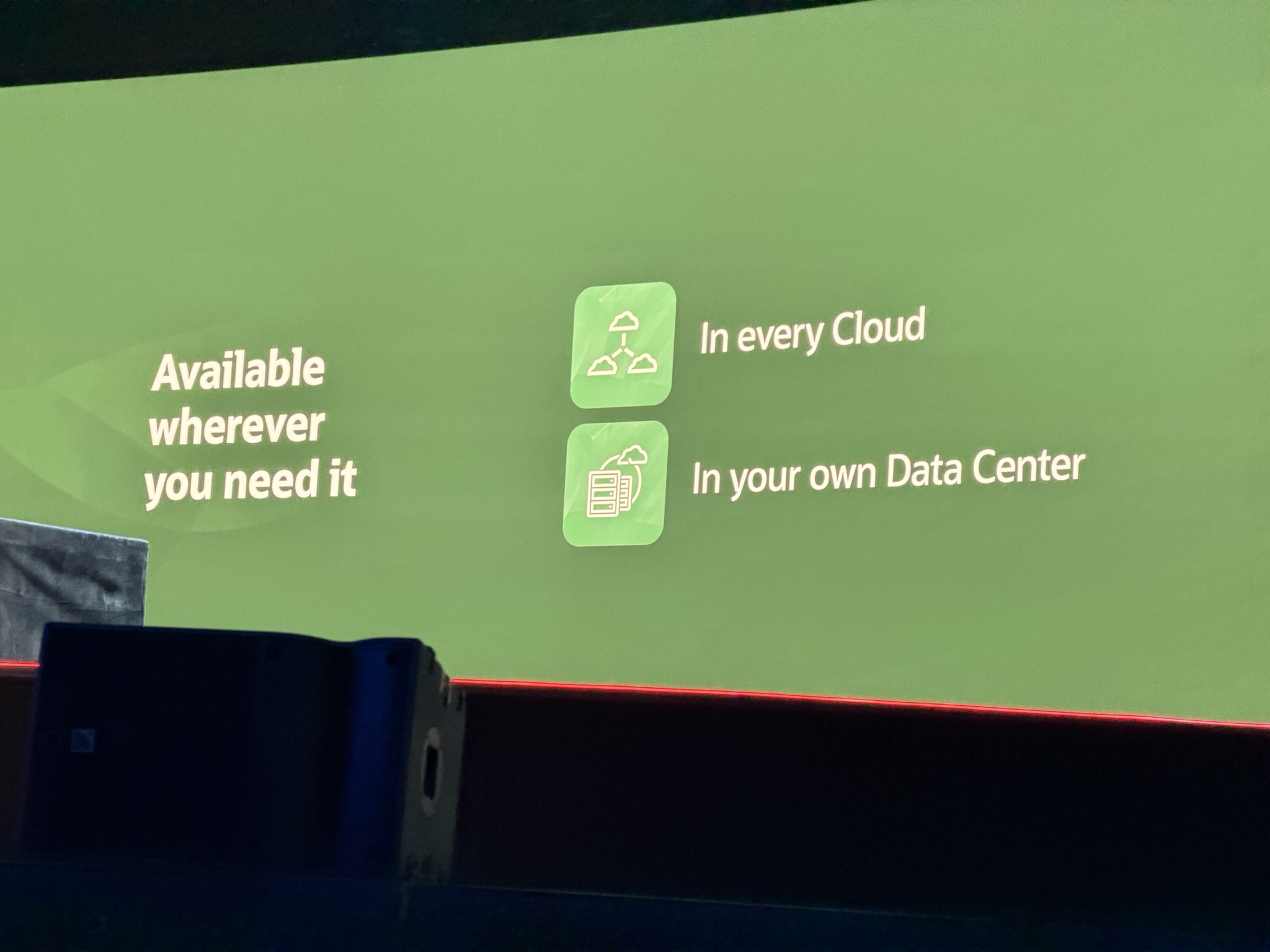
Available wherever you need it, whether in any cloud (via Oracle Database @ Multicloud) or in your own data centre.
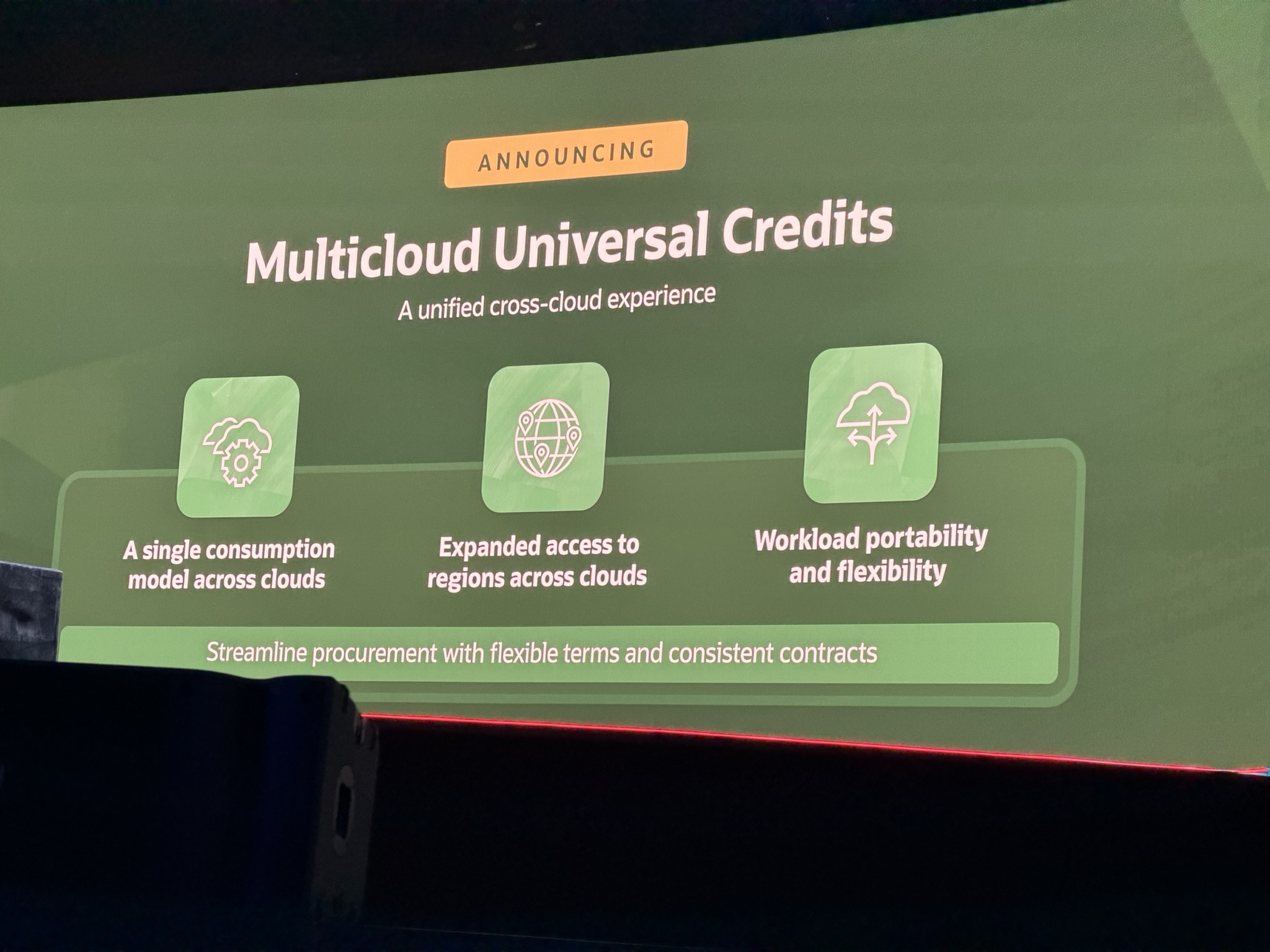
With this, he announced Oracle’s Multicloud Universal Credits, enabling a single consumption model across all clouds, pay Oracle once and use Oracle anywhere. This is especially appealing for multicloud customers seeking workload portability and the flexibility to apply credits wherever they need. More info here.
Clay’s final announcement was the General Availability (GA) of Dedicated Region 25, originally announced last year, as highlighted in my blog here.
If you found this blog post useful, please like as well as follow me through my various Social Media avenues available on the sidebar and/or subscribe to this Oracle blog via WordPress/e-mail.

Thanks

Zed DBA (Zahid Anwar)
Oracle AI World 2025 Day 3 Part 3 – Keynote The “AI for Data” Revolution is Here – How to Survive and Thrive

If you missed my day 3 part 2, you can view it here.

After Larry’s keynote ran over by an hour, there was little time left before the next session. So, I quickly grabbed a tea and returned to my seat, ready for the following keynote.

Keynote: The “AI for Data” Revolution is Here – How to Survive and Thrive

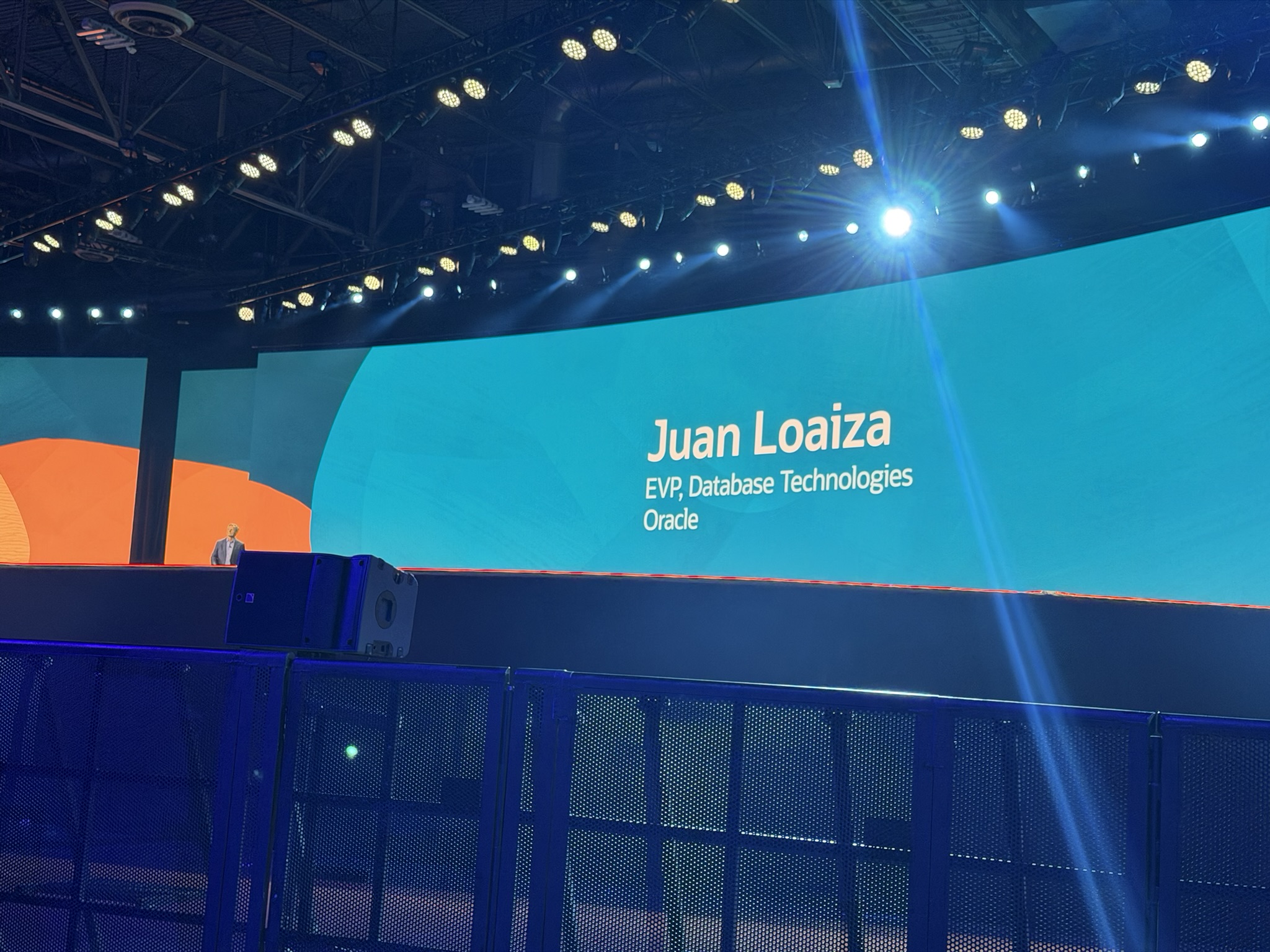
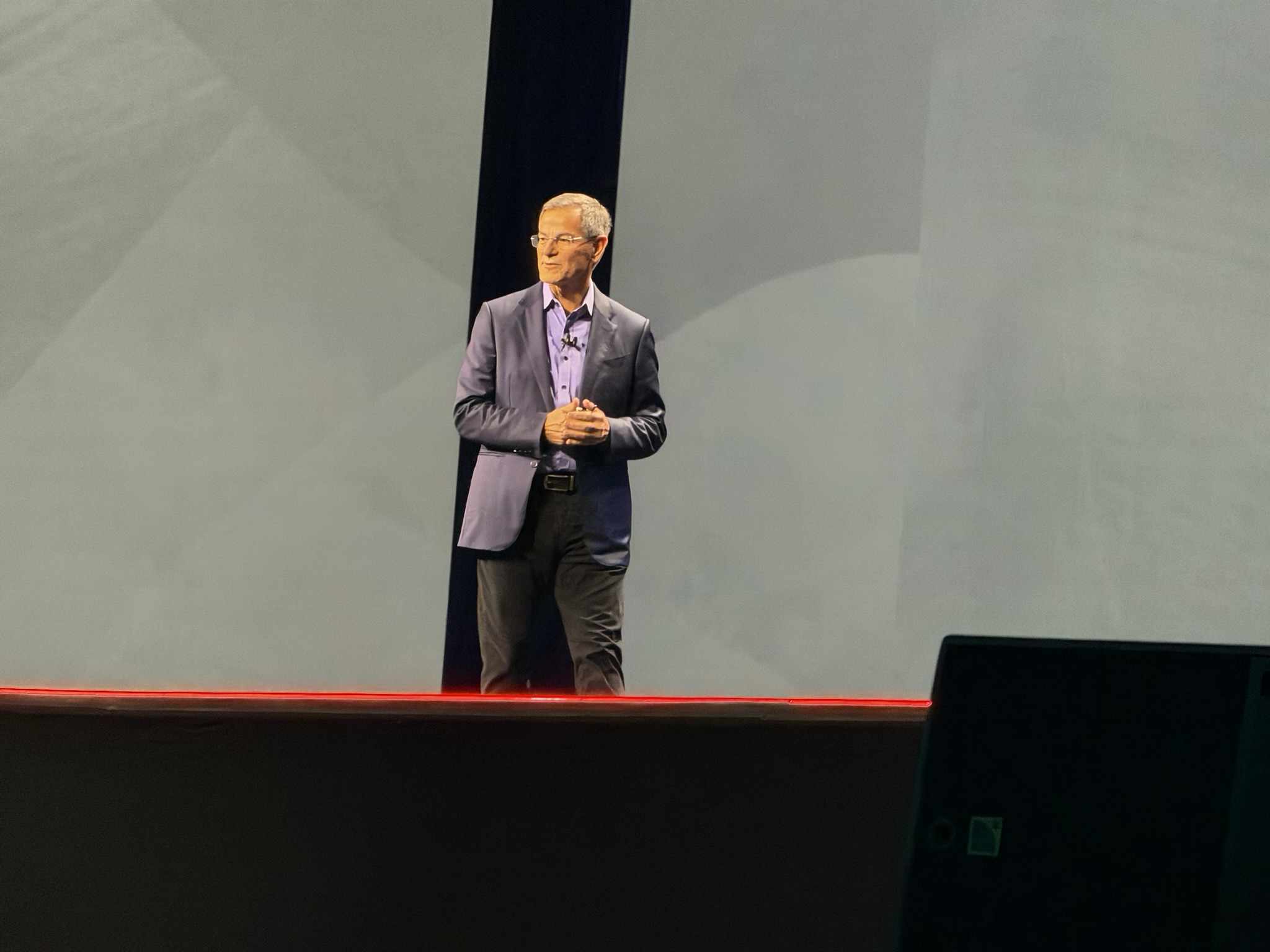
This keynote was by Juan Loaiza, Executive Vice President, Oracle Database Technologies, Oracle.

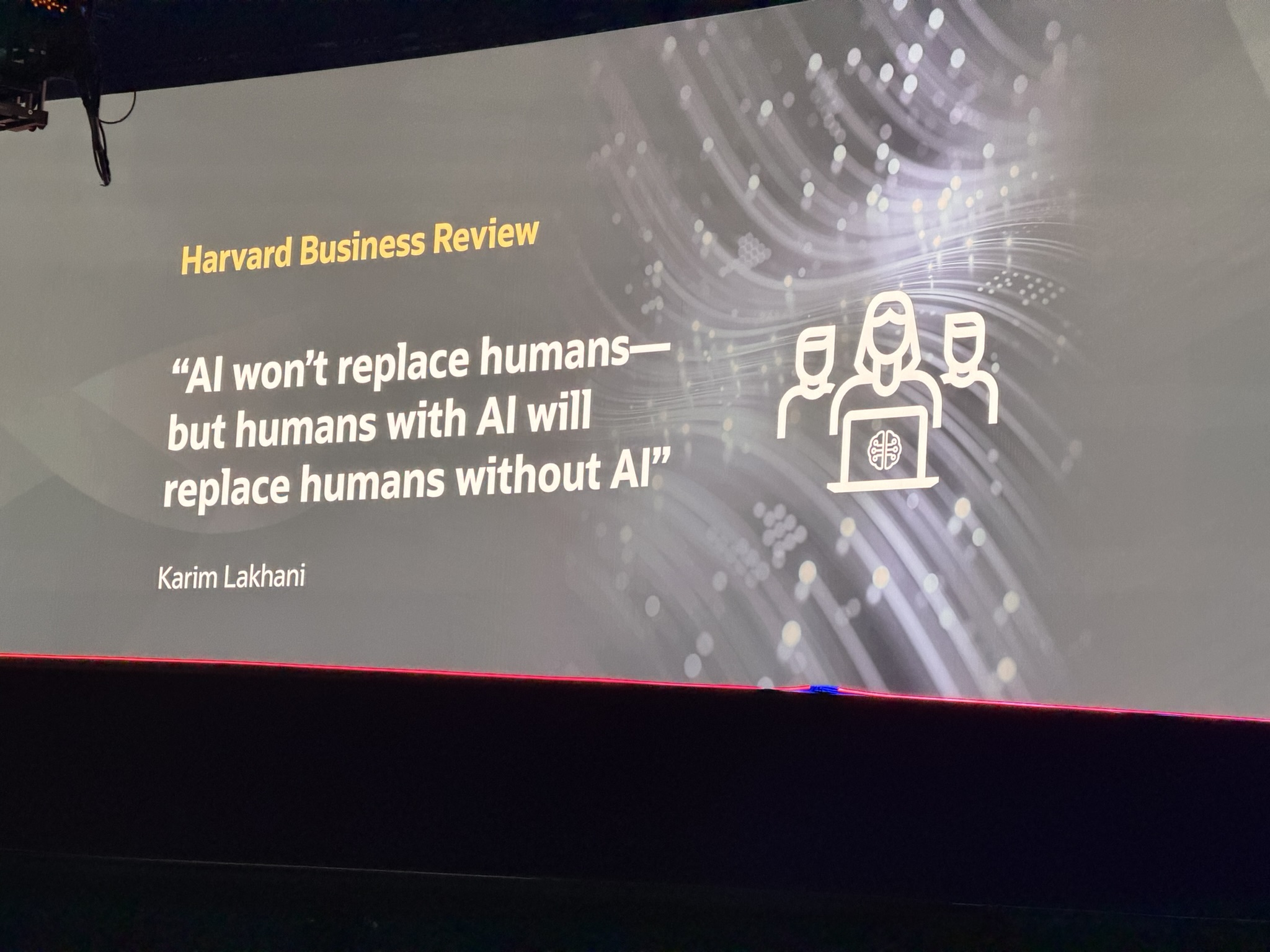
An interesting quote that stood out for me was: “AI won’t replace humans – but humans with AI will replace humans without AI” Karim Lakhani, Harvard Business Review. This really echoed a common theme at Oracle AI World of AI is here to augment humans, not replace them.

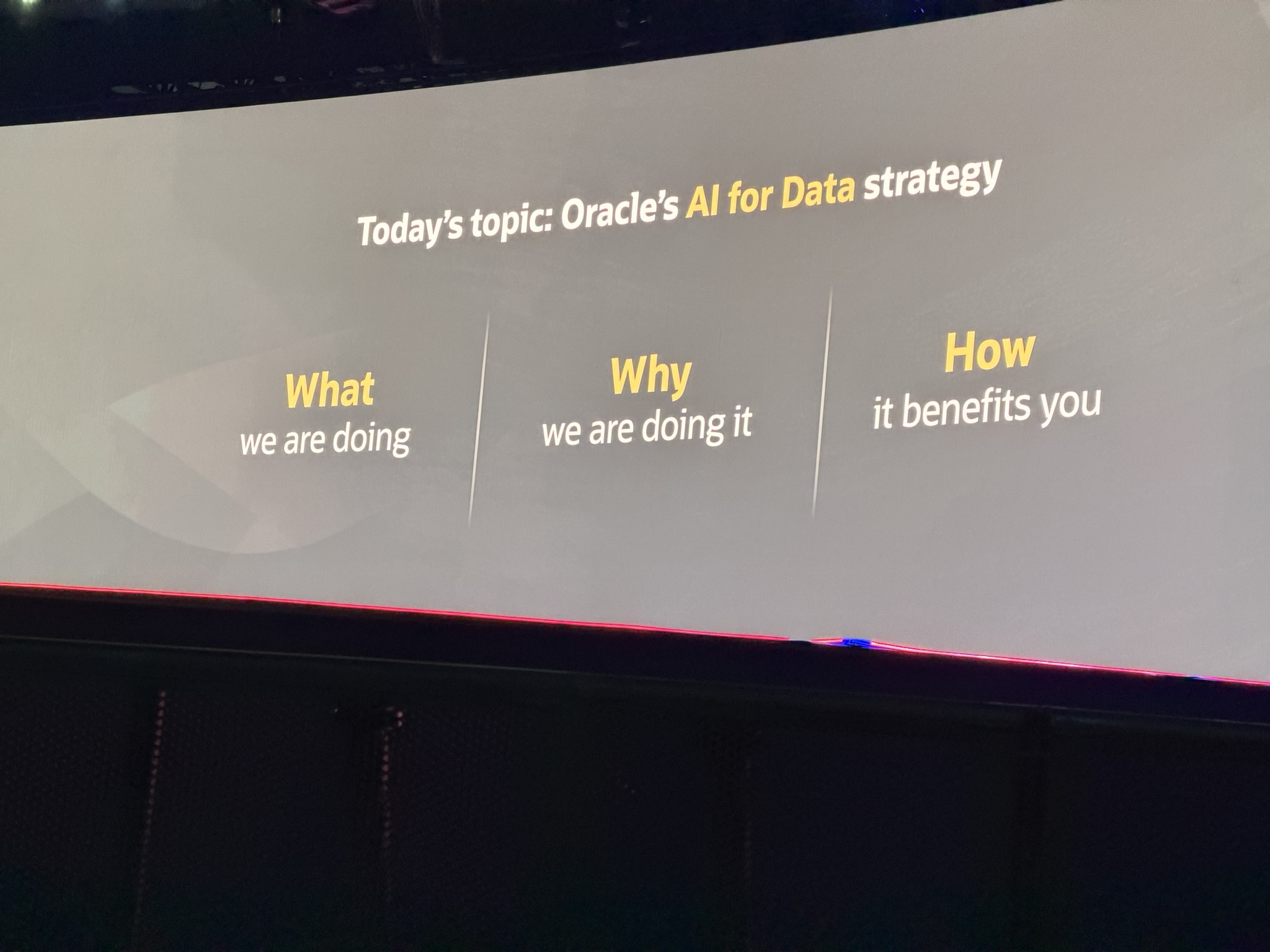
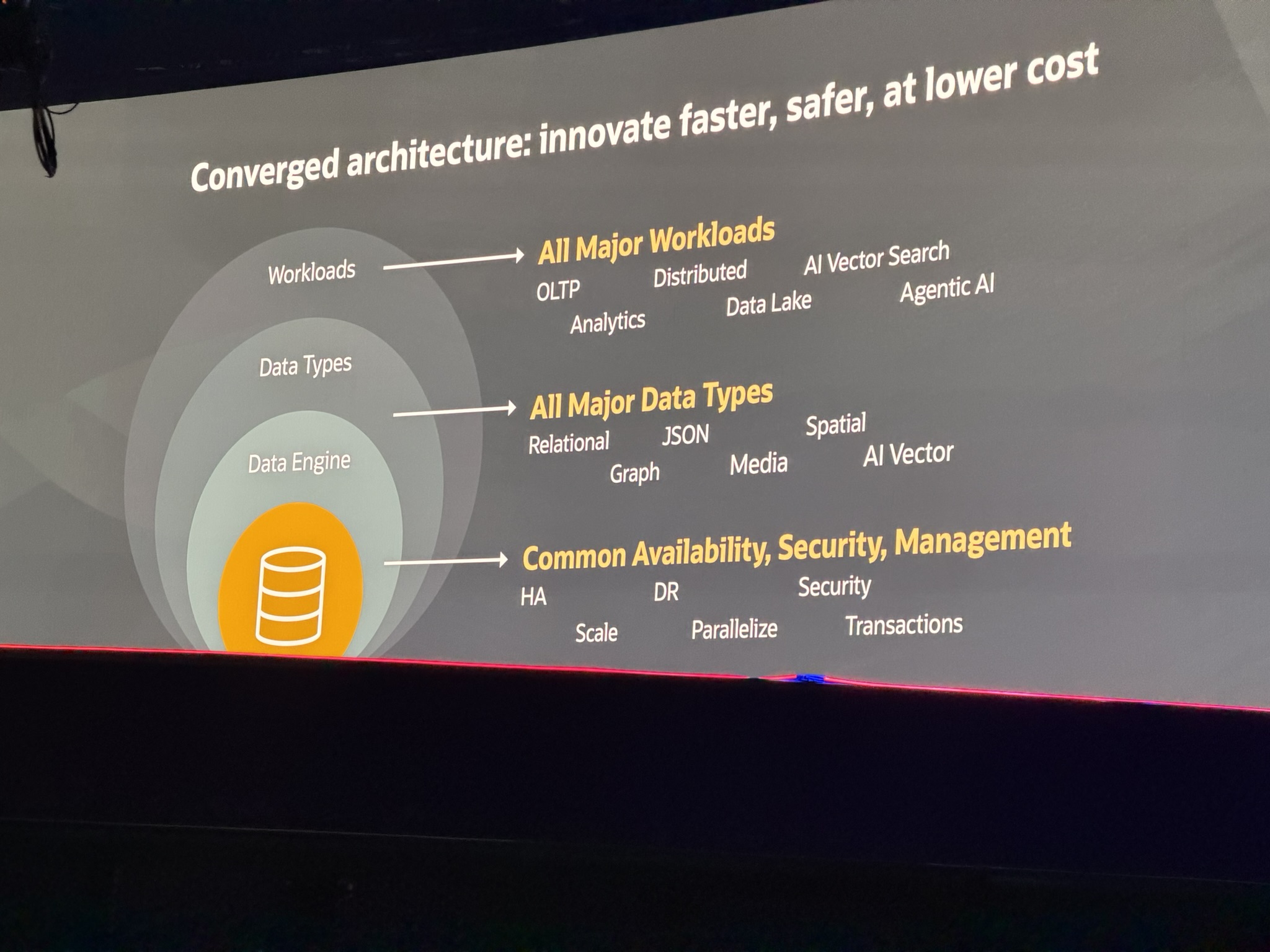
Juan then moved on to Oracle’s AI for Data strategy, explaining that Oracle is positioning its database and data platforms as the backbone for enterprise AI, helping organisations innovate faster, safer, and at lower cost.

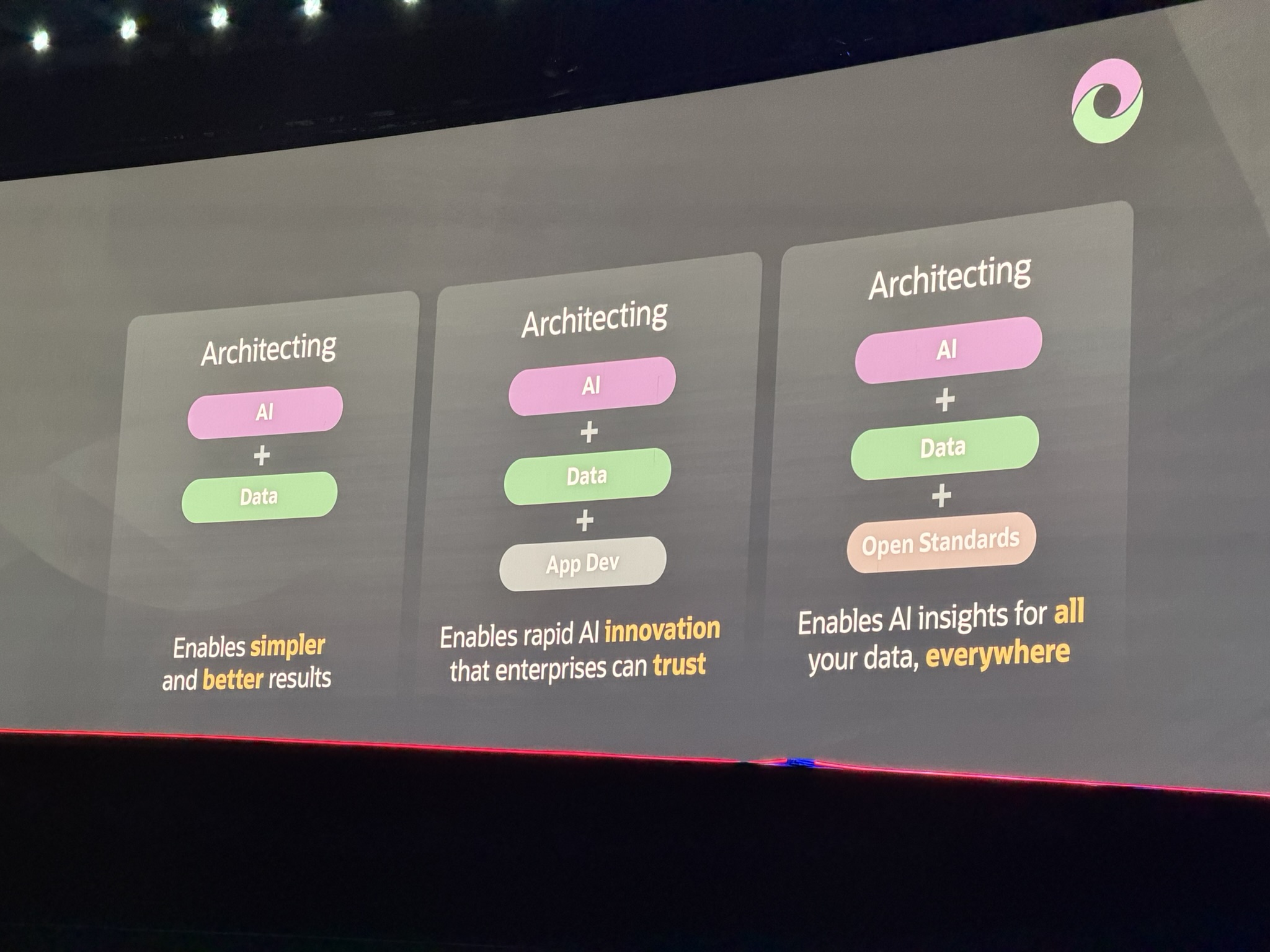
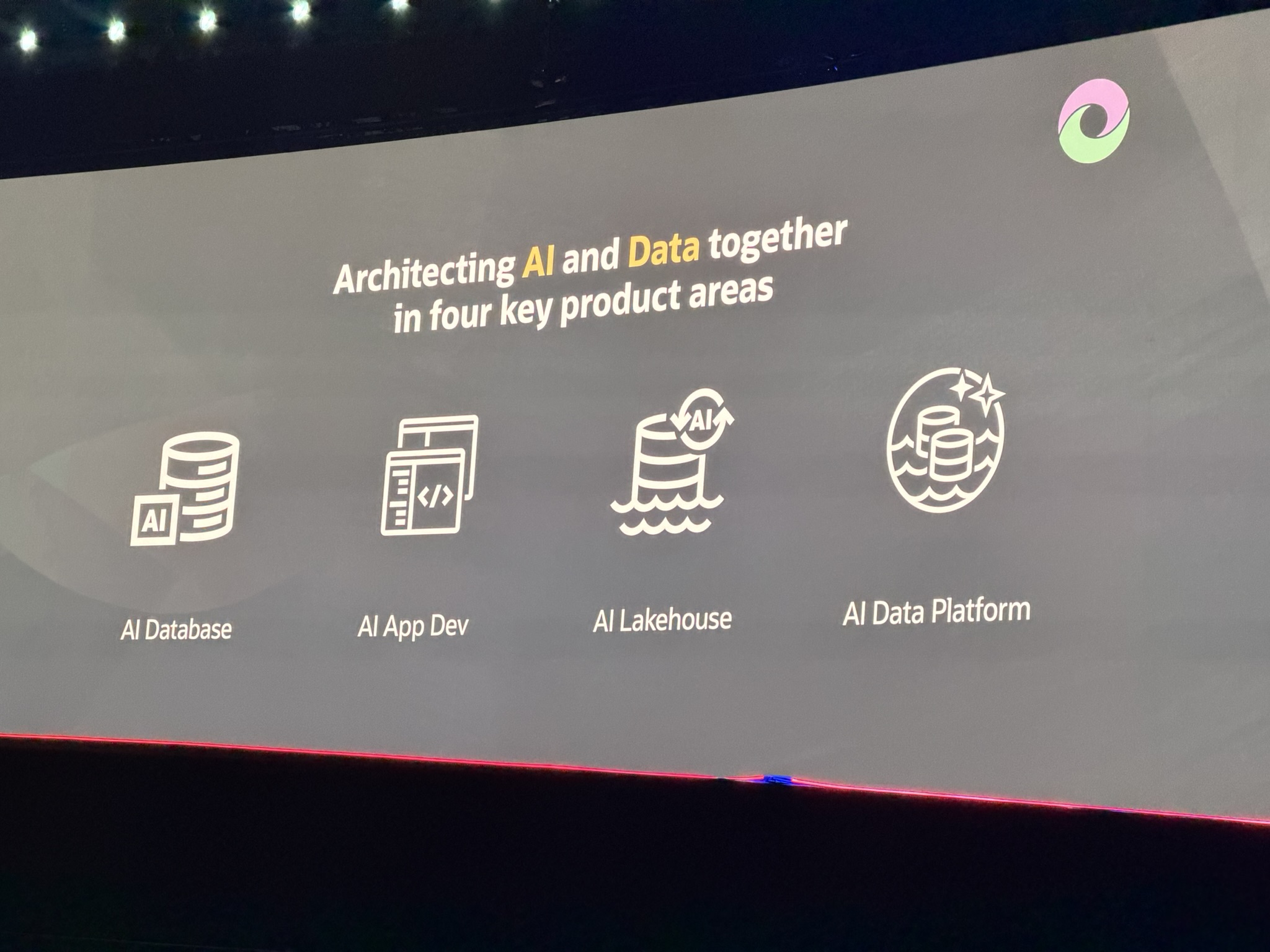
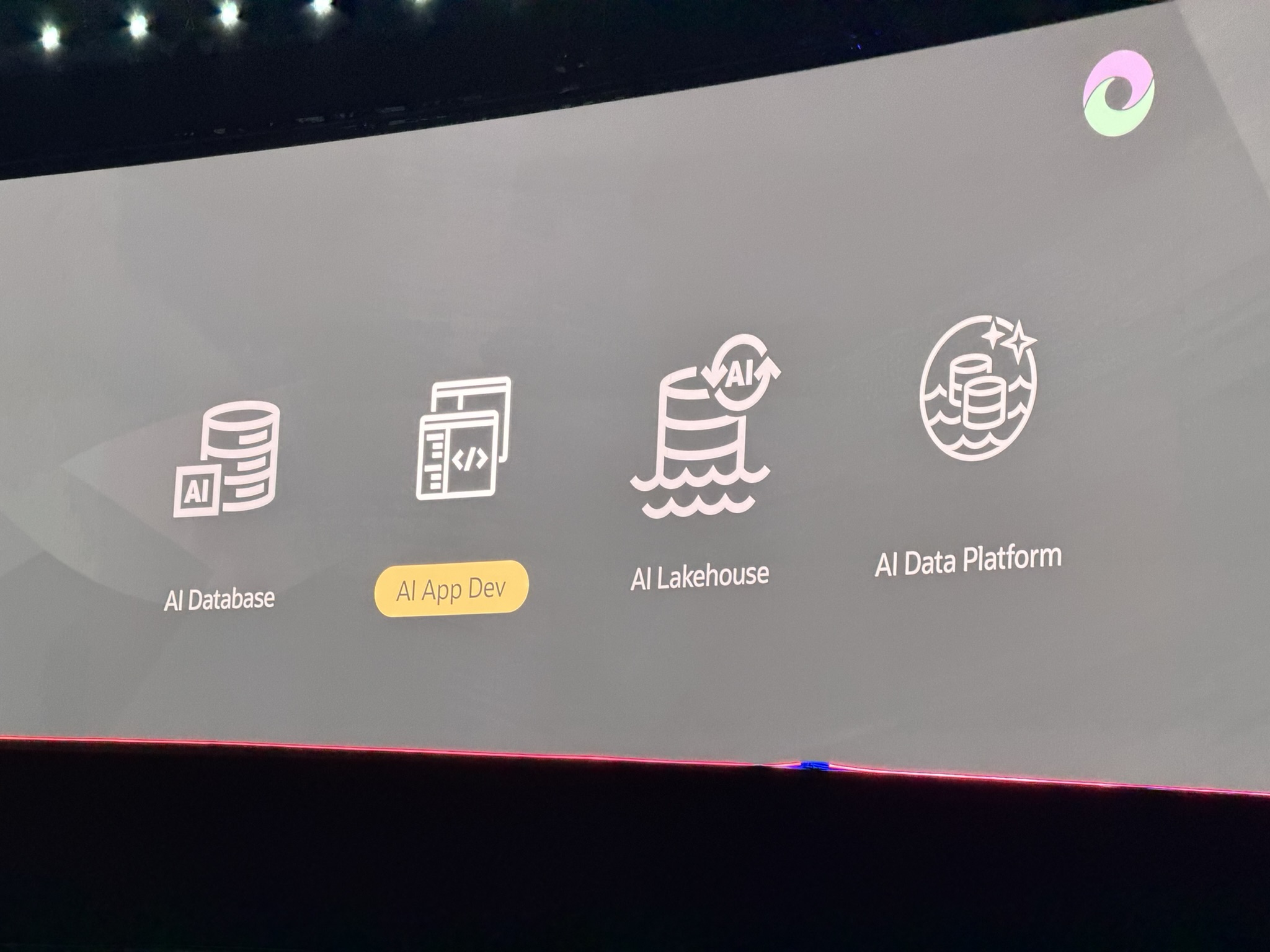
Segment 1: Architecting AI and Data Together – The Oracle AI Database

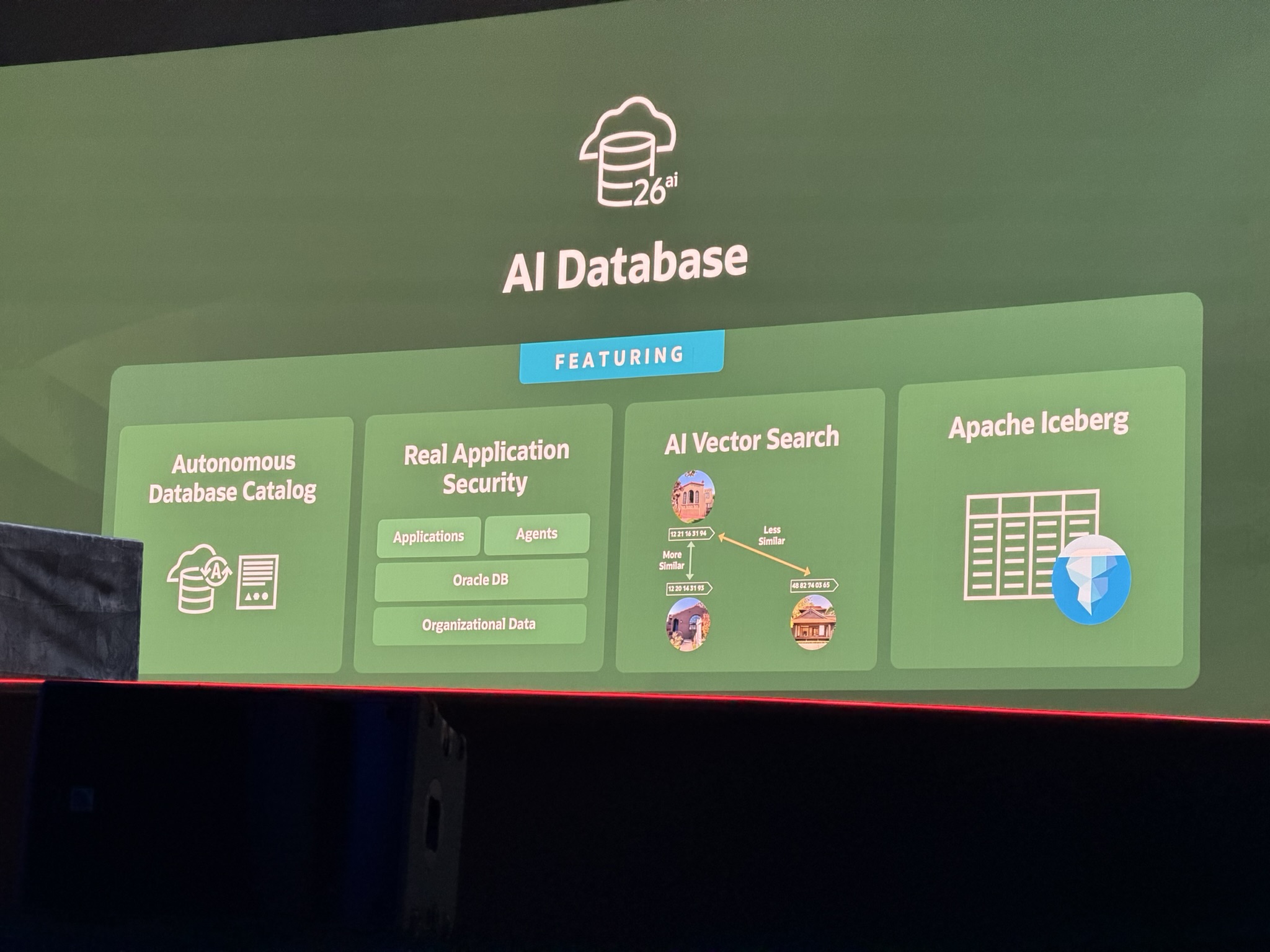
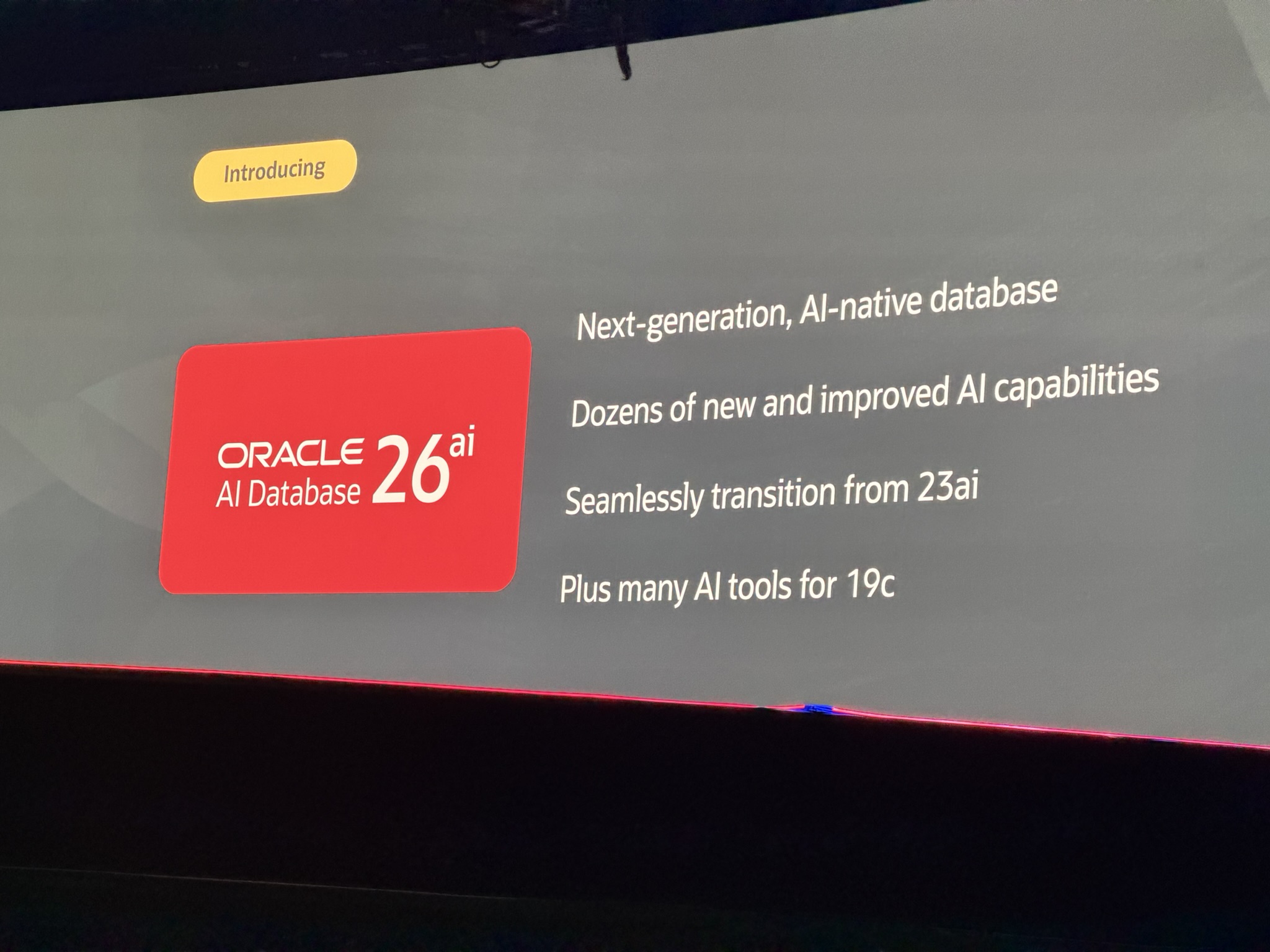
Next, he introduced the new Oracle AI Database 26ai, the next-generation AI-native database. It replaces 23ai with a simple Release Update (RU), making the upgrade seamless and efficient.

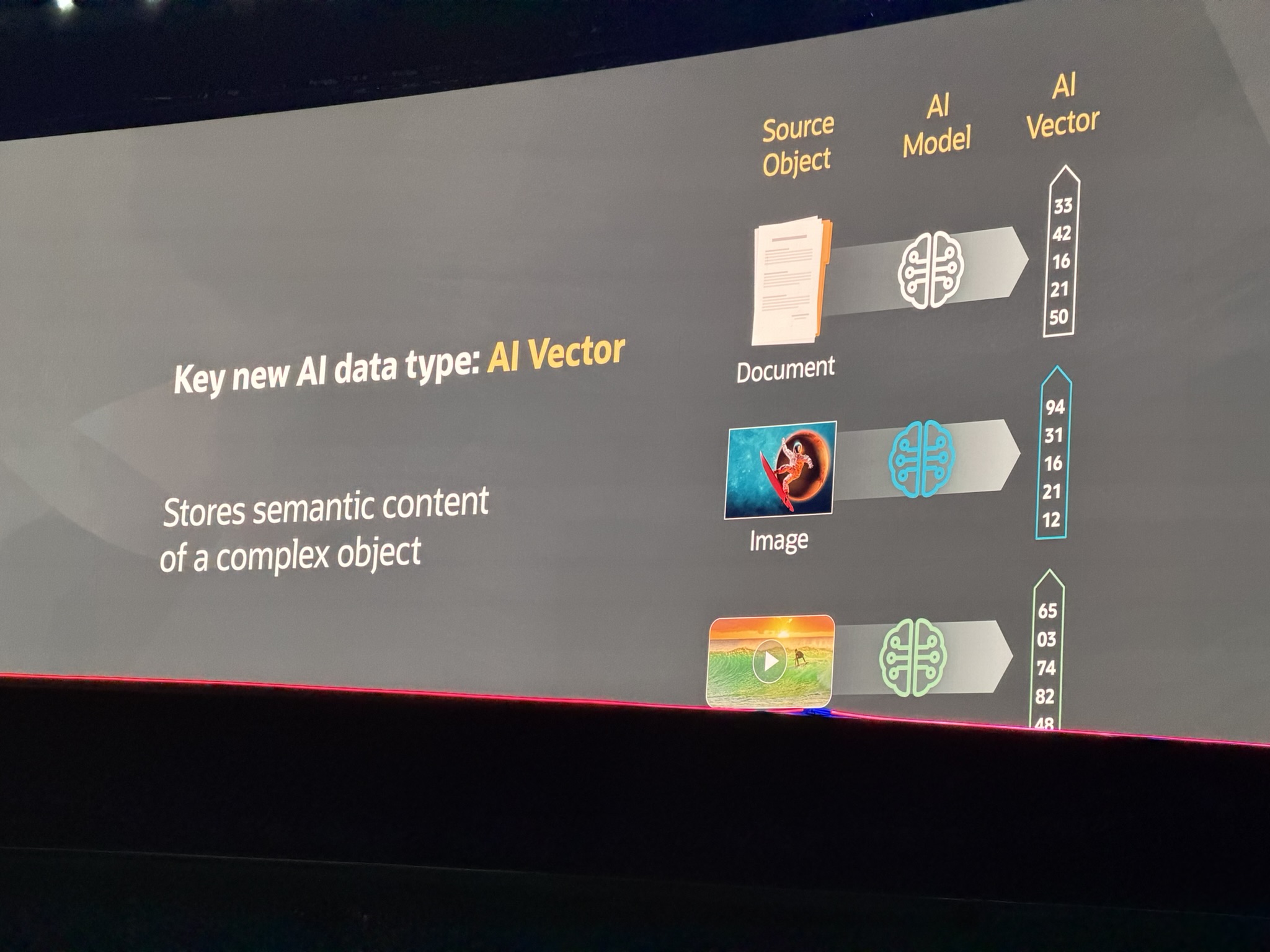
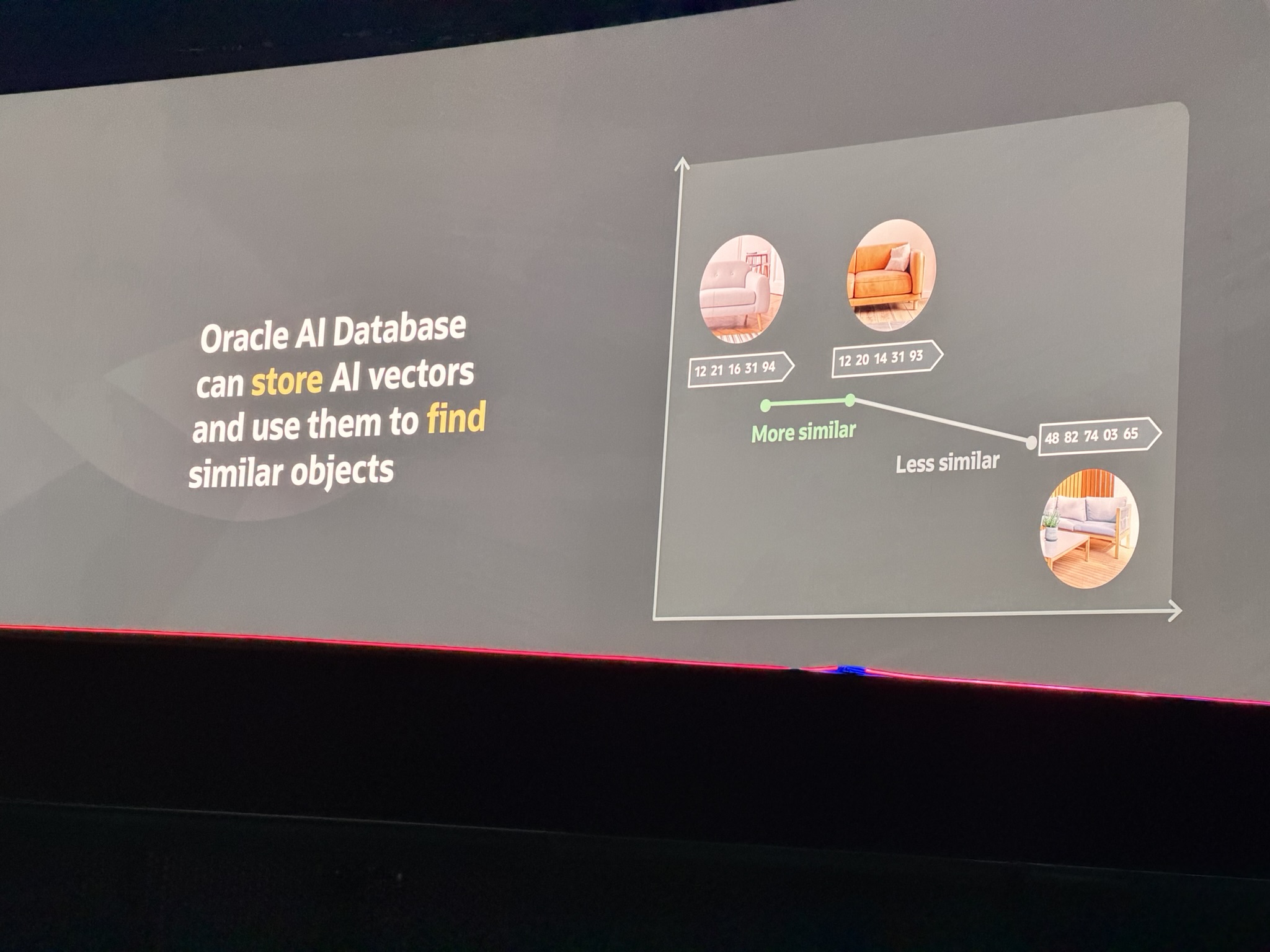
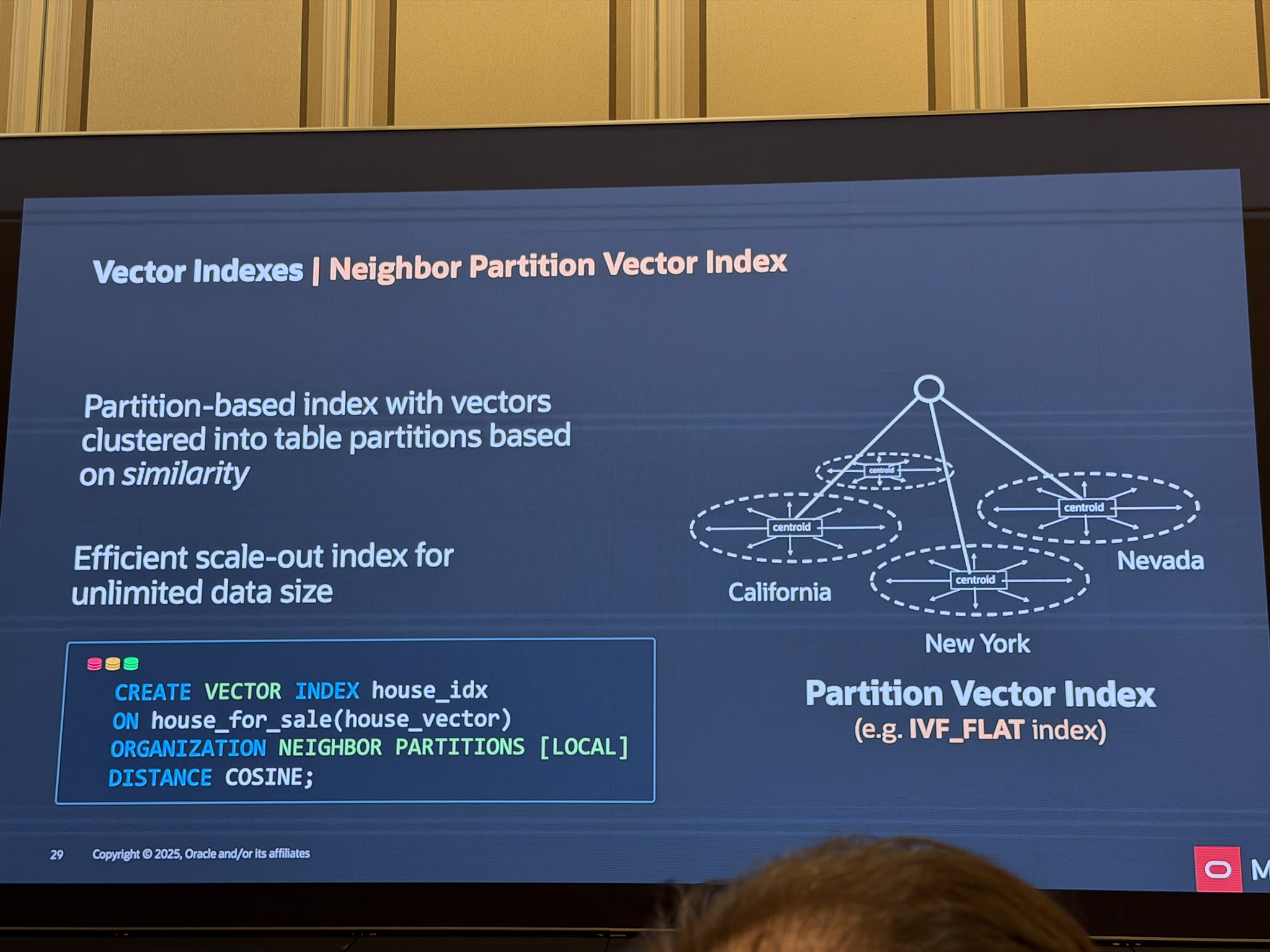
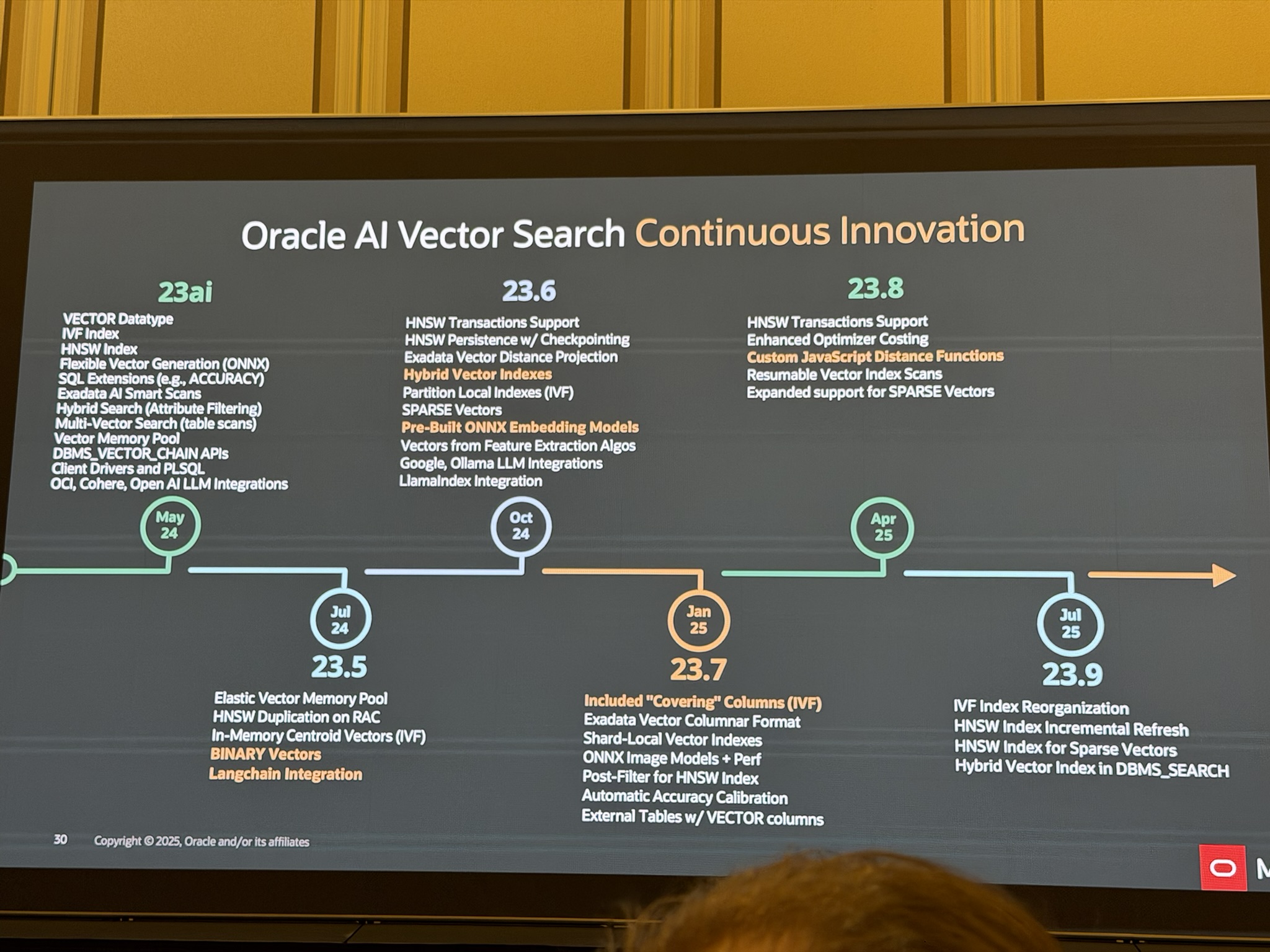
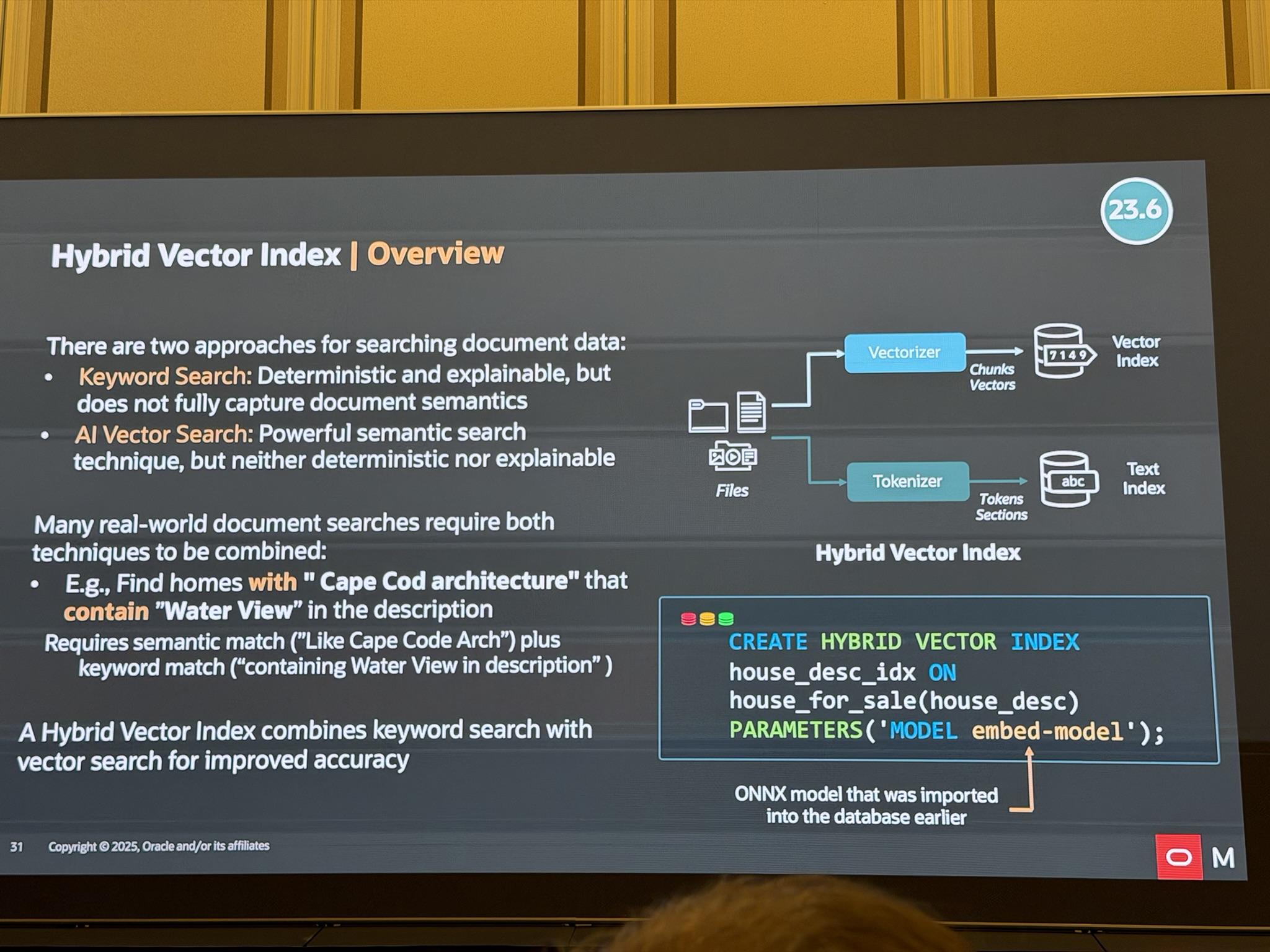
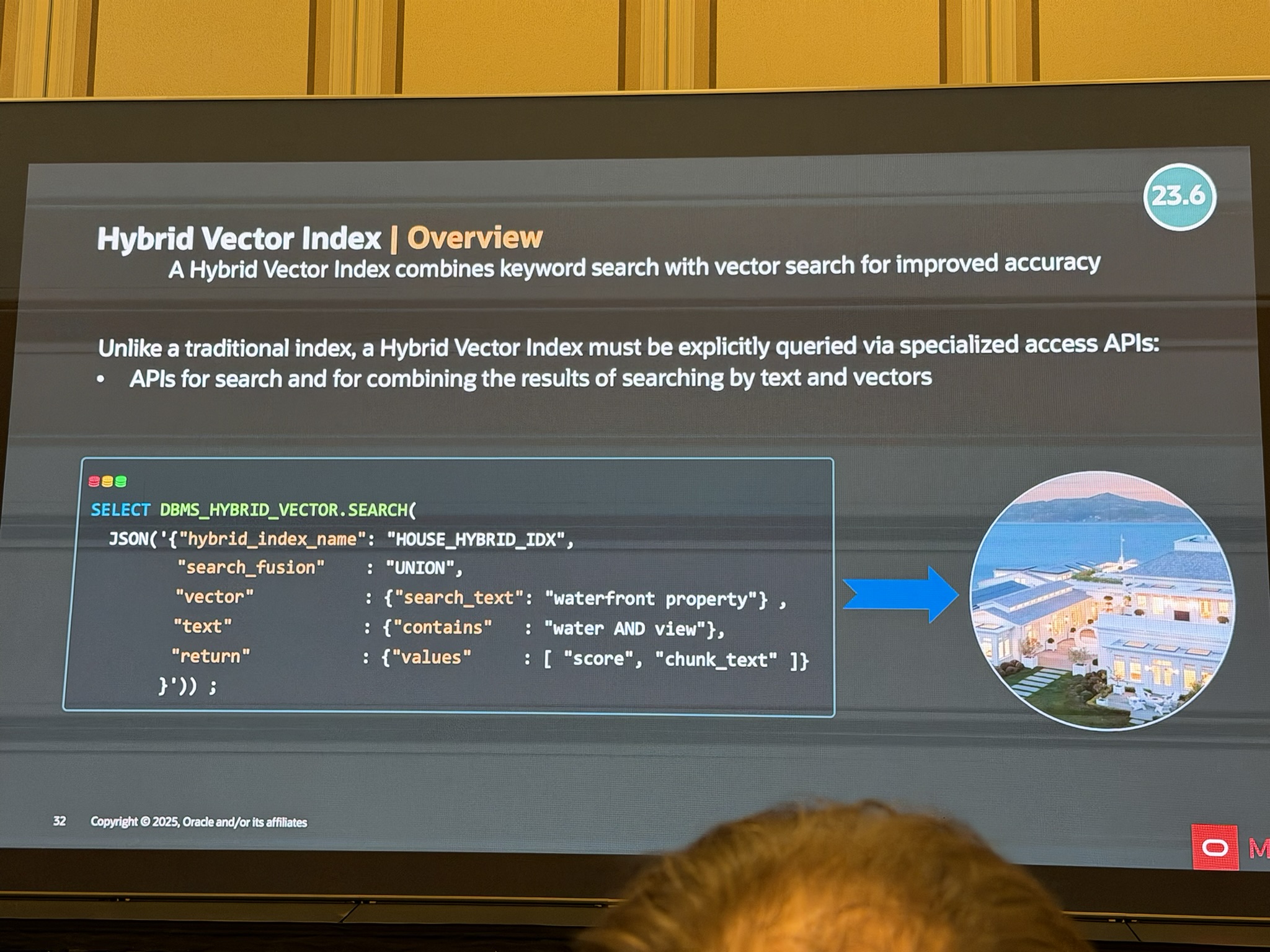
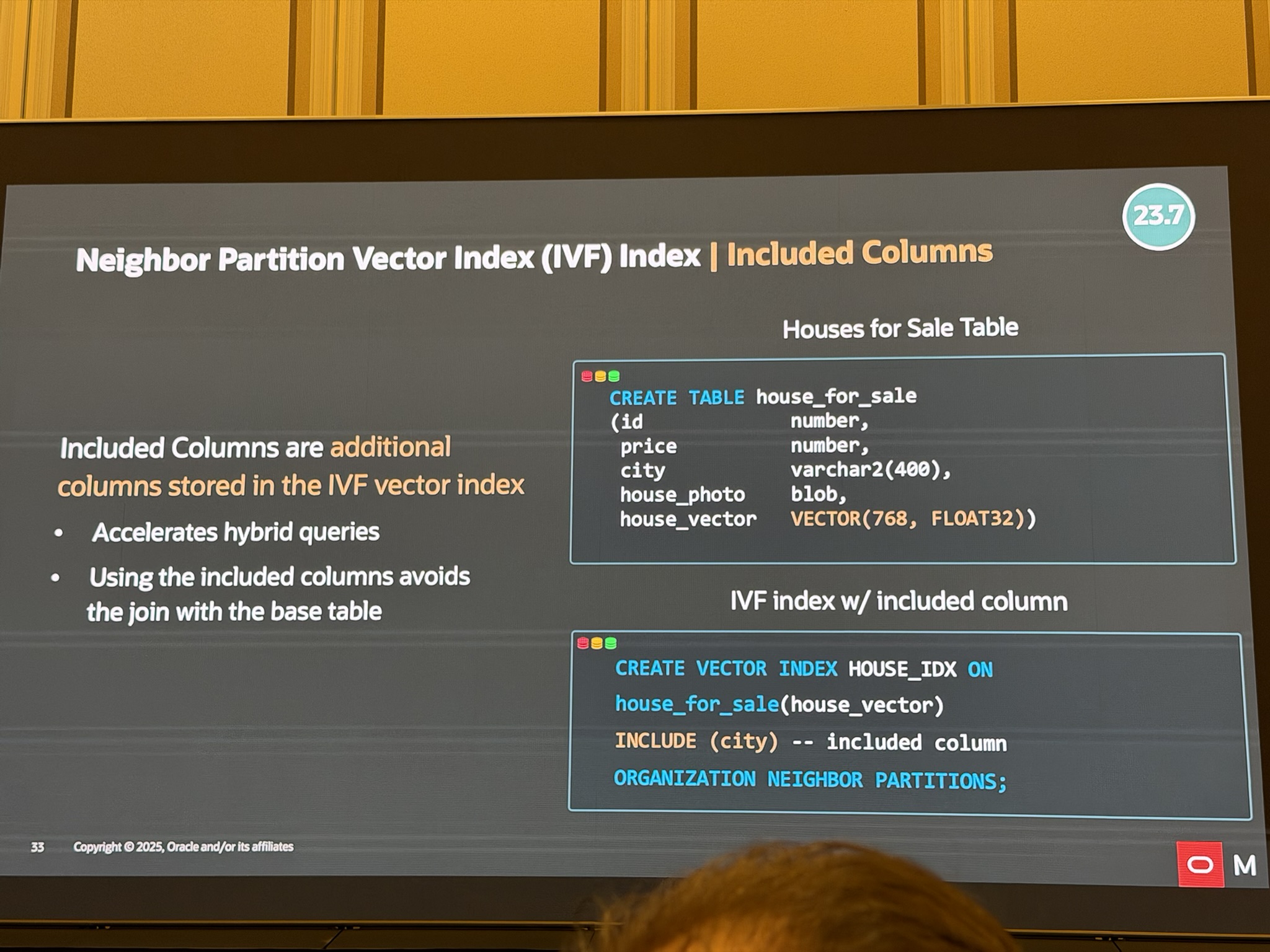
He then spoke about AI Vector Search. If you’d like more details, check out my previous blog here, it covers what AI Vector Search is, what’s new, and what’s coming next.

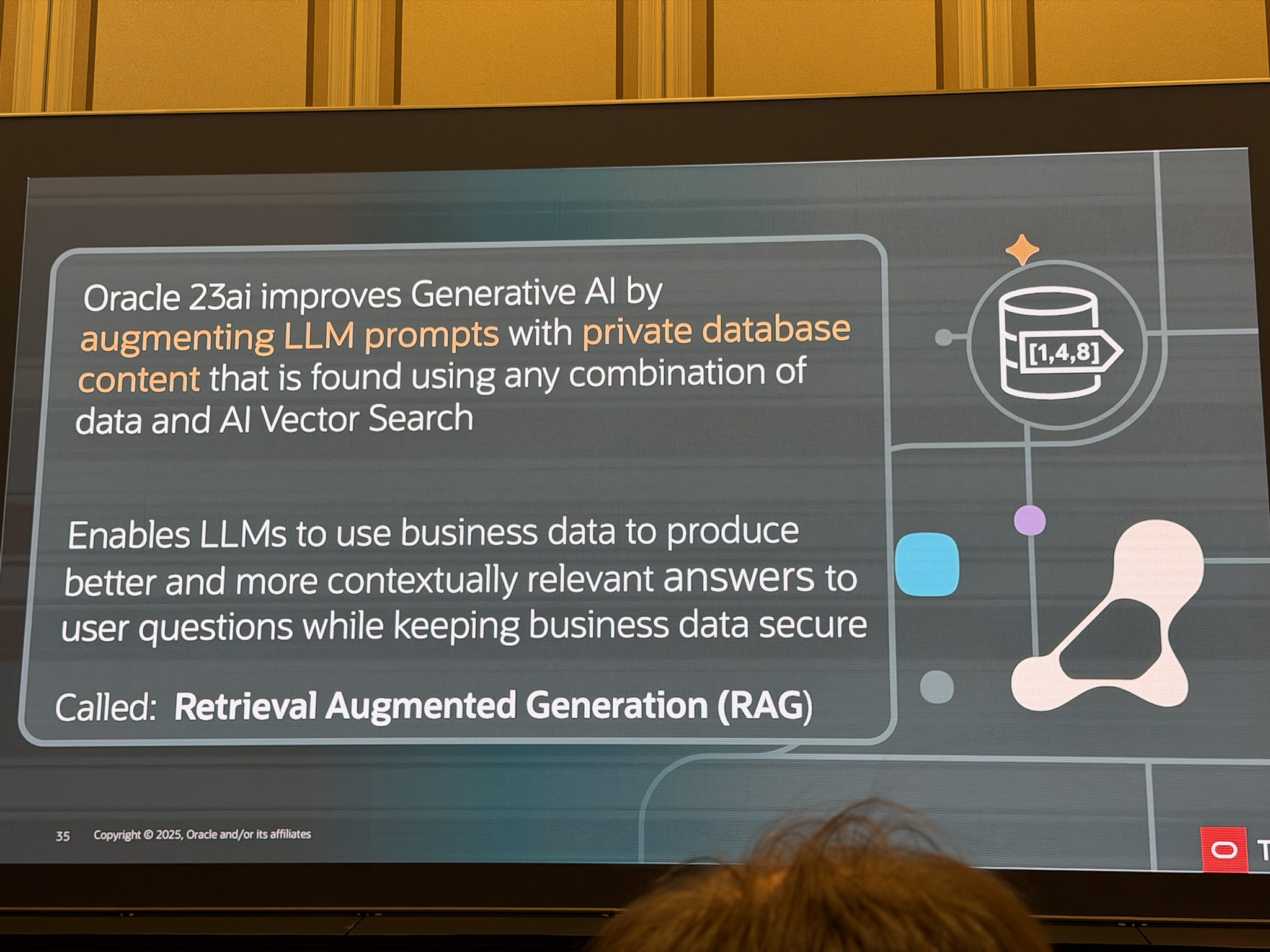
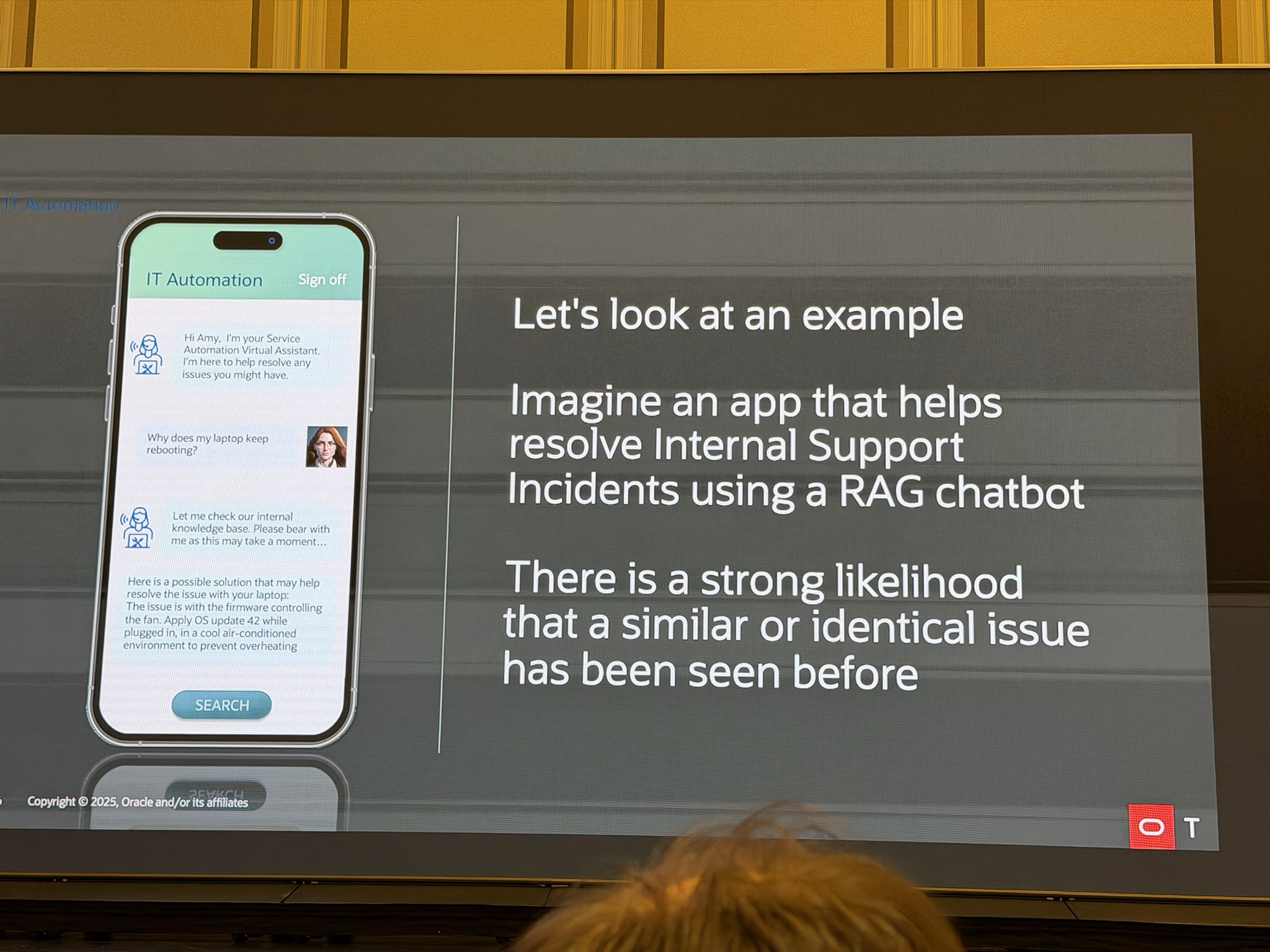
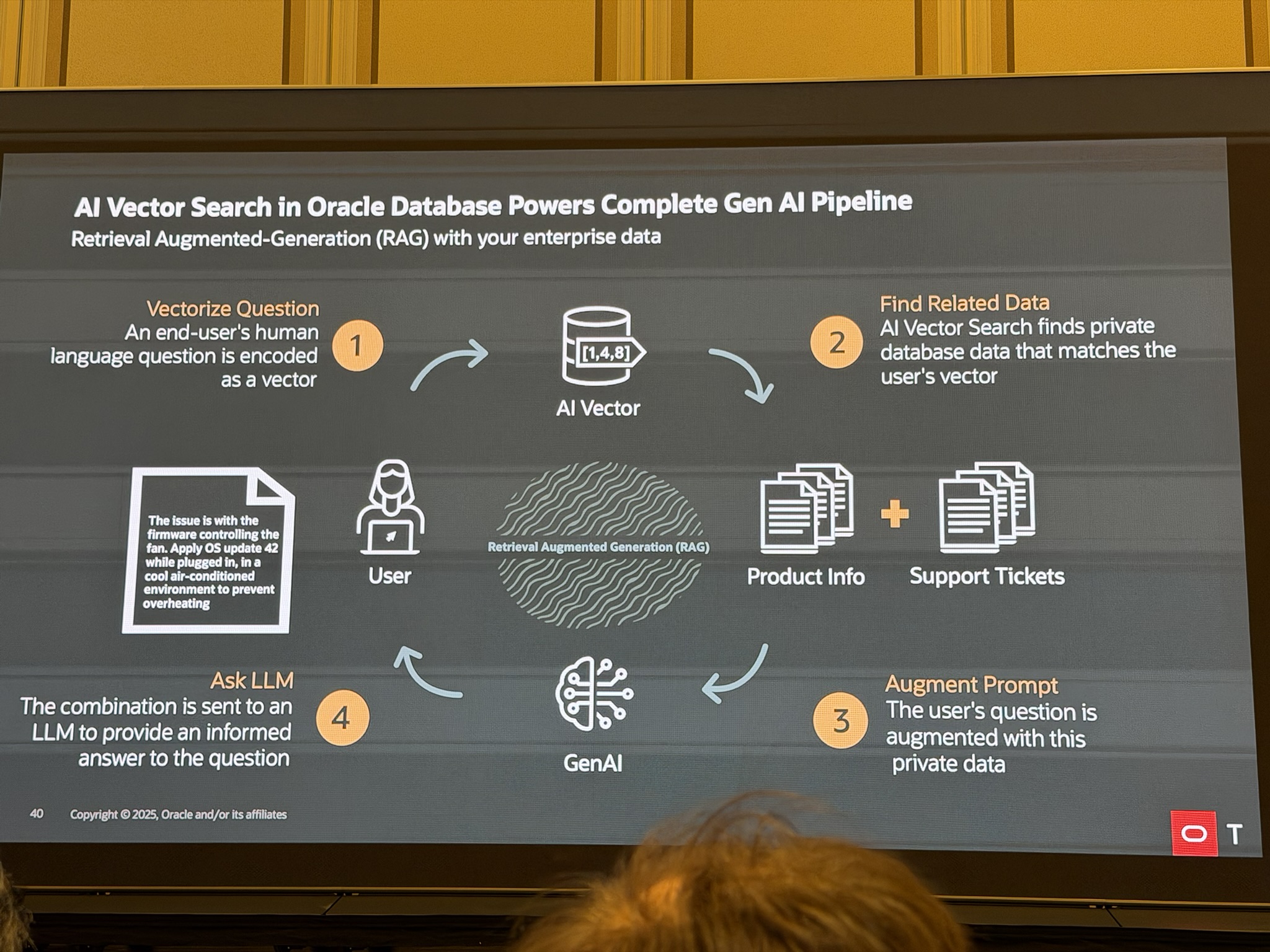
Next, he covered Retrieval Augmented Generation (RAG) and Agentic AI, explaining how they can deliver more sophisticated answers by blending private enterprise data with public data, unlocking richer, context aware responses.

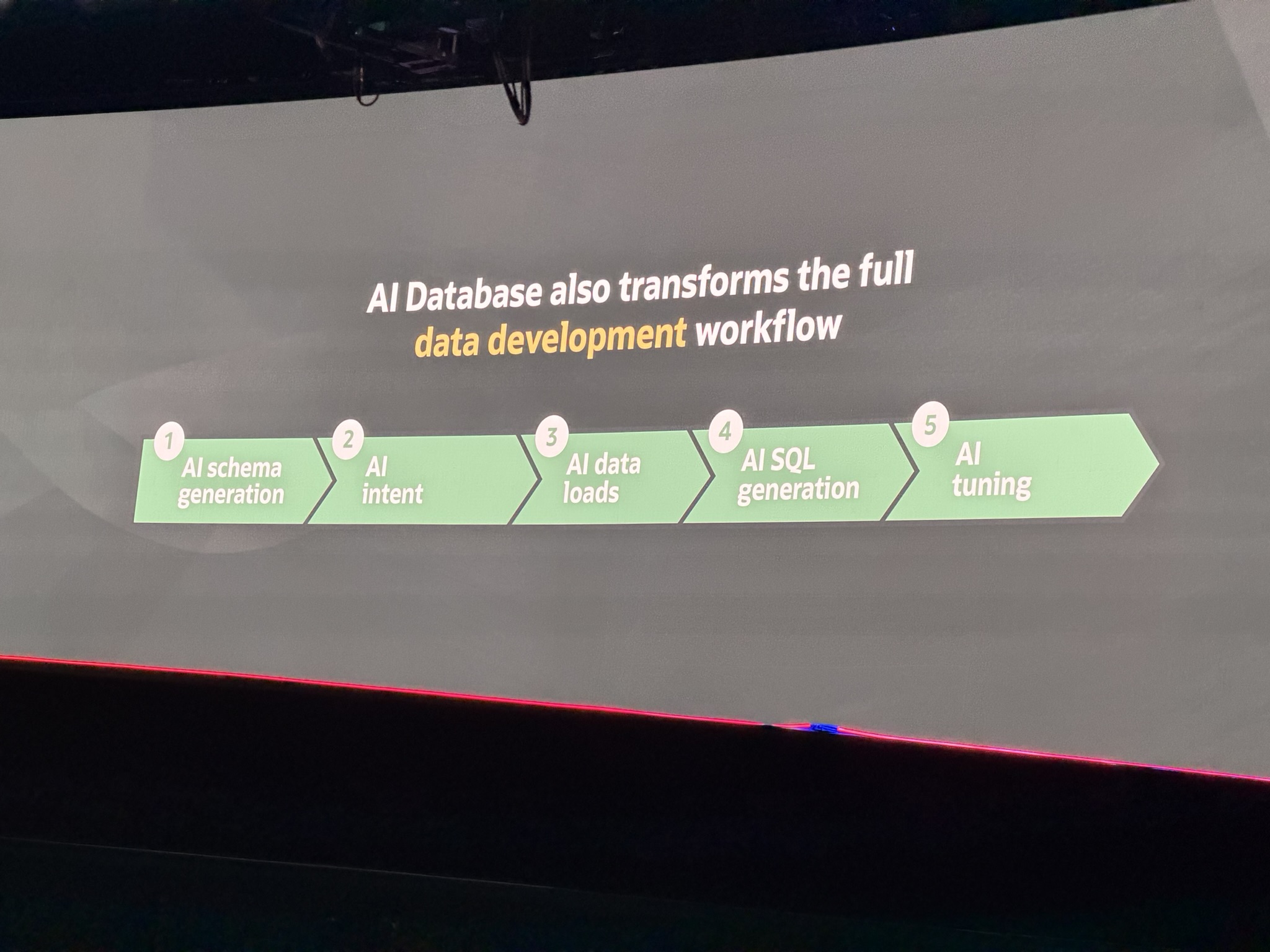
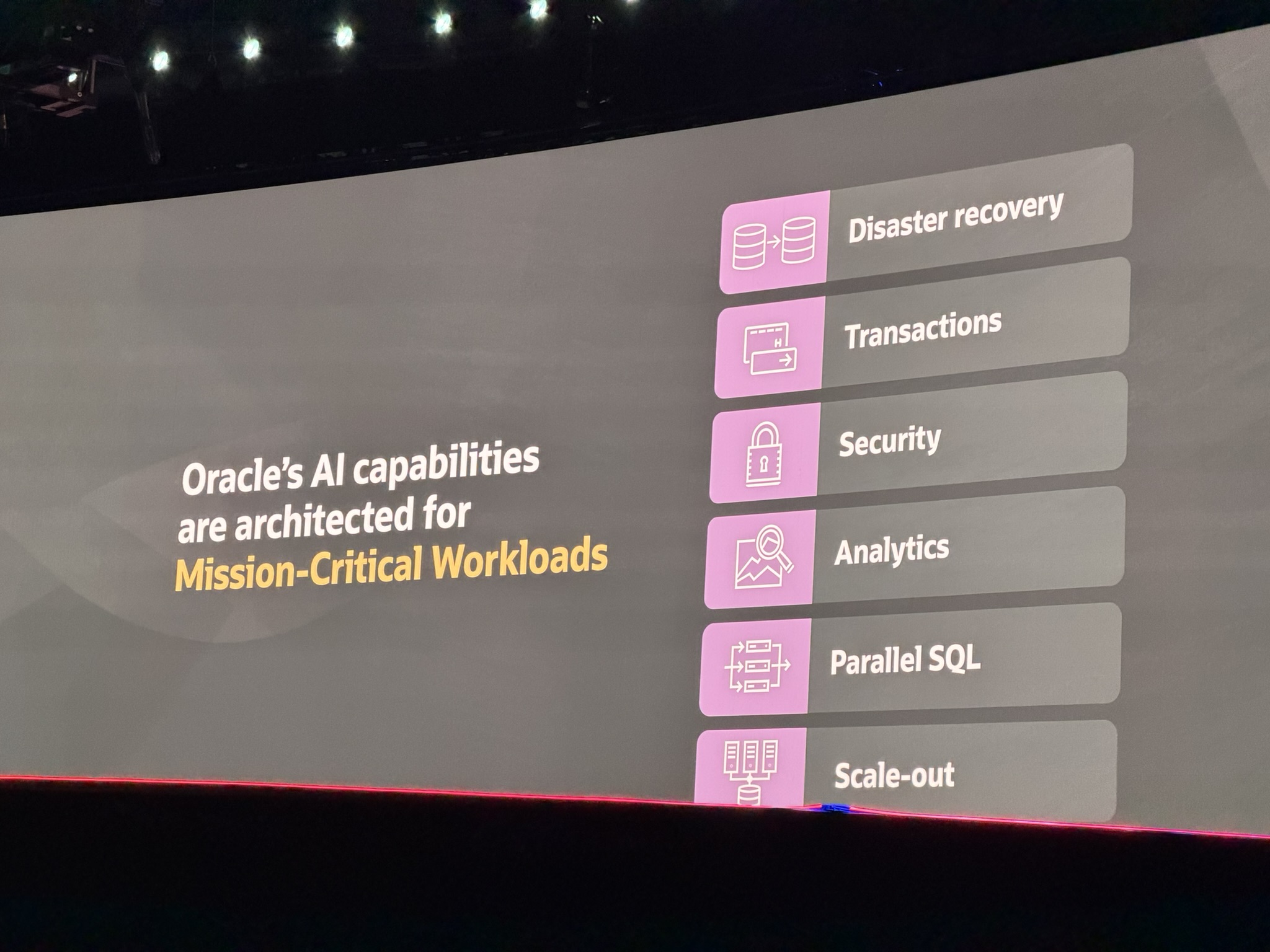
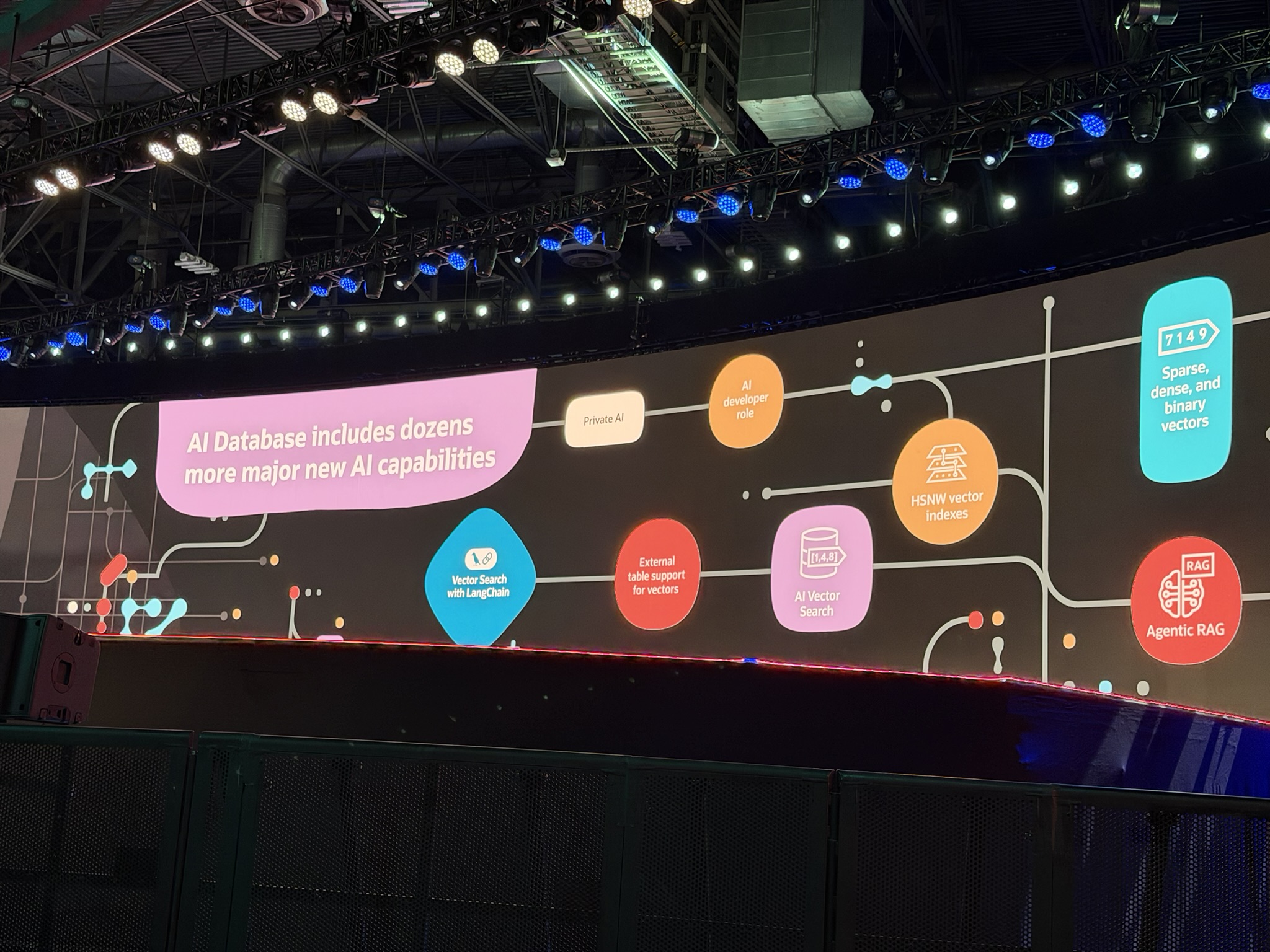
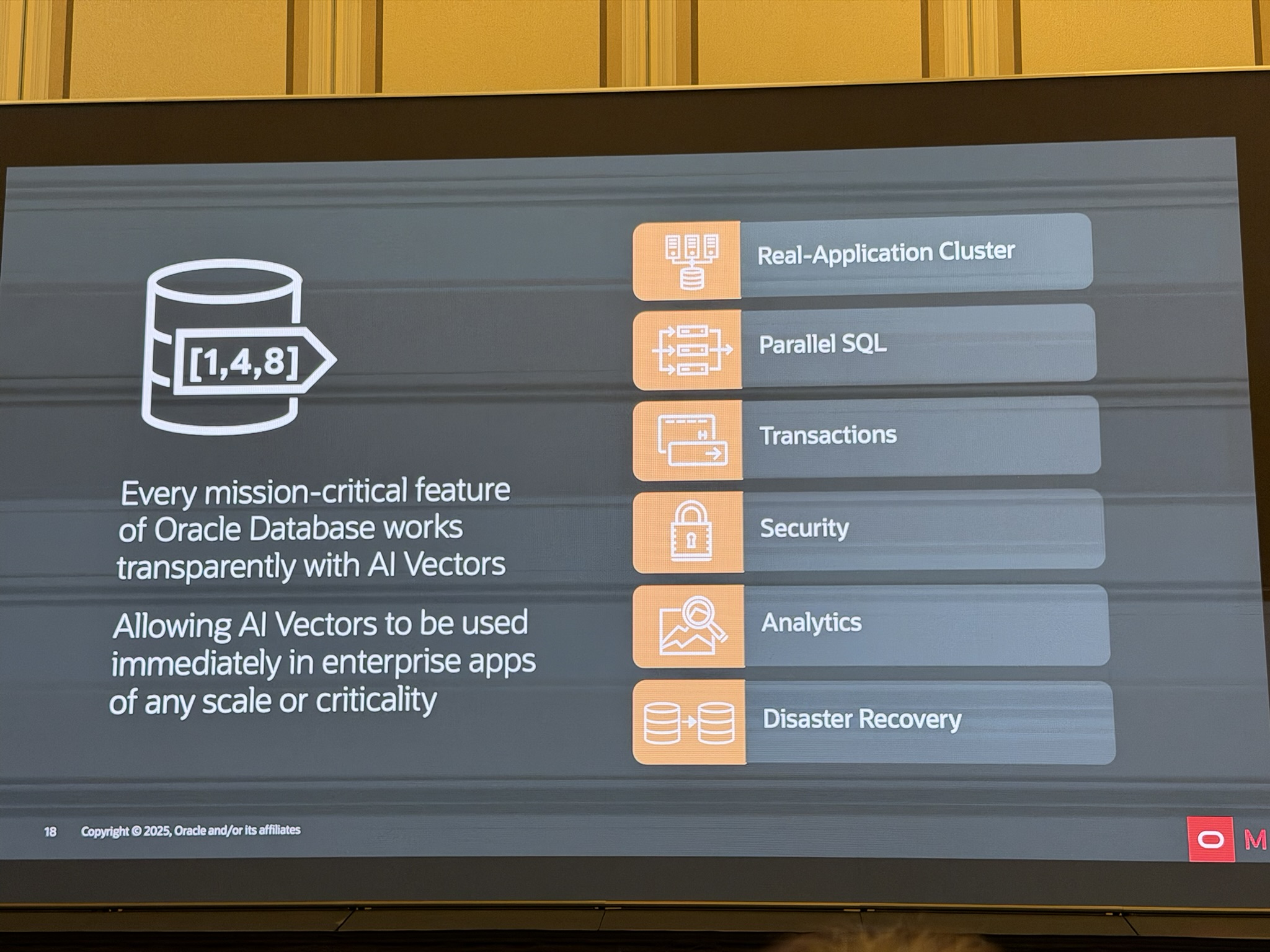
He finished off the AI Database segment by talking about how the AI database is also transforming the full data development workflow: generating schema using natural language, declaring data intent and semantics to LLMs using annotations, AI-assisted ETL pipeline creation, creating synthetic test data from production using AI, talking to your data and generating SQL with Select AI, and testing and optimising embedding models and LLMs for your data. He also highlighted how Oracle’s AI capabilities are architected for mission-critical workloads and that the AI database includes dozens more major new AI capabilities.

Segment 2: Architecting AI, Data, and App Dev Together – GenDev

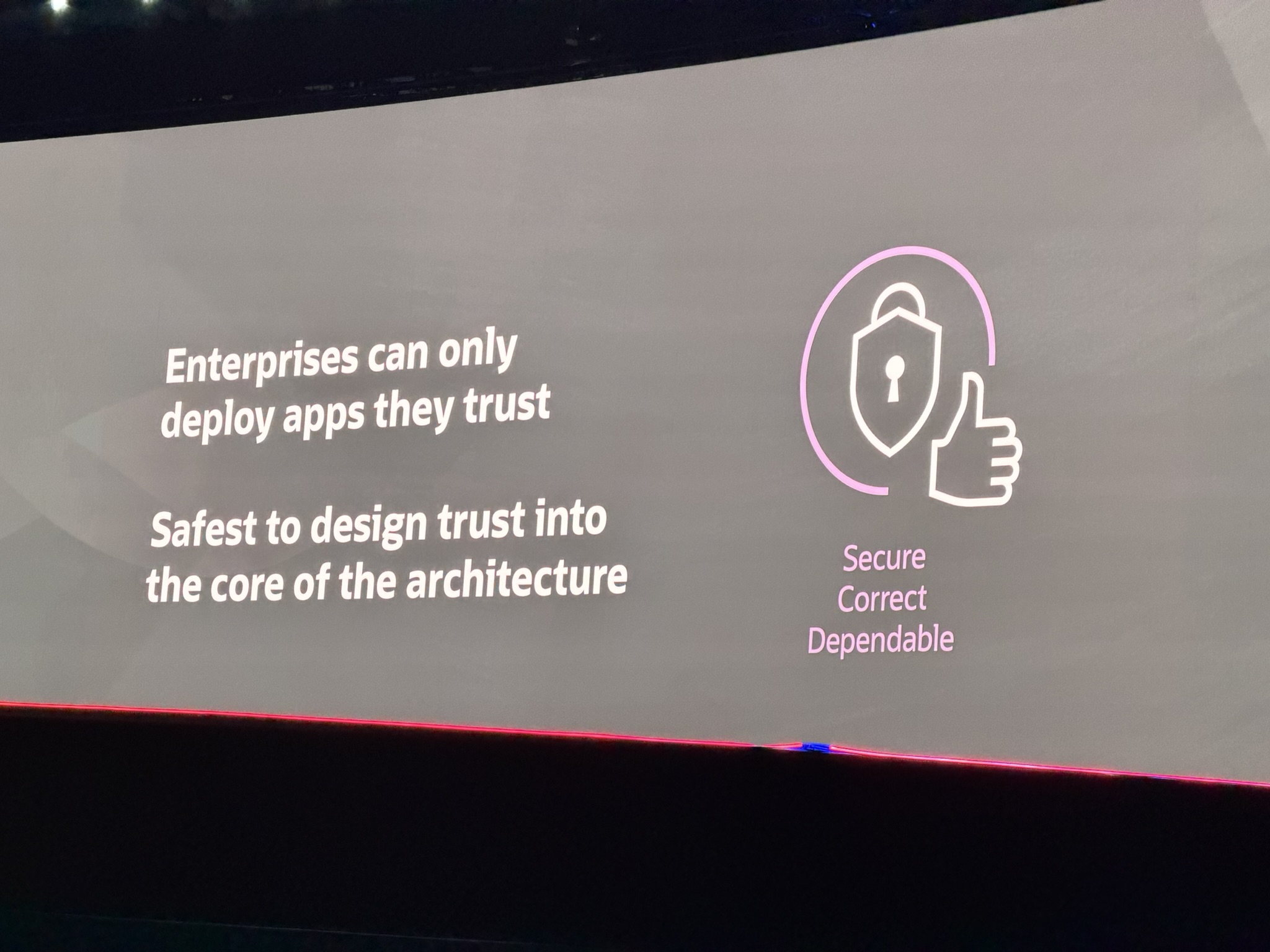
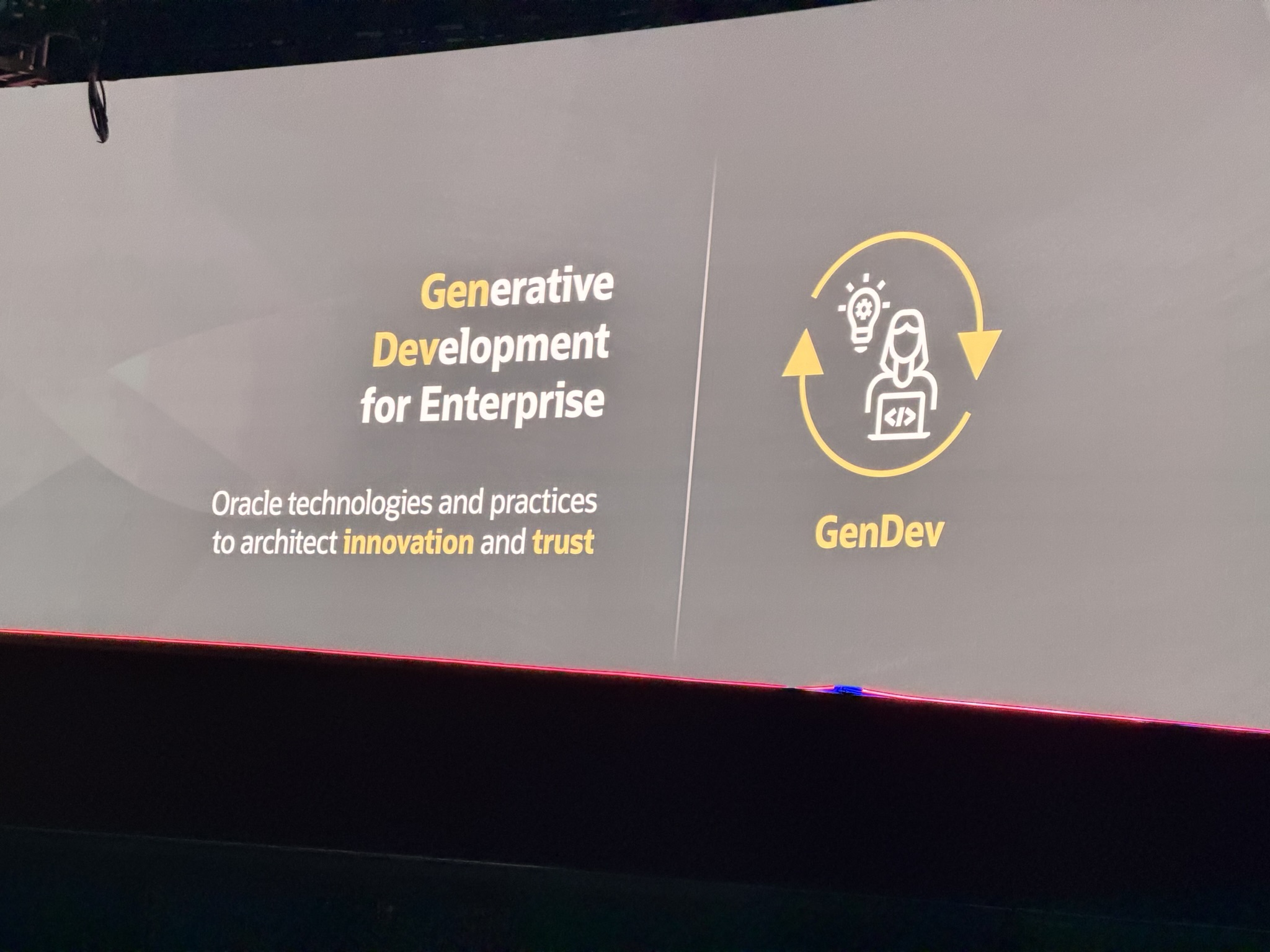
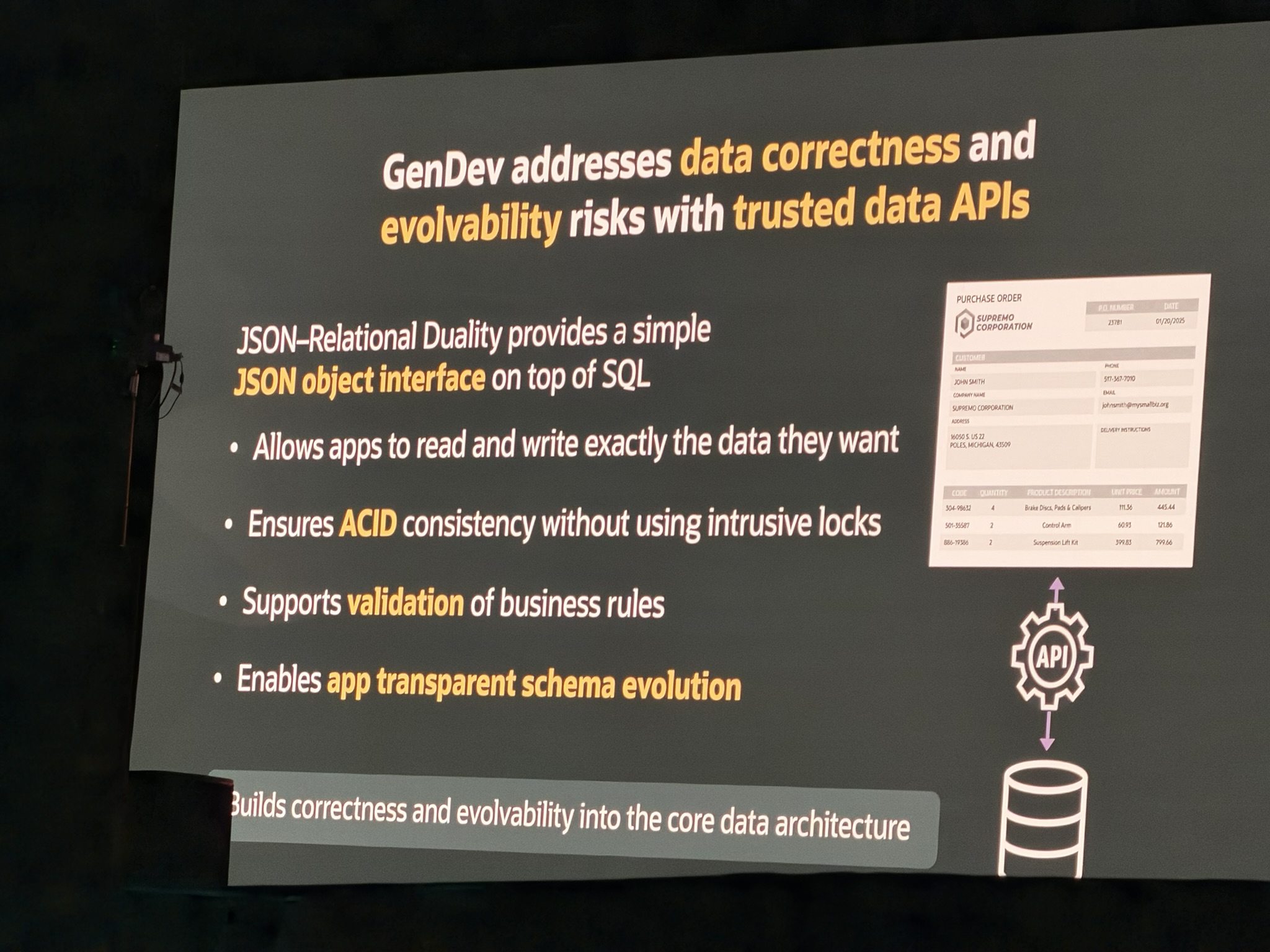
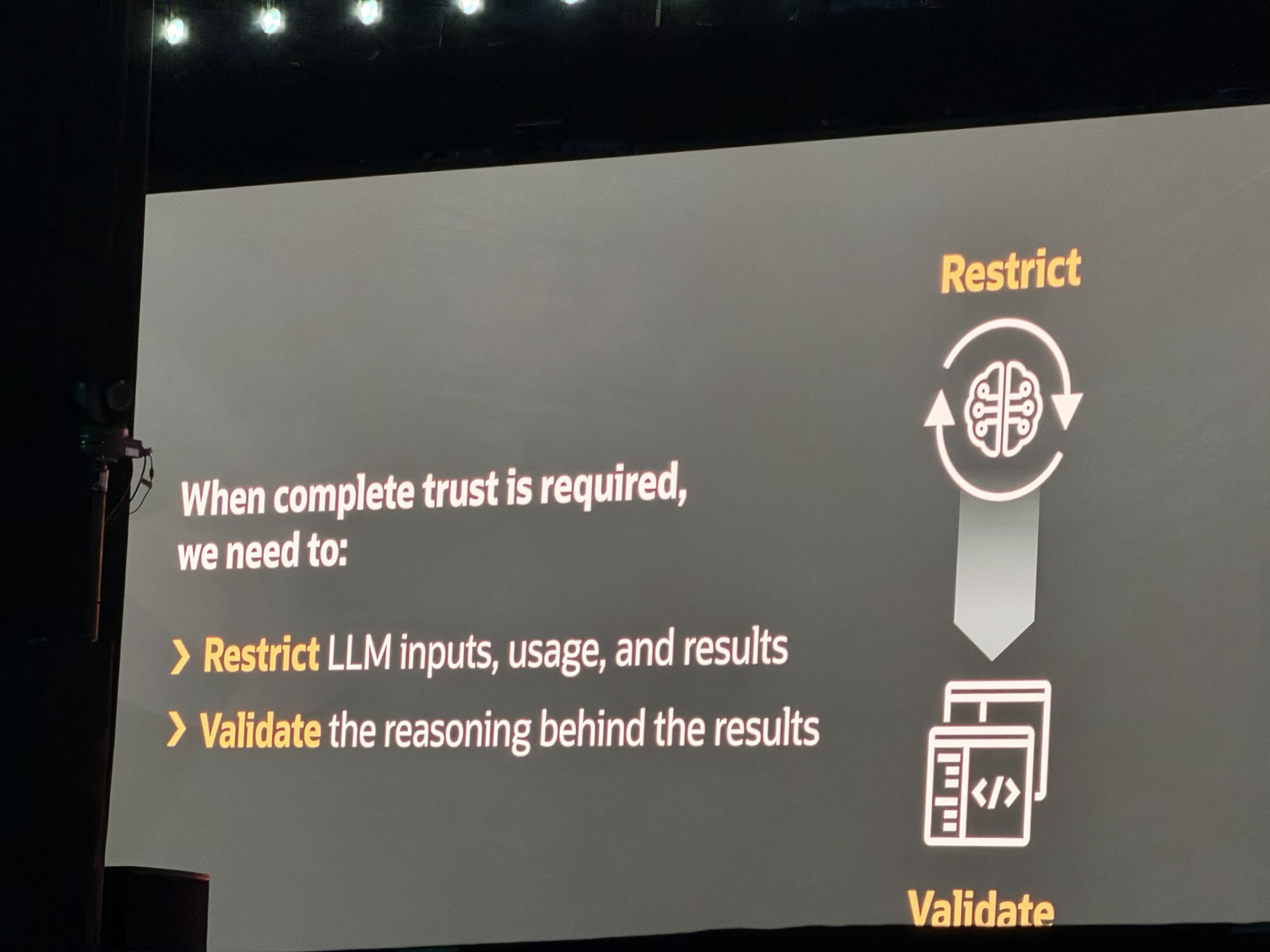
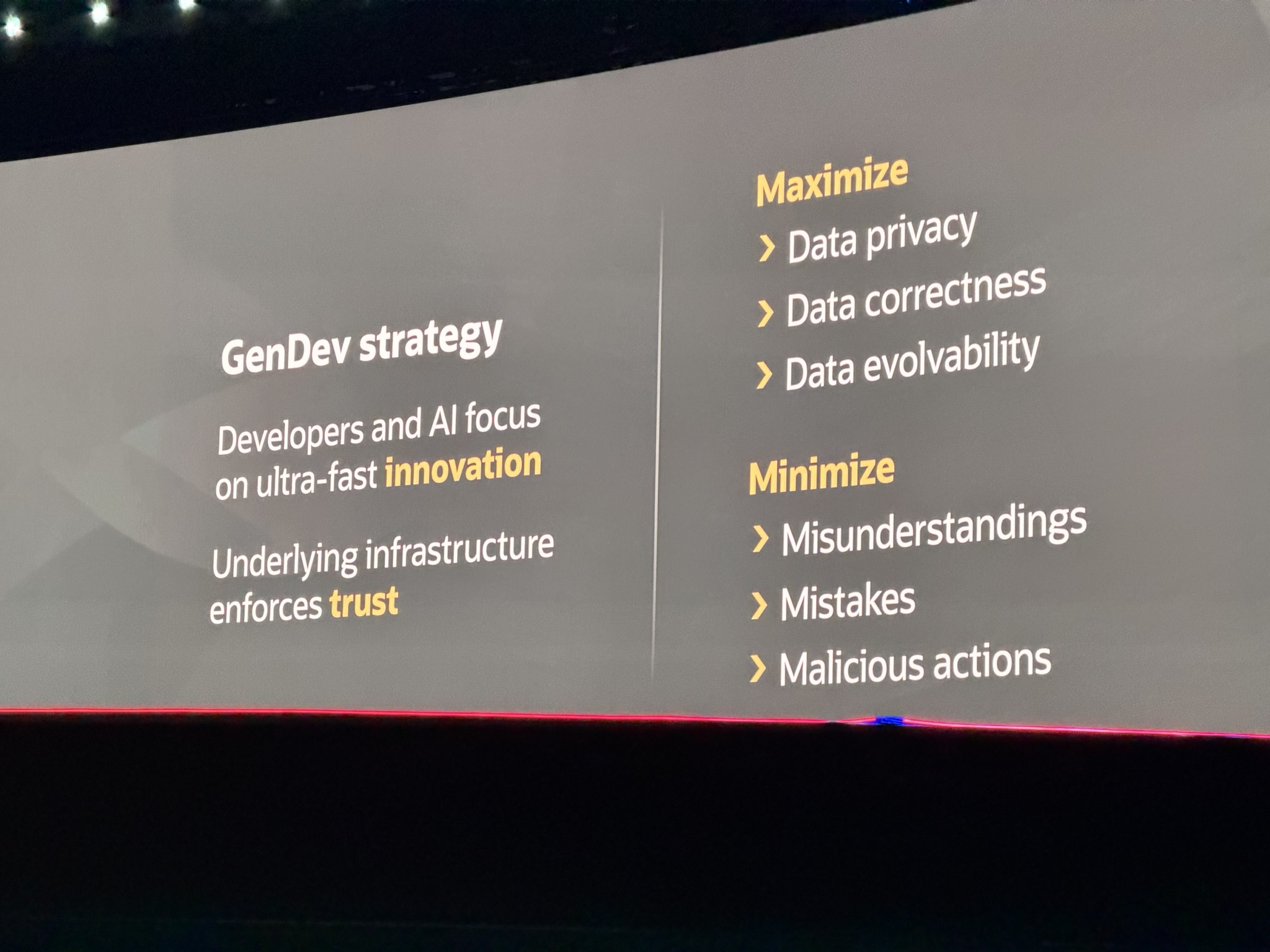
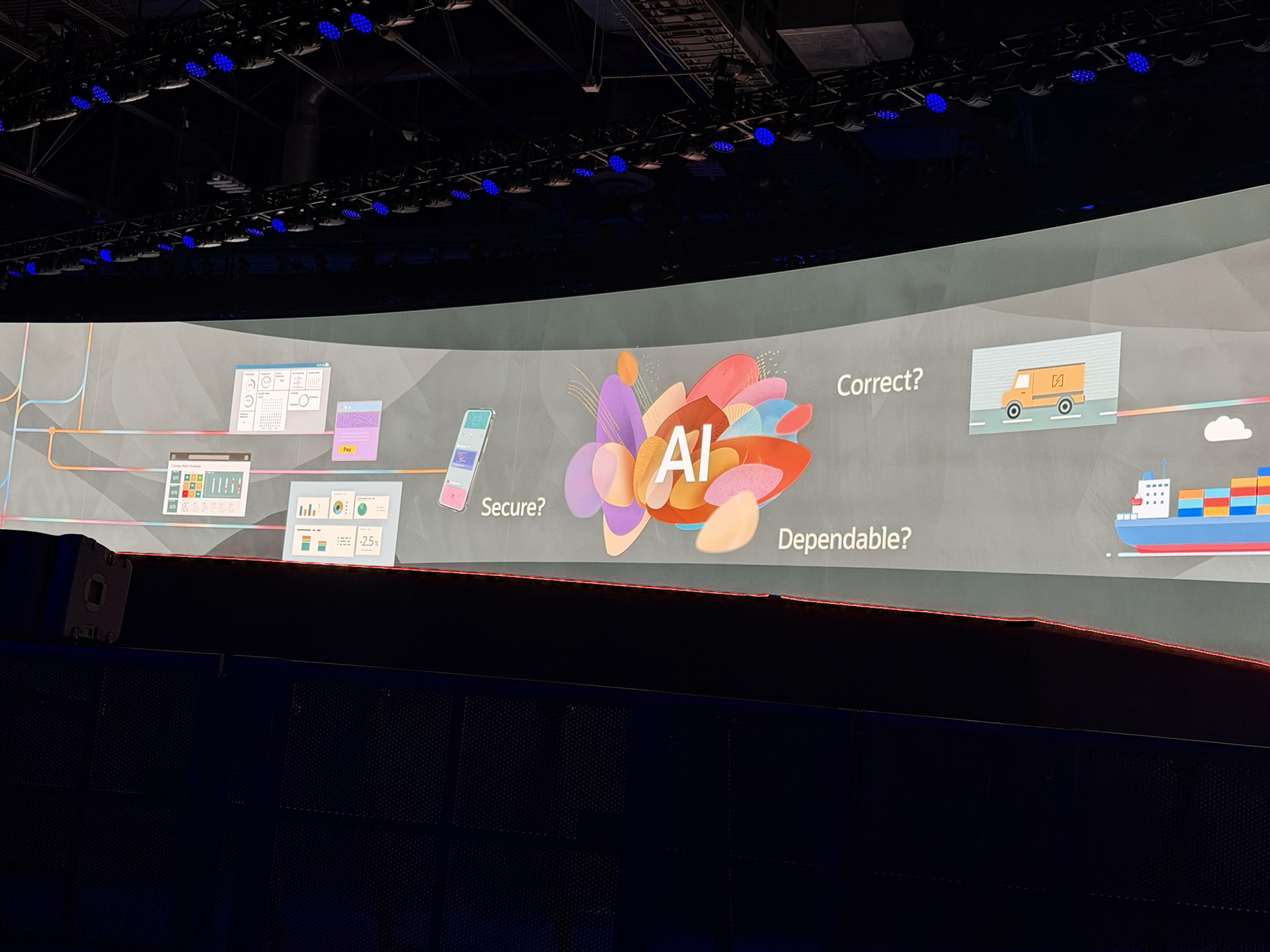
He next introduced Generative Development for Enterprise (GenDev), Oracle’s approach to AI-driven application development. Maximise innovation speed while ensuring apps are secure, correct, and dependable.

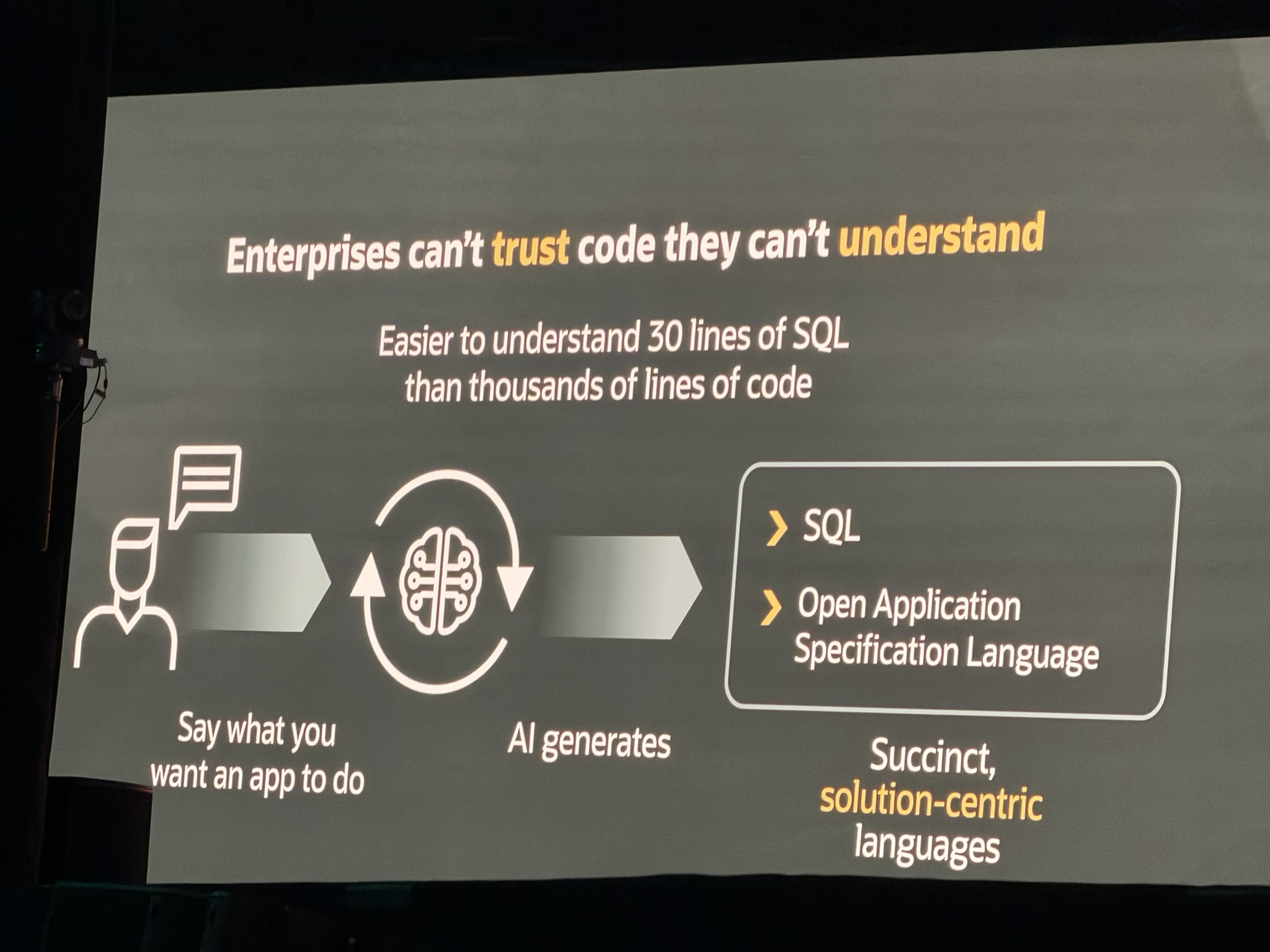
He explained what makes GenDev different, instead of generating thousands of lines of low-level, un-auditable code, GenDev uses high-level, solution-centric languages:

  • SQL: Proven for data operations
  • Open Application Specification Language: Declaratively defines what an app should do, not how

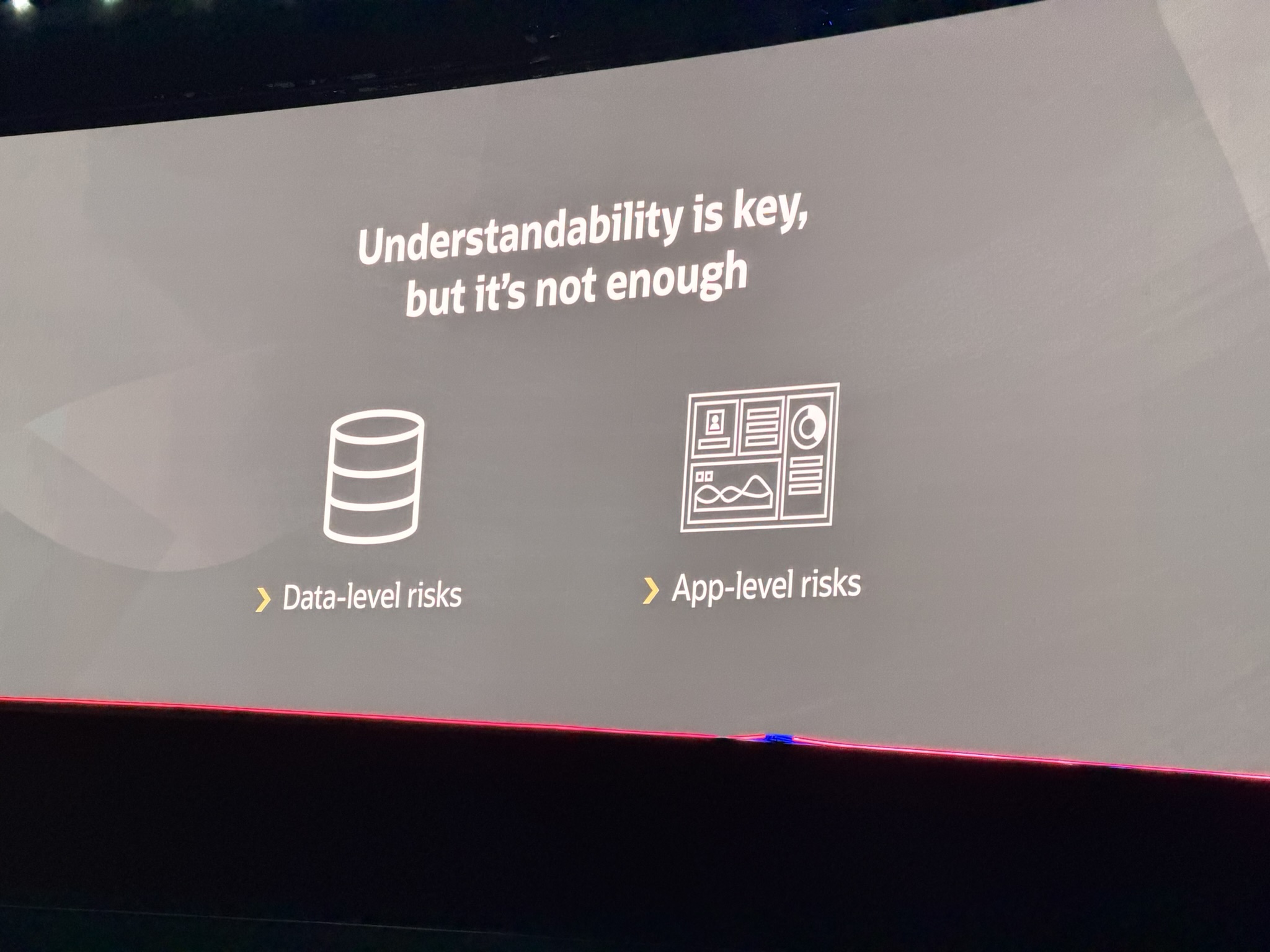
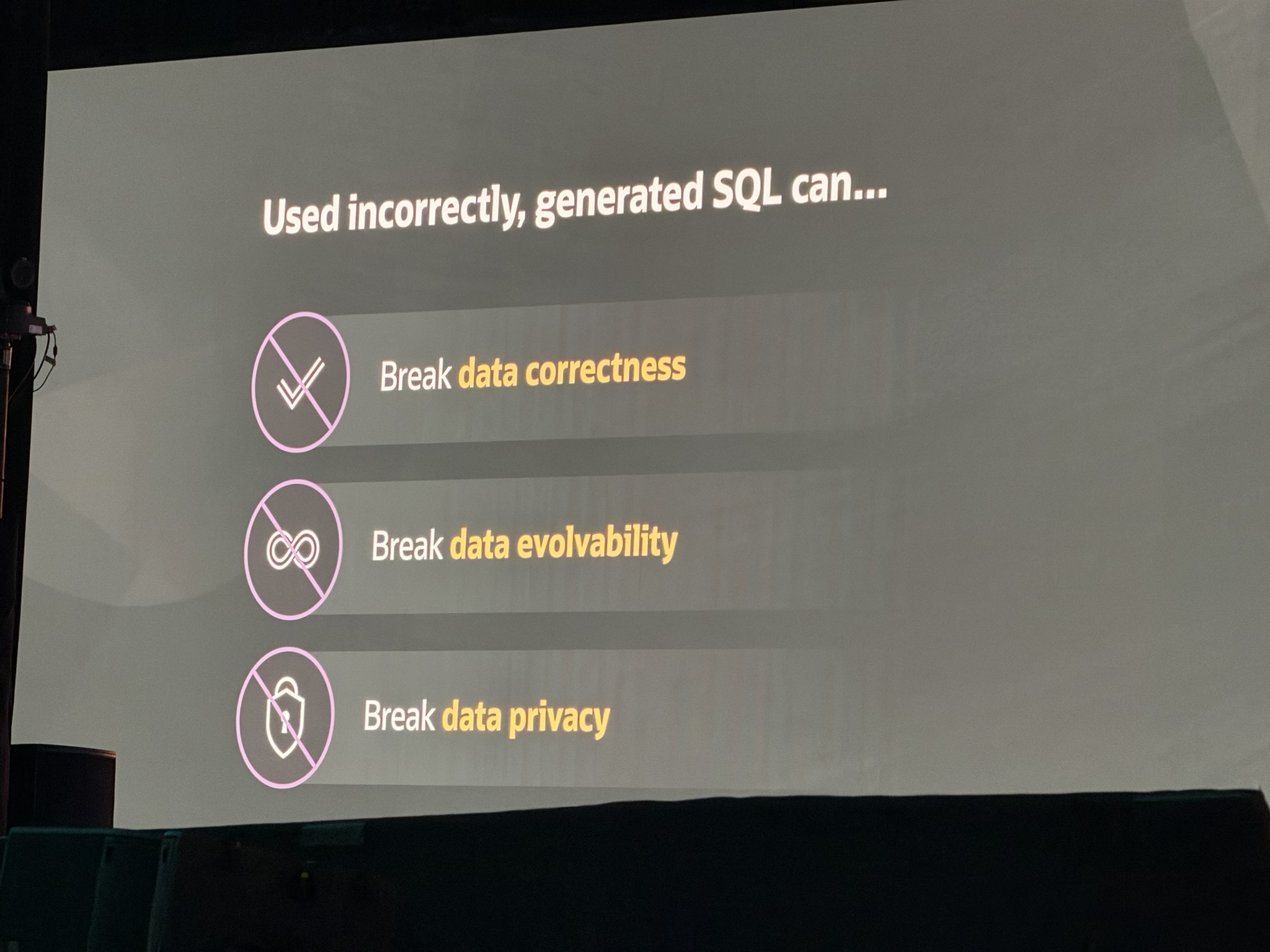
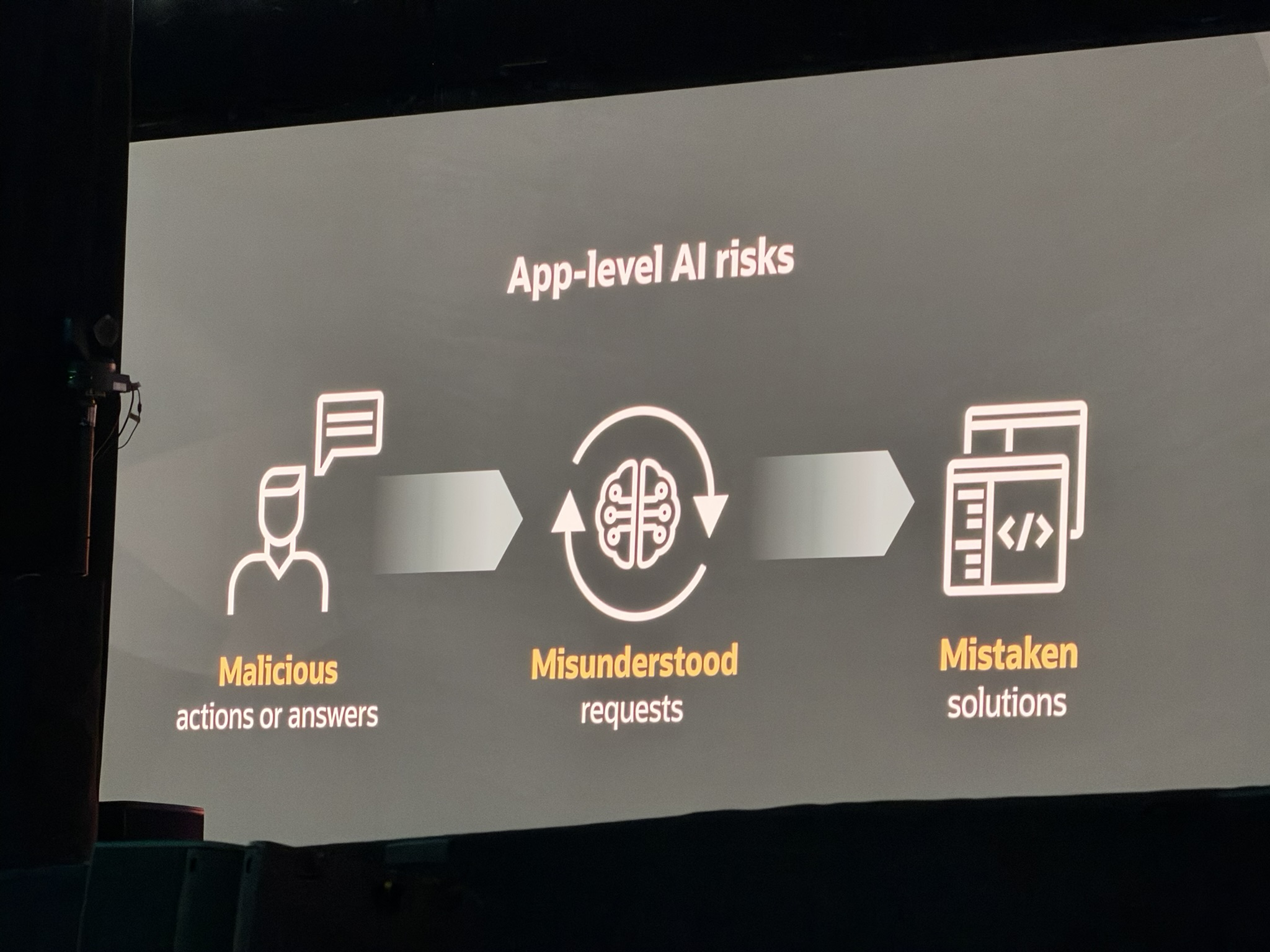
How it’s tackling critical risks, by addresses three big challenges:

  1. Data Correctness & Evolvability
    Uses Trusted Data APIs built on JSON Relational Duality to enforce business rules, maintain ACID consistency, and decouple apps from schema
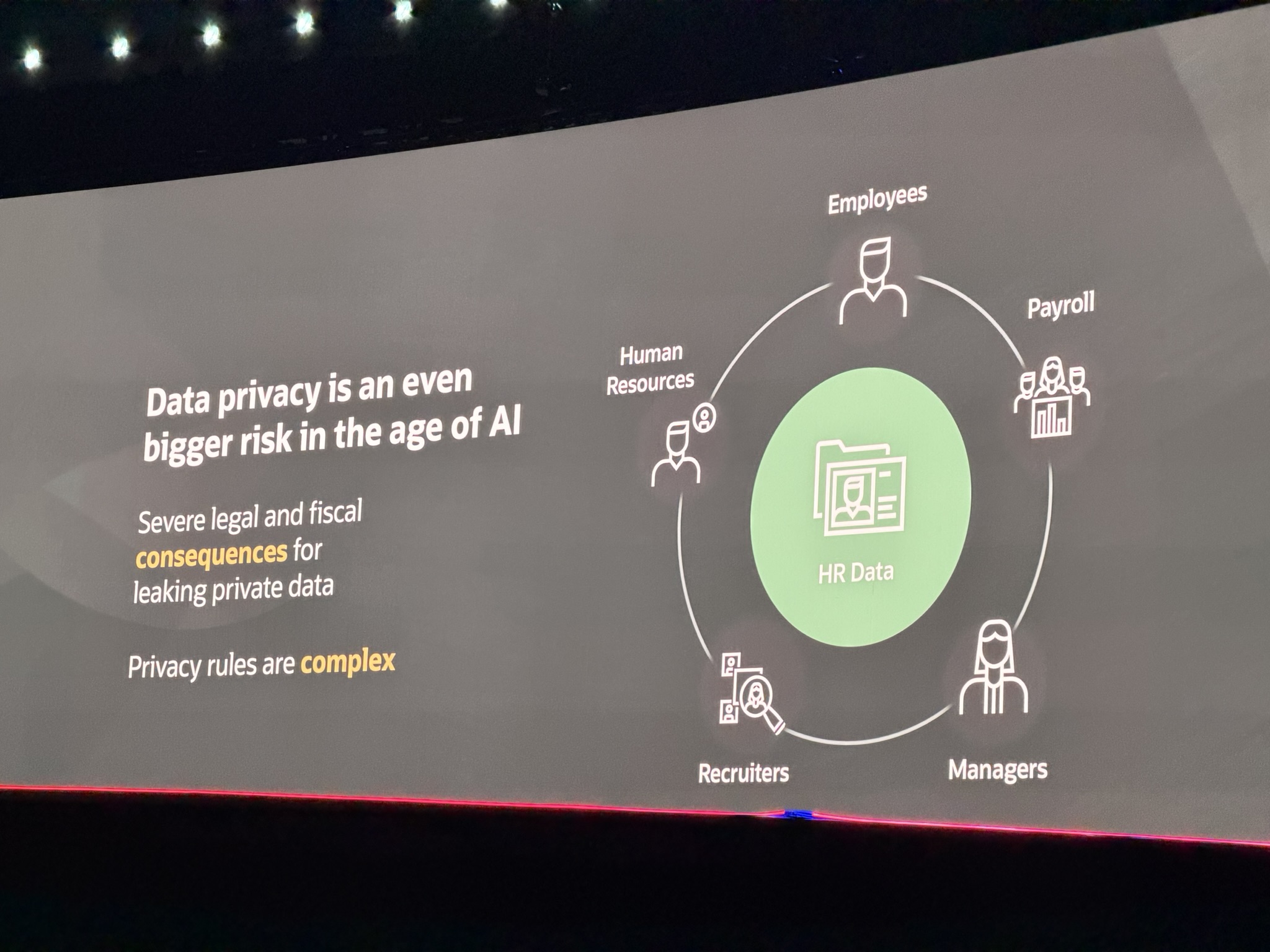
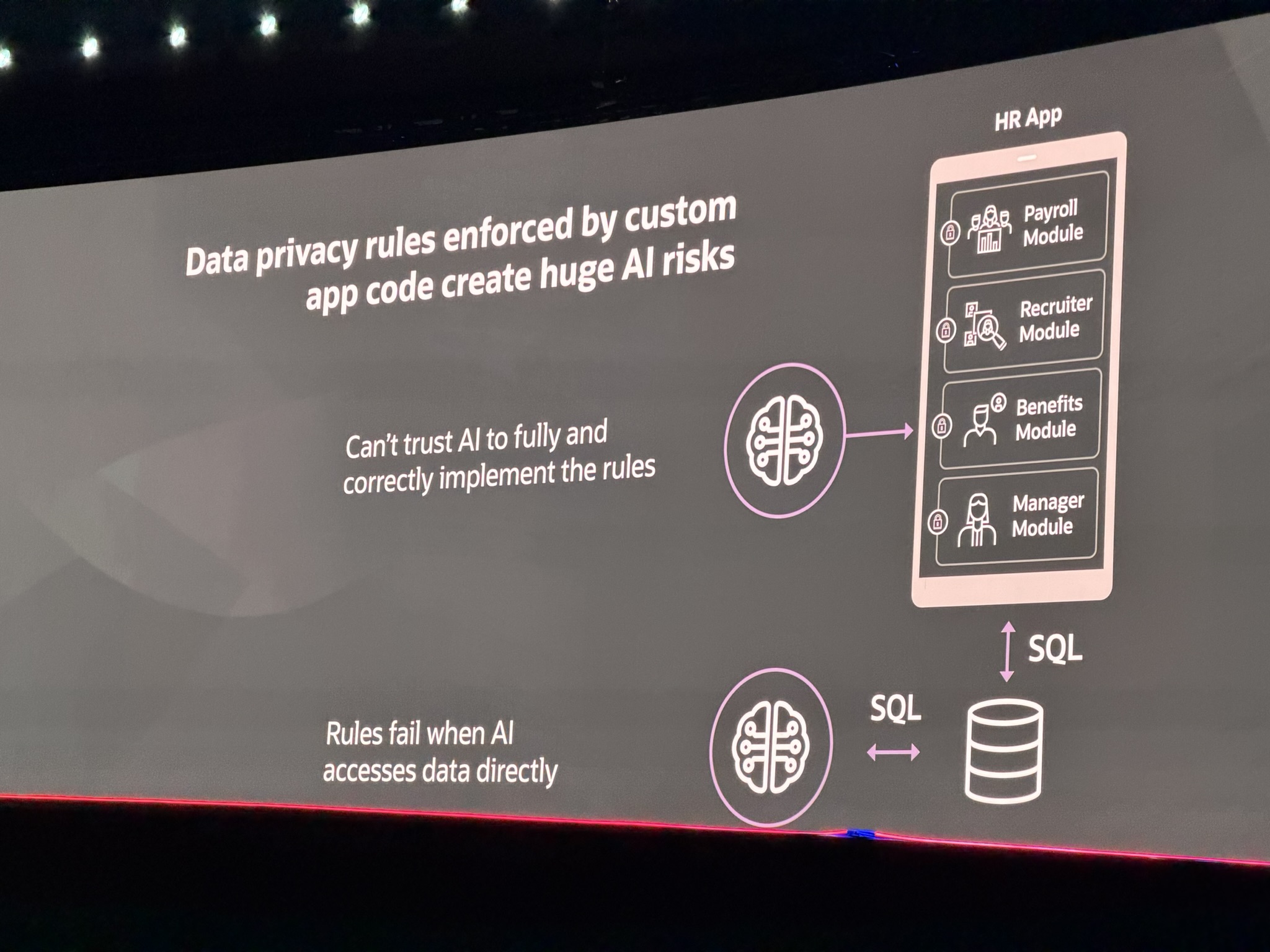
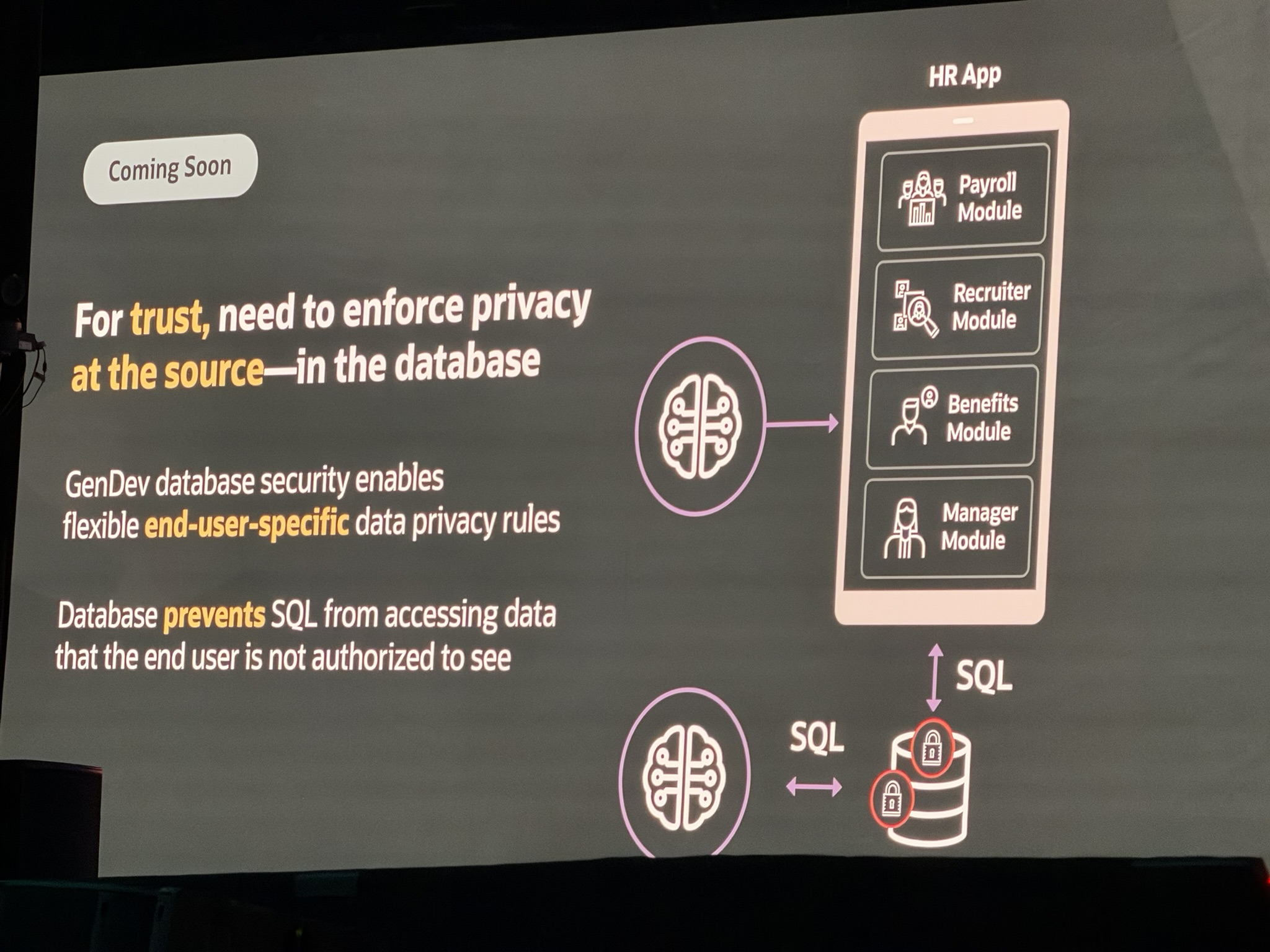
  2. Data Privacy
    Privacy is enforced at the source via Oracle’s rules engine, ensuring any SQL, human or AI-generated, returns only authorised data
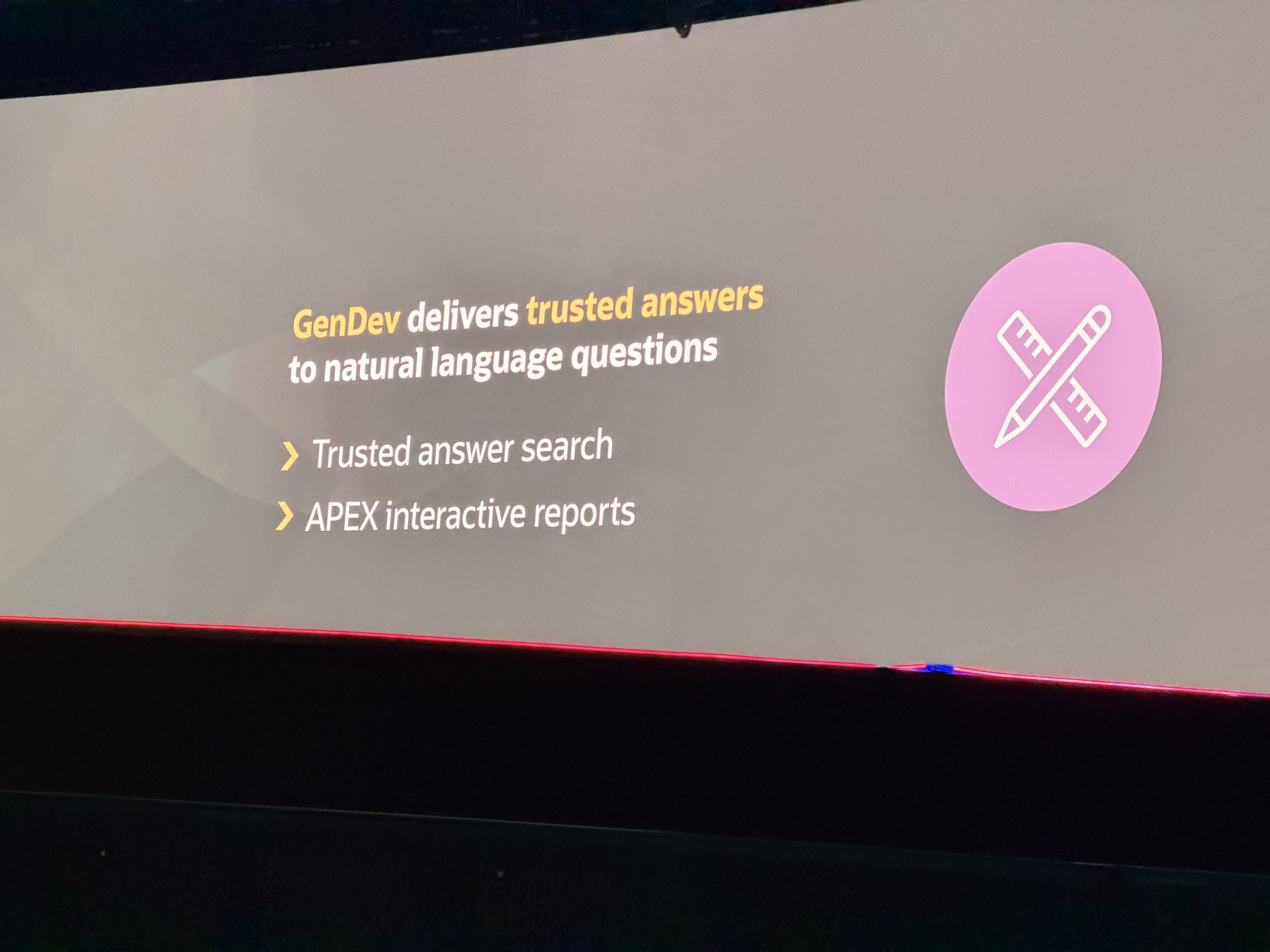
  3. Application-Level Trust
    Prevents LLM hallucinations by translating natural language queries into transparent, auditable report settings e.g. Apex interactive reports

He finished off the AI App Dev segment talking about how Apex Goes AI-Native. Oracle is re-architecting Apex into an AI-native app generator:

  • Developers describe apps in natural language
  • Apex converts this into an Open App Specification, compiles it, and ensures secure data access via Trusted Data APIs

He concluded that GenDev isn’t just about speed, it’s about building AI-powered apps you can trust.

Segment 3: Architecting AI, Data, and Open Standards Together – The AI Lakehouse

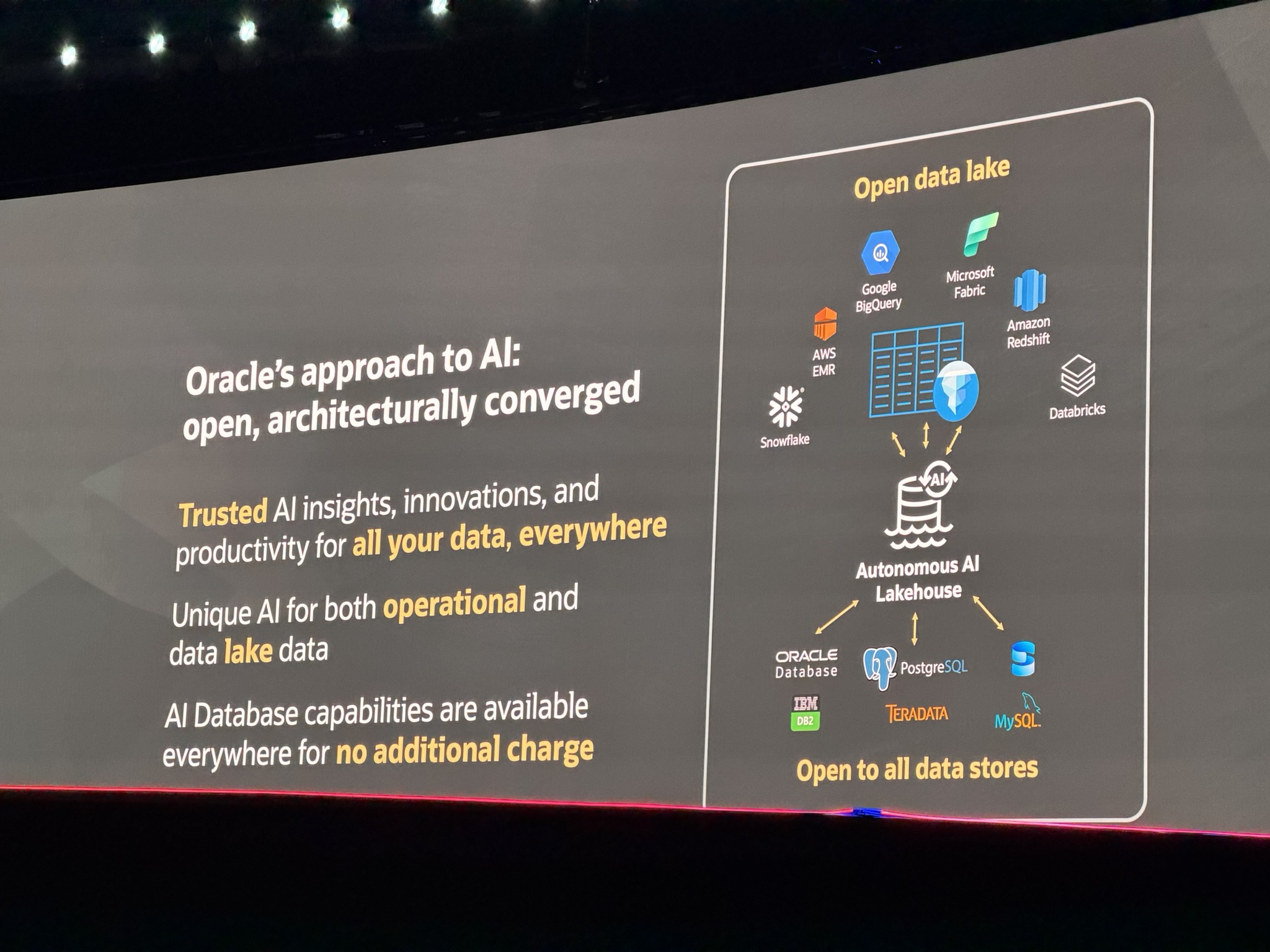
He next introduced Oracle AI Lakehouse, the strategy/concept where Oracle is extending its AI capabilities beyond its own database to all enterprise data, reinforcing its commitment to openness and flexibility.

This is interesting because Microsoft takes a Software as a Service (SaaS) first approach with Fabric, a unified data platform that brings together analytics, data engineering, and AI, powered by Azure AI Foundry. Oracle is pursuing a similar vision but with a database-centric strategy, embedding AI deeply into its core data architecture rather than layering it on top.

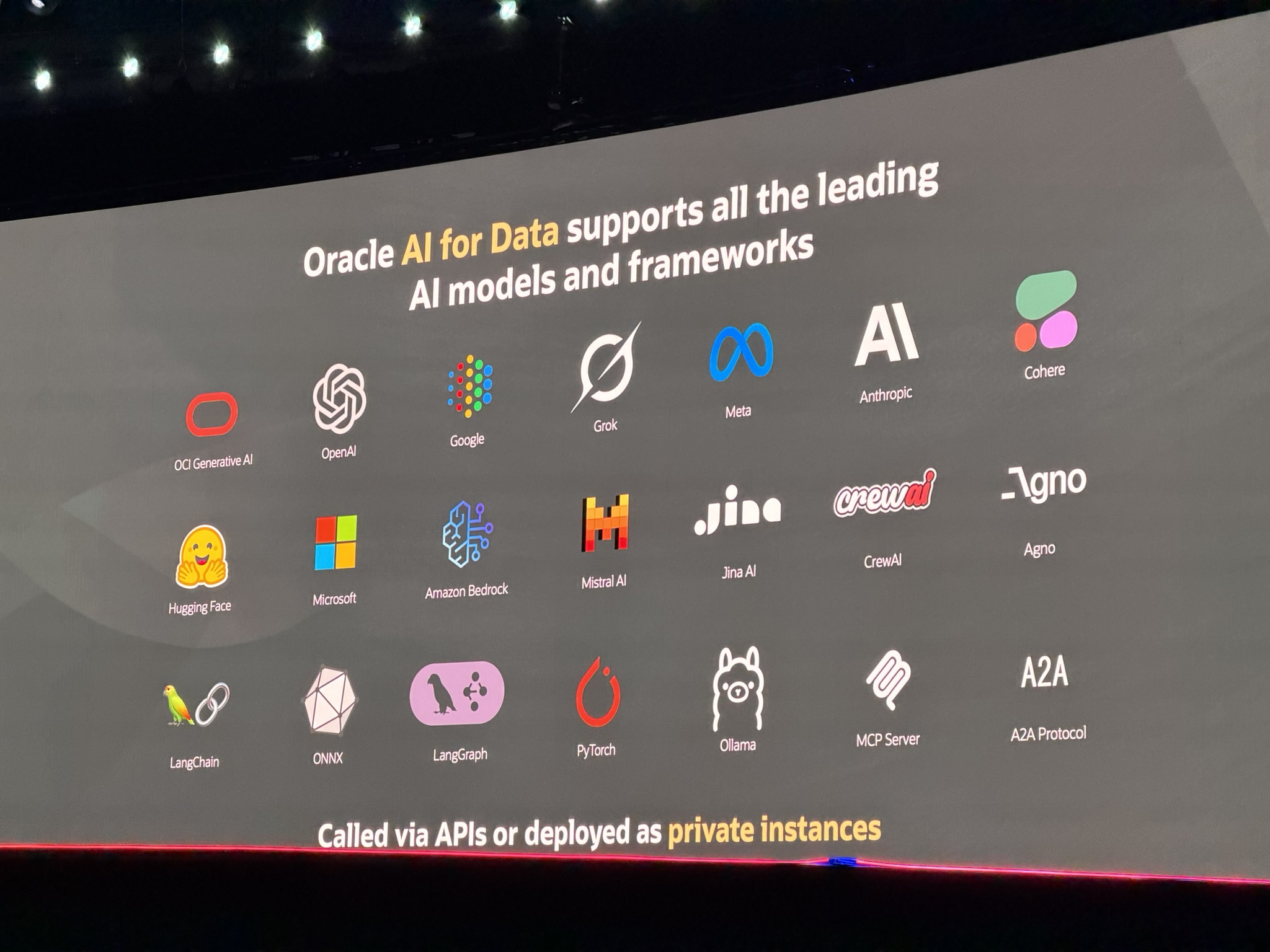
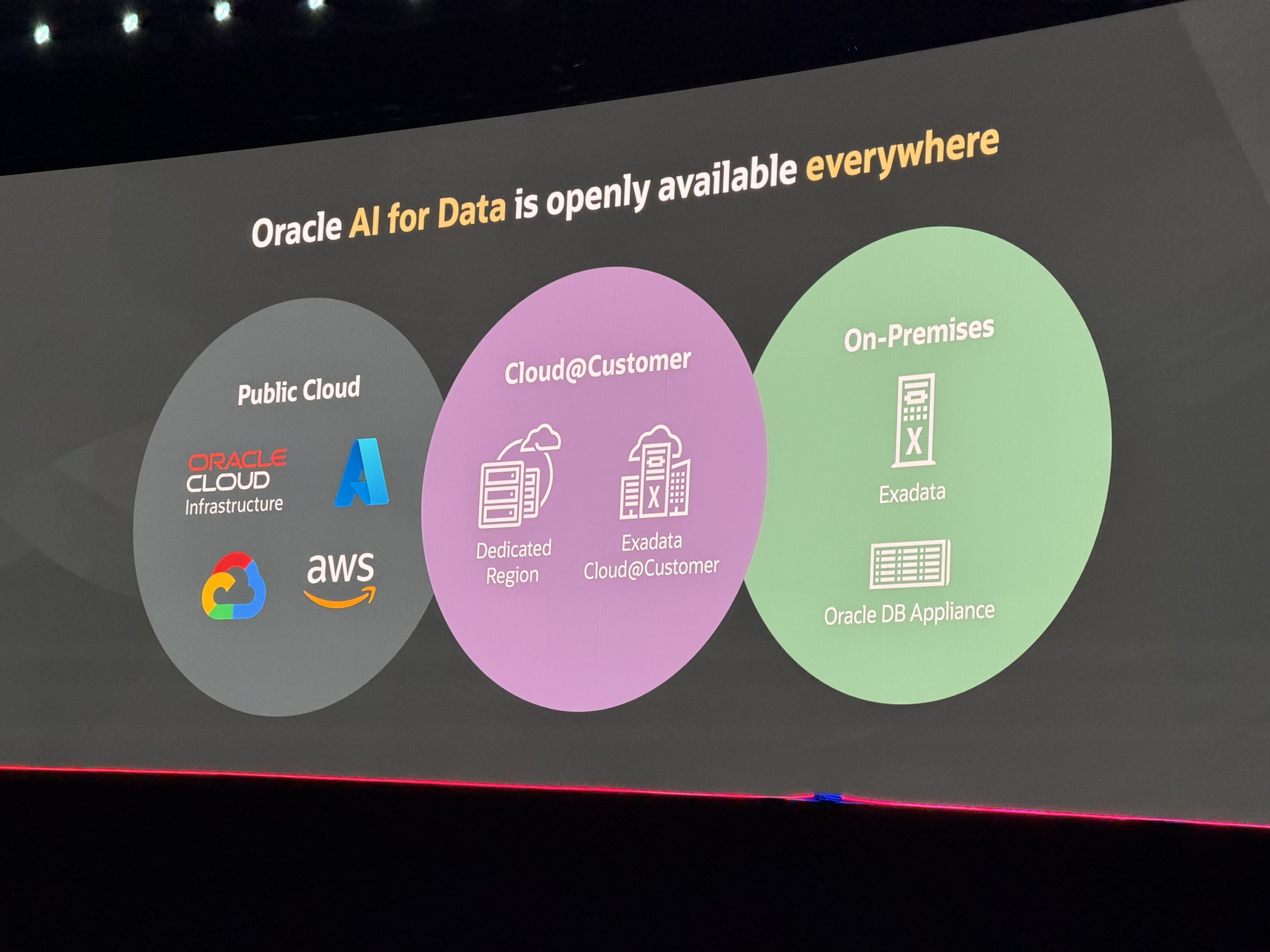
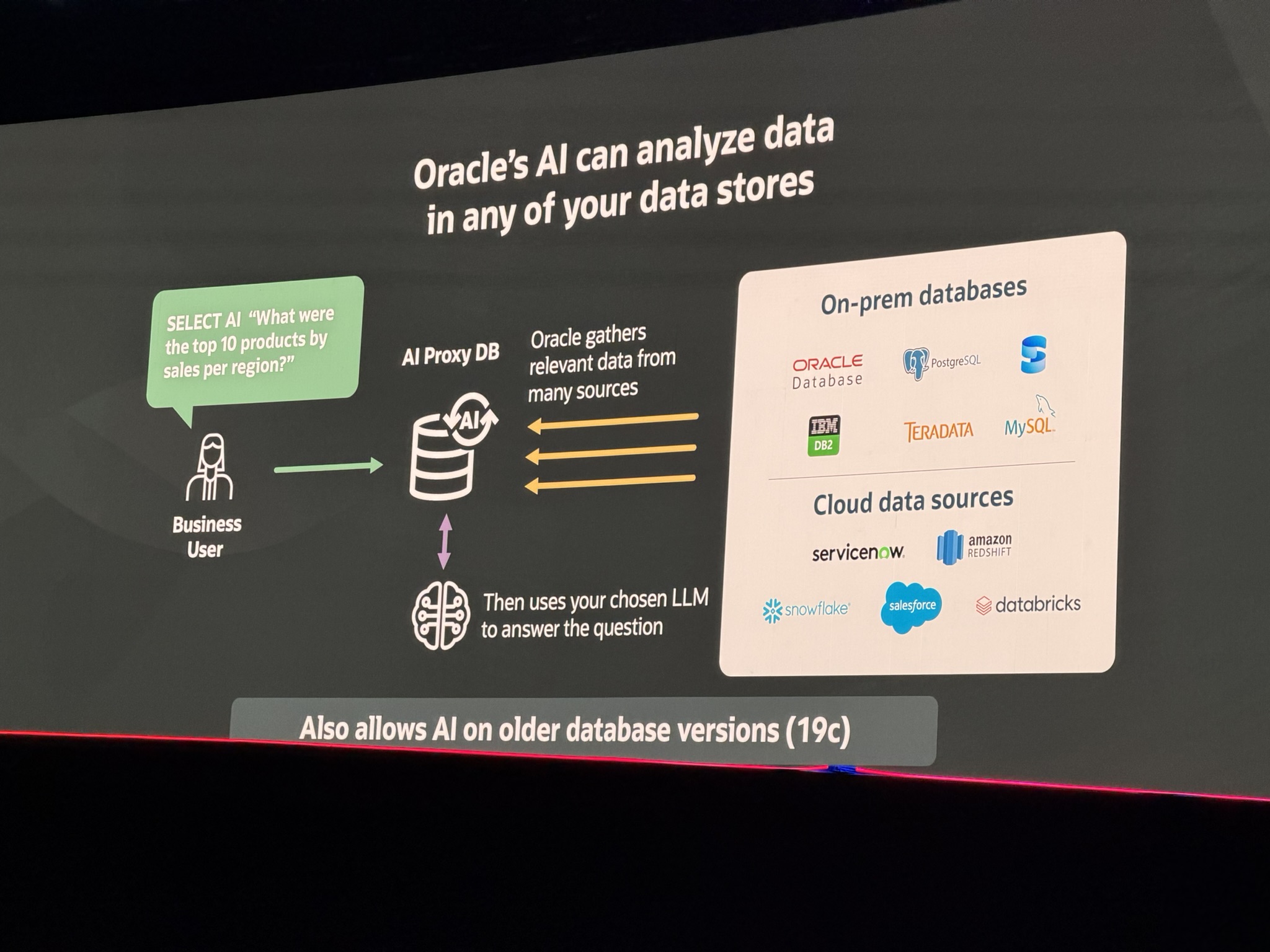
He talked about openness and flexibility, how Oracle AI Lakehouse supports all leading LLMs and AI frameworks, callable via API or deployable privately. How it runs everywhere, public clouds, on-premises, and Cloud@Customer. How it introduces an AI Proxy Database that federates queries across heterogeneous data sources, including older Oracle versions and third-party databases, bringing Oracle AI to mixed environments.

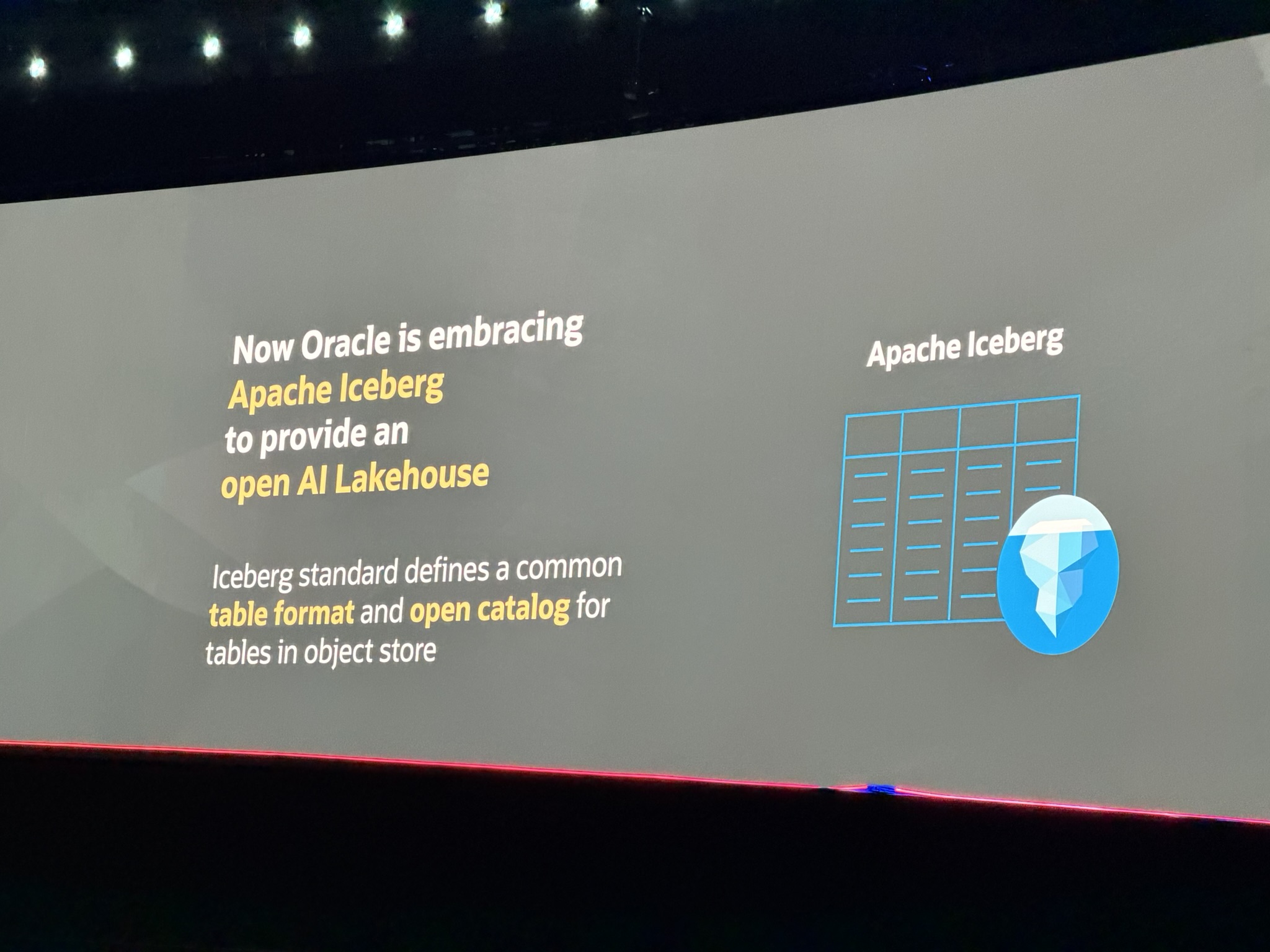
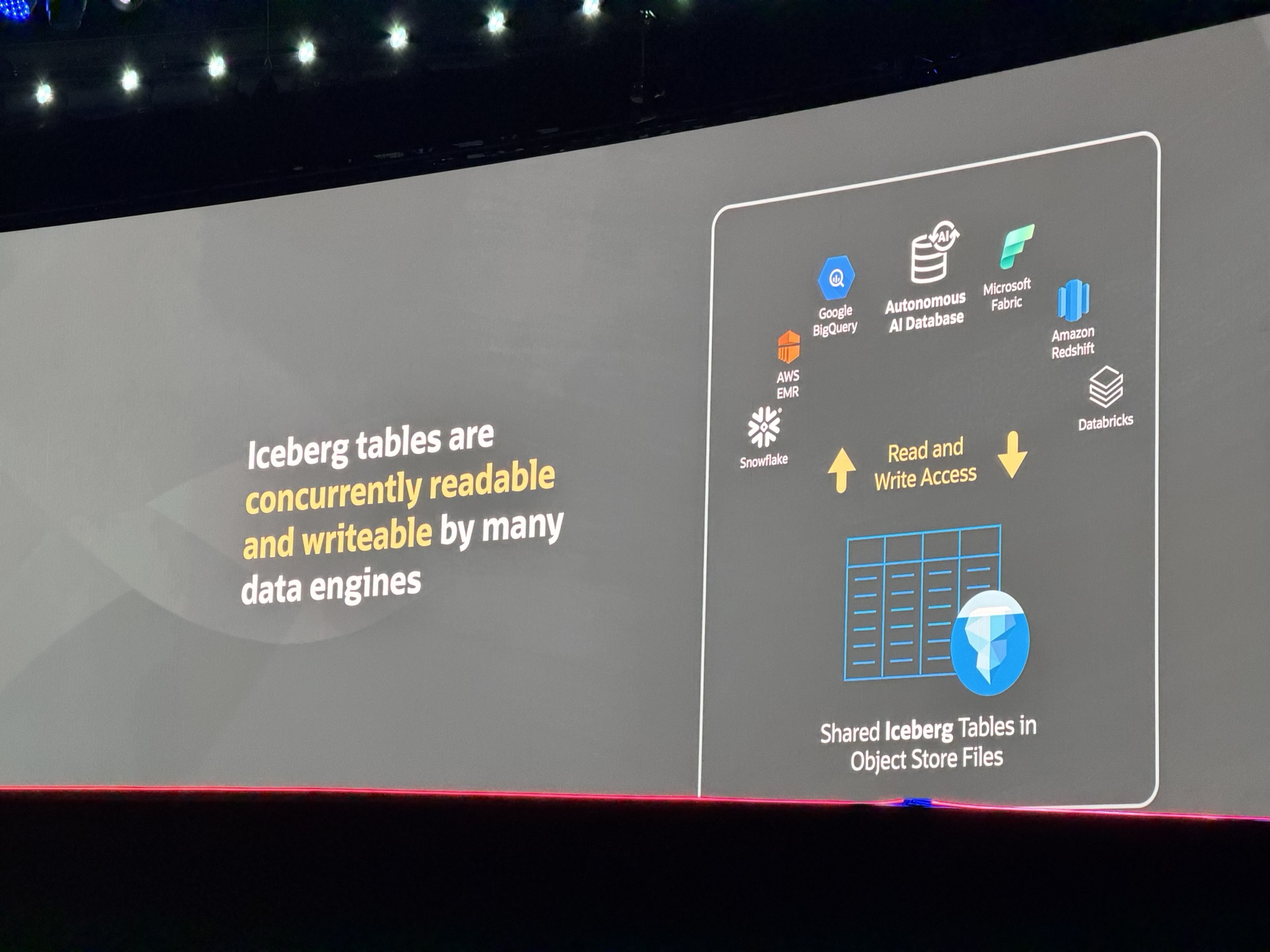
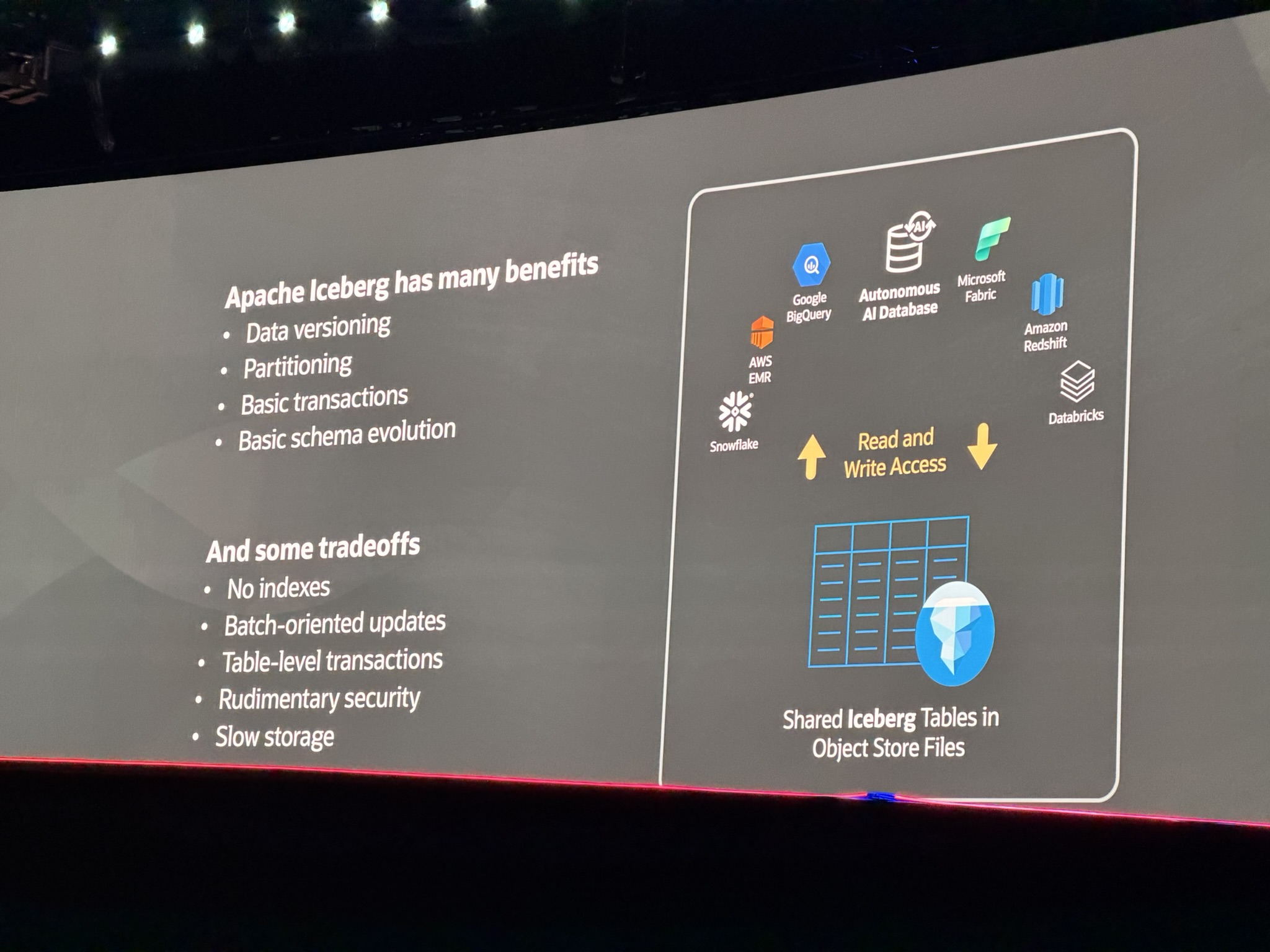
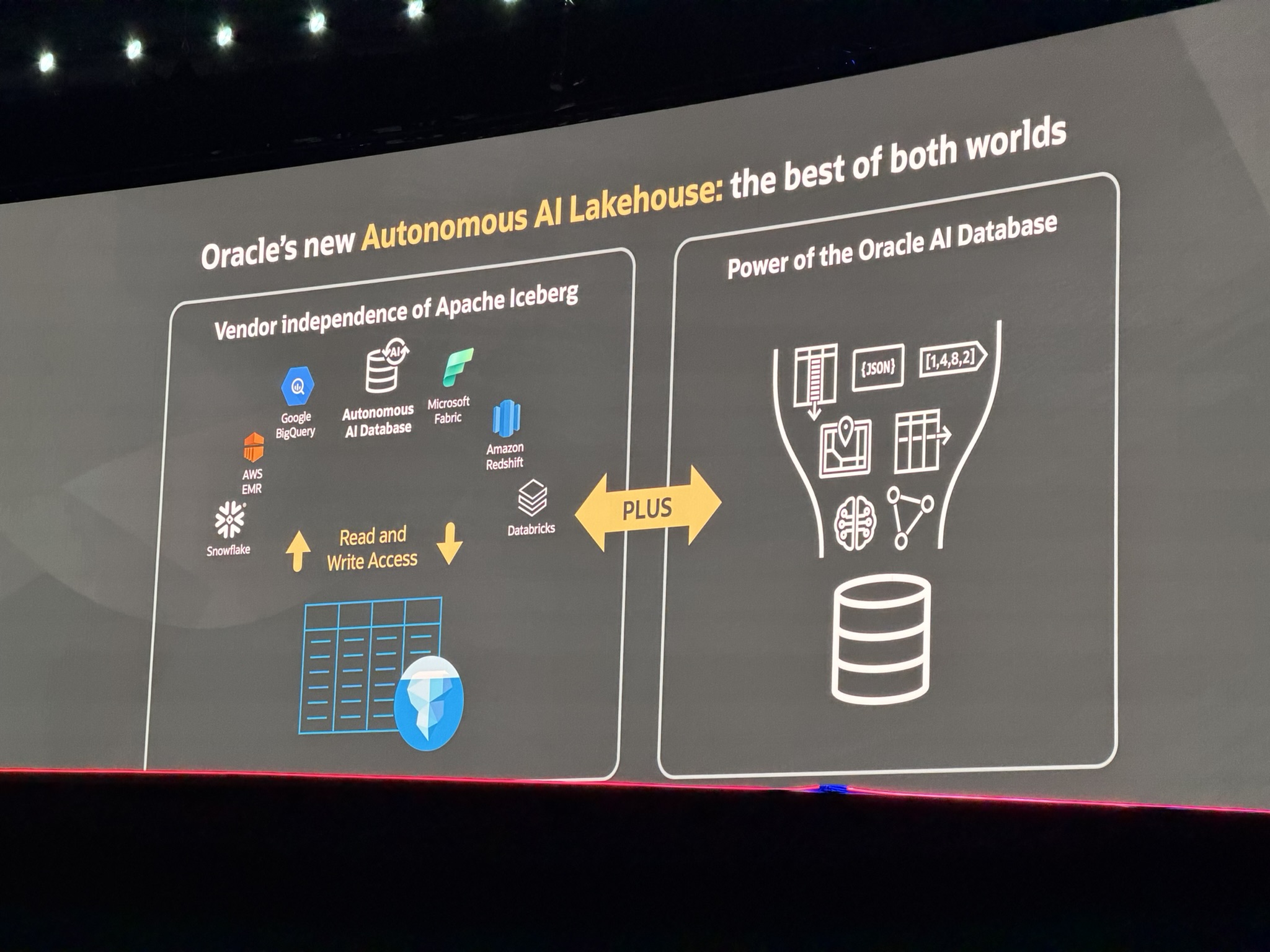
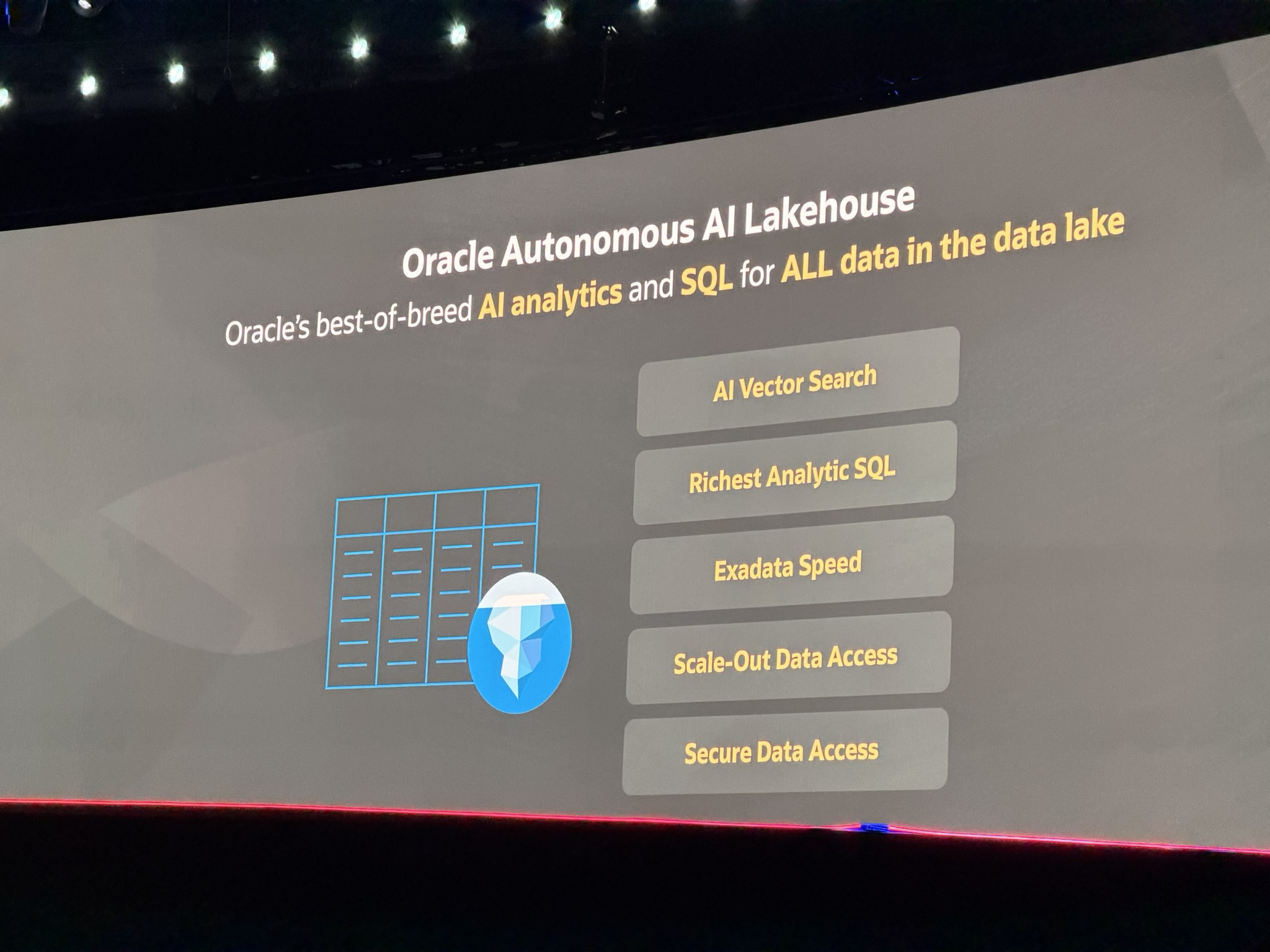
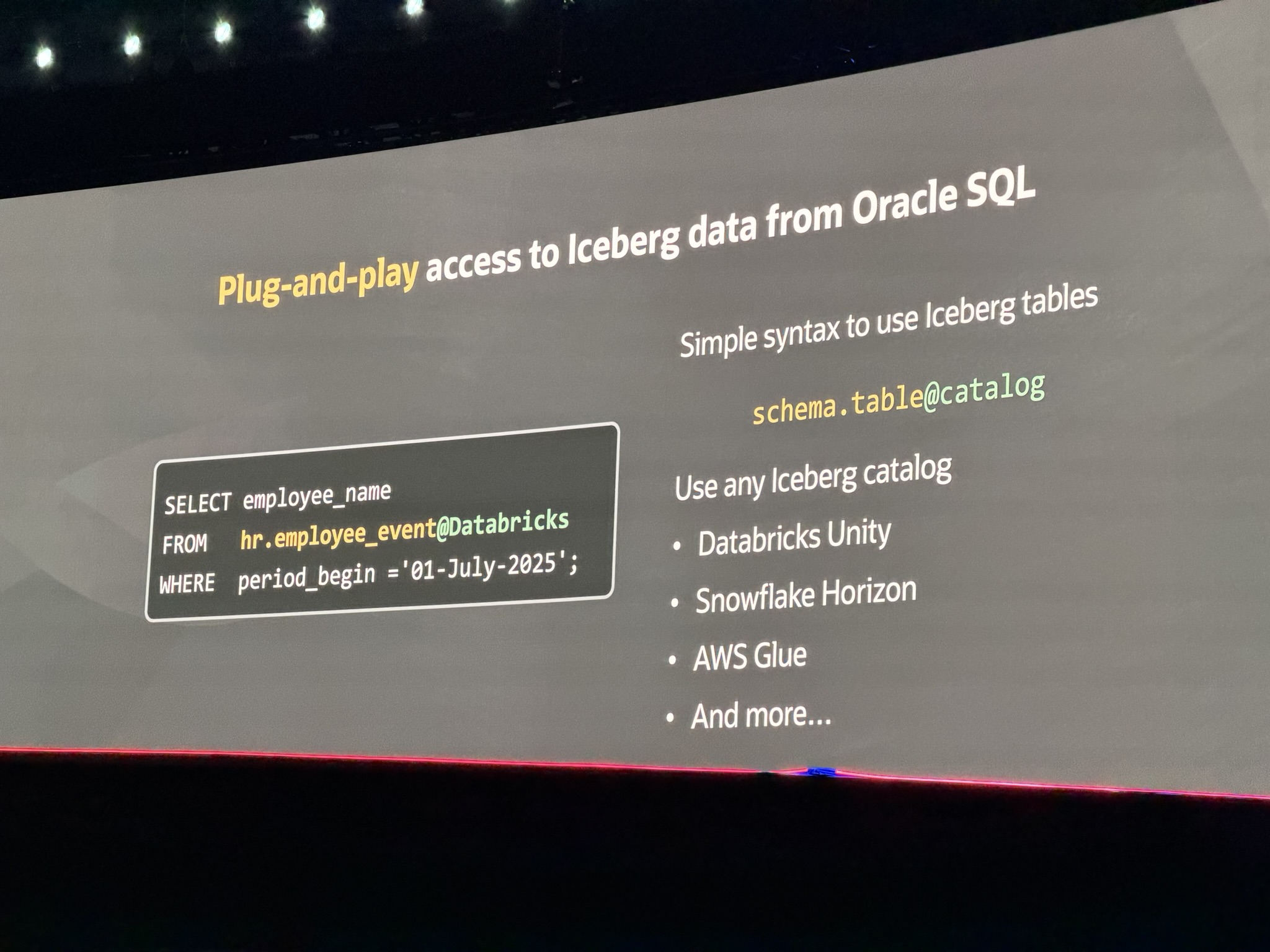
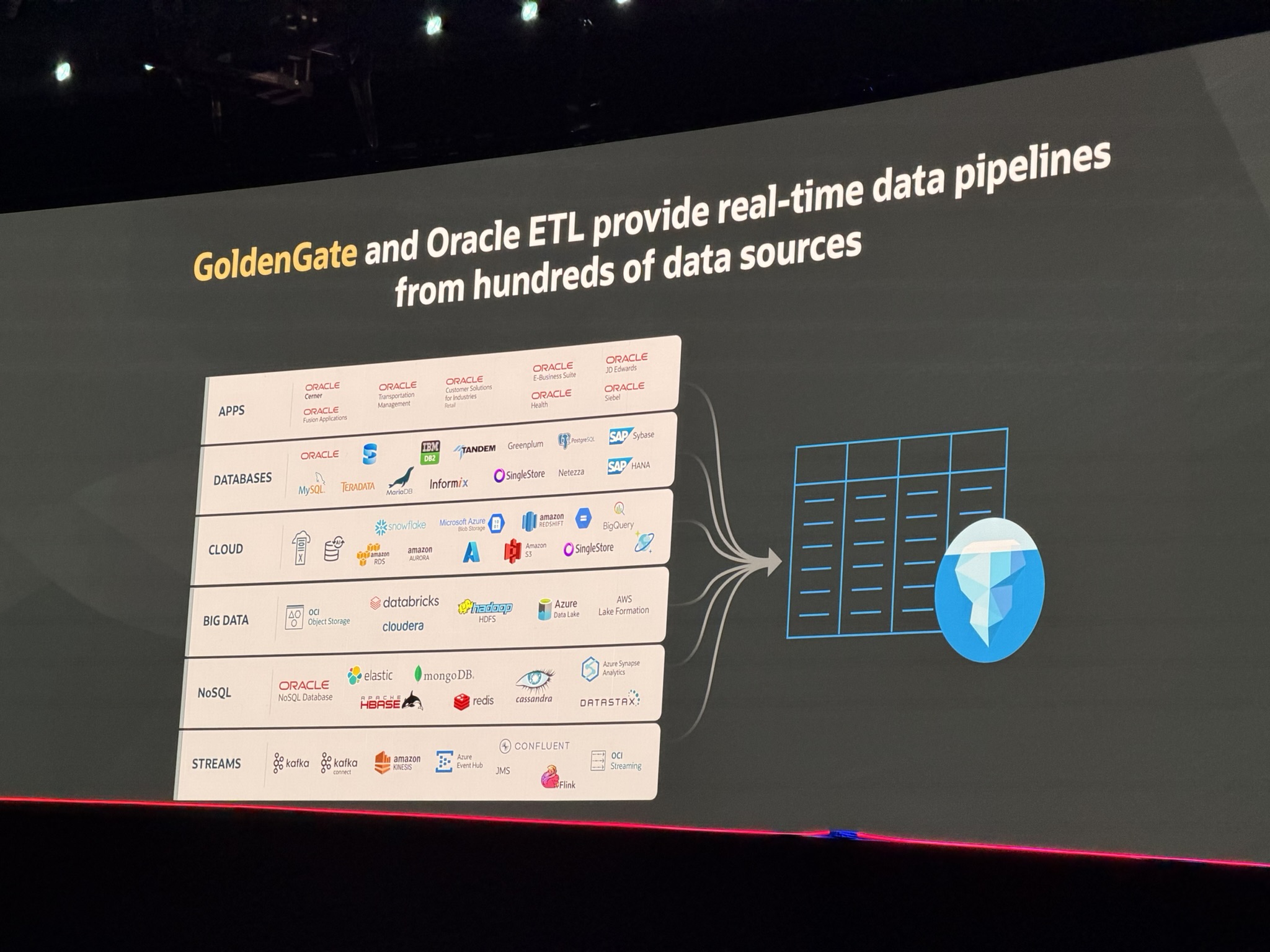
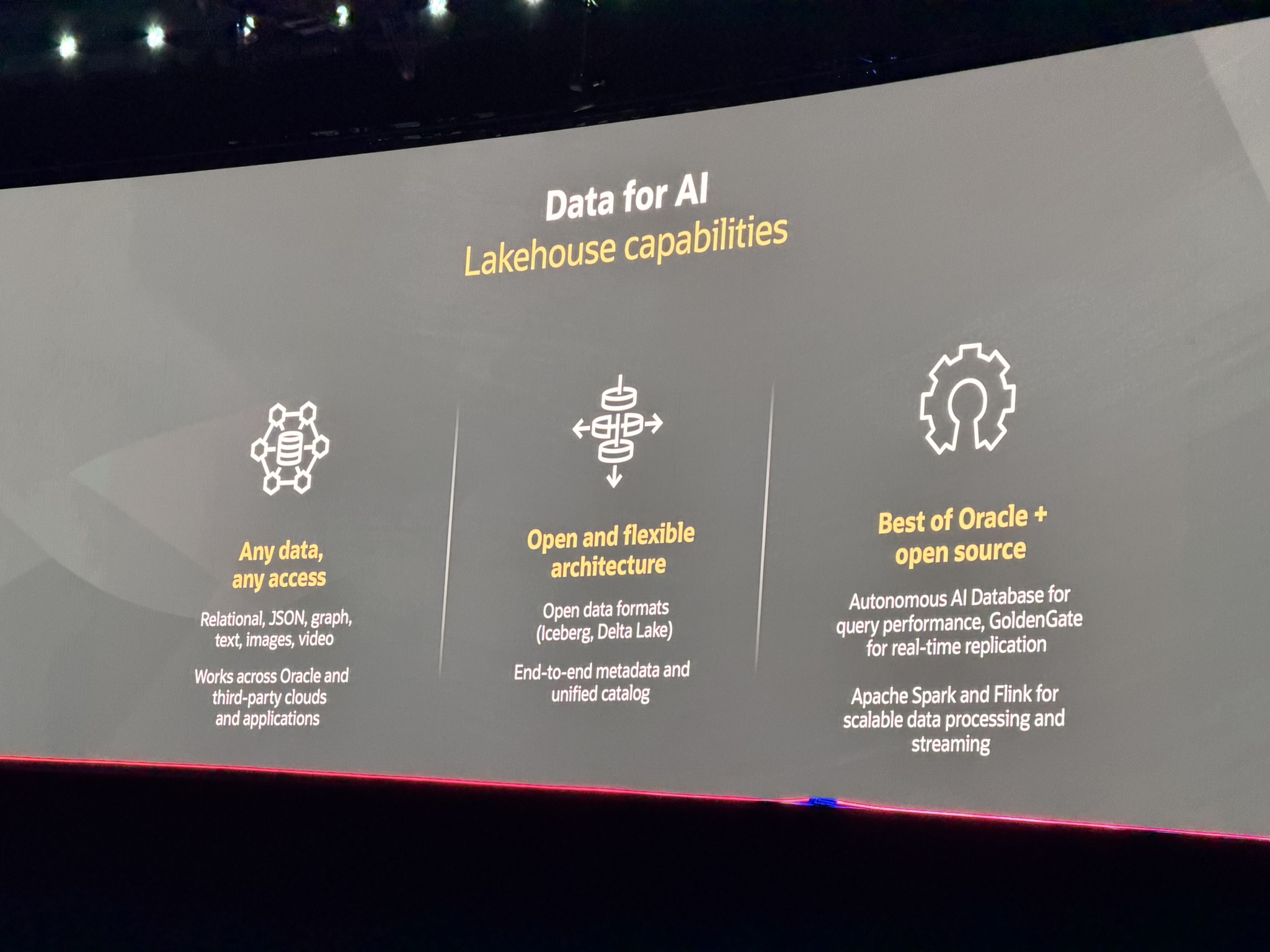
Next he introduced the Oracle Autonomous AI Lakehouse, Oracle’s AI Lakehouse product. Which was a major announcement, built on Apache Iceberg (open table format standard). It combines the independence of an open lakehouse with the full power of Oracle AI Database.

The key features are:

  • AI Vector Search: for fast semantic search on lake data
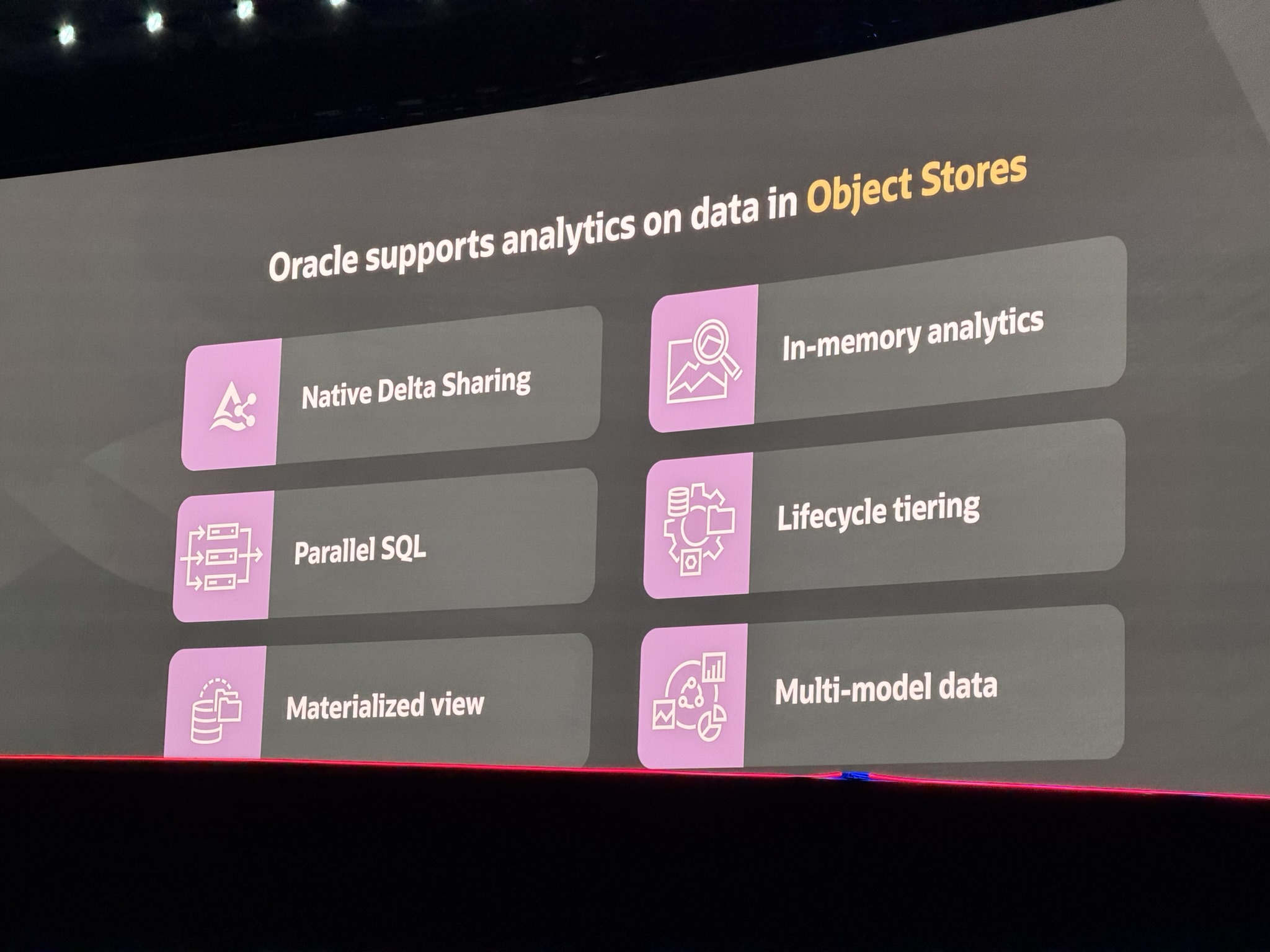
  • Rich Analytics: Advanced SQL for relational, graph, and JSON directly on Iceberg
  • Exadata Performance: Caches frequently accessed lakehouse data for speed
  • Secure Access: Applies Oracle’s robust security and governance to lake data
  • Federated Catalog: A “catalog of catalogs” for unified discovery across Oracle, Databricks, and Snowflake

Oracle’s AI Lakehouse strategy promises open standards, strong security, and high performance, unlocking AI insights across all enterprise data. It’ll be interesting to see whether this gains traction the way Microsoft Fabric has among Microsoft centric customers, for Oracle focused organisations, this could be the game changing alternative.

Segment 4: The Oracle AI Data Platform

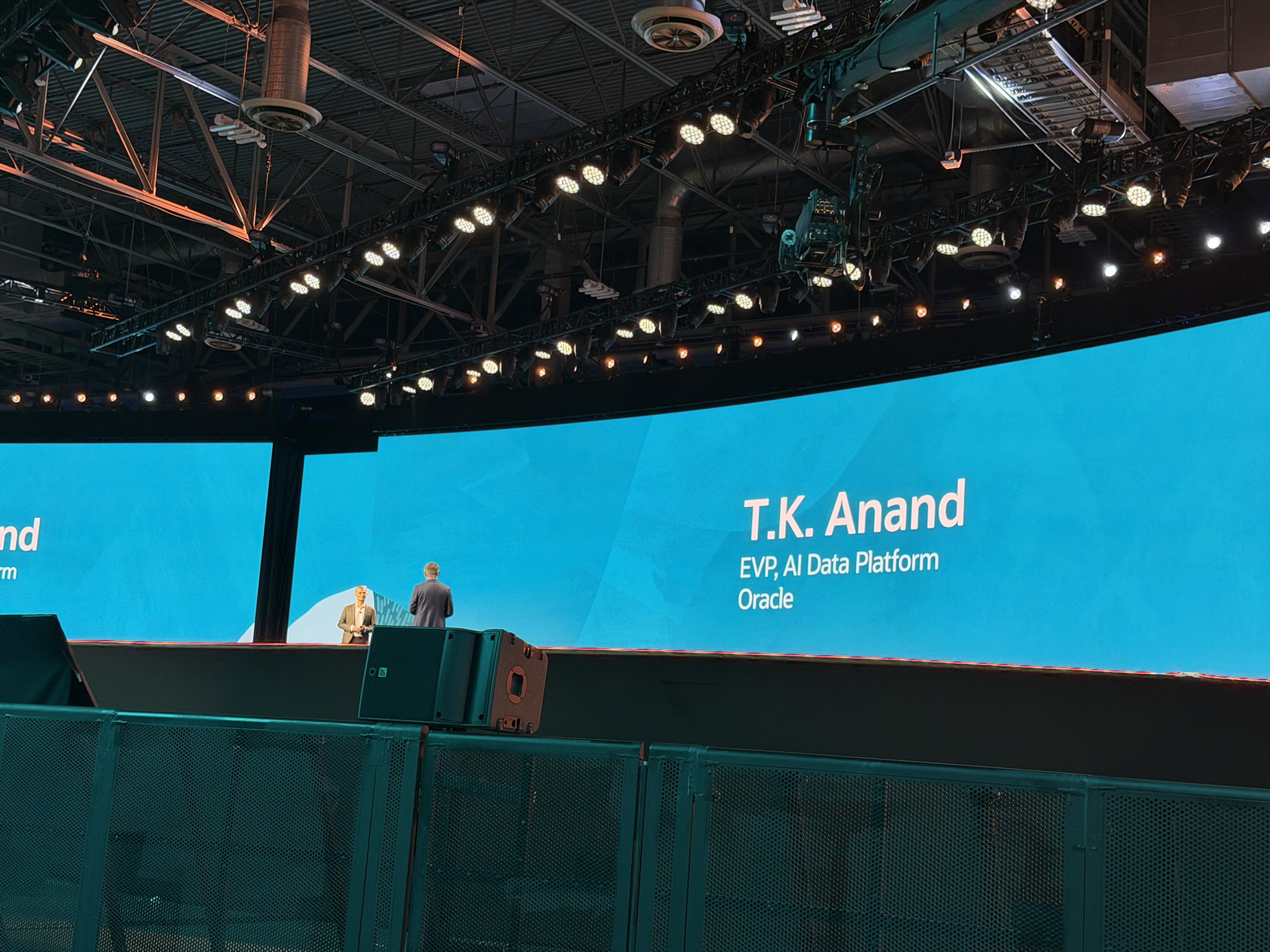
Juan then brought T.K. Anand, EVP of Oracle’s AI Data Platform, on stage to kick off the final segment of the keynote.

Building on the AI Database and AI Lakehouse, TK Anand announced the general availability of the Oracle AI Data Platform, an end to end Platform as a Service (PaaS) designed to unify data, analytics, and AI development. As TK Anand put it:
“The AI Data Platform gets your data ready for AI and then leverages AI to transform your business.”

He explained the platform brings together multiple OCI services into a seamless experience, removing the complexity of stitching tools together.

Key components include:

Data Foundation
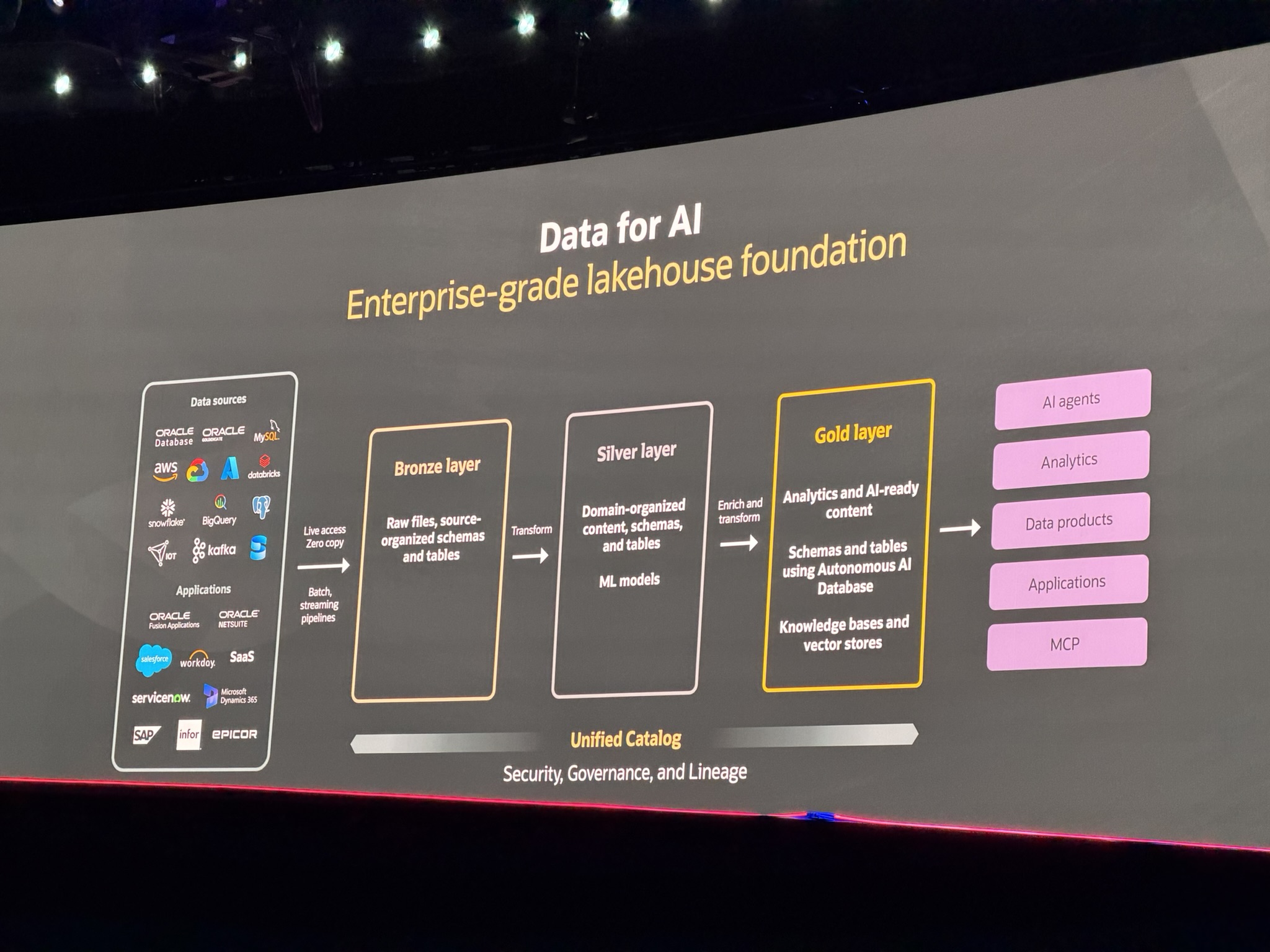
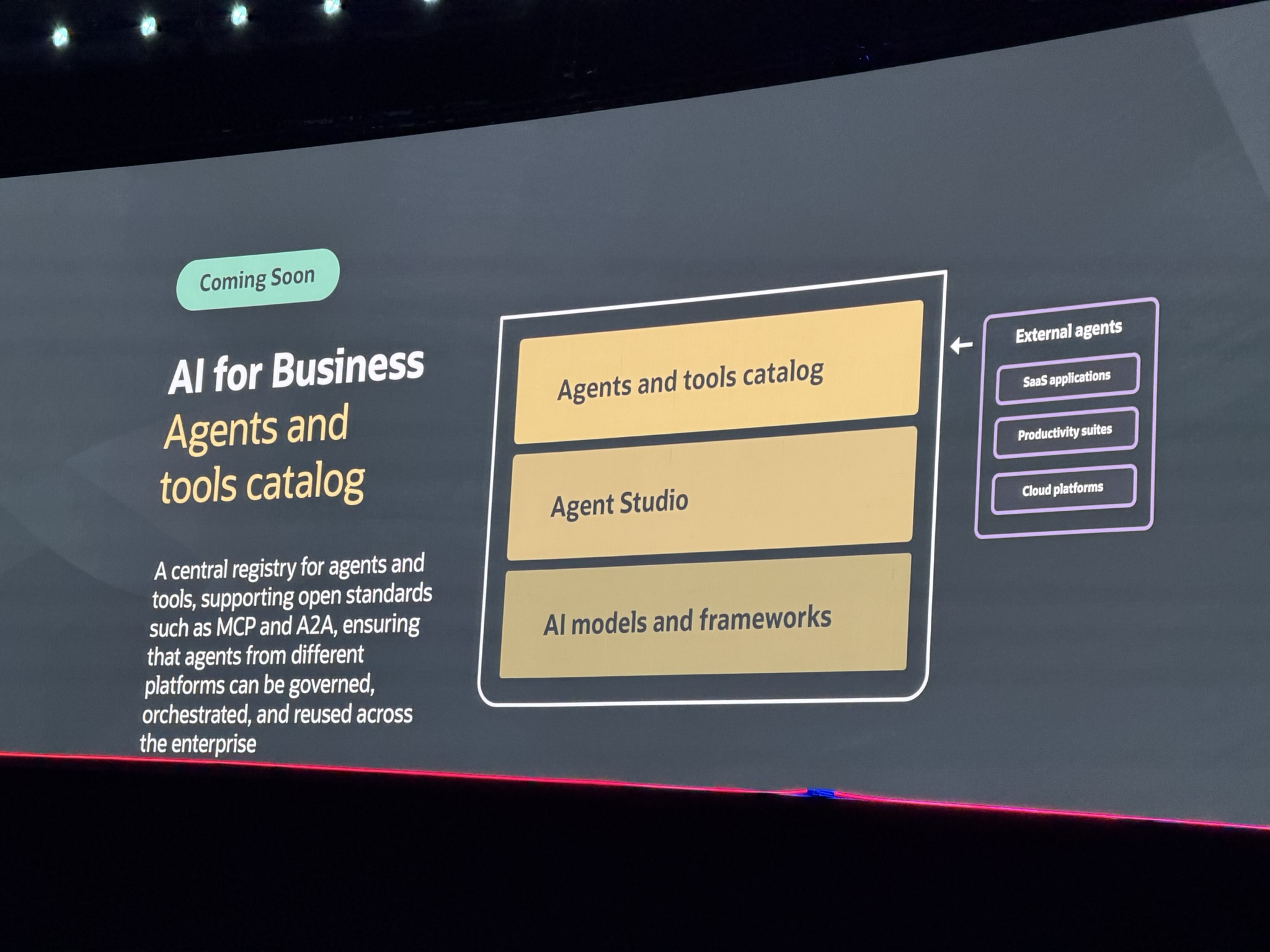
An enterprise grade open lakehouse built on standards like Apache Iceberg and Delta Lake, with a Medallion Architecture (Bronze, Silver, Gold layers) and a Unified Catalog for data, models, and AI assets, complete with security and governance.

Developer Workbench
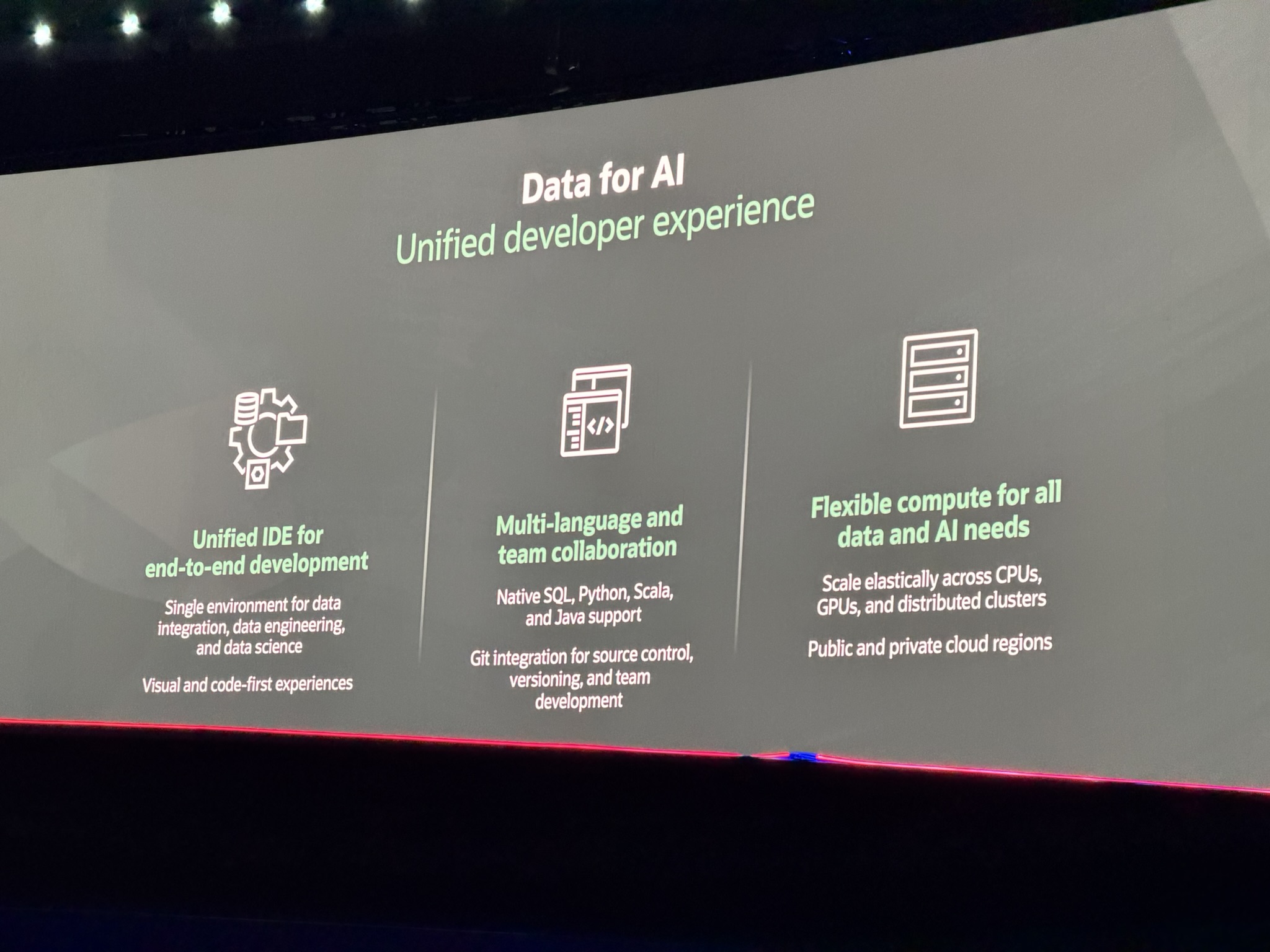
A single environment for data integration, data science, and agent development. Includes AI-assisted notebooks (SQL, Python, Scala), drag-and-drop interfaces, and job execution on Autonomous Database, Spark, or Flink.

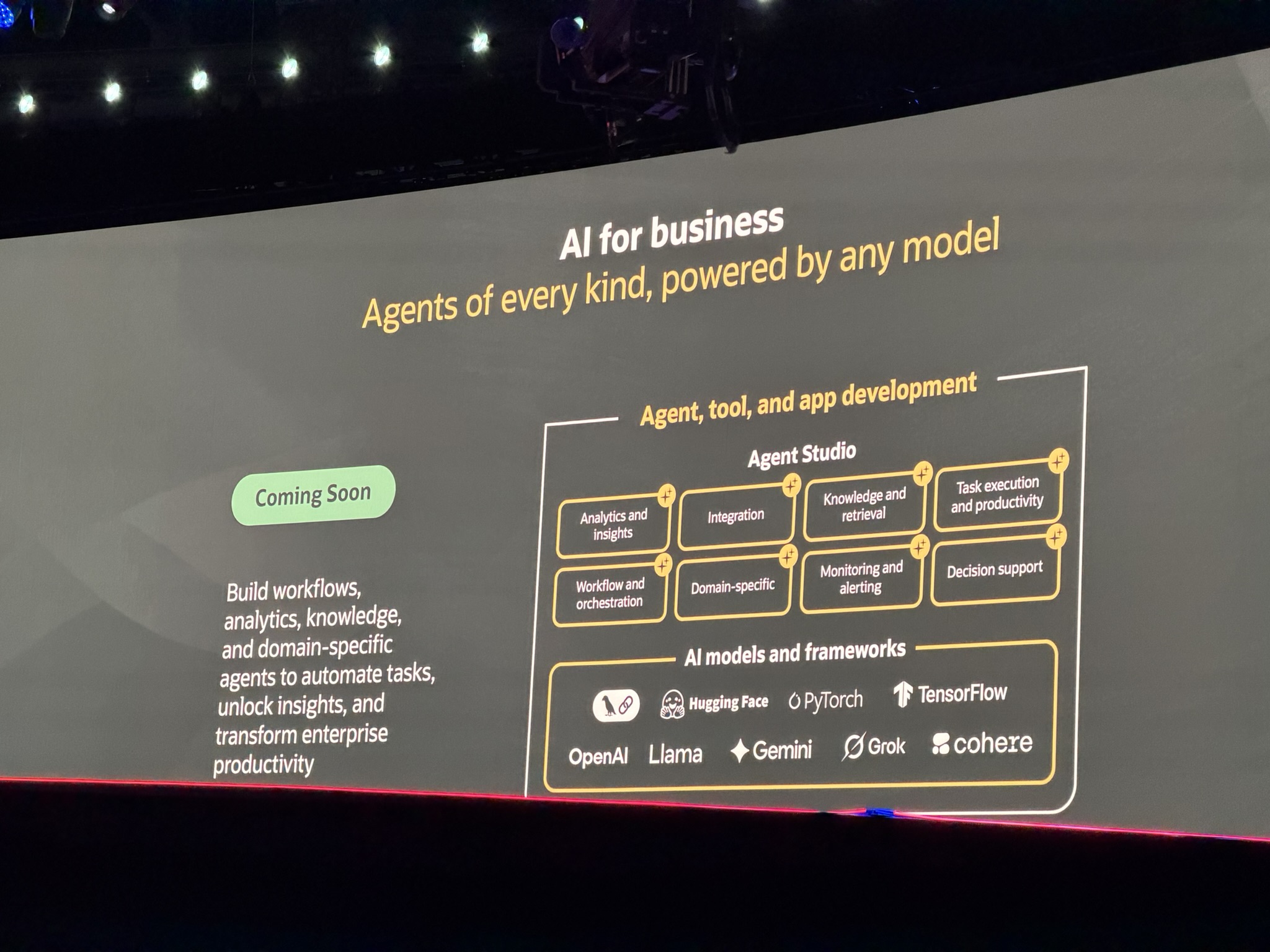
Agent Studio & Models
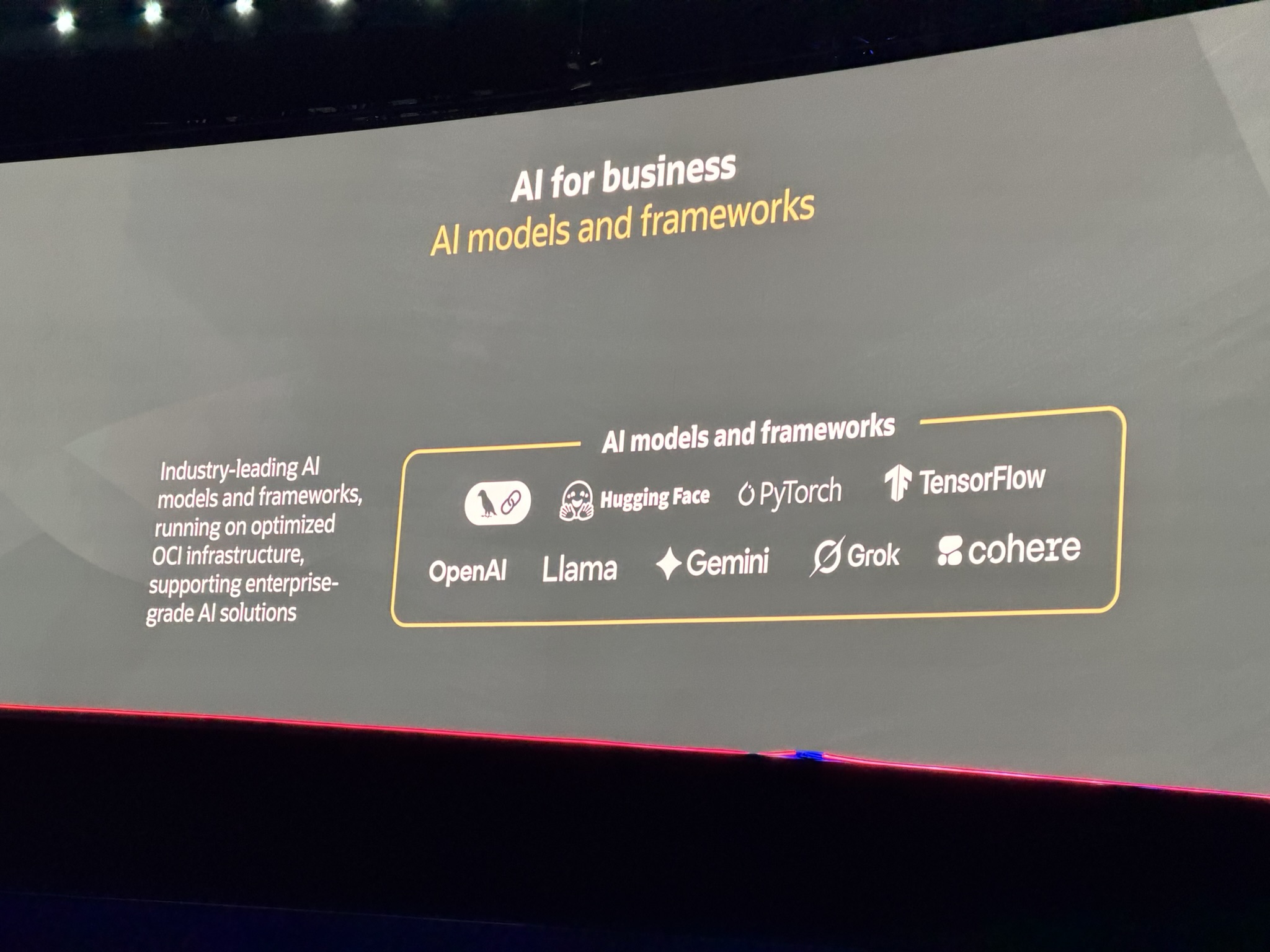
Integrates leading foundation models (OpenAI, Grok, Llama, Cohere, soon Gemini) and frameworks like LangChain and LangGraph. Developers can build AI agents for tasks such as RAG-based semantic search, workflow orchestration, and querying enterprise systems.

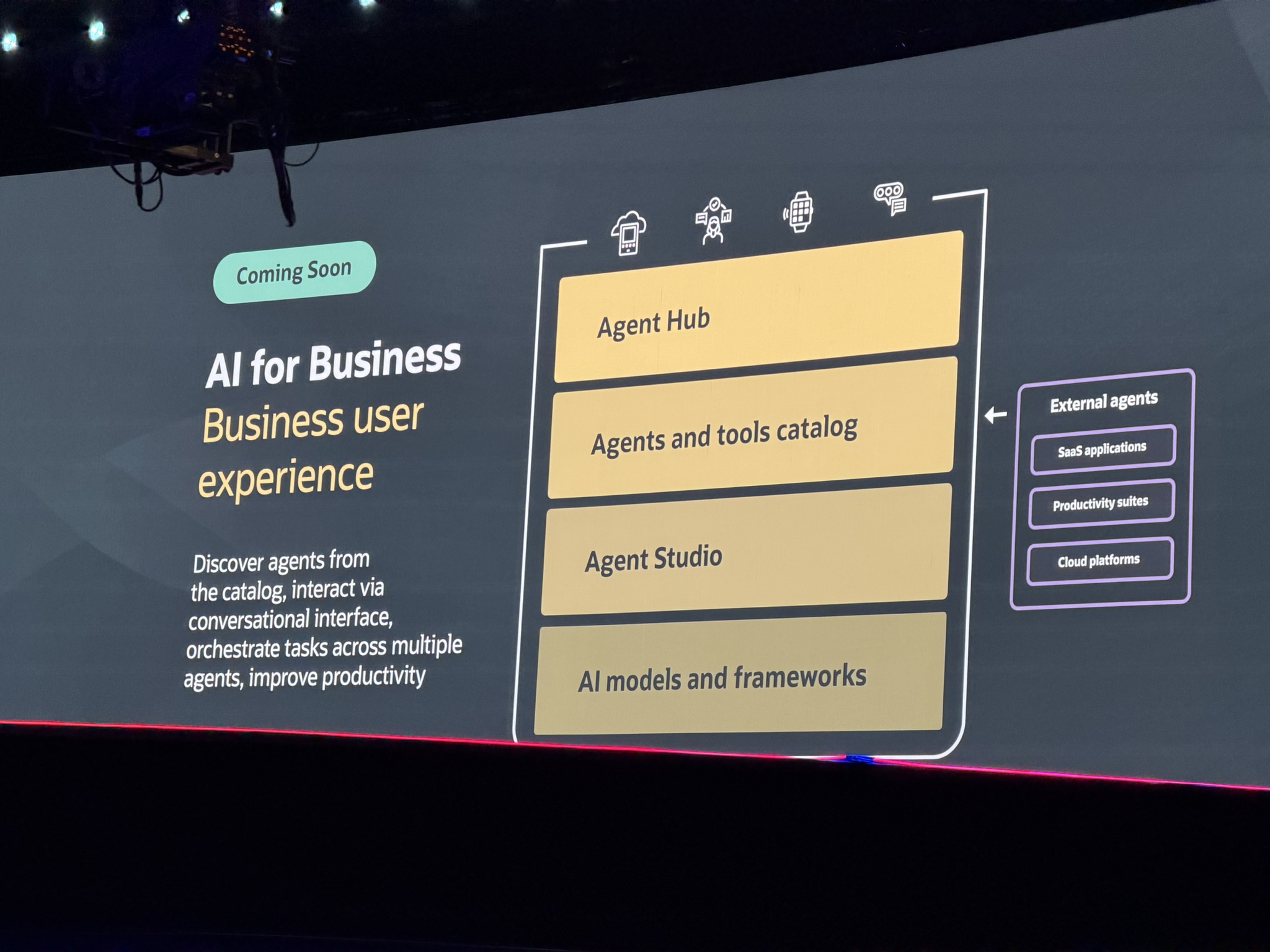
Agent Hub (Coming Soon)
A “single pane of glass” for business users to interact with all organisational AI agents. Users will be able to chat with agents, trigger tasks, and chain workflows, with full transparency into AI reasoning.

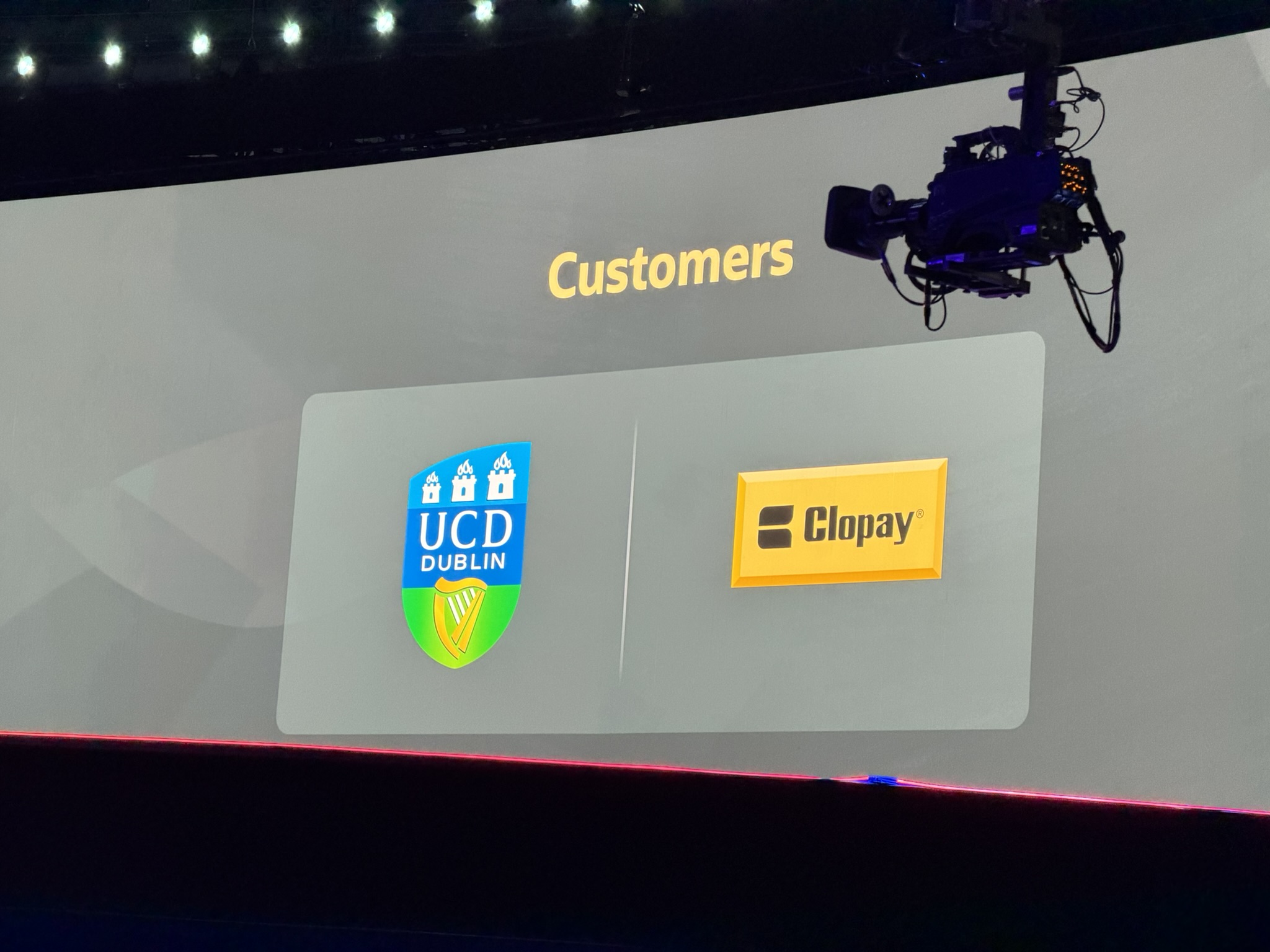
TK Anand finished with saying, Oracle’s AI Data Platform has already been tested by customers. University College Dublin used it to build a decision support tool for respiratory care, while Clopay leveraged it to predict dealer churn more accurately.

Juan concluded the keynote with, Oracle will deliver customised versions of the AI Data Platform with pre-built integrations for its major application suites, Fusion, NetSuite, Health, and more. These tailored offerings include ready to use data pipelines, business semantics, analytics, and AI agents, enabling SaaS customers to gain immediate value while retaining full flexibility to extend and customise the platform.

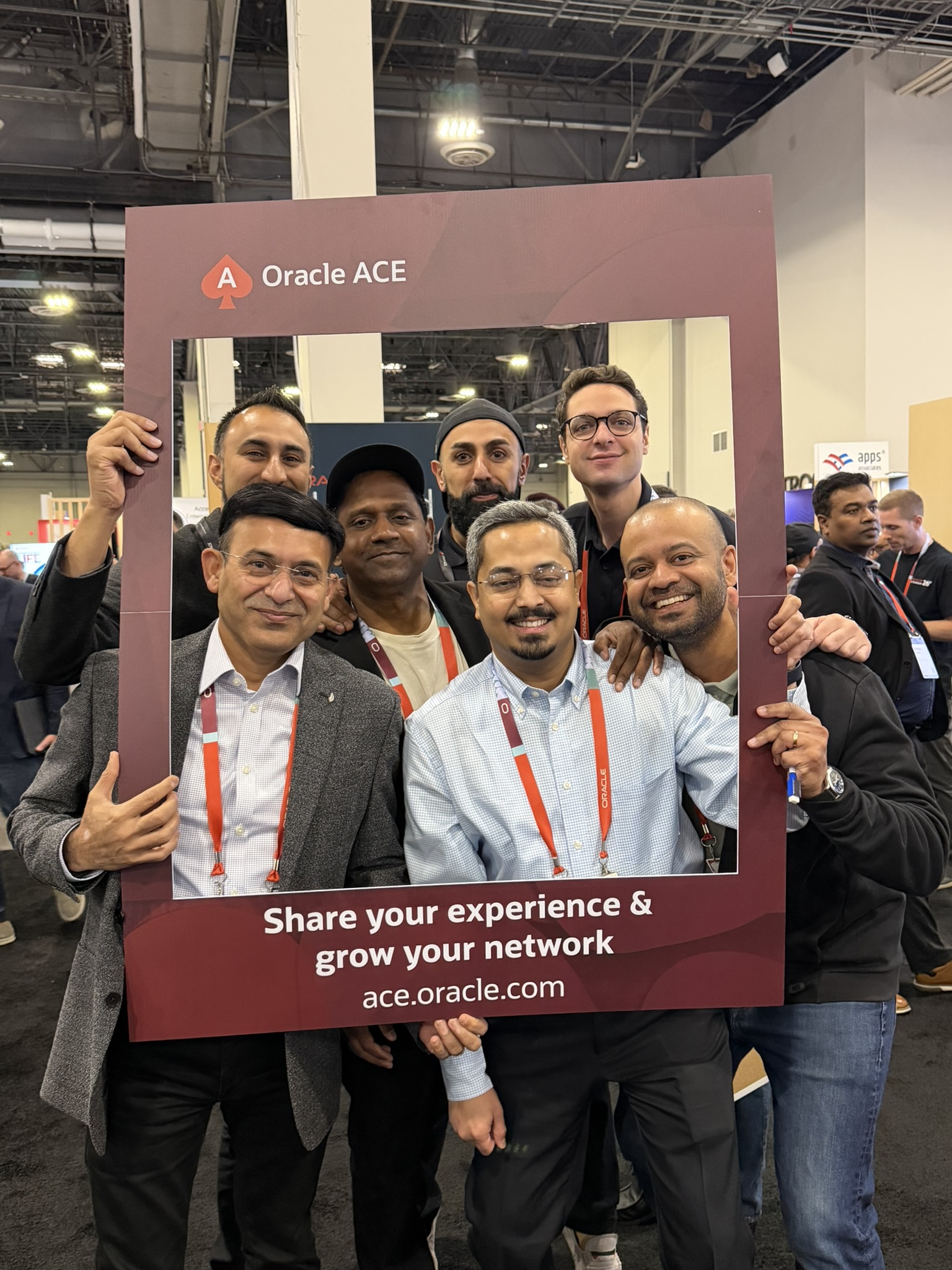
After the keynote, I went to the Oracle ACE booth to do my volunteer shift, telling passing delegates about the Oracle ACE programme along with other ACEs, to see if they were interested in joining. You can find more info here.

KNEX Roaring Into The Future Event

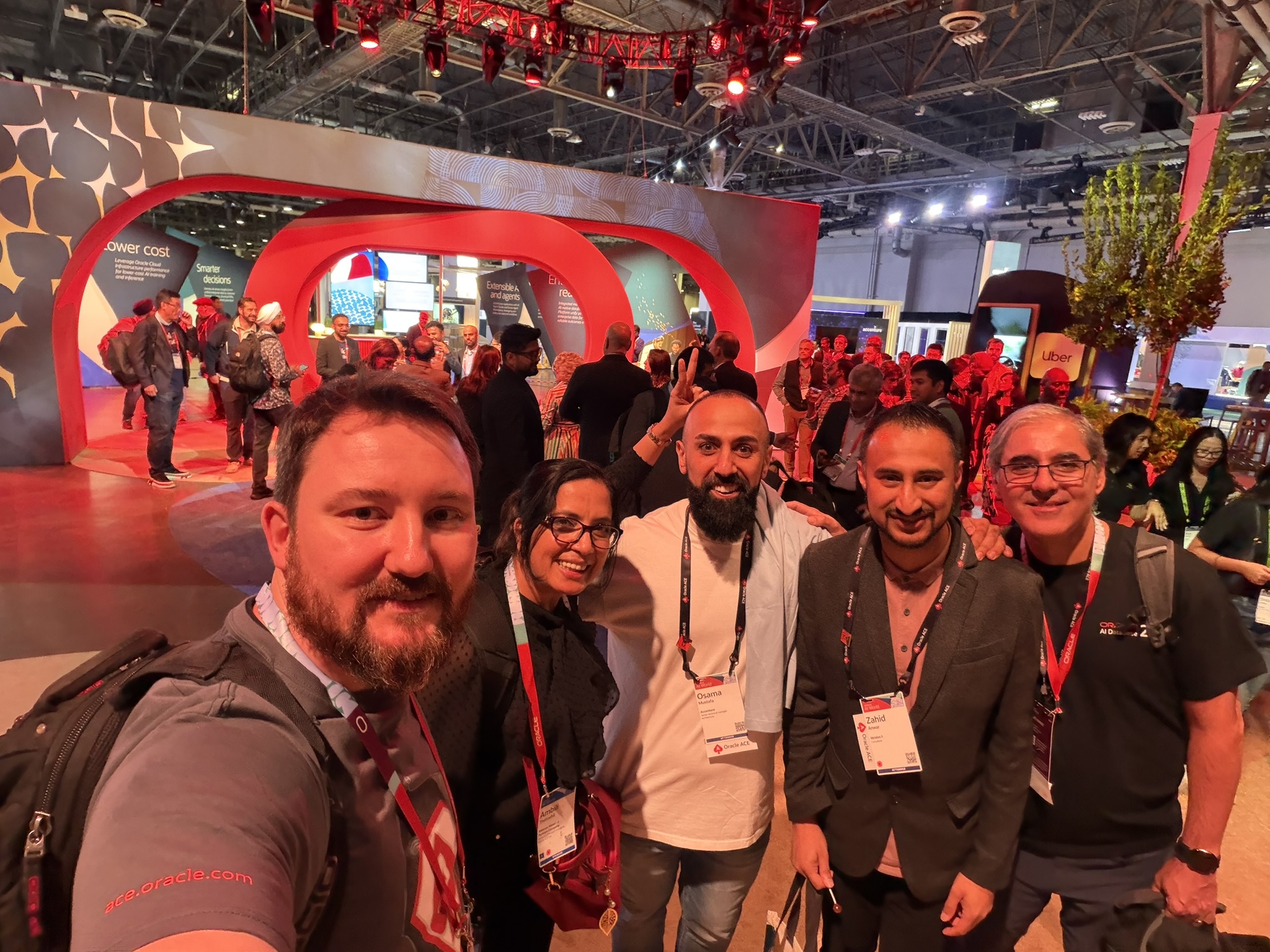
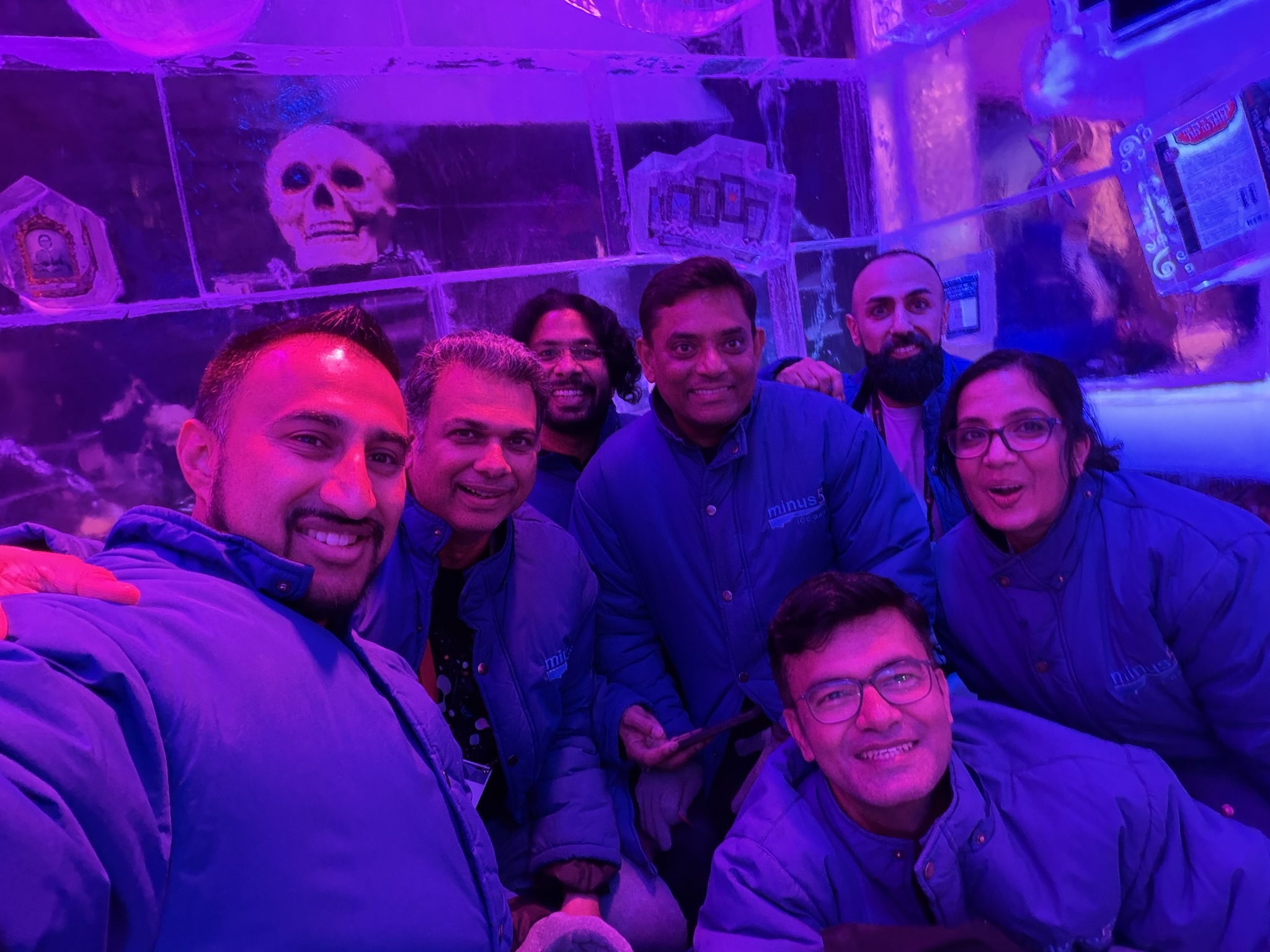
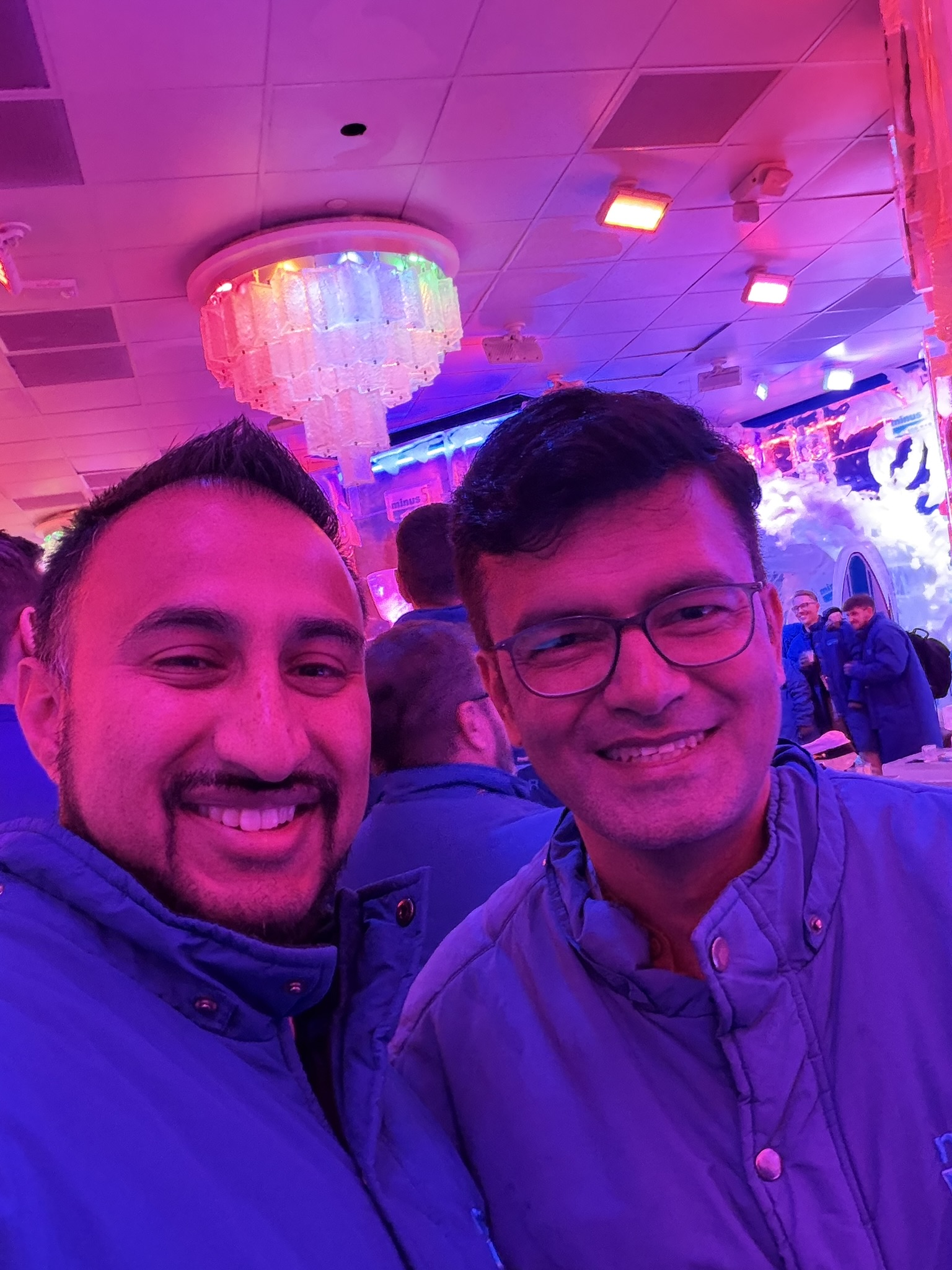
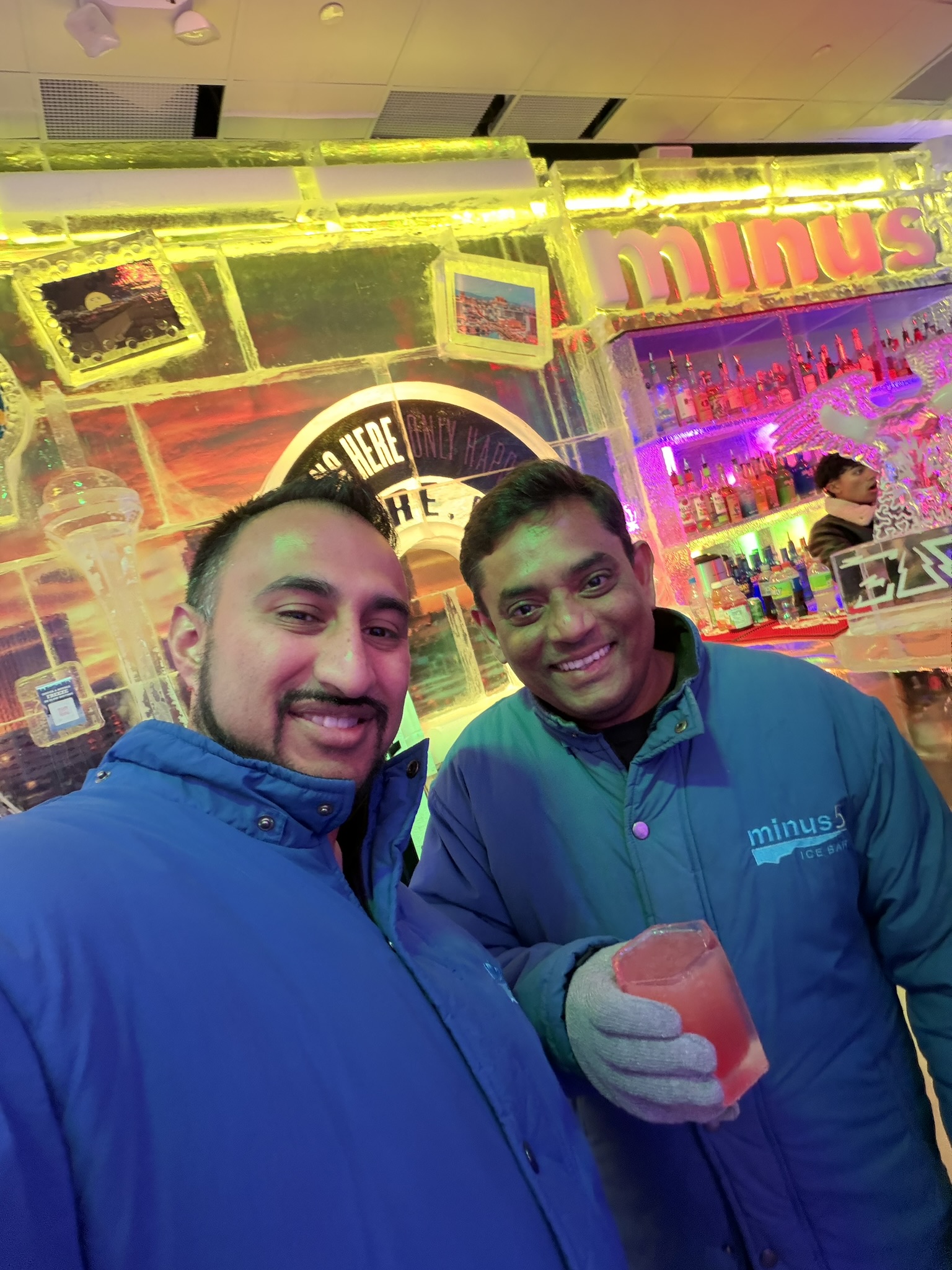
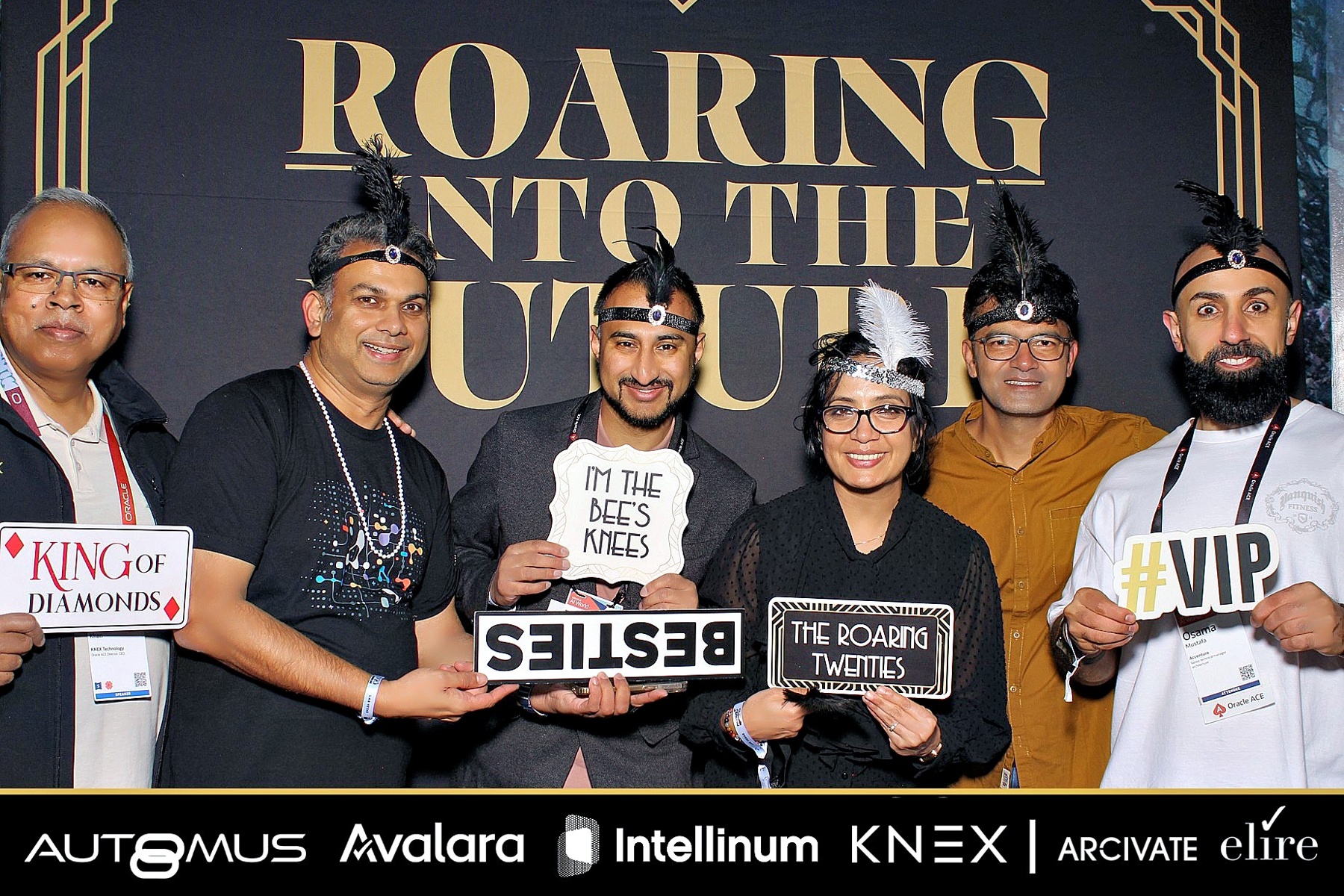
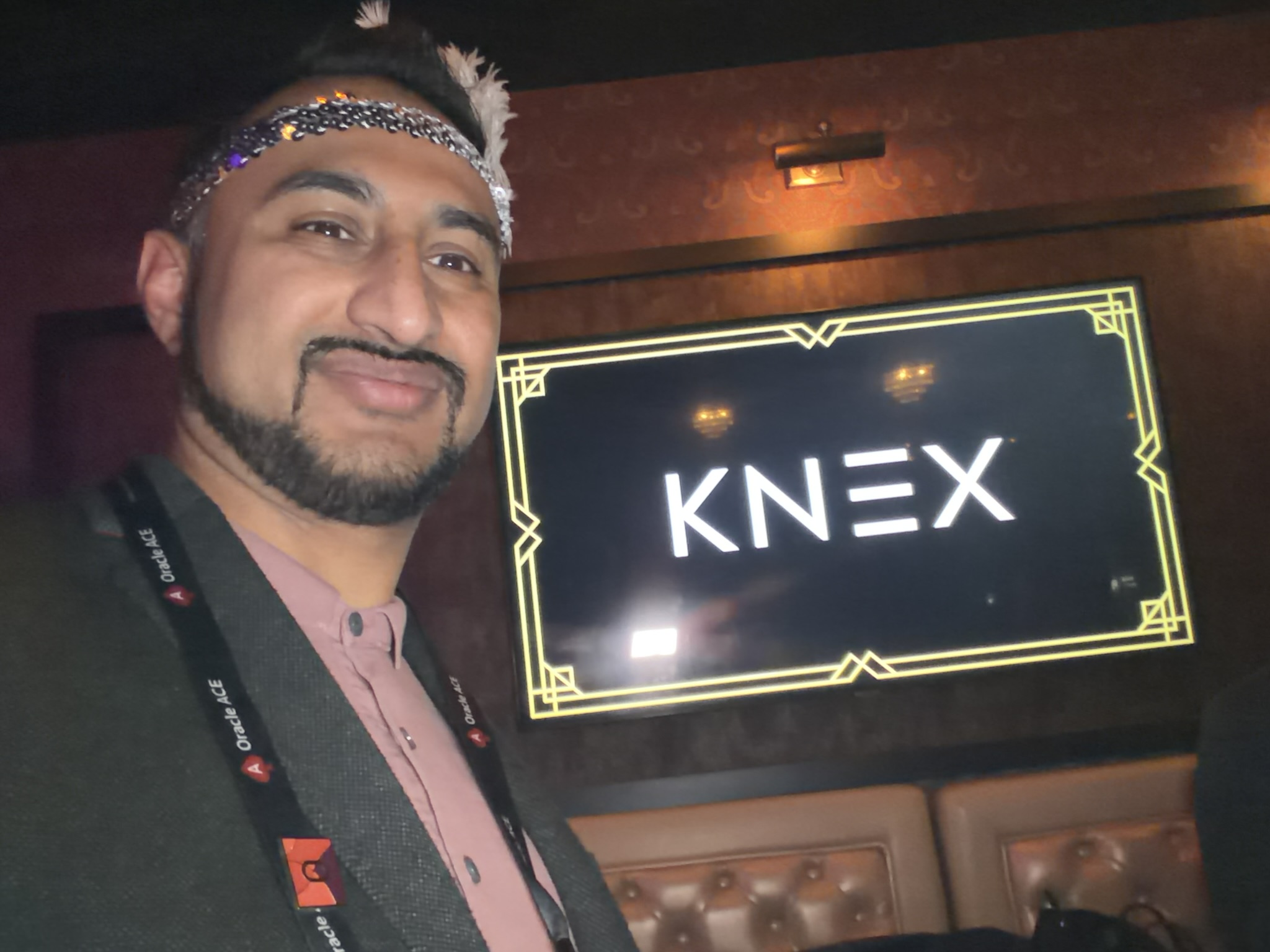
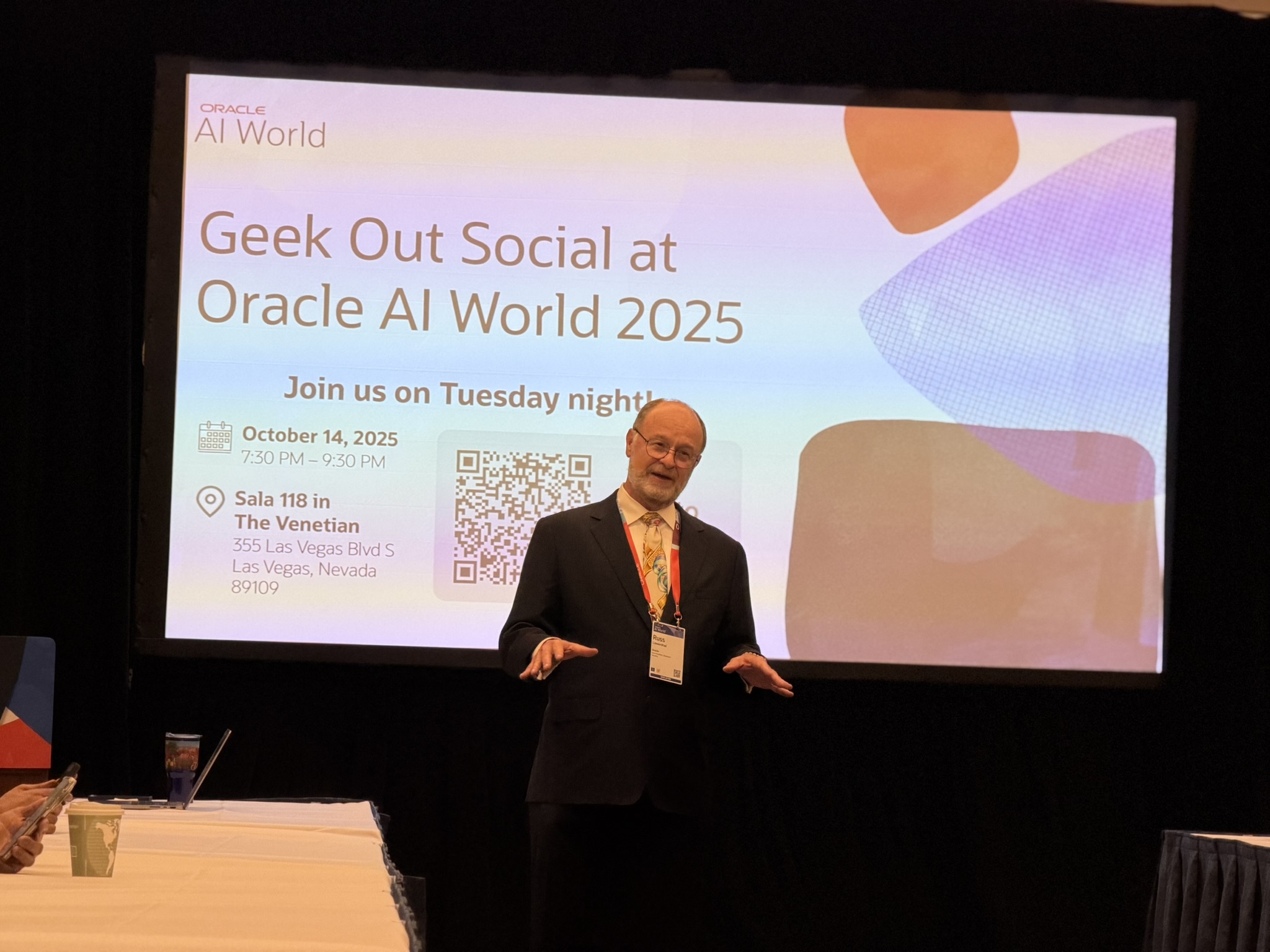
Once I finished my Oracle ACE shift, I went with some Oracle ACEs to the Geek Out Social for Oracle ACEs at Sala 118 in The Venetian. After an hour or so, Osama, Ambili, and I left to meet Sandesh, Sai, and Chandan to go to the KNEX “Roaring Into The Future” event invited by Basheer, the CEO.

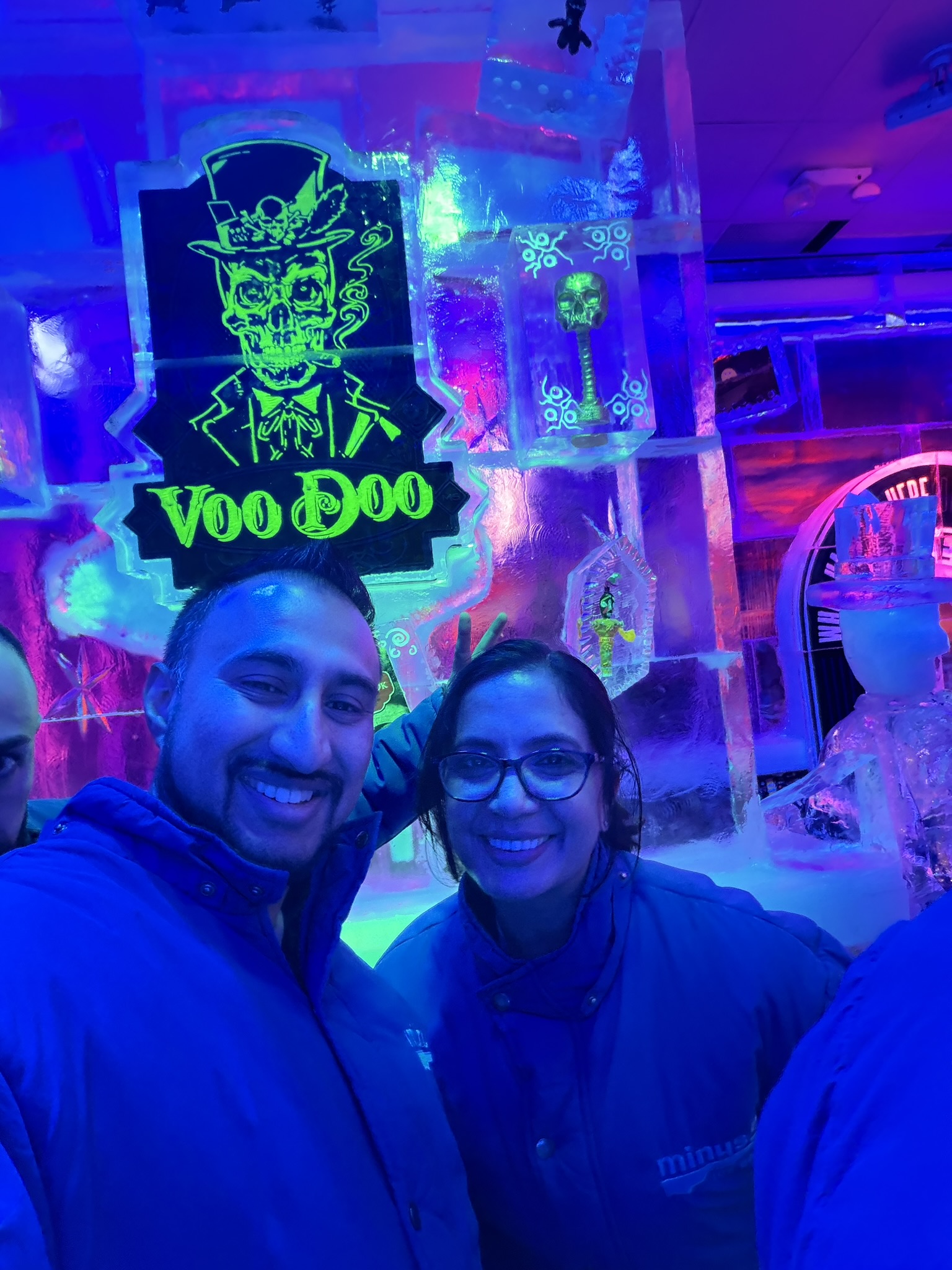
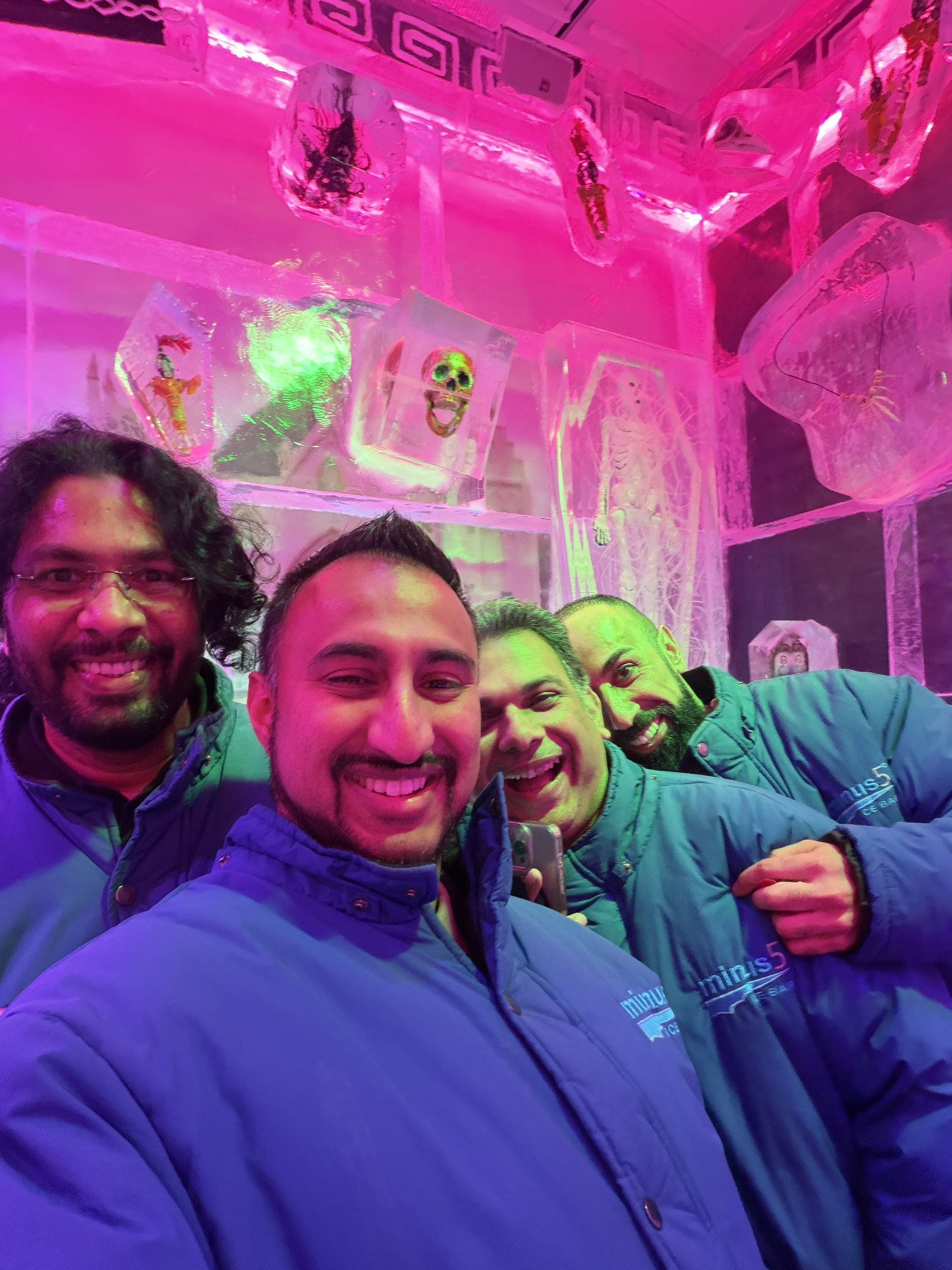
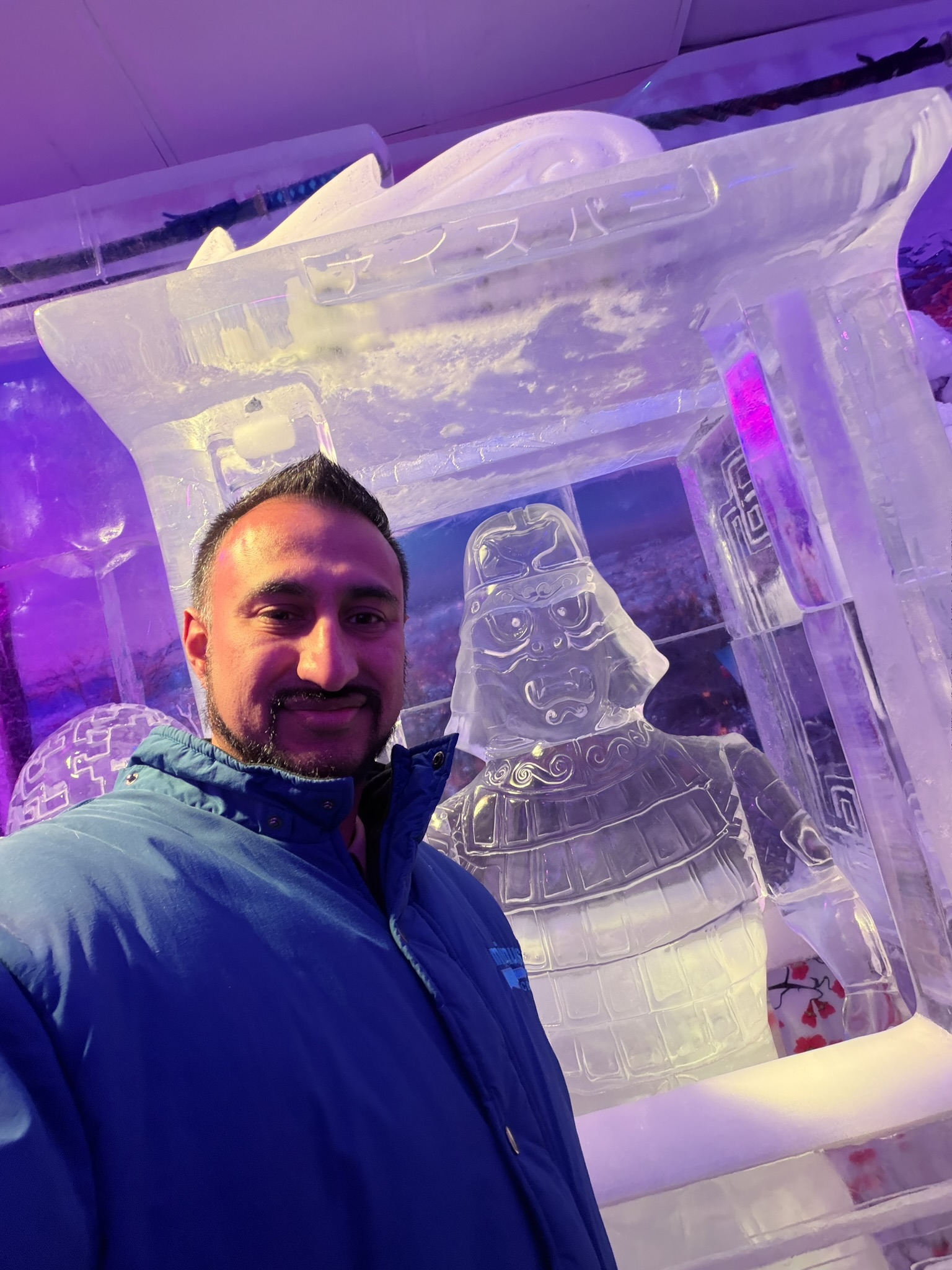
The first part of the event was at the Minus 5 Ice Bar, which is basically a bar made out of ICE! 🧊 I had never been to a place like this, it was an experience, not a place I could stay for too long as it got very cold 🥶 Even the drink was in a glass made of ICE! 🧊

The next part of the event was at the Prohibition Bar, which prior to going in, we got some props to wear for a group photo and to wear in the bar for the 1920’s theme.

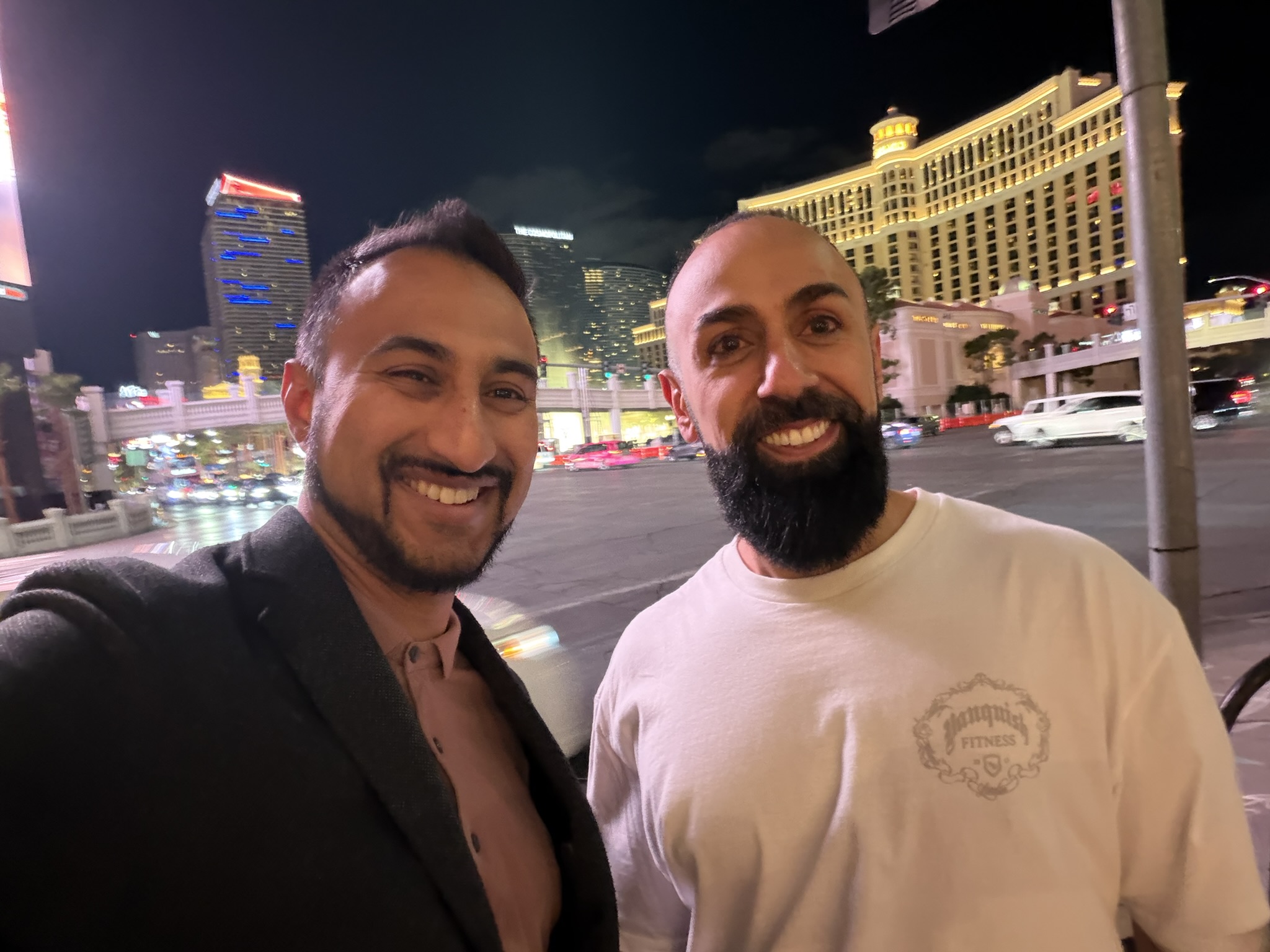
I didn’t stay too long at the Prohibition Bar, as it’s not my thing and I was hungry. So I left with Osama and went for a walk and eventually ended up at Yard House, where we went earlier in the week, and I got another healthy king prawn salad.

Then it was time to call it a night, for the next day, which will be a full day of conference, ACE dinner, and finally the Oracle AI World Party! 🎉

You can view my day 4 part 1 here.

If you found this blog post useful, please like as well as follow me through my various Social Media avenues available on the sidebar and/or subscribe to this Oracle blog via WordPress/e-mail.

Thanks

Zed DBA (Zahid Anwar)
Oracle AI World 2025 Day 3 Part 2 – Keynote Oracle Vision and Strategy

If you missed my day 3 part 1, you can view it here.

AI Vector Search: What’s New and What’s Next

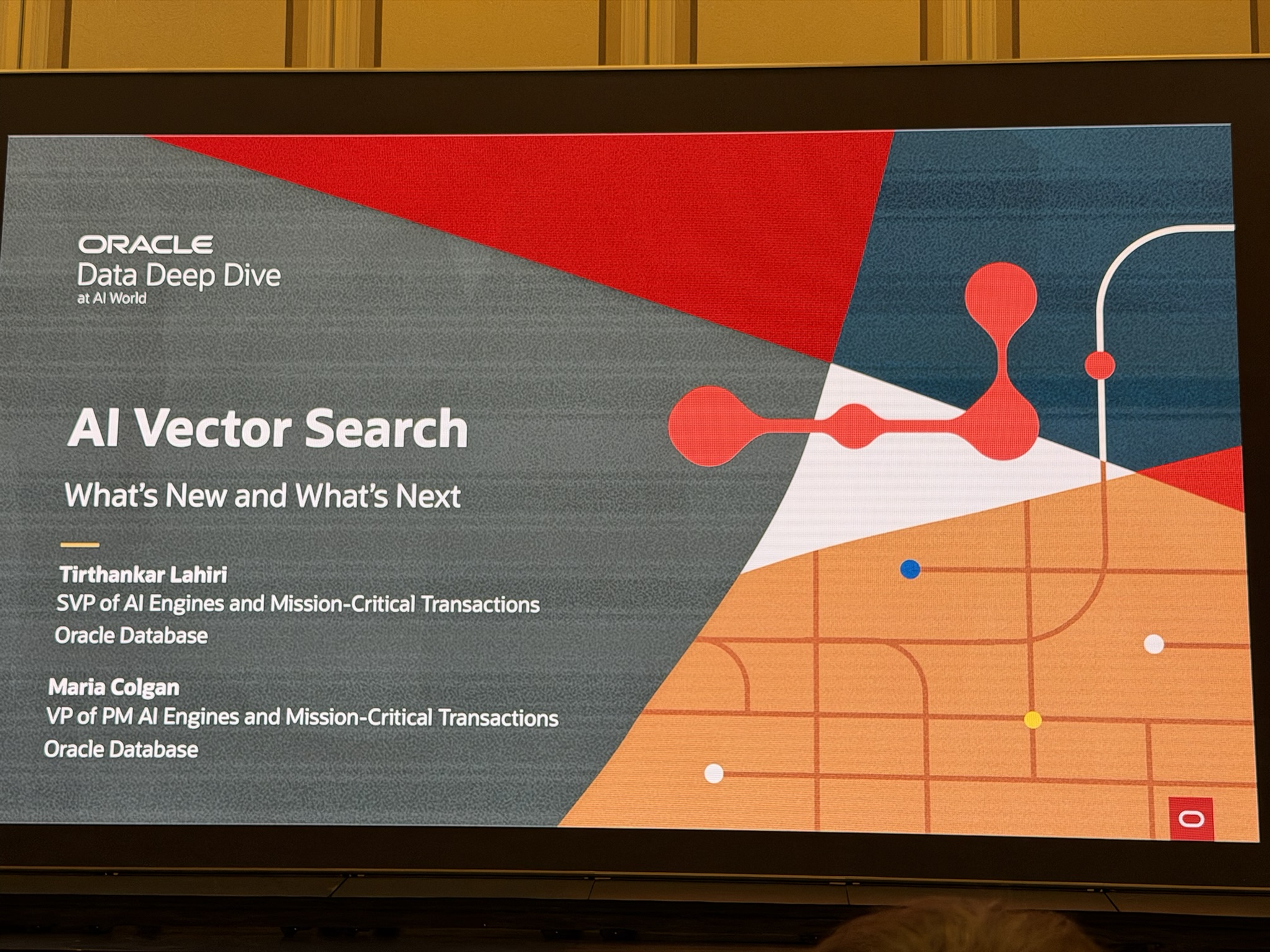
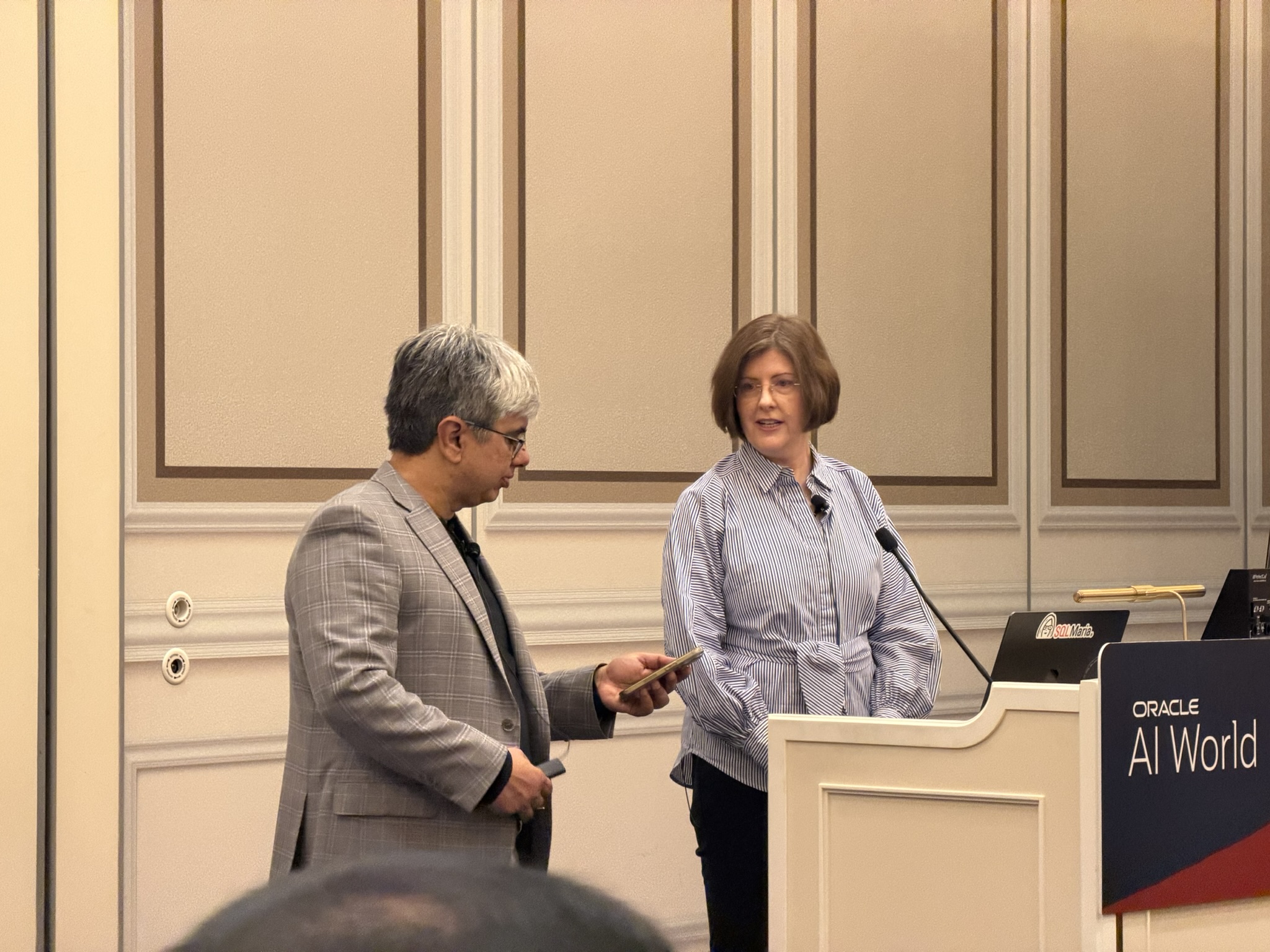
Before Larry Ellison’s keynote, I attended an insightful session on Oracle’s AI Vector Search by Tirthankar Lahiri and Maria Colgan (SQLMaria).

Traditional Databases vs. Vector Search

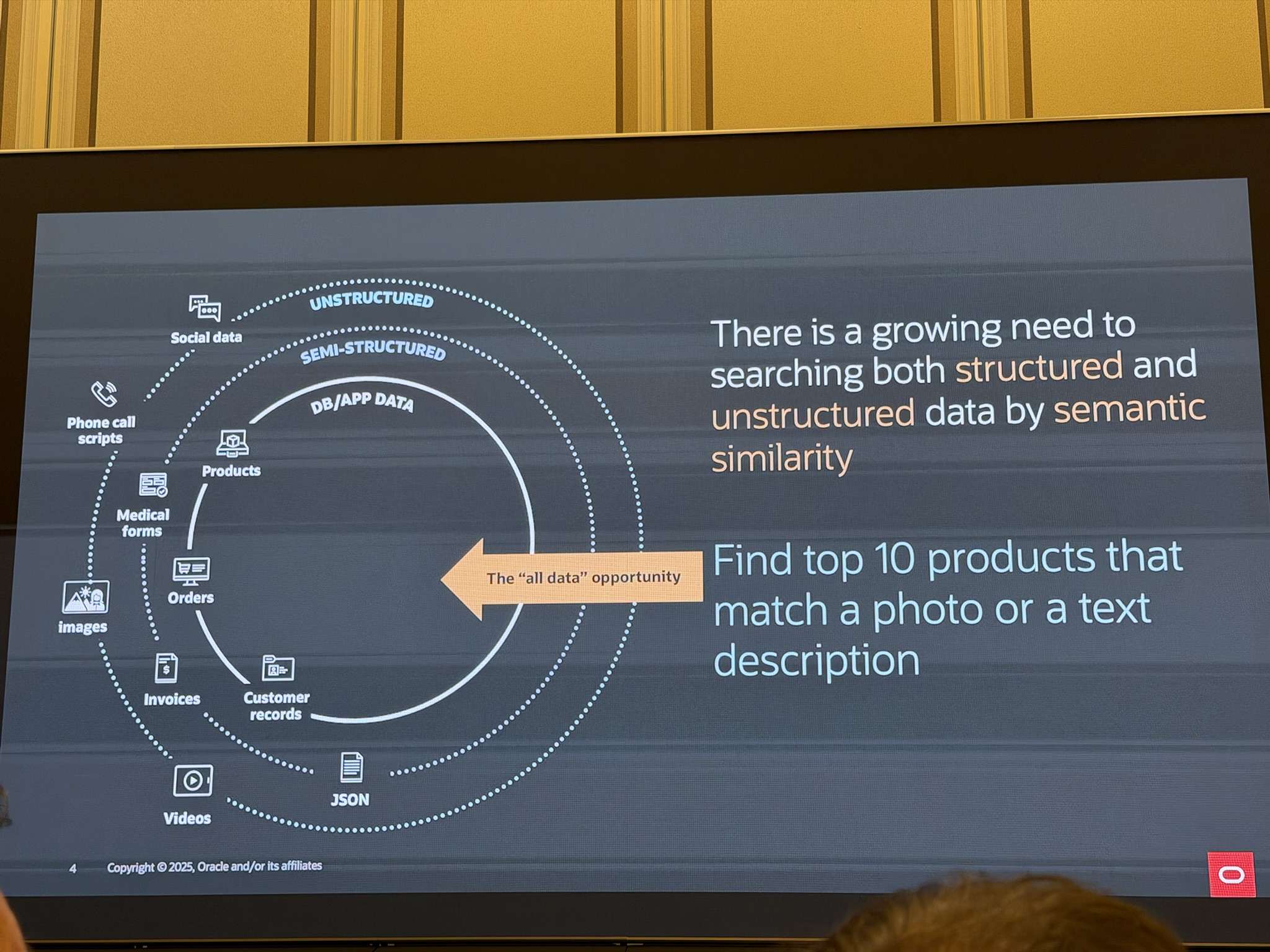
  • Databases excel at finding exact values in structured data, but struggle with identifying similarities rather than exact matches.
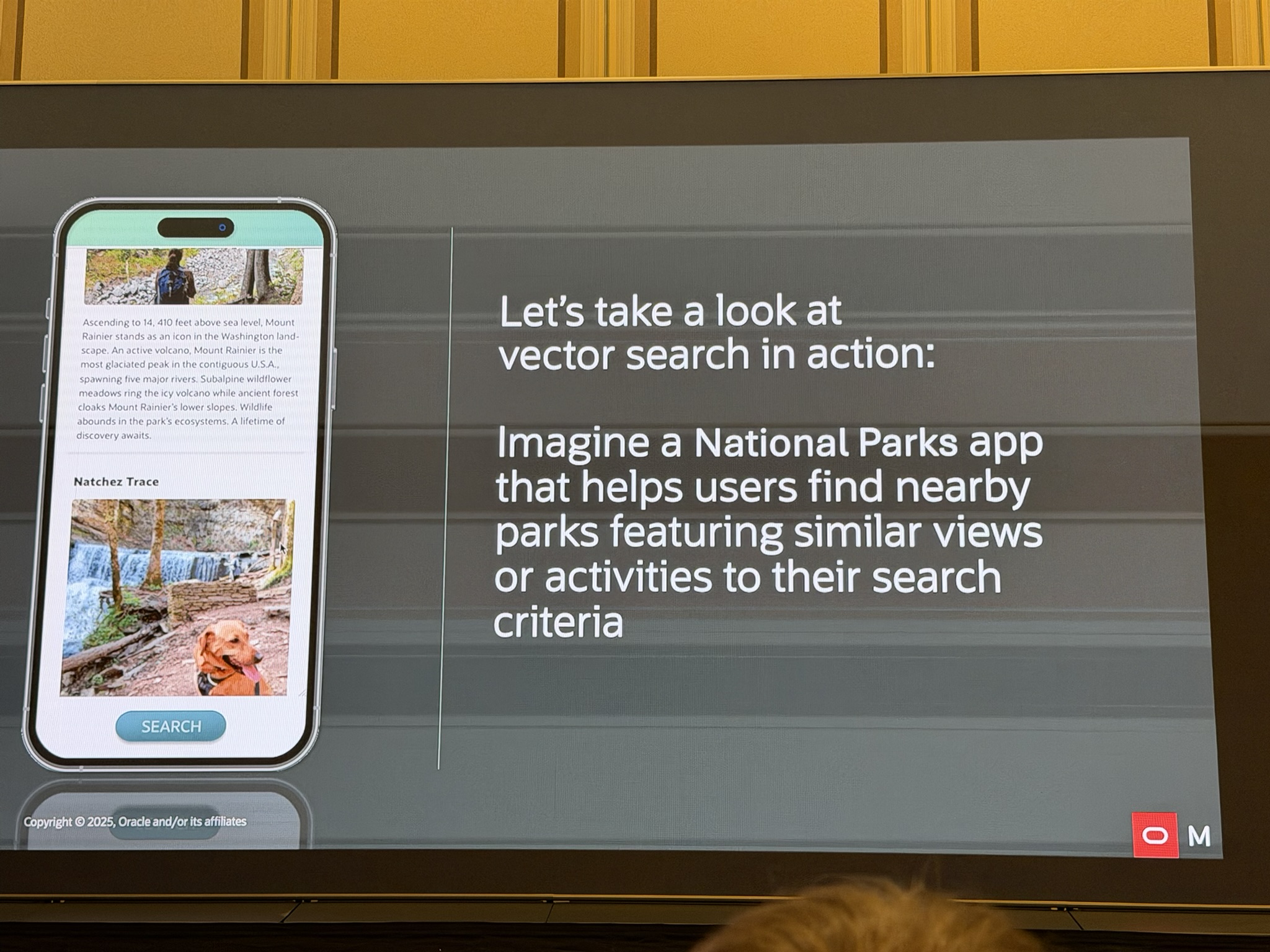
  • Vector Search solves this by enabling searches based on semantic context, allowing systems to find items that are similar in meaning, not just identical in value.

How It Works

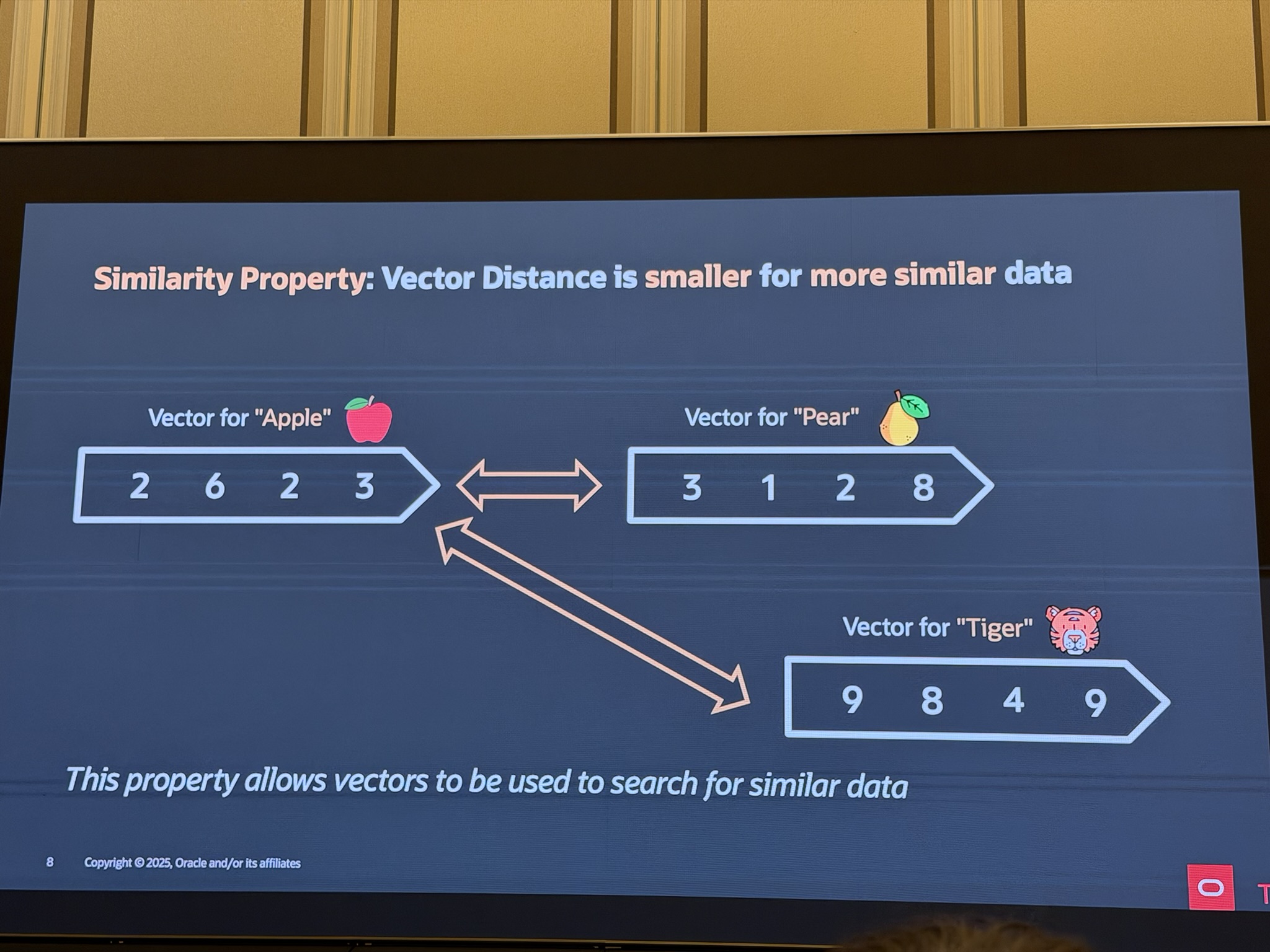
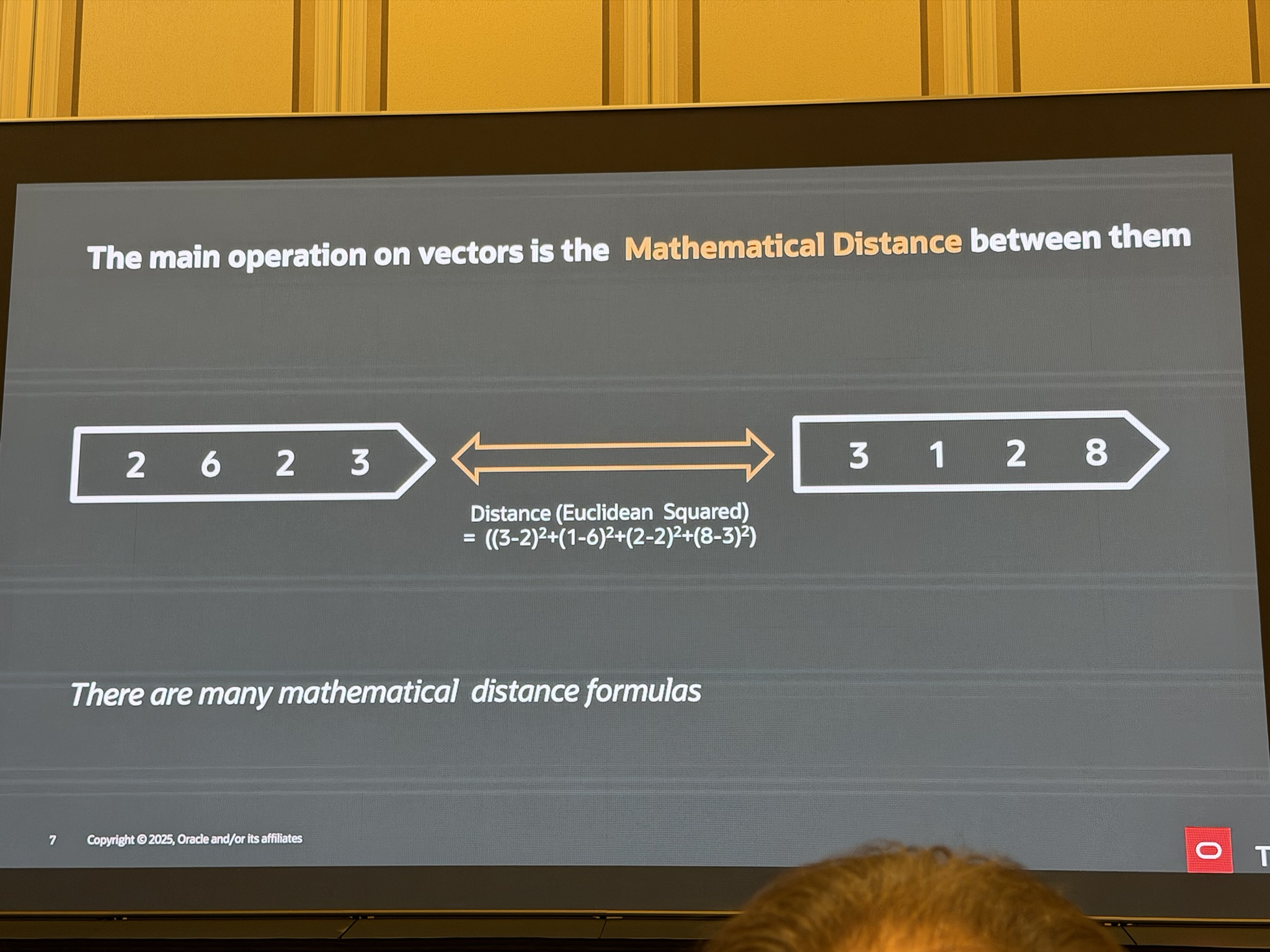
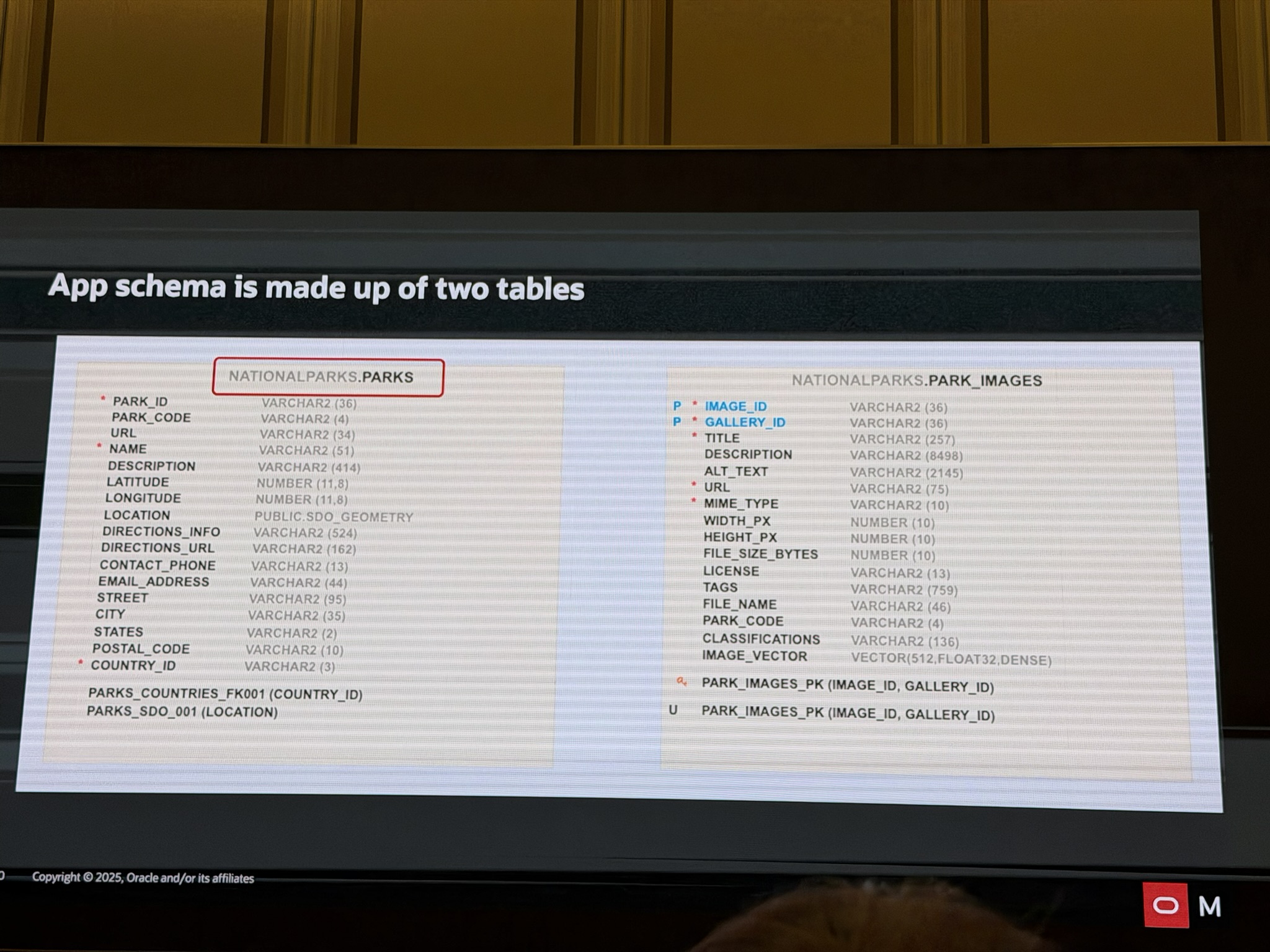
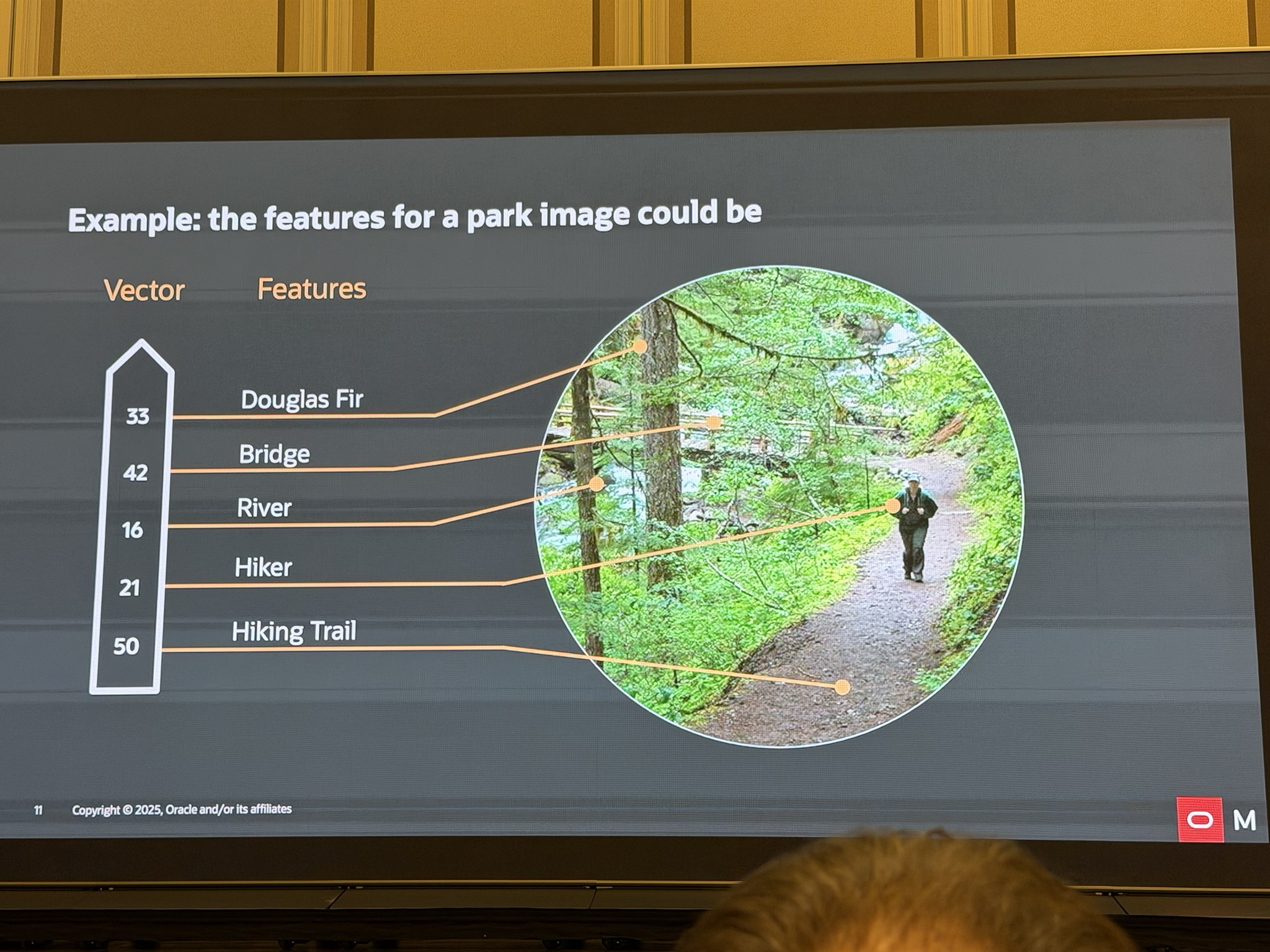
  • Vectors represent data points in a way that captures relationships and similarities.
  • For example:
    • Vector for “Apple” are closer to vector for “Pear” then it is for “Tiger”.
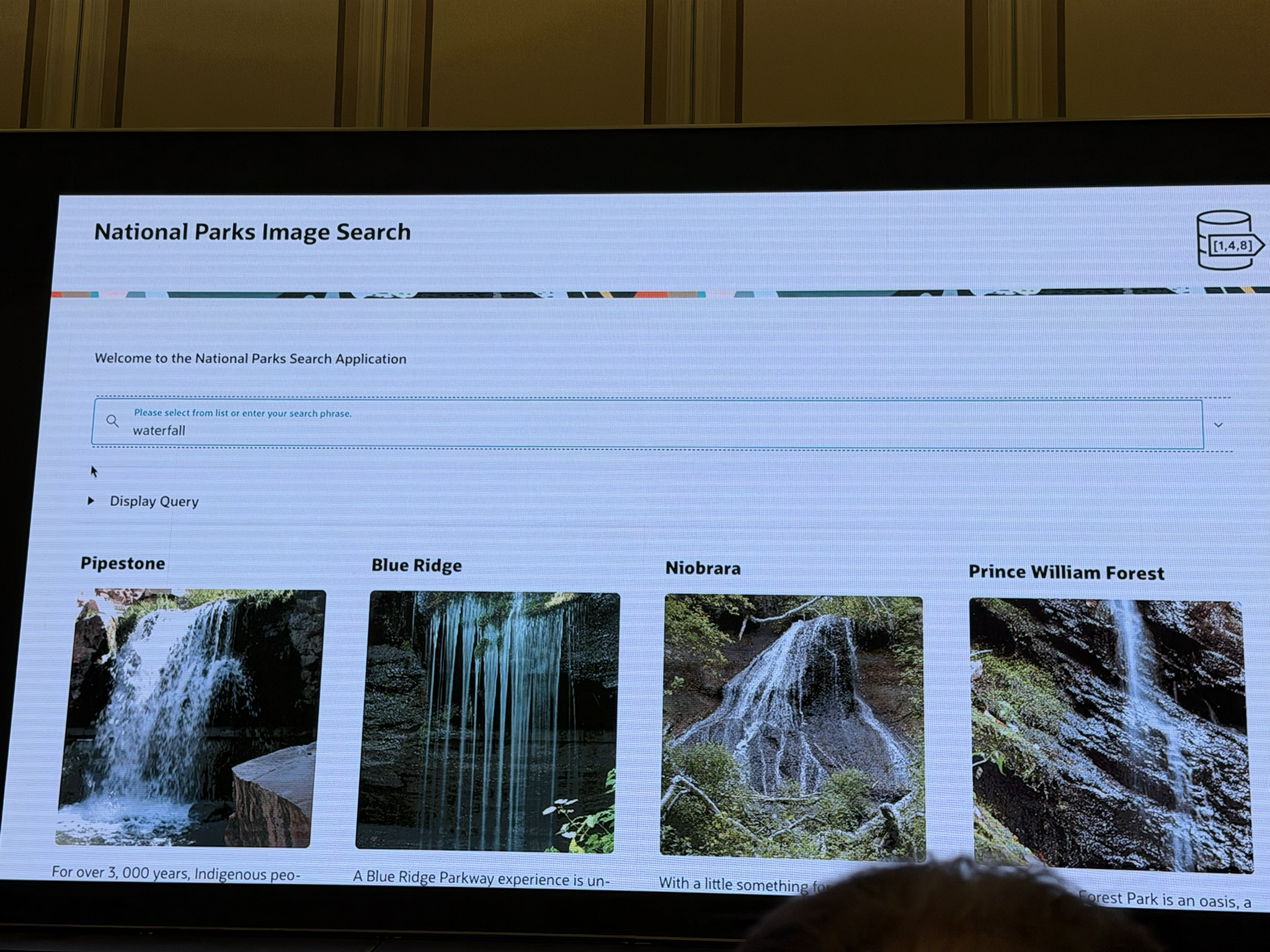
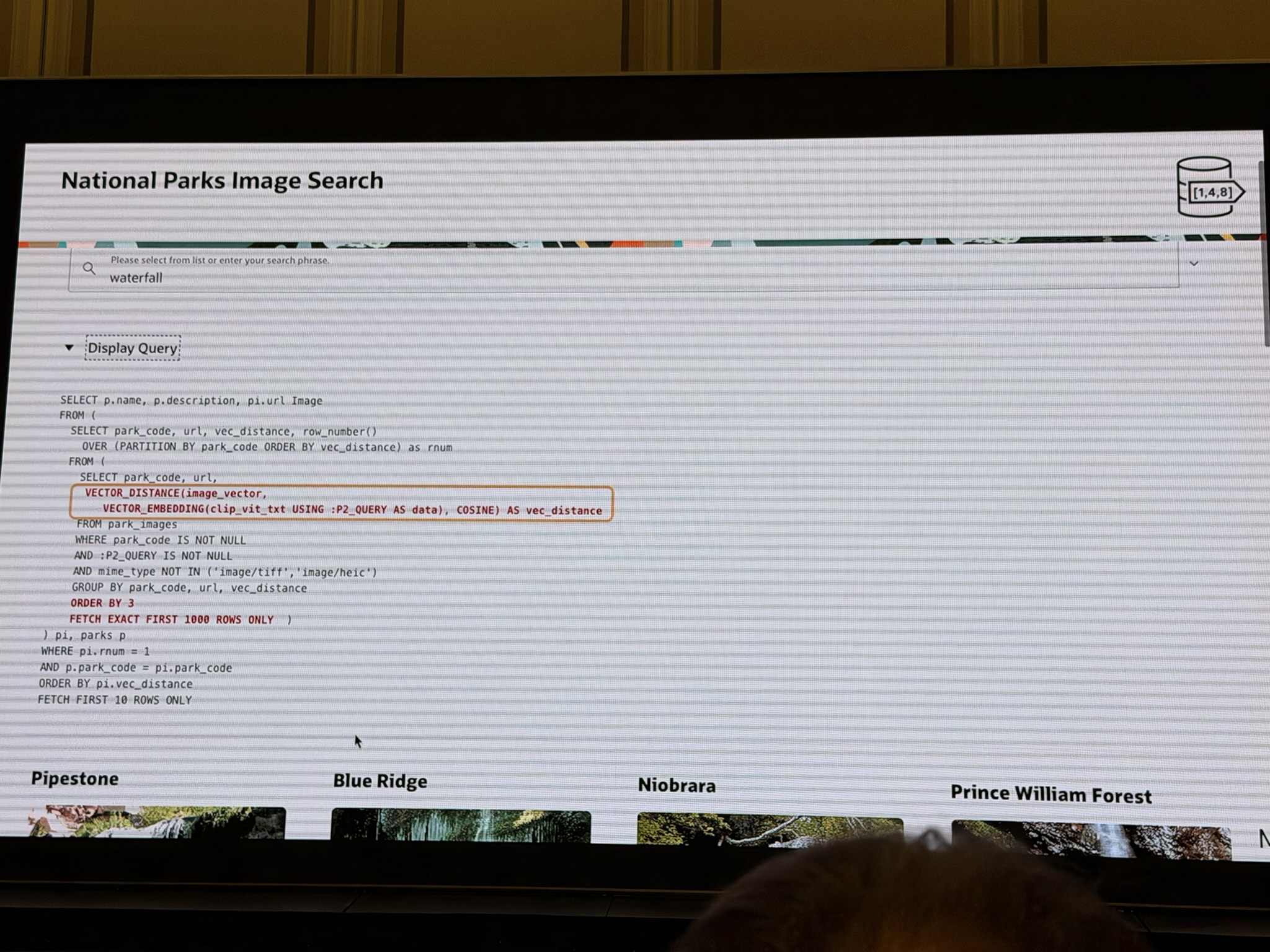
    • Searching for “waterfall” returns results related to waterfalls, even if the word isn’t explicitly mentioned.
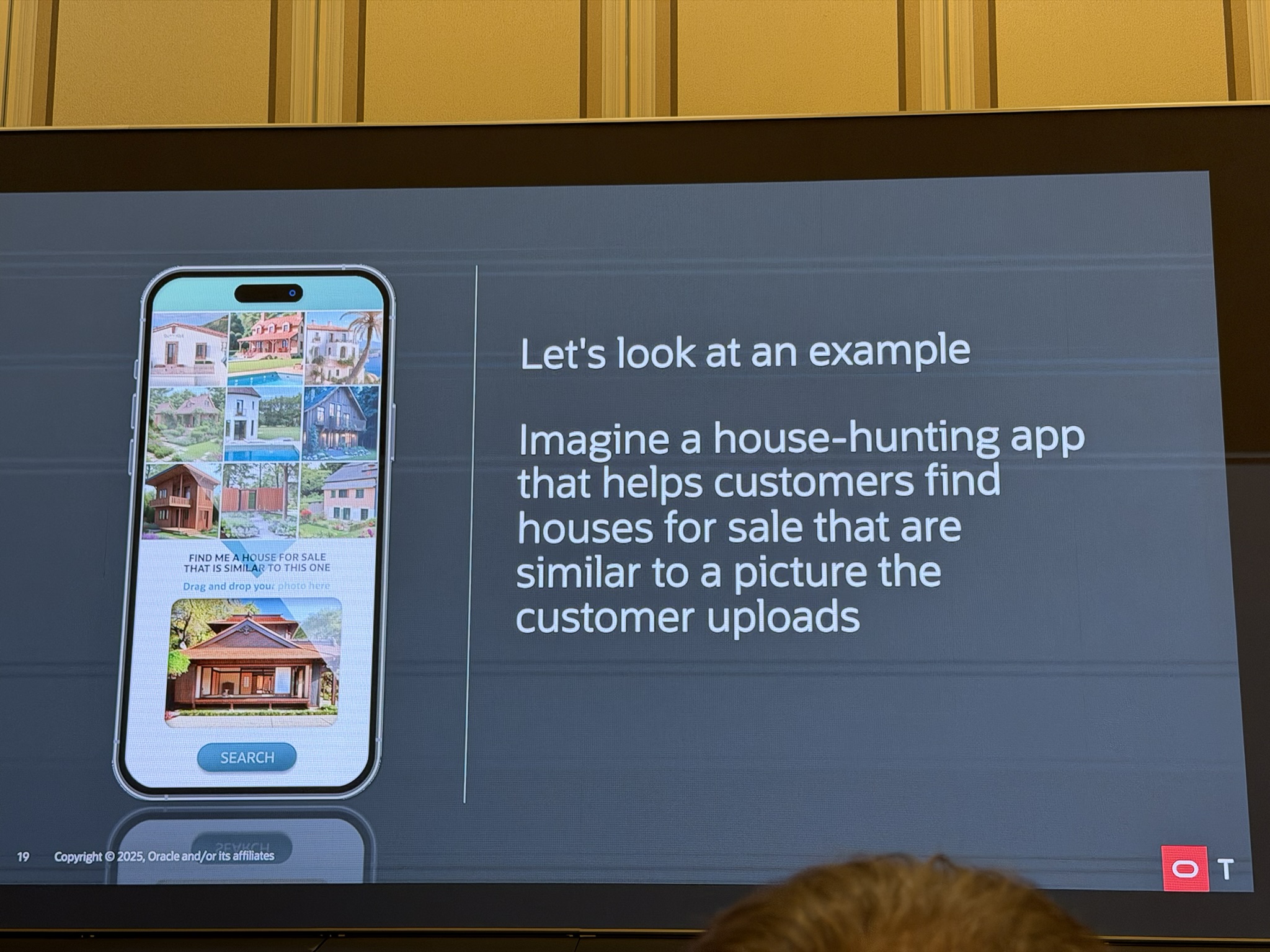
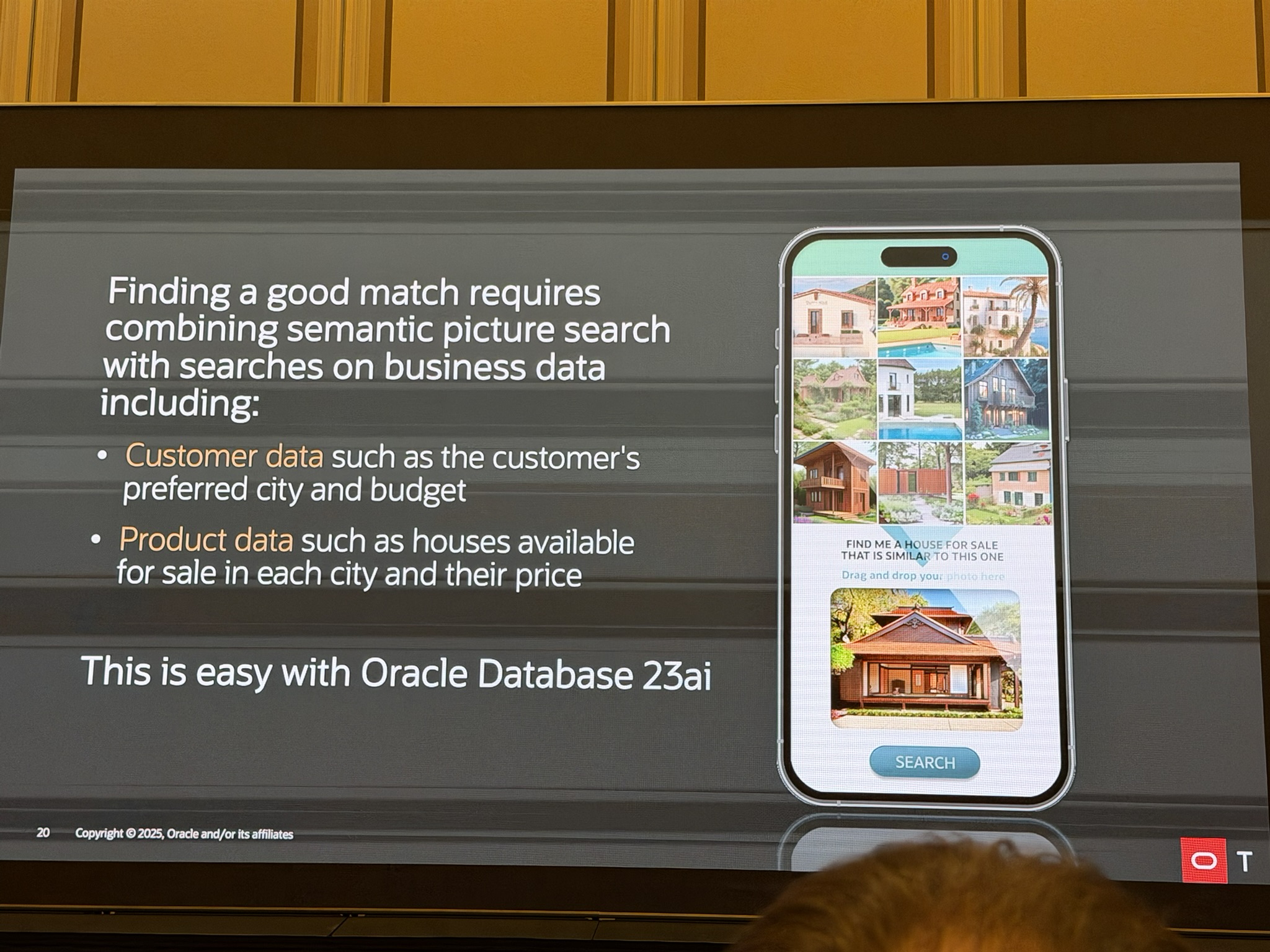
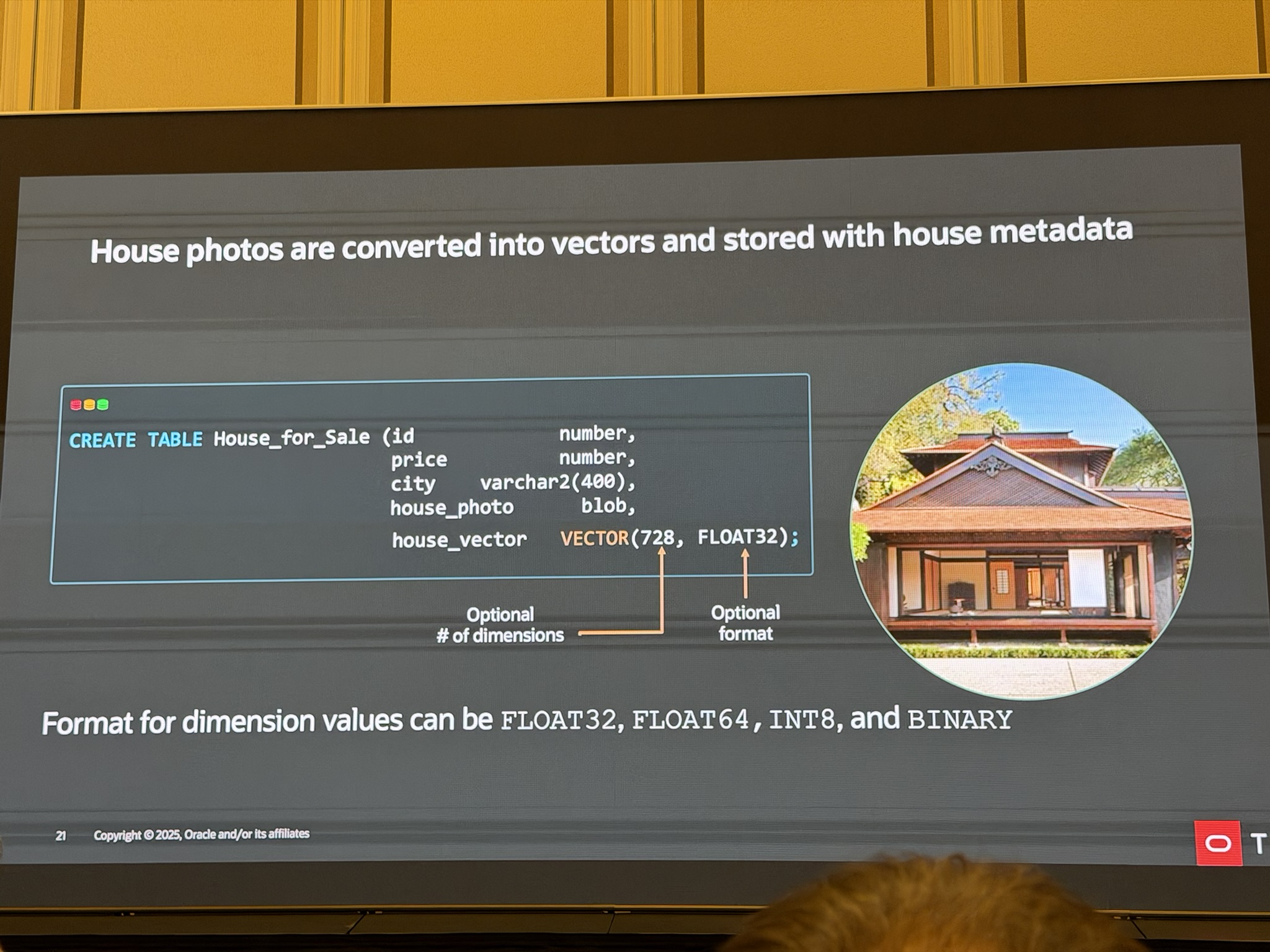
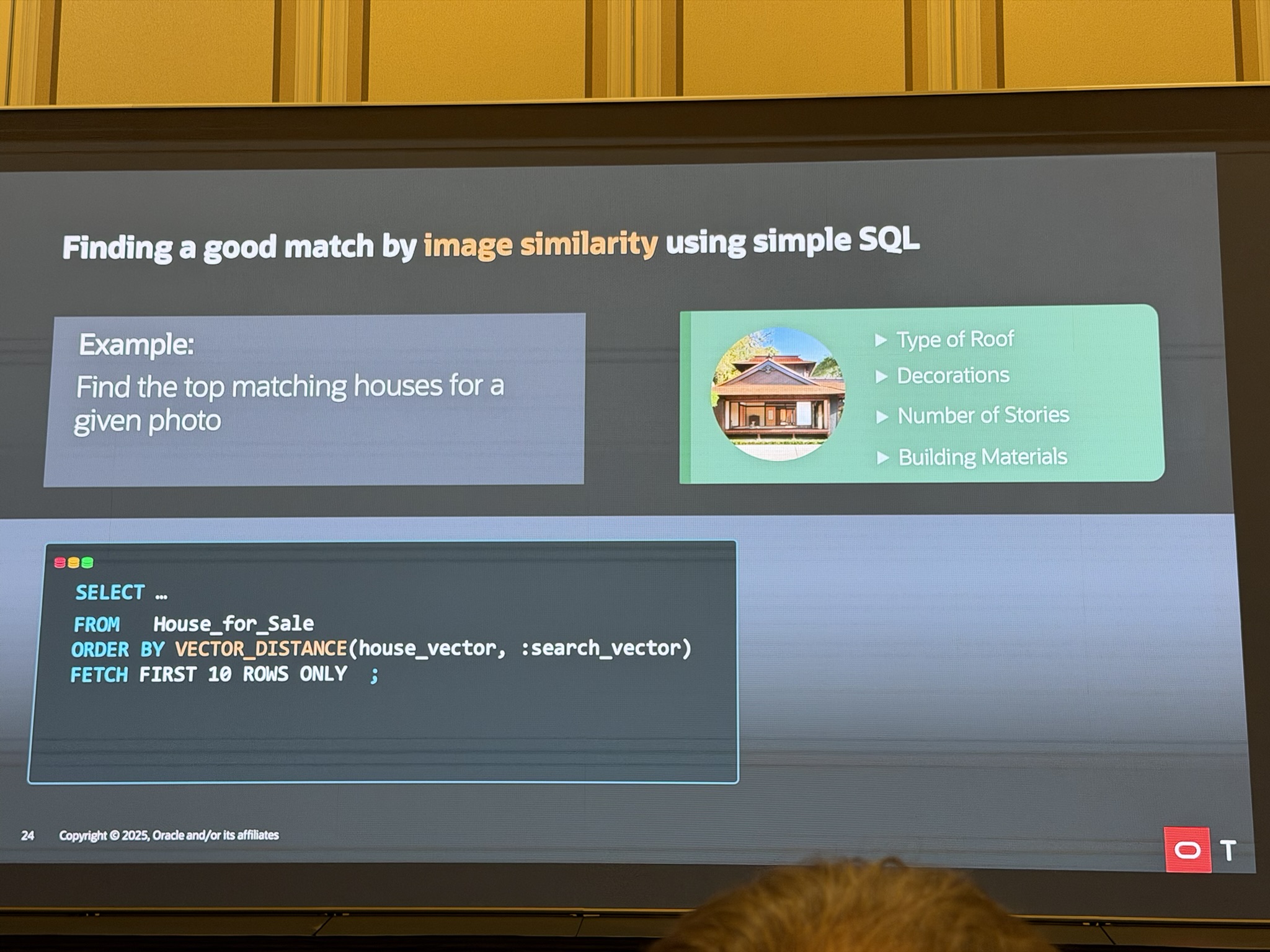
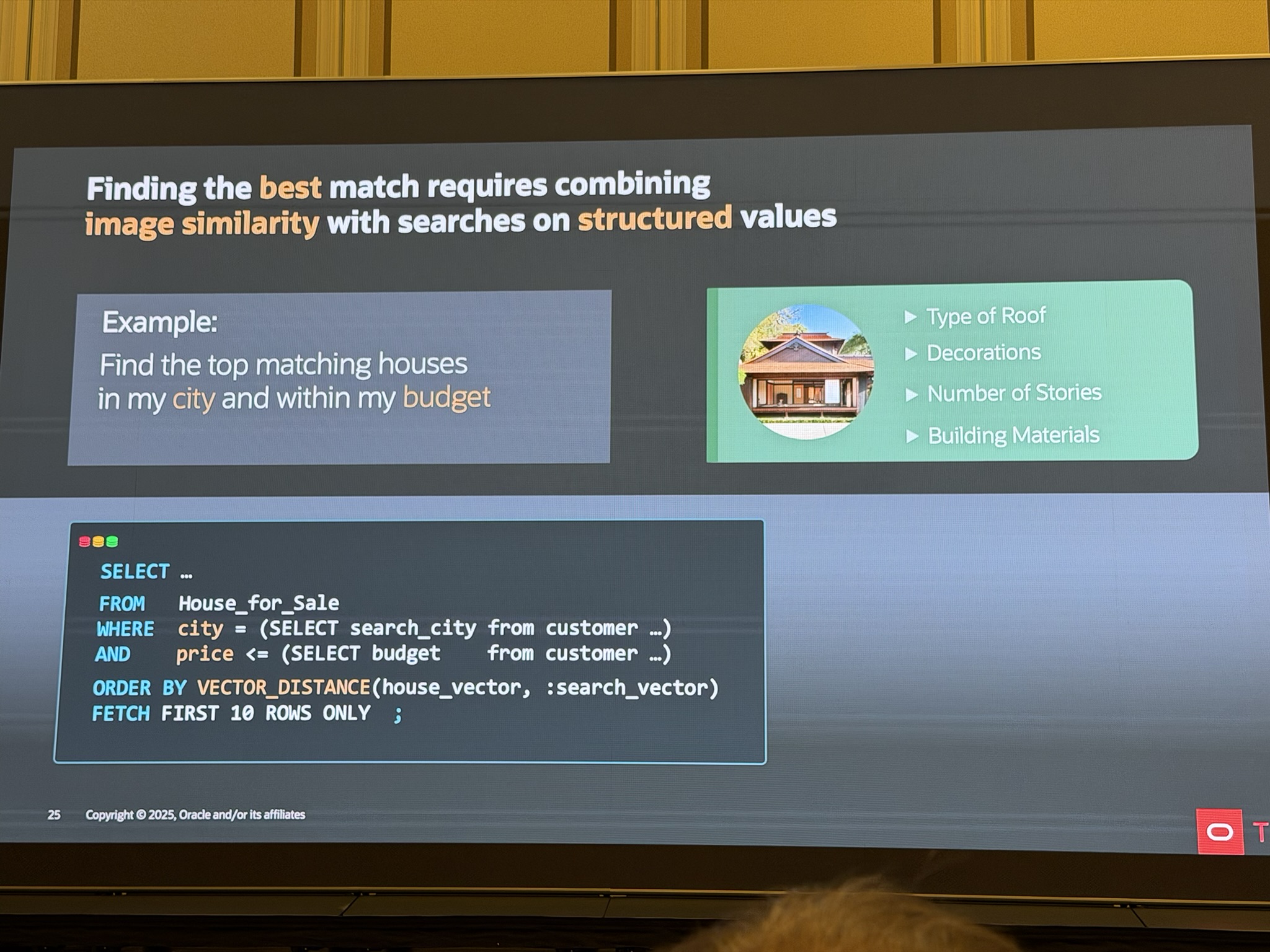
    • Searching with an image (e.g. a house photo) retrieves visually similar houses.

Benefits

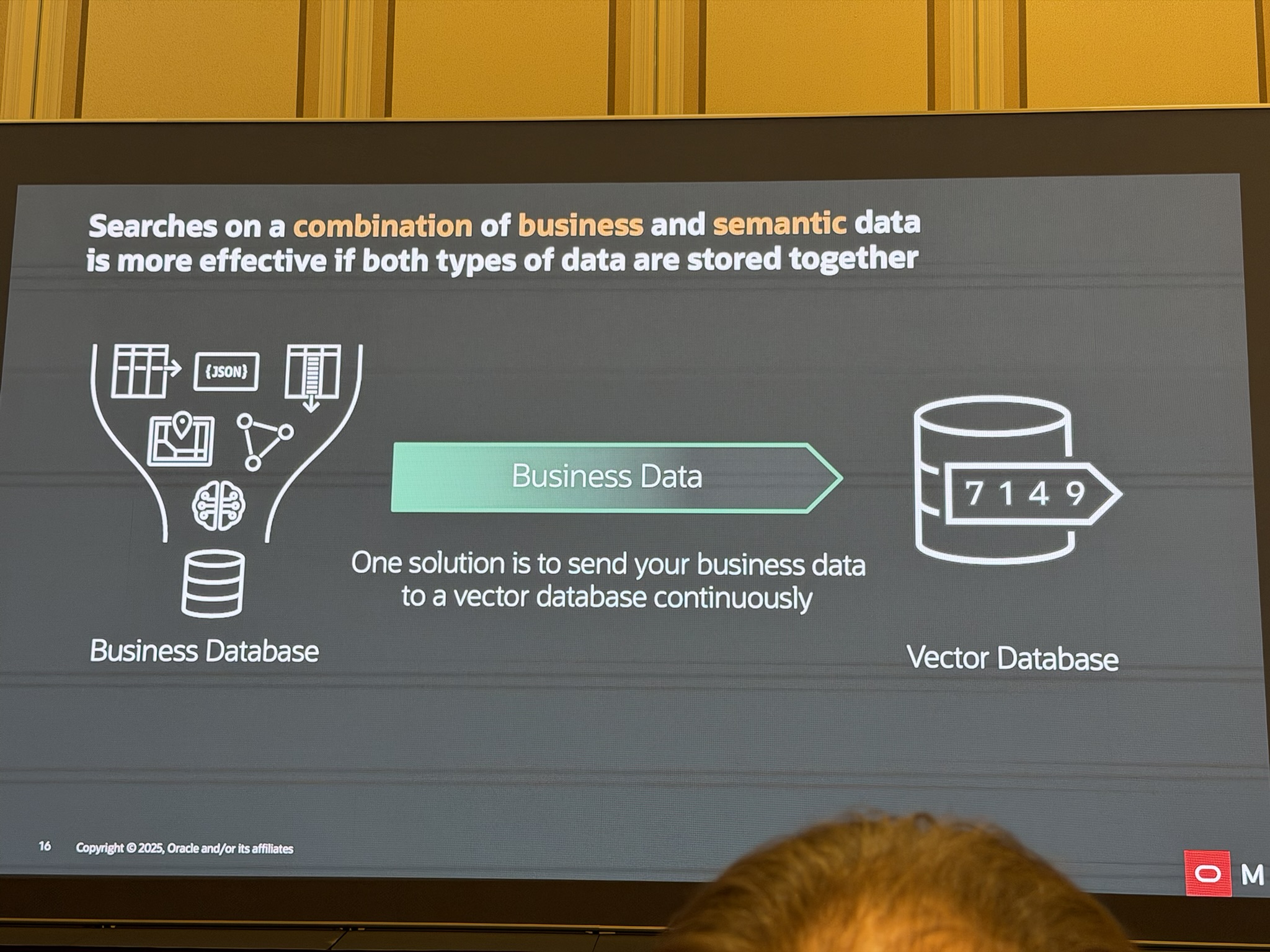
  • No need to ship data around, everything resides in the database, eliminating synchronisation issues.
  • Can be integrated into any enterprise application.
  • Supports image-based searches and natural language queries for richer user experiences.

Performance & Architecture

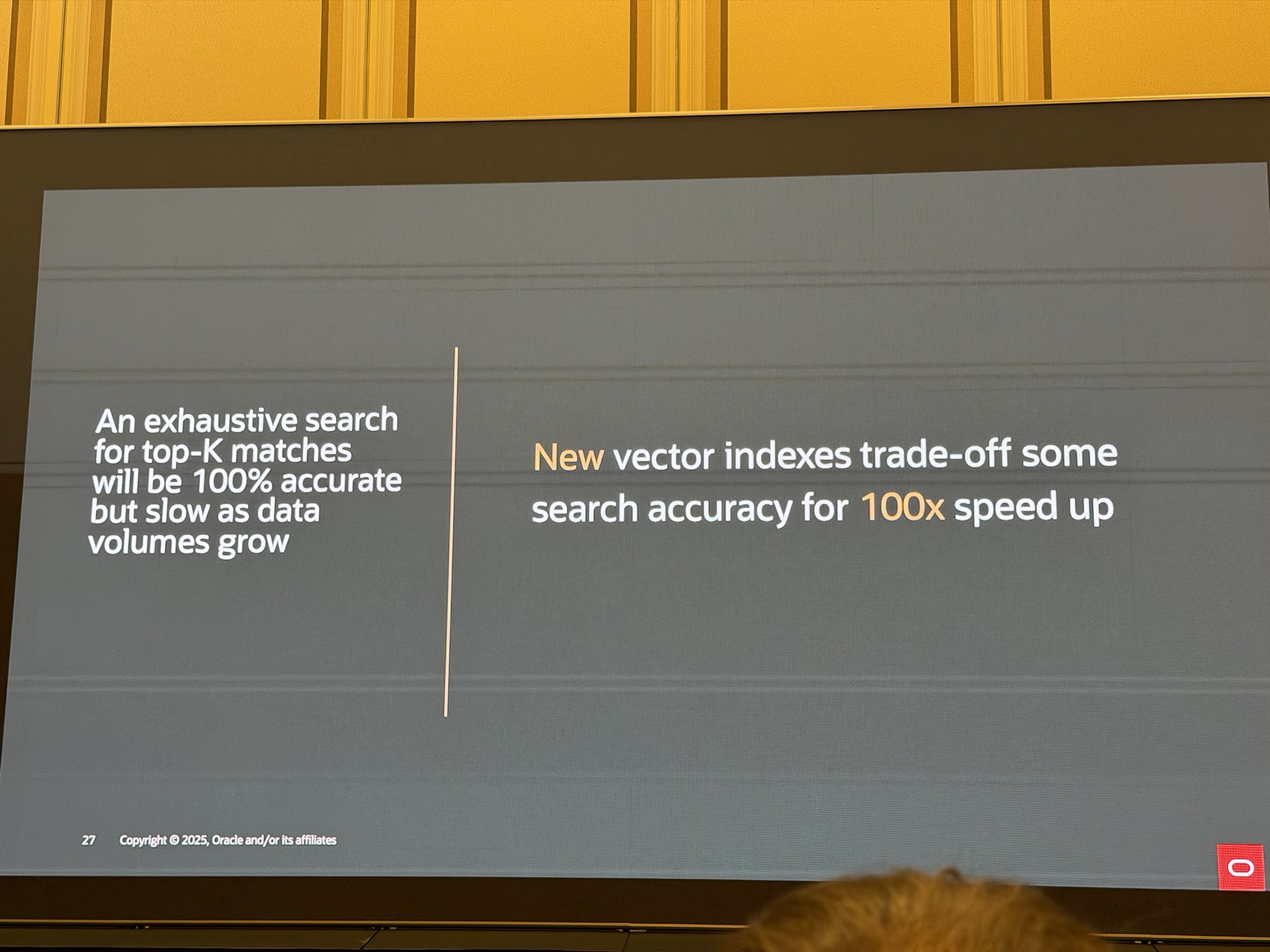
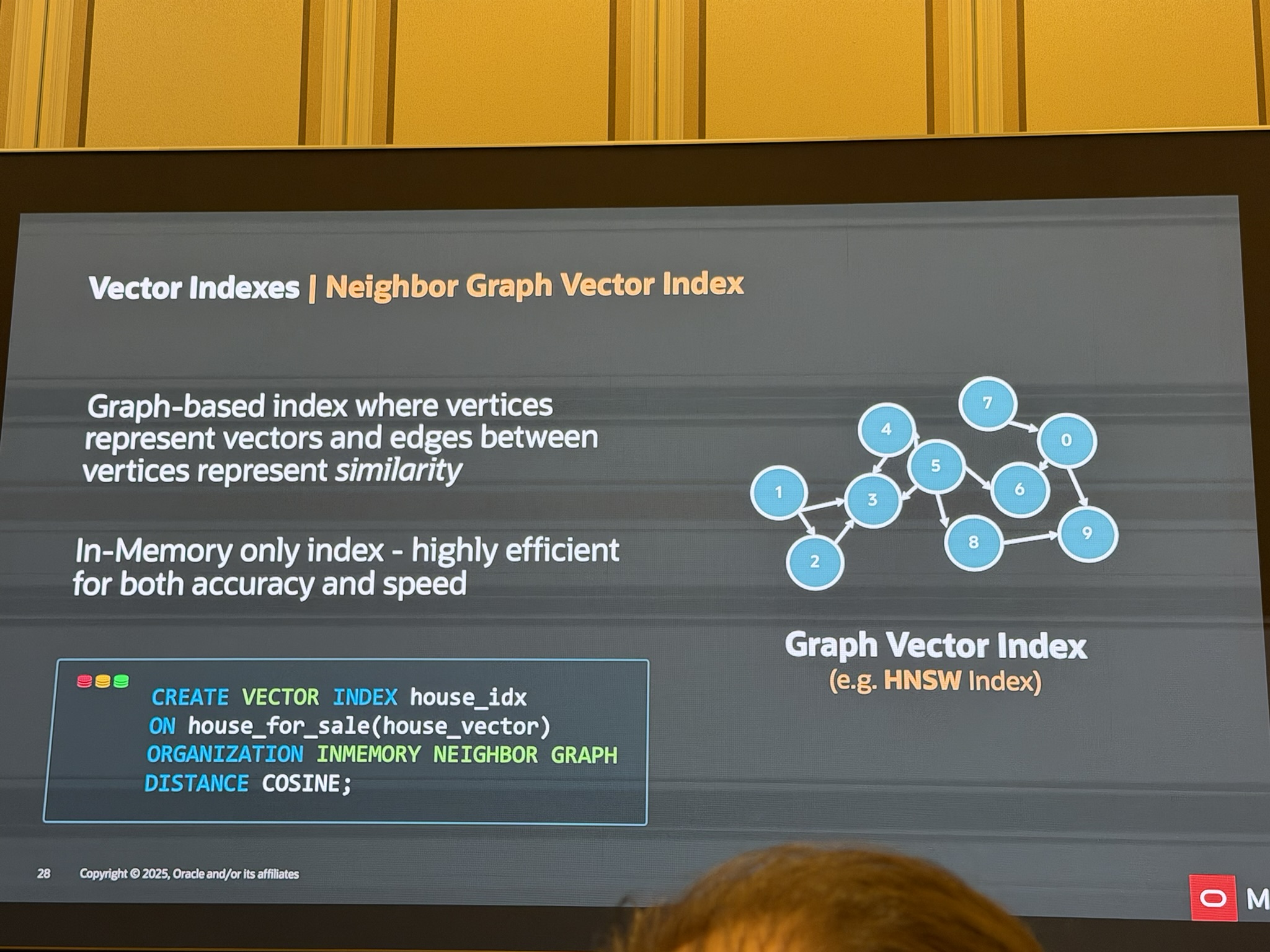
  • Vector indexes ensure top-K matches are consistent, even if the full search set varies. Trade-off some search accuracy for 100x speed up.
  • In-memory searches are fast but limited by memory size and volatility.
  • On-disk searches use partitioning to eliminate irrelevant vectors efficiently.
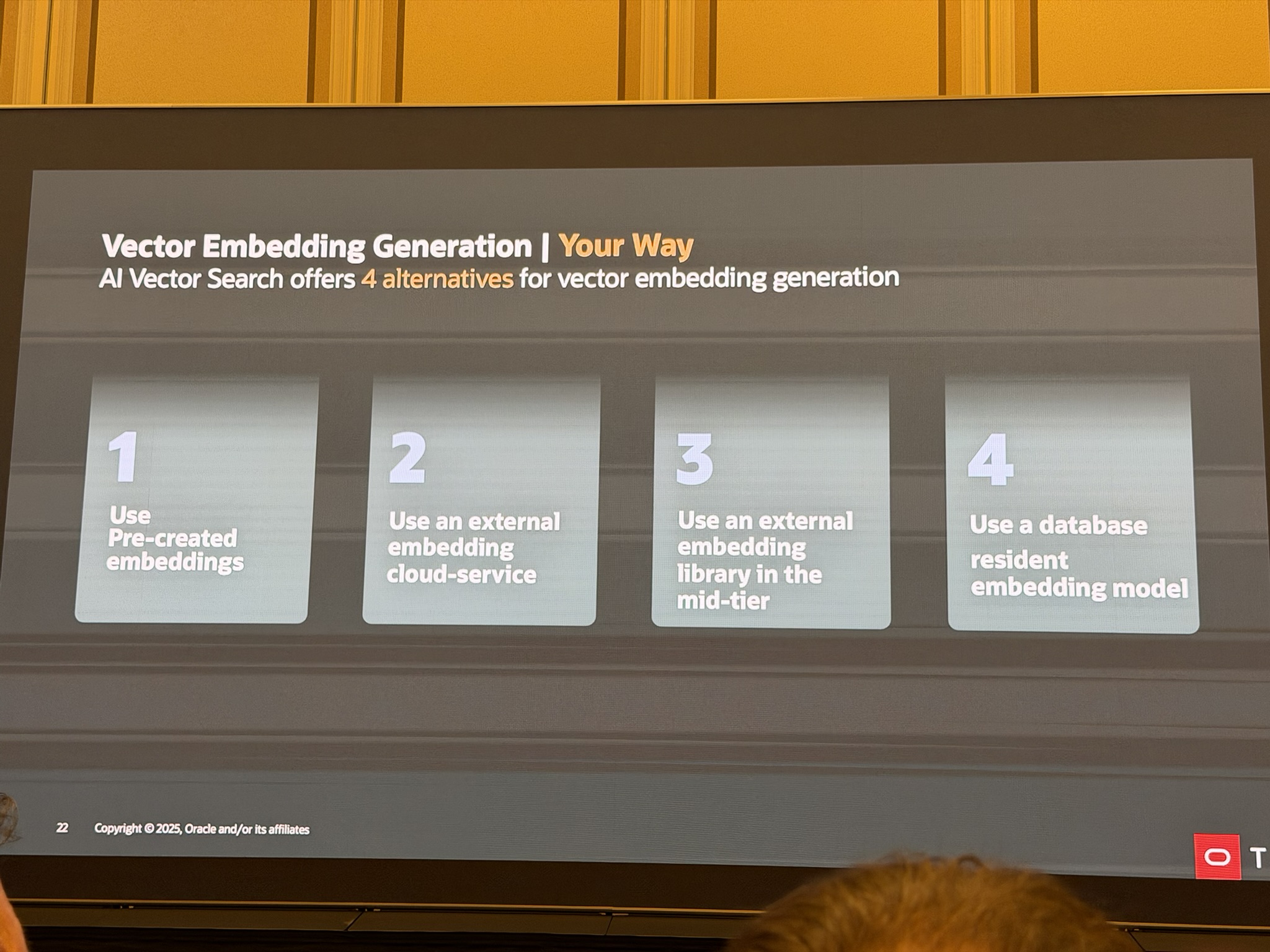
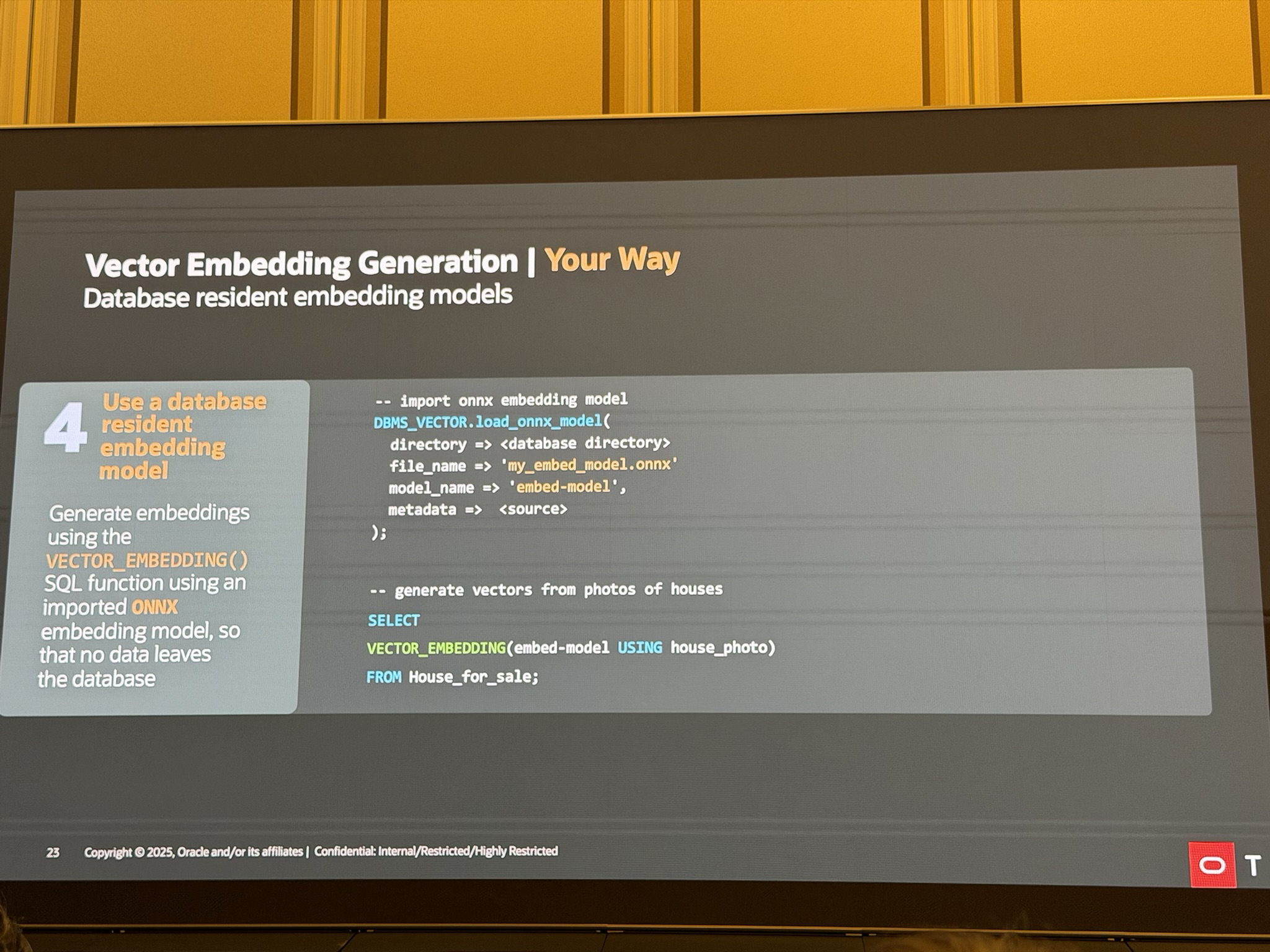
  • AI agents typically run in the mid-tier but can now perform inference directly with Oracle Database.

This session highlighted how Oracle’s AI Vector Search is redefining enterprise search capabilities. By moving beyond exact matches to semantic similarity, businesses can deliver smarter, more intuitive experiences, whether it’s finding related content, identifying similar products, or enabling image-based searches. And because the data stays within the database, organisations avoid costly synchronisation challenges while maintaining speed and scalability.

Keynote: Oracle Vision and Strategy

Next, I attended the keynote by Larry Ellison, Oracle’s Chairman of the Board and Chief Technology Officer for insights into Oracle’s AI strategy and future vision.

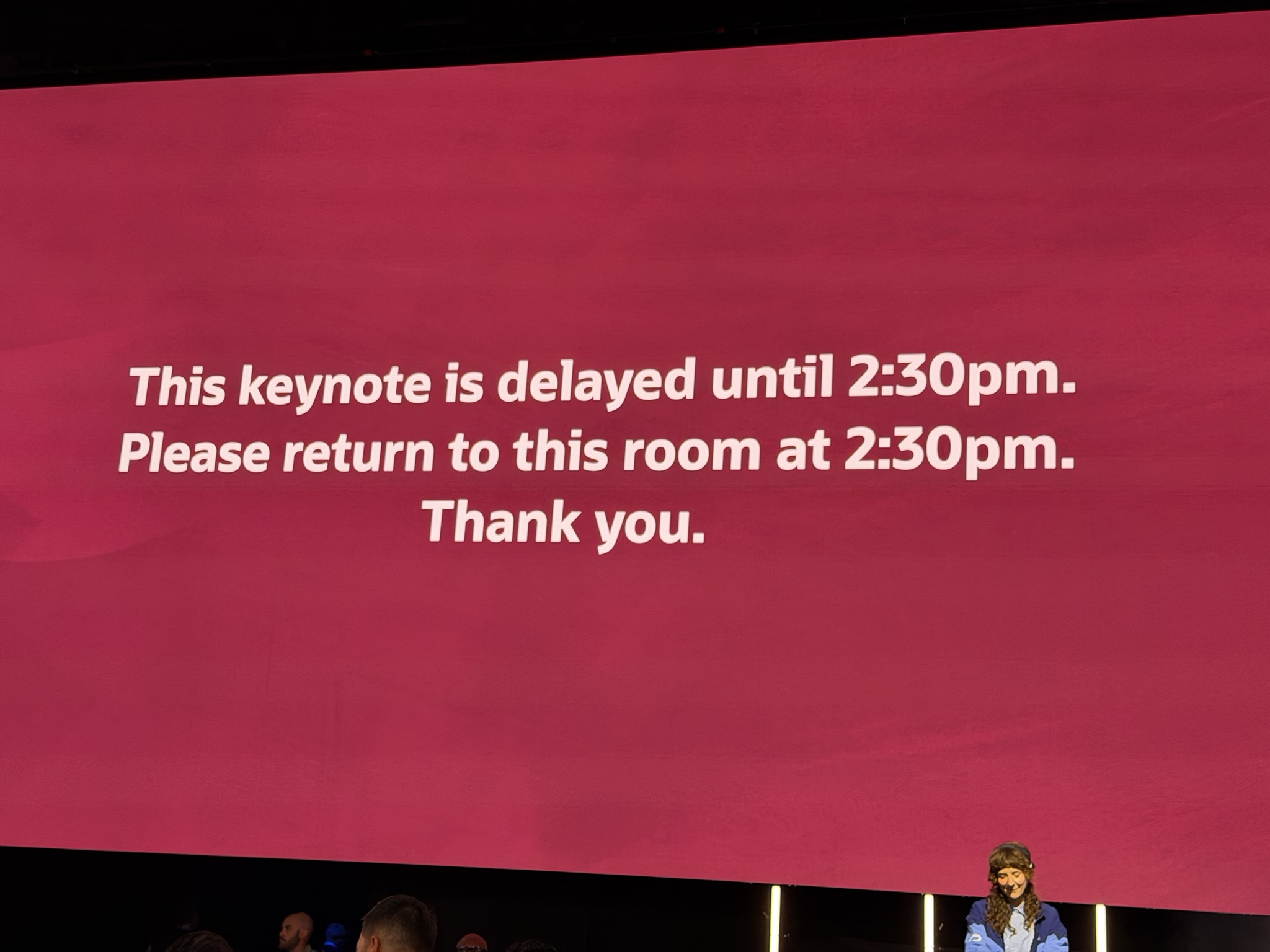
I arrived half an hour early to secure a good seat, but just as the keynote was about to begin, I discovered it had been delayed by an hour.

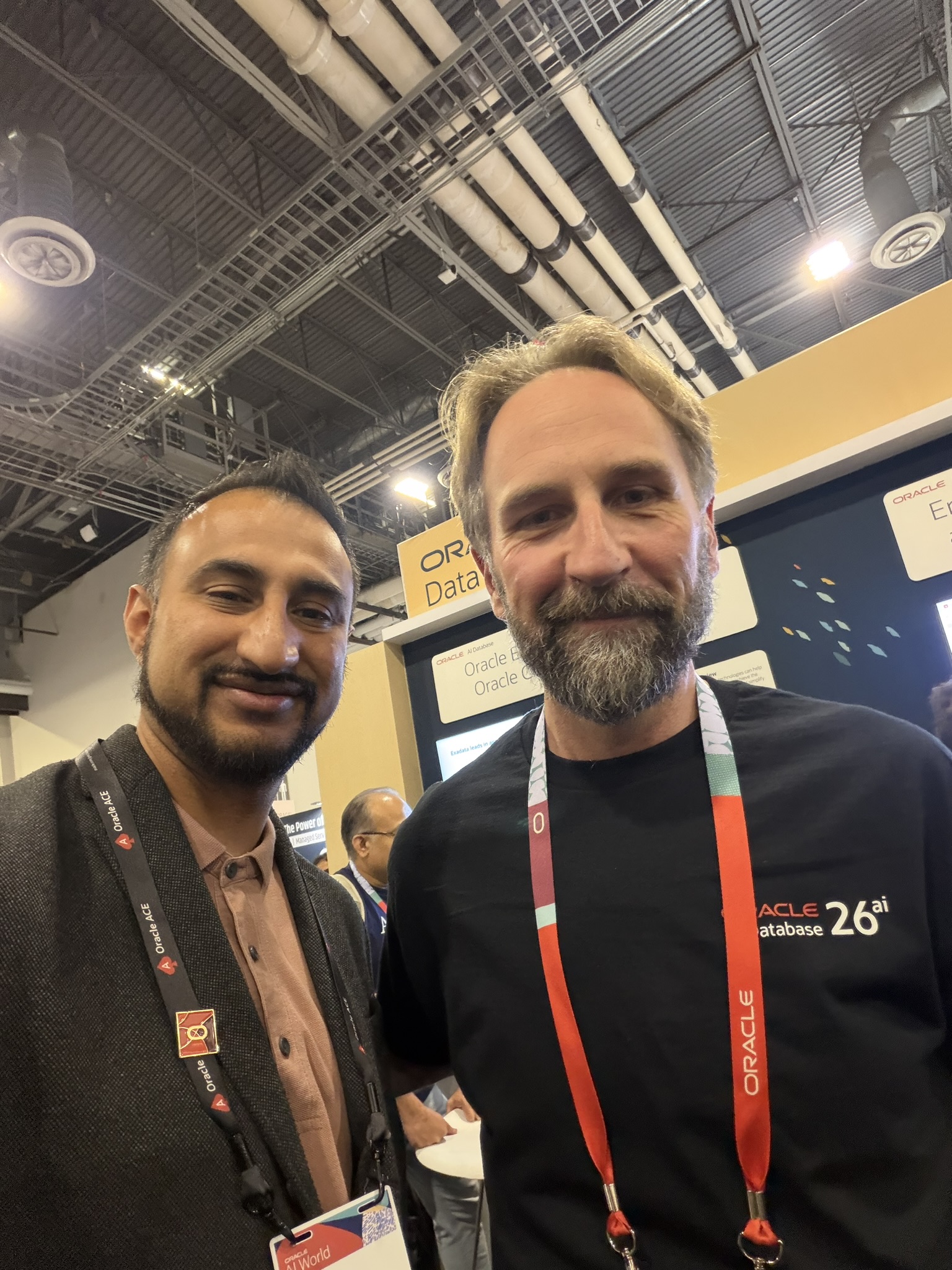
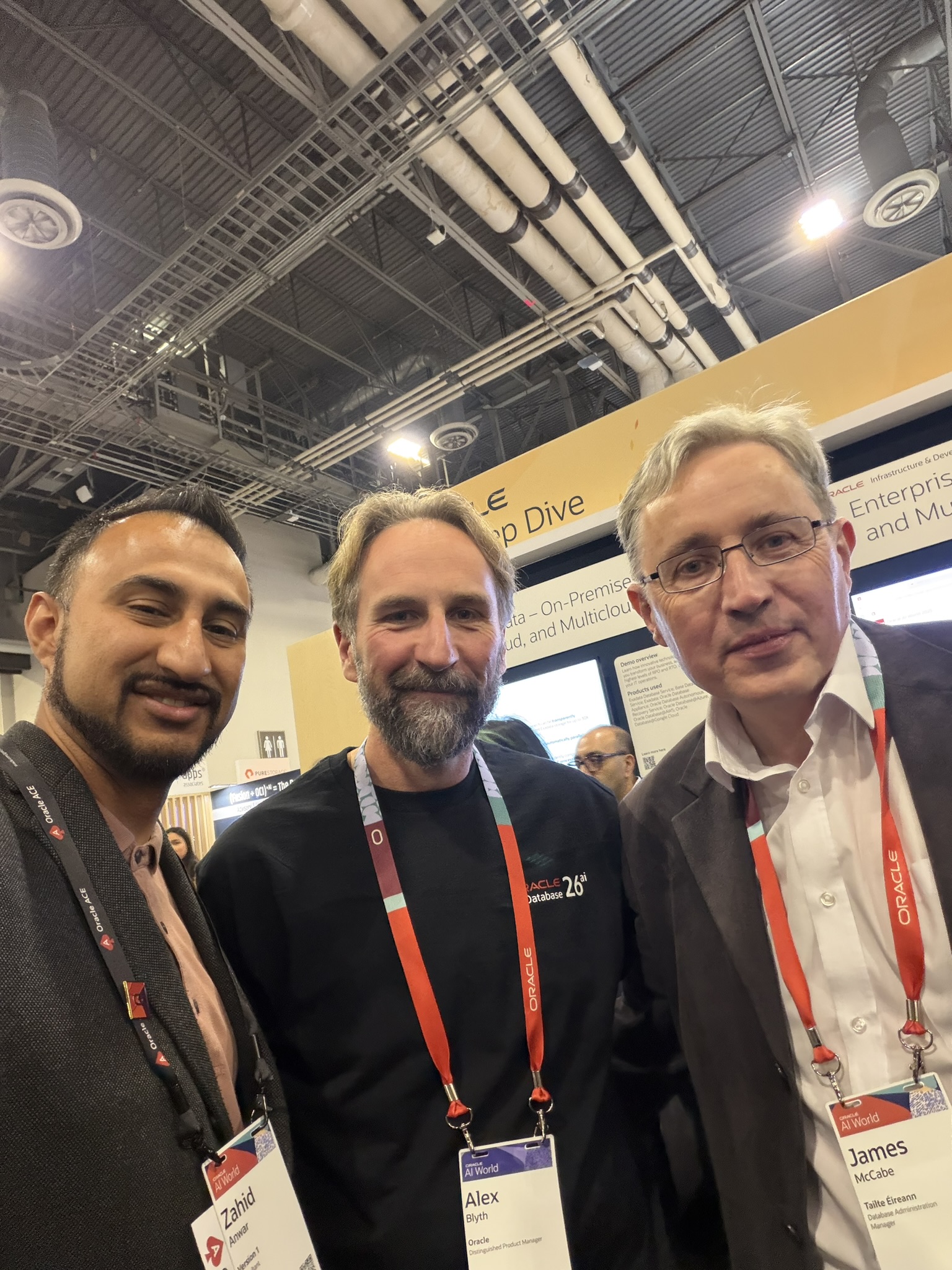
I made the most of the break with a quick cup of tea, stopped by the Oracle ACE booth, and had a great chat with Alex, Oracle’s Exadata Product Manager, as well as my client James. Then I headed back to my seat, ready for the big keynote.

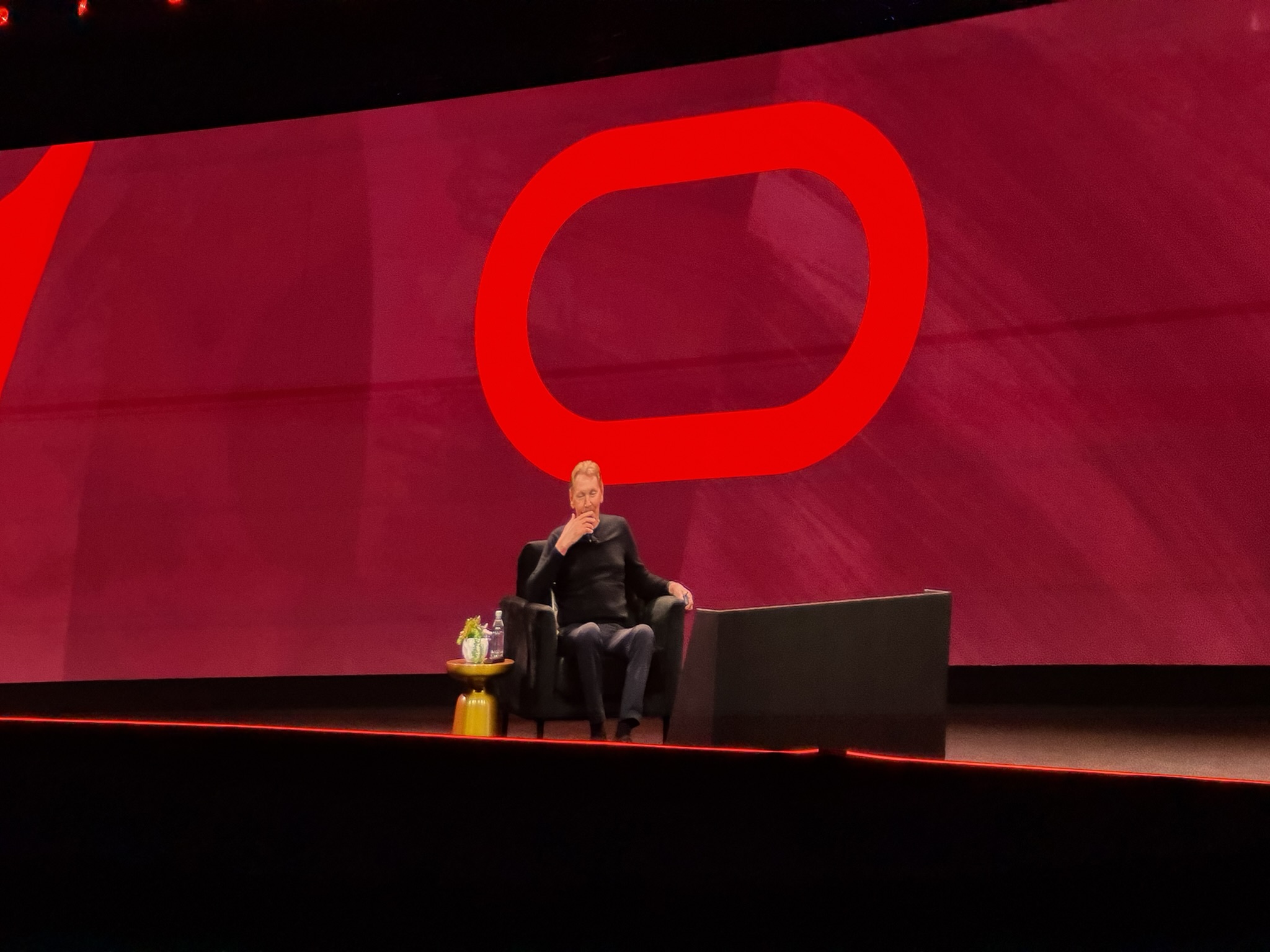
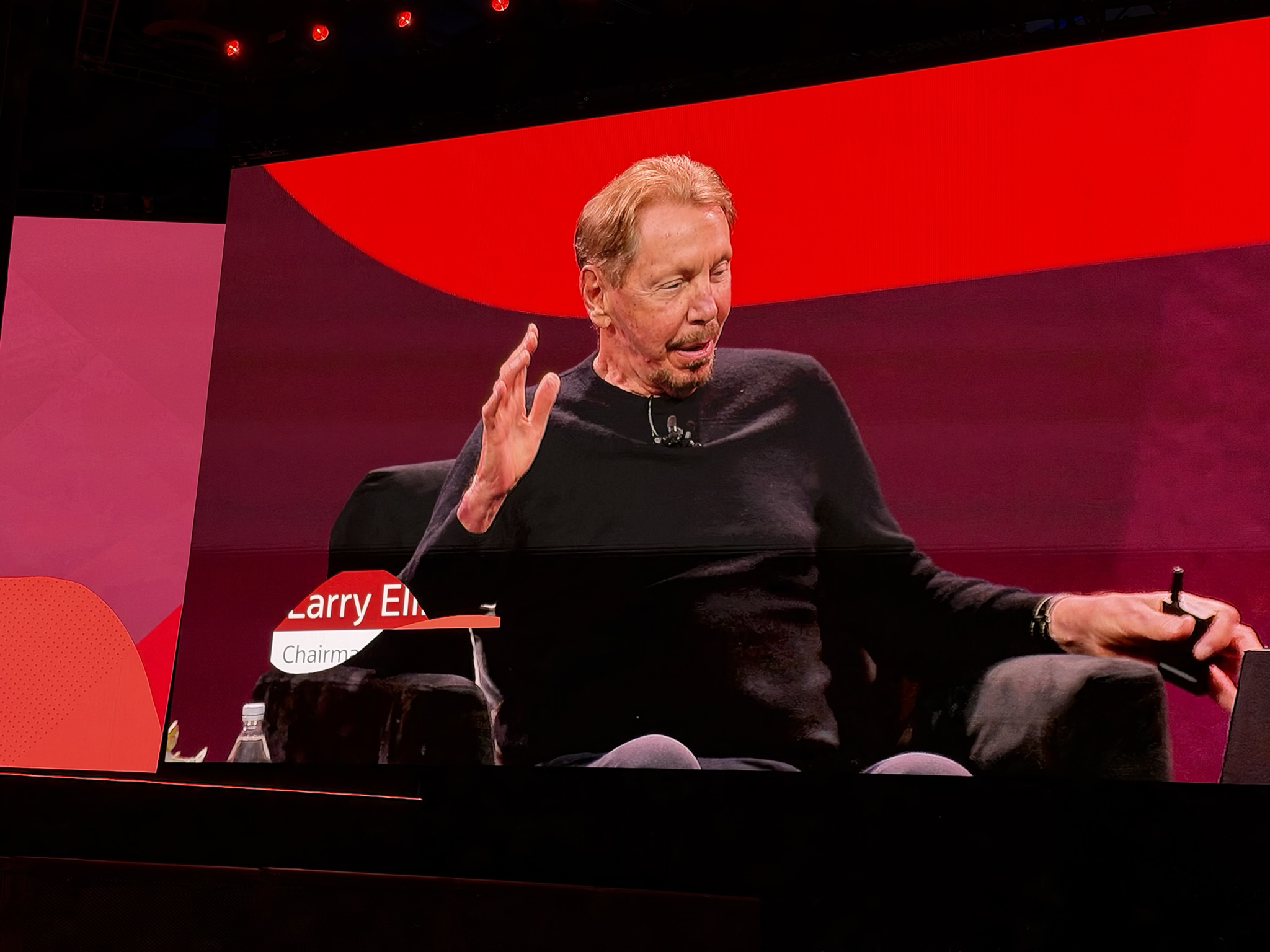
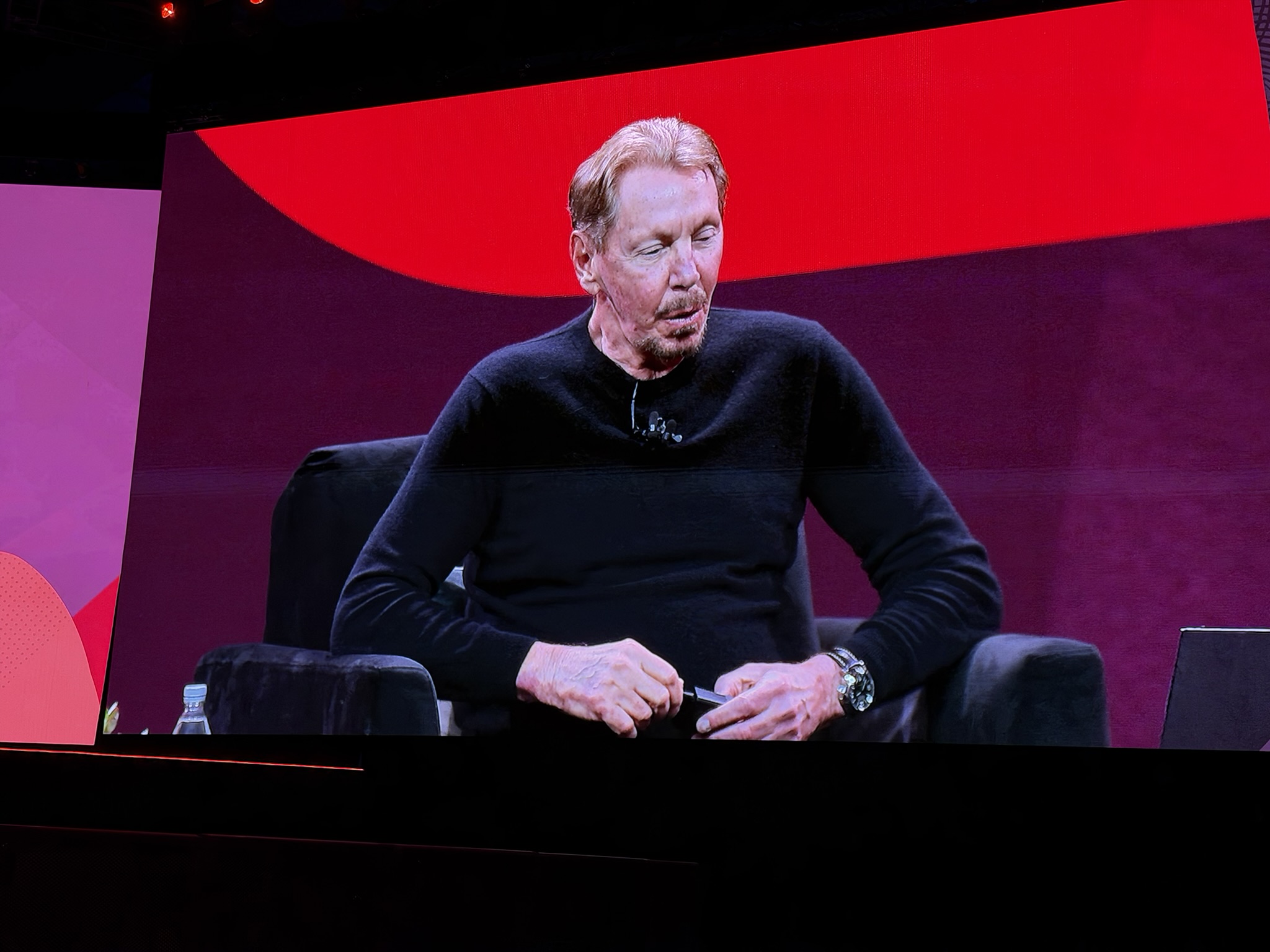
Unfortunately, even with the hour delay, Larry didn’t speak live at the keynote. I’m not sure if it was due to a delay, security, or health reasons, it was unknown. Given that Larry is now over 80 and doesn’t appear to be as fit as in the past, that could have been a factor. Instead, we got a video feed. I wasn’t sure if it was broadcast live from elsewhere, but as the video showed the actual stage, I suspect it was a recording from a dry run, though I can’t say for certain. Nevertheless, I listened attentively as if he were there, making sure to capture the key messages.

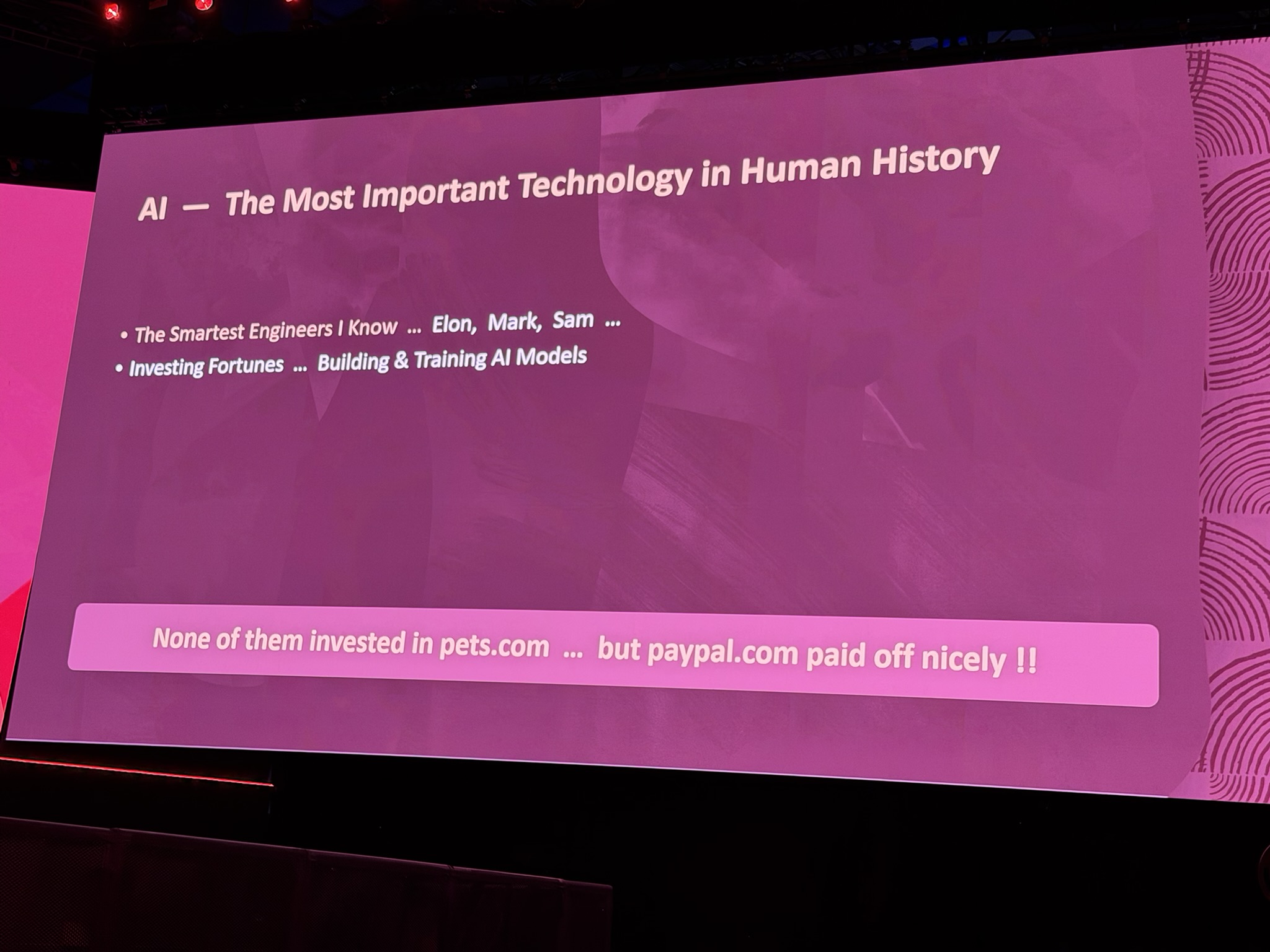
Larry delivered a thought-provoking keynote that positioned AI as the most transformative technology since the Industrial Revolution, bigger than the railroads.

AI as the Highest-Value Technology

  • “AI is the highest-value technology we have ever seen.”
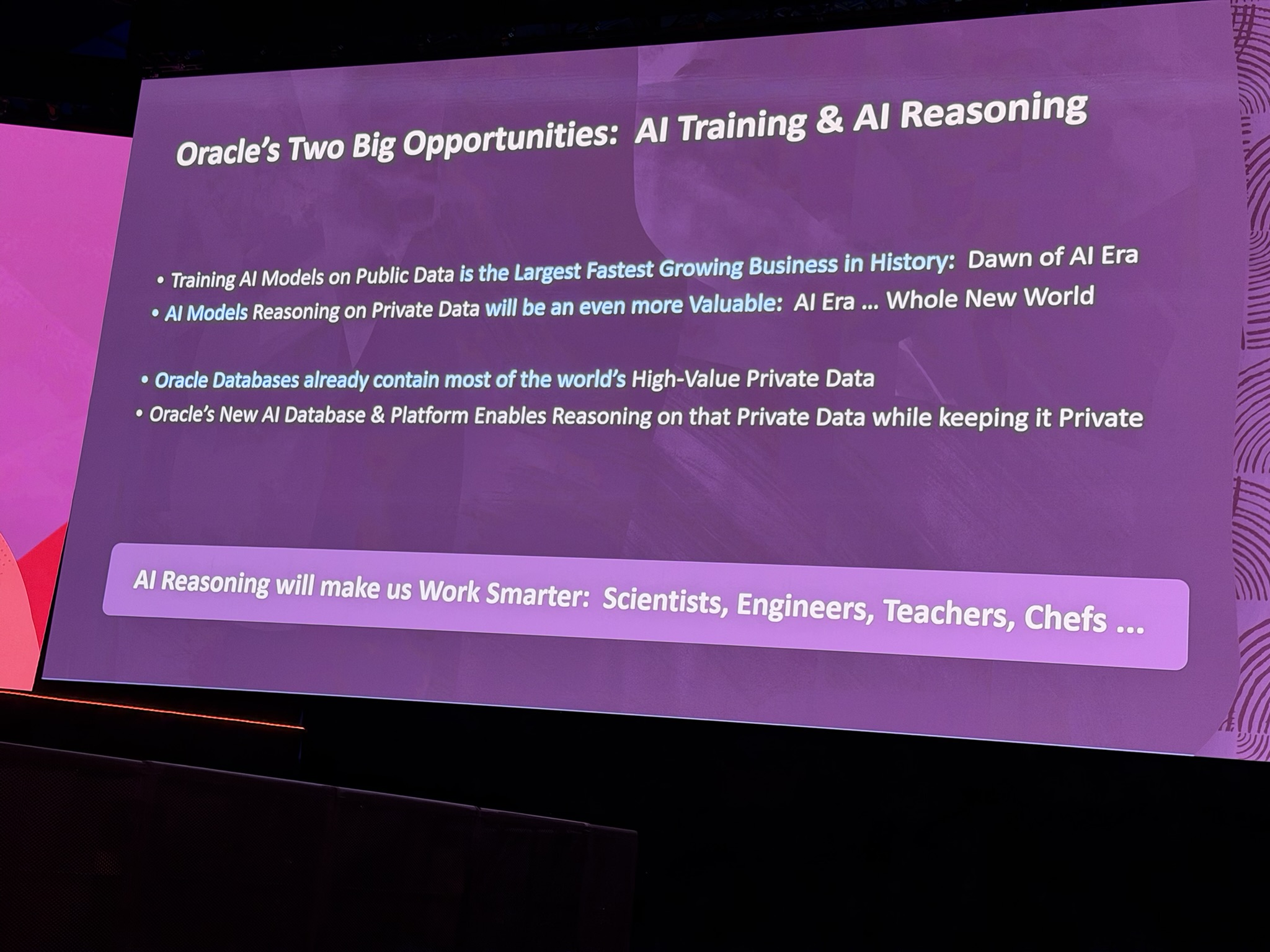
  • Building and training AI models is a massive opportunity, especially when leveraging private data, most AI models today are trained on public data, but private enterprise data (often in Oracle databases) is where true differentiation happens.

Why AI Needs the Internet

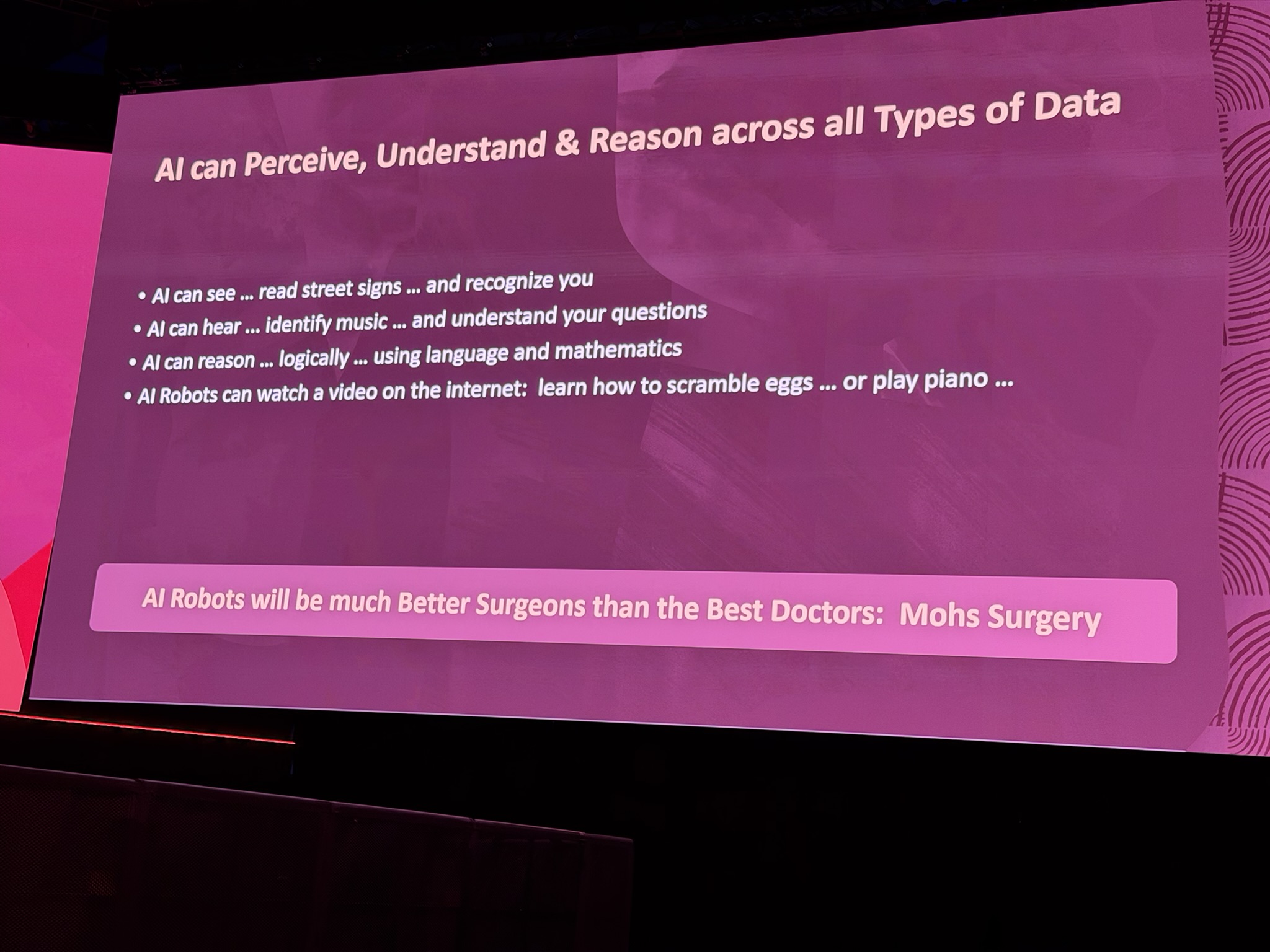
  • Larry compared AI learning to a robot mastering tasks like cleaning, cooking, or playing the piano: “They would just watch videos on the internet very rapidly, faster than real time, and then do it better.”

AI in Healthcare and Surgery

  • AI offers microscopic vision, enabling precision in surgery:
    • Humans remove layers of cancerous skin and check repeatedly.
    • AI robots can detect and remove cancer cells in real time, reducing risk and improving outcomes.

Powering AI at Scale

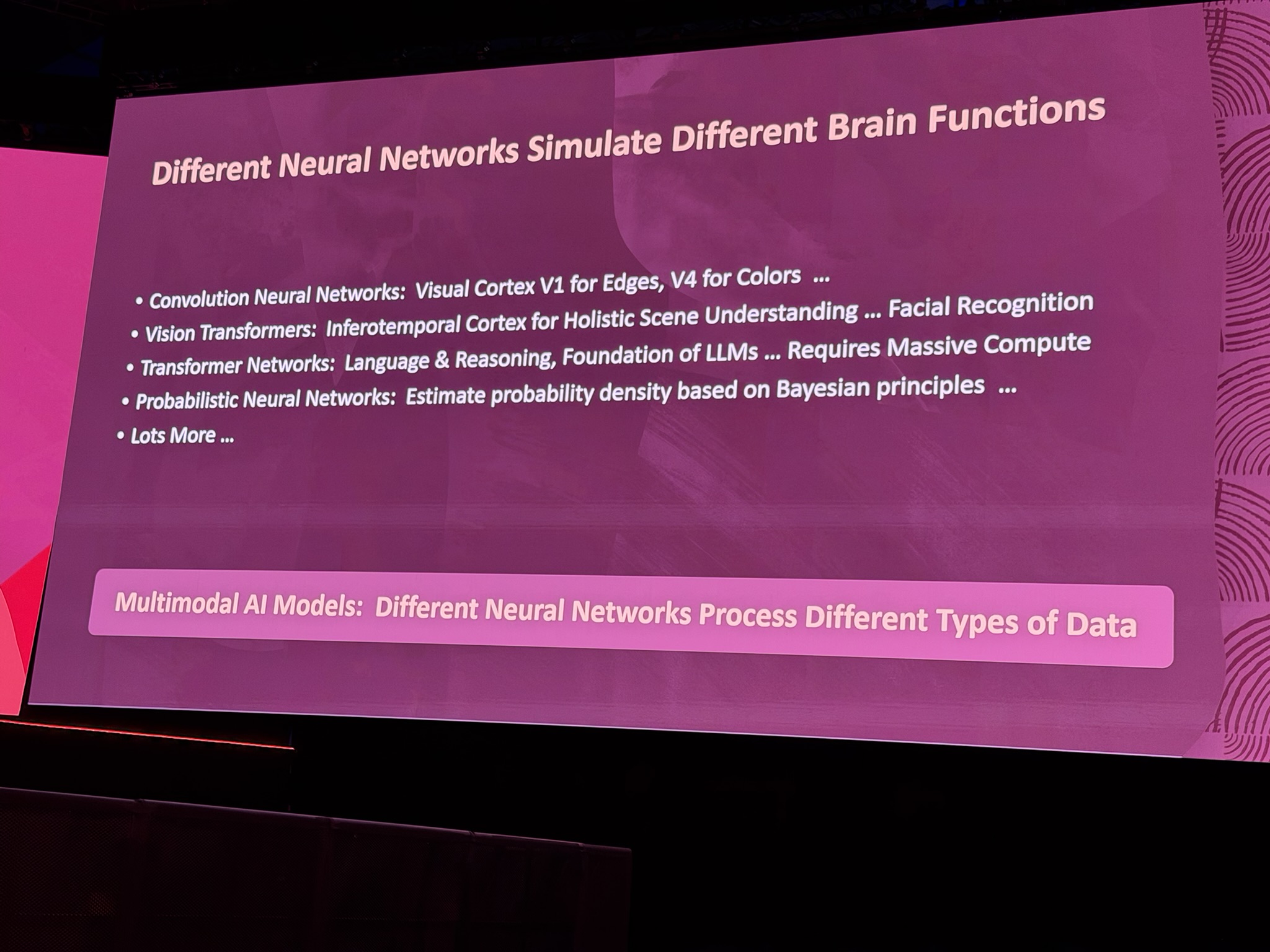
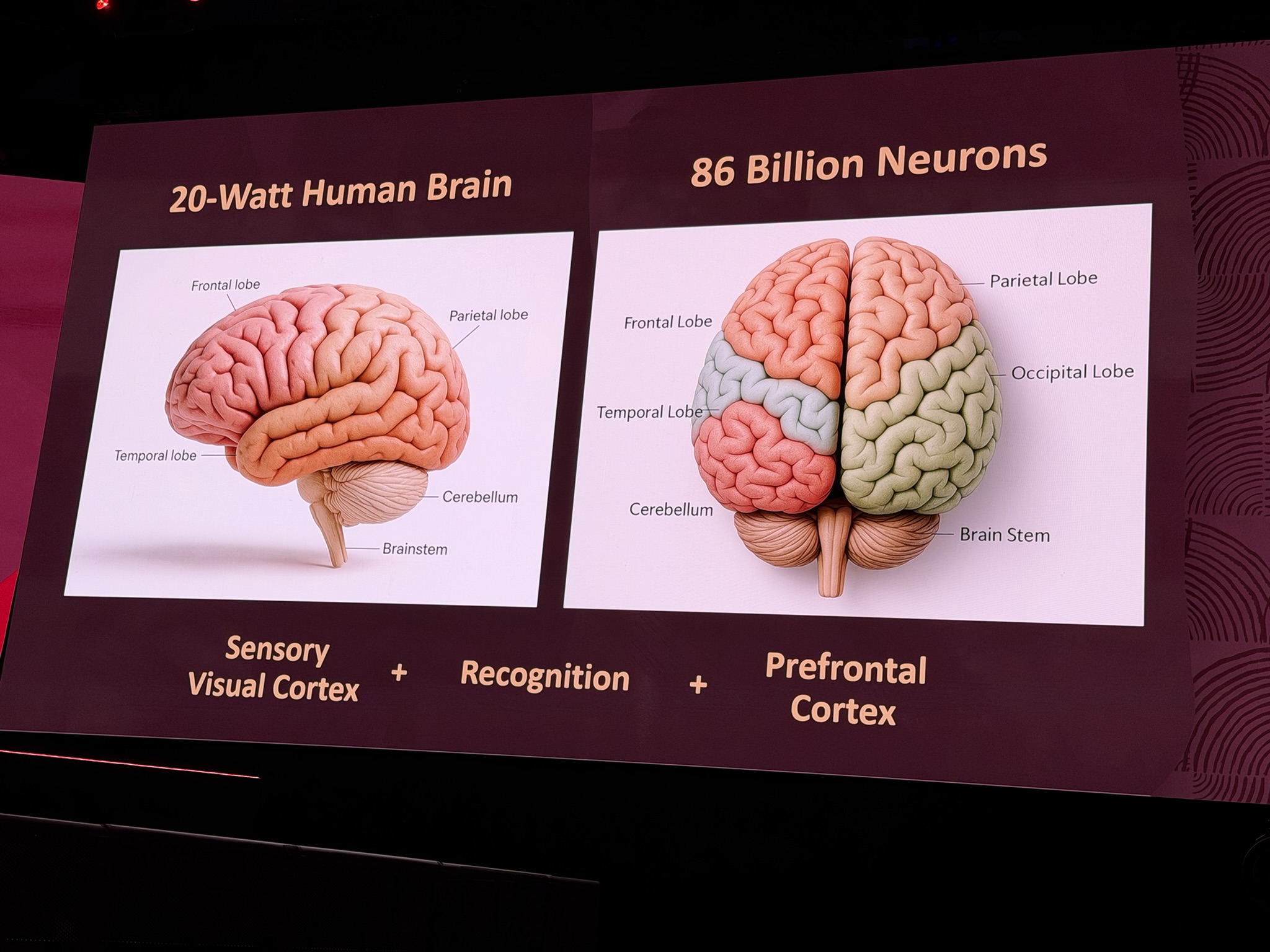
  • Human brain: 20 watts
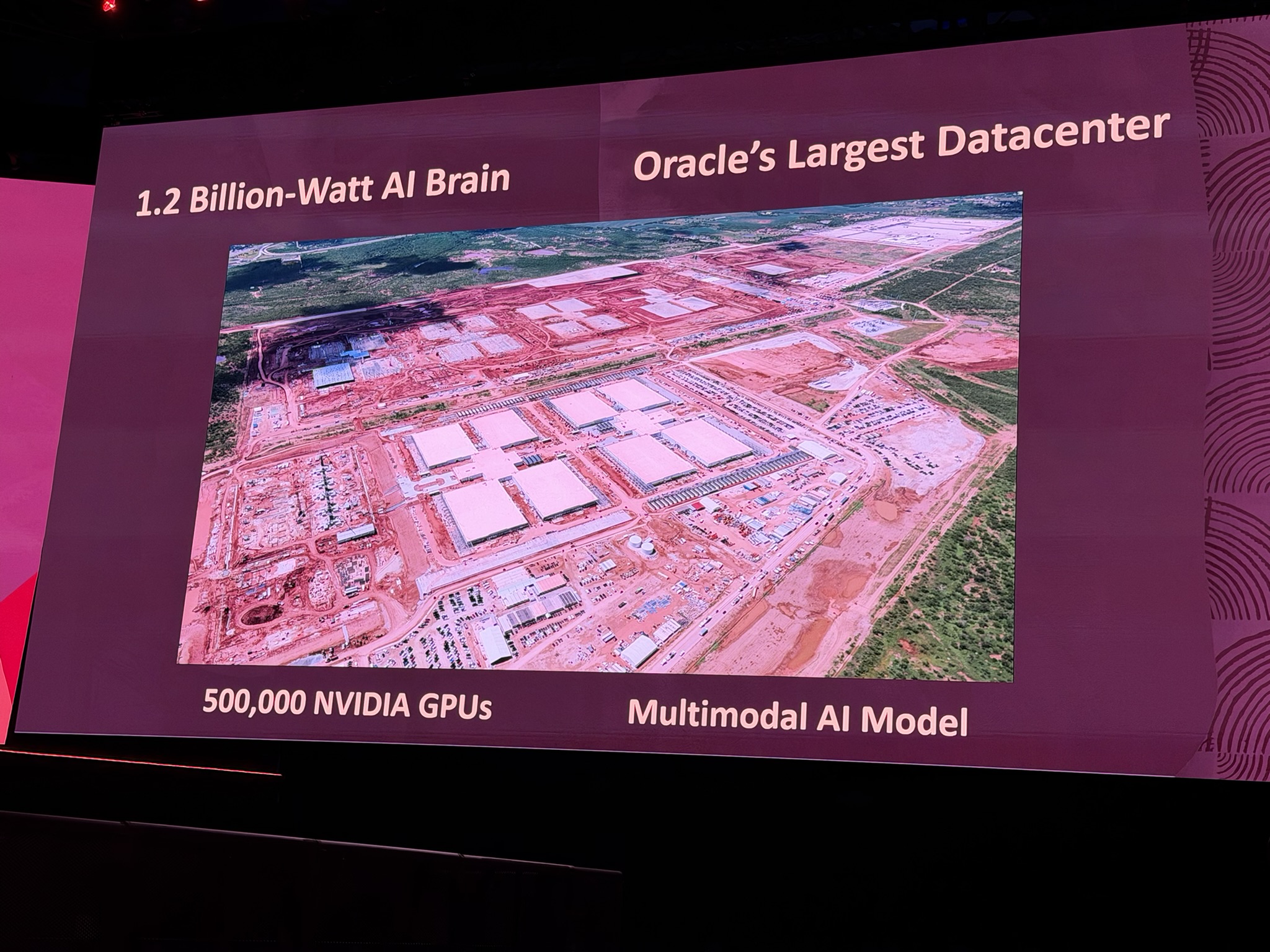
  • AI models: 1.2 billion watts enough to power 1 million homes
  • Oracle is investing in grid power and onsite natural power generators to fuel massive data centres.
  • Data networks interconnect the largest AI multimodal models, enabling faster training and inference.

Privacy and AI

  • People want to keep their data private yet still reason on it.
  • Oracle’s new AI Data Platform solves this:
    • Enables AI on private data without sharing it externally.
    • Supports AI agents using RAG (Retrieval-Augmented Generation) for tasks.

Real-World Use Cases

  • Healthcare automation:
    • AI determines which drugs work best for which patients.
    • In the US, models are trained on healthcare policies to personalise care based on eligibility.
  • MRI scans:
    • Larry shared his own experience after a bike accident: “They were counting broken ribs, but there was lots of other data ignored. AI will look at everything.”

Speed and Scale

  • Training and inference used to be separate; now Oracle enables both at scale and speed, solving complex problems faster than ever.

Larry’s keynote reinforced Oracle’s commitment to AI built-in, not bolted on. From powering multimodal models with sustainable energy to enabling private data reasoning, Oracle is positioning itself as a leader in enterprise AI. The vision is clear: AI will not only transform industries but redefine how we live, work, and heal.

You can view my day 3 part 3 here.

If you found this blog post useful, please like as well as follow me through my various Social Media avenues available on the sidebar and/or subscribe to this Oracle blog via WordPress/e-mail.

Thanks

Zed DBA (Zahid Anwar)
Oracle AI World 2025 Day 3 Part 1 – Keynote Oracle AI Powering Your Business

If you missed my day 2, you can view it here.

Today marked the official start of Oracle AI World 2025, featuring a packed agenda of keynotes and sessions. I headed to the Venetian early, grabbed breakfast, and made my way to Hall A for the opening keynote.

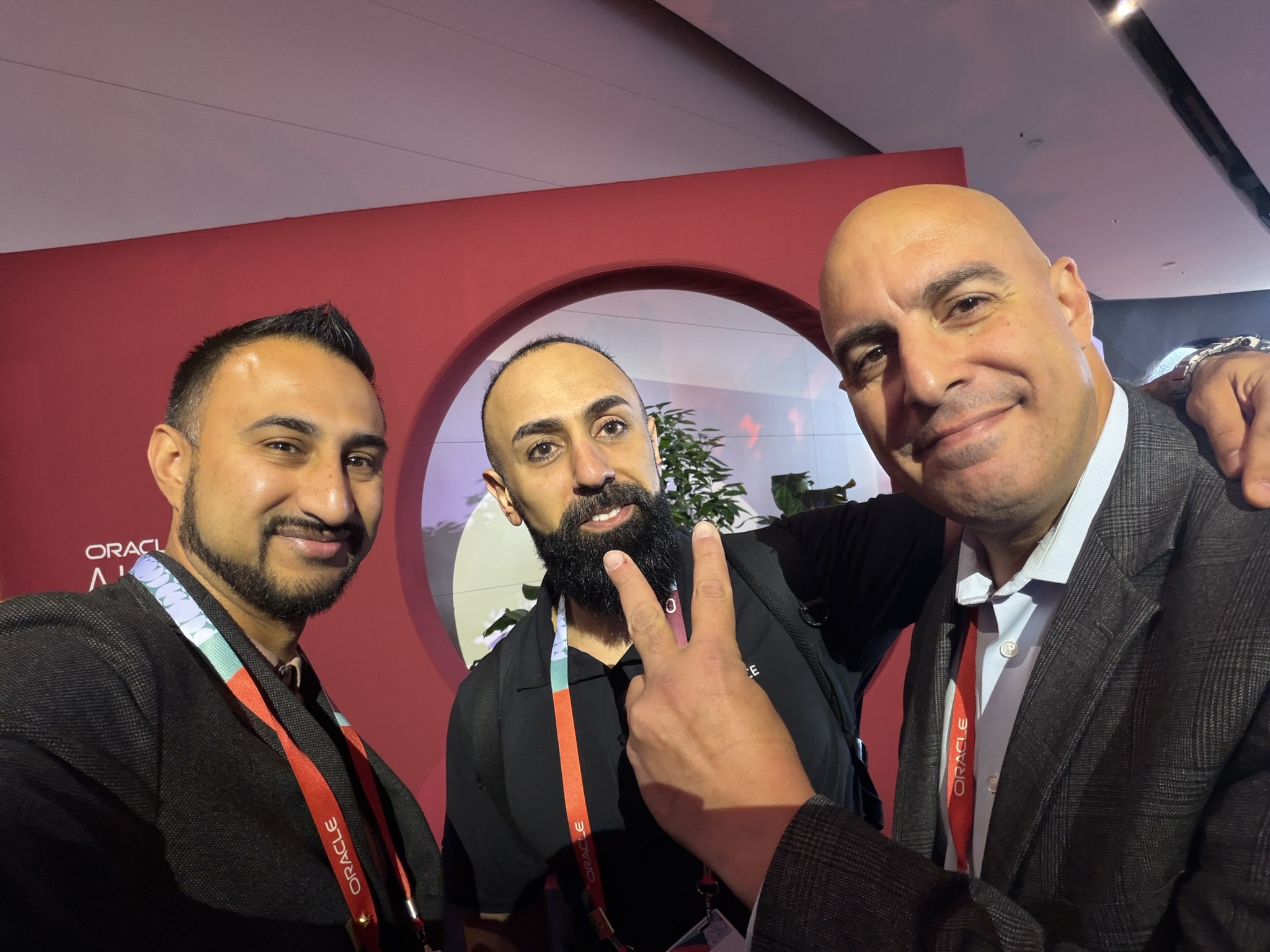
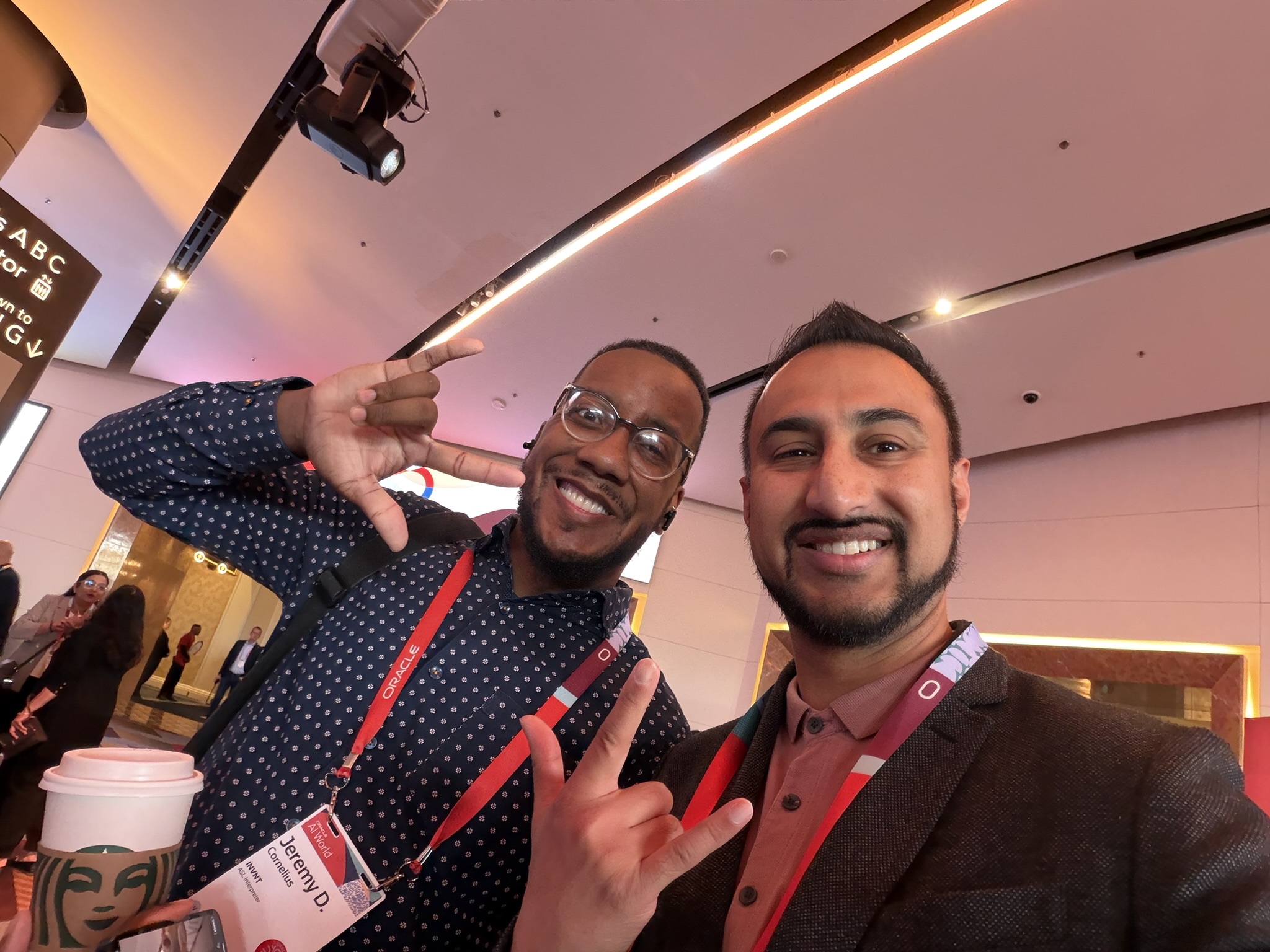
On the way to the opening keynote, I bumped into Osama and Ahmed and grabbed a quick selfie. I also ran into Jeremy, the American Sign Language interpreter who’s been a fixture at Oracle AI World since his debut at Oracle CloudWorld in 2022. It’s become a tradition to catch up with him each year. It’s fantastic to see Oracle continuing to invest in accessibility, ensuring that the event remains inclusive for the deaf community.

Keynote: Oracle AI: Powering Your Business

I managed to get a great seat right at the front with Osama, and we waited in anticipation for the keynote to begin, the energy in the room was already building.

Mike Sicilia, Oracle’s newly appointed CEO (formerly President of Oracle Industries), made his entrance to the stage, marking his first major appearance in this role at Oracle AI World 2025.

Mike declared that we are living through a once-in-a-generation moment where AI is changing everything, from how organisations operate to how they serve customers and empower employees.

He emphasised that Oracle is embedding AI across every layer of its technology stack, from data platforms to cloud infrastructure and applications. This isn’t just about adding features, it’s about transforming business models and accelerating productivity at scale.

Key highlights from his talk included:

  • “It all starts with data” Oracle’s AI capabilities are deeply rooted in its data-first approach, enabling smarter decisions and faster outcomes
  • Powered by OCI, Oracle Cloud Infrastructure delivers the speed, security, and scale needed to support enterprise-grade AI
  • Built into Fusion, AI is integrated into Oracle Fusion Applications, helping support teams cut resolution times in half and enabling real-time issue resolution without the need for ticket logging
  • 80% of Oracle staff report that AI is saving them time, making every interaction more personal and efficient
  • The keynote also introduced the AI Agent Marketplace, allowing customers to deploy AI agents directly within Fusion apps to streamline workflows and boost productivity

Mike’s message was clear: AI isn’t just a tool, it’s a revolution, and Oracle is leading the charge by making it an integral part of everyday enterprise operations.

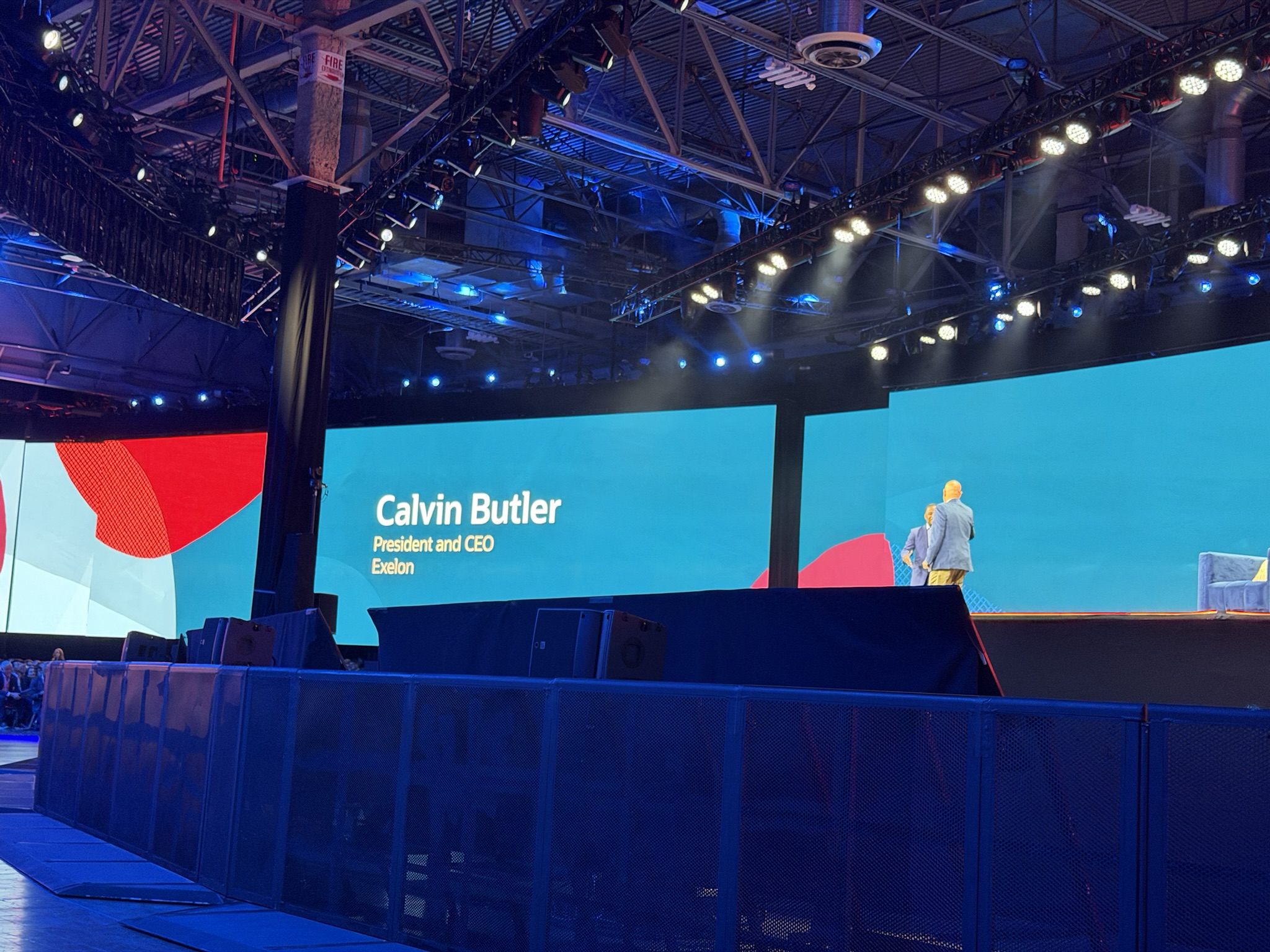
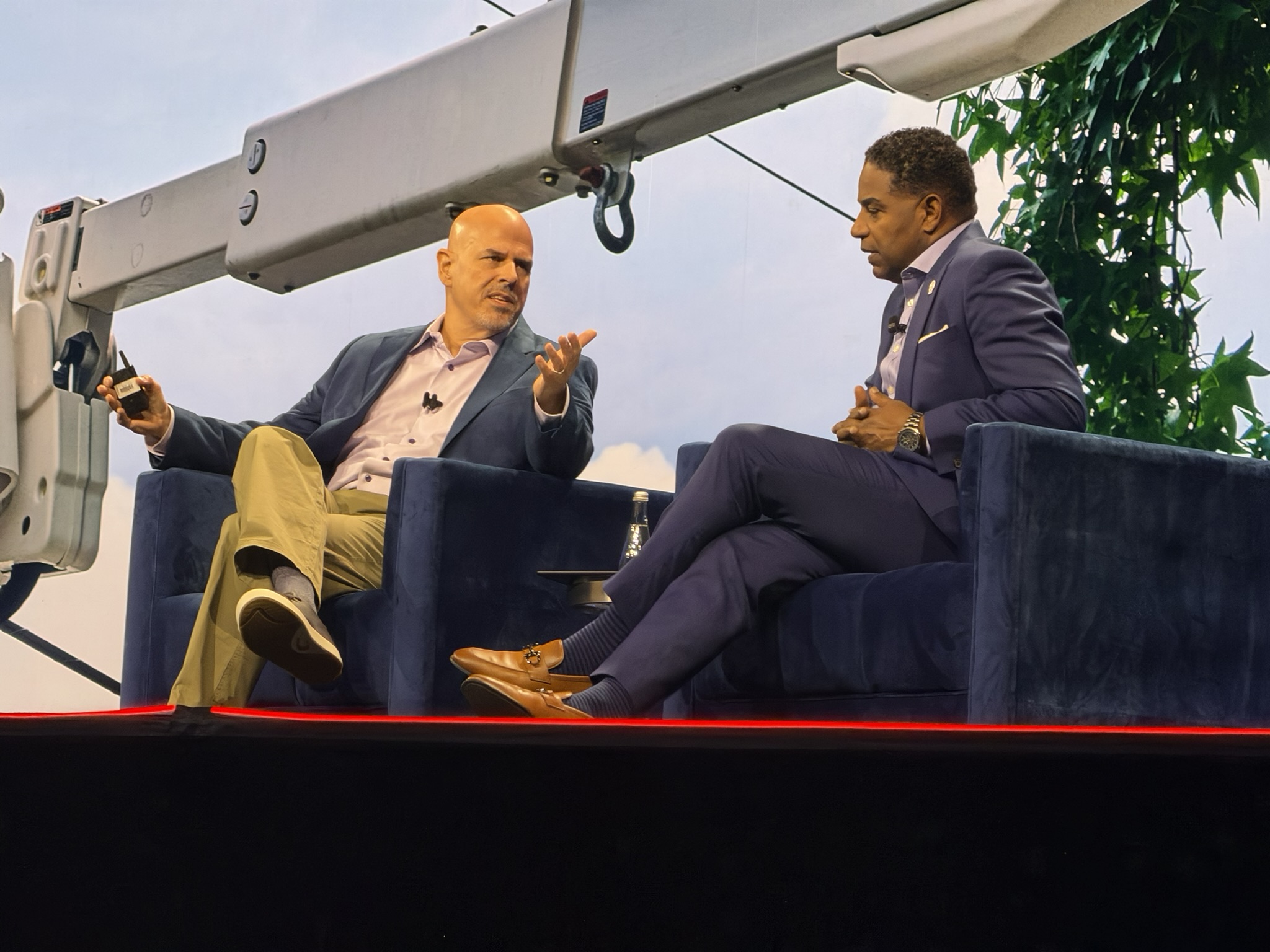
Mike then welcomed Calvin Butler, President and CEO of Exelon, to the stage, a key voice in the energy sector and a long-standing Oracle customer.

Calvin shared a compelling vision for how the energy sector is evolving through AI and digital transformation. He emphasised that Exelon is focused on showing up for customers today and over the next decade, with a commitment to efficiency, reliability, and innovation.

Partnering with Oracle on finance and supply chain operations, Exelon is aligning energy and technology to deliver mission-critical services across the national grid, where downtime is not an option.

Calvin highlighted that the next five years will bring more transformation than the last ten, driven by AI’s ability to enable predictive analytics, real-time customer engagement, and preventative maintenance. These capabilities are already being tested through pilots with regulators, ensuring that every investment is backed by a measurable business case.

He reinforced that AI is not about replacing people, but augmenting human expertise, helping teams make faster, smarter decisions. Oracle’s seamless integration across its stack allows Exelon to deliver value-driven propositions with speed, scale, and security.

Mike next welcomed Ravi Simhambhatla, EVP, Chief Digital and Innovation Officer at Avis Budget Group, to the stage.

Ravi shared how the company is embracing AI to transform operations across three core pillars:

  • Customer Experience
  • Vehicle Management
  • People

He emphasised that in a highly commoditised industry like car rental, velocity is the competitive advantage and Oracle’s AI stack is helping Avis move faster, smarter, and more efficiently.

Avis was among the first to go live with Oracle Database 23ai, having reached end-of-support on their previous version. Rather than patching legacy systems, they made a bold leap to the latest release, unlocking powerful AI capabilities. Ravi highlighted the shift from traditional SQL to natural language models, allowing teams to query data conversationally and intuitively.

“Data is the new oil,” Ravi said, “and AI is the enabler.”

Instead of manually slicing and dicing dashboards, teams now ask questions directly to Oracle’s AI-powered analytics engine, driving growth and modernisation across the business.

Avis has made significant investments in both Oracle Database 23ai and Oracle Fusion. AI agents are now embedded in procurement and supply chain workflows, streamlining operations and reducing costs. For example, field engineers no longer need to search for part numbers or compare prices, they simply ask for what they need, and AI handles the rest. This gets vehicles back on the road faster, improves service speed, and boosts efficiency.

Ravi stressed the importance of measuring the impact of AI. If a task that used to take five hours can now be completed in two minutes, that’s a tangible business benefit, and one that can be quantified.

He also reinforced that AI is not about replacing people, but augmenting human capability. Technology is confirming what humans may already know, making them more effective and confident in their decisions.

He closed with a celebration of the brilliant teams at Avis and Oracle, working together in a strong partnership and leaning into AI to deliver real-world transformation.

Mike then introduced Ty Breland, Chief Human Resources Officer and EVP of Global Operations Services at Marriott International, to share how one of the world’s largest hospitality brands is leveraging AI to transform workforce experience and operational excellence.

Ty shared how the world’s largest hospitality brand is leveraging AI to enhance experiences for guests, associates, and property owners.

He explained the scale of operations, 800,000 associates, 9,000 hotels in 142 countries. Marriott’s ecosystem includes guests, staff, and owners, as most properties are owner-operated. Ty emphasised that AI is being used to deliver personalised authentication experiences at speed, while helping owners drive efficiency and reduce costs.

Marriott began its transformation in 2023, moving away from manual processes toward unified systems that allow staff to focus on hospitality rather than system navigation. The goal is to enrich roles with technology, removing pain points and enabling associates to do less with more impact.

Ty stressed that staff know best how processes work, so Marriott actively asks them how AI can help. The approach is collaborative, ensuring technology enhances rather than replaces human interaction.

In the Bonvoy programme, Marriott uses AI to provide white-glove service by surfacing guest information in real time for associates handling calls. This enables personalised conversations, making guests feel valued.

“AI is an investment in our associates,” Ty said. “It’s about enhancing human interaction, not replacing it.”

Key Themes he highlighted:

  • AI as an enabler, not a replacement
  • Predictive insights to improve guest experience
  • Efficiency for owners through cost reduction
  • Empowering associates to deliver exceptional hospitality

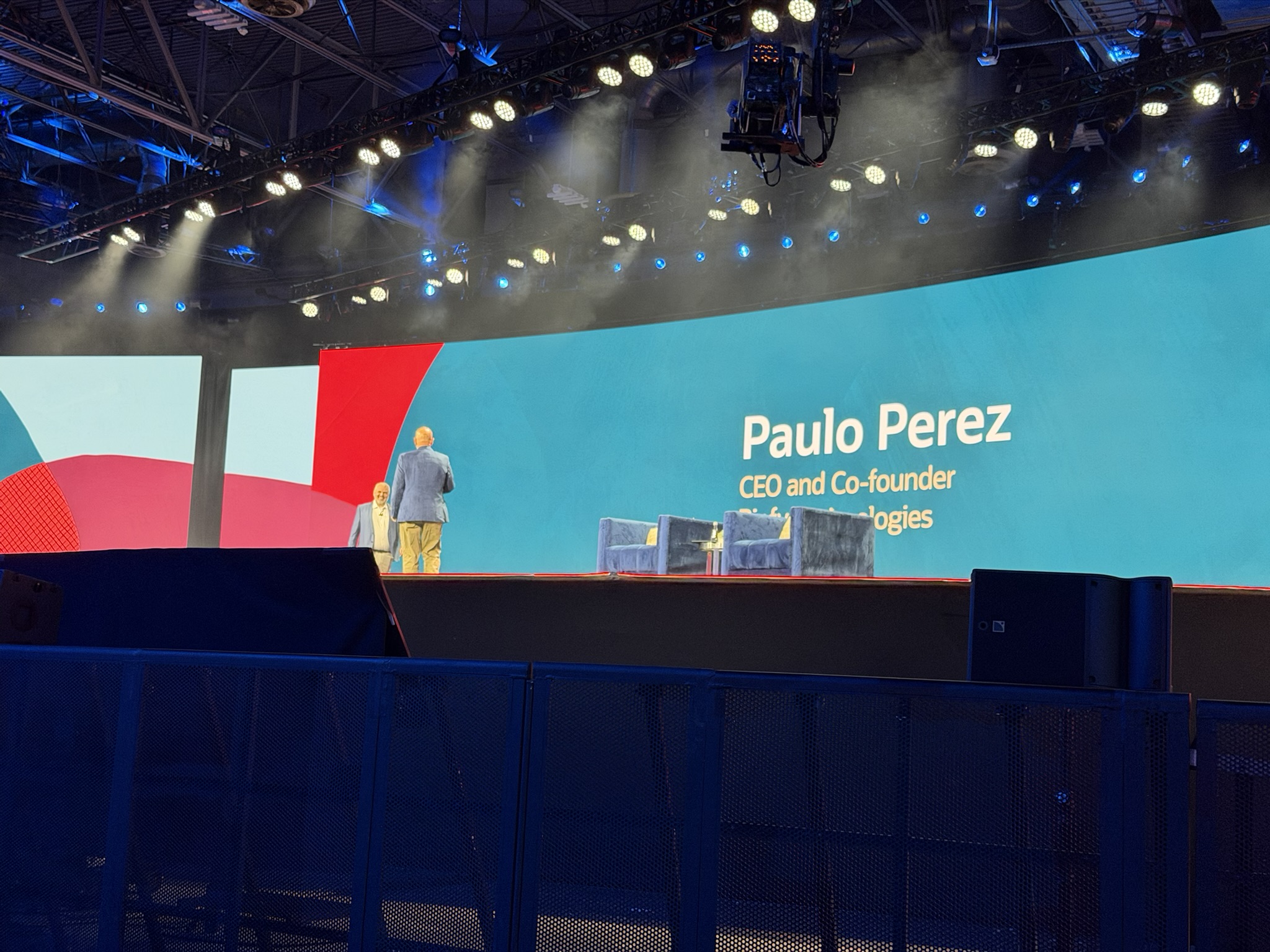
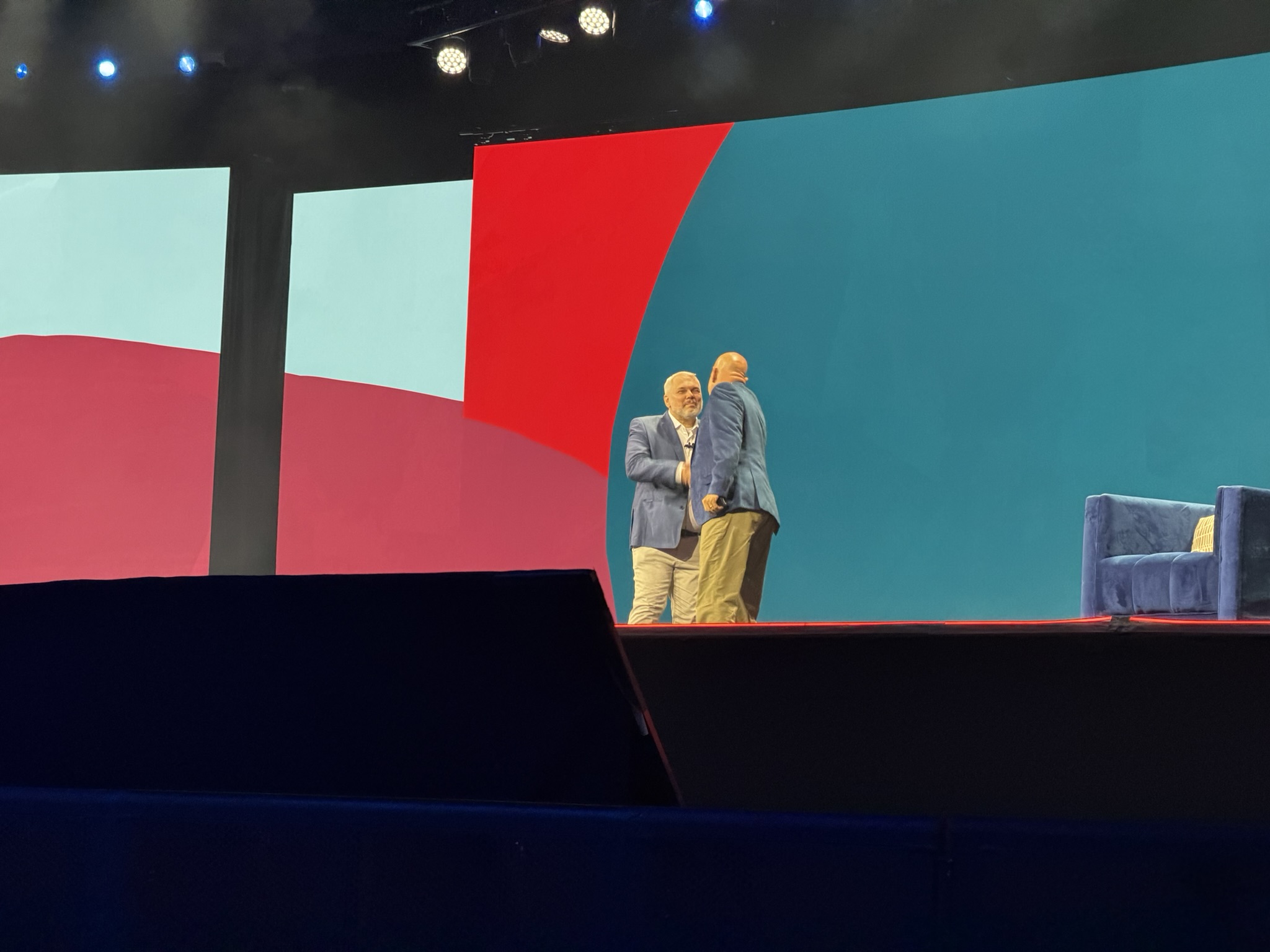
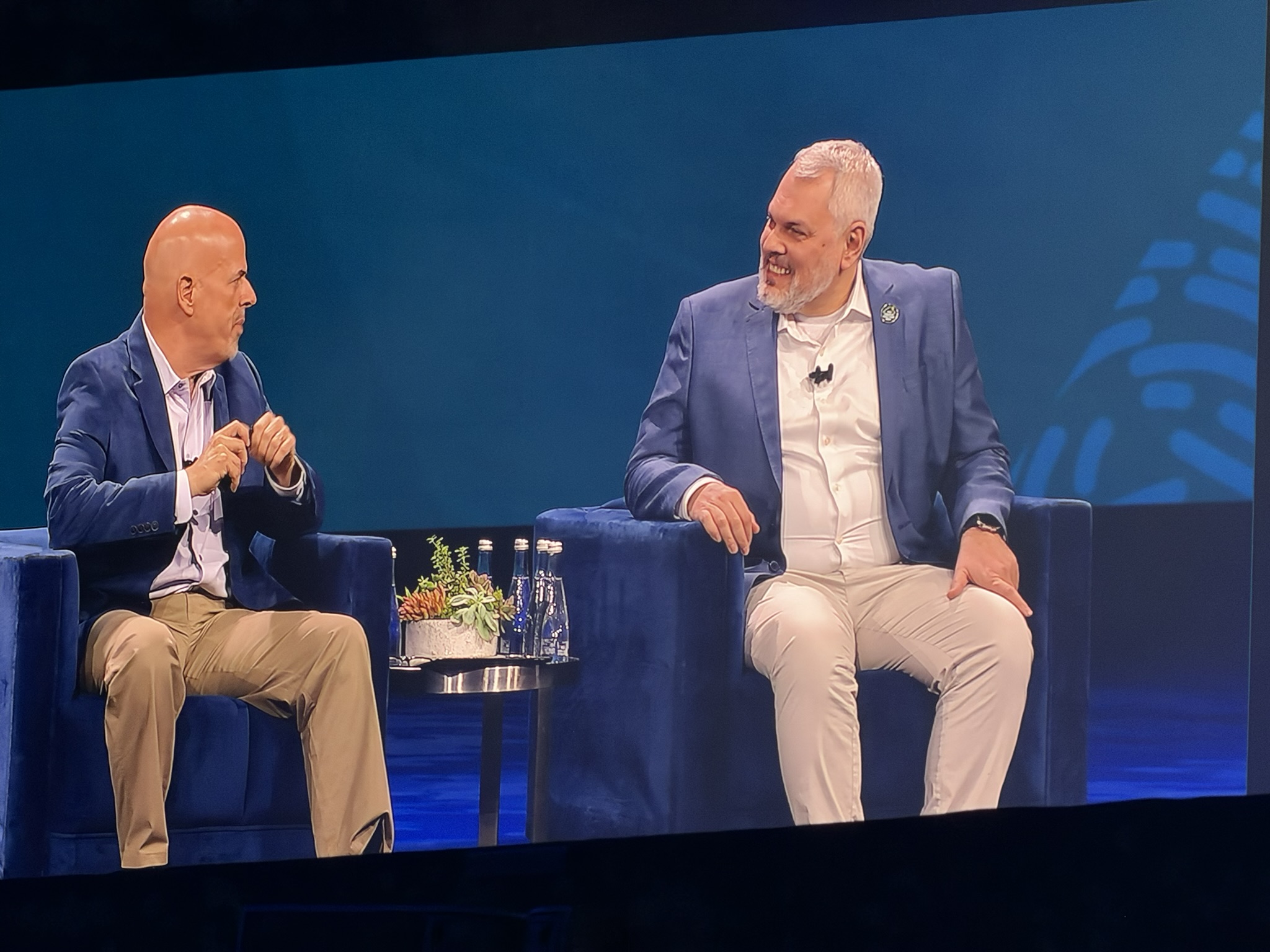
Mike then welcomed Paulo Perez, CEO and Co-founder of Biofy Technologies, to share how this innovative biotech company is using AI to accelerate breakthroughs in sustainable energy and life sciences.

What Paulo and the Biofy Technologies team are doing is nothing short of inspiring, a bold, visionary effort that could have a profound impact on humanity. Their work demonstrates how AI can be harnessed not just for business efficiency, but for solving global challenges in sustainability and health.

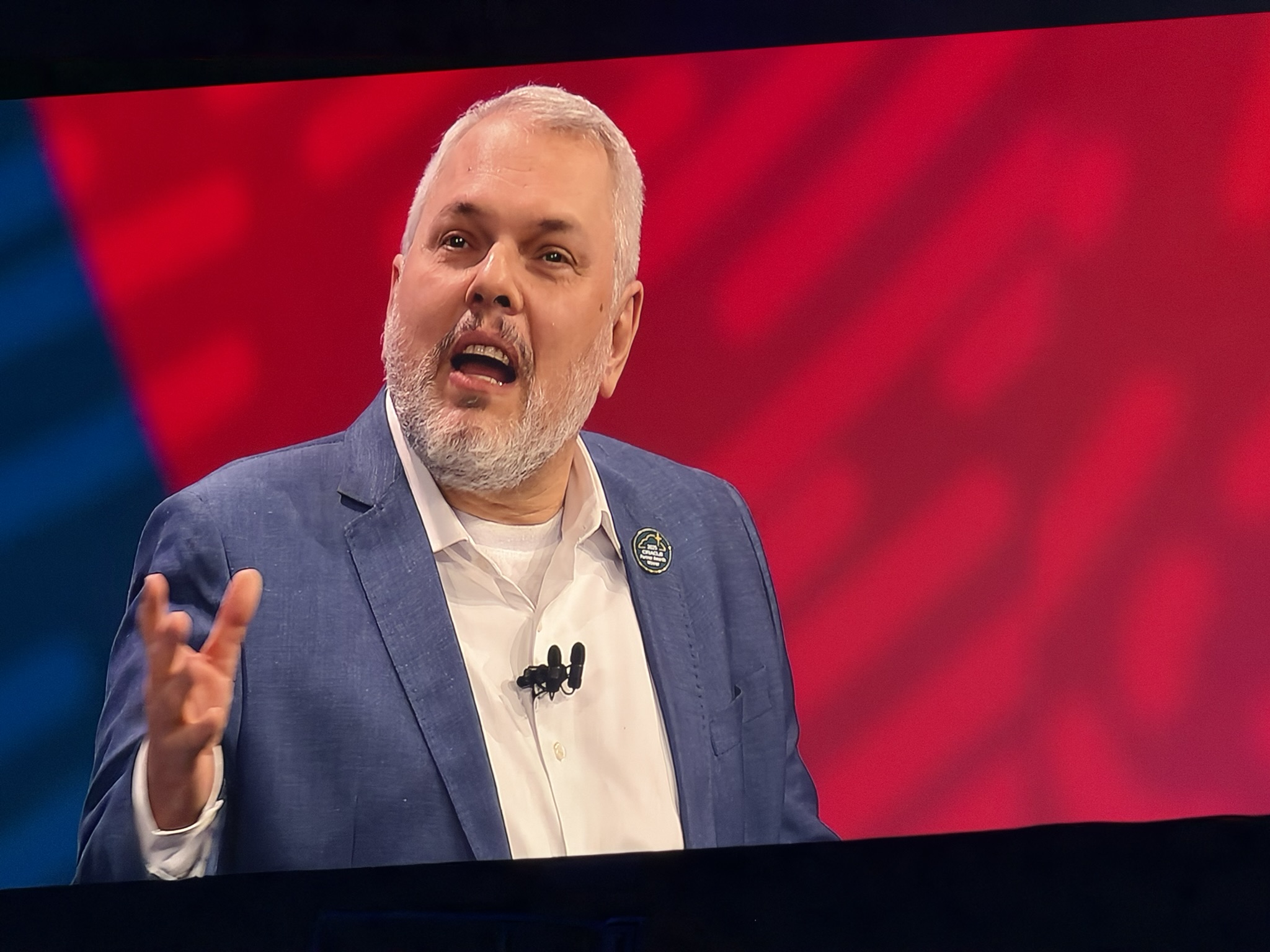
Paulo shared an extraordinary vision for how AI can tackle some of humanity’s biggest challenges, from combating superbugs to slowing cell ageing.

Biofy is using AI for Environmental and Health Solutions to develop solutions that help the environment and save lives. They use Oracle’s vector search for faster diagnosis, when faced with a bacterial infection, Biofy takes a sample, converts it into vectors, and uses vector search to assess resistance to medicines. Traditional process takes 5 days, with AI vector search it’s 4 hours! This breakthrough enables the creation of medication for infections with lower resistance, reducing mortality by 50%. Impact in Brazil, resistance rates dropped from 70% to 30%, saving approximately 2,000 lives in Brazil this year alone. Combating superbugs, Biofy is using AI to test antibiotics against super bacteria, aiming to develop new antibiotics.

Paulo’s dream: “In five years, no super bacteria will be resistant to any antibiotics.”

Future vision, Biofy is researching how to stop cell ageing, with the potential to eliminate cancer, a bold step towards redefining human health. Oracle and Biofy are working together to make these breakthroughs possible, proving that AI built-in (not bolted on) can transform industries and save lives.

The audience responded with a big round of applause, recognising the magnitude of this mission. It was a truly inspiring use case of AI, one that left me in awe.

You can view my day 3 part 2 here.

If you found this blog post useful, please like as well as follow me through my various Social Media avenues available on the sidebar and/or subscribe to this Oracle blog via WordPress/e-mail.

Thanks

Zed DBA (Zahid Anwar)
Oracle AI World 2025 Day 2

If you missed my day 1, you can view it here.

Day 2 was about registering for Oracle AI World, then attending Empower Your Clients: Oracle Database Security Partner & ACE SIG session, the Oracle Partner Success Summit, and finally the Database Premier Customer Appreciation Event in the evening.

Registering for Oracle AI World

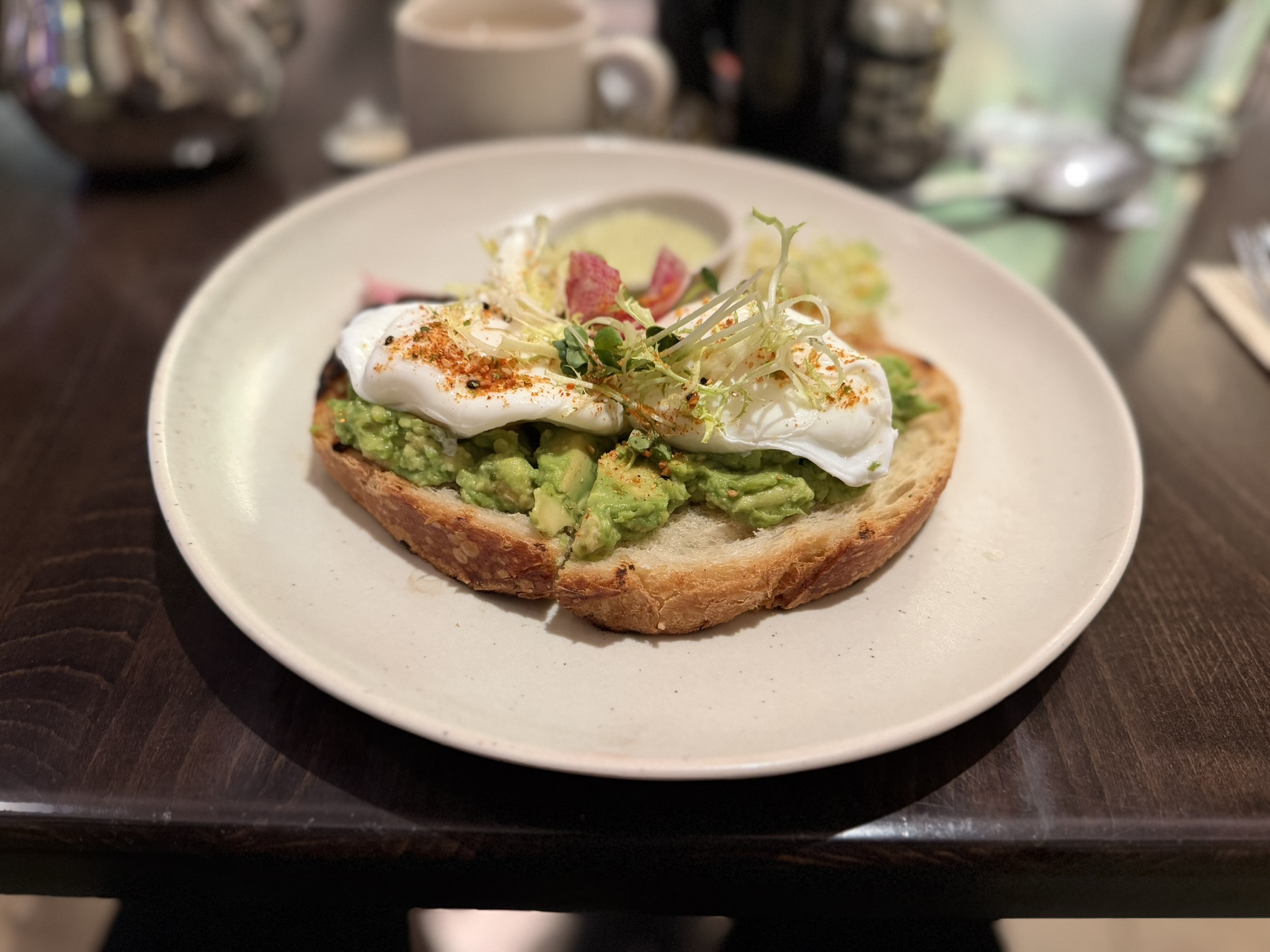
I spent the morning blogging about day 1 followed by having breakfast, the same healthy sourdough bread, lightly boiled eggs with avocado.

Like last year, Oracle AI World is only in The Venetian, with no other Oracle-related conferences going on in parallel like JavaOne or SuiteWorld. I headed over at midday to register, and it was starting to get busy.

I headed over to registration, and luckily it wasn’t busy. I saw on social media in the morning, the queues were huge as everyone tried to register early.

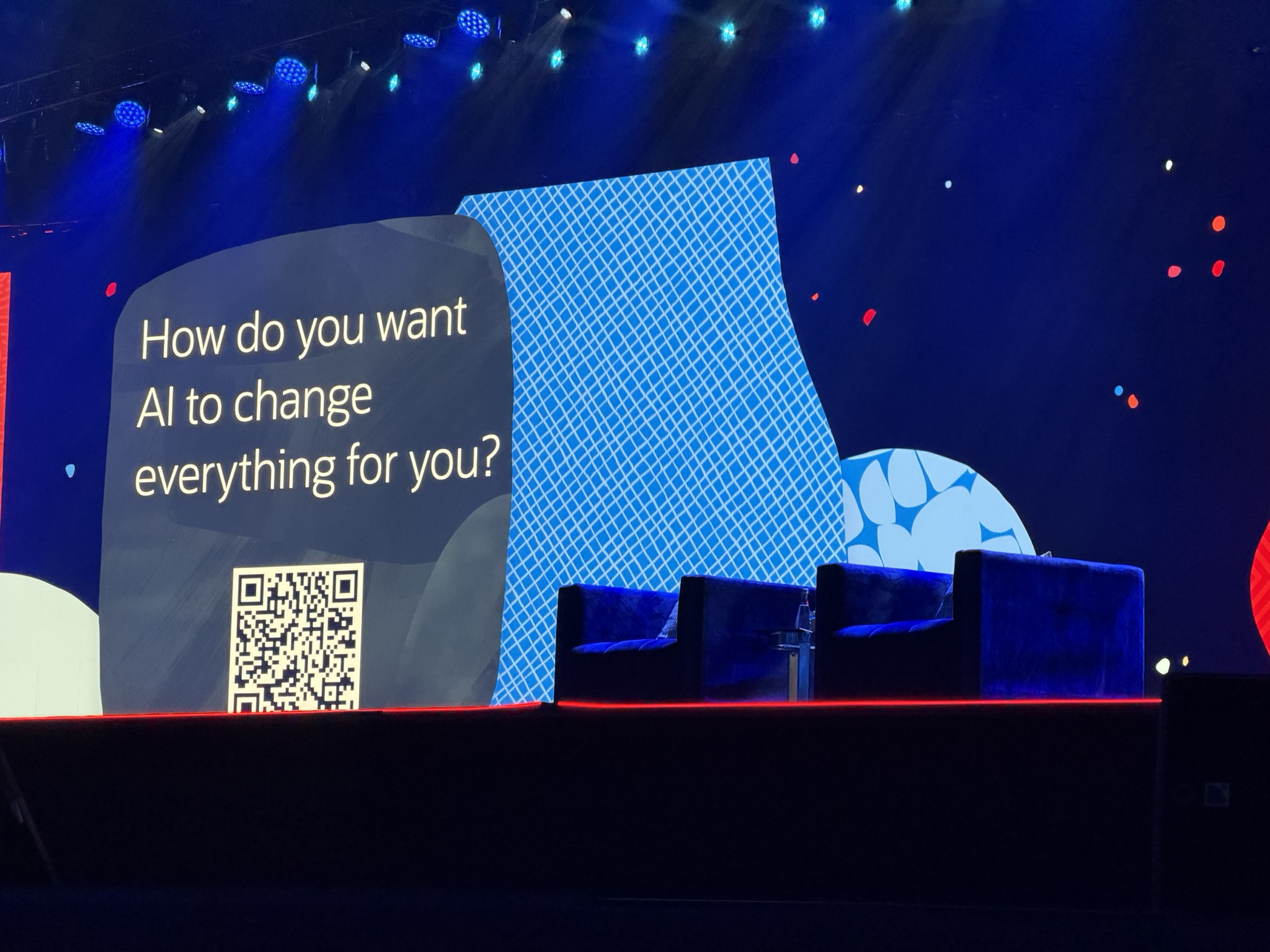
The slogan at the registration desk said, “AI Changes Everything”, setting the tone for the conference. Within a couple of minutes, I was registered 😎

Empower Your Clients: Oracle Database Security Partner & ACE SIG

There were no official sessions today, with the exception of the Oracle Partner Success Summit, unless by invitation. Being an Oracle ACE, I got invited to the Empower Your Clients: Oracle Database Security Partner & ACE SIG for Oracle partners and Oracle ACEs. So I attended this session before attending the Oracle Partner Success Summit.

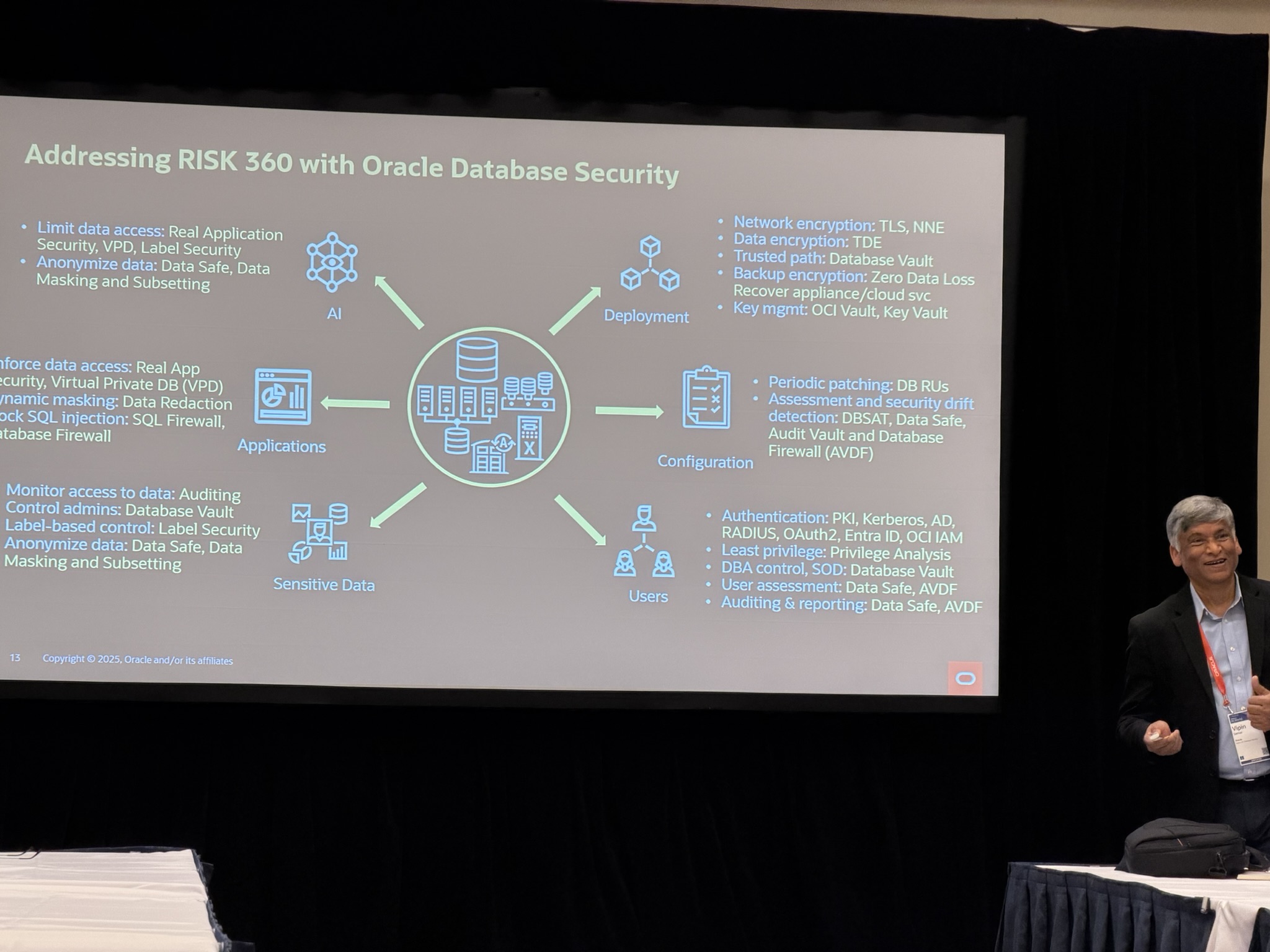
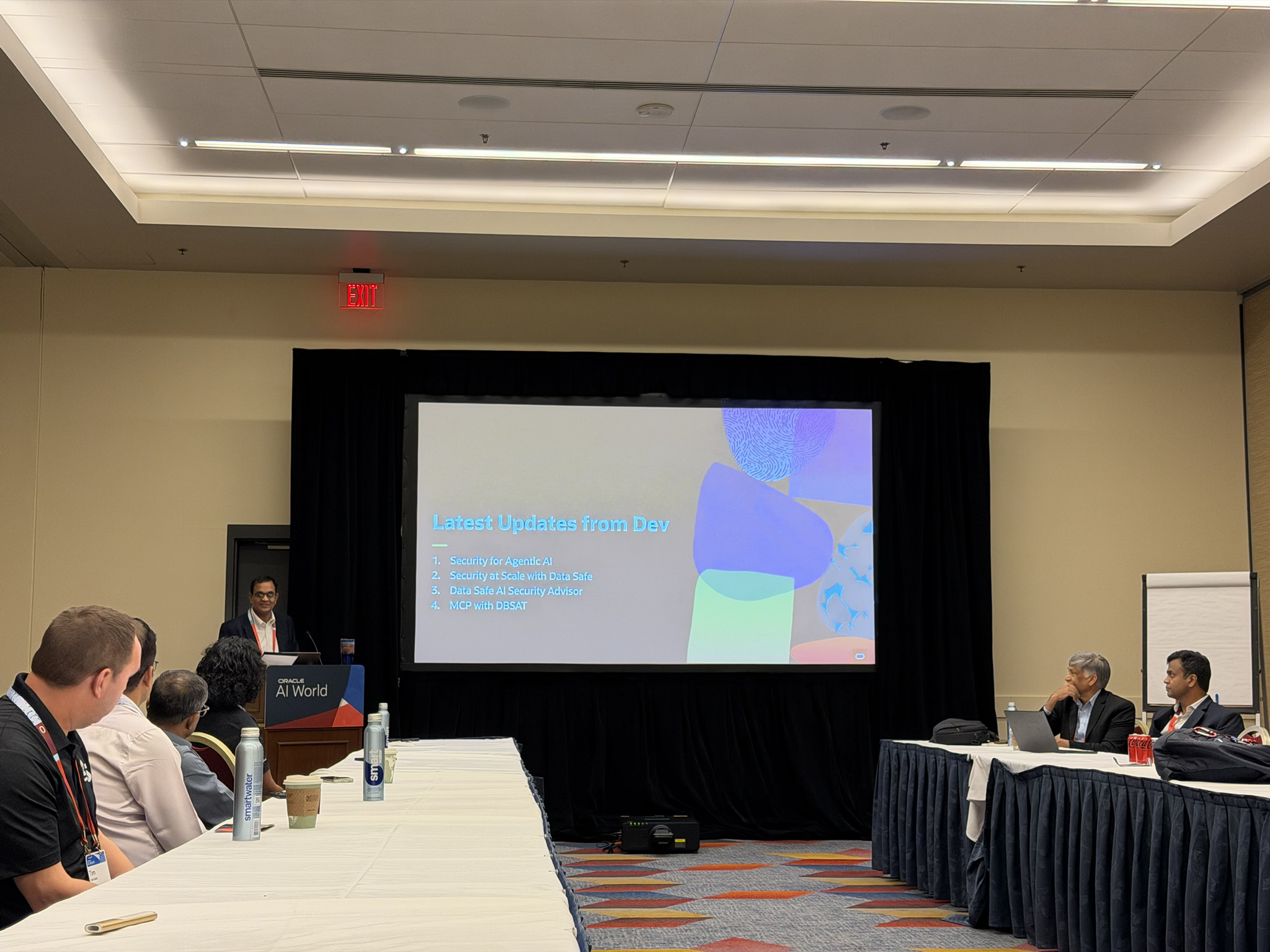
Vipin Samar, Senior Vice President of Development for Database Security, Oracle, talked about risks to your database that can come from many directions, hence “RISK360”.

How, if any gaps remain open, these will be exploited, hence it’s imperative we protect against all attack vectors.

How, the challenge is we don’t have just one database but many! So how do we address the challenge of an entire database fleet with different requirements and an evolving landscape that we need to constantly keep updating?

He talked about a three-pronged approach of:

  • Security 360: securing the database attack surface
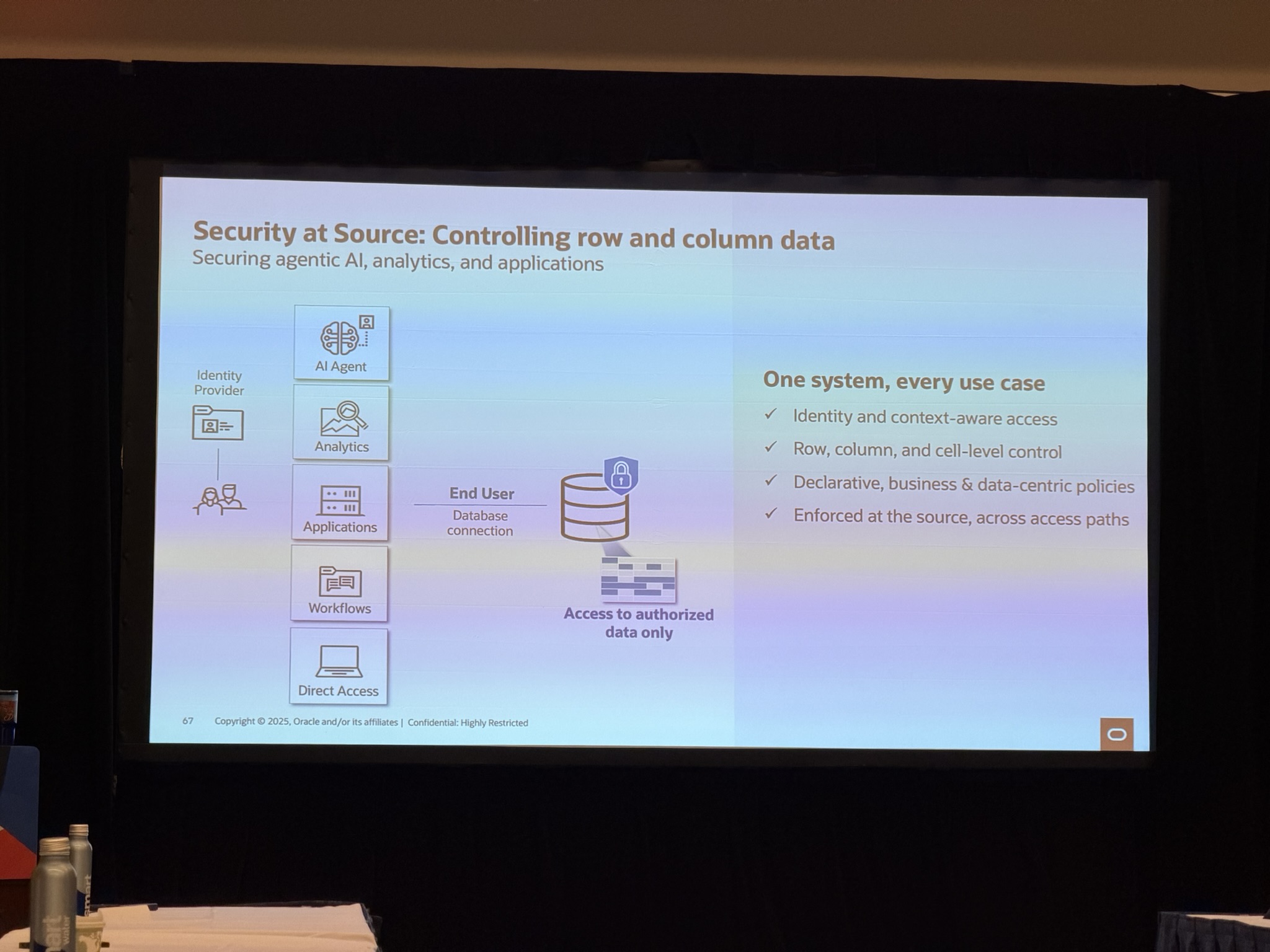
  • Security at source: where possible, secure at source, so not relying on other external measures you may not have control over i.e. row, column, and cell-level control
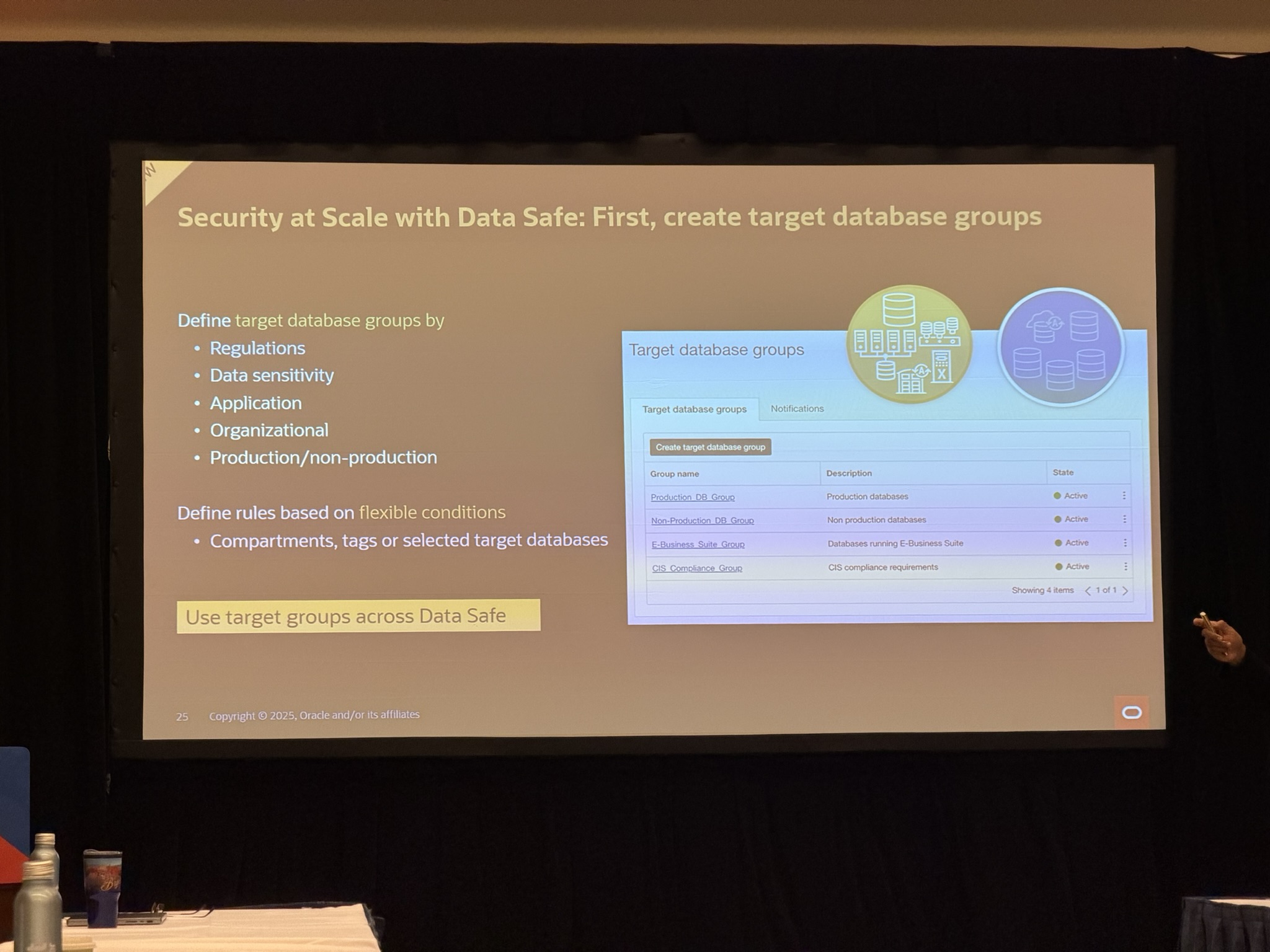
  • Security at scale: so not just apply to one database but the entire fleet

Next, he spoke about how to address those risks with various Oracle products, features, or processes.

Then he spoke about how to address security at scale with Oracle Data Safe, an Oracle Cloud product, which can be used to manage databases in OCI, multi-cloud, or even on-premises. Securing thousands of databases anywhere.

Next, Vikram Pesati talked about how to secure agentic AI from providing more information than the requester is privileged to see. Ensuring no unauthorised access by bypassing typical permissions. Ensuring row and column-level control.

As the Oracle Partner Success Summit was starting shortly, I had to leave this session early to ensure I got a good seat.

Oracle Partner Success Summit

I headed over to the Partner Success Summit, where the doors had already opened. I headed over to the front, as close as I could get. The room was starting to get pretty full.

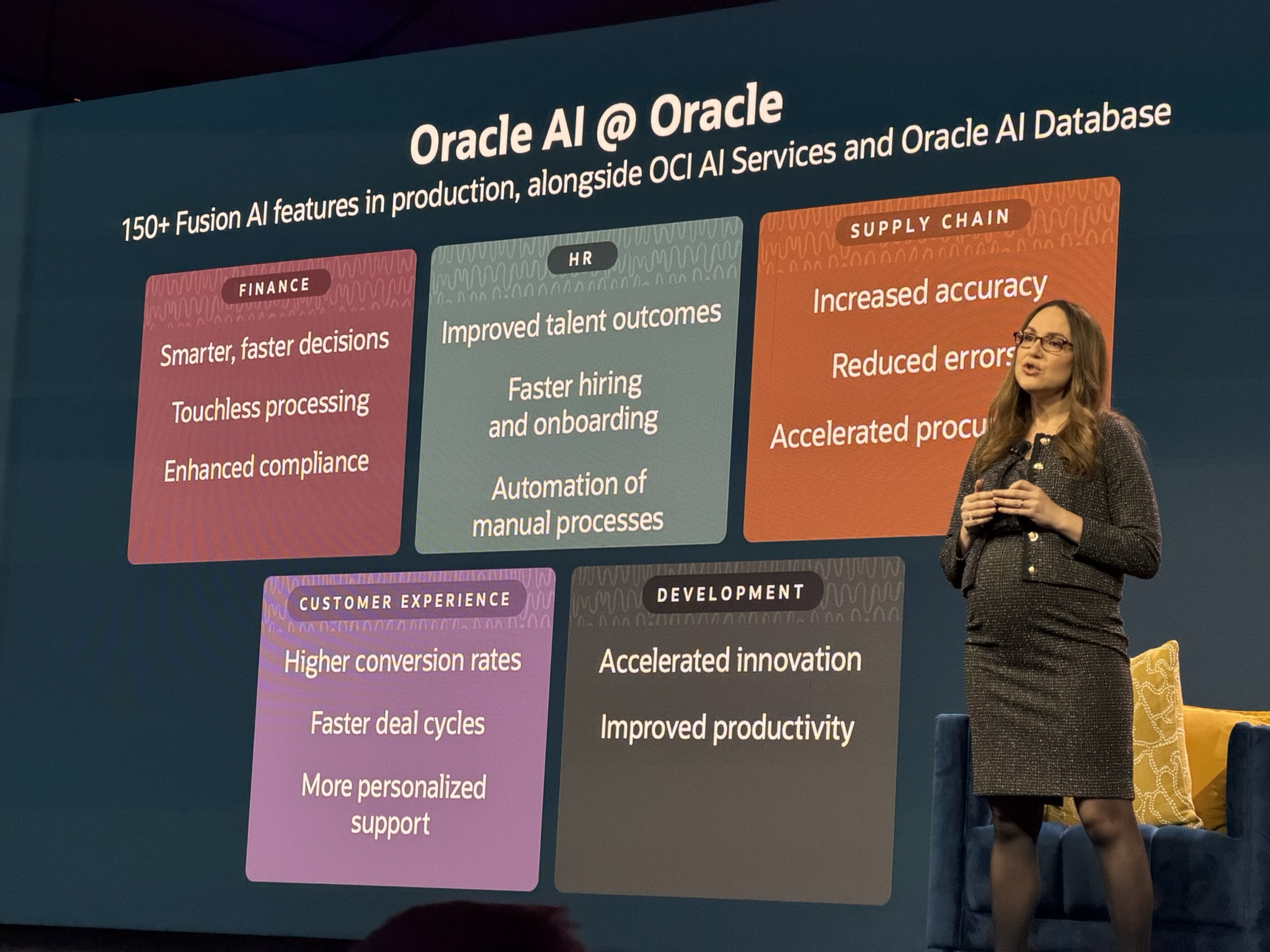
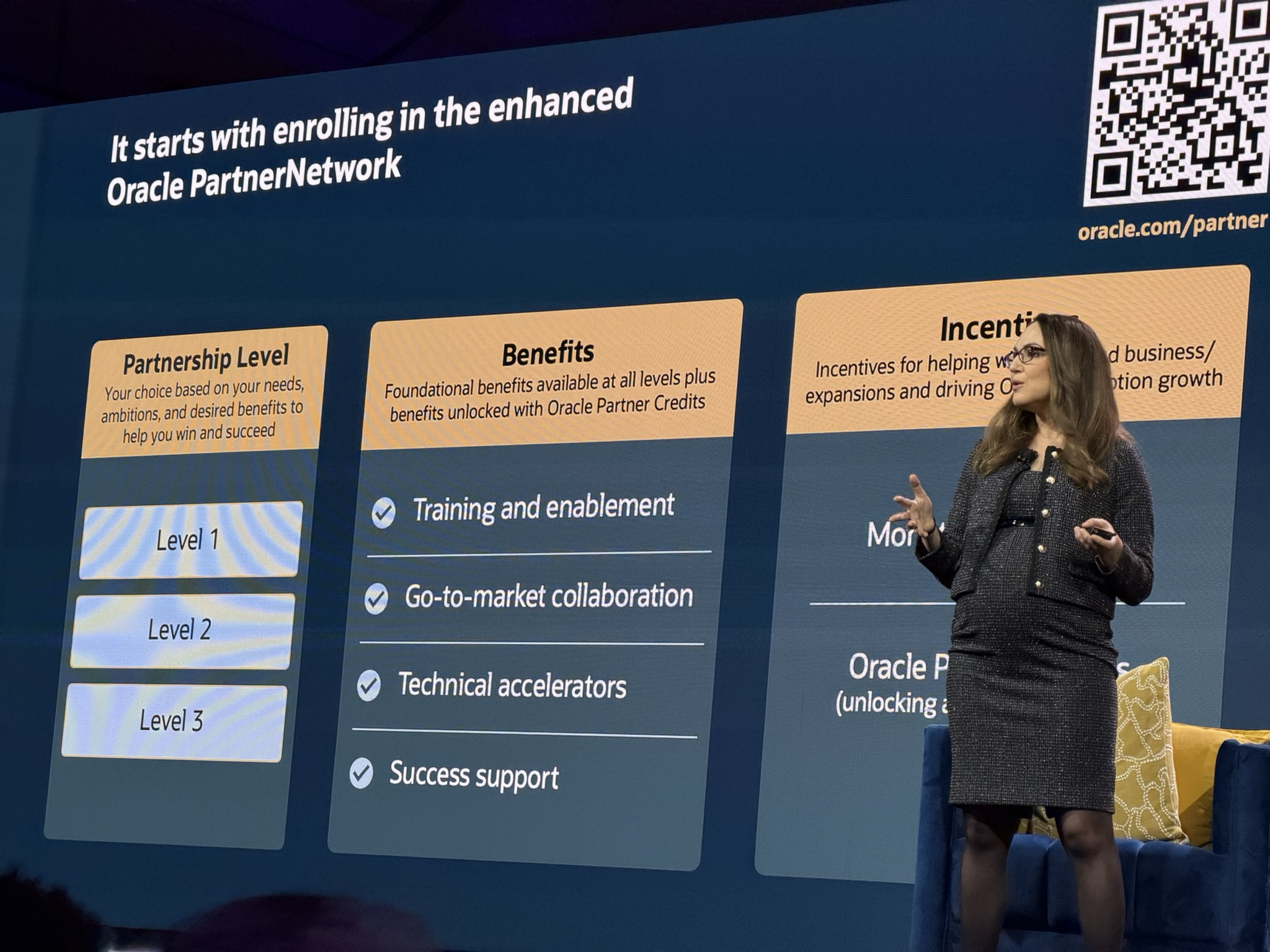
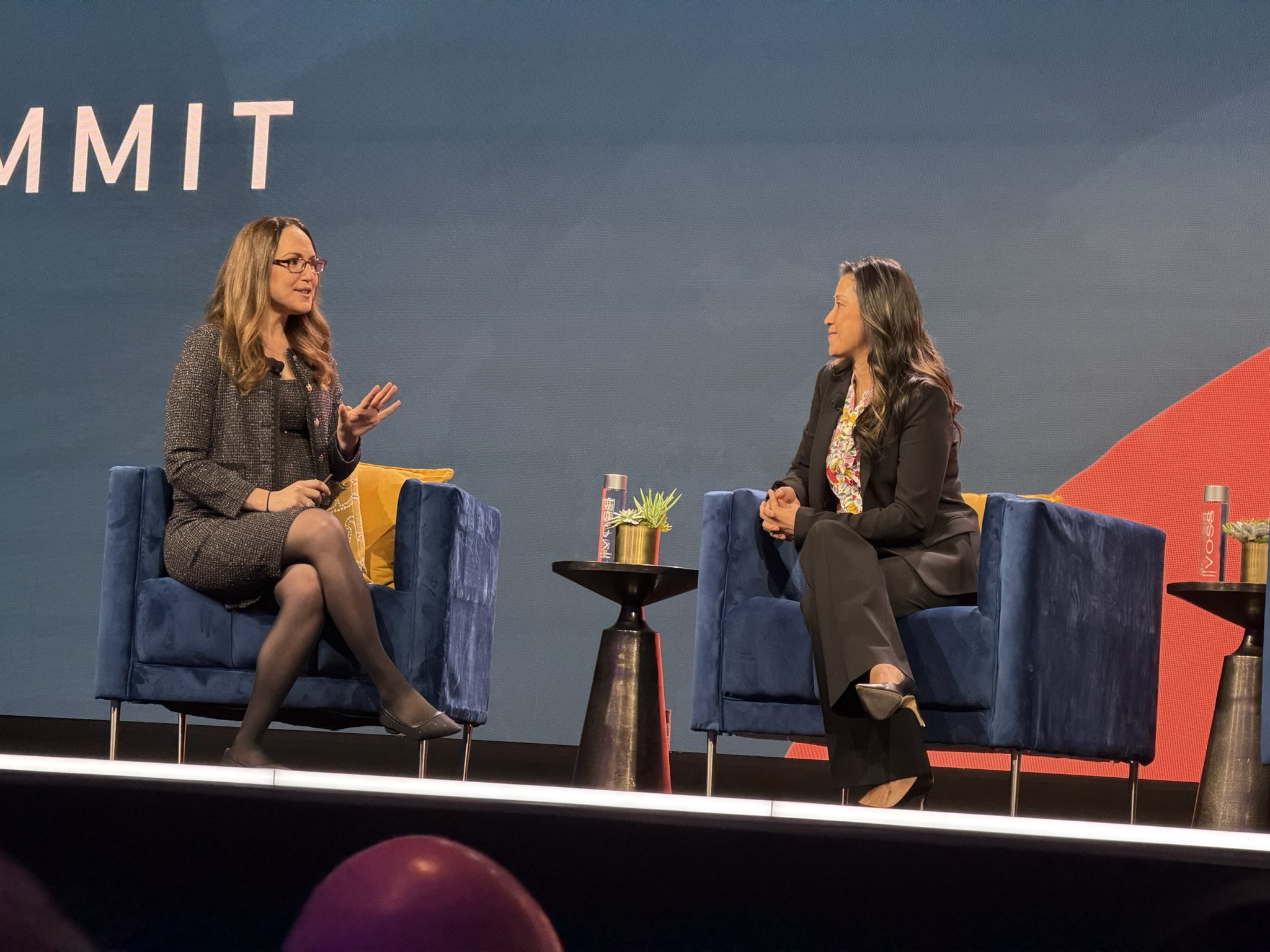
Same as last year, Leah Yomtovian, Senior Vice President, Partner, Sales, and Operations Strategy was the host and welcomed us all. However, it was evident she was pregnant, congratulations to her! 😊

She:

  • Thanked us all for helping deliver exceptional customer outcomes
  • Mentioned how we’re already off to a great start this year with increases in cloud and OCI revenue, with even more cloud regions
  • Stated how lower costs in OCI mean customers are doing more whilst spending less
  • Also stated higher AI performance on OCI compared to other hyperscalers
  • Mentioned how reliable and trusted security is built into the Oracle DB
  • Mentioned cloud applications that are integrated, scalable, performant, and capable of running mission-critical applications
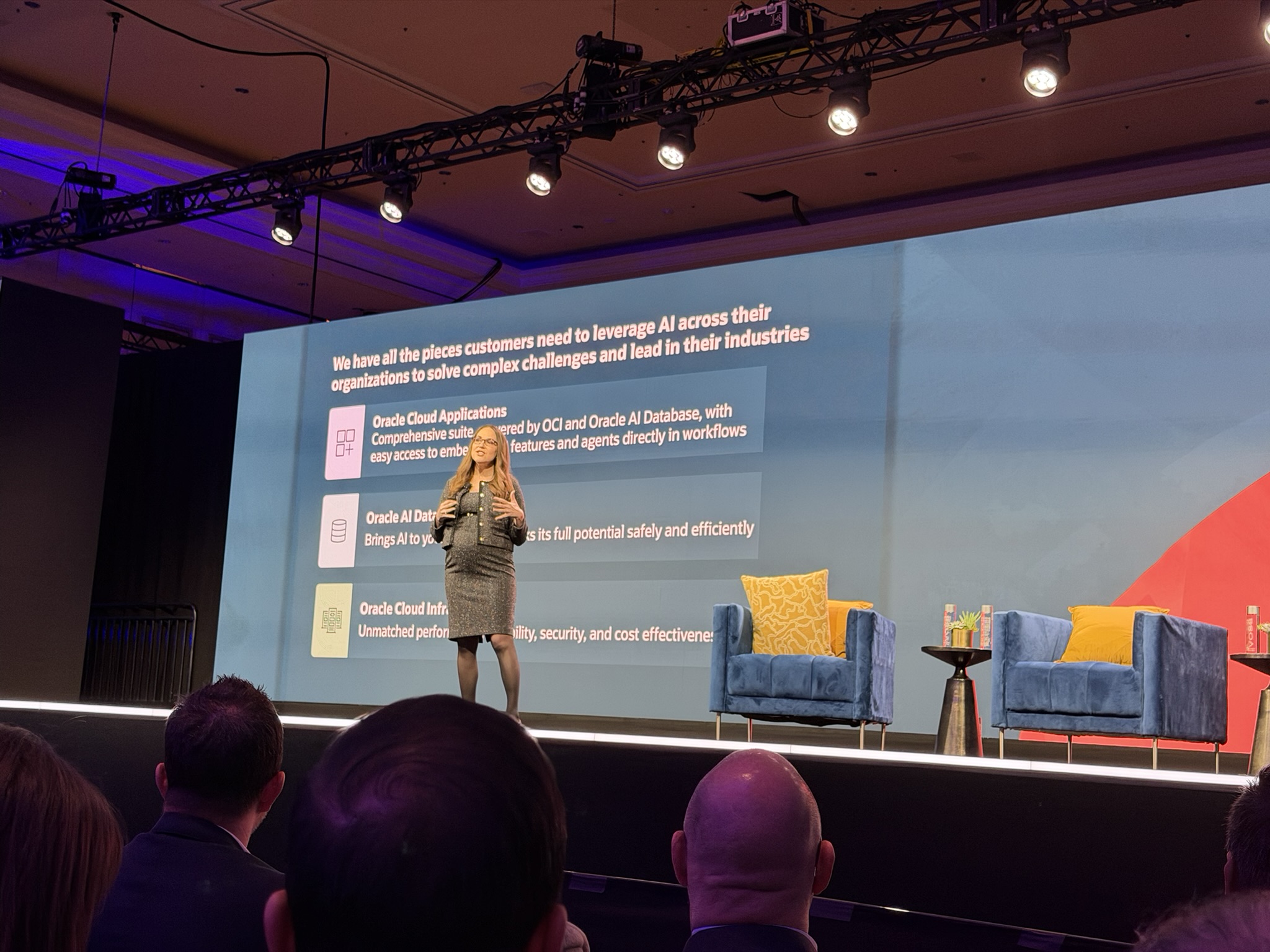
  • Explained how we all can help customers leverage AI to solve complex challenges through Oracle Cloud Apps, Oracle AI Database, or Oracle Cloud Infrastructure

She then welcomed Clay Magouyrk, CEO, Oracle (newly appointed from President of OCI business), to the stage.

I’ve always admired Clay, as he’s a true techie at heart, not the most eloquent person, but he owns it and has that appeal with the techies because he can speak at a low level.

He spoke about several key themes:

  • OCI underpins Enterprise Applications and also functions as a standalone product. Years of investment have driven its success
  • OCI can scale up or down, even to a minimal footprint of just three racks, making it highly flexible
  • In multi-cloud setups, Oracle embeds its full stack, infrastructure, software, network, so that new features are instantly available across environments, including Google Cloud, Azure and AWS
  • Oracle ensures the same services are available everywhere in OCI, maintaining consistency across regions and platforms
  • Introduced Zero Trust Packet Routing, a new feature that enforces zero trust principles at the network layer. It restricts access to OCI resources based on security attributes and intent-based policies, such as limiting access to Object Store
  • Emphasised that security is as critical as performance, with built-in guardrails and compliance with global standards
  • At both the platform and application layers, Oracle sees a huge opportunity to adopt AI
  • The AI and data platform enables enterprises to leverage the latest AI capabilities, with embedded AI that is secure, intuitive, and built into workflows
  • Oracle’s AI is natively built into OCI, not bolted on, and is automatically updated with no extra cost
  • “AI is changing everything”, we’re in a fundamental period of transformation. Clay urged partners to understand what’s new, what’s changed, and how AI can reshape businesses
  • The Oracle Database is the best place to take advantage of AI, available on-premises and across all clouds
  • Partners like you are key drivers of this change, helping customers unlock the full potential of Oracle’s AI and cloud offerings

Leah next welcomed Hasan Rizvi, EVP, Database Engineering, Oracle and Srikant Gokulnatha, SVP, Analytics Product Management, Oracle to the stage.

Hassan talked about:

  • How the Oracle Database was the first relational, first portable, first clustered, first engineered, first autonomous, and now the first AI-native database
  • The first converged database: a single engine with native support for all modern data types, analytics, and development paradigms built into one product
  • Portability and flexibility allow customers to decide where they want to run workloads, on-premises, Cloud@Customer, or multi-cloud environments like AWS, Azure, and GCP
  • Security close to the data is a third pillar of Oracle’s strategy, making a big difference to customers by enforcing zero trust principles and quantum-resistant encryption
  • Leveraging the power of AI and data together by bringing AI to your data, not the other way around. This is enabled by in-database AI agents, vector search, and retrieval-augmented generation (RAG) capabilities
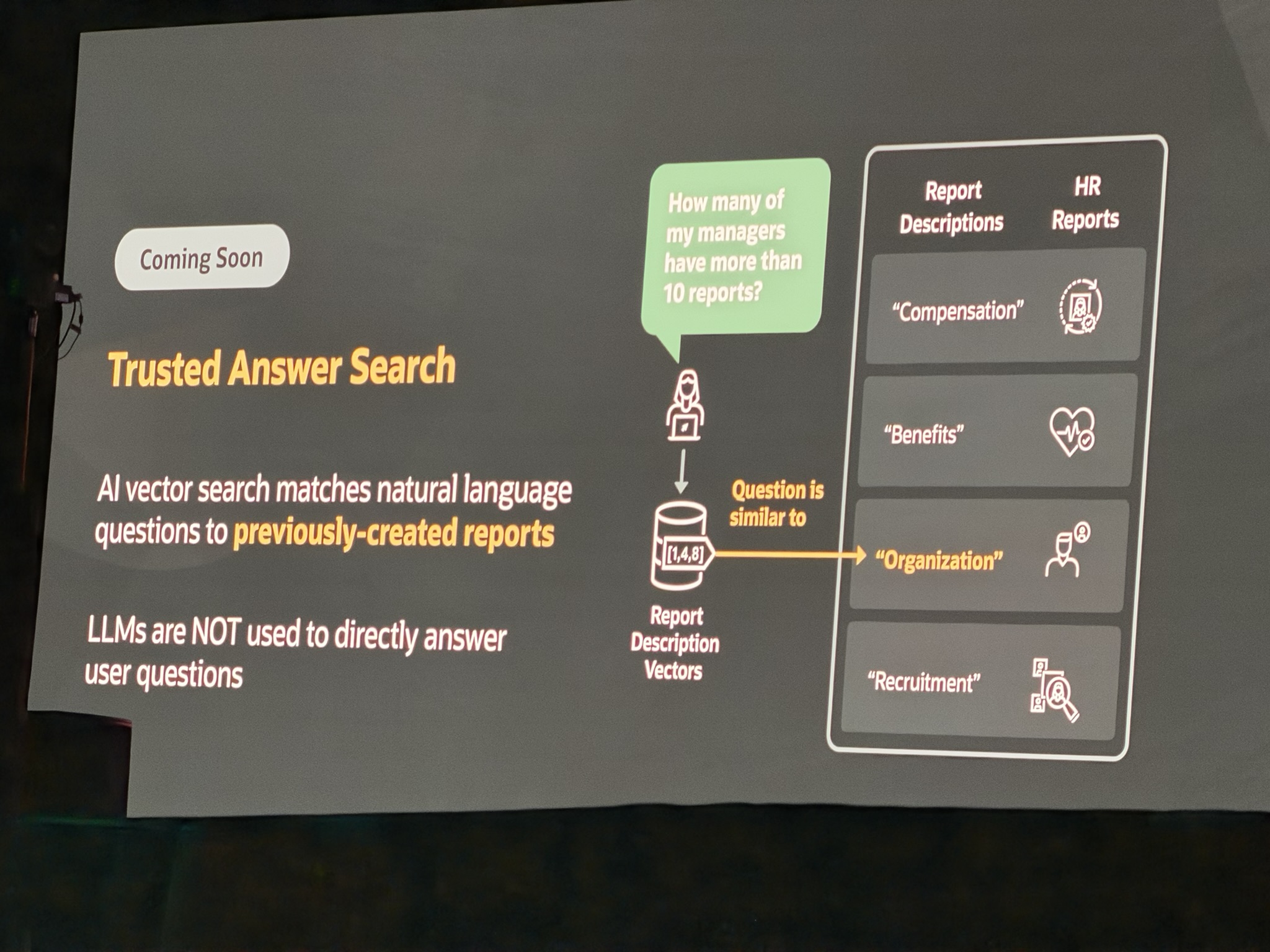
  • Introduction of new vector data types for AI and agentic RAG, allowing SQL queries across both vectors and relational data
  • Functionality to explain data using annotations, helping machine learning models generate SQL and improve interpretability
  • Development transformation through low-code apps built on Oracle APEX, powered by ML-generated logic
  • Oracle Database is now available everywhere, on all three major hyperscalers (AWS, Azure, GCP), on-prem, and OCI, giving customers the freedom to choose
  • Customers can bring their Oracle licences or use their hyperscaler contracts to consume Oracle services, offering commercial flexibility
  • Oracle continues to deliver the highest performance, especially on Exadata and the newly announced OCI Zettascale10 supercomputer, which supports 16 zettaflops of AI compute
  • The combination of multi-cloud, AI, ZDLRA (Zero Data Loss Recovery Appliance), and Autonomous AI Lakehouse opens up massive opportunities for partners and customers alike

Srikant talked about:

  • Gartner’s 60% prediction: By 2026, 60% of enterprise data will be used to train AI models, highlighting the urgency to make data AI-ready
  • The importance of making data ready for AI by ensuring it is clean, structured, and accessible across platforms
  • How to bring data together from disparate sources into a unified model, this is where Oracle Fusion Data Intelligence (FDI) plays a key role
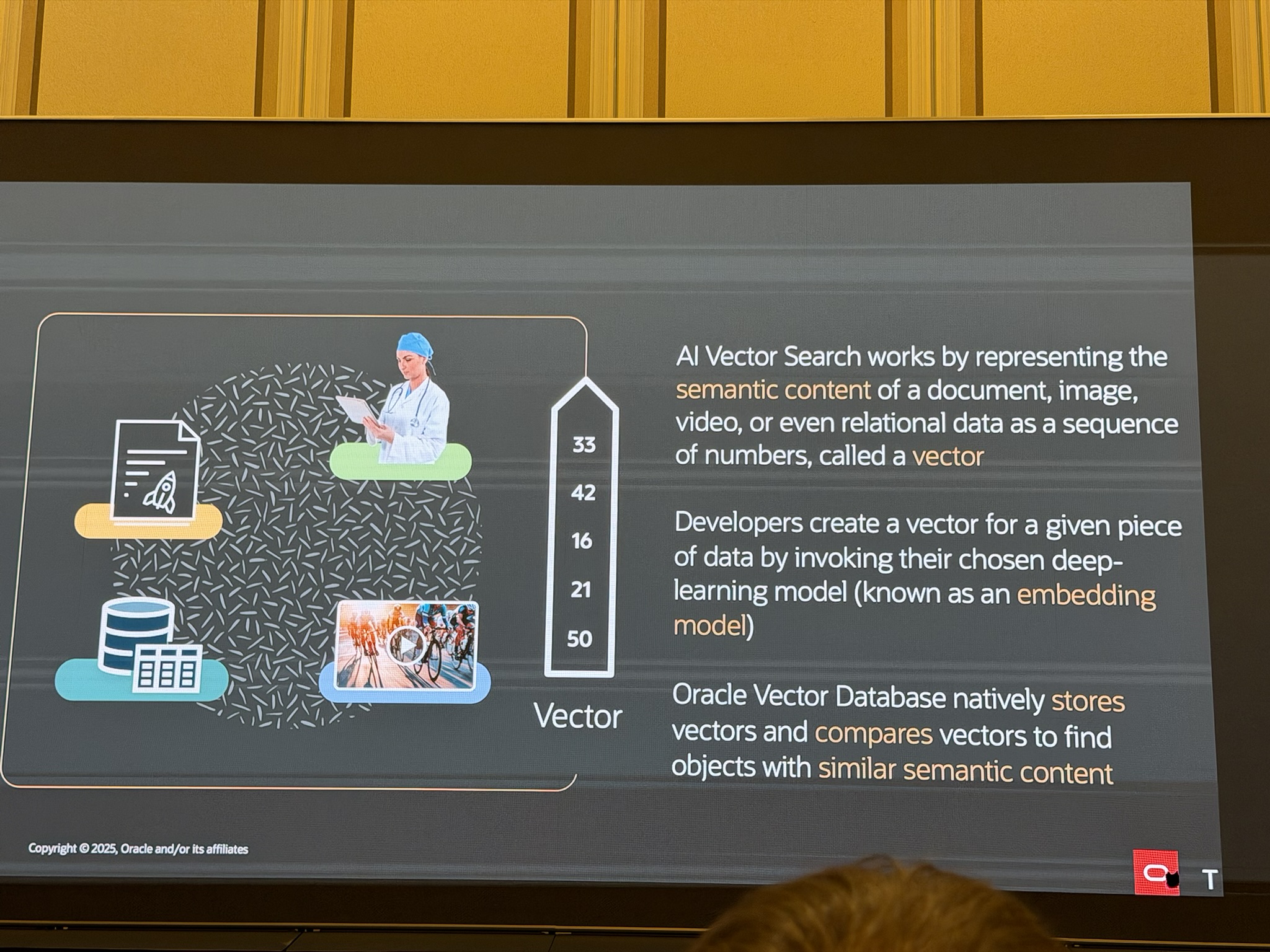
  • Exposing data as one unified layer for AI consumption, enabling consistent access for training and inference across Oracle Cloud Applications
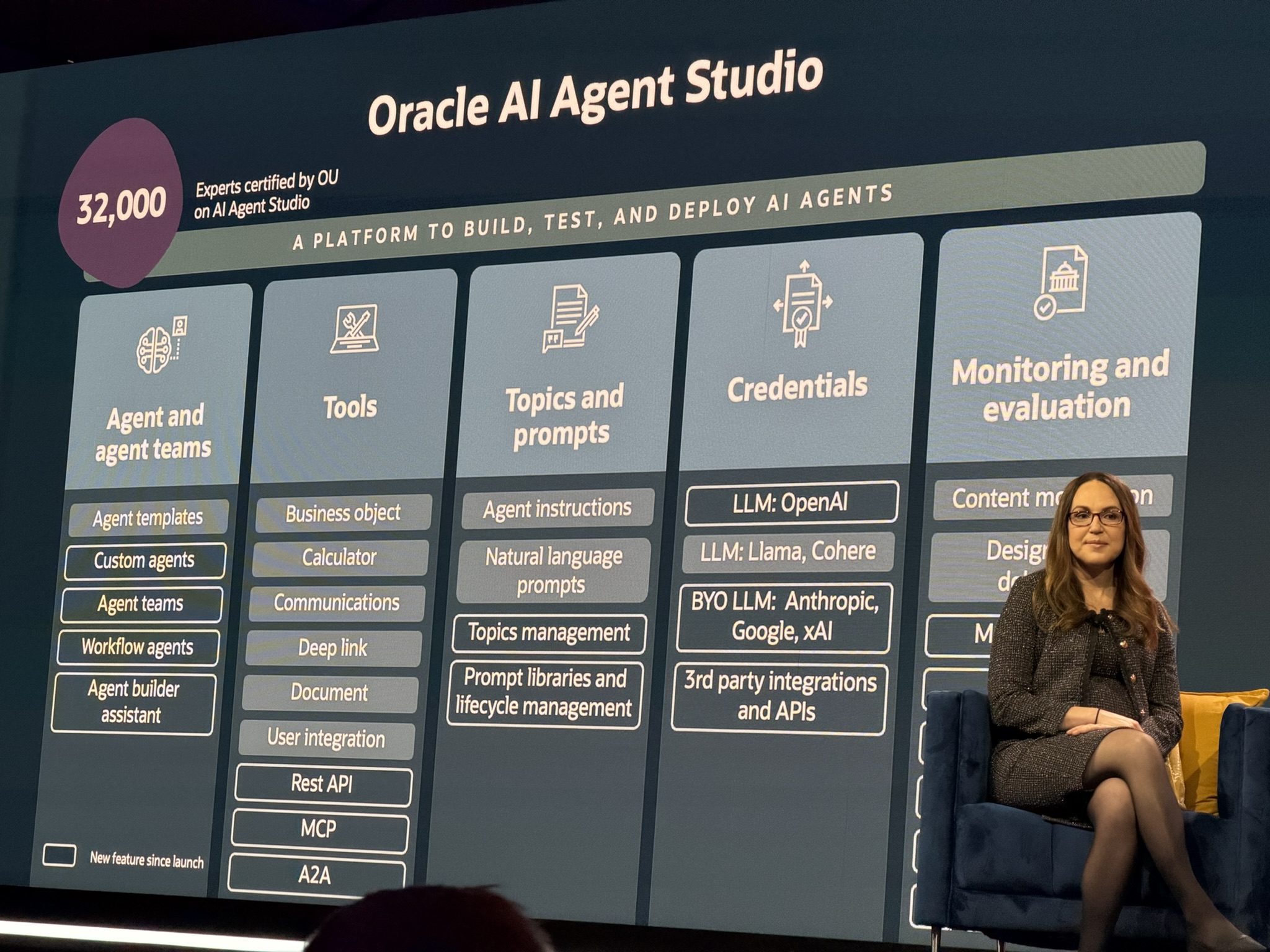
  • Use of low-code tools like Jupyter and Oracle AI Agent Studio to build agentic AI solutions. These tools allow developers and analysts to create AI workflows without deep ML expertise
  • Fusion Data Intelligence (FDI) as a platform for agentic AI
  • FDI integrates with Oracle ERP, HCM, SCM, and CX to provide prebuilt KPIs, dashboards, and AI/ML models
  • It supports custom ETLs, third-party analytics tools, and self-service reporting
  • FDI enables 360-degree views of business entities, combining transactional and analytical data for deeper insights
  • Oracle’s broader data and analytics strategy creates rich opportunities for partners to deliver AI-driven solutions that are scalable, secure, and business-aligned

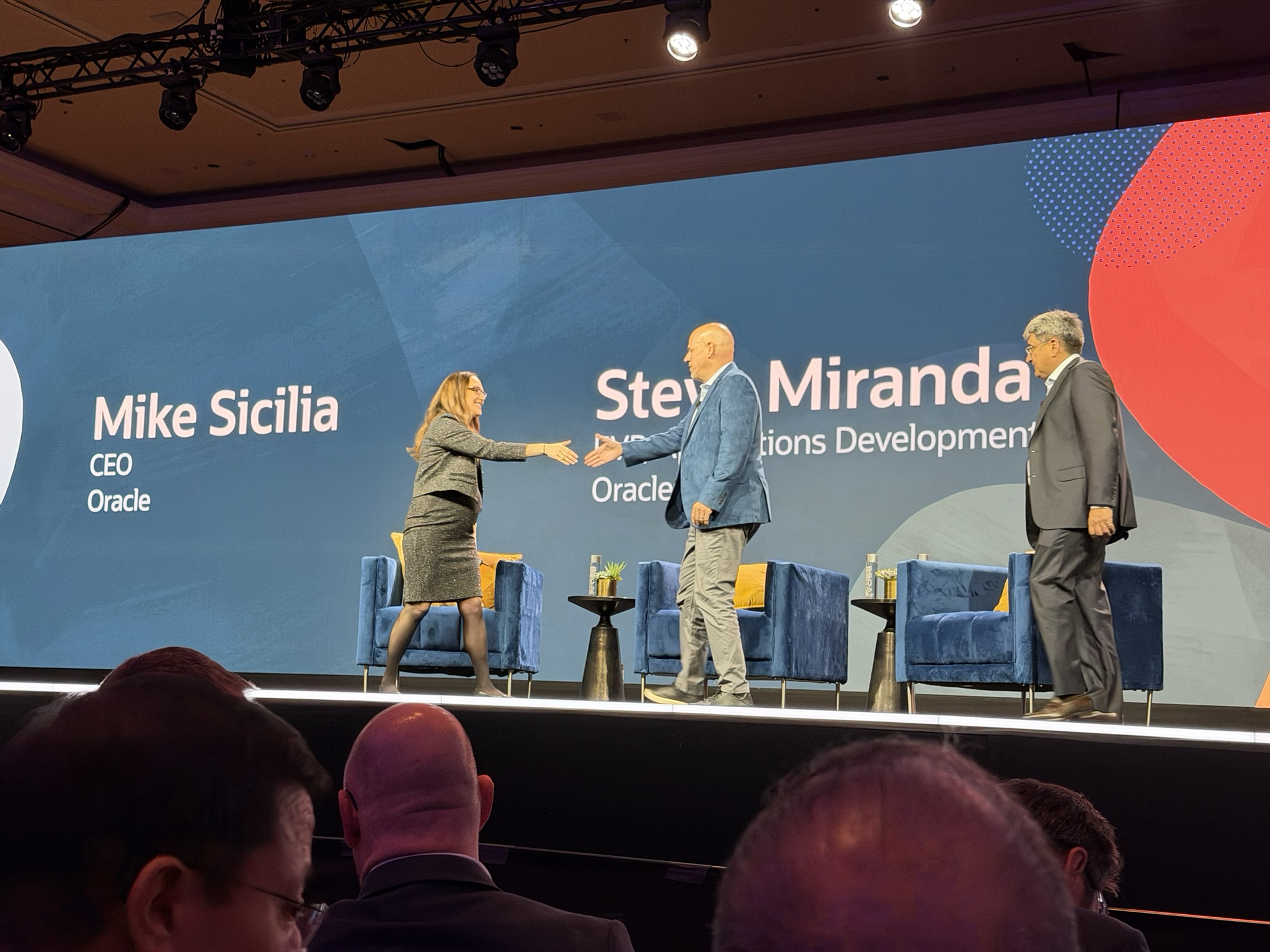
Next, Leah welcomed Mike Sicilia, CEO, Oracle (newly appointed from President of Oracle Industries) and Steve Miranda, Executive Vice President, Application Development, Oracle to the stage.

Mike Sicilia and Steve Miranda talked about:

  • Over 400 AI features embedded in Oracle Fusion Applications, and 650+ AI capabilities across industry-specific apps like Oracle Health, Hospitality, and Financial Services
  • The deployment of AI agents to solve real business problems, not just automate tasks. These agents are designed to triage, fetch data, generate responses, and trigger actions, acting like digital team members
  • Introduction of AI Studio for Fusion and industry apps, enabling partners and customers to customise or build new agents using low-code tools like Jupyter notebooks and Oracle Agent Studio
  • Emphasis on prompt engineering and private data residency within applications, ensuring AI operates in close proximity to enterprise data for better accuracy and security
  • Oracle’s unique position as the only vendor with deep integration across both applications and technology stack, allowing it to drive real business value rather than just data movement
  • A compelling healthcare example: Oracle AI saved 100 minutes per day in clinical settings by automating mundane tasks, such as documentation and scheduling
  • Focus on real applied AI, not hype, to deliver efficiency gains by removing labour-intensive processes and enabling automation at scale
  • A heartfelt appreciation for the partner community, recognising that partners working closely with customers are the key to driving success and adoption
  • Advice to partners: understand the full Oracle stack, from infrastructure to apps, to help customers solve complex, multi-layered problems that require deep integration

Next, Leah had her own segment.

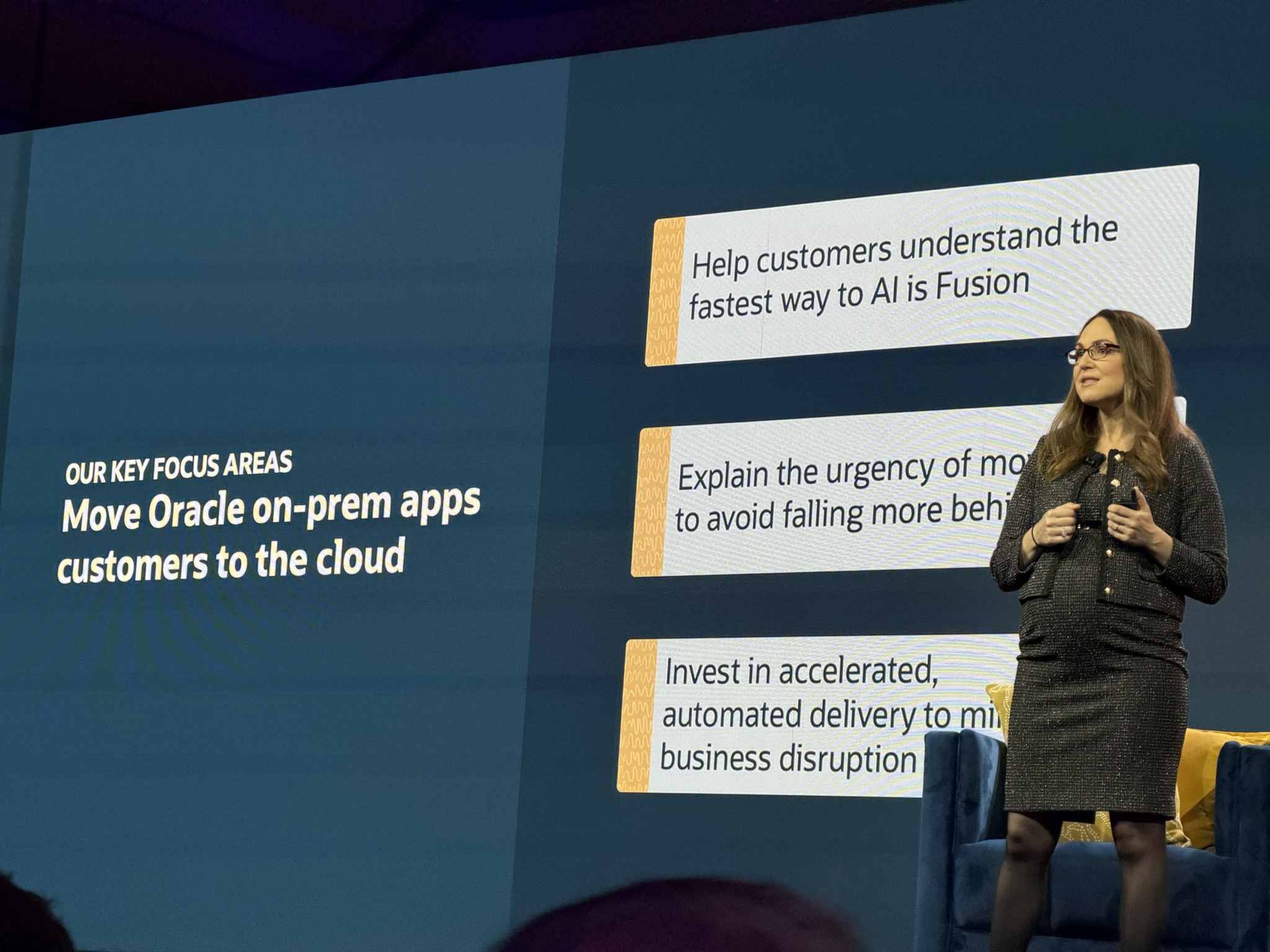
She talked about:

  • Helping customers move Oracle applications to the cloud, particularly Fusion Cloud Applications, to unlock agility, scalability, and embedded AI capabilities
  • Encouraging partners to engage C-level stakeholders to help them understand the strategic value and opportunity of Oracle’s full-stack cloud and AI offerings
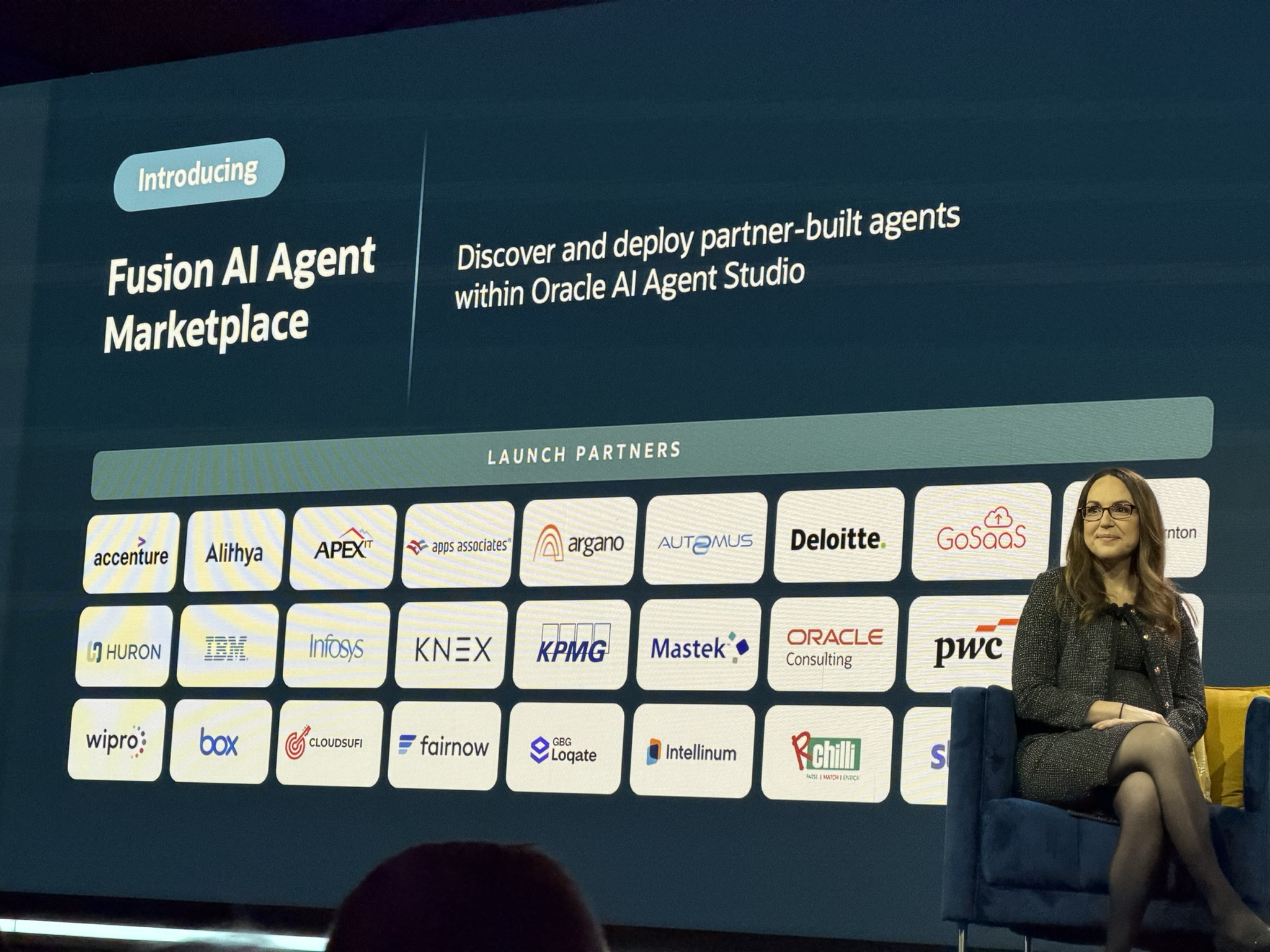
  • Leveraging OCI and AI agents to deliver joint solutions that solve real business problems. This includes deploying Oracle-validated AI agents built by partners and available directly within Fusion workflows
  • Driving organisational transformation through Oracle’s end-to-end tech stack, from infrastructure to applications, enabling seamless integration and automation
  • Highlighting the launch of the Oracle AI Agent Studio and its listing on the Oracle Marketplace, where partners can publish and monetise their AI agents with custom pricing models approved by Oracle
  • Promoting free AI training for partners, available through Oracle University until end of October, covering topics like Fusion ERP, HCM, and APEX low-code development with AI.

For the final segment, Leah welcomed Karen Chen, VP, Global Cloud Sales, nvidia to the stage.

She talked about:

  • DGX-1 (2016) marked NVIDIA’s pivotal shift into deep learning, integrating chip, software, and networking capabilities
  • This led to its first partnership with OpenAI, laying the groundwork for modern AI infrastructure
  • The GH200 Grace Hopper Superchip, now available in Oracle Cloud Infrastructure (OCI), exemplifies NVIDIA’s commitment to high-performance computing for generative AI workloads
  • NVIDIA AI Enterprise provides a robust software layer for deploying AI across hybrid cloud environments, including OCI
  • The NVIDIA Inference Service in OCI supports scalable AI workloads, particularly in data science and model deployment
  • Karen emphasised that the partner ecosystem plays a vital role in accelerating AI adoption, with collaboration being critical to NVIDIA’s success
  • The session reinforced how strategic partnerships and cloud-native AI services are driving rapid innovation and enterprise transformation

After the summit concluded, a network reception was held for approximately 500–600 partner delegates, which I attended. During the event, I had the opportunity to connect with Manish Naik, another Oracle ACE, and catch up with my Version 1 colleagues, Tim German, Kate Mead, and Marc Southey.

Oracle Database Premiere Customer Appreciation Event

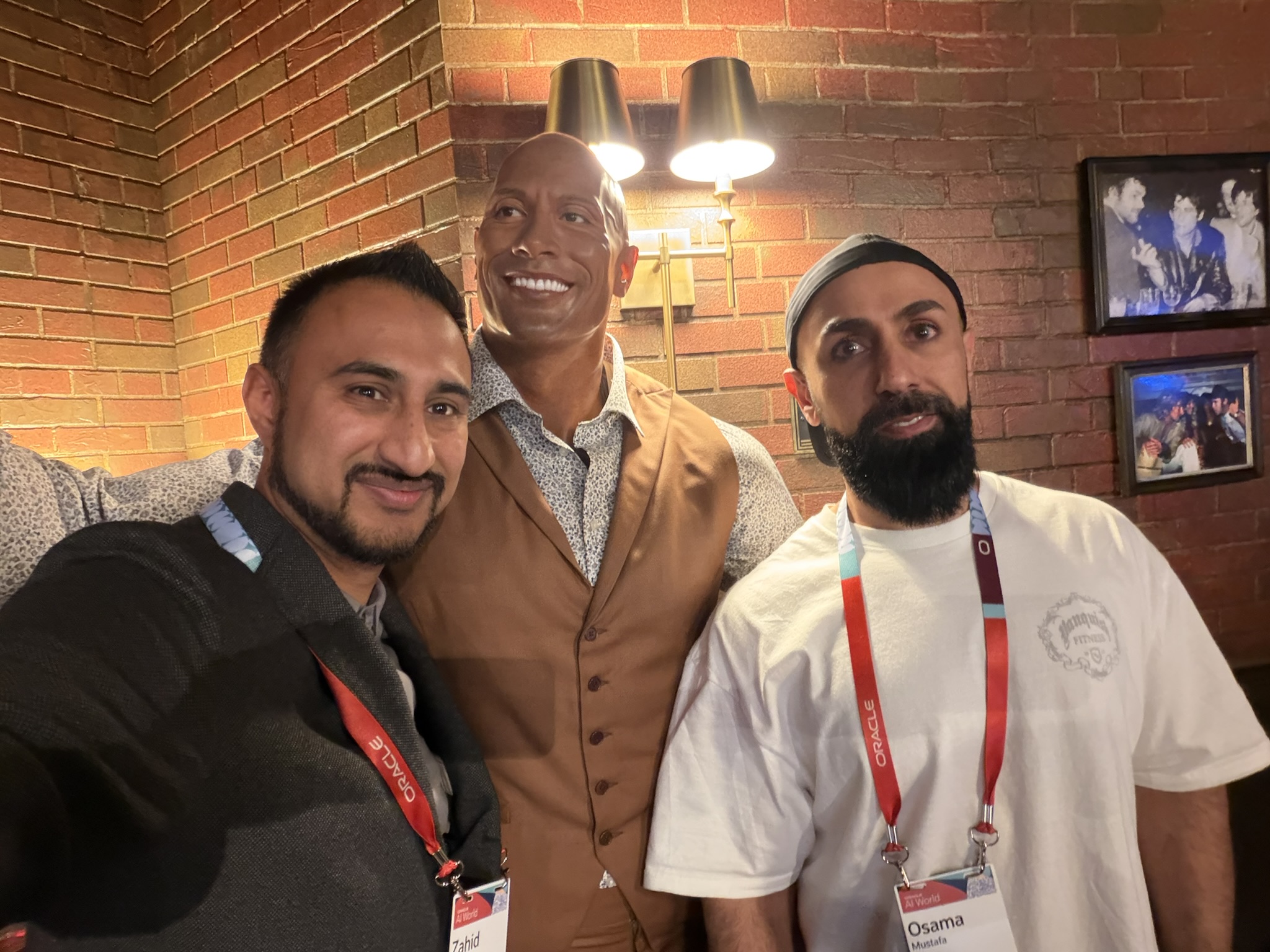
The final event of the day was the Oracle Database Premiere Customer Appreciation Event, which I’ve attended for the past three years. For the last two years, and again this year, the event was hosted at Madame Tussauds in The Venetian, offering a familiar and engaging setting for networking!

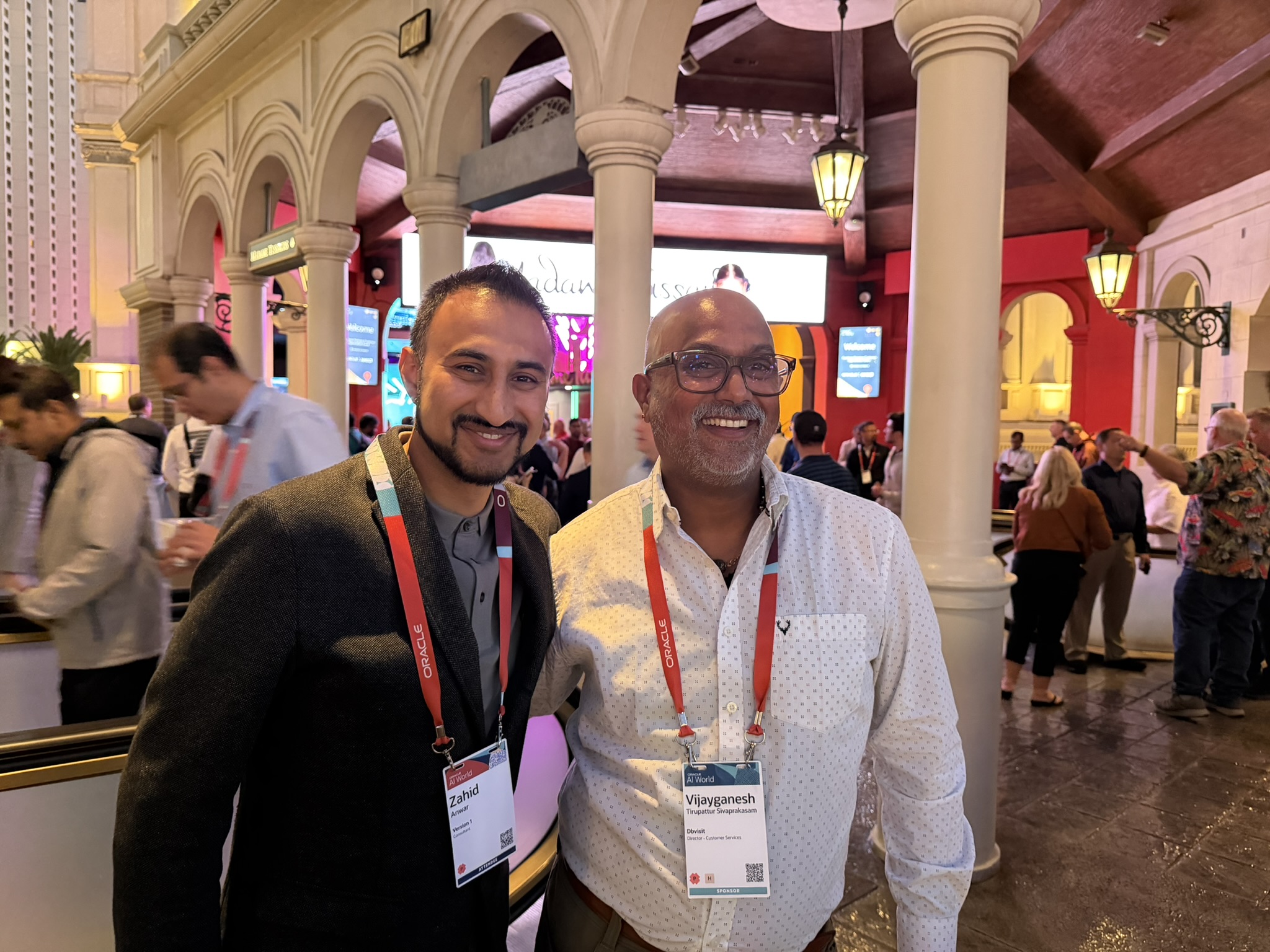
Met with my Oracle ACE friends, Vijayganesh Sivaprakasam, Osama Mustafa, Nelson Calero, and Sai Penumuru.

There was a fun and visually impressive ice cream-making experience this time, using liquid nitrogen, a popular technique for its dramatic fog effect and ultra-fast freezing, which always draws a crowd and tasty at the same time 😋

I got to met Annie, from Barclays a customer of Version 1.

A little bit of fun with angel wings, a light-hearted moment with my Oracle ACE friends!

I also got to meet Alex Blyth, Exadata Product Manager, who I know quite well 😊

As well as:

Also got to meet some old friends from last year when I attended the same event 🤣

Rather then repeating the same photos, you can see them here:

Tomorrow marks the first day of the actual conference, really looking forward to it! 😎👍🏽

You can view my day 3 part 1 here.

If you found this blog post useful, please like as well as follow me through my various Social Media avenues available on the sidebar and/or subscribe to this Oracle blog via WordPress/e-mail.

Thanks

Zed DBA (Zahid Anwar)