Oracle AI World 2026 Day 2 – Part 1

If you missed my day 1, you can view it here.

The Boring Migration: How to move to multicloud and promoted, not paged

Today was the official start of Oracle AI World 2026 and a pretty special day for me, my first time presenting at Oracle AI World! 😎

After an early breakfast at the hotel, the usual sourdough, avocado and poached eggs, I headed to The Venetian with David from Kobalt, my co-presenter.

And there was no easing ourselves into it. We had the very first session of the conference at 8am!
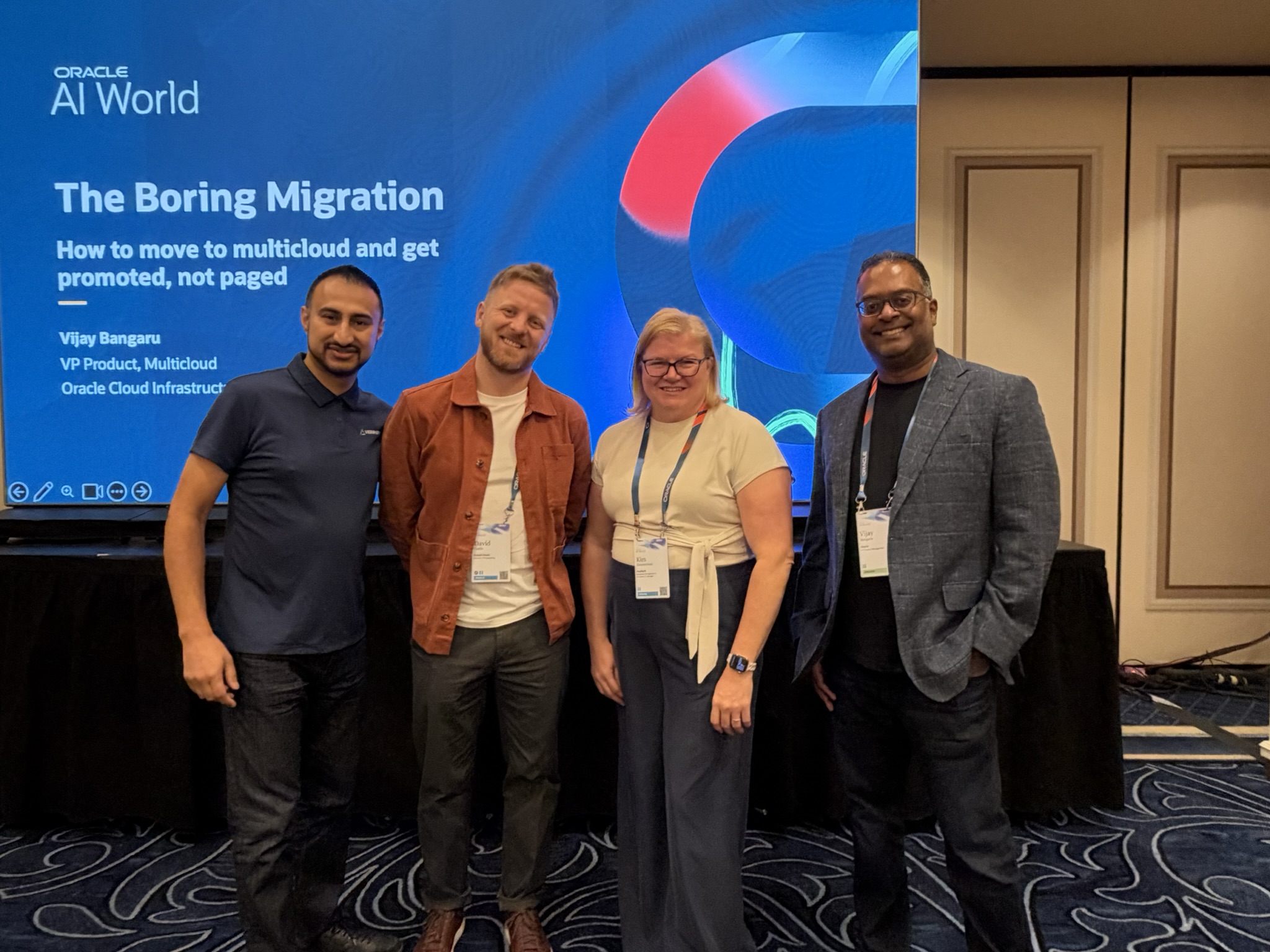
Our session was “The Boring Migration: How to Move to Multicloud and Get Promoted, Not Paged.”

What does a boring migration mean? Simple, moving to Oracle AI Database@Multicloud without any drama! When it comes to a major database migration, boring is definitely a good thing 😎

Vijay Bangaru, Vice President of Product for Multicloud, Oracle Cloud Infrastructure, had kindly invited Version 1 and Kobalt to share our customer success story, alongside Kim from KeyBank.
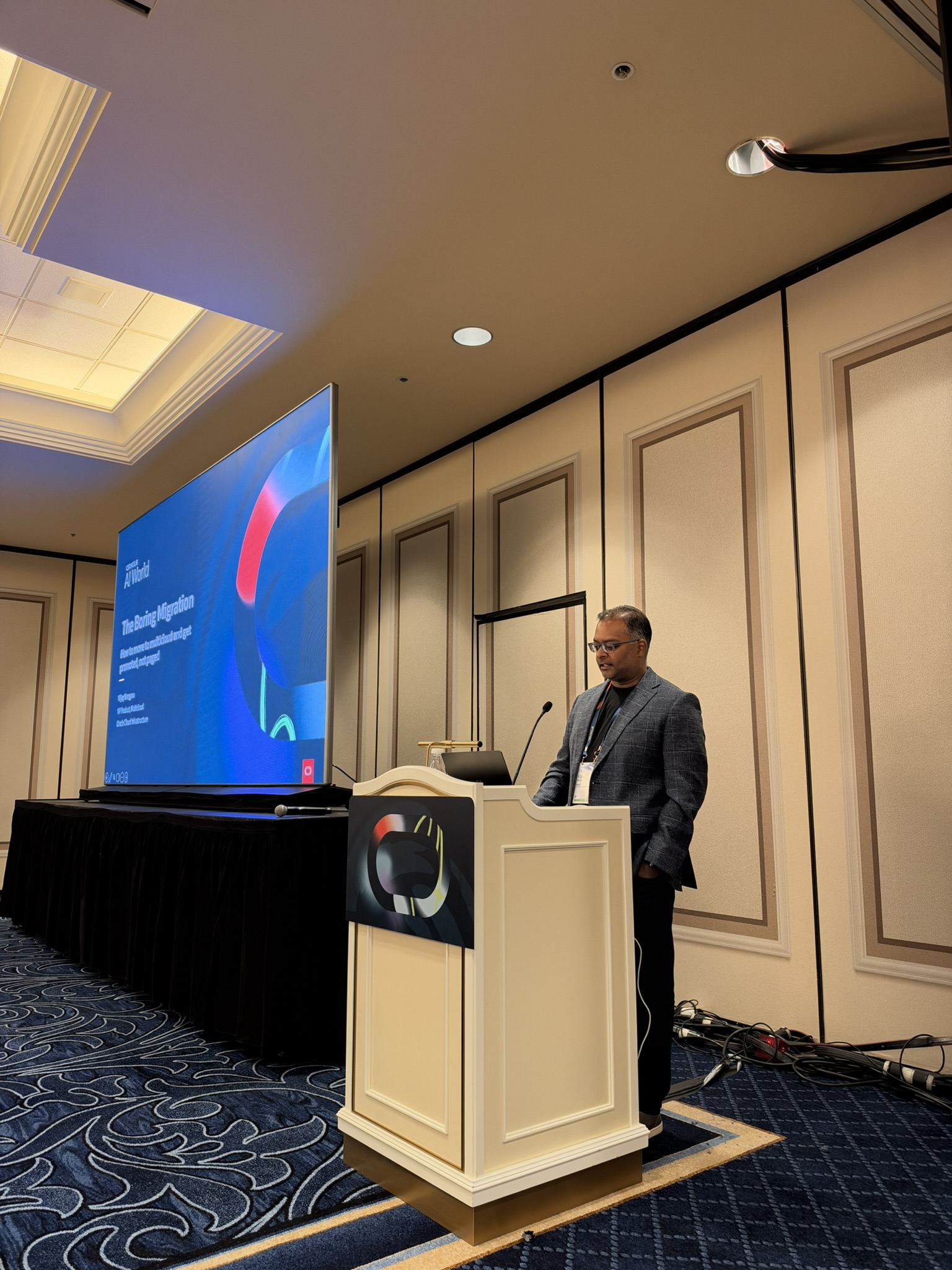
Vijay kicked off the session by introducing Oracle AI Database@Multicloud, explaining what it is, where it’s available and the support available to customers, including funding, partners such as Version 1 and Oracle’s Tiger Team.

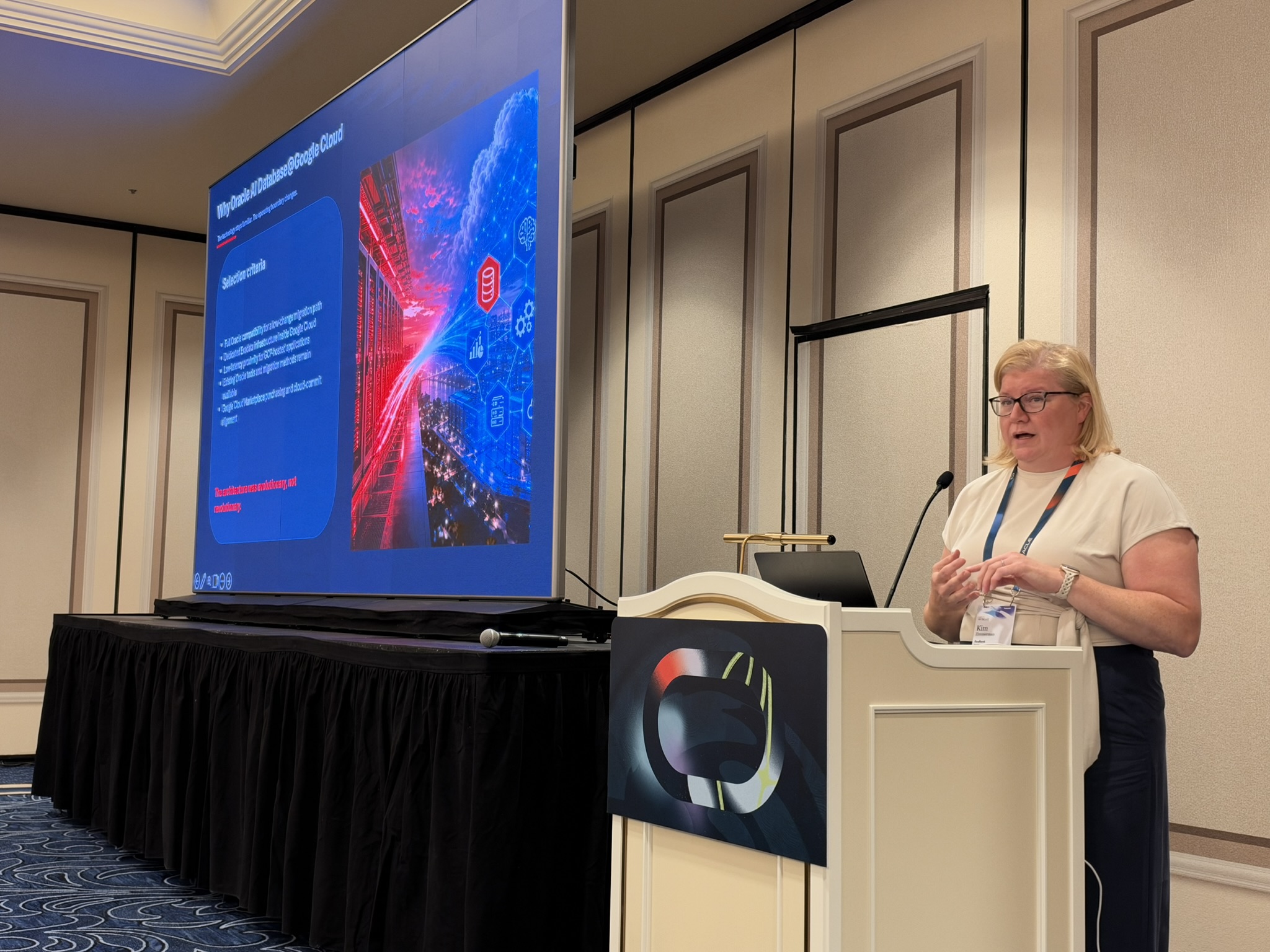
Kim then shared KeyBank’s Oracle AI Database@Google Cloud journey. GCP is their preferred cloud provider, so she explained why bringing Oracle Database into GCP made sense for them, their experience working with Oracle’s Tiger Team, and how the migration has gone so far.

They are still early in the journey, with some non-production workloads migrated, but so far the experience has been positive.
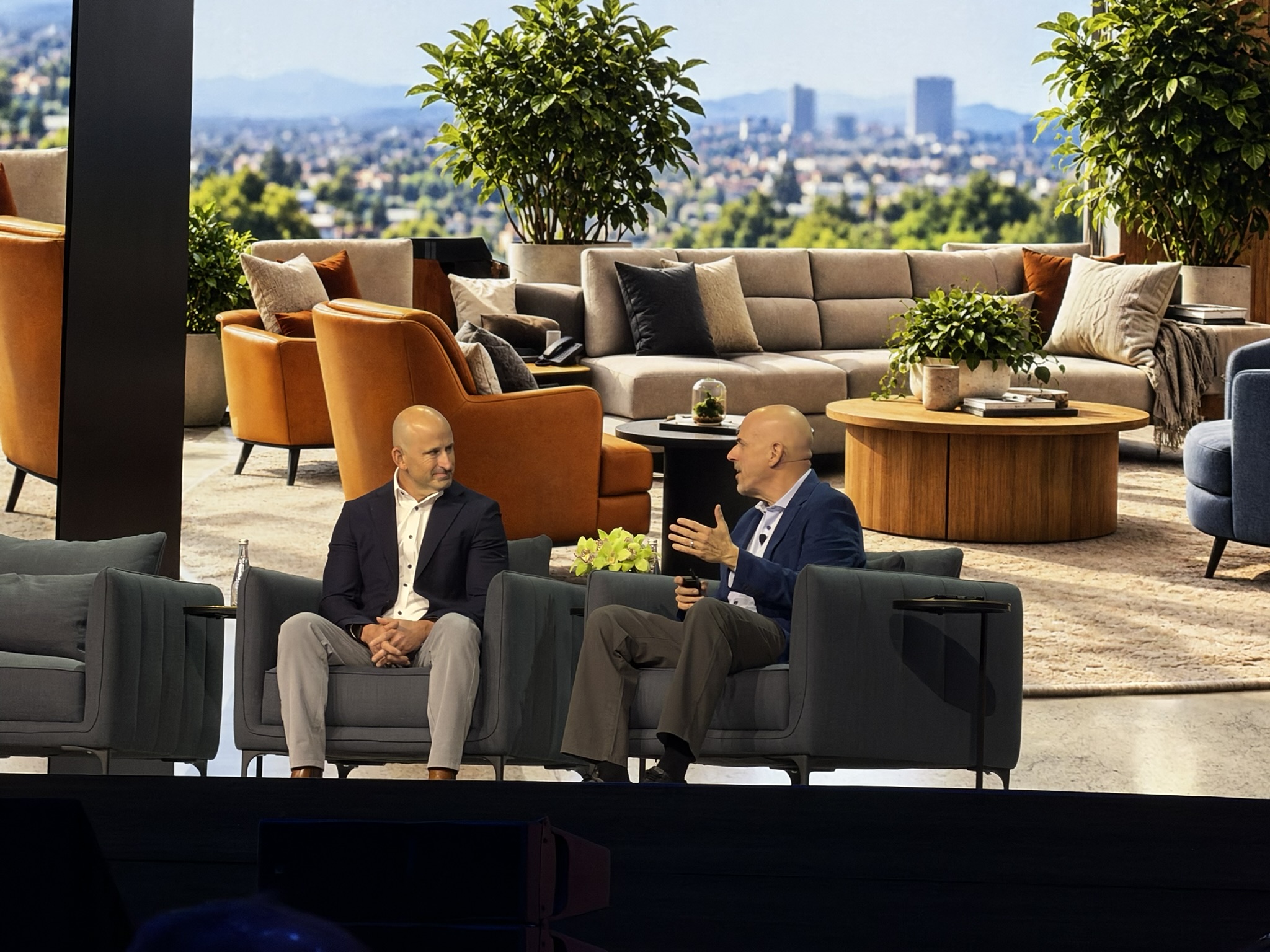
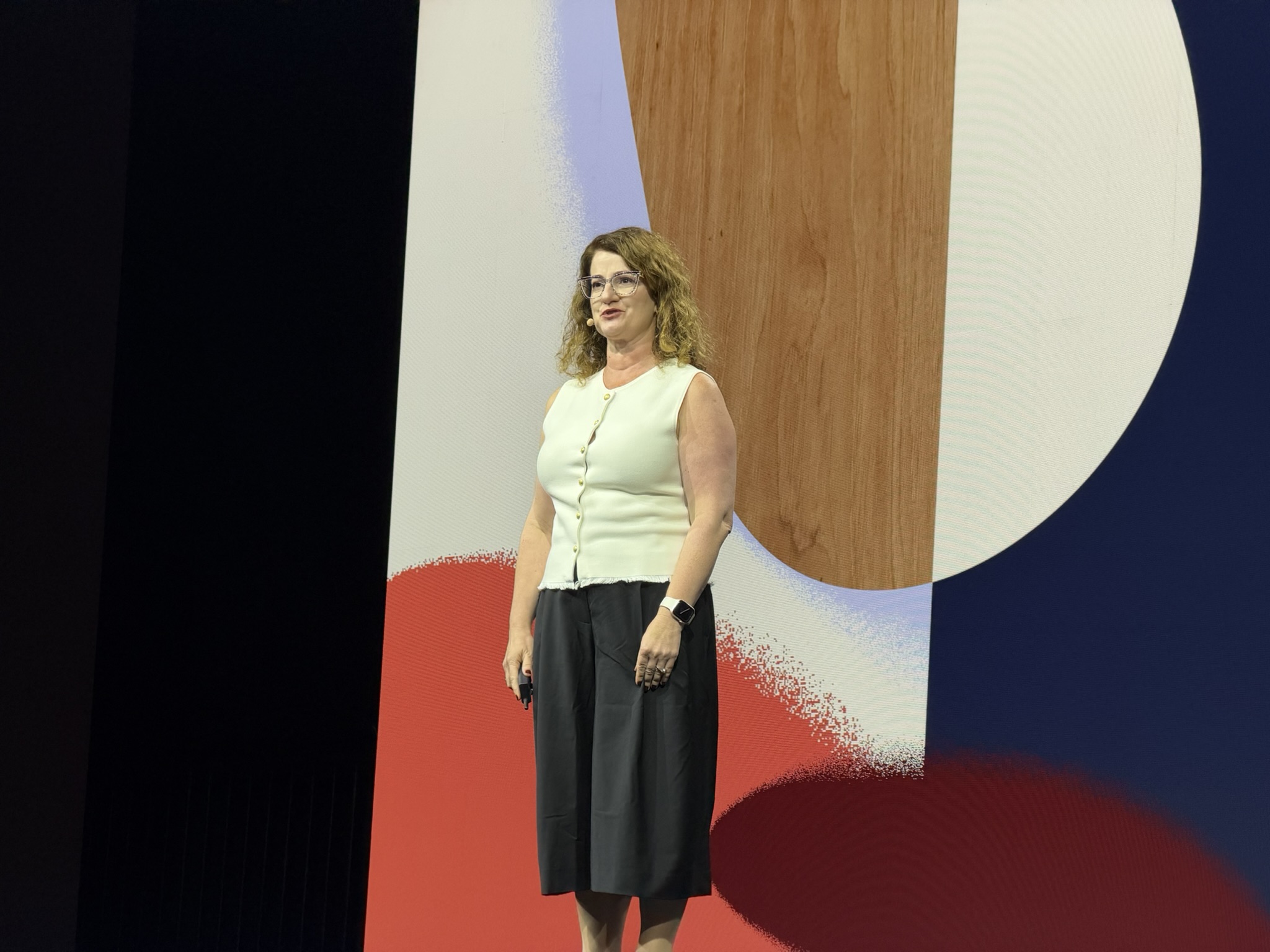
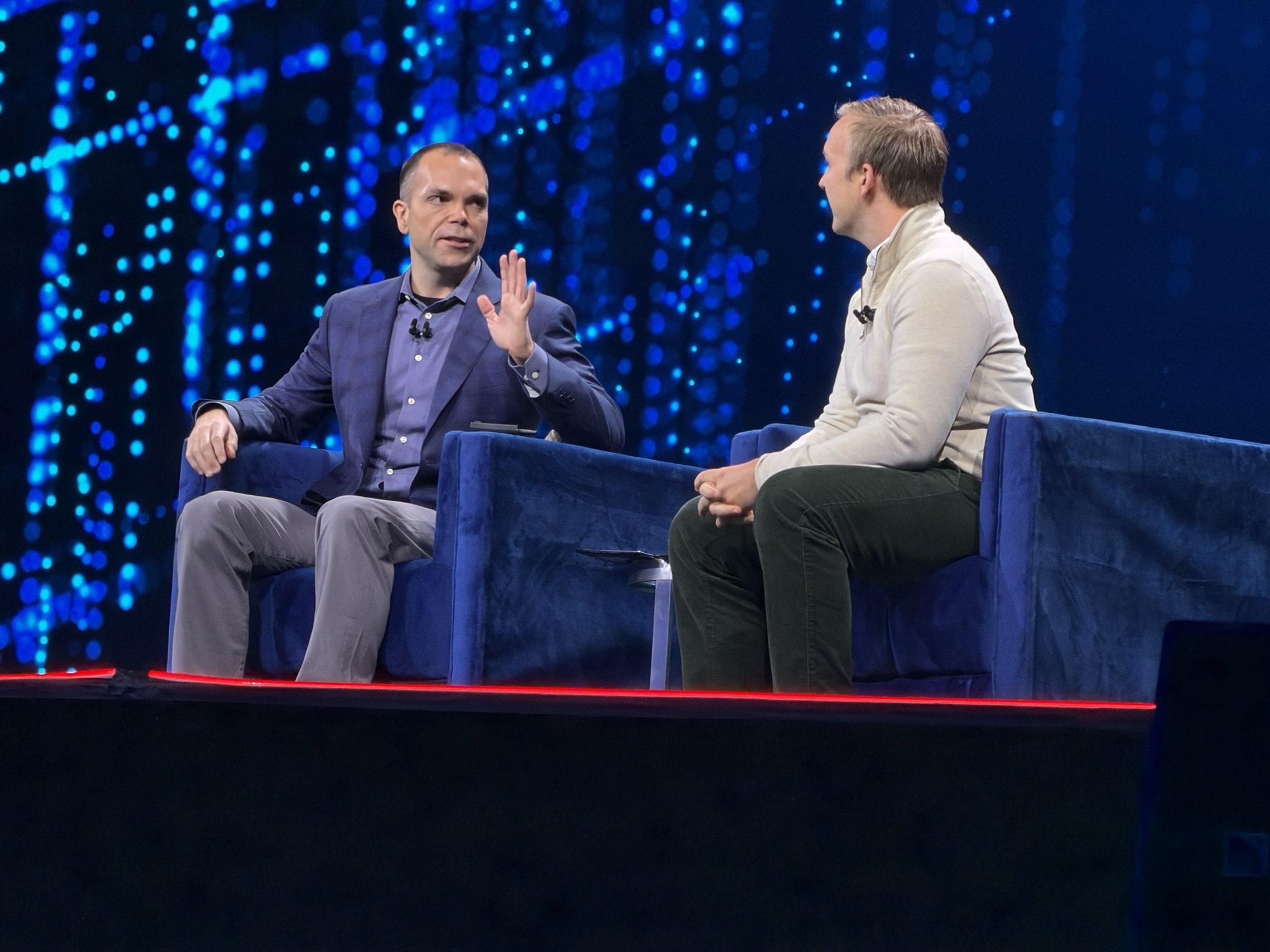
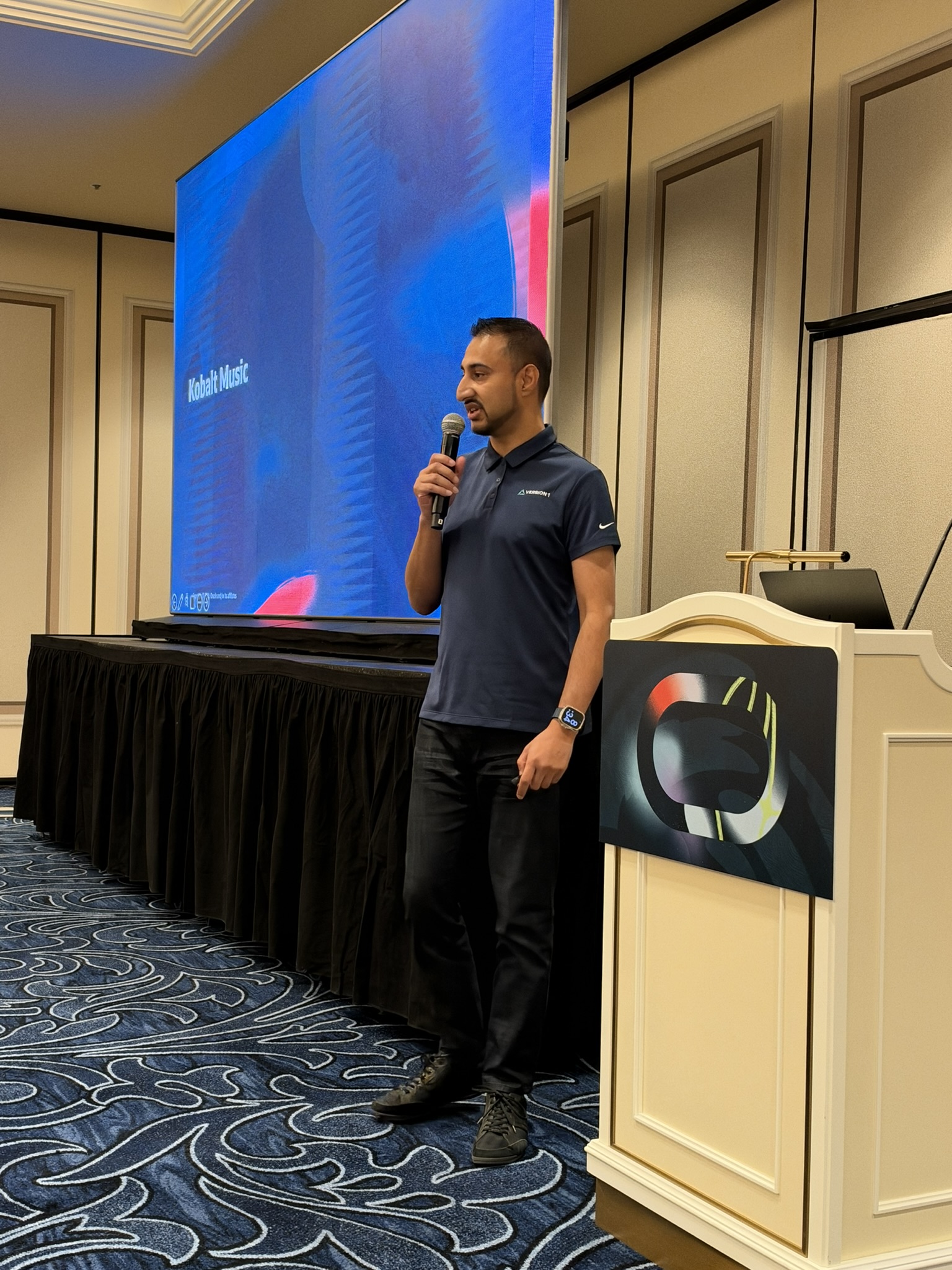
Then came the moment I’d been waiting for! 😎 David and I were up next to share Kobalt Music’s customer success story, taking the audience through their journey of migrating to Oracle AI Database@AWS.
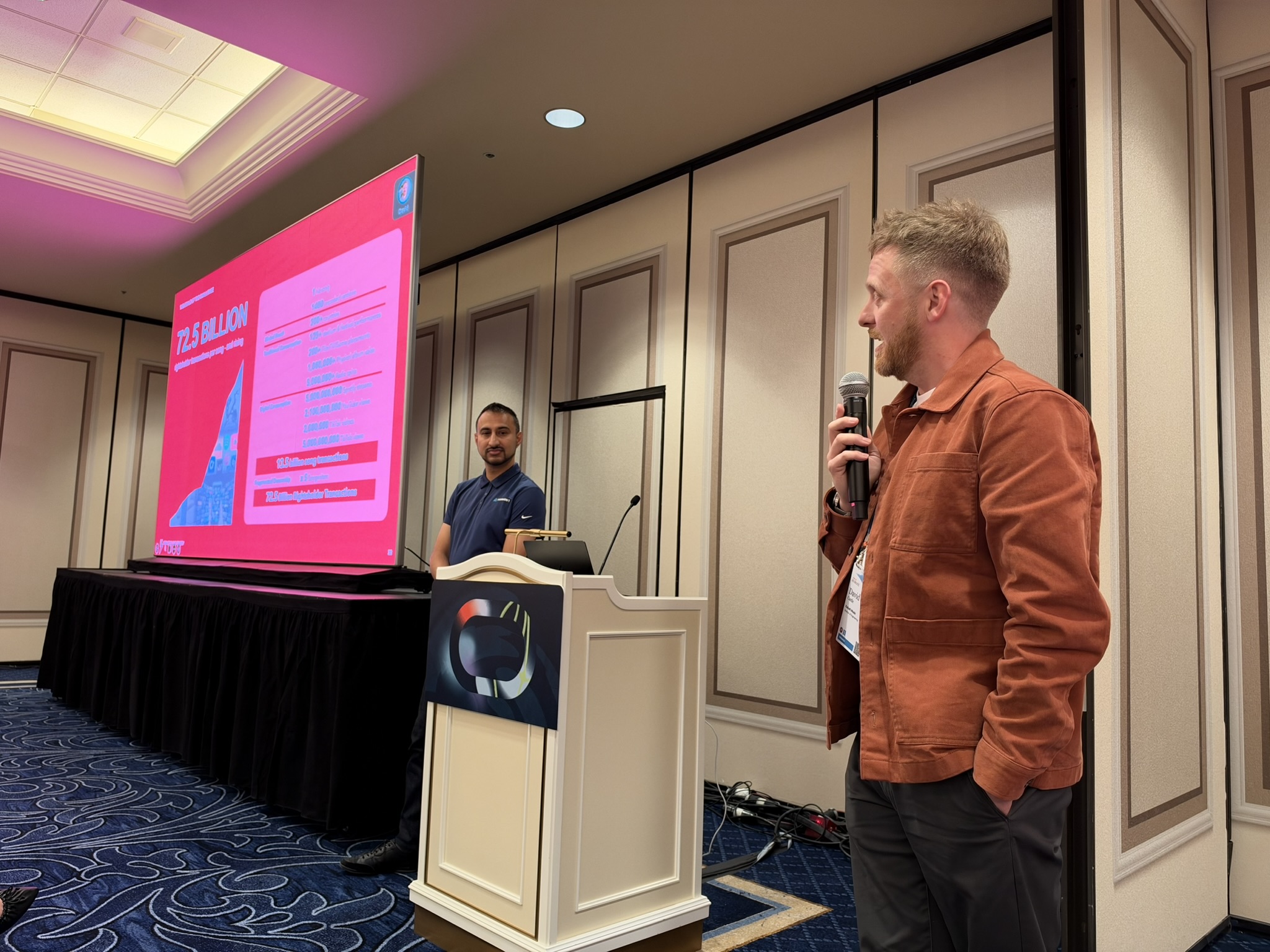
David then shared some numbers that really put the scale of Kobalt Music into perspective. One hit song alone can result in 72.5 billion rightsholder transactions! Yes, billion! 😲

And remember, that’s just one song. When you consider the number of songs Kobalt manages and the royalties they need to calculate and collect for their clients, you can imagine the huge volumes of transactions their systems have to deal with.

Unsurprisingly, there is a lot of data behind all of this. Kobalt has two main databases which, combined, are in excess of 250TB!
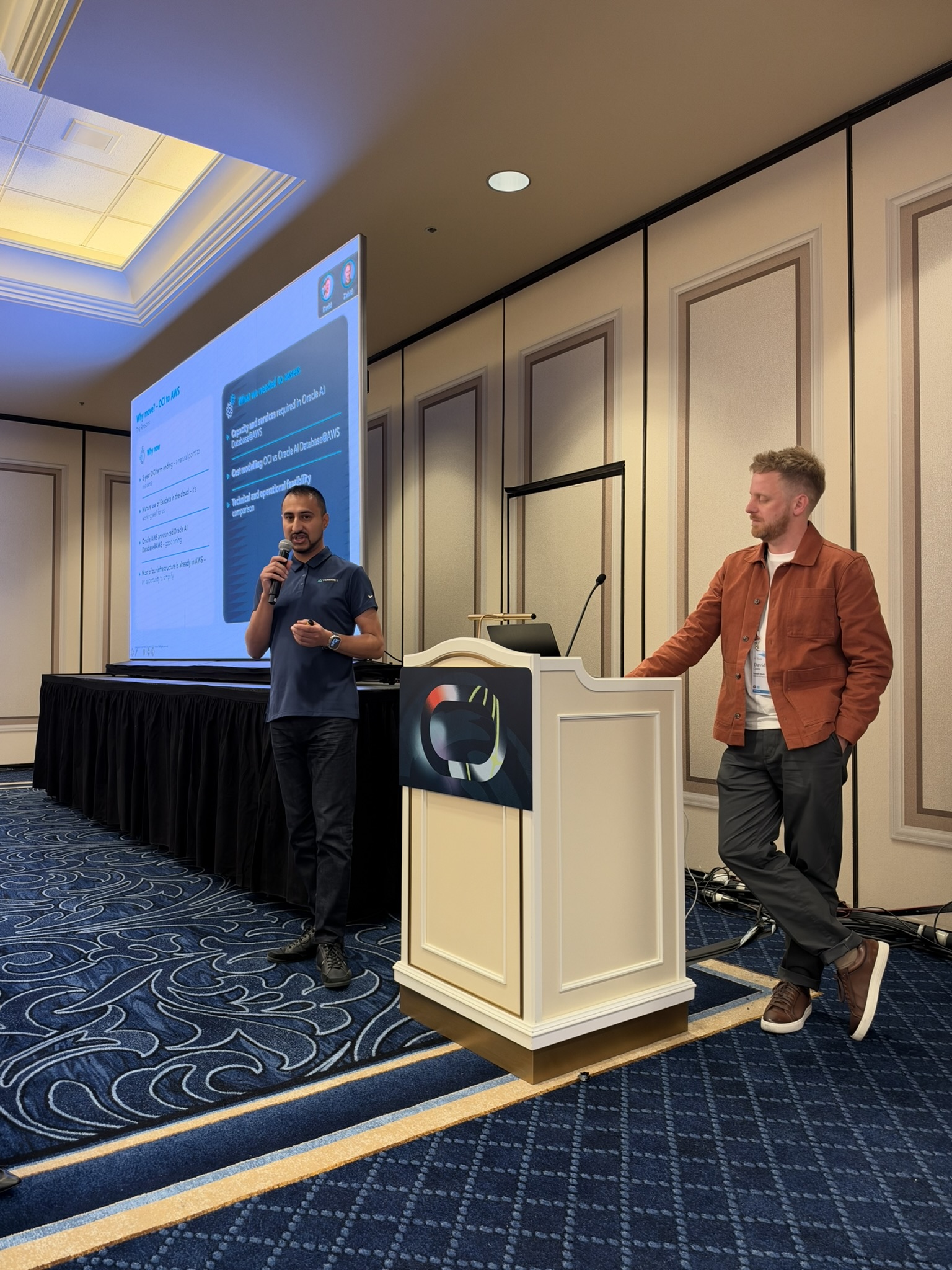
David and I then discussed the what and why behind the migration. Kobalt was already making excellent use of Oracle Exadata in OCI, but with their OCI contract naturally coming to an end, it created the perfect opportunity to step back and evaluate all the available options.

Kobalt was already operating a multicloud model, with their Oracle databases running on Oracle Exadata in OCI, while much of the rest of their technology estate was in AWS. So the opportunity to retain the performance and capabilities of Exadata, but bring the database into AWS through Oracle AI Database@AWS, seemed like a perfect fit.

I then explained how we approached the Total Cost of Ownership (TCO) analysis. We compared remaining on their existing Exadata X9M platform against migrating and upgrading to Exadata X11M, either in OCI or through Oracle AI Database@AWS.

What was particularly interesting was that even after factoring in the cost of the migration, the overall TCO was lower. Moving to the newer X11M generation meant Kobalt could reduce the number of storage cells required because of the increased storage capacity, while the improved performance also meant fewer ECPUs were needed.

But the benefits went beyond the infrastructure savings. Moving the database closer to Kobalt’s existing AWS estate also removed the associated transit gateway costs, while providing lower latency and higher bandwidth between the database and AWS services. In turn, this opened up opportunities for Kobalt to make greater use of AWS services alongside their Oracle databases.

When we brought the commercial and technical benefits together, Oracle AI Database@AWS became the obvious recommendation for Kobalt, and one they ultimately accepted.
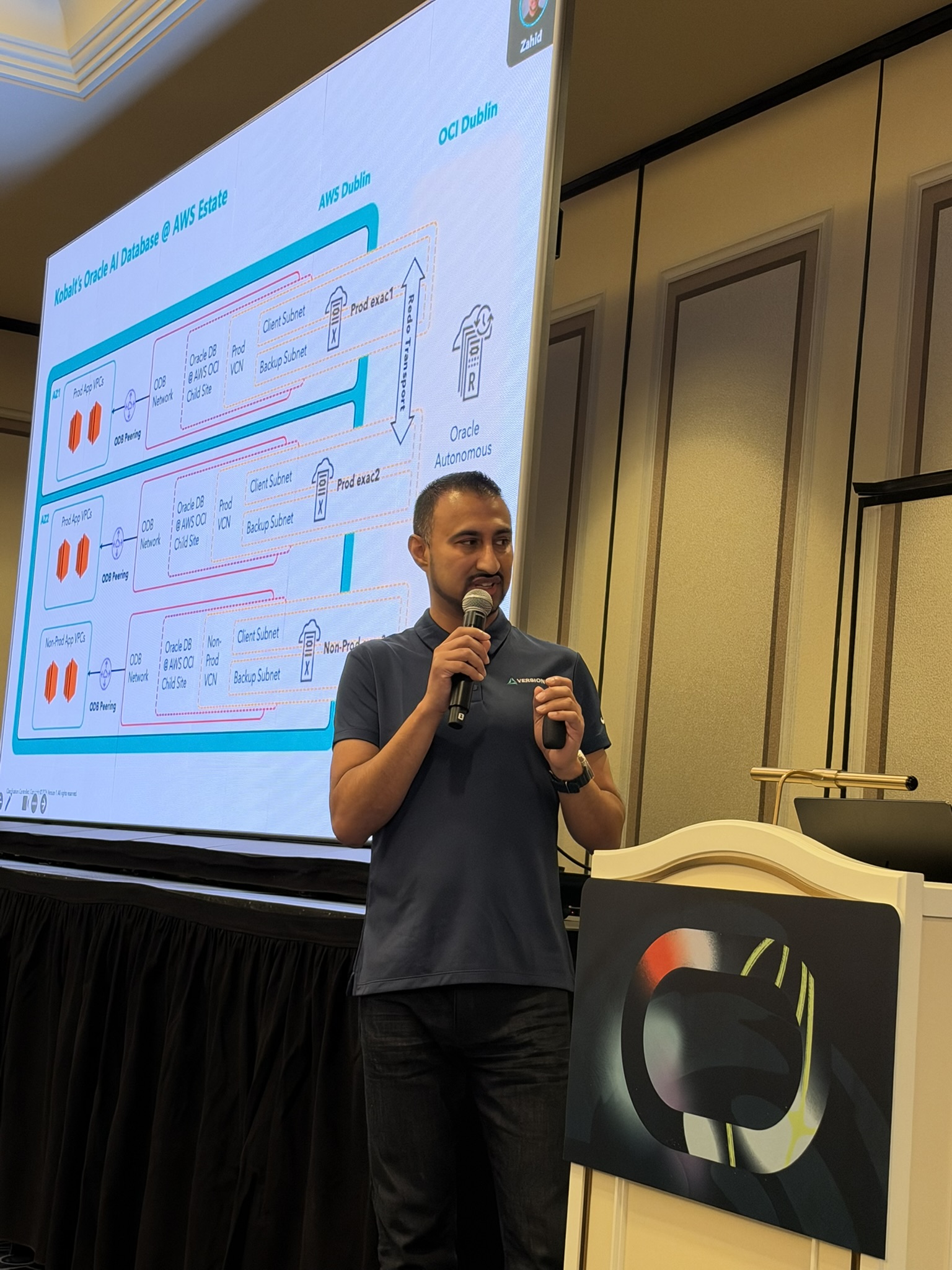
I then moved onto how we actually delivered the migration. We built Kobalt’s new Oracle AI Database@AWS environment in the Dublin region across two Availability Zones, connecting the ODB network through ODB peering into multiple AWS accounts.

The really proud moment for me was being able to say that we had successfully completed the migration, including production! We had taken the project all the way from the initial TCO and architecture discussions through to a fully migrated production environment.

And what a journey it had been. Along the way, we were also incredibly proud to see Kobalt’s story featured at the Oracle AI Database@AWS launch events in both London and Dublin. 😎
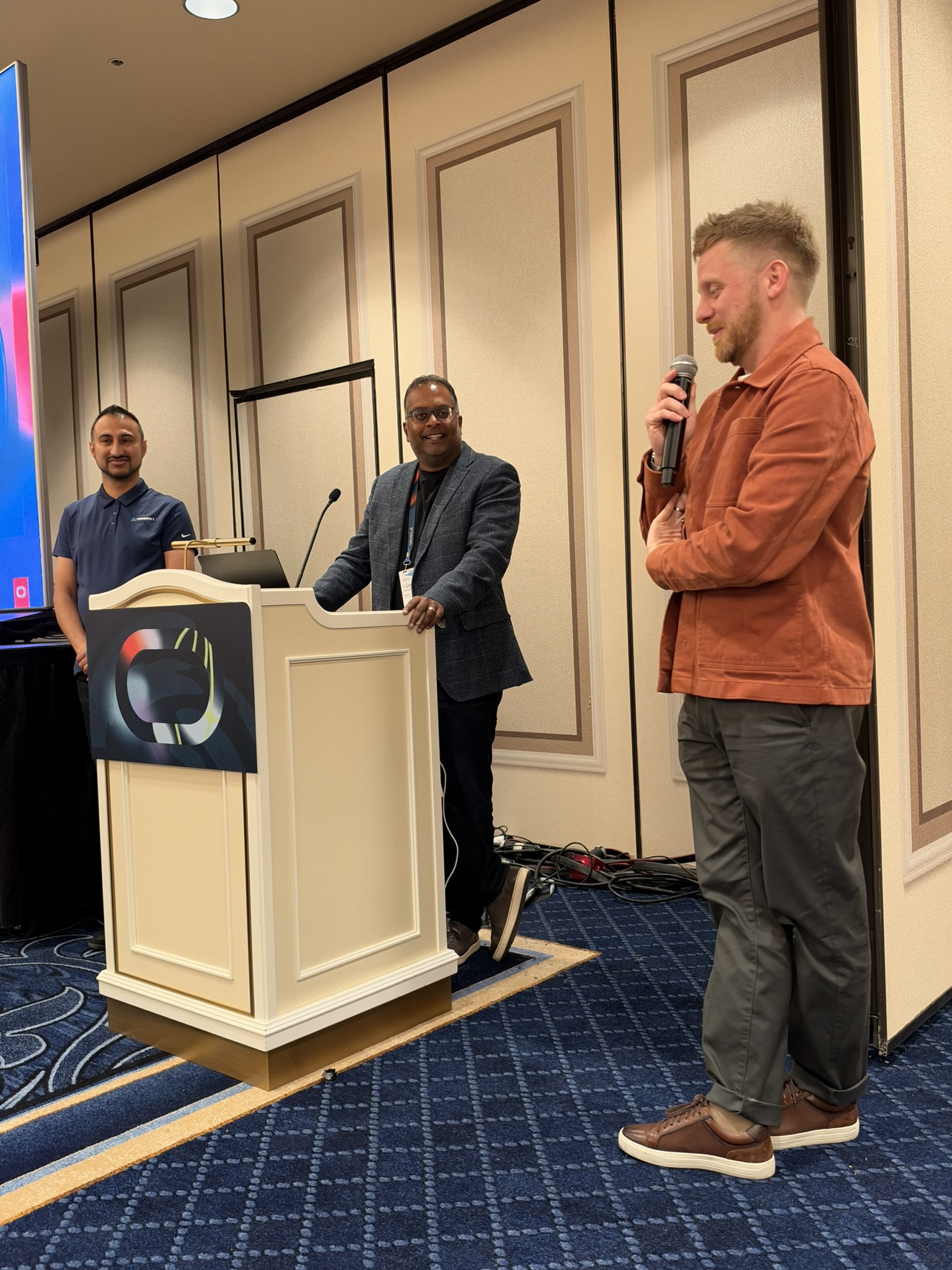
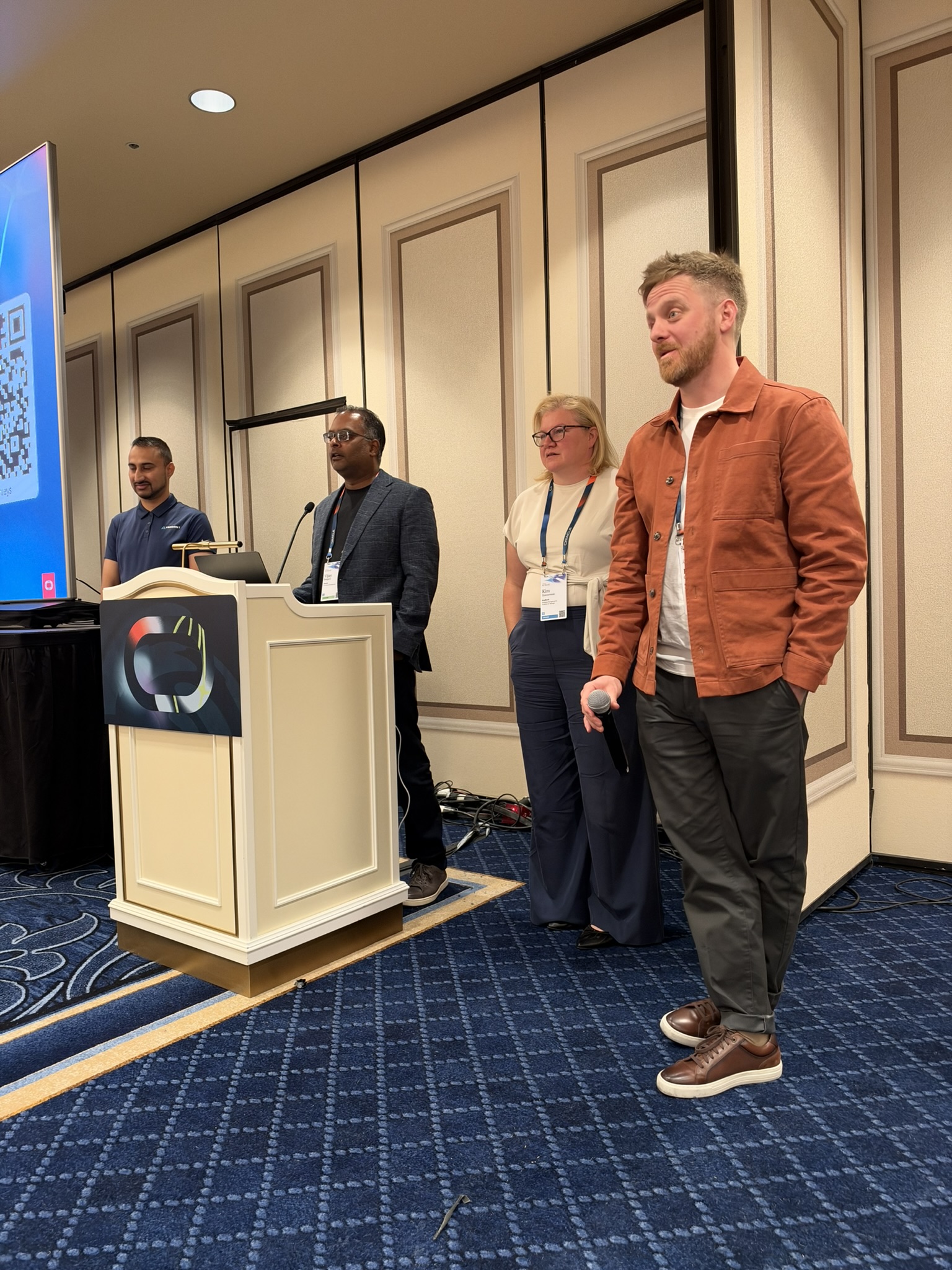
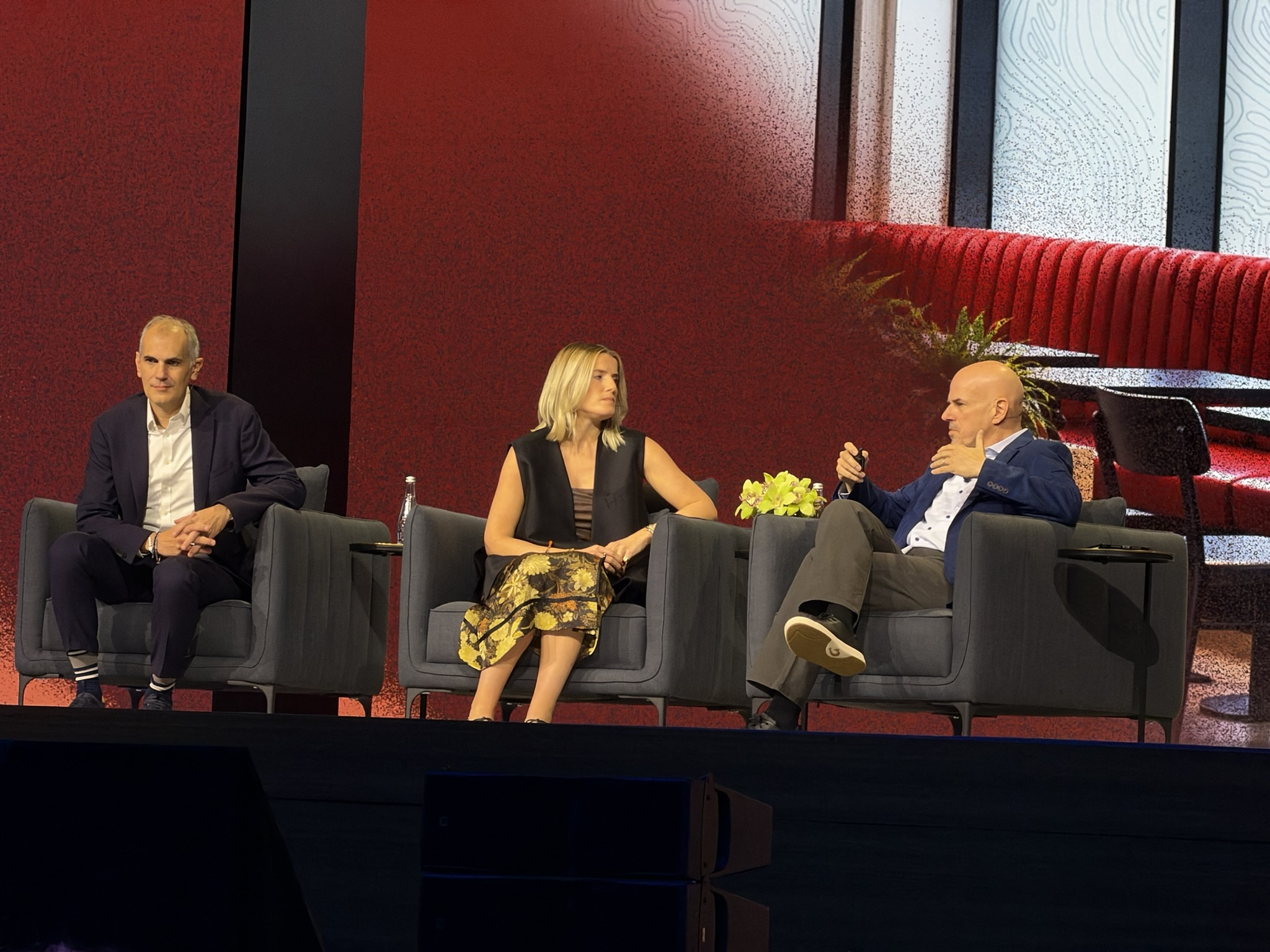
Finally, Vijay finished with a few questions for David and me about the migration. One of them was simply, “What was one of your key takeaways?”

David gave an answer that had everyone laughing. Apparently, his QA Manager was disappointed that there hadn’t been any issues and wanted at least one problem, just so the migration would feel normal! 😂

I thought that was the perfect way to end our part of the session because it captured exactly what “The Boring Migration” was all about.

No drama. No nasty surprises. No being paged because something had gone wrong. Just a successful migration.

Sometimes, boring really is a good thing! 😎

Before I finish, I have to give photo credits to Leona, who took all the photos on my iPhone 📱 and made sure the moment was properly captured! 📸

I also want to say a huge thank you to my Oracle ACE friends who came along to support me, take plenty more photos and make me feel very special. 🫶🏽
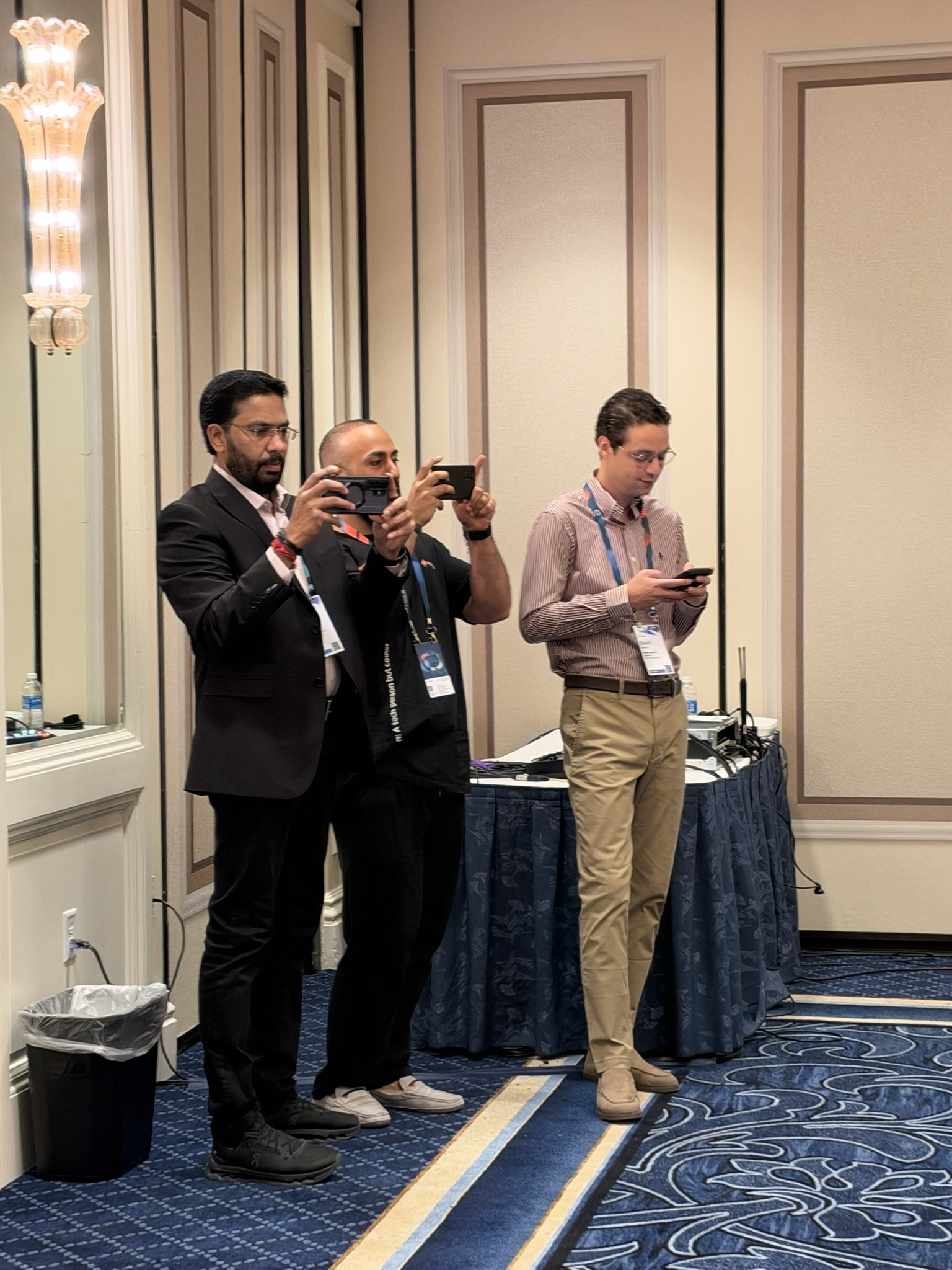
Having friends there supporting me meant a lot and made my first ever presentation at Oracle AI World that little bit more special! 😎

Keynote: Where AI Means Business

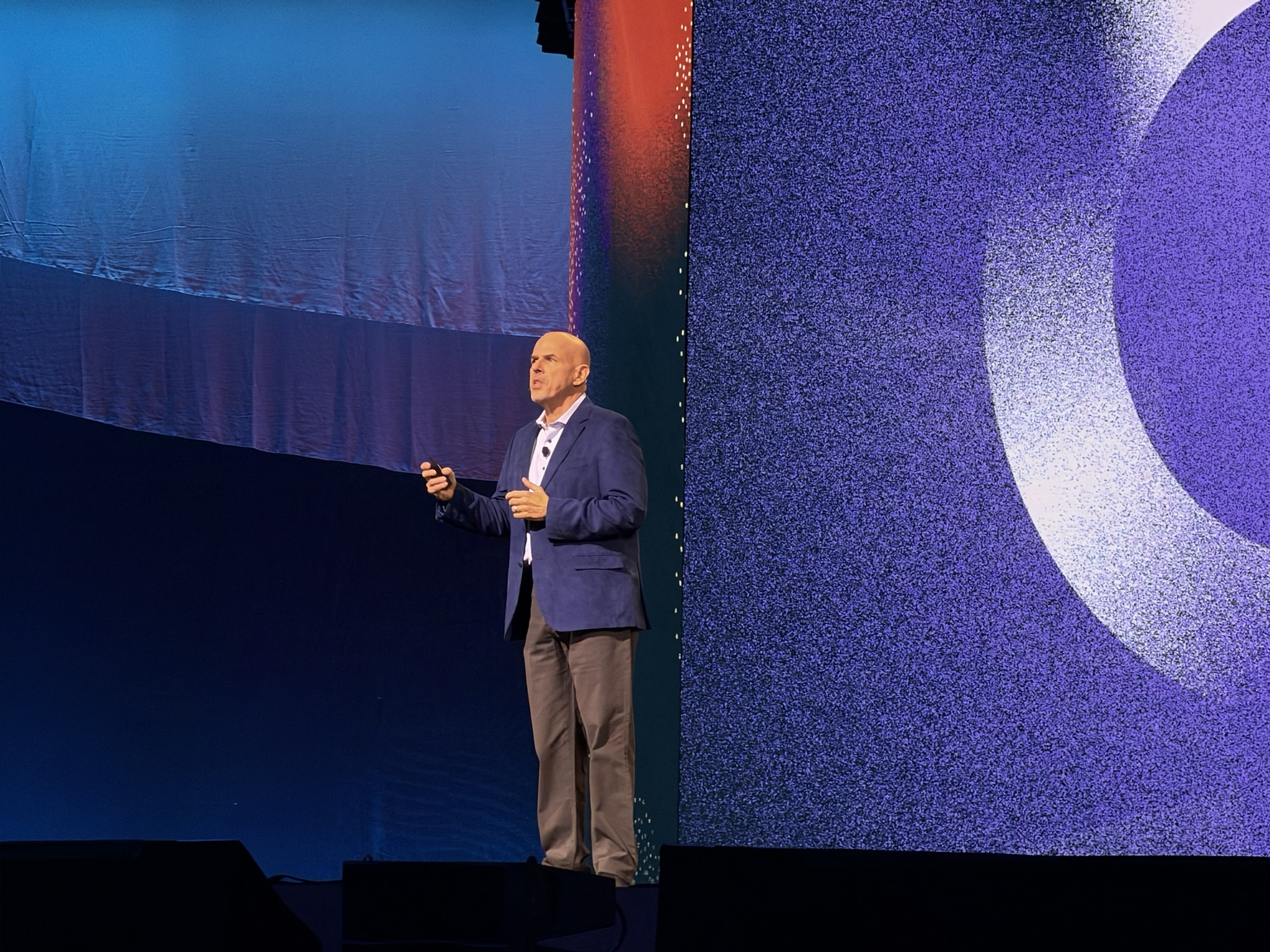
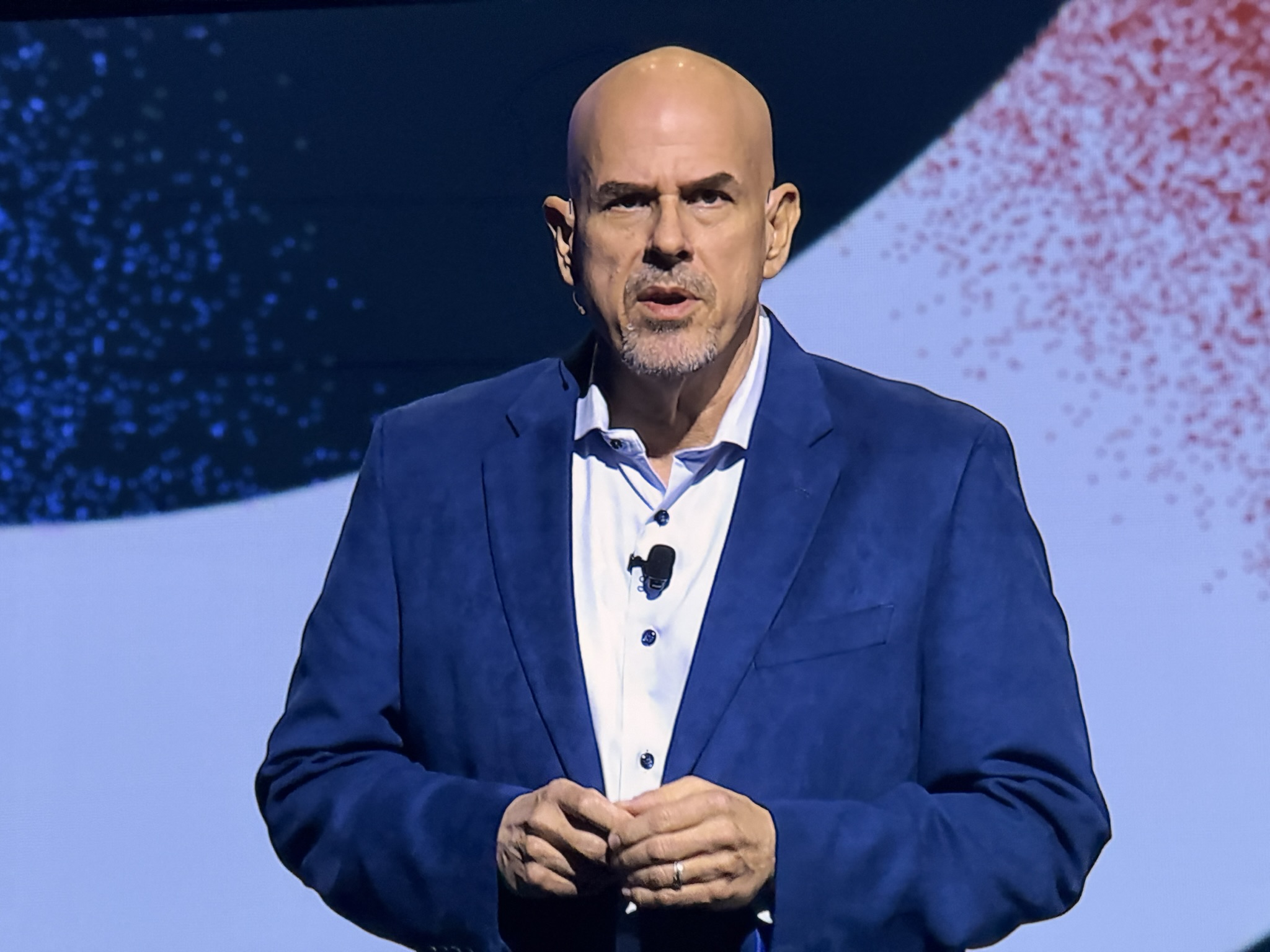
After the excitement of presenting Kobalt Music customer story, there wasn’t much time to relax! Next, I headed over to the main Keynote Hall for one of the main keynote sessions of Oracle AI World, “Oracle: Where AI Means Business.”
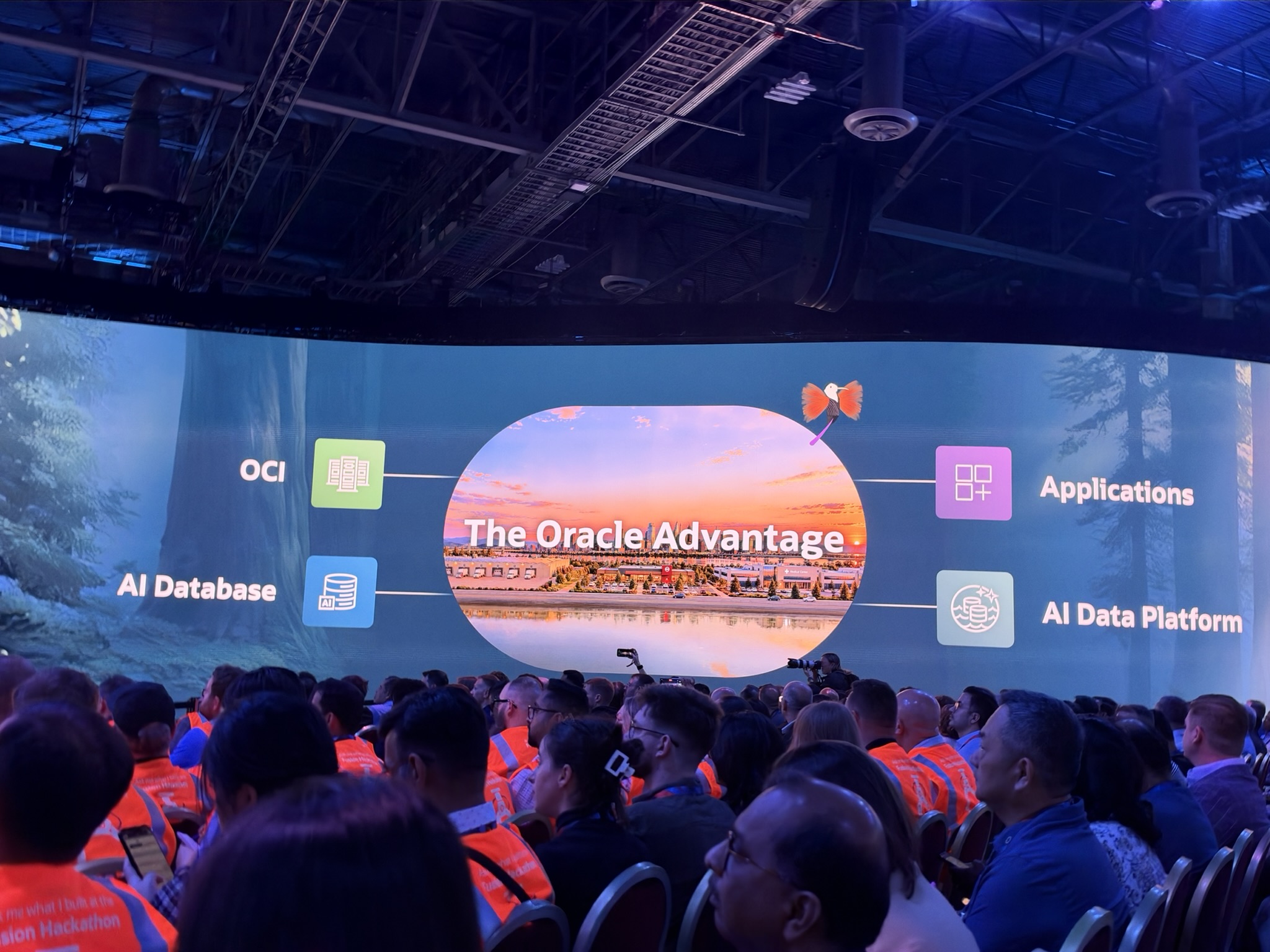
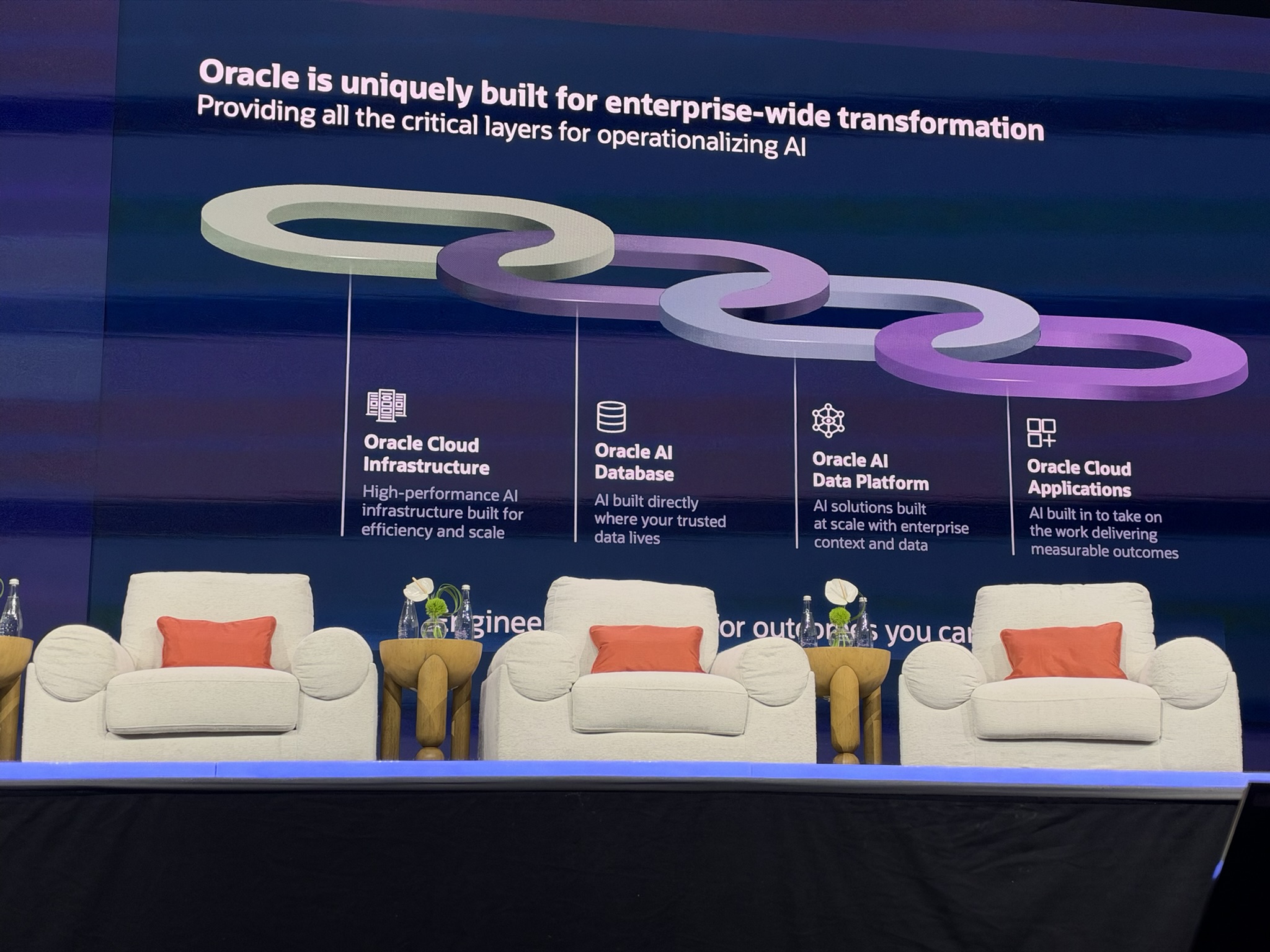
The keynote was led by Mike Sicilia, CEO of Oracle, and the message from the very beginning was clear: AI is no longer just about what is technically possible, it is about using AI to deliver real and measurable business outcomes. Oracle’s focus was on bringing AI together with trusted enterprise data, applications and business processes rather than treating AI as something separate from the platforms businesses already use every day.
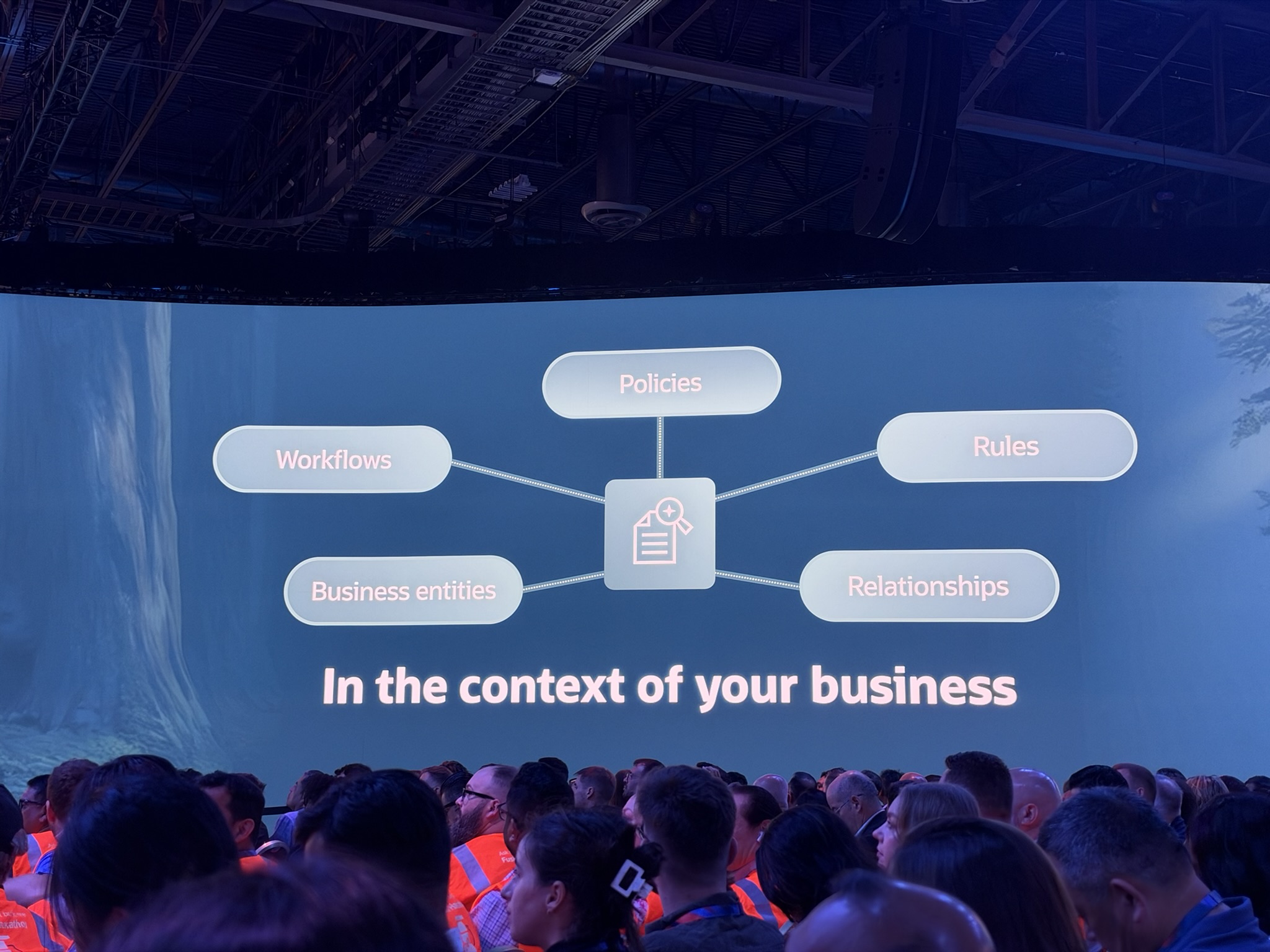
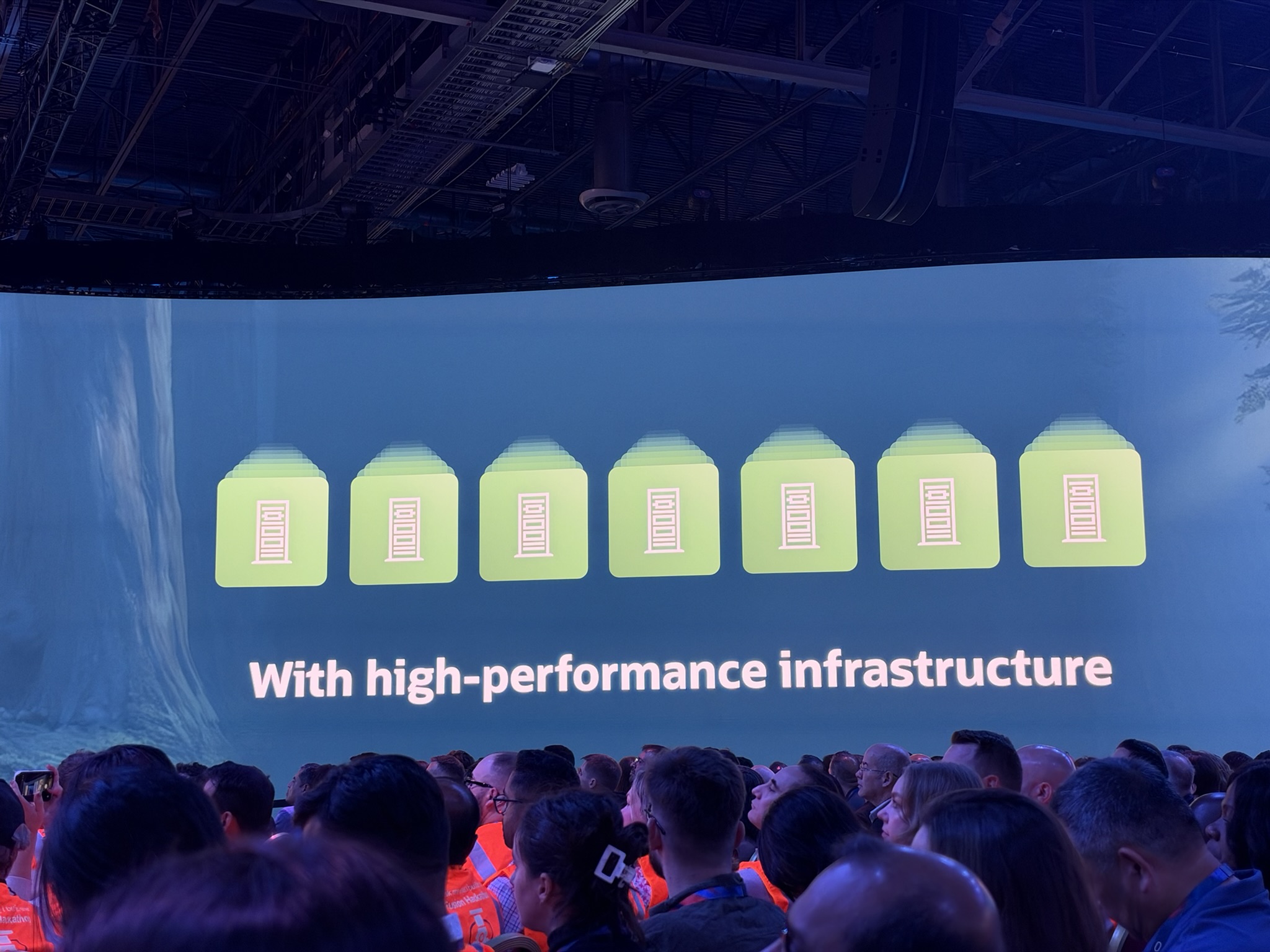
For me, this was quite an interesting message. We hear about AI everywhere at the moment, but enterprises need more than another AI demo. They need to be able to trust the data, govern how AI is being used and, ultimately, demonstrate some real business value from it. Those themes of trusted AI, governance and human oversight featured heavily in the opening part of the keynote.

AI inside the applications
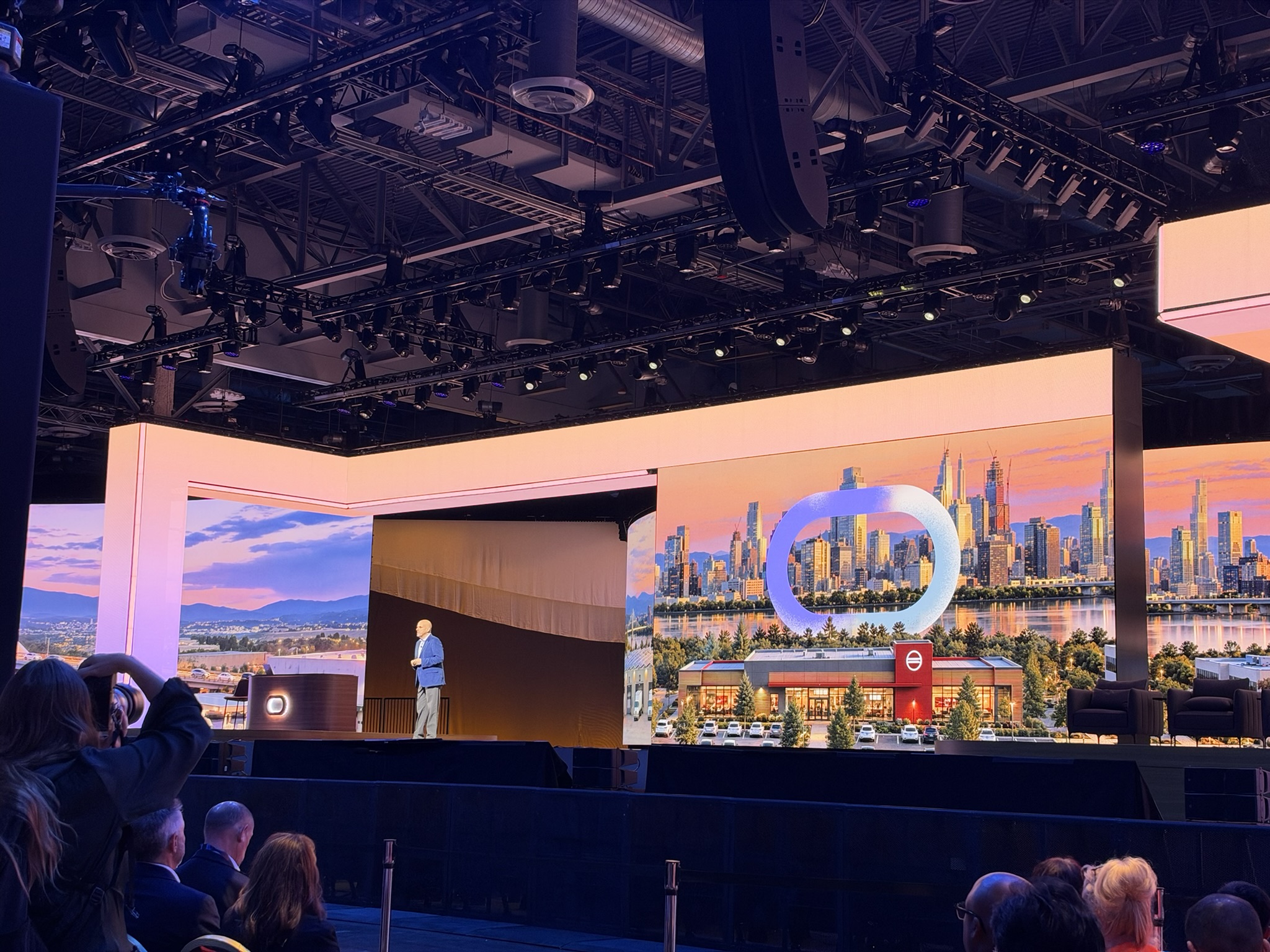
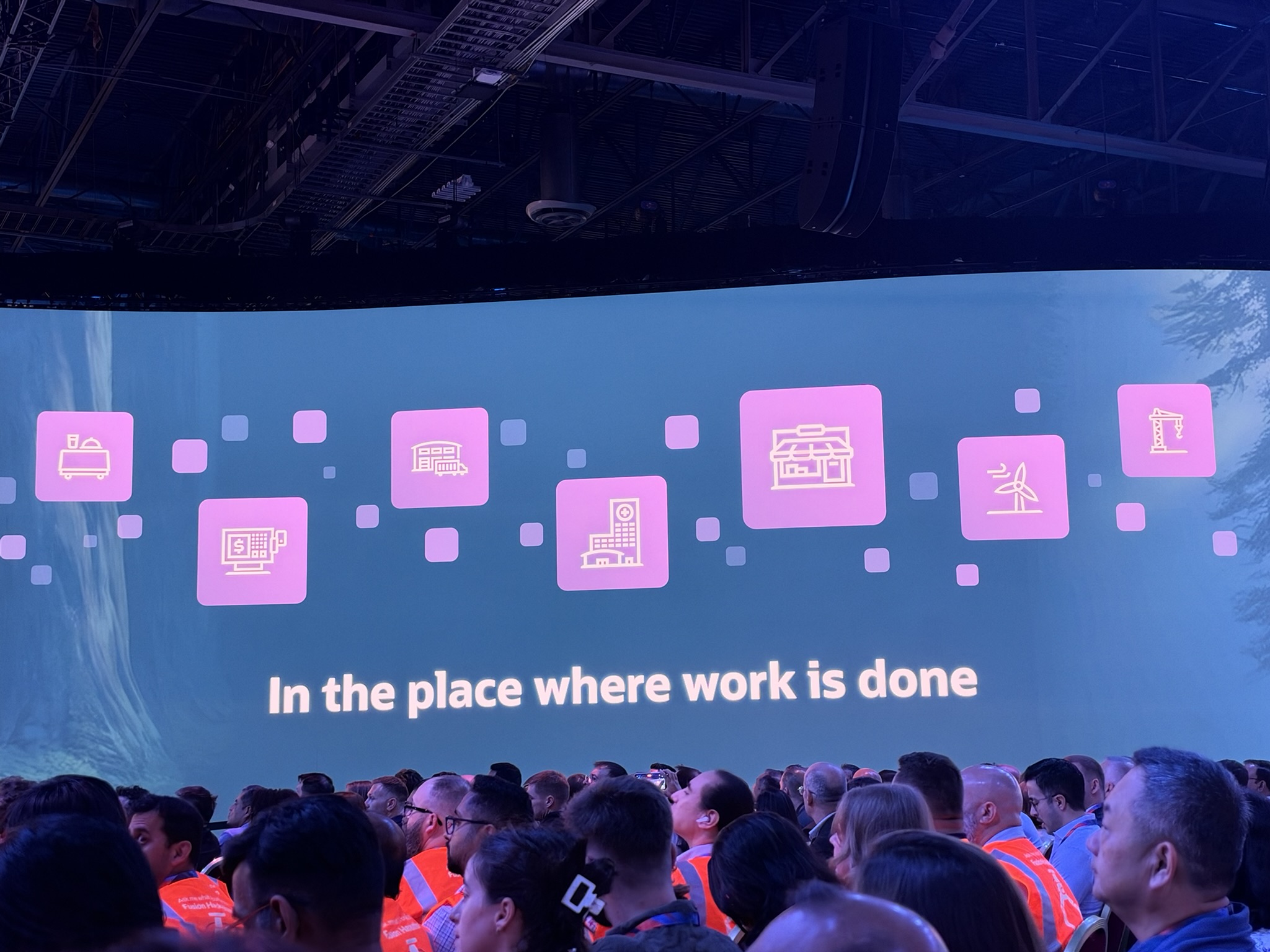
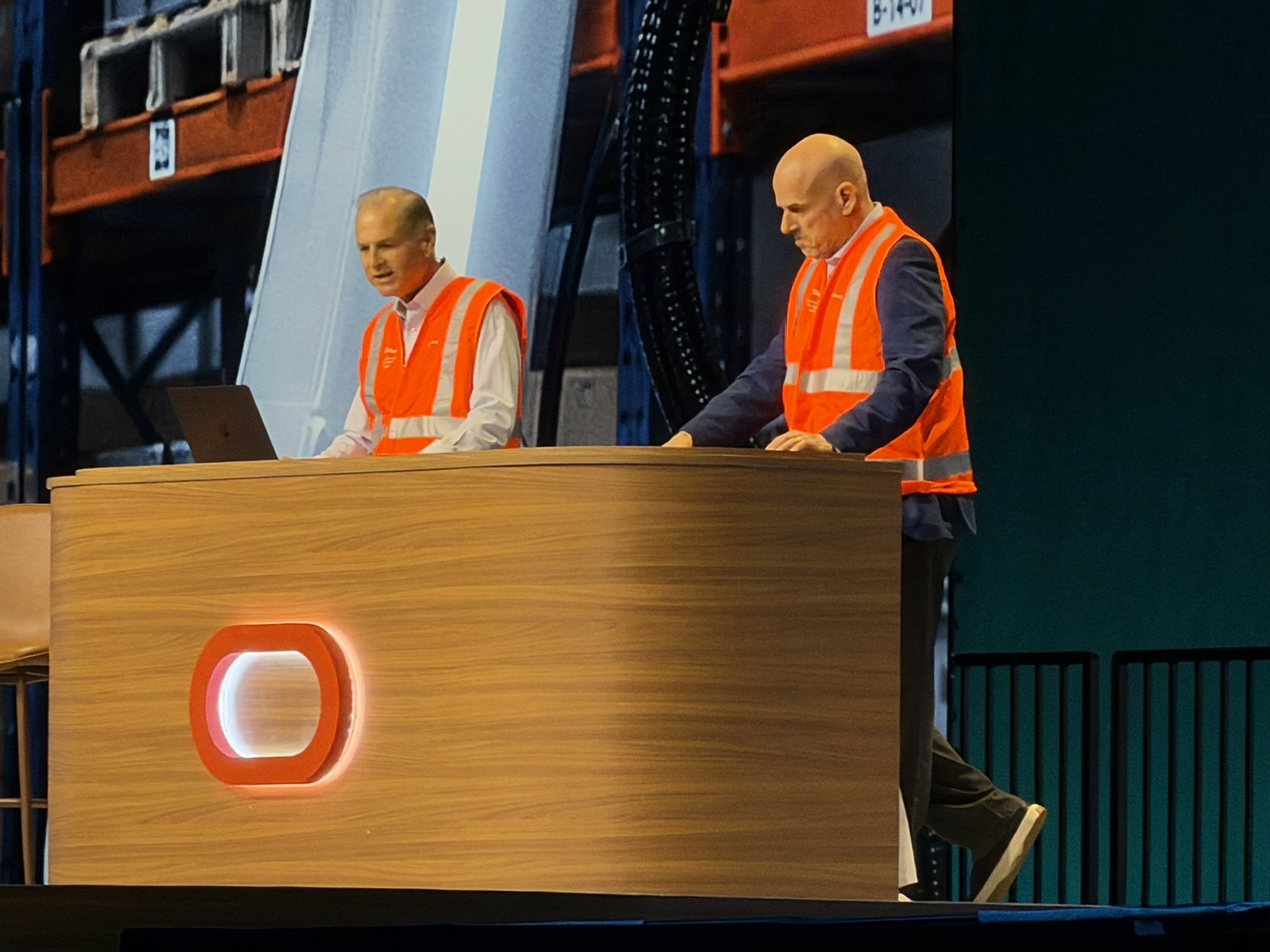
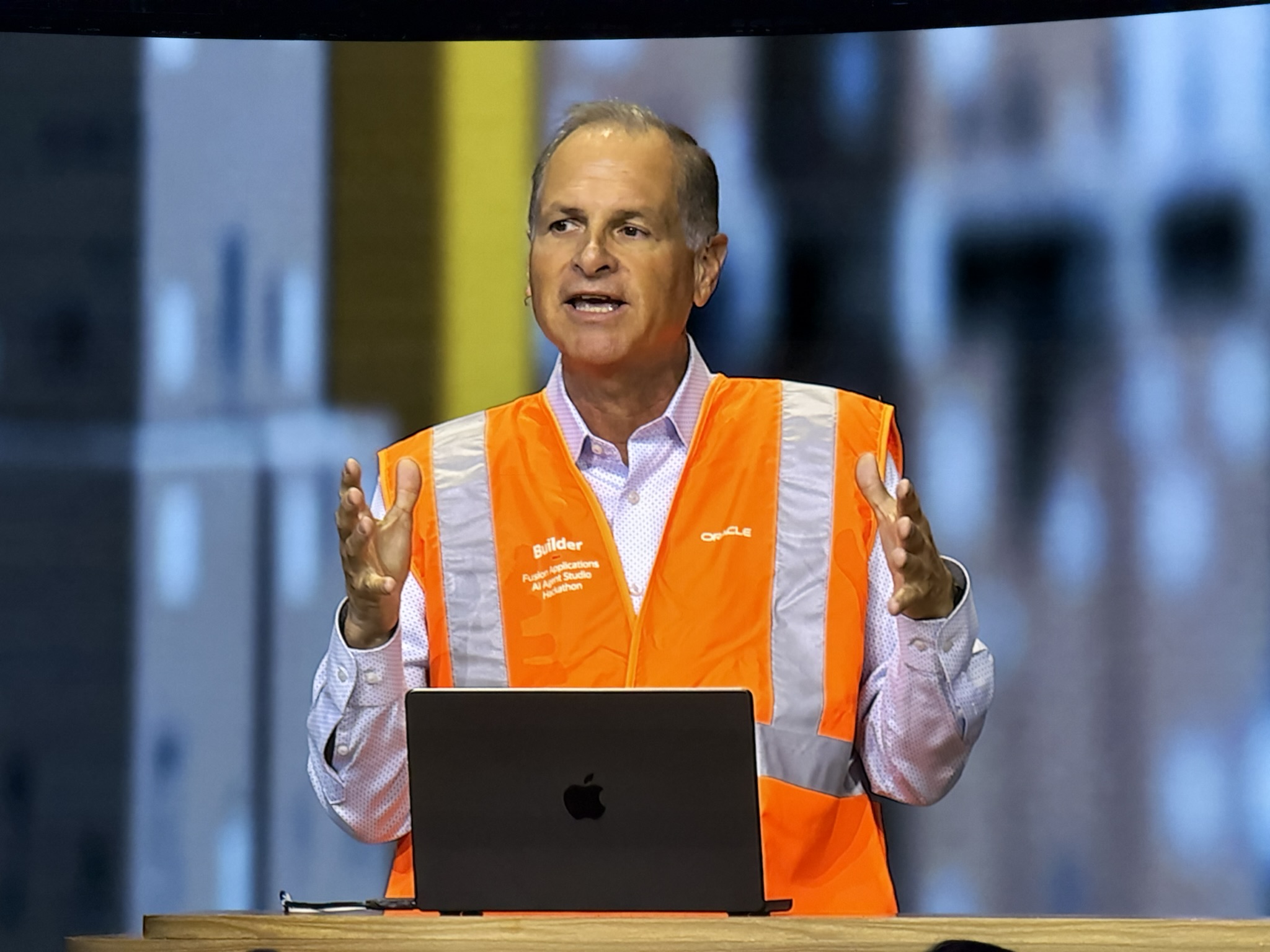
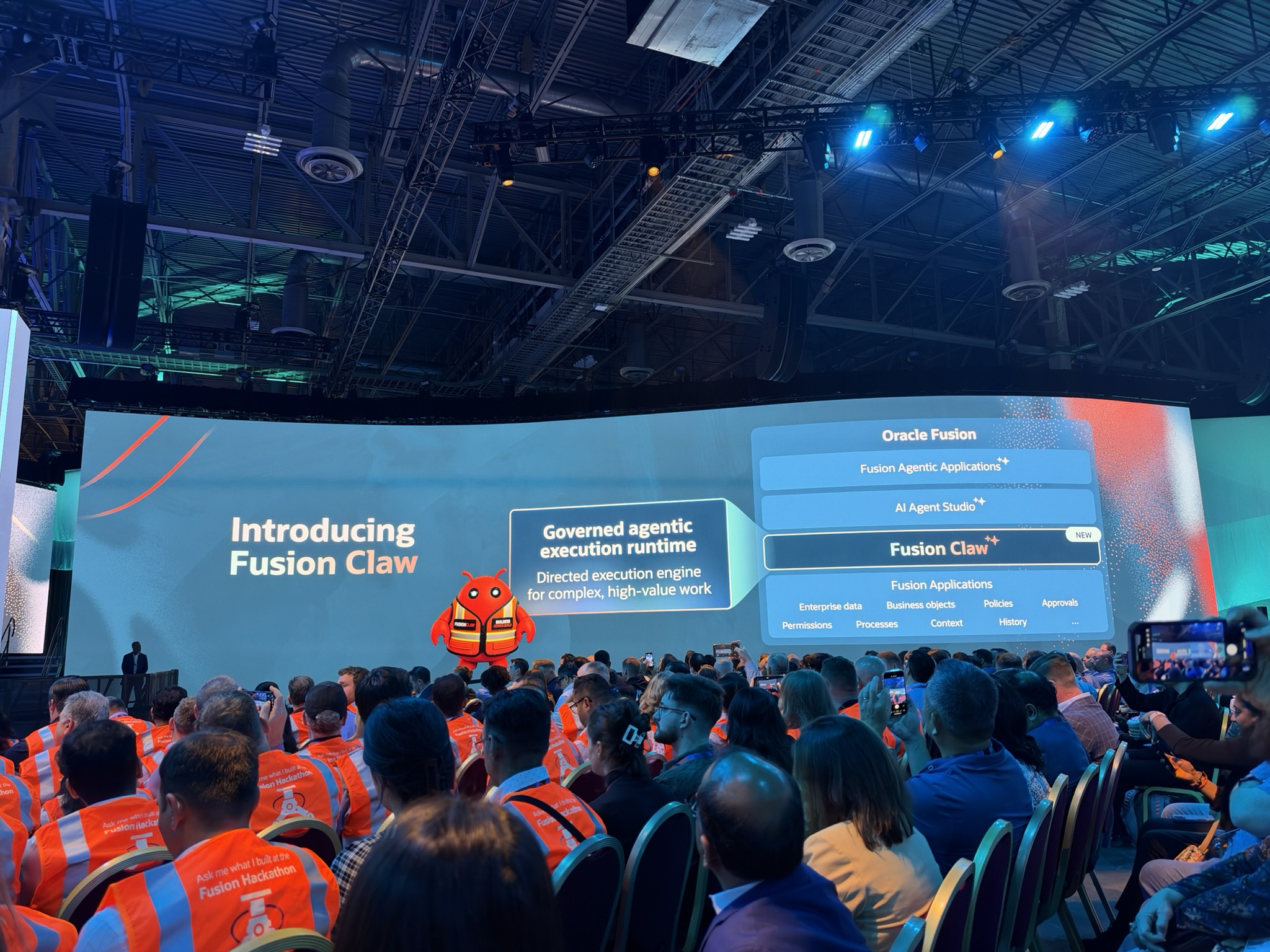
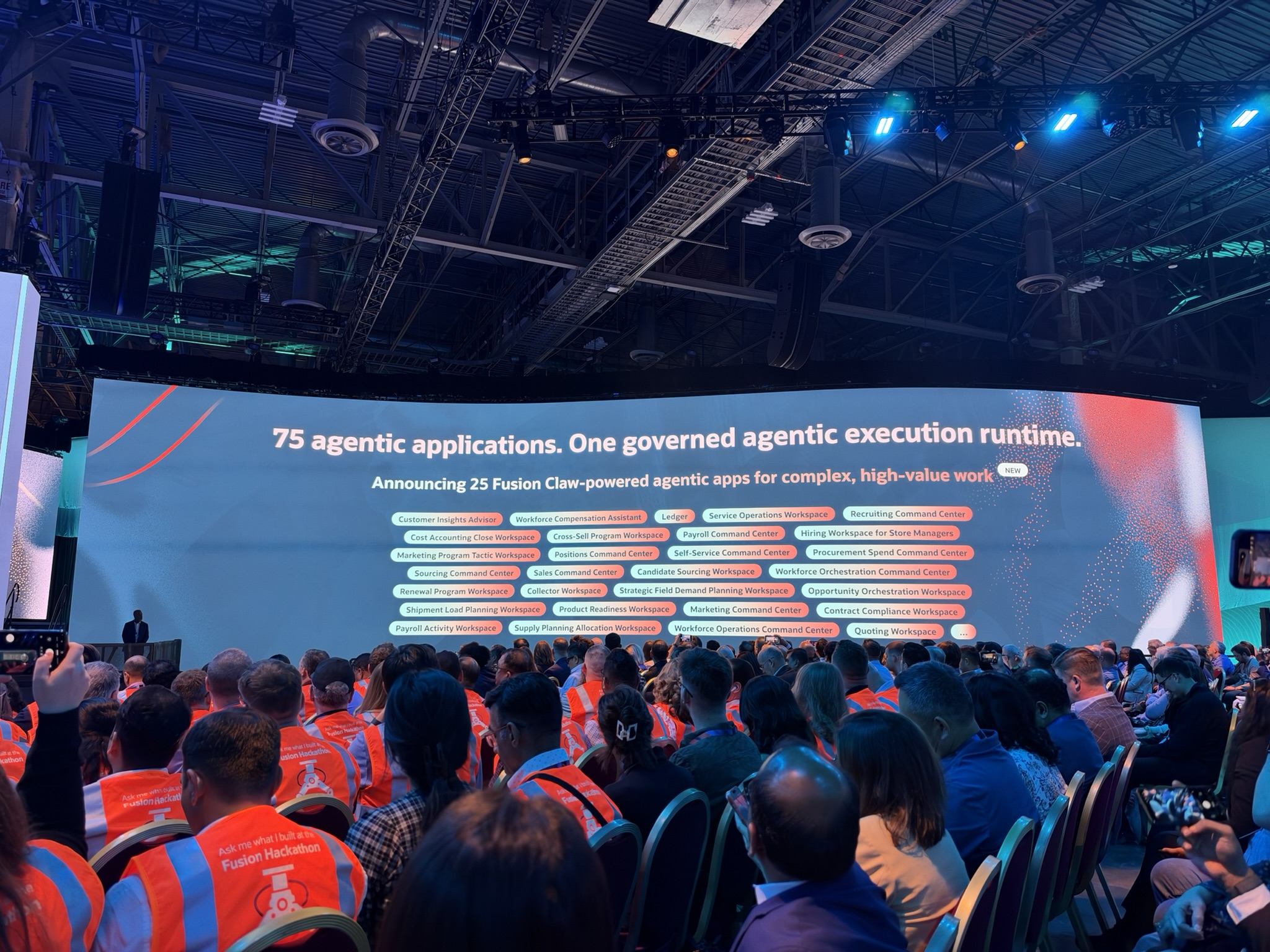
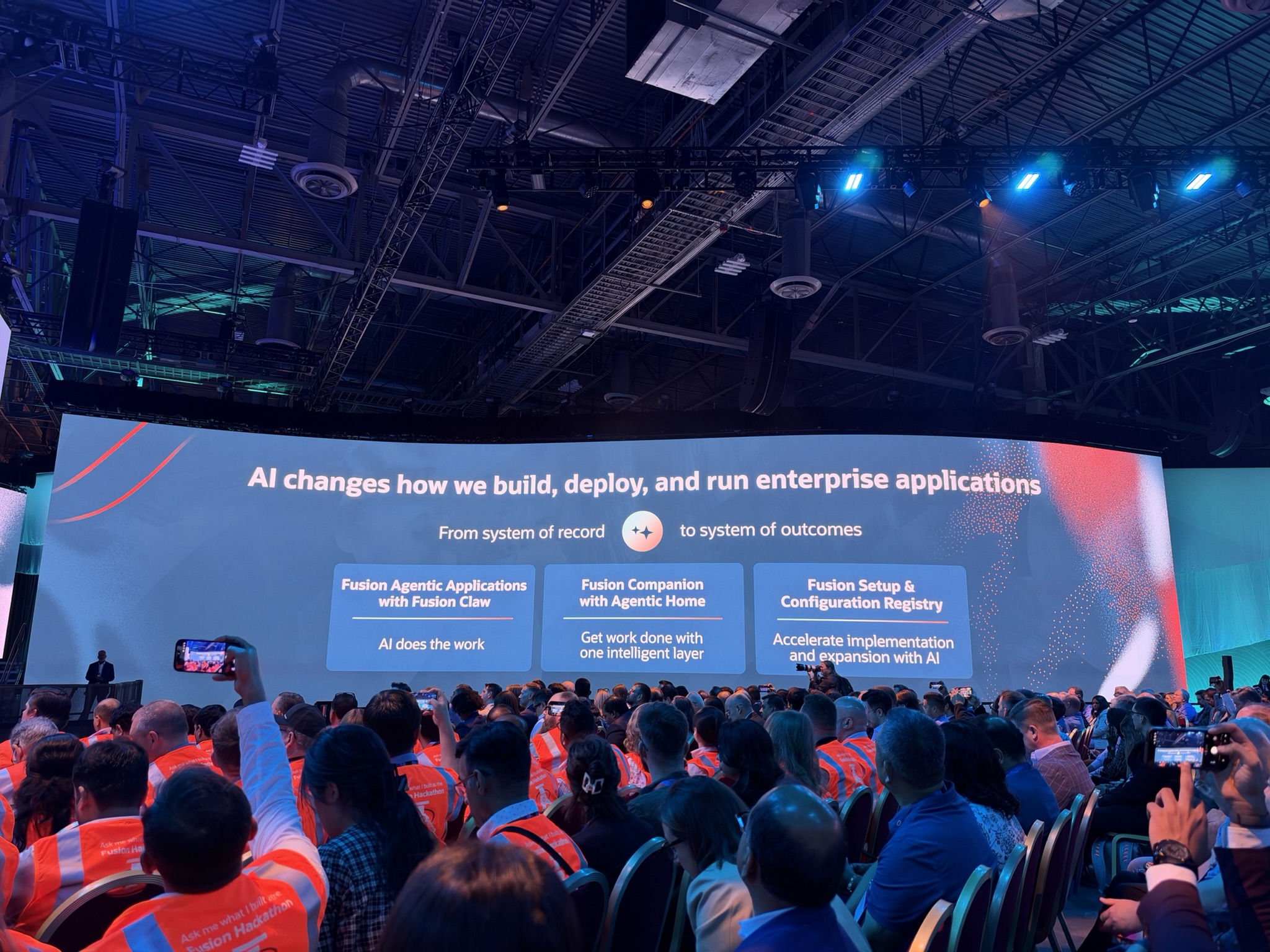
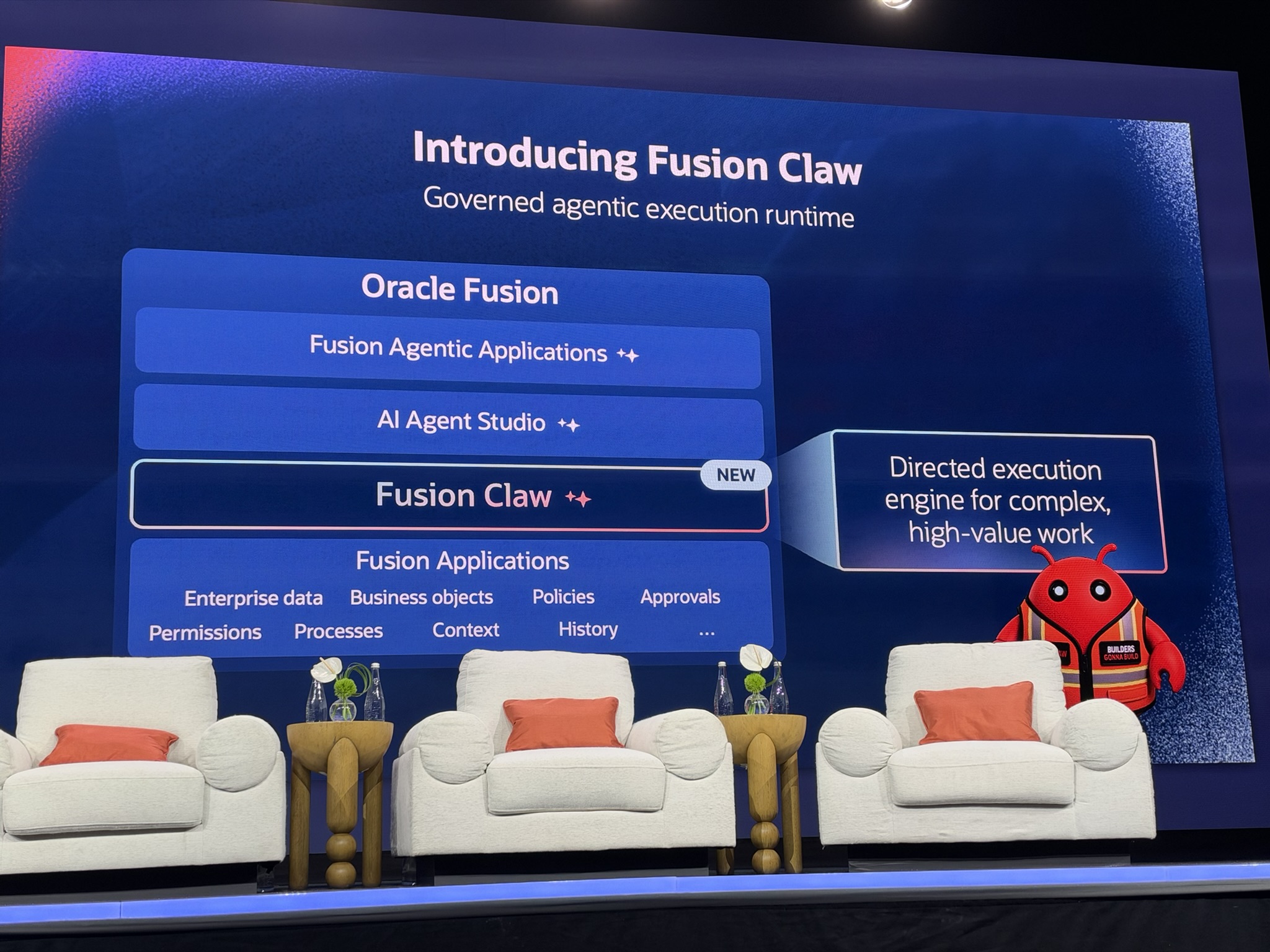
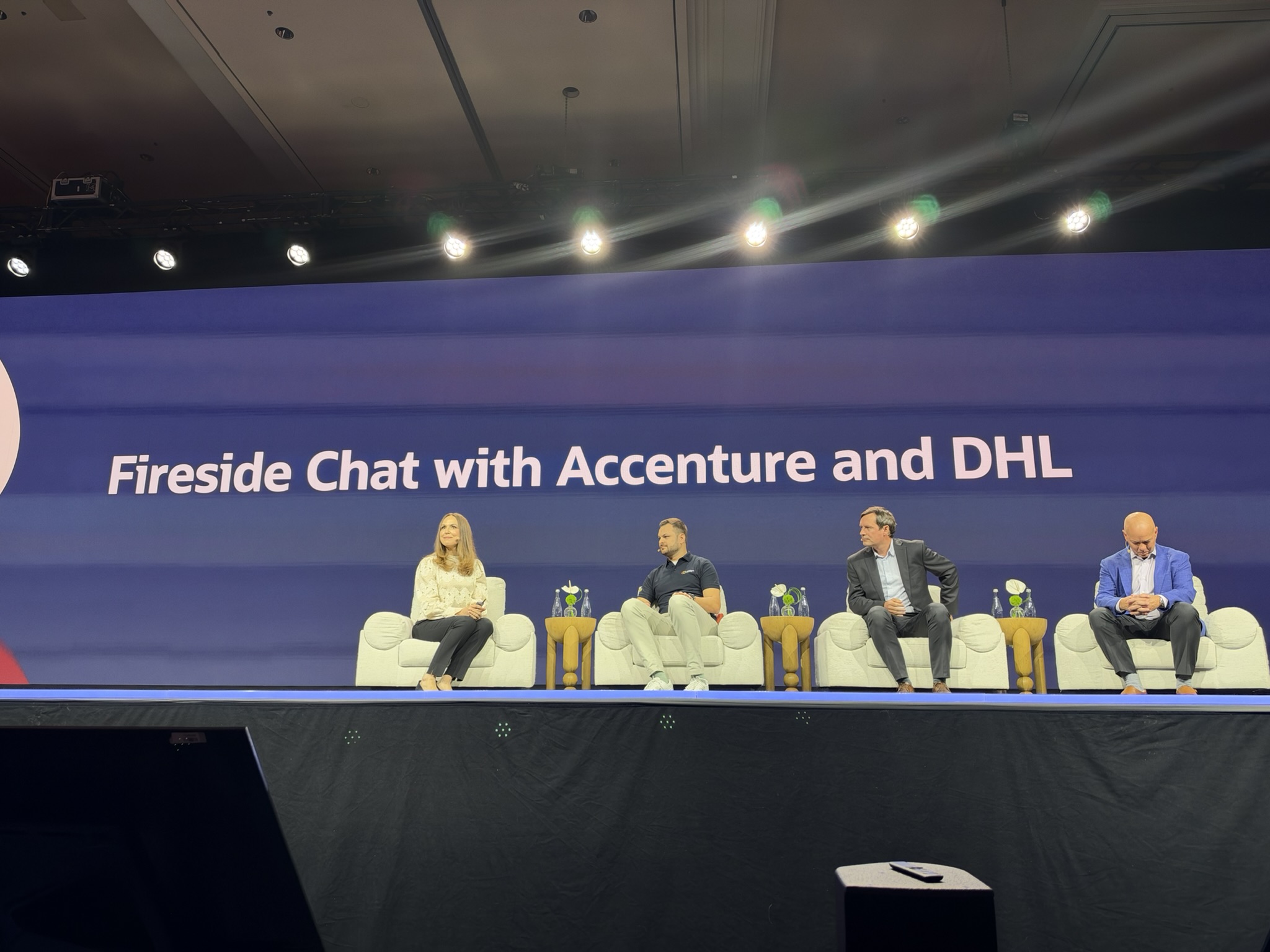
Chris Leone then took the keynote deeper into Oracle Fusion Applications and agentic AI. Rather than users constantly having to move between screens, interpret information and manually kick off the next process, Oracle’s direction is increasingly about having AI agents work within those existing business processes.

There were a number of demonstrations showing what that could actually look like. One example showed AI being used to optimise shipping operations, followed by the concept of autonomous execution and AI outcome receipts, providing visibility into what the AI had actually done and the resulting outcome.
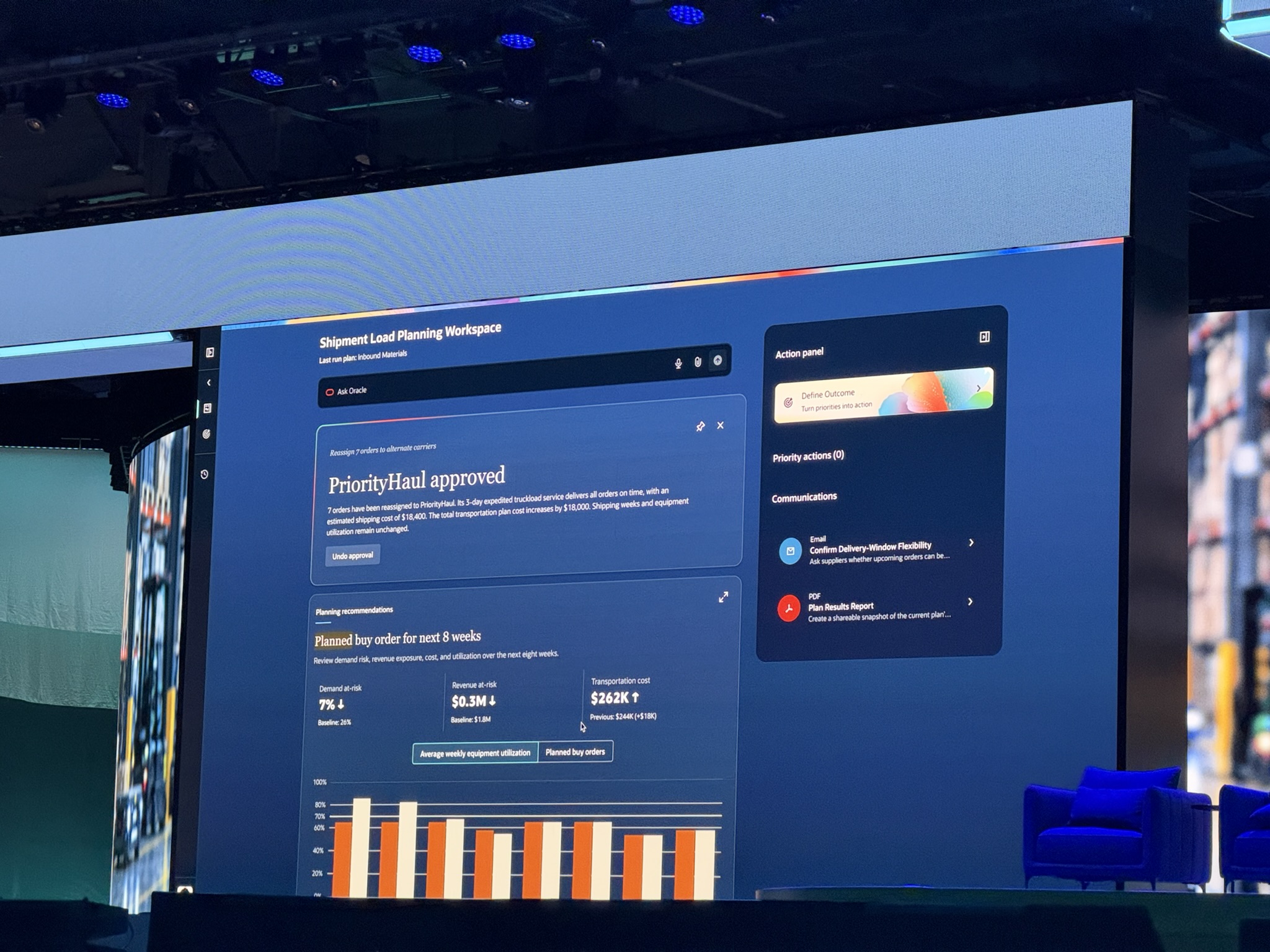
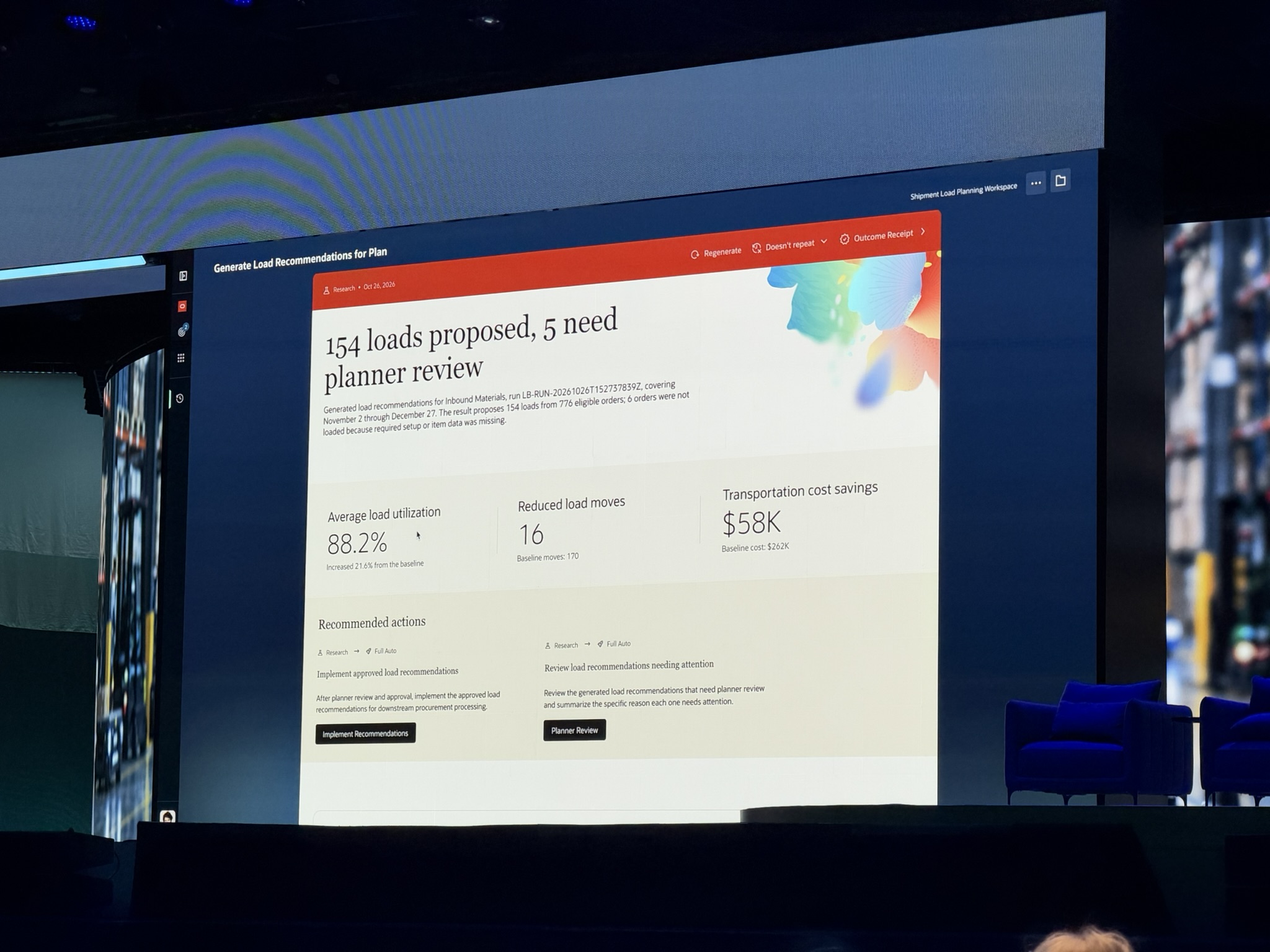
That last point is particularly important for me. Being autonomous is one thing, but in an enterprise you also need to know what your AI has done, why it has done it and be able to govern it.

Oracle Fusion gets even more AI
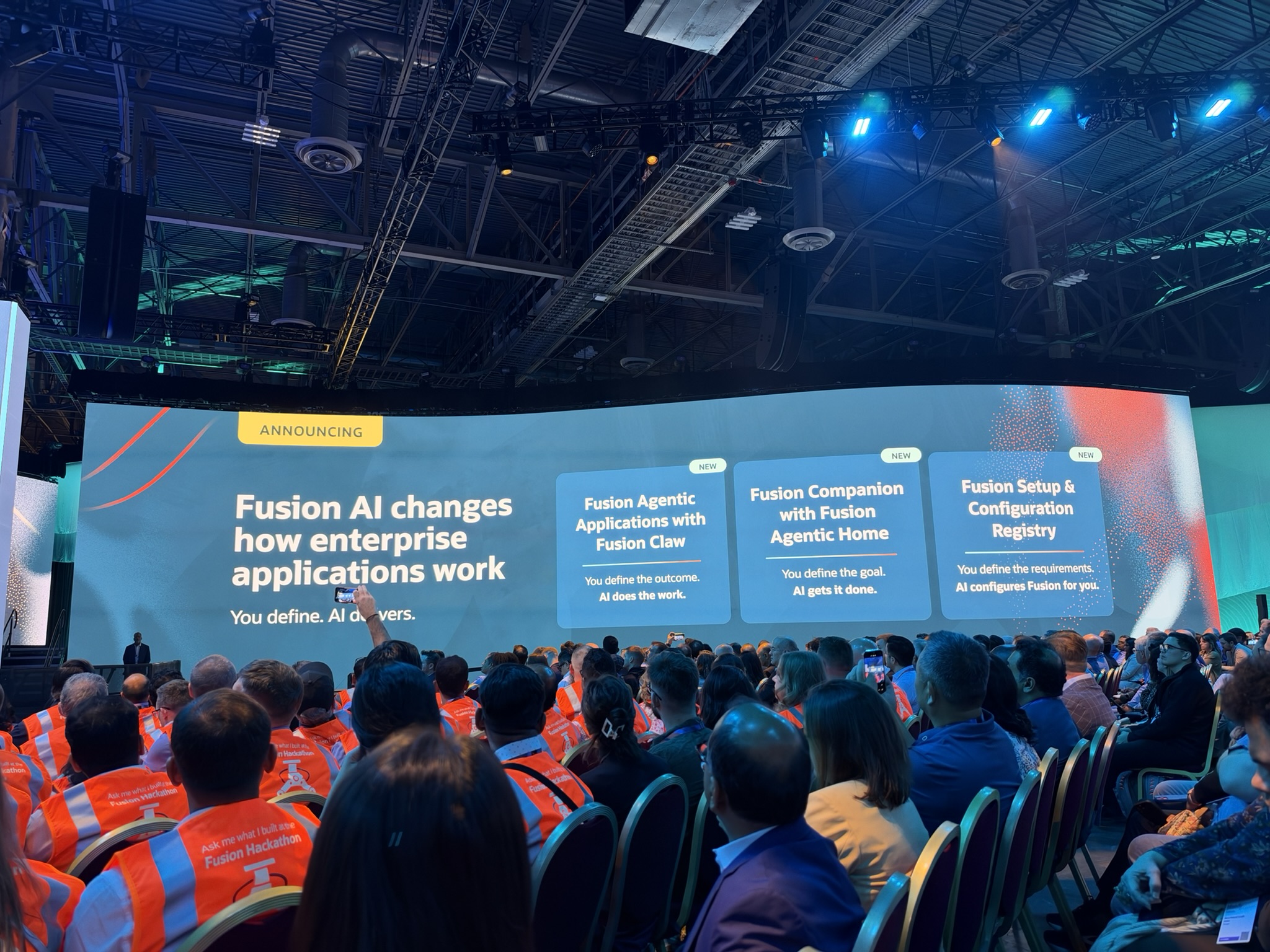
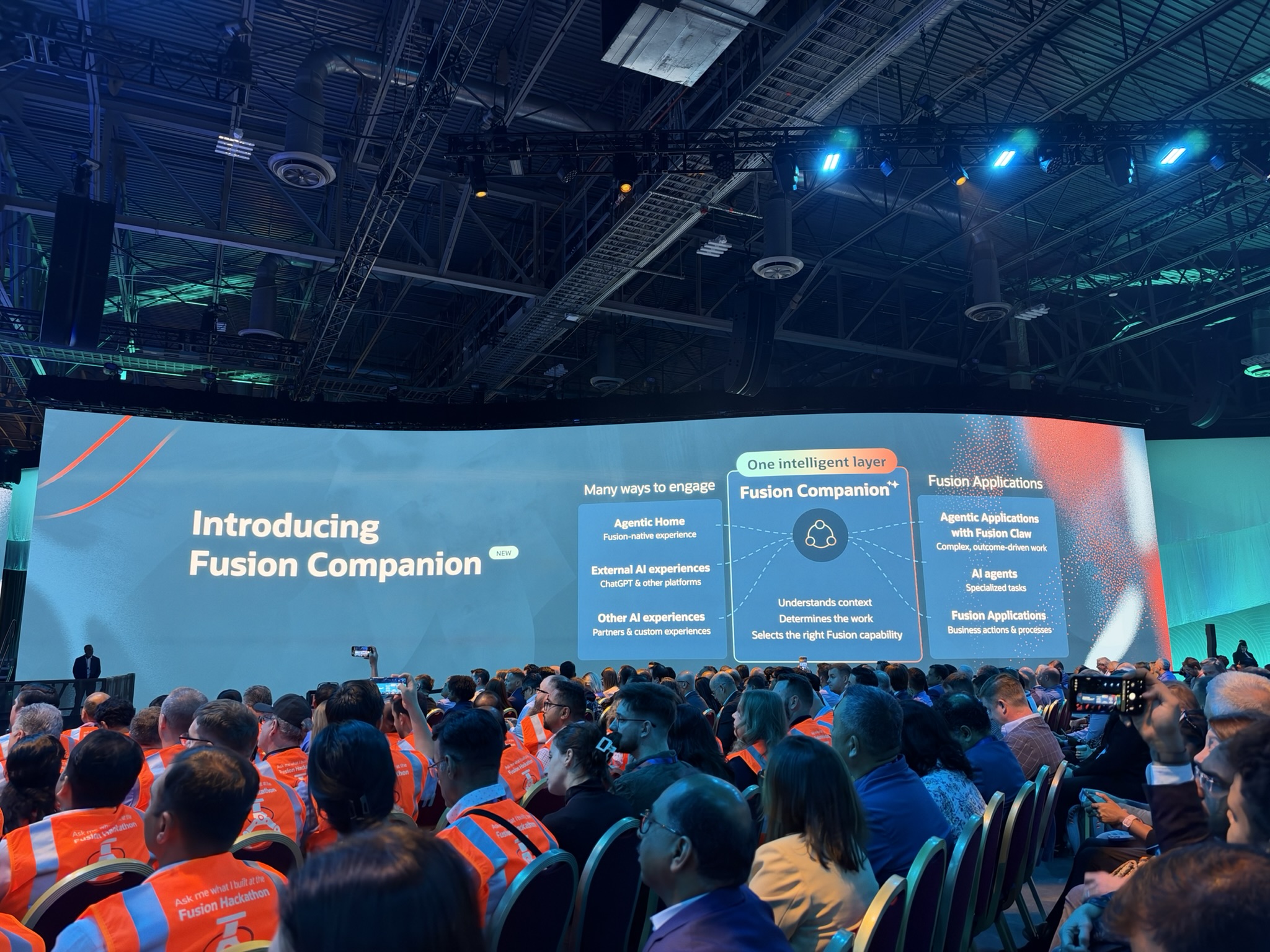
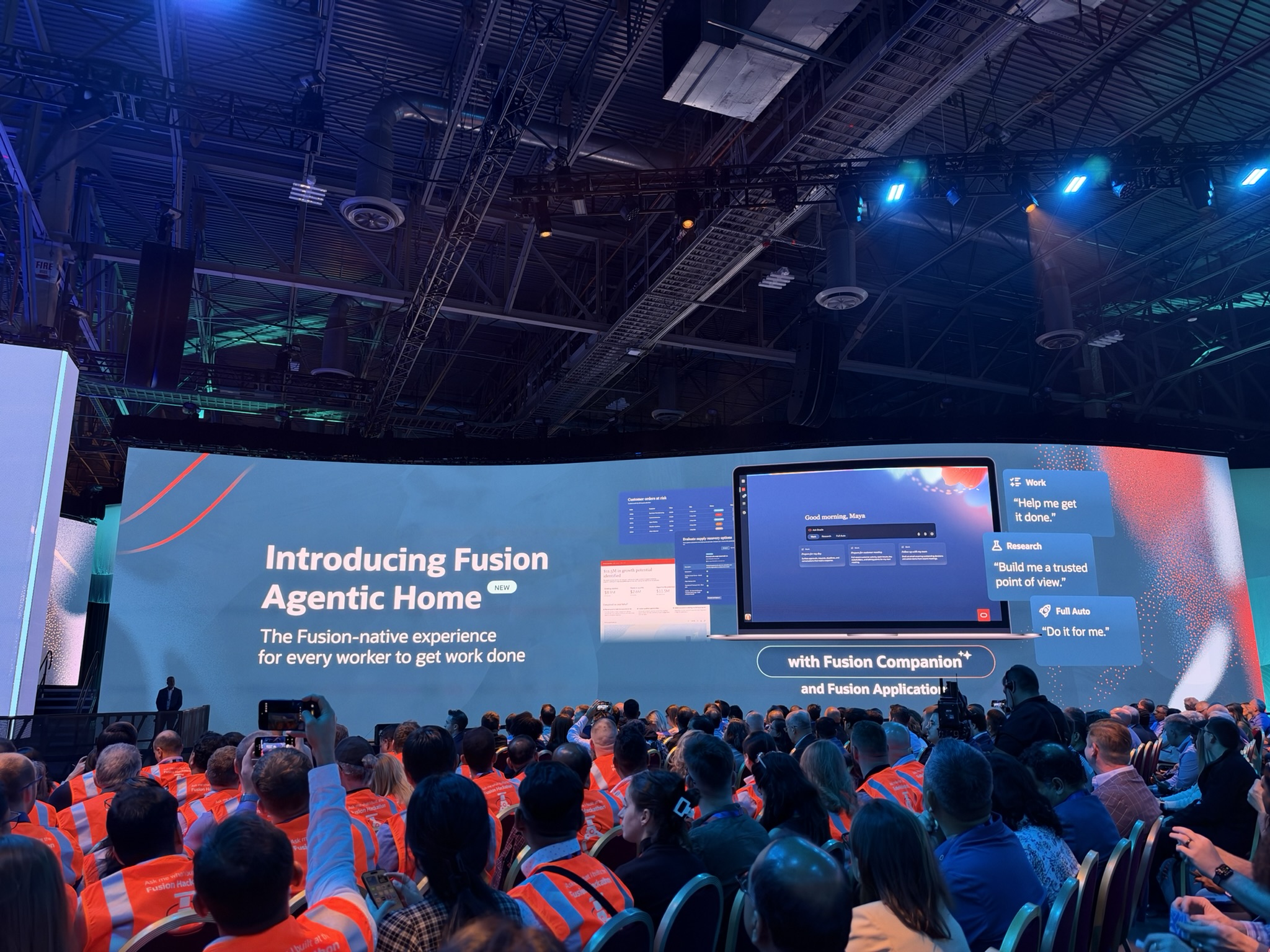
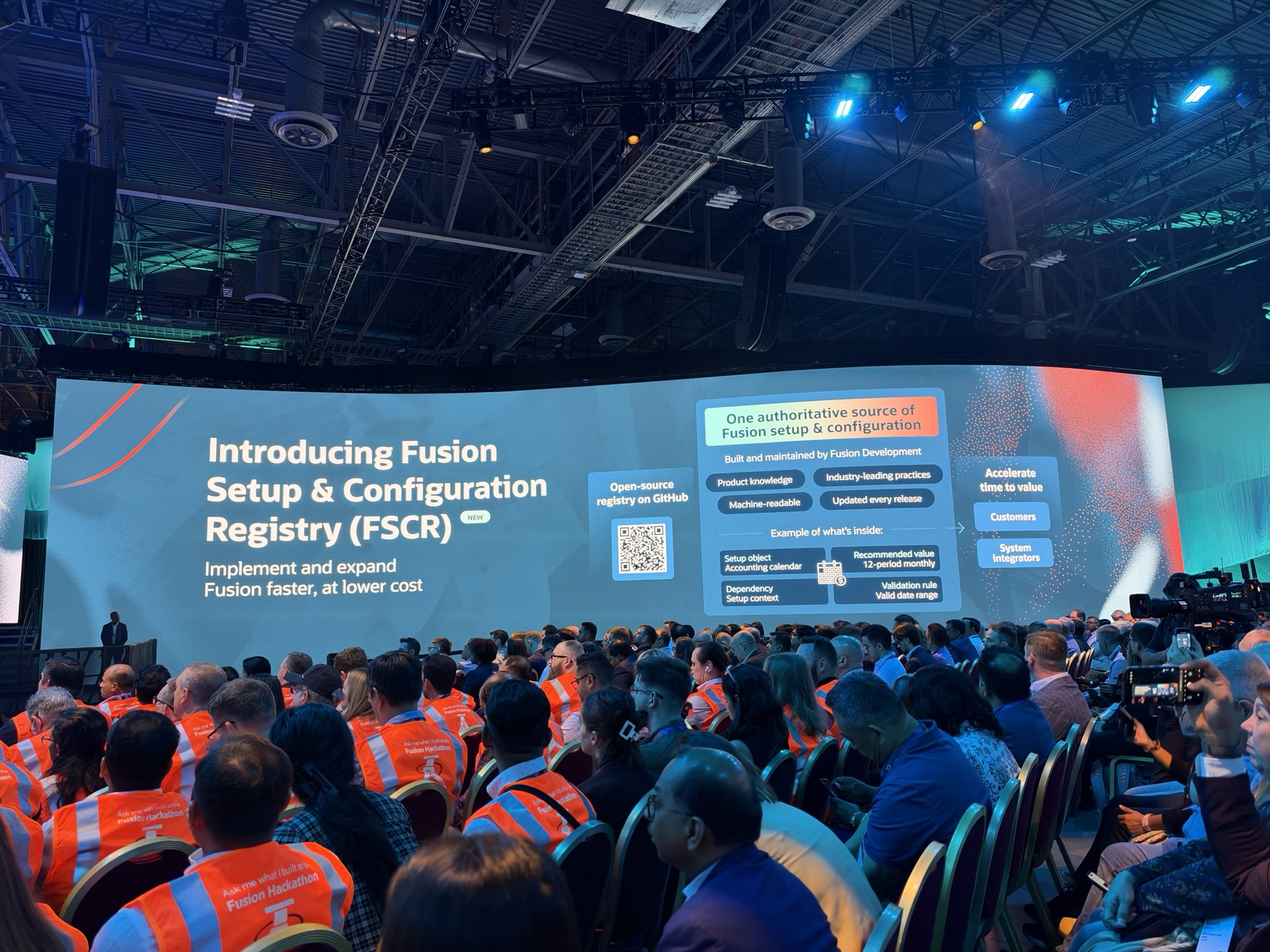
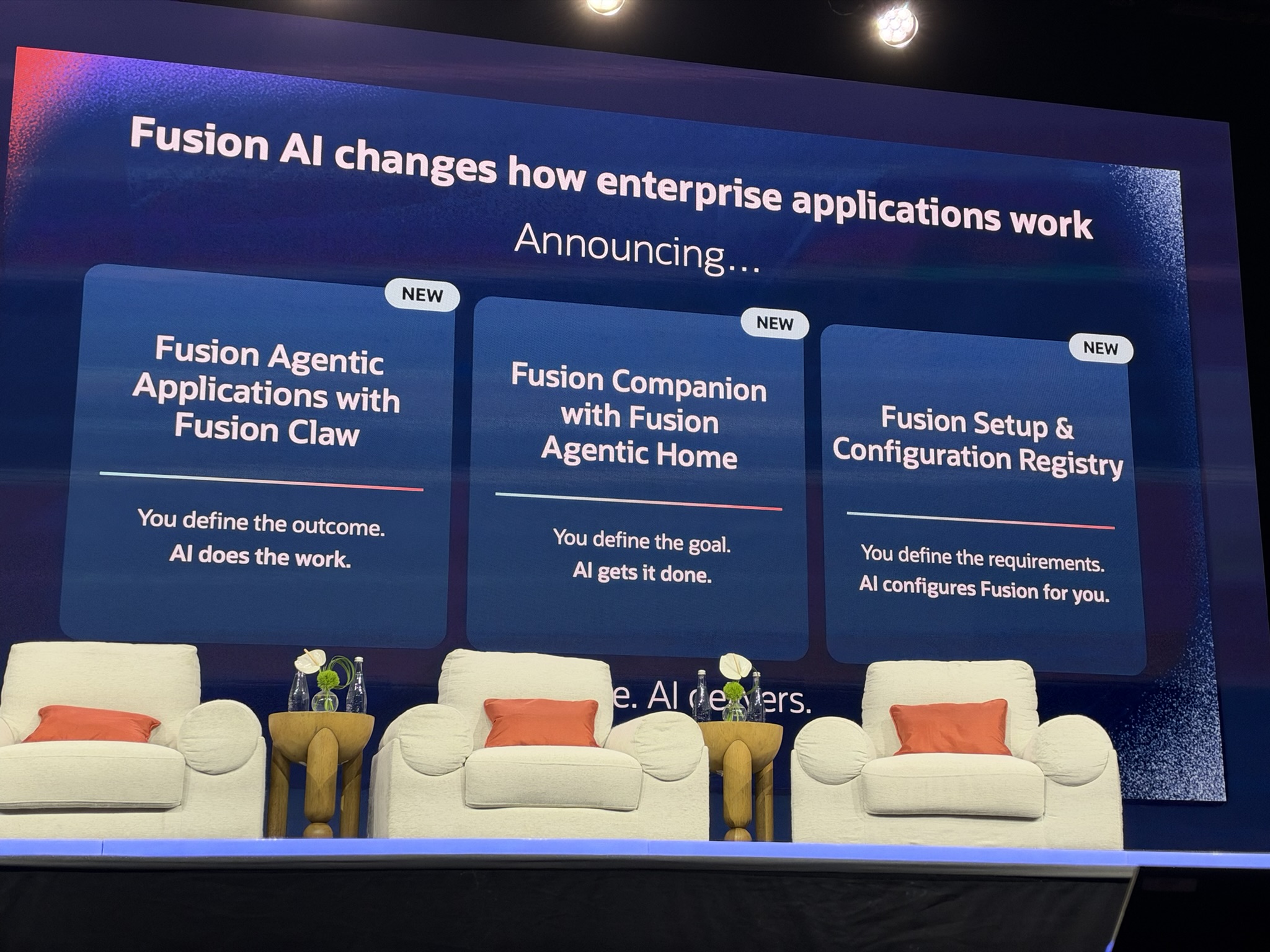
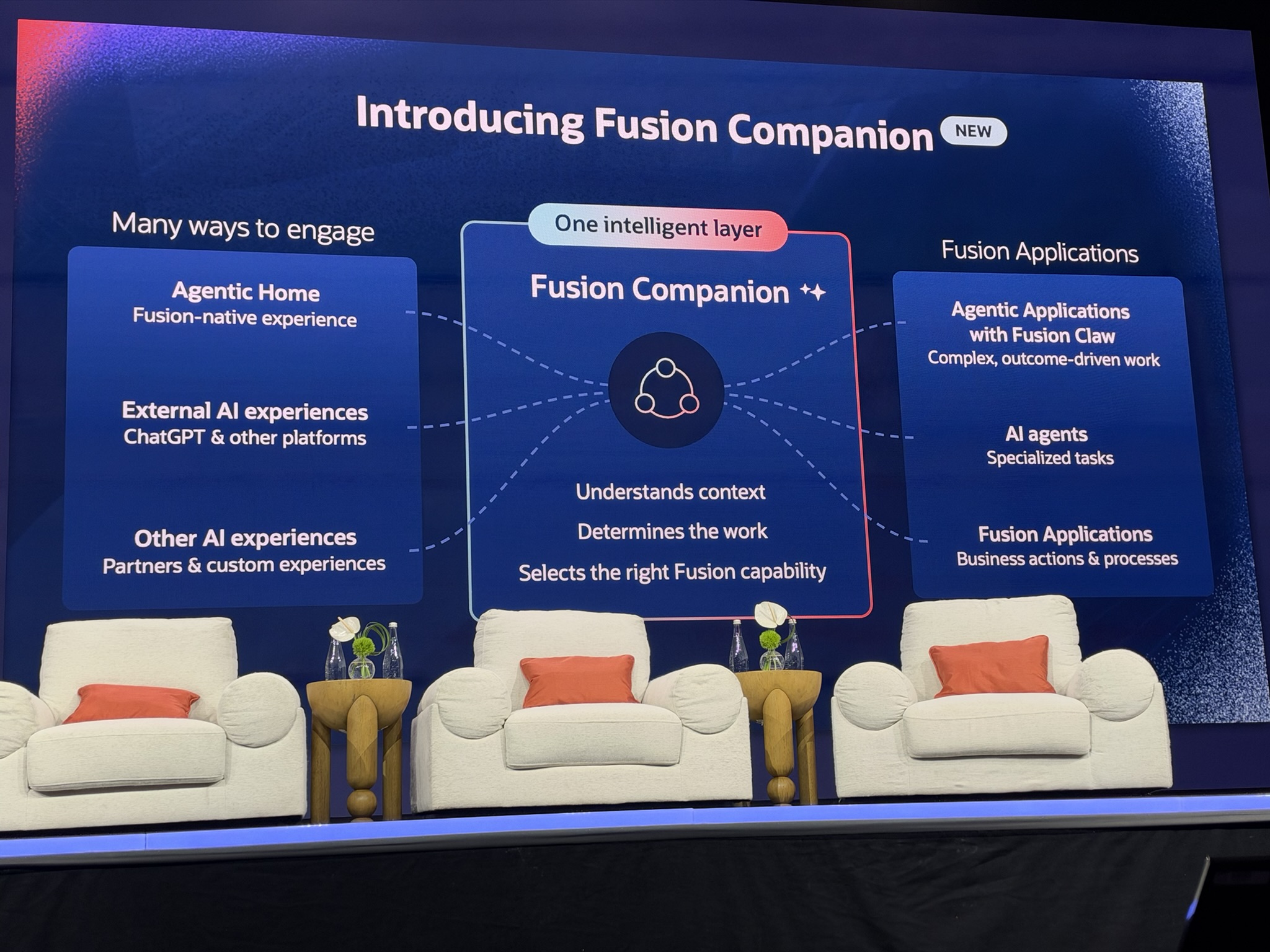
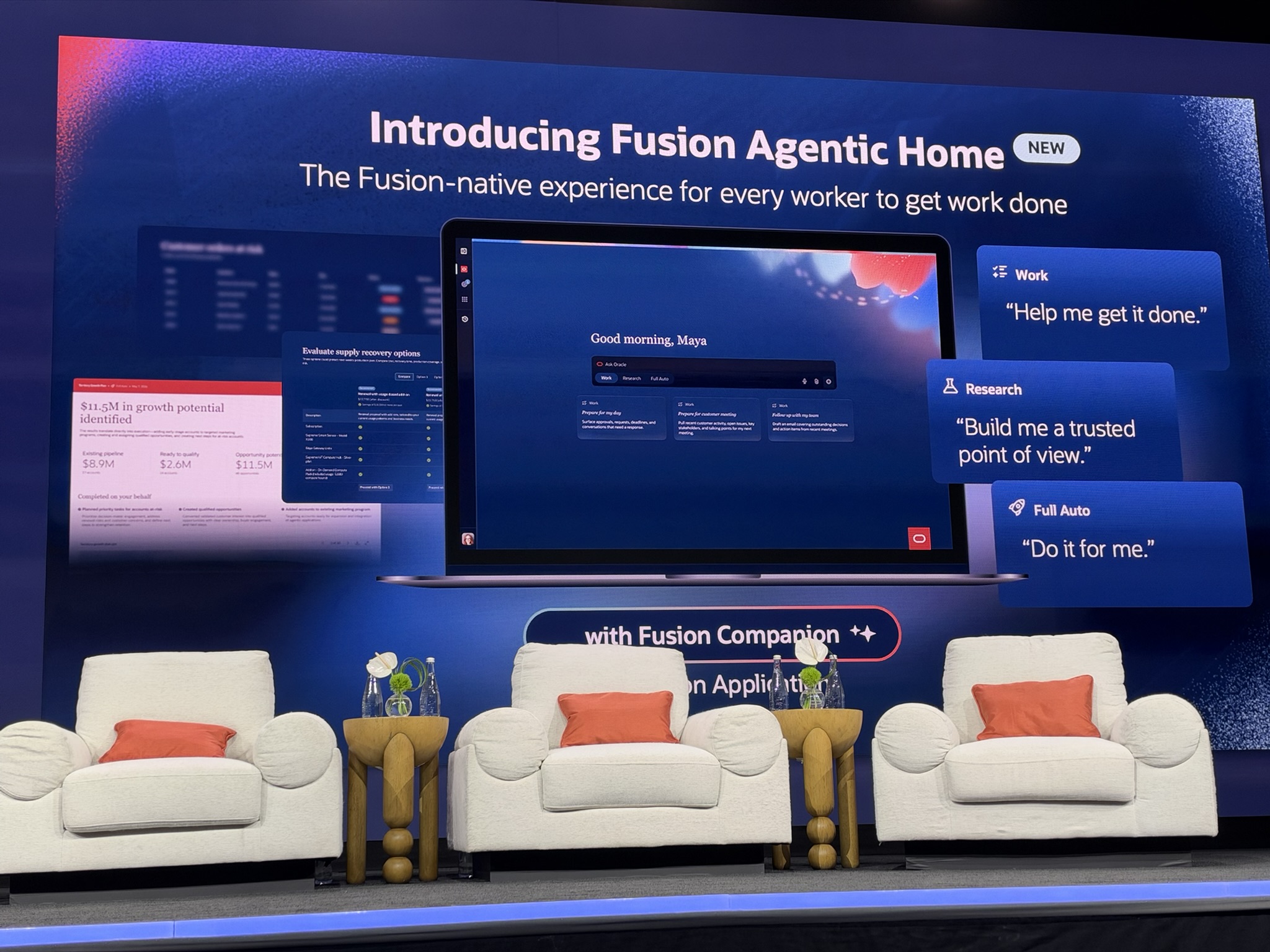
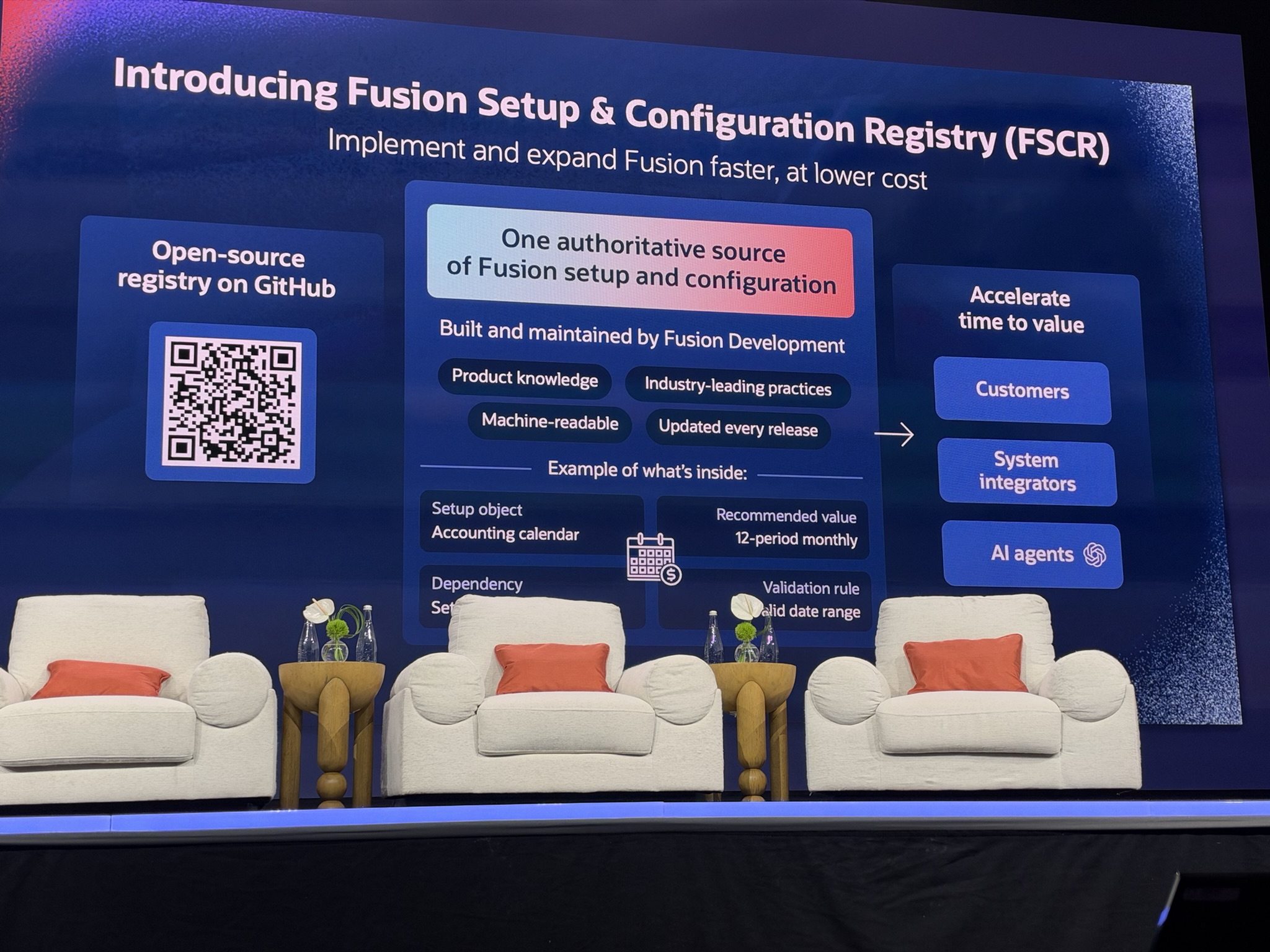
There were also several Oracle Fusion AI announcements, including Fusion Companion and Agentic Home. The direction was pretty clear: Oracle wants AI to become a natural part of the Fusion user experience rather than something users have to go somewhere else to access.

That is probably where AI starts becoming much more interesting for enterprise customers. If AI is embedded directly into the applications and processes people already use, and has the appropriate business context and trusted data behind it, then it has the potential to remove a lot of the repetitive work rather than simply being another chatbot! 😎

Real customers rather than just demos
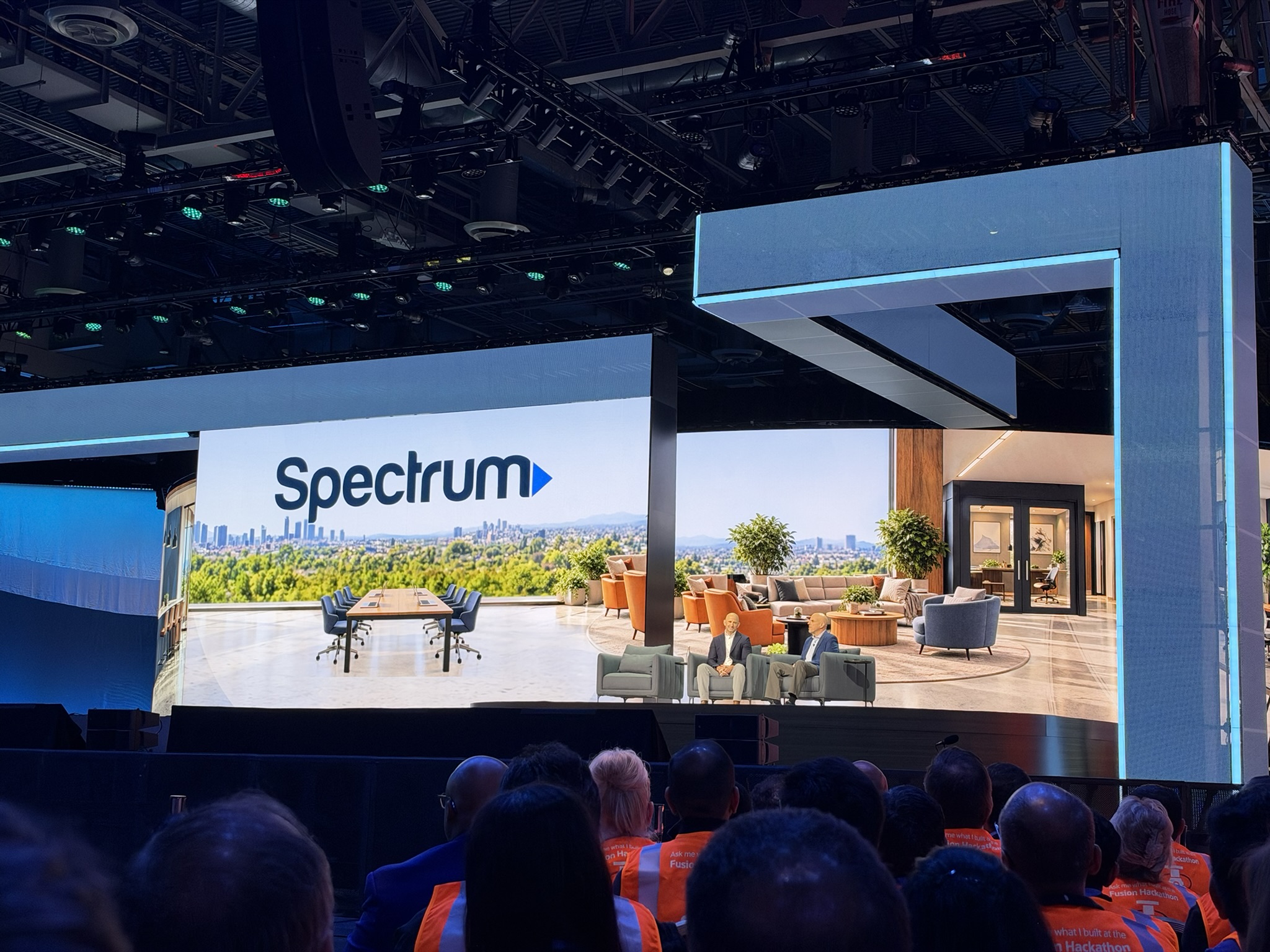
One thing I particularly liked about the keynote was the amount of emphasis placed on real-world use cases and customers.

Spectrum featured during the keynote, demonstrating how AI is being used around HR and the employee experience. The discussion wasn’t only about what AI could automate, but also governance, measuring success and how AI could potentially be scaled across an organisation.

That tied nicely back to the overall theme. The challenge isn’t simply building an AI use case. The real challenge is turning it into something that can be trusted, measured and scaled across an enterprise.

AI meets Burger King 🍔
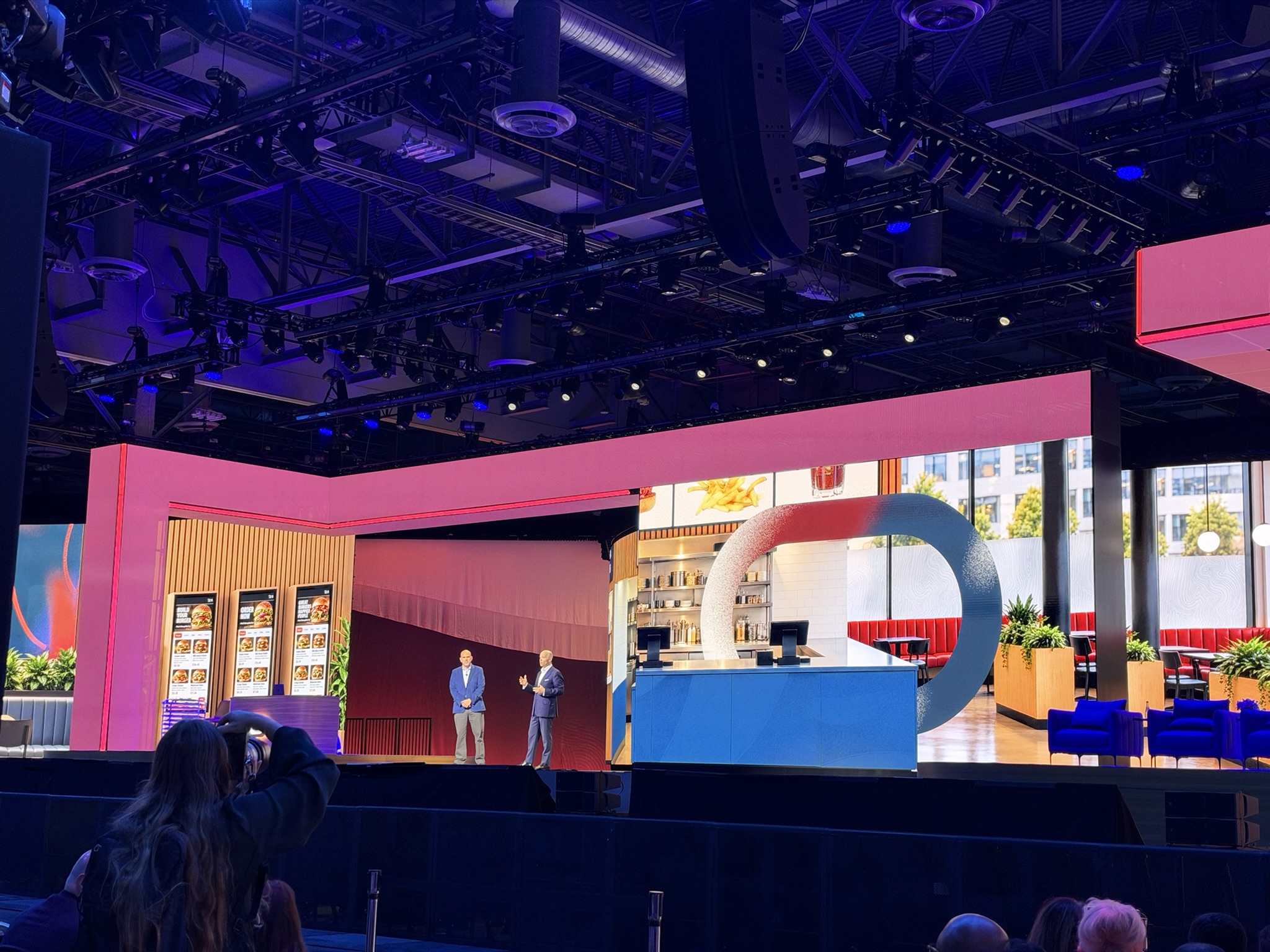
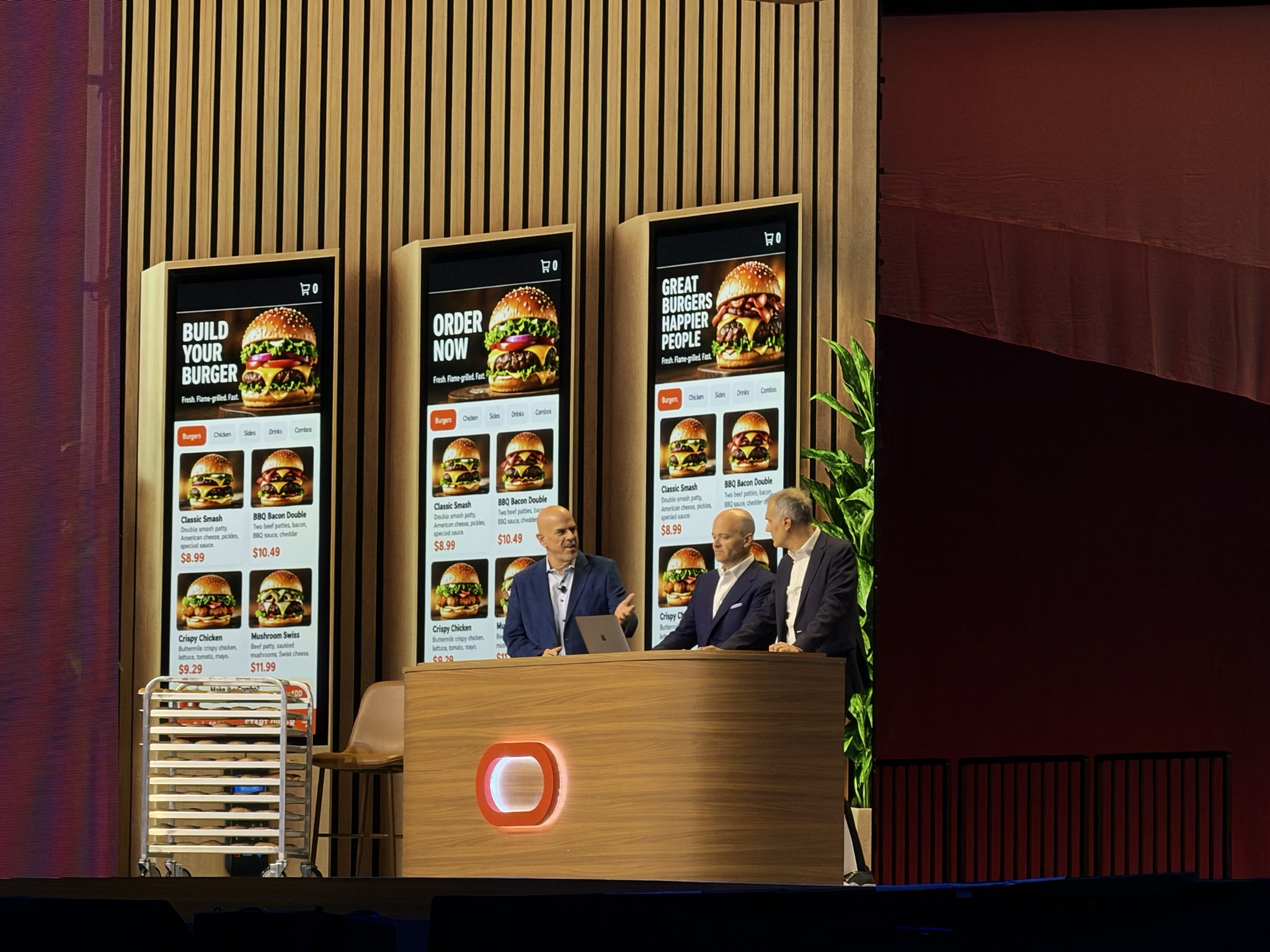
One of the more fun demonstrations involved Burger King Italia and the use of AI within restaurant operations.

The keynote demonstrated a restaurant AI command centre and explored several practical use cases, including delivery claims management, inventory and loss prevention. There was also discussion about the lessons learned from AI pilots and what it takes to scale those capabilities across restaurants.

I liked this section because these were very tangible examples. Rather than AI for the sake of AI, it showed how the technology could potentially help solve everyday operational problems within a business. Ultimately, that is where AI needs to get to if it is going to deliver genuine value.

From burgers to ambulances!
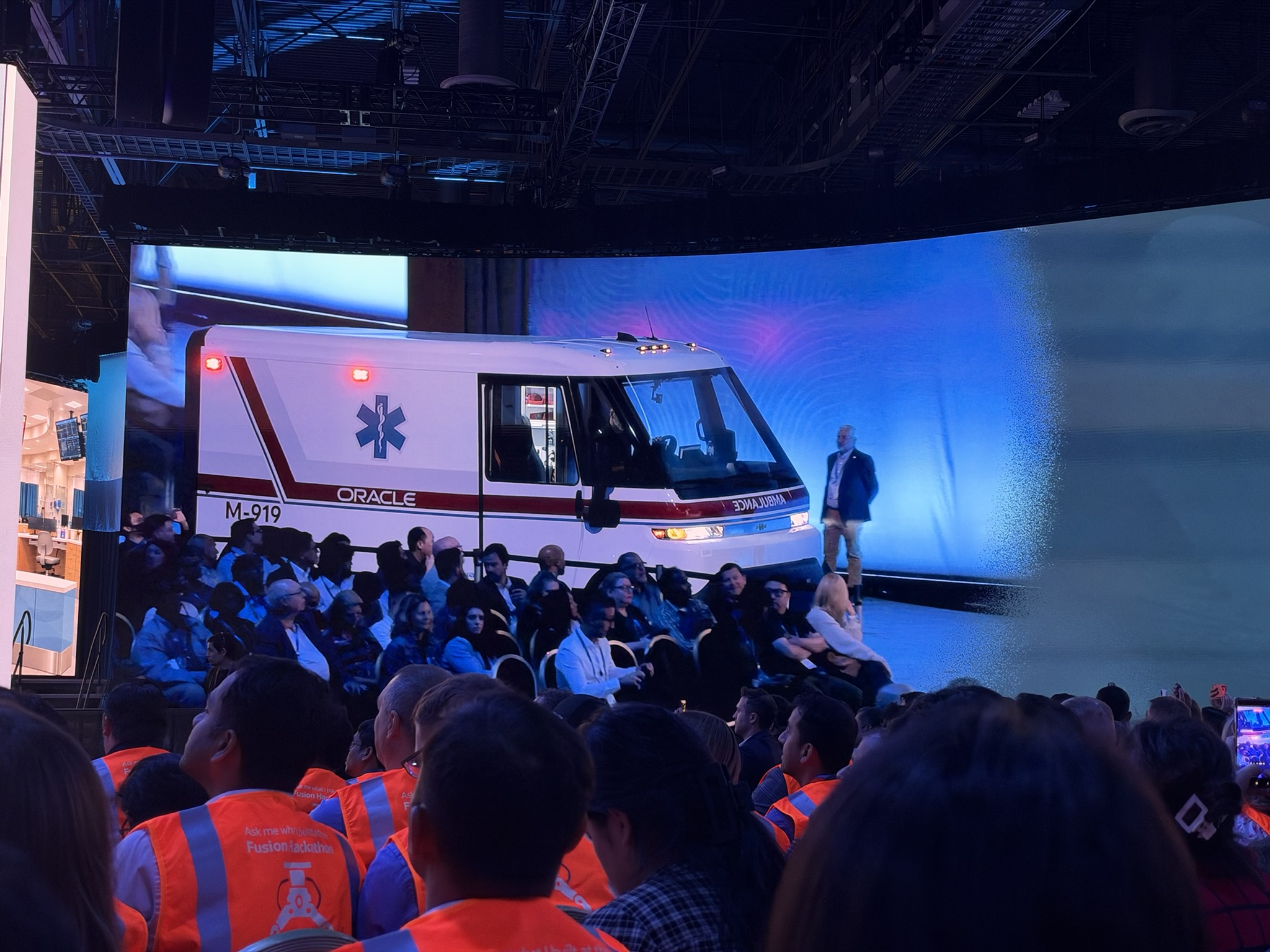
The keynote then moved in a completely different direction with a connected healthcare and emergency response demonstration.

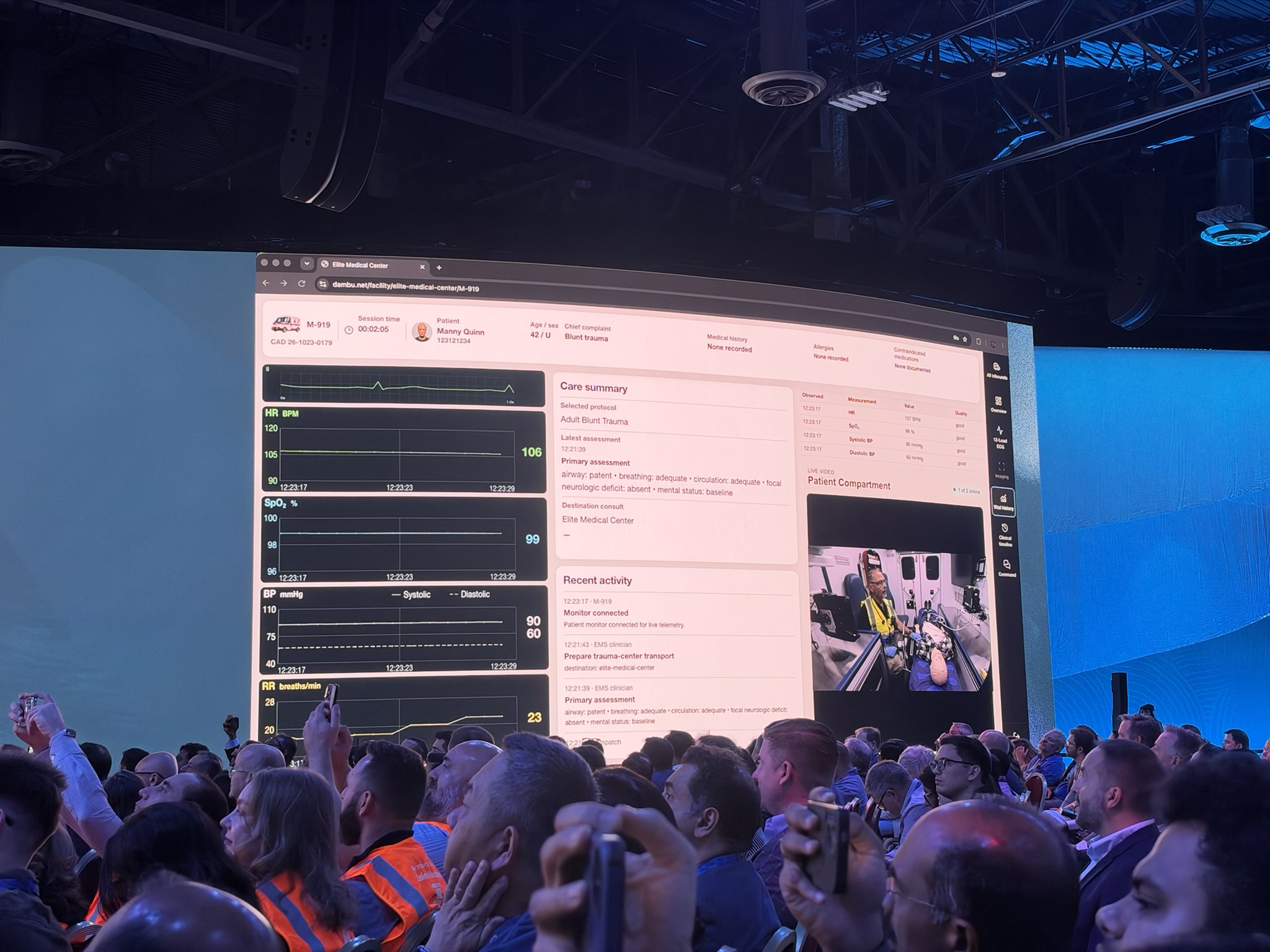
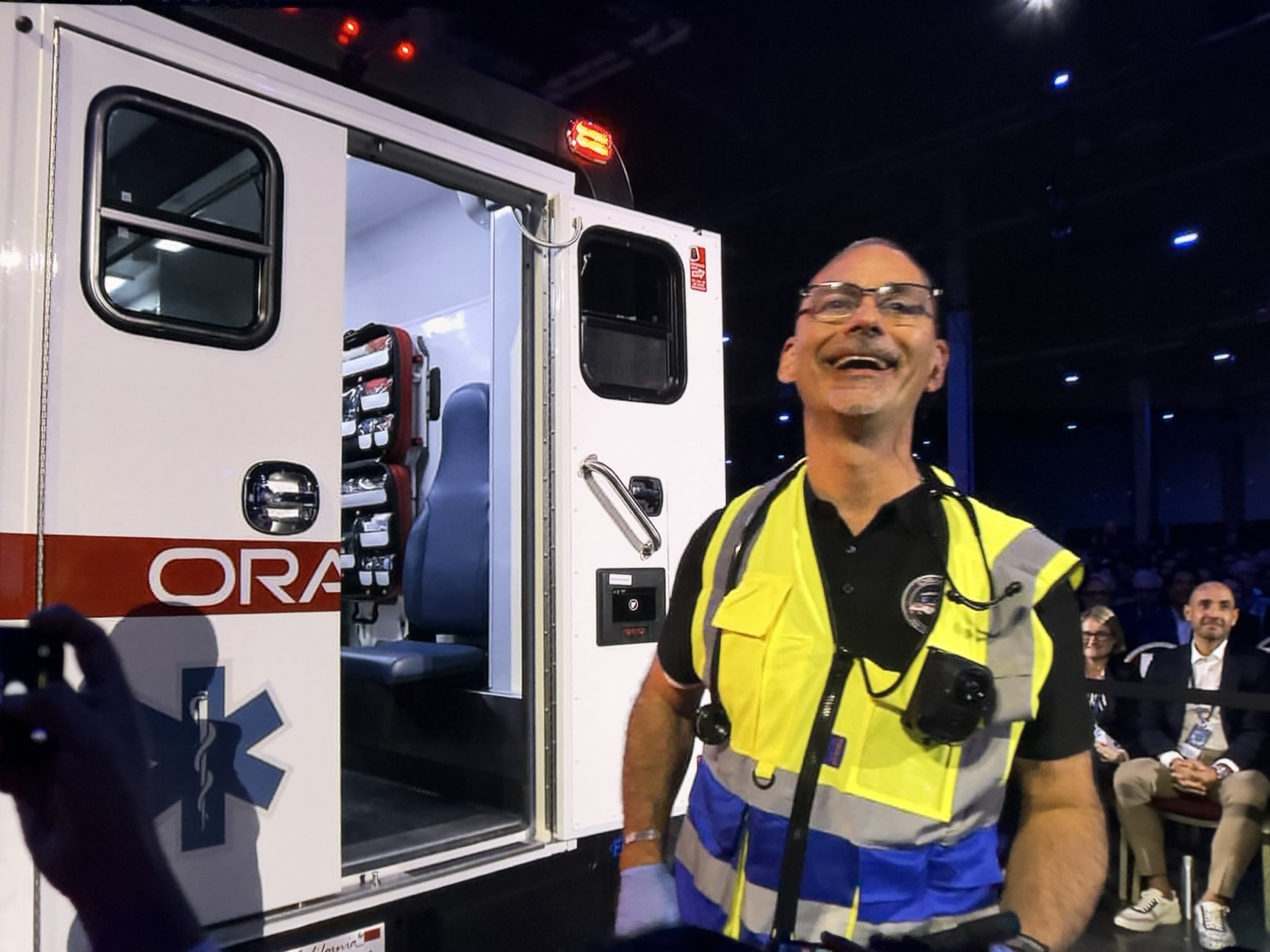
We saw how IoT, connectivity, data and AI could come together around a connected ambulance, providing information to healthcare professionals as part of the emergency-care process. The healthcare section then continued into hospital performance analysis and an example involving the investigation of cardiology referral declines.

It was quite a contrast going from restaurant operations to emergency healthcare within the same keynote, but I think that was precisely the point. AI isn’t one particular product or use case. The opportunity is in applying it to the data and processes that are specific to each industry.

AI that actually means business

Towards the end, the conversation broadened again to accelerating enterprise AI adoption, before looking at AI in agriculture and food security and ultimately the wider impact AI could have on humanity.

For me, the title “Where AI Means Business” actually summed up the keynote very well.

There was obviously plenty of impressive technology on show, but the underlying message I took away wasn’t simply “look what AI can do.” It was much more about where AI can provide useful, trusted and measurable outcomes when it is combined with enterprise applications, business processes and, most importantly, trusted data.

Given how much of this year’s Oracle AI World had already been focused on AI, it was another reminder of just how quickly Oracle is embedding it across its portfolio. And we were only at the start of the conference! 😎

You can watch the full Oracle AI World 2026 Keynote: Where AI Means Business here on YouTube. The session runs for around 73 minutes and includes the Fusion, Spectrum, Burger King Italia, connected healthcare and agriculture sections I’ve covered above.

If you found this blog post useful, please like as well as follow me through my various Social Media avenues available on the sidebar and/or subscribe to this Oracle blog via WordPress/e-mail.

Thanks

Zed DBA (Zahid Anwar)
Oracle AI World 2026 Day 1

If you missed my day 0, you can view it here.

Day 1 started with getting registered for Oracle AI World, before heading to the Oracle Partner Success Summit, followed by the Oracle EMEA Partner Awards, and finally the Database Premier Customer Appreciation Event in the evening.

Registering for Oracle AI World

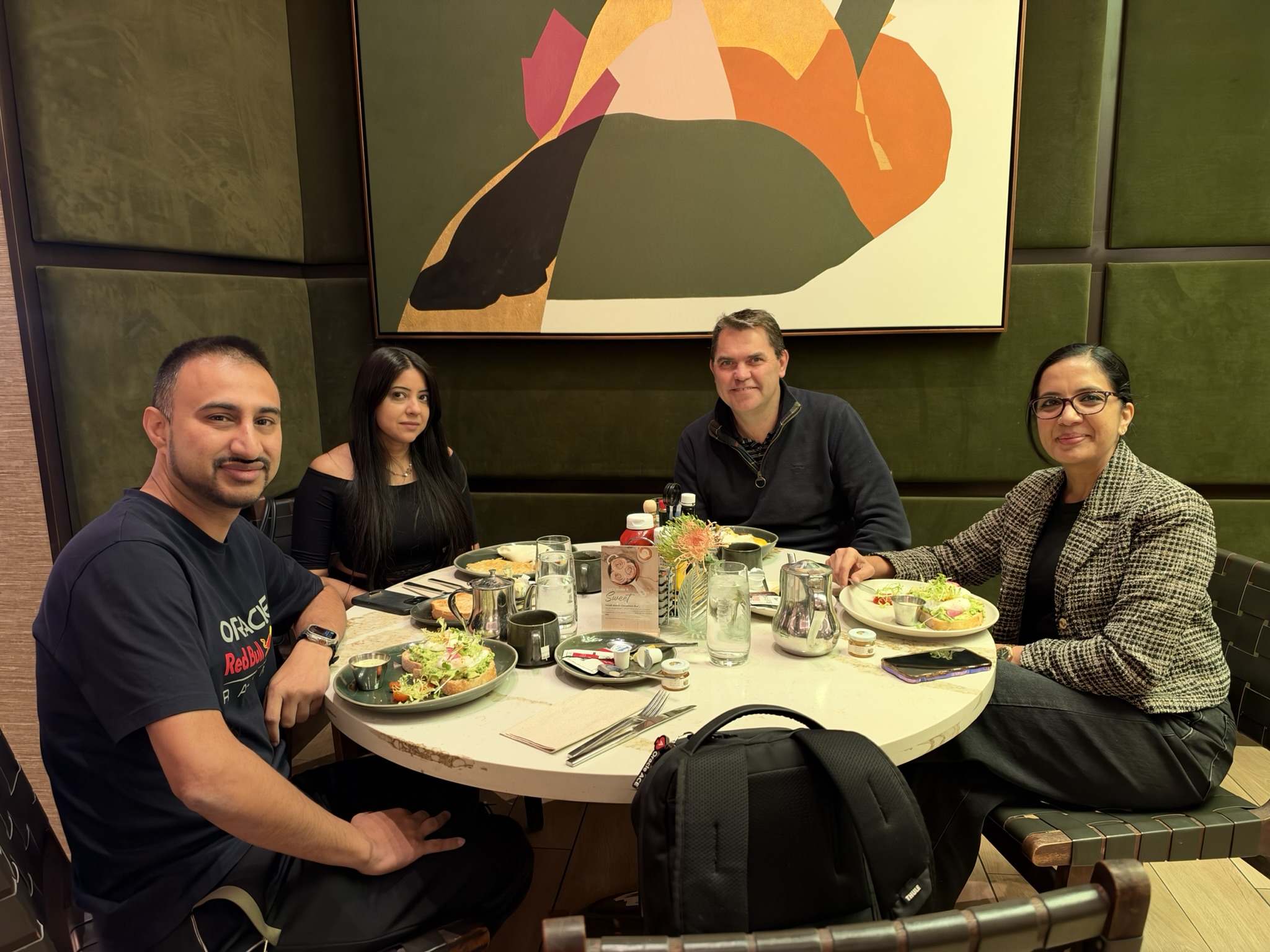
Started the day having breakfast with Leona (CEO of UKOUG), Geoff (my Version 1 colleague), and Ambili (fellow Oracle ACE and friend). And keeping things healthy, I went for the same breakfast as usual: sourdough bread, lightly boiled eggs and avocado. Followed by blogging about Day 0.

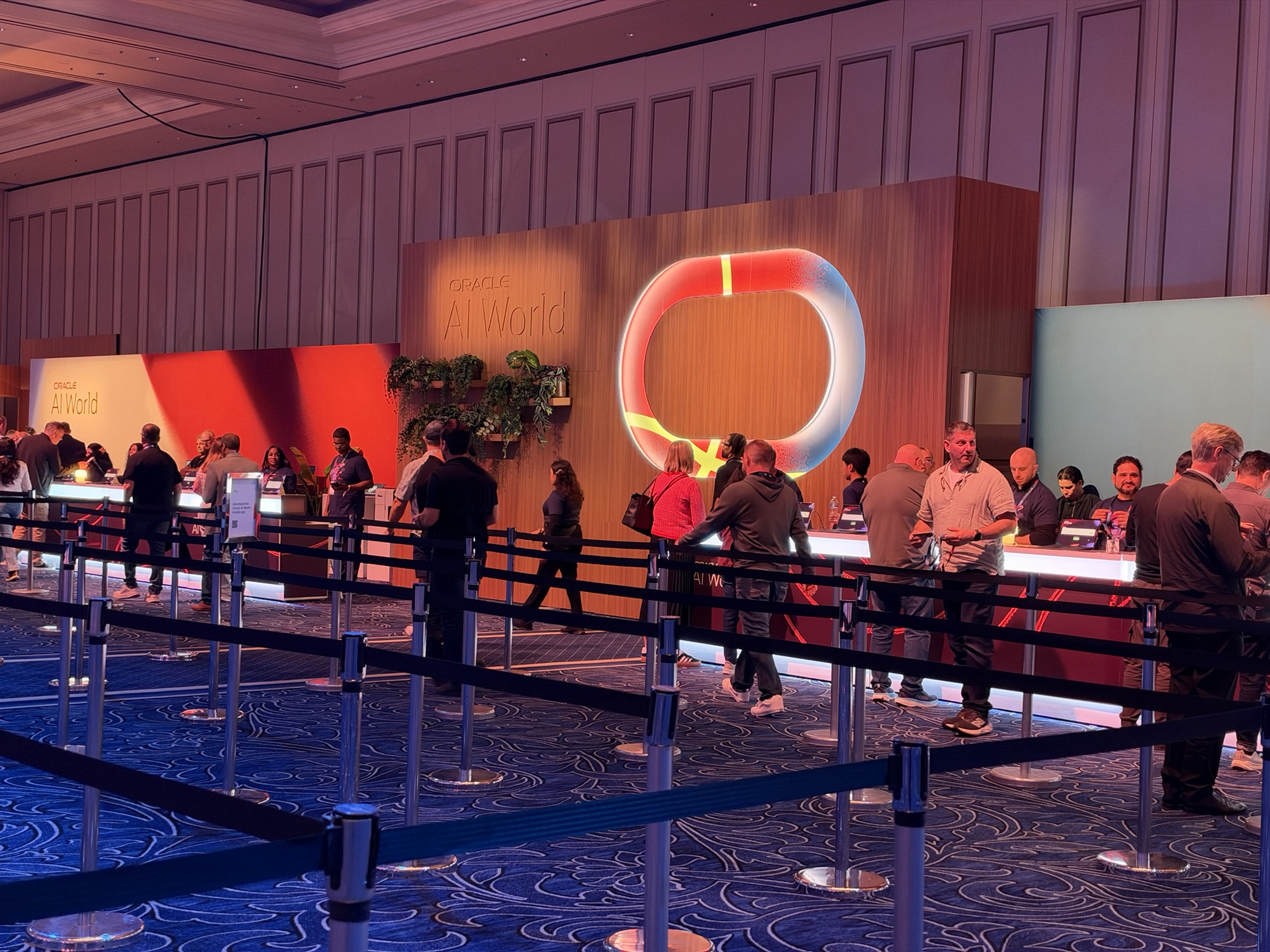
Next stop was The Venetian to get registered for Oracle AI World. Like last year, the whole conference was based there, while SuiteWorld was also happening over at Caesar’s Palace.

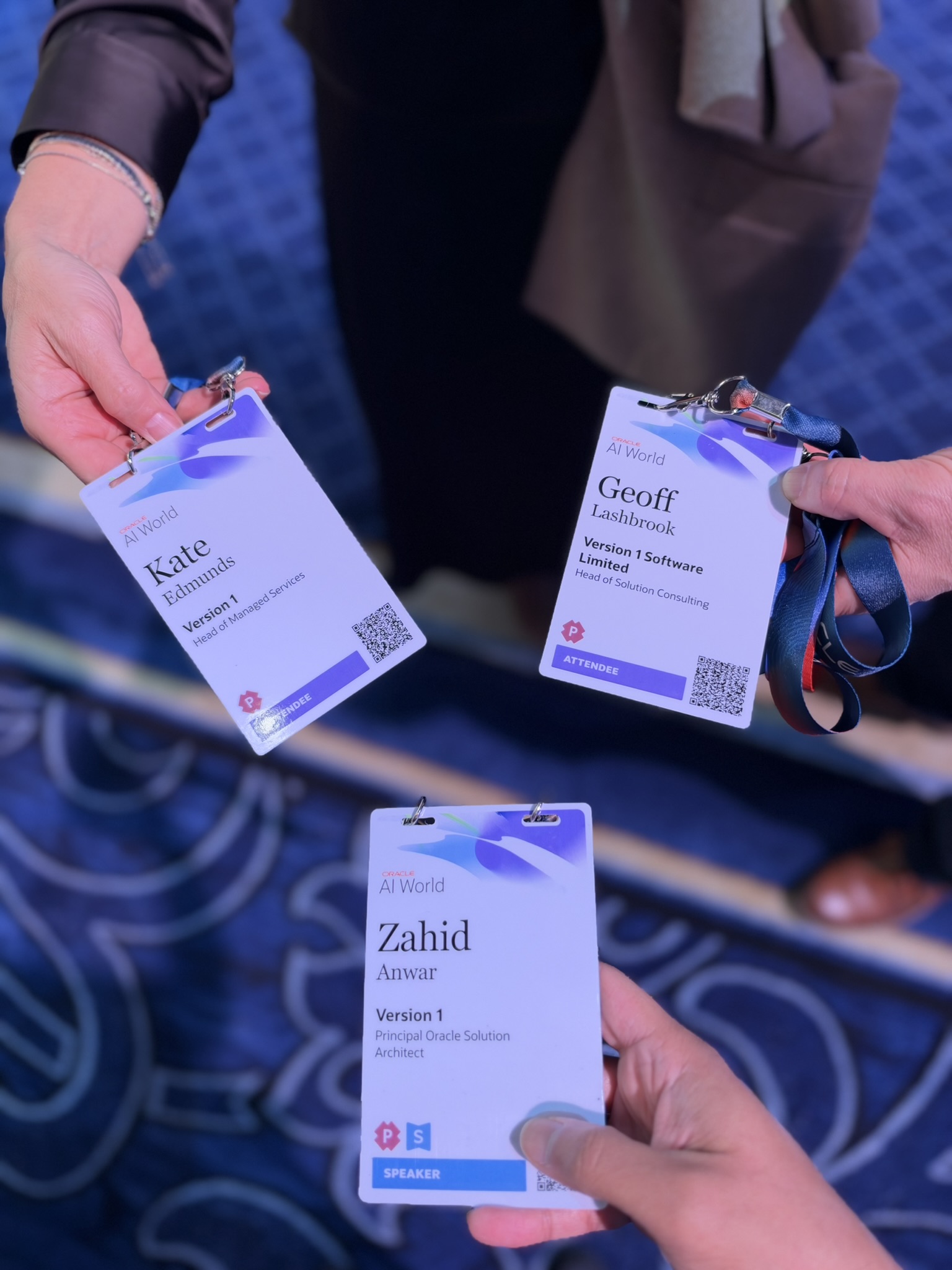
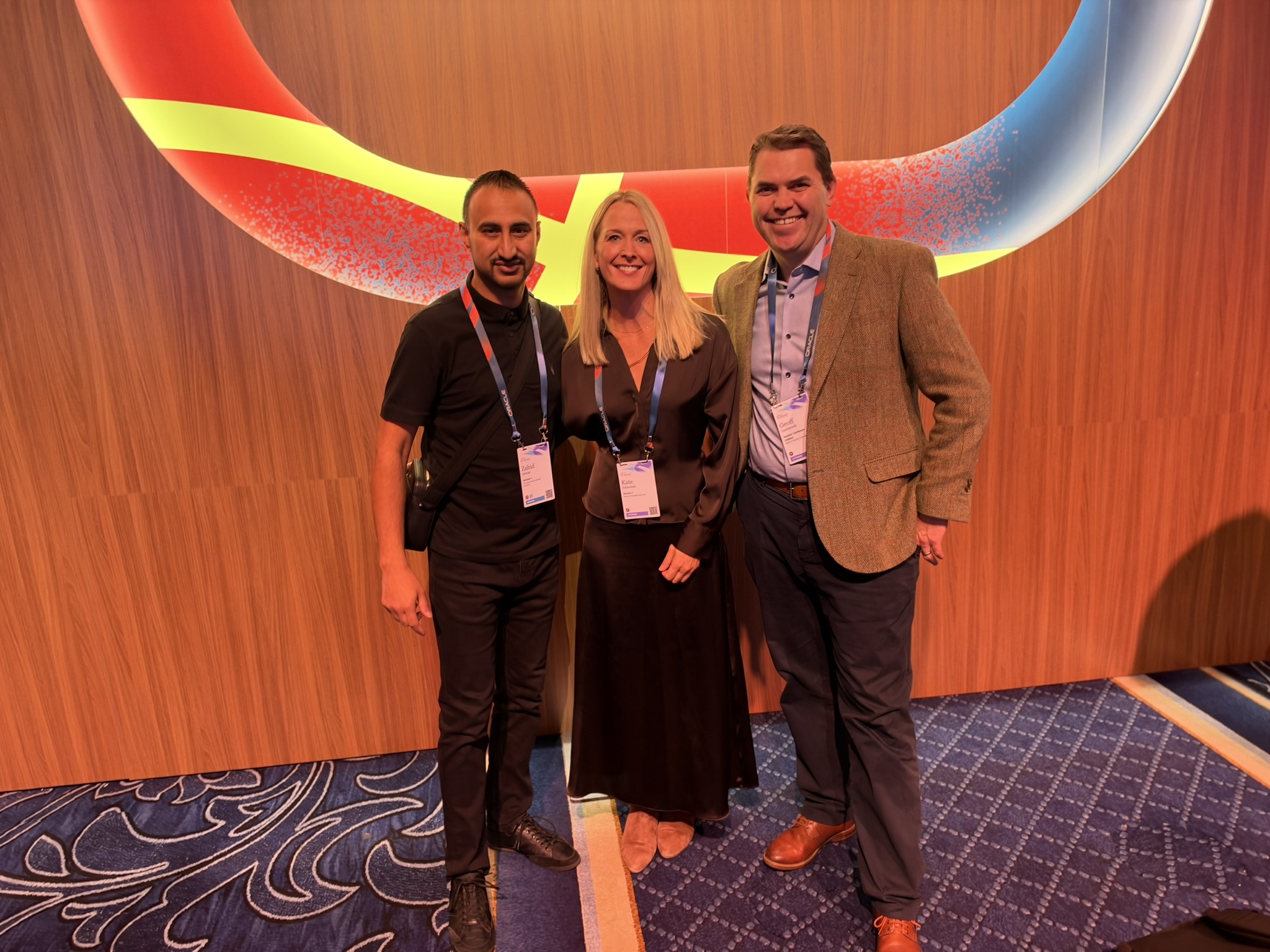
I headed over around 1:30pm with my Version 1 colleagues Geoff and Kate, who were joining me at the conference this year. Luckily, registration wasn’t too busy and we were through pretty quickly!

Quick photo opportunity!

I gave Geoff and Kate a quick orientation of the conference, before we headed over to the Oracle Partner Success Summit nice and early to make sure we got good seats at the front!

Oracle Partner Success Summit

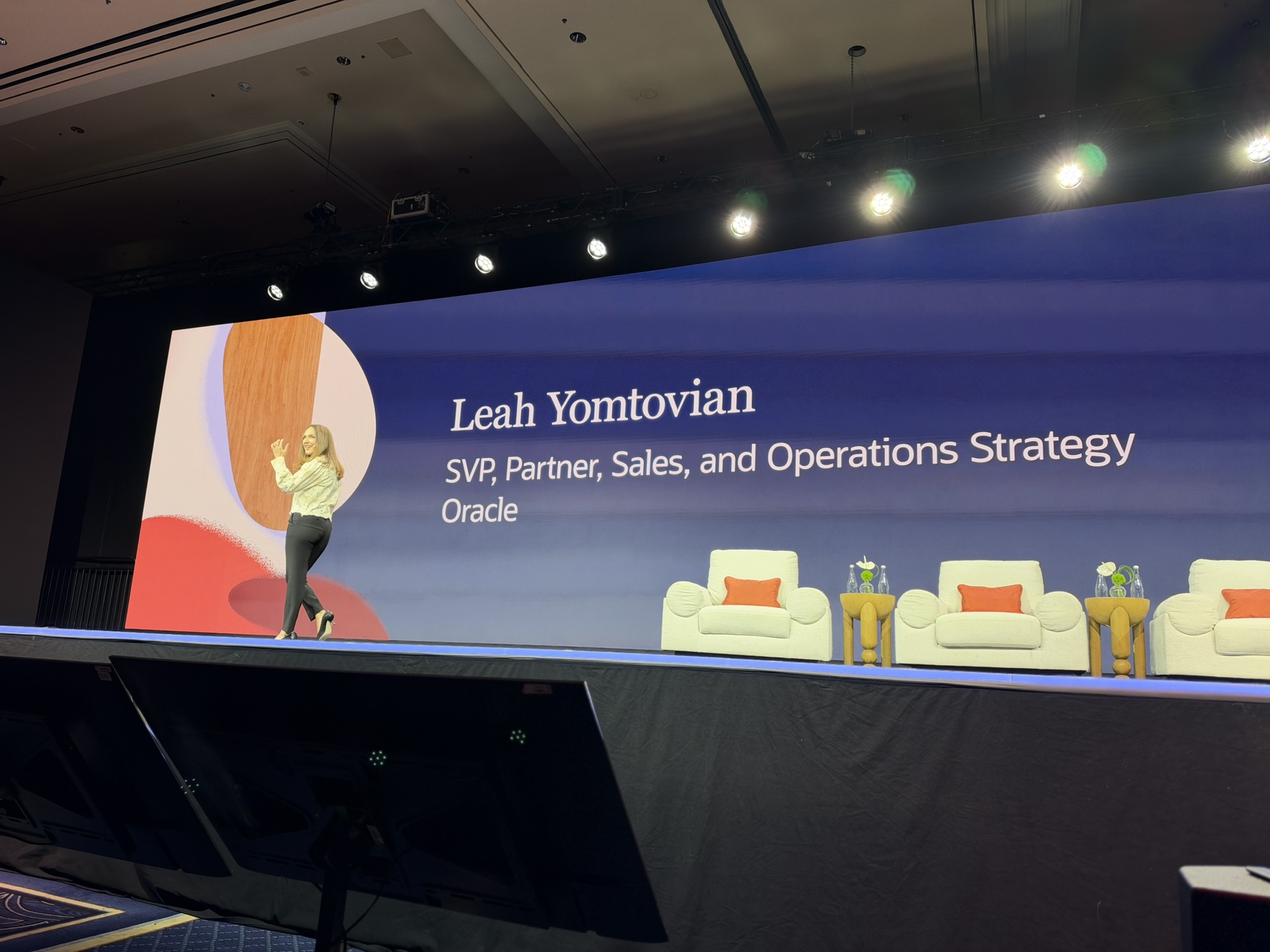
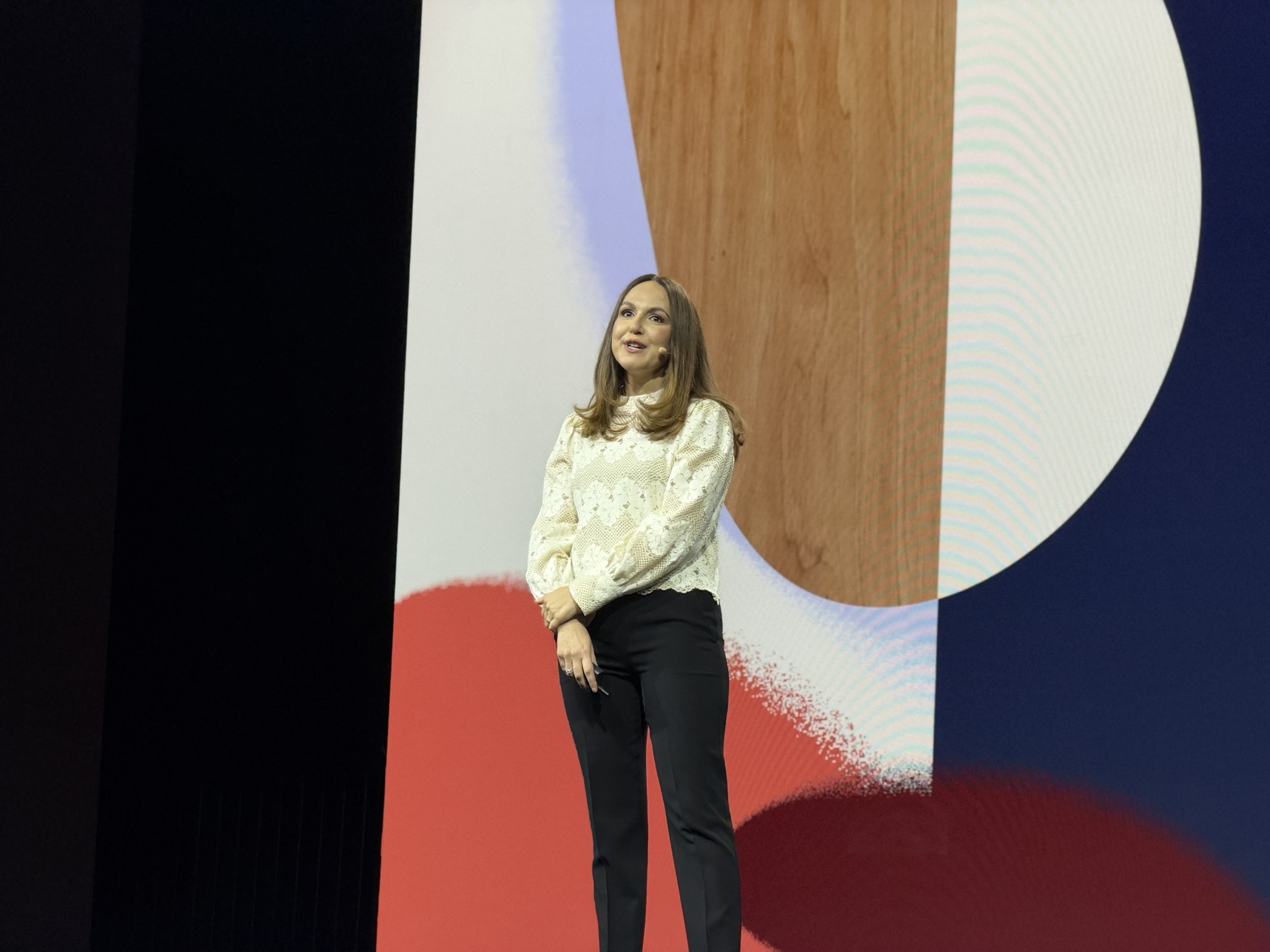
The Partner Success Summit kicked off with Leah Yomtovian, Senior Vice President, Partner, Sales, and Operations Strategy thanking the partner community and talking about the importance of customer success. One announcement that certainly caught my attention was Oracle’s plan to invest $1 billion into its partner programme, with the aim of driving greater success for both Oracle and its partners.

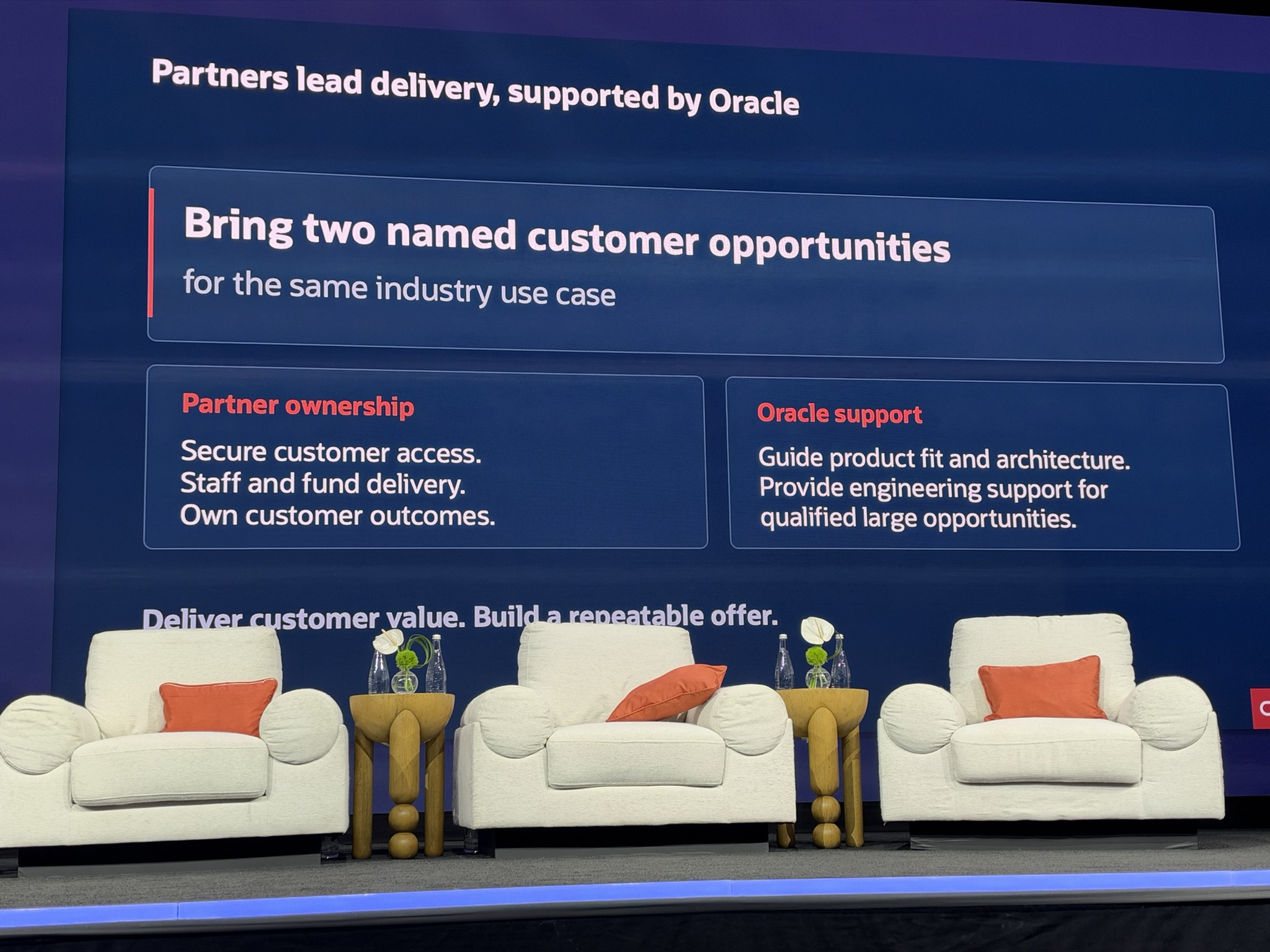
A big theme throughout the summit was how partners can help customers move beyond simply adopting new technology and actually deliver meaningful outcomes.

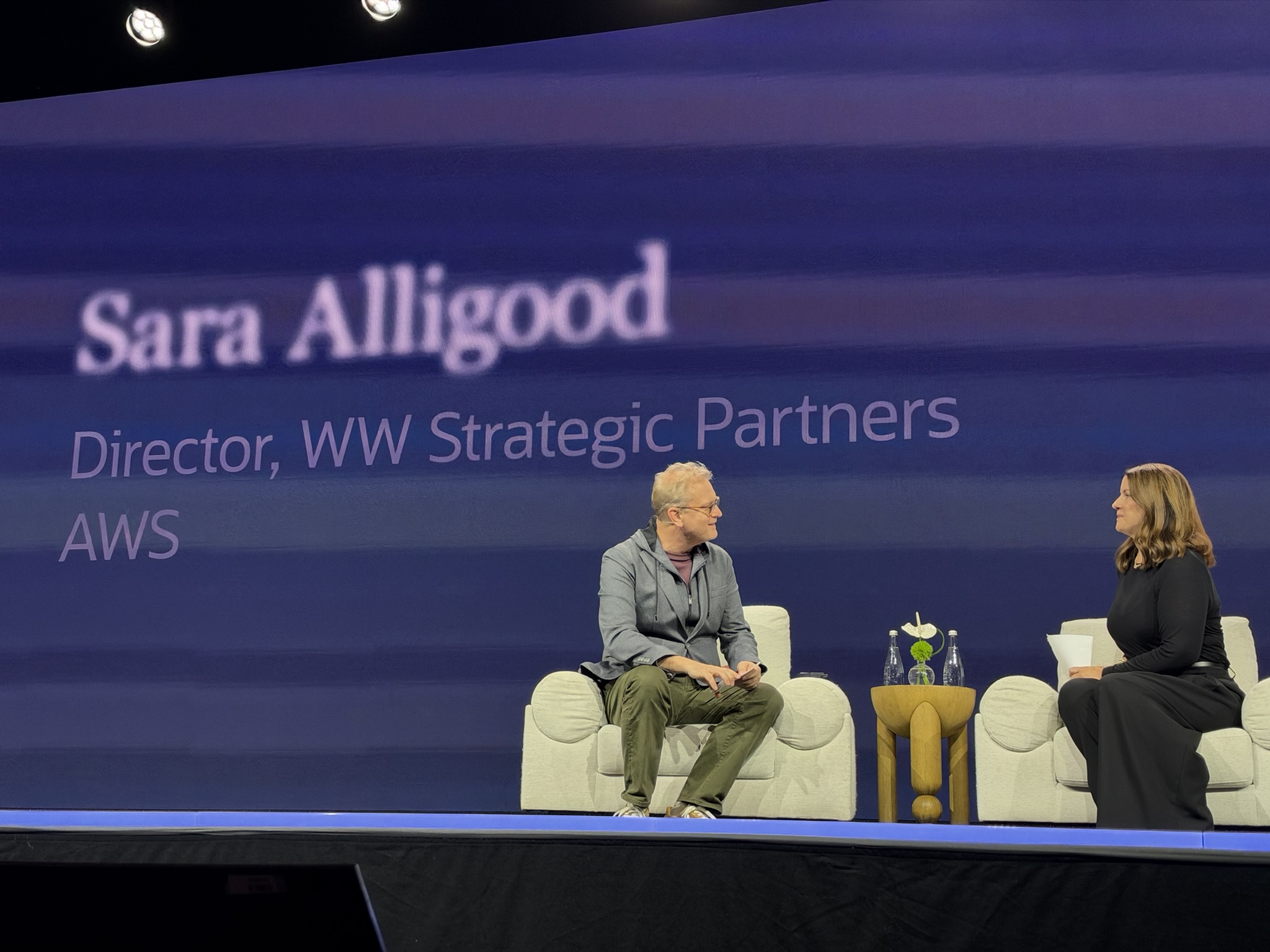
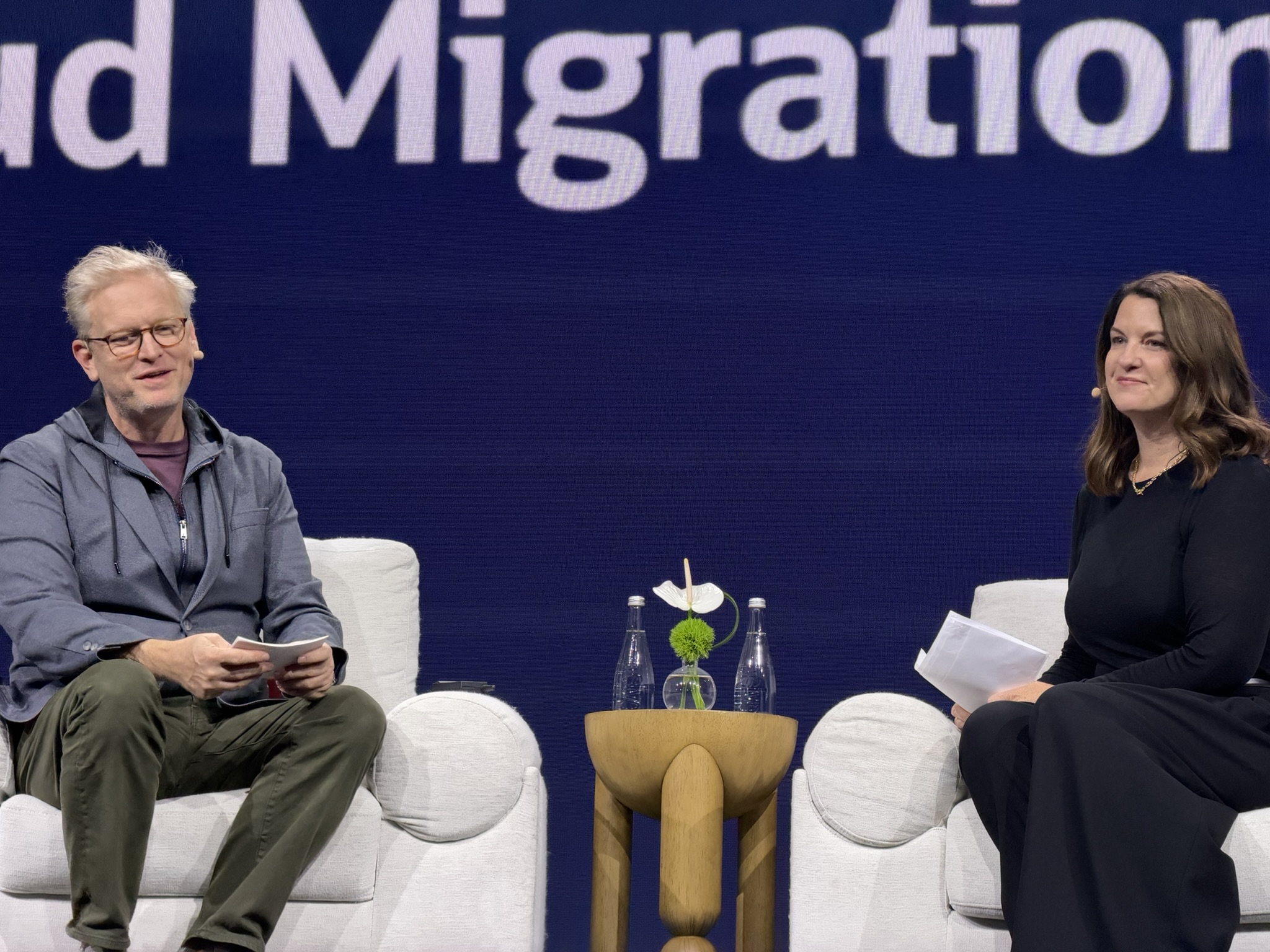
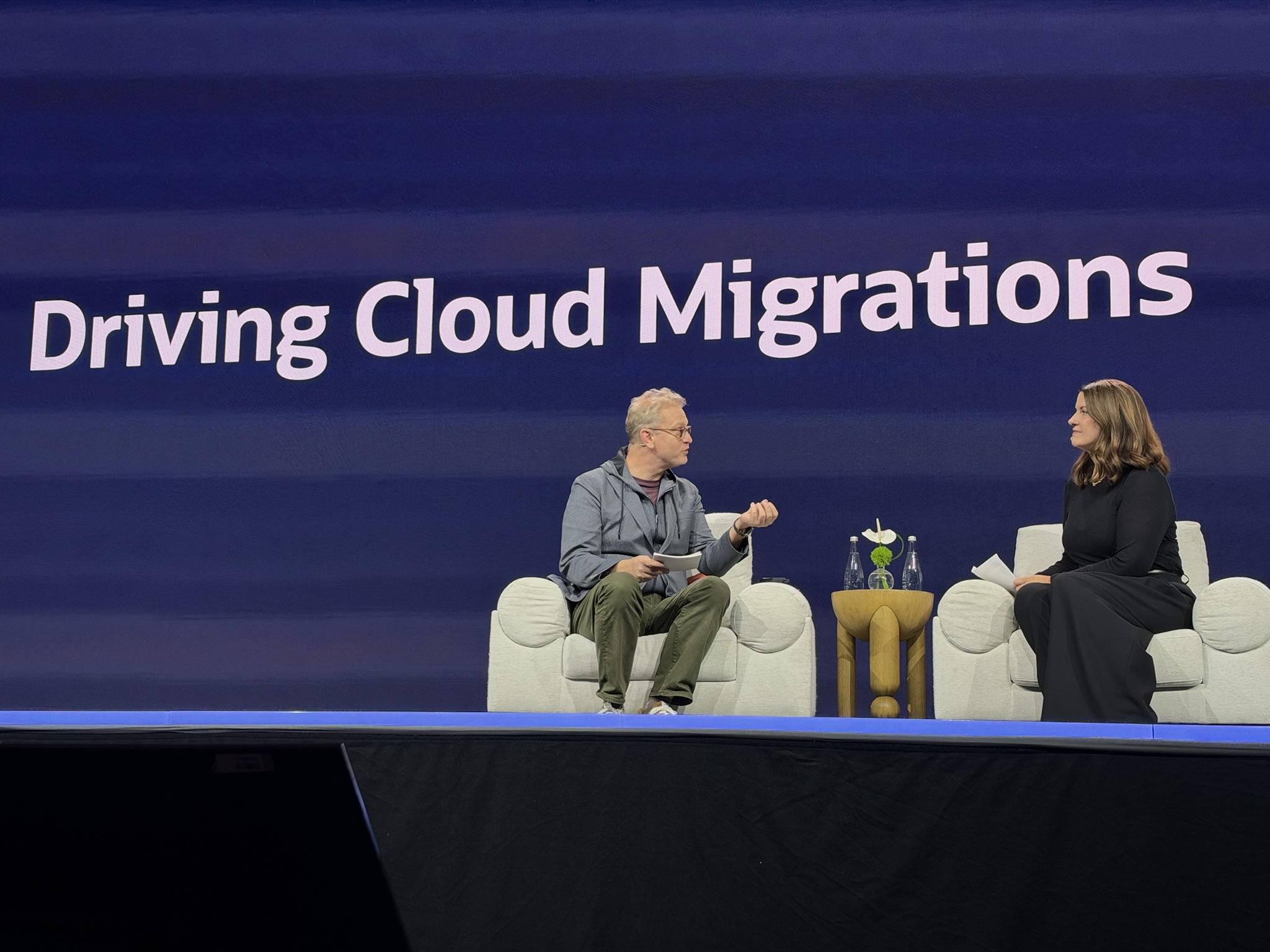
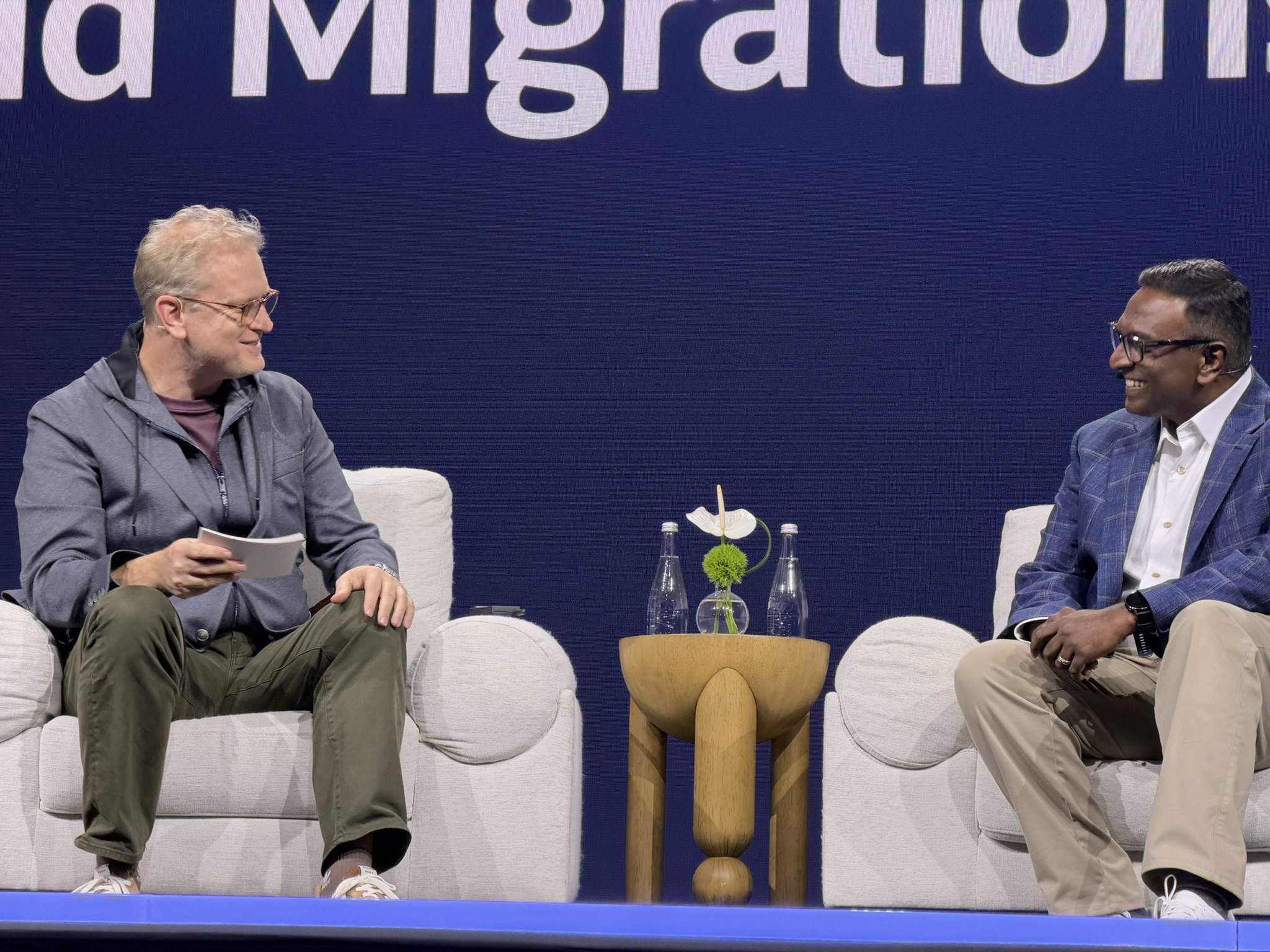
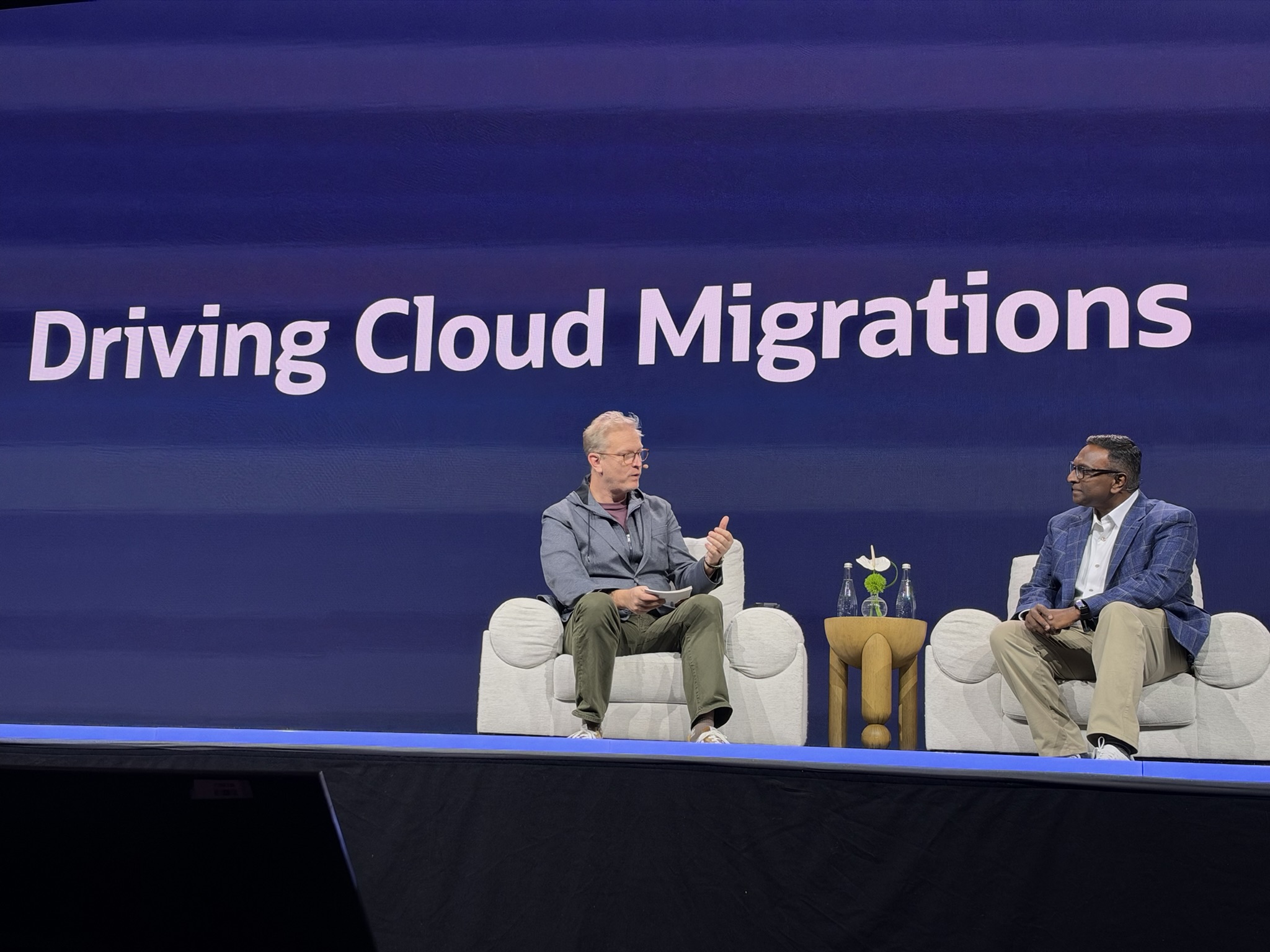
Driving Cloud Migrations

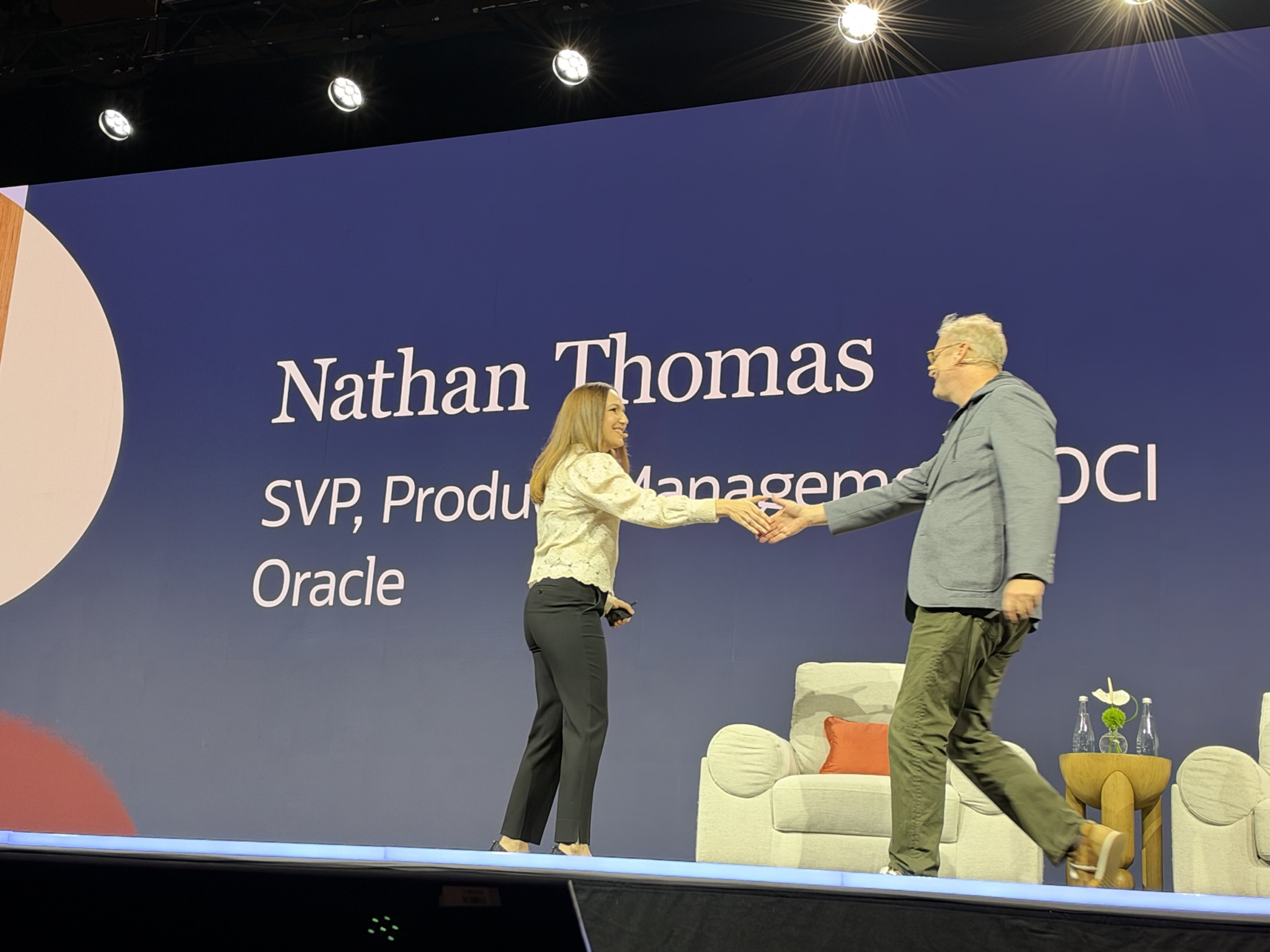
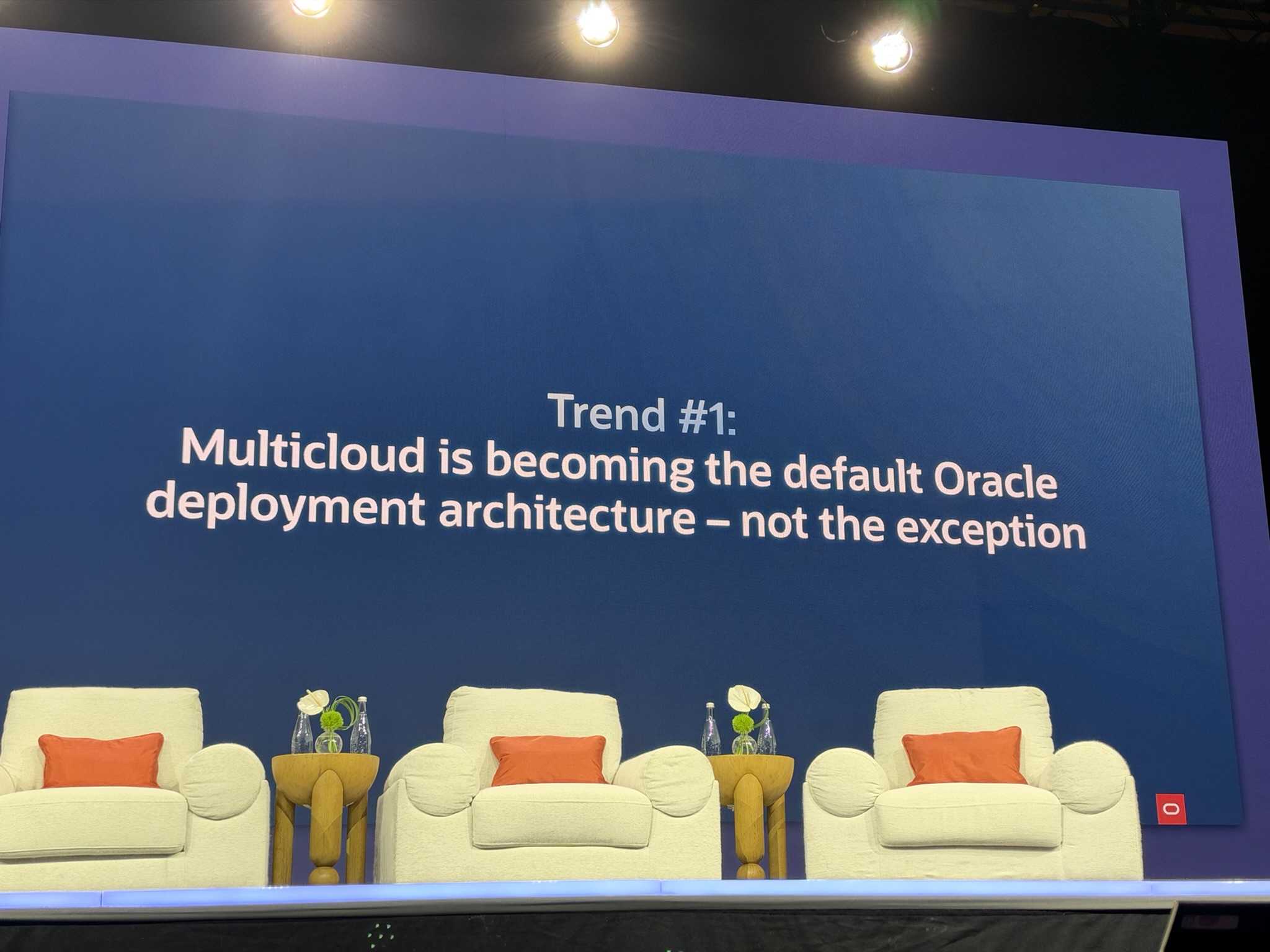
One of the most interesting parts for me was the discussion around multicloud. Nathan Thomas, SVP, Product Management OCI talked about how multicloud is increasingly becoming the default and a key part of Oracle’s strategy.

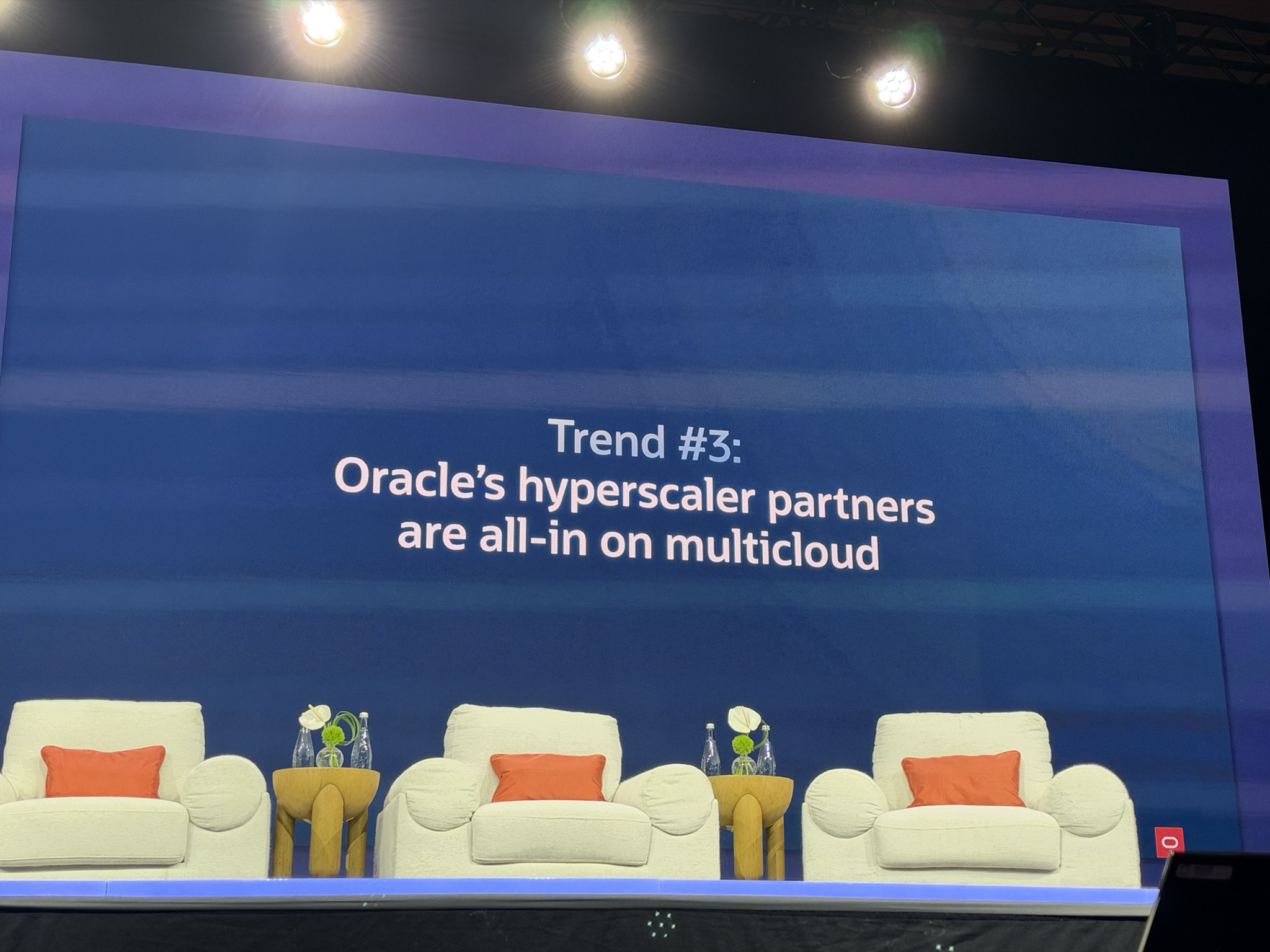
There were perspectives from AWS, Google and Microsoft, showing just how far Oracle’s multicloud strategy has come.

With AWS (Sara Alligood, Director, WW Strategic Partners), one of the messages that really stood out was: don’t move the data, connect the AI to it. With Oracle AI Database@AWS, the database can sit close to the applications and services already running in AWS, allowing customers to take advantage of services such as Amazon Bedrock without unnecessarily moving their data around.

The approach was nicely summed up as:

Assess → Rationalise → Migrate → Innovate

For me, that last step is particularly important. Migration shouldn’t just be about moving a database from one place to another. The real opportunity comes from what customers can do once they get there.

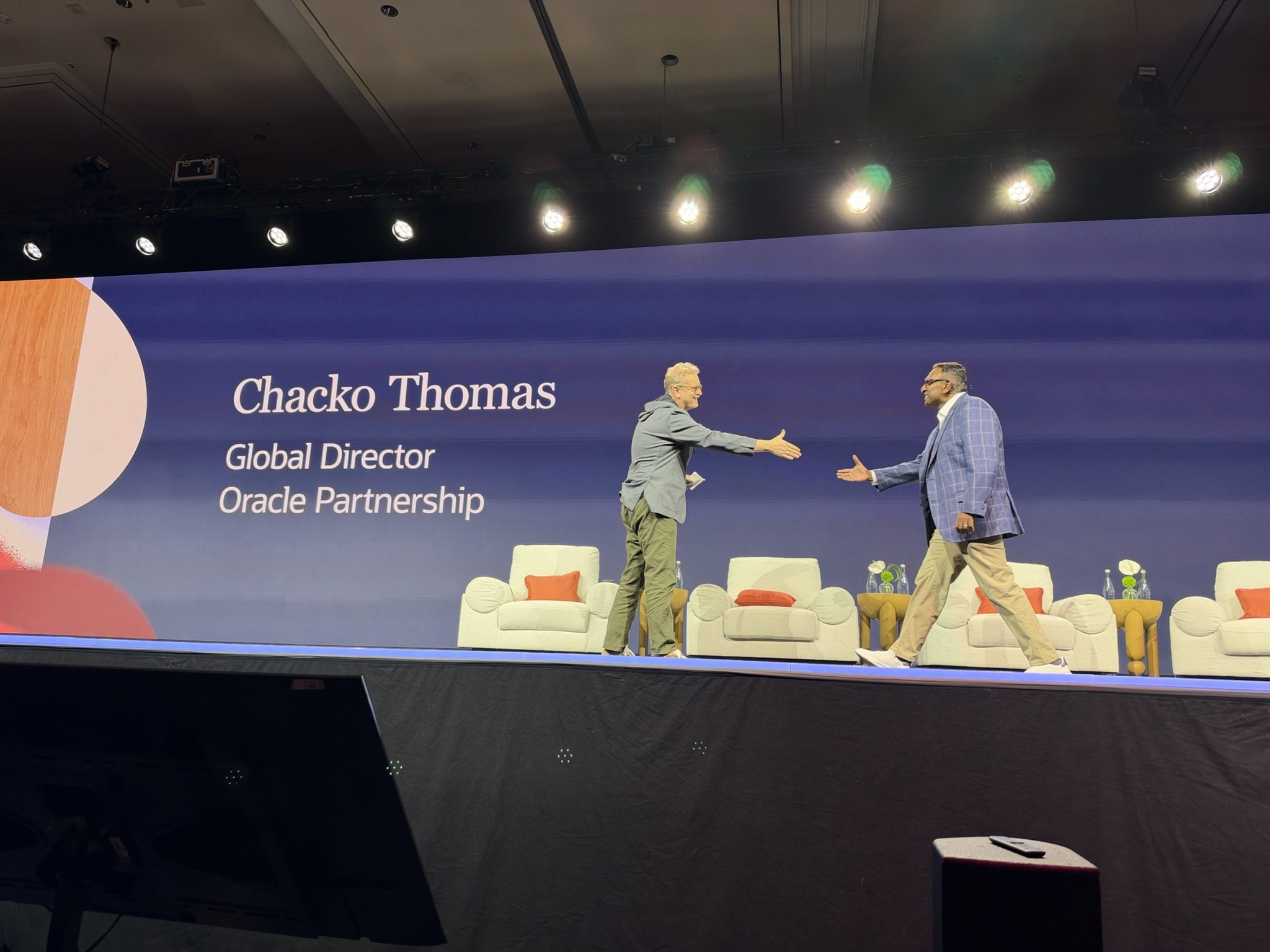
With Google Cloud (Chacko Thomas, Global Director, Oracle Partnership), the theme was very much better together, with increasingly close integration between Oracle and Gemini. This included connecting Gemini with Oracle AI Database@Google Cloud, as well as bringing Gemini capabilities into Oracle Fusion.

Microsoft (Stephen Boyle, Corporate Vice President, Enterprise Partner Solutions) also talked about the importance of trust, built from around 30 years of Oracle and Microsoft working together. The message here was about listening to customers, understanding why they want Oracle and Microsoft technologies together, and then using the wider partner ecosystem to bring the industry and customer knowledge needed to make it successful.

Delivering Agentic Applications

Another major theme, unsurprisingly, was AI and agents.

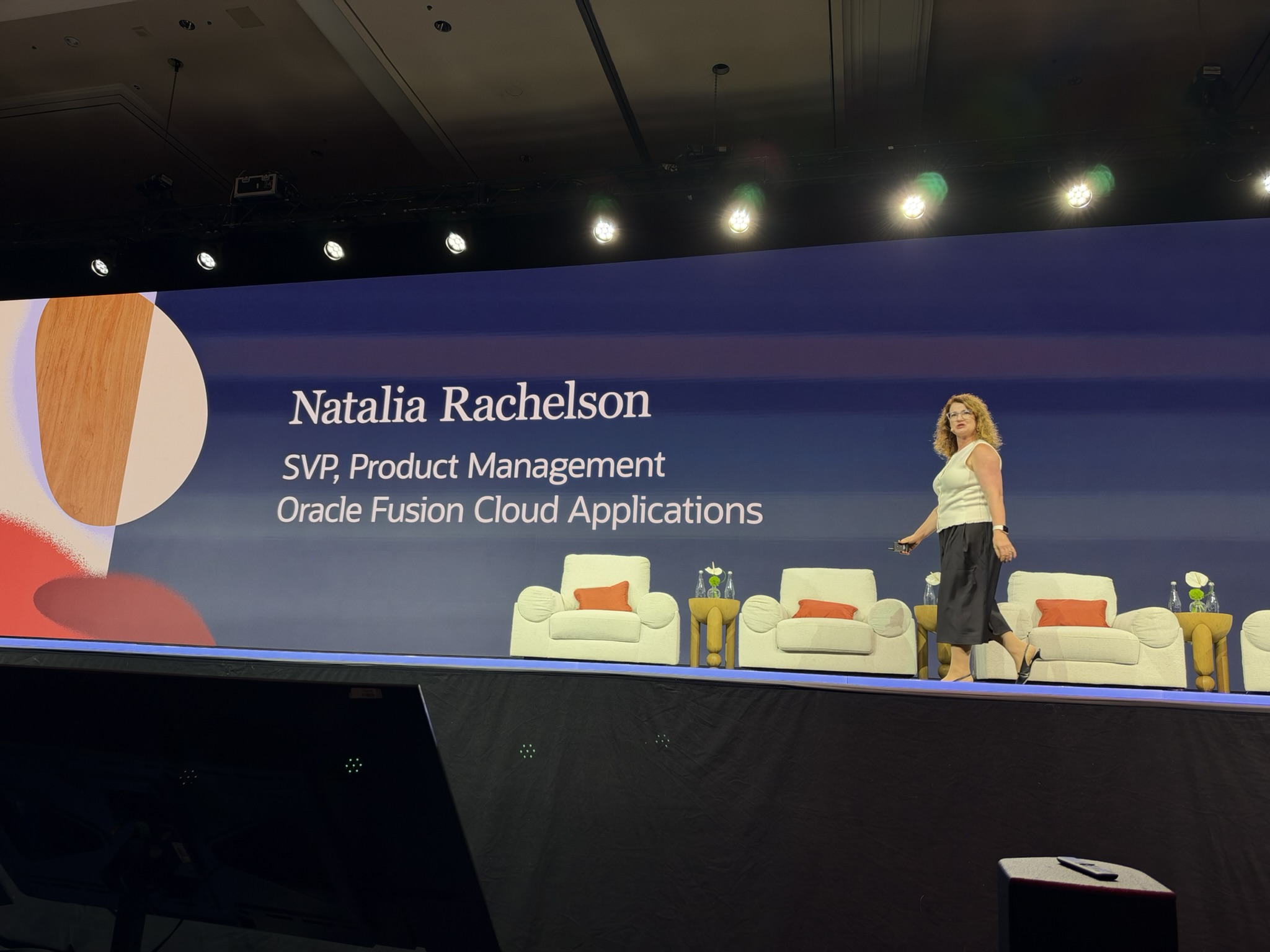
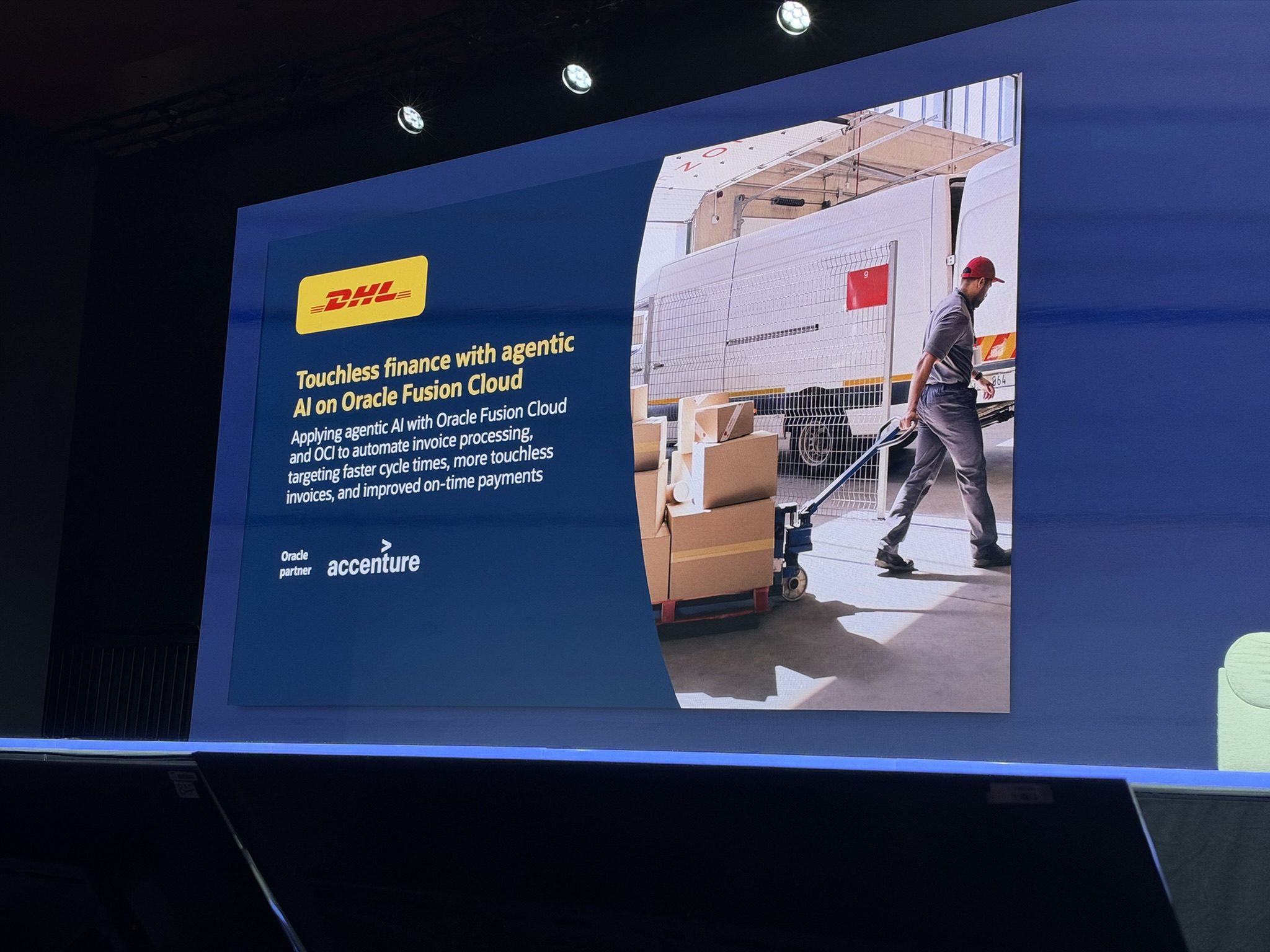
Oracle (Natalia Rachelson, SVP, Product Management, Oracle Fusion Cloud Application) talked about its Fusion agentic applications and how it is continuing to take AI further within its applications. A DHL example highlighted something I thought was particularly important: successful AI isn’t just about the technology. It requires the customer, partner and Oracle working together, backed by strong governance and leadership.

That message came up several times during the summit.

Oracle AI Data Platform

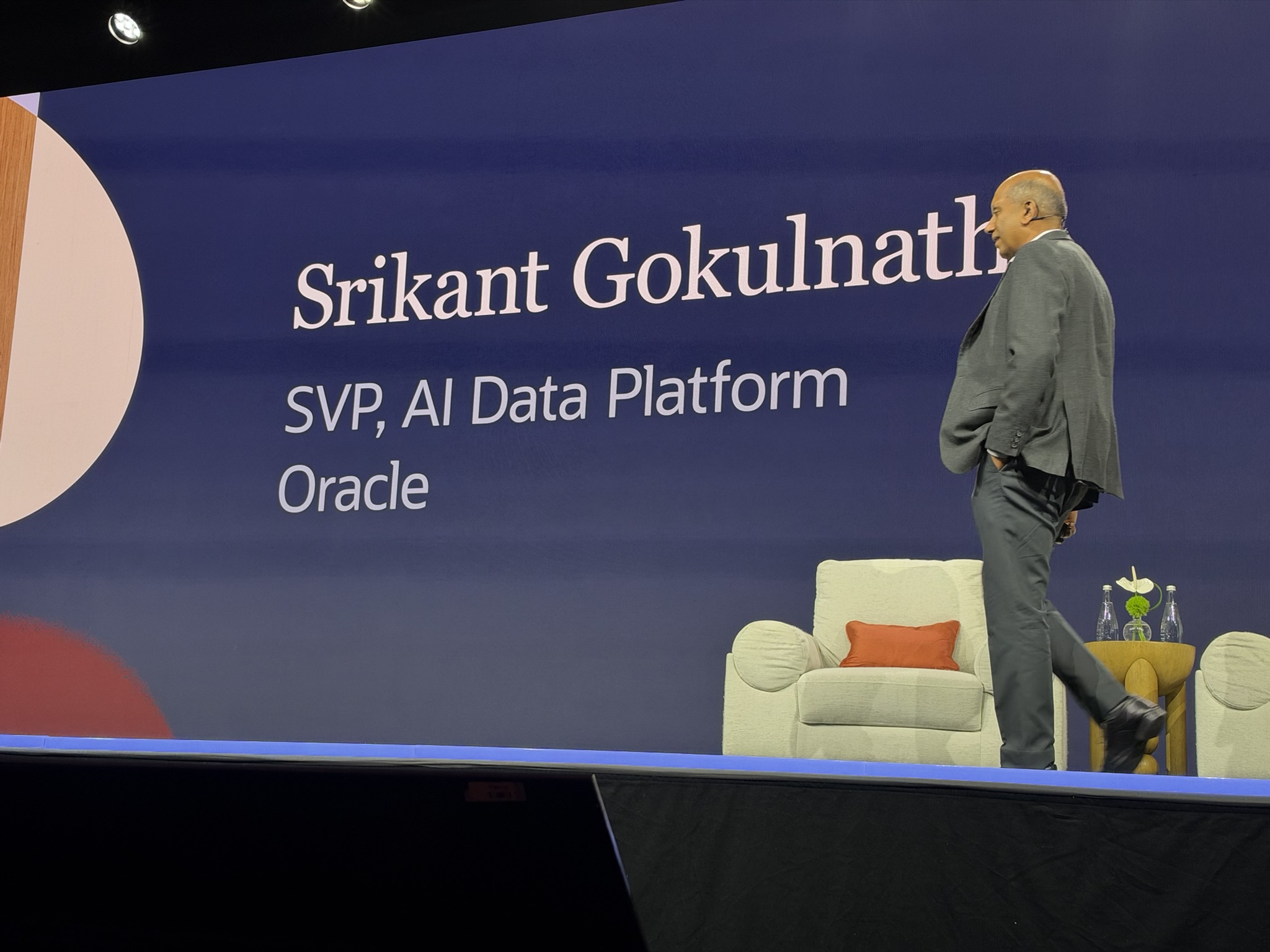
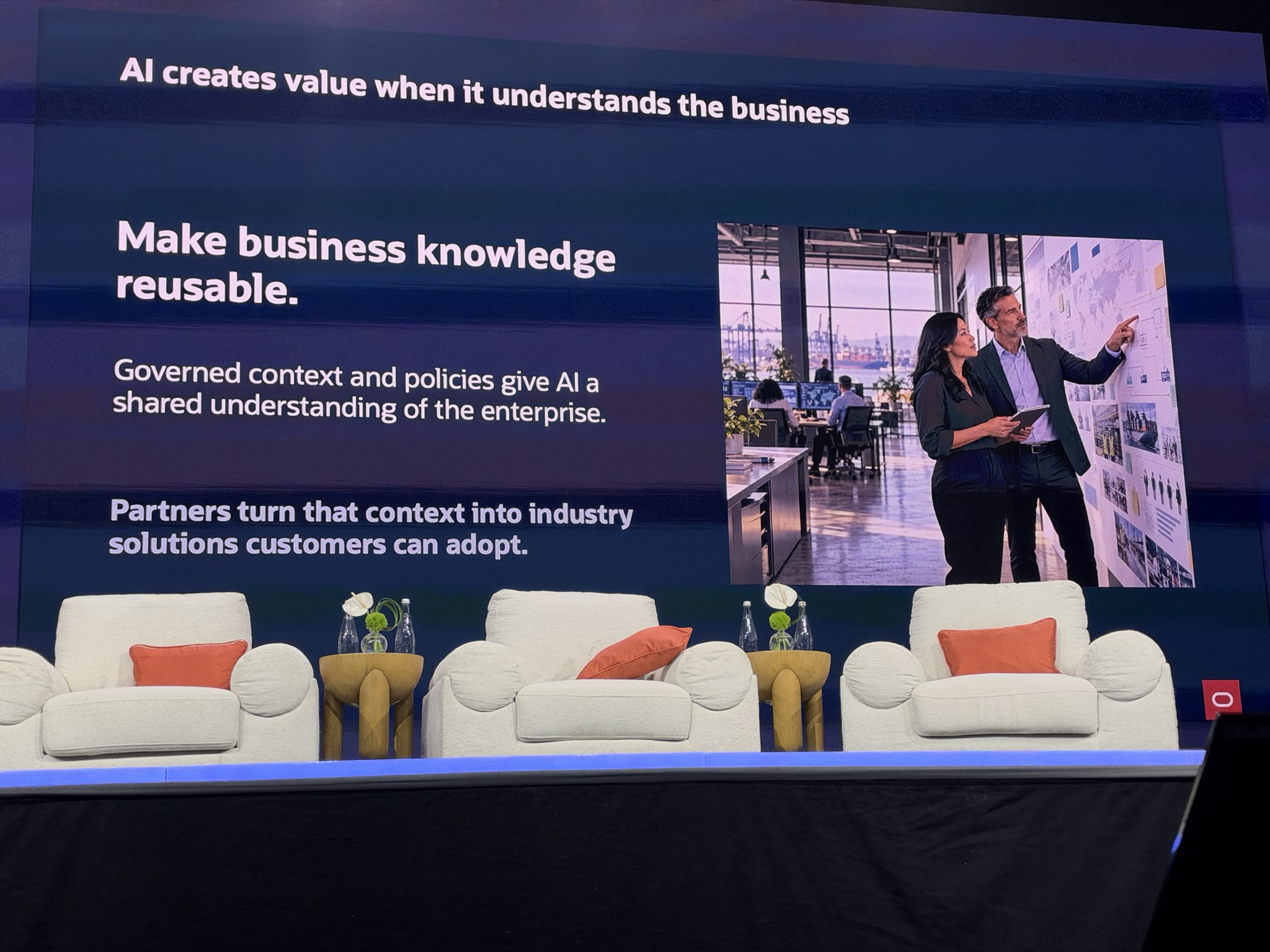
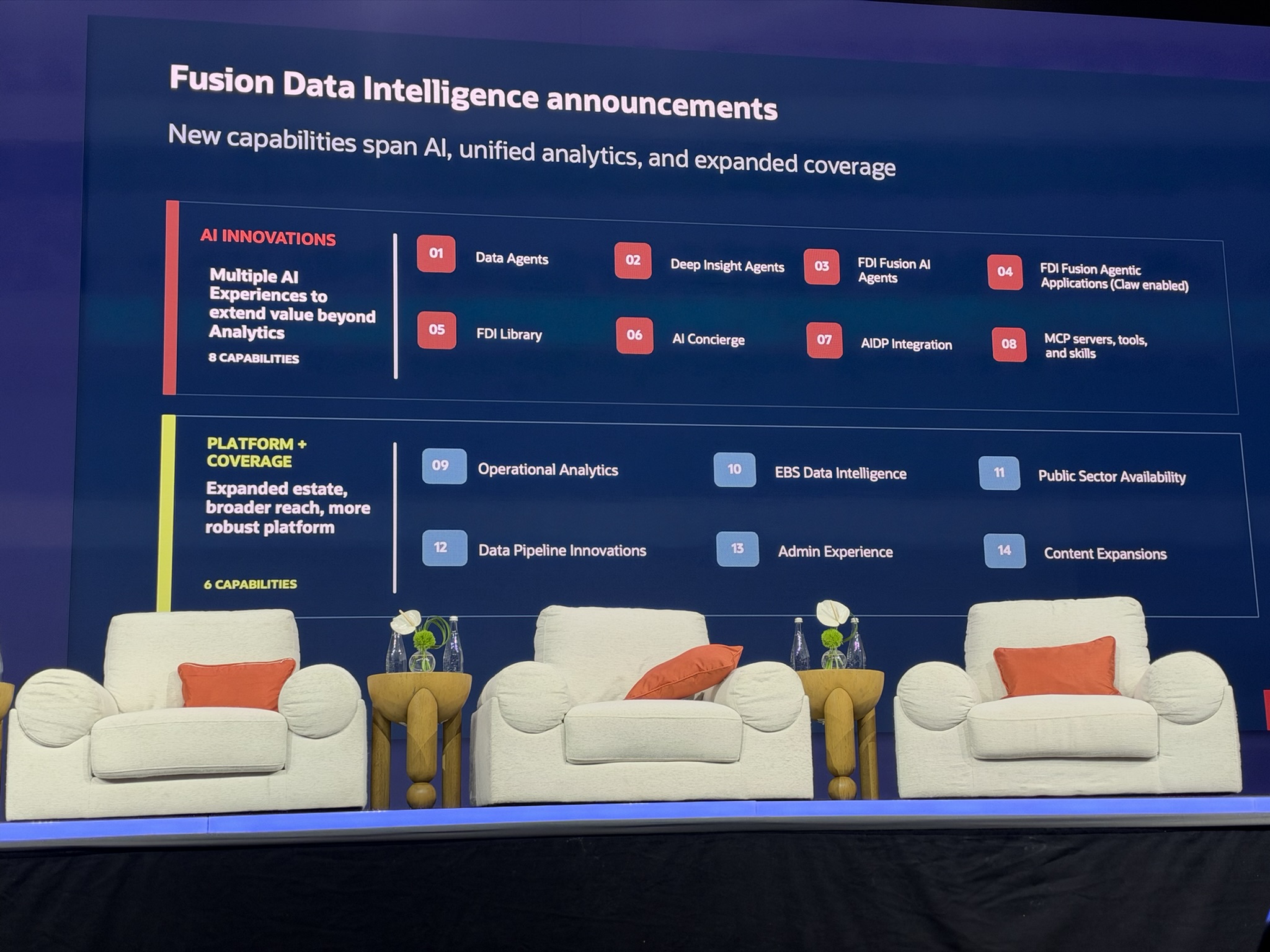
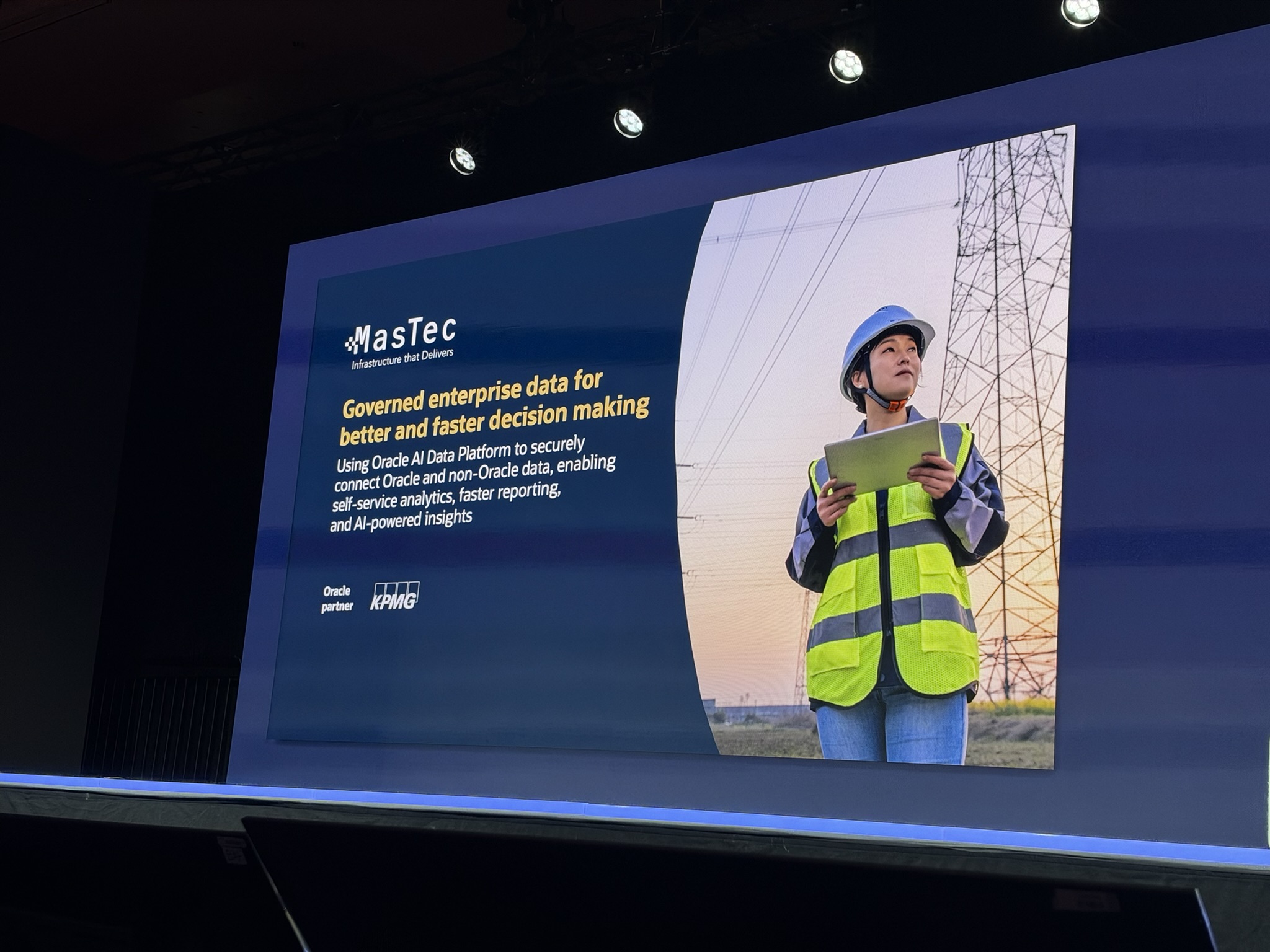
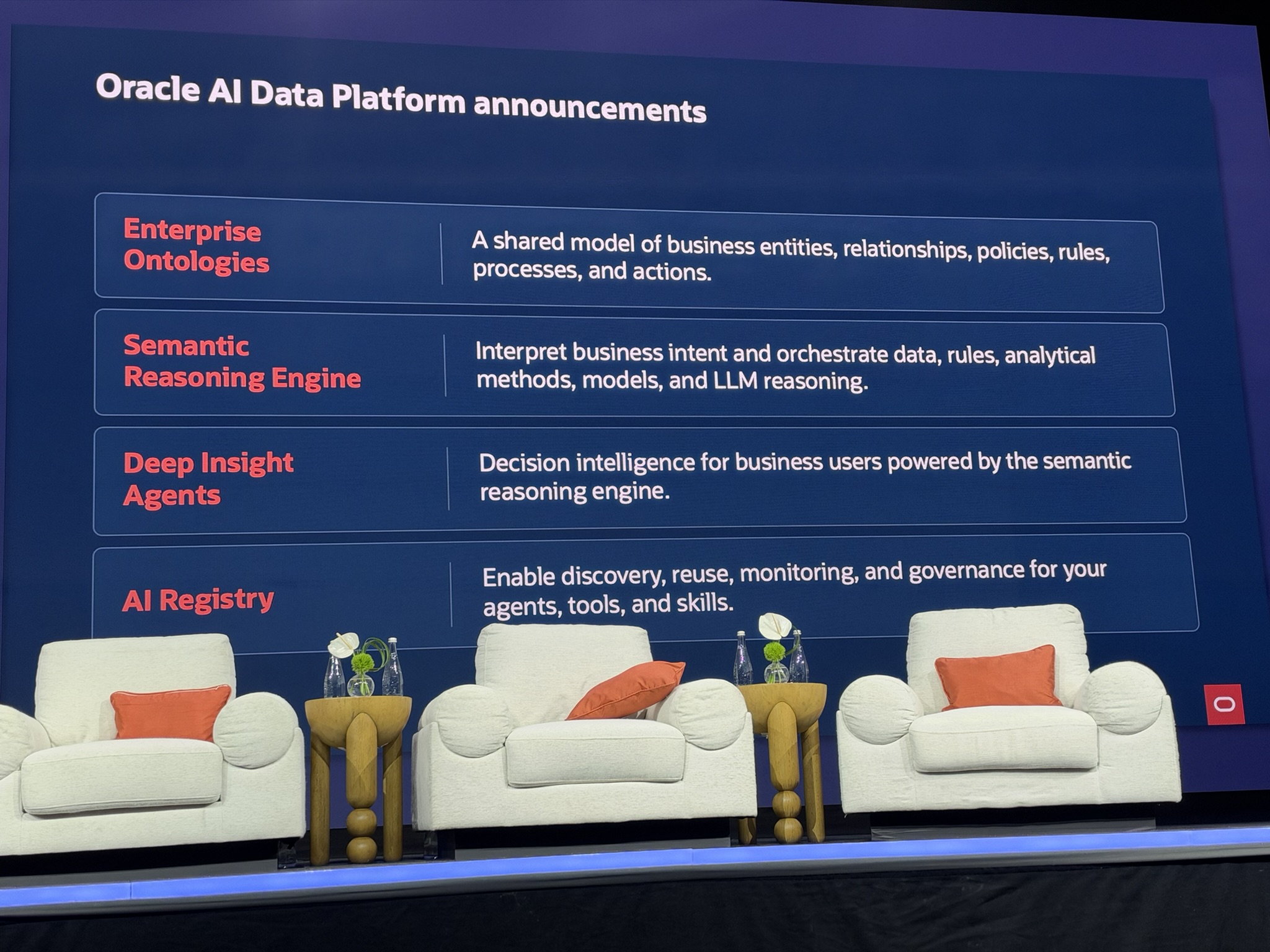
We also heard from Srikant Gokulnatha, SVP, AI Data Platform about how the Oracle AI Data Platform can help organisations get more value from fragmented enterprise data.

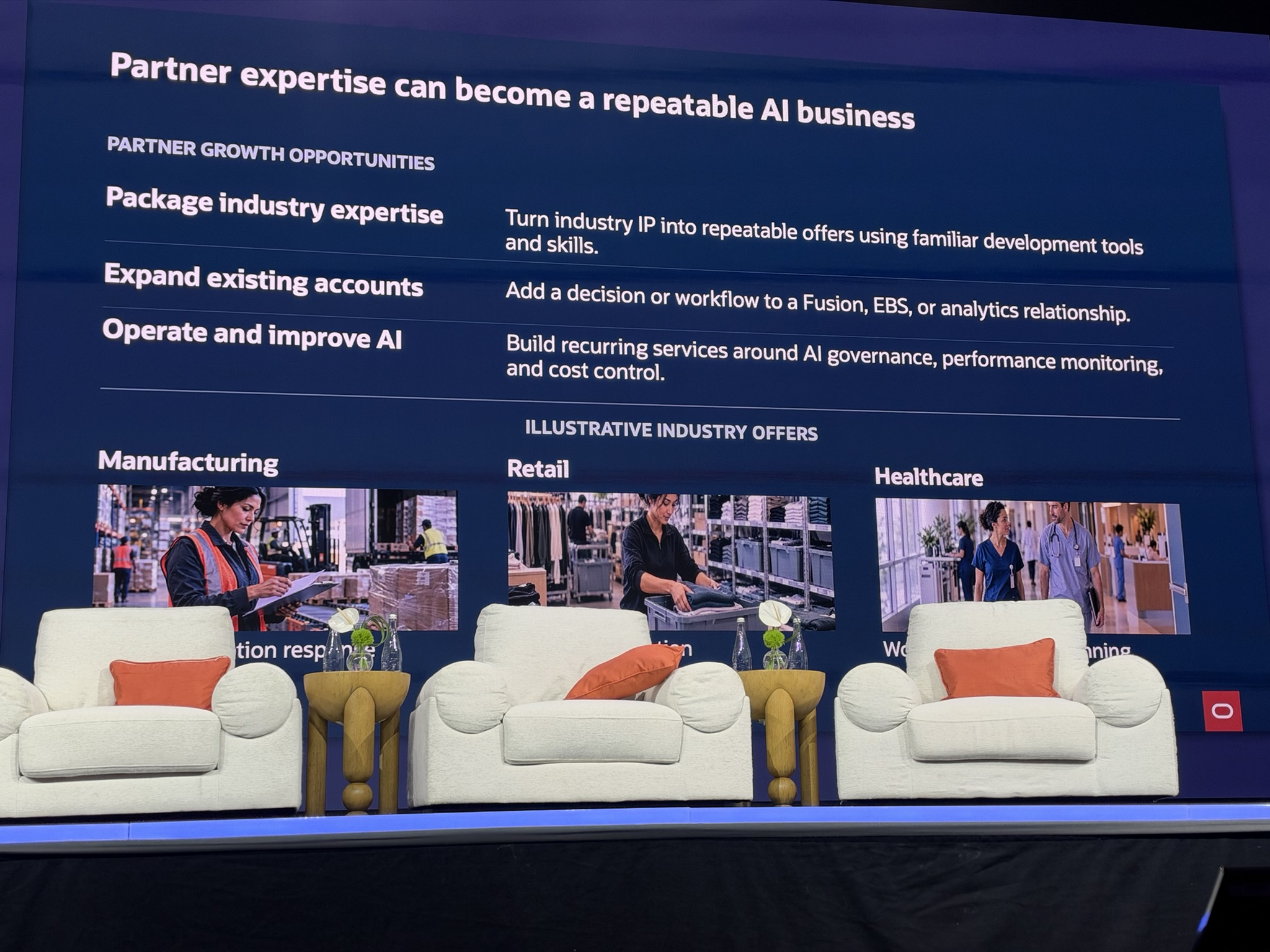
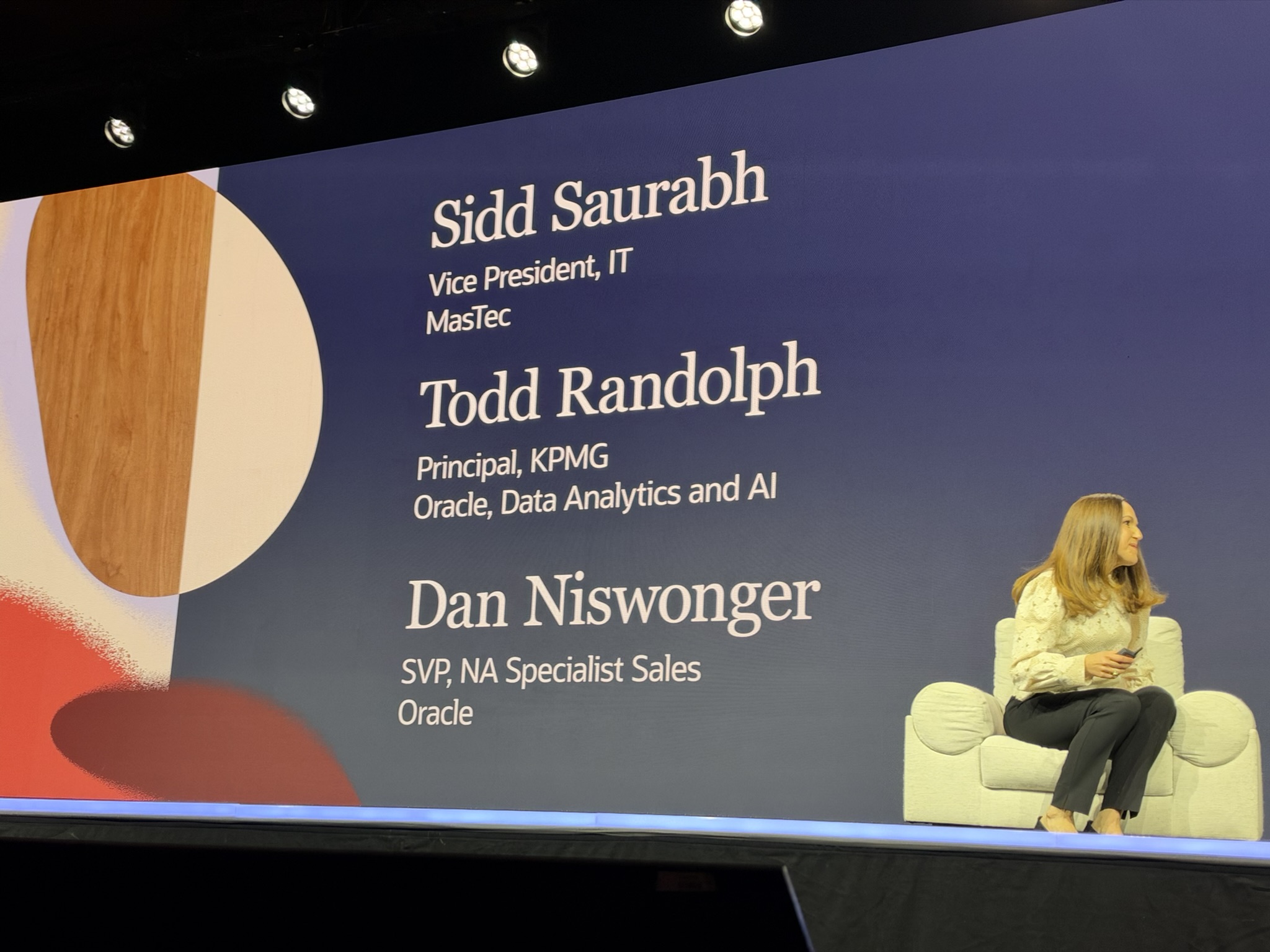
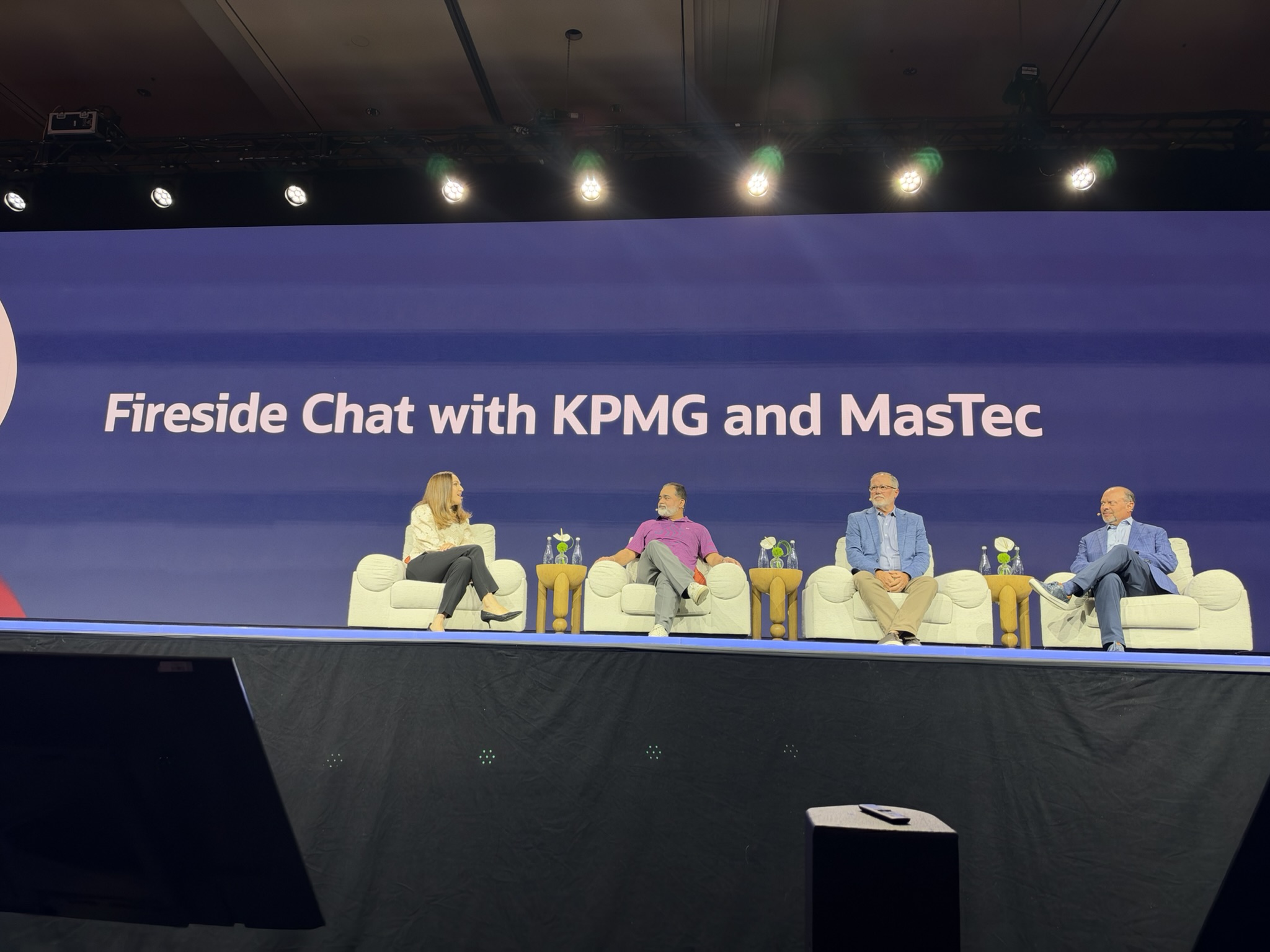
MasTec was used as one example, where fragmented data and reporting were challenges and KPMG identified Oracle AI Data Platform as a potential fit.

For me, this tied back nicely to the wider message of the day: data is at the heart of AI, and organisations need to get their data strategy right if they want to move AI beyond experimentation.

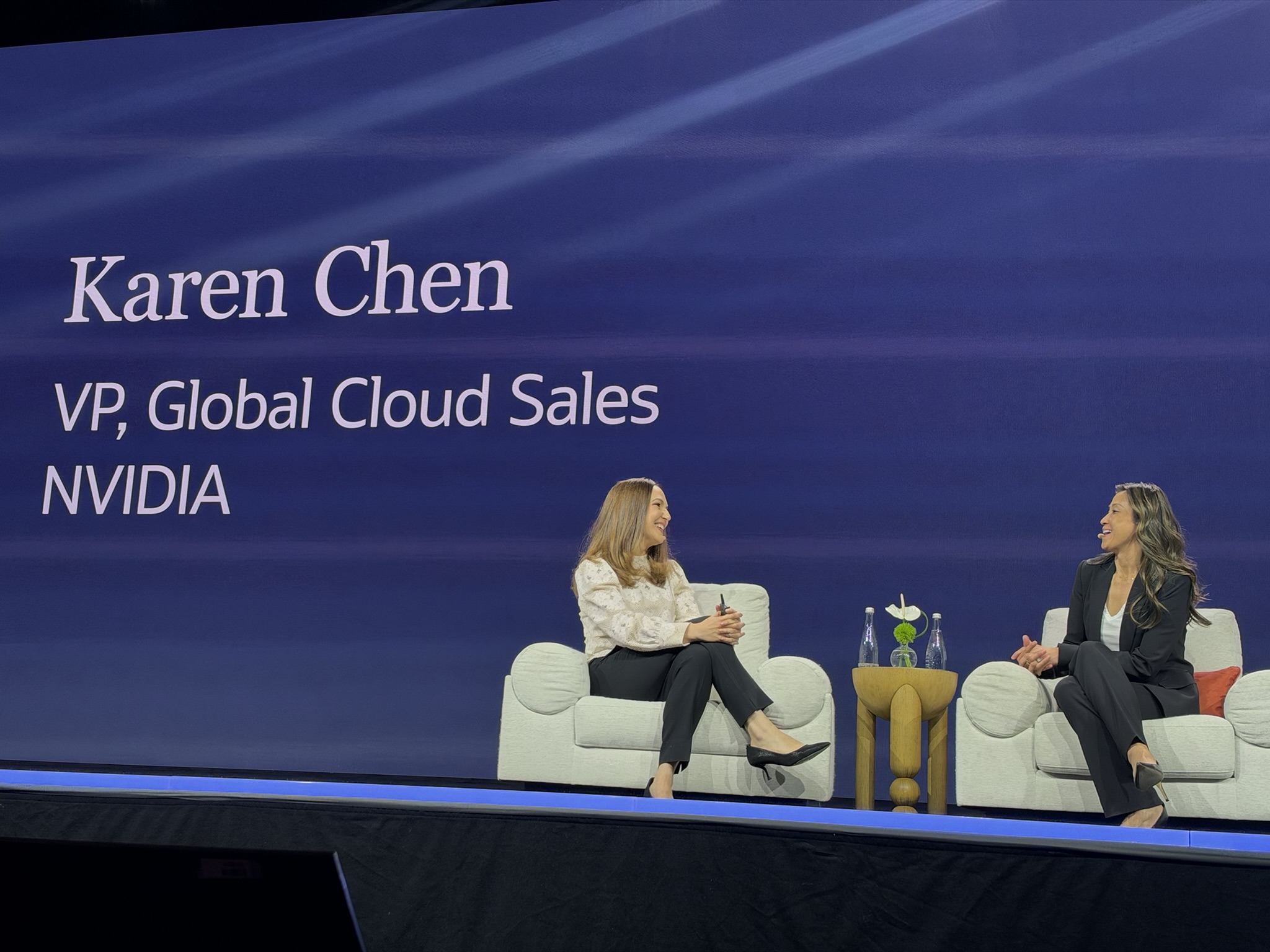
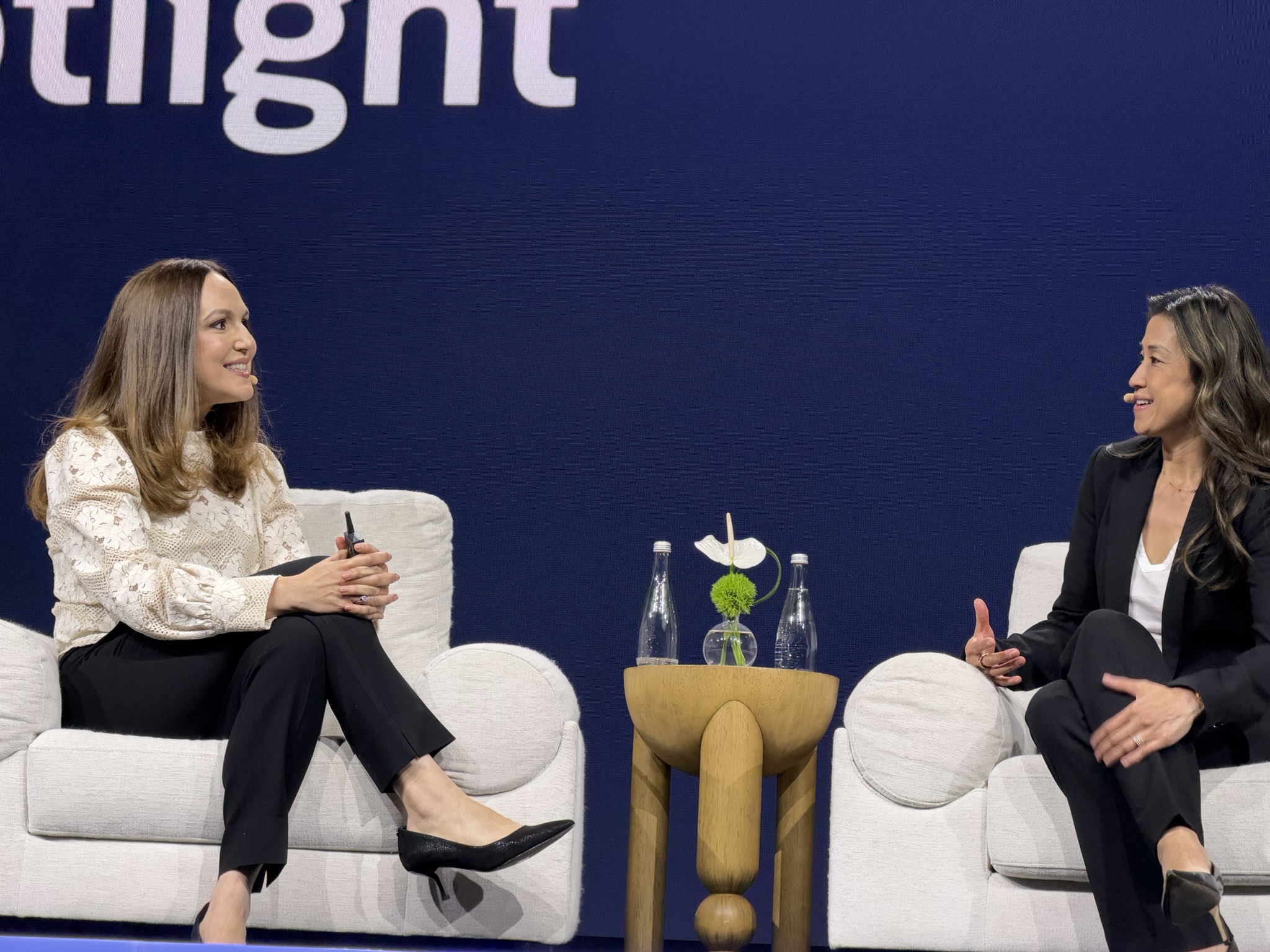
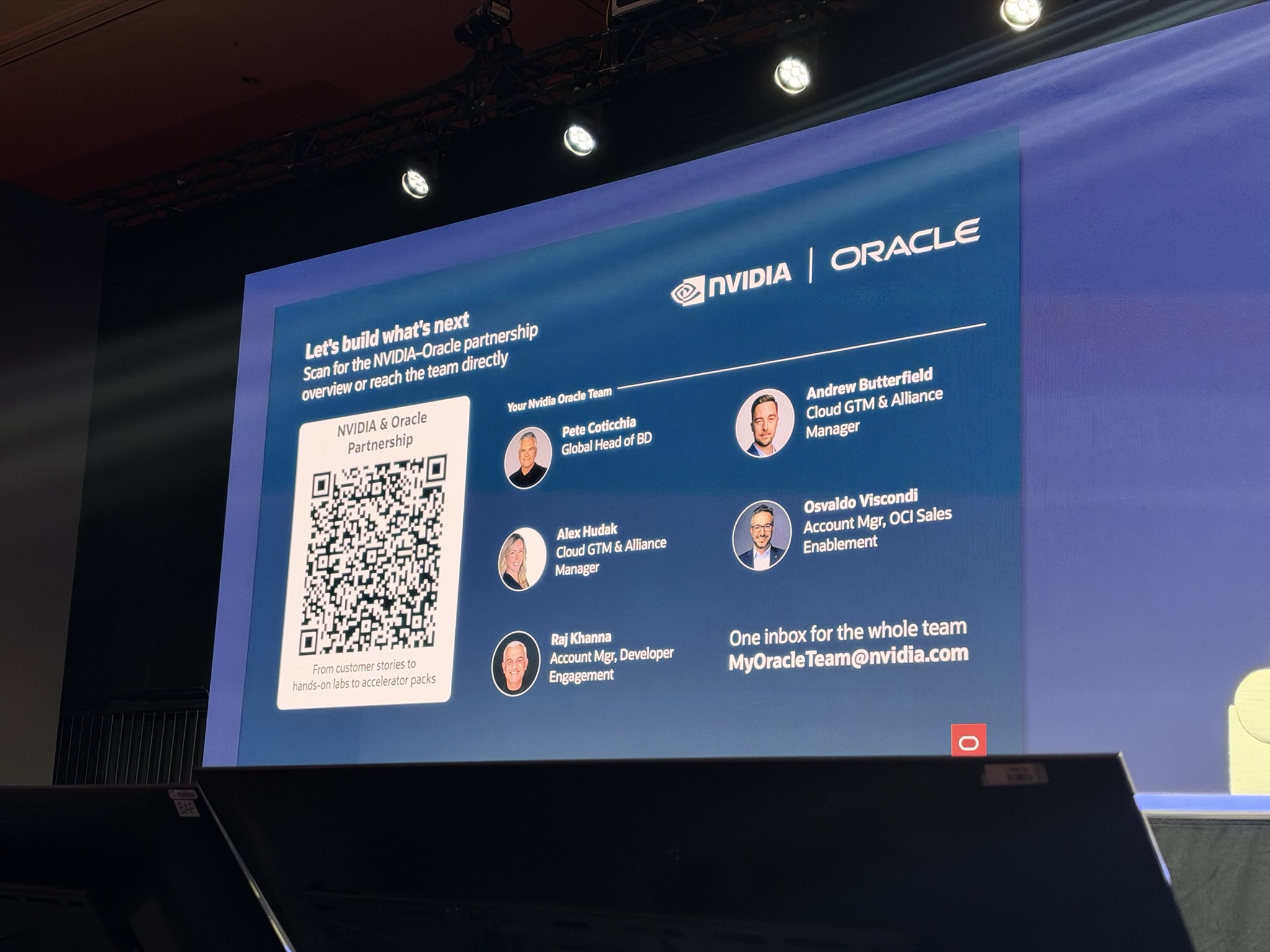
NVIDIA Spotlight

The NVIDIA spotlight finished with another message that resonated with me.

Only a few years ago, many organisations were still experimenting with AI. We are now increasingly seeing customers looking at how they can take AI into production and run it at scale.

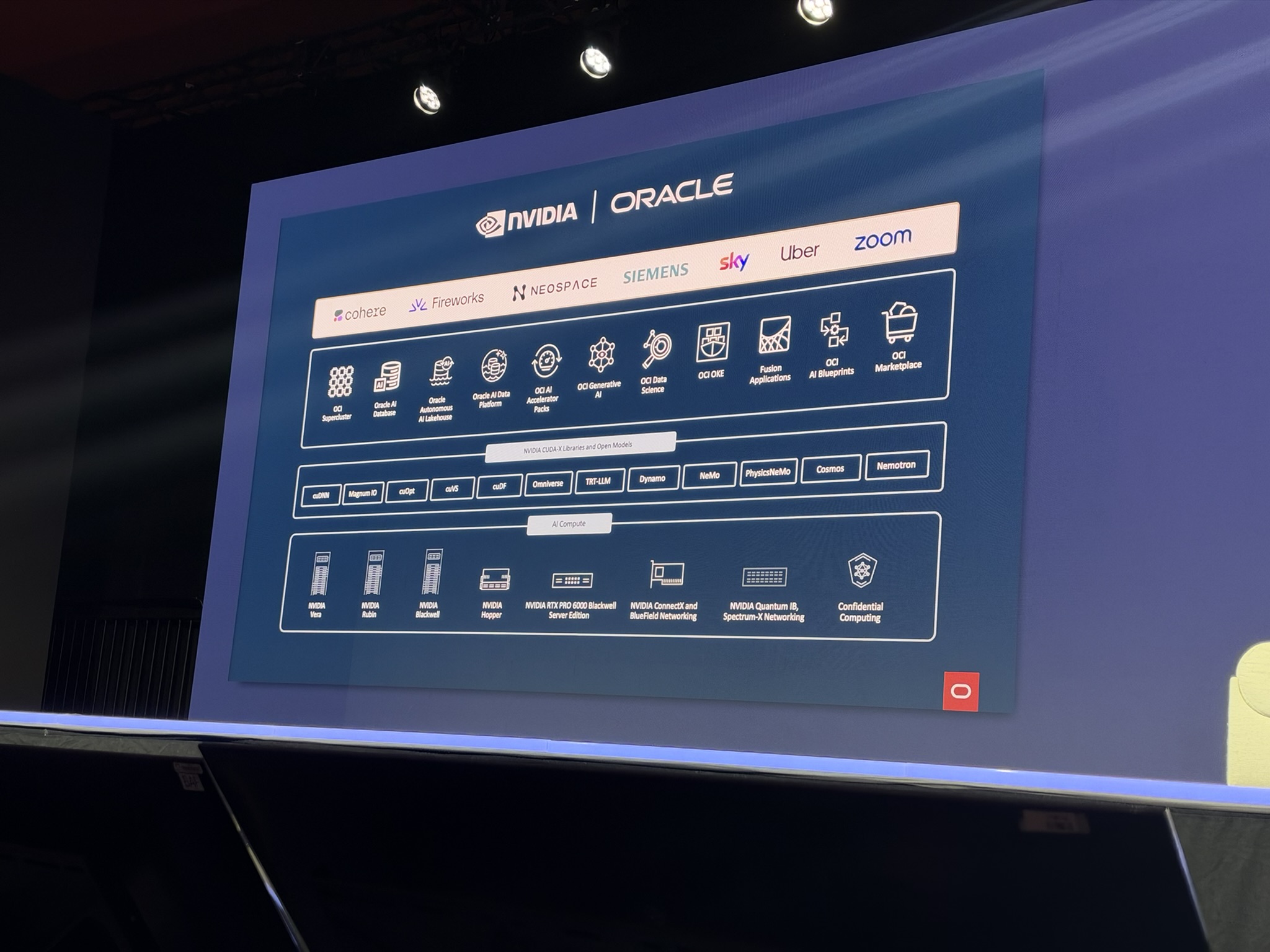
The Oracle and NVIDIA partnership is part of enabling that shift, combining Oracle’s data and cloud platforms with NVIDIA accelerated computing and giving customers greater choice around AI models and infrastructure.

Oracle EMEA Partner Awards

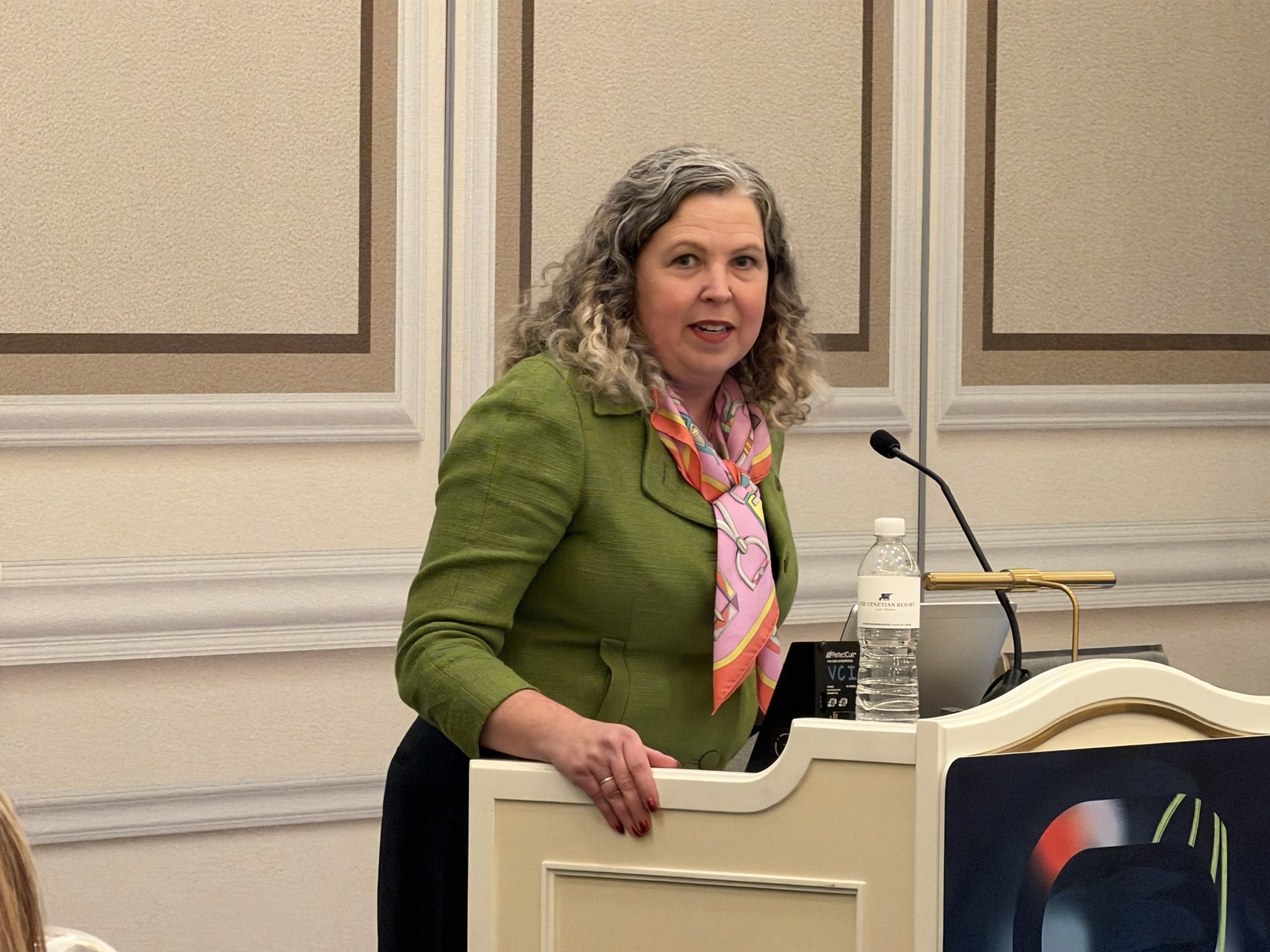
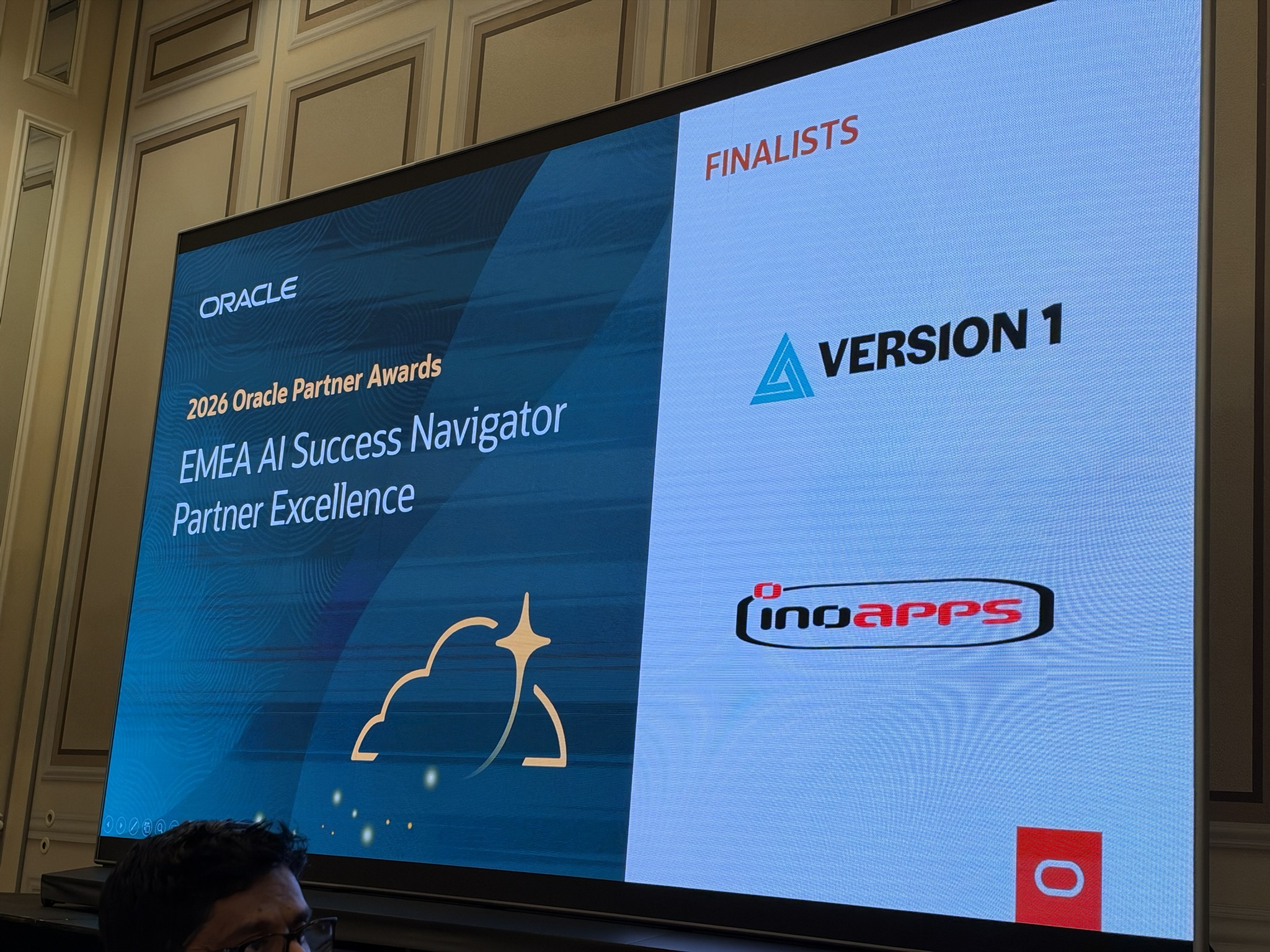
Next up was the Oracle EMEA Partner Awards. Version 1 was a finalist in several categories this year, so we headed in hoping we might come away with some success! This event was hosted by Philippa Clifford-Davies.

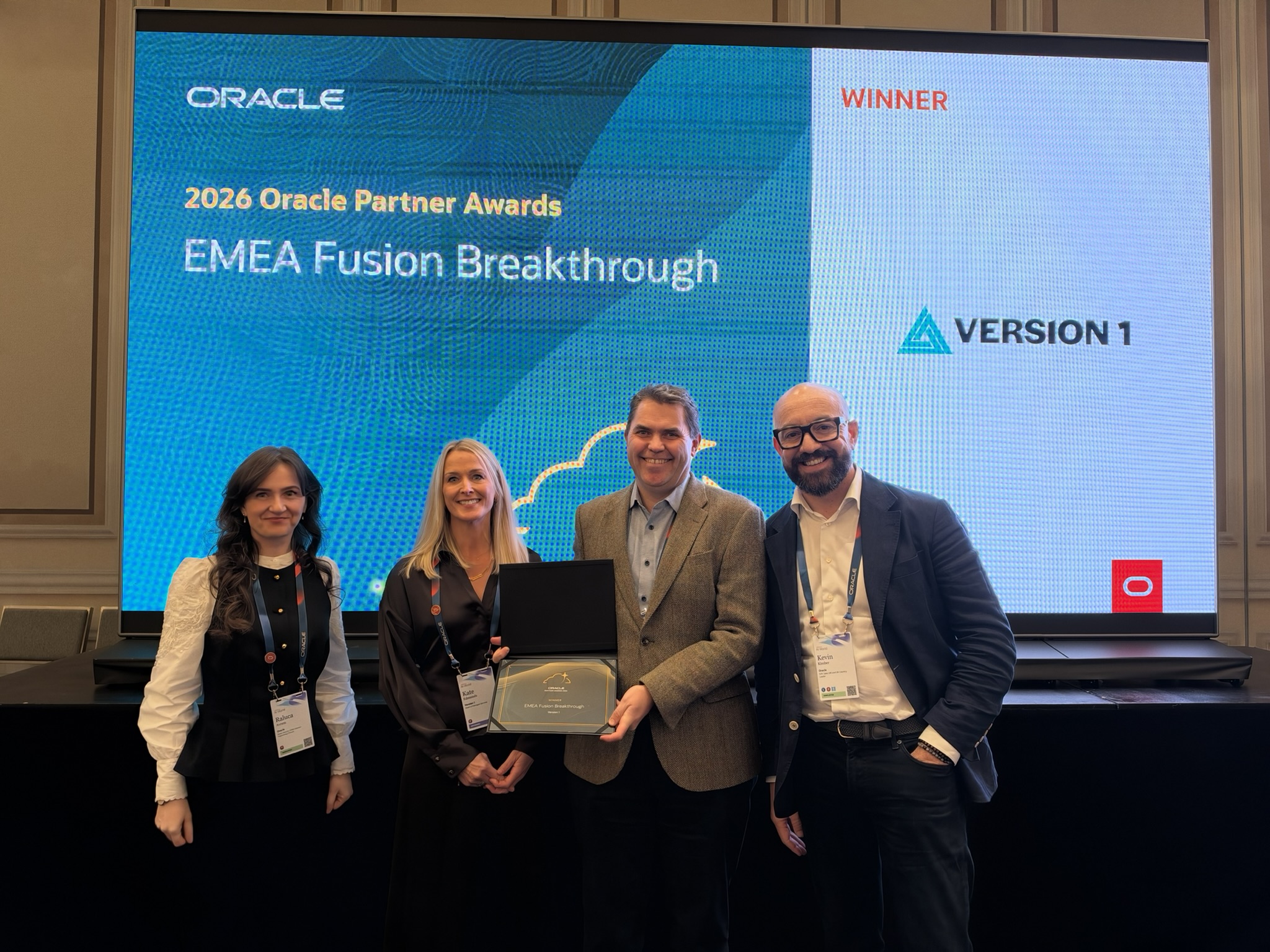
Great news, we won! 🏆

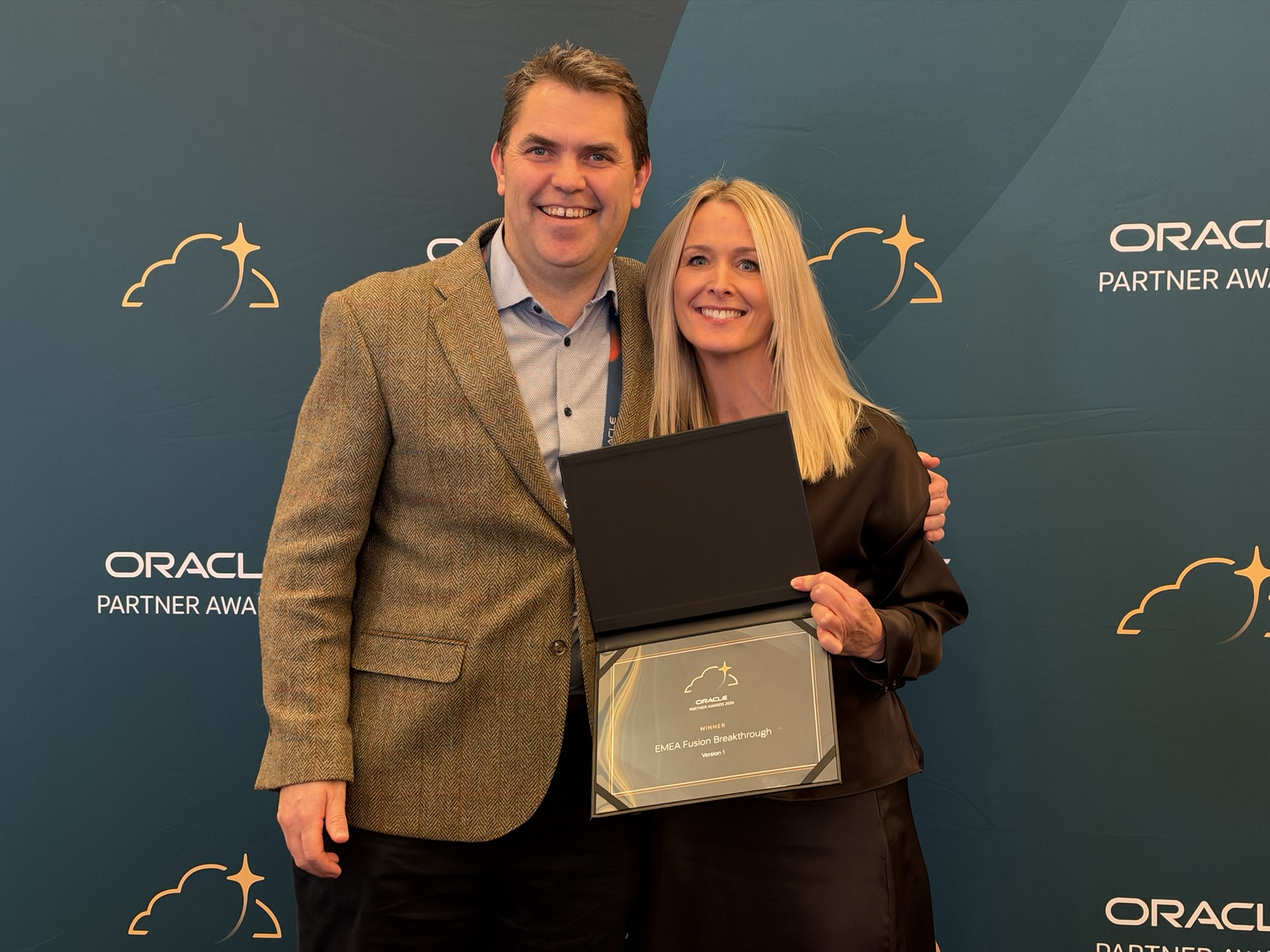
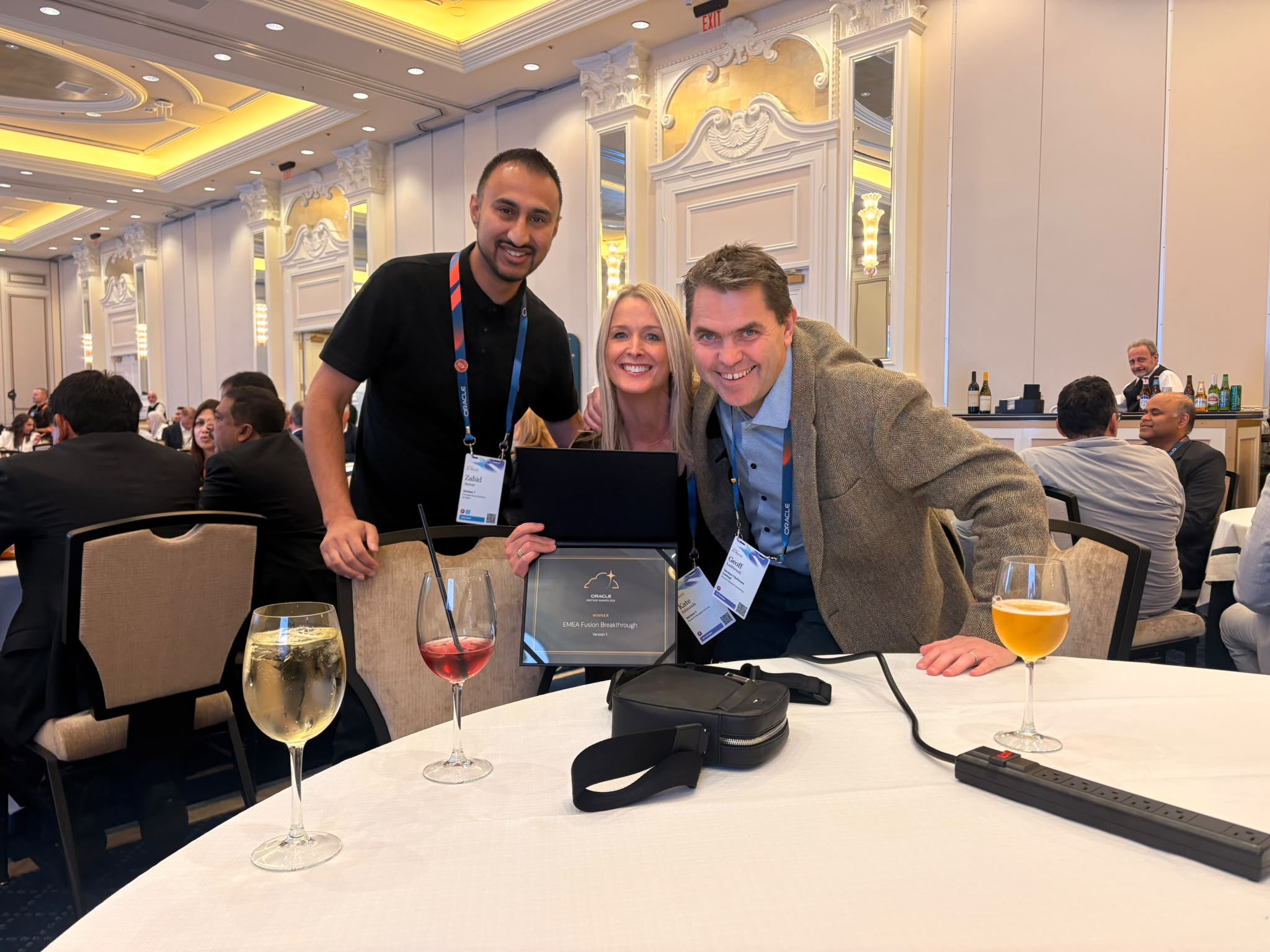
Version 1 picked up the EMEA Fusion Breakthrough Award, which was a fantastic result. Well done to all my colleagues in our Enterprise Applications practice who contributed to this achievement.

Geoff and Kate had the honour of collecting the award from Kevin Kimber on behalf of Version 1. A brilliant way to start Oracle AI World!

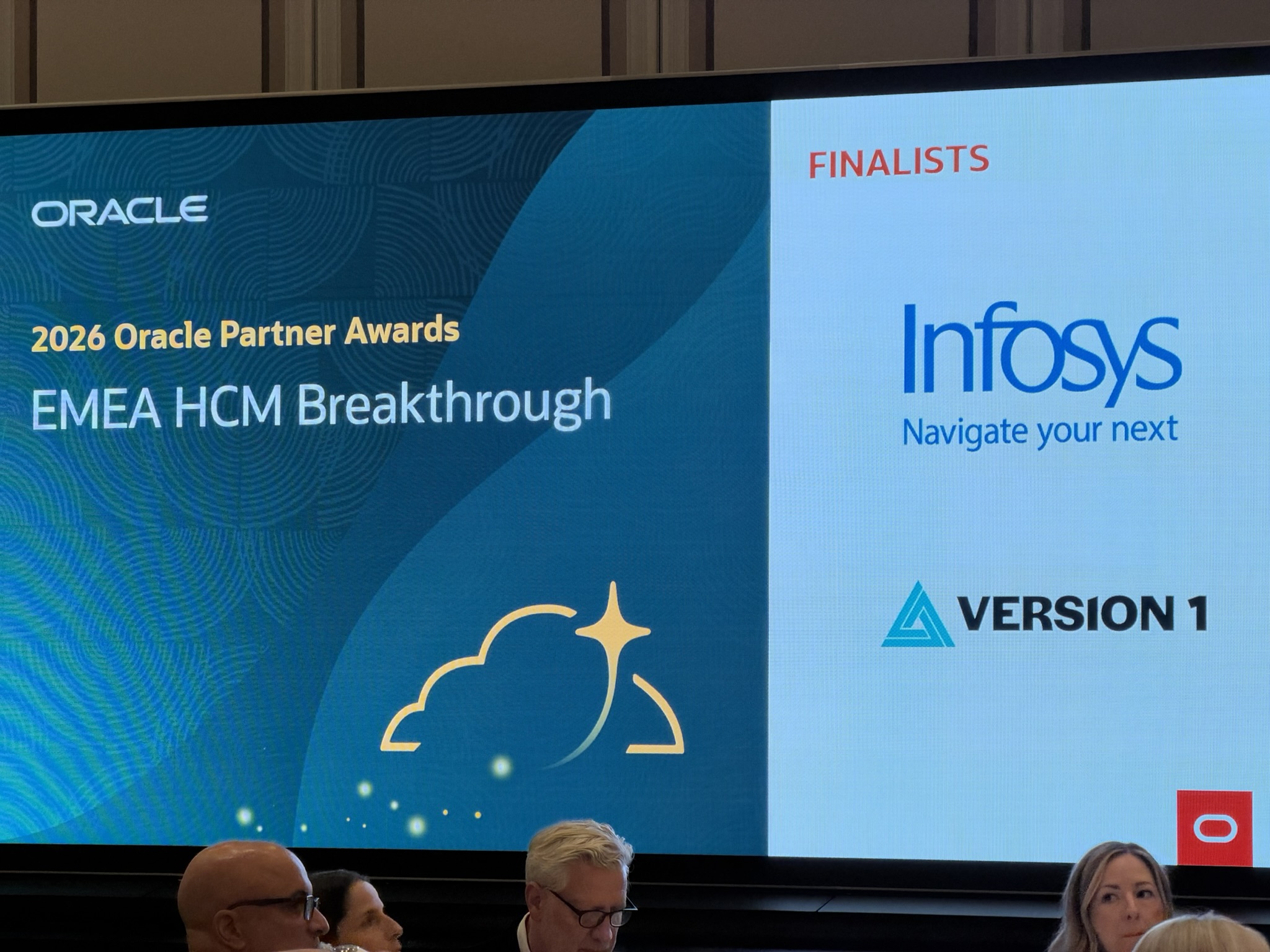
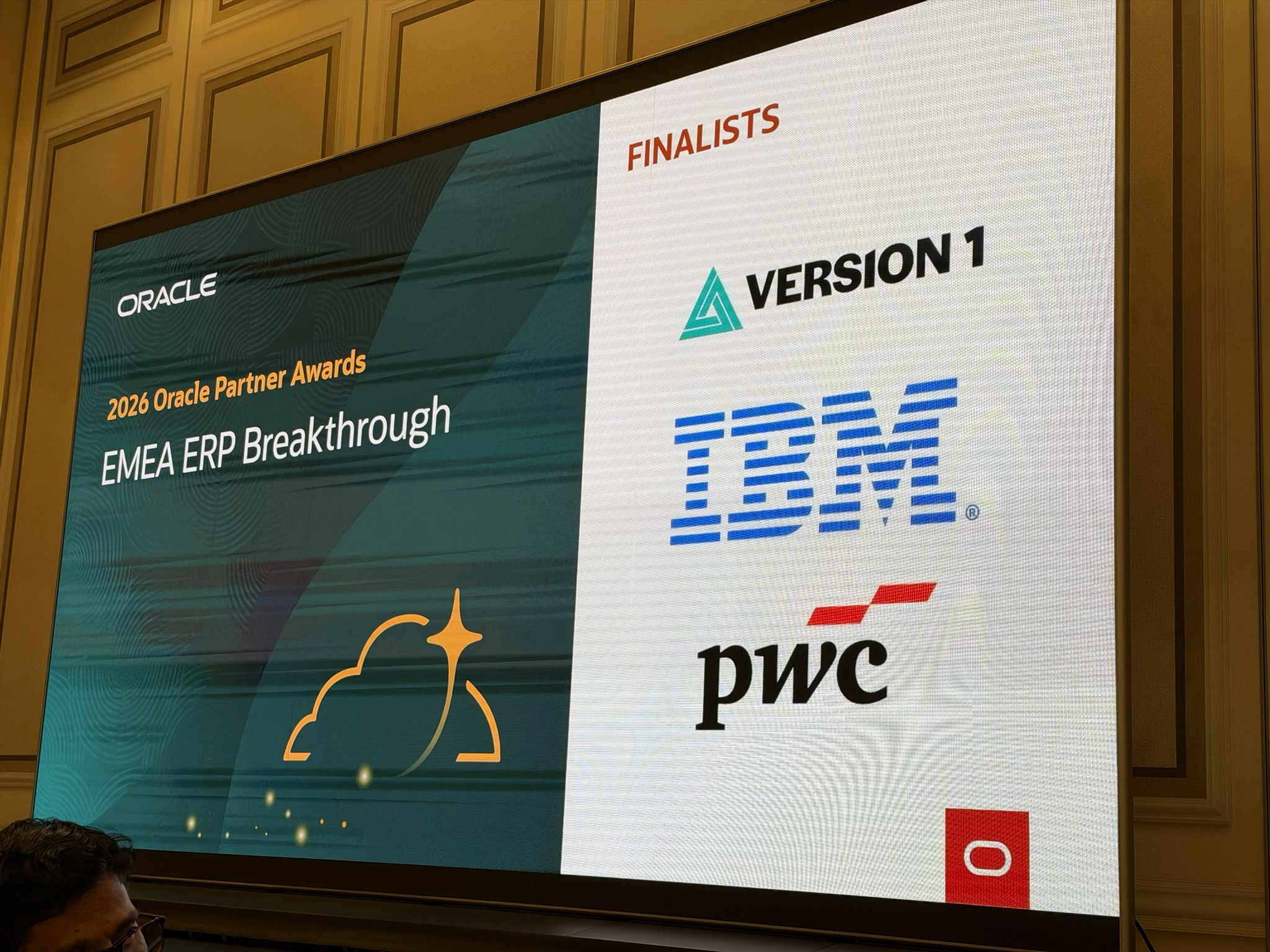
We were also finalists in the following categories. We didn’t win these ones, but still a fantastic achievement and great recognition for the team.

Well done again to everyone in our Enterprise Applications practice!

Oracle Database Premiere Customer Appreciation Event

Last stop of a very busy Day 1 was the Oracle Database Premier Customer Appreciation Event.

I’ve attended this event for the past four years, with the previous three held at Madame Tussauds in The Venetian. This year, there was a change of venue, with the event taking place at TAO.

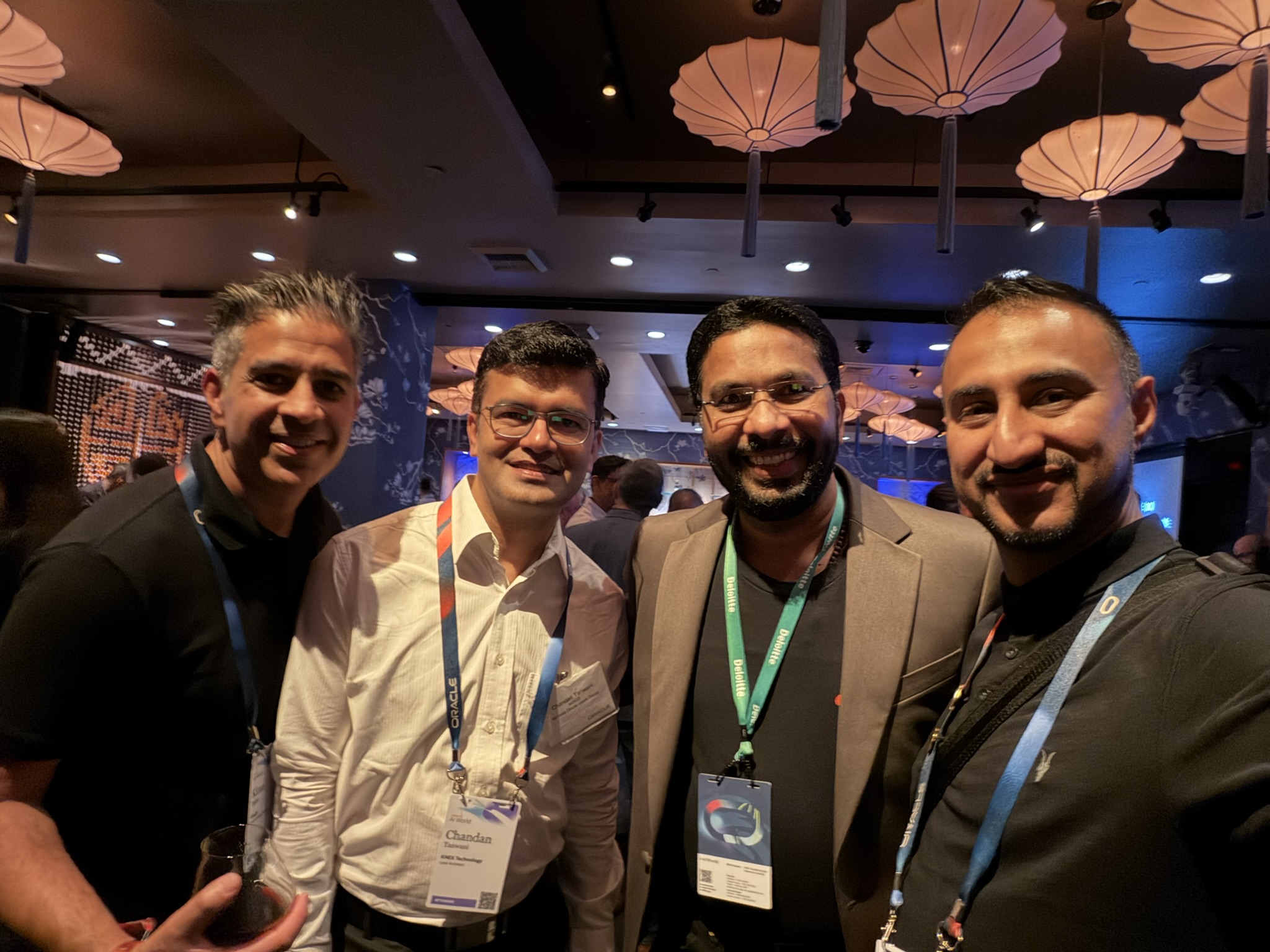
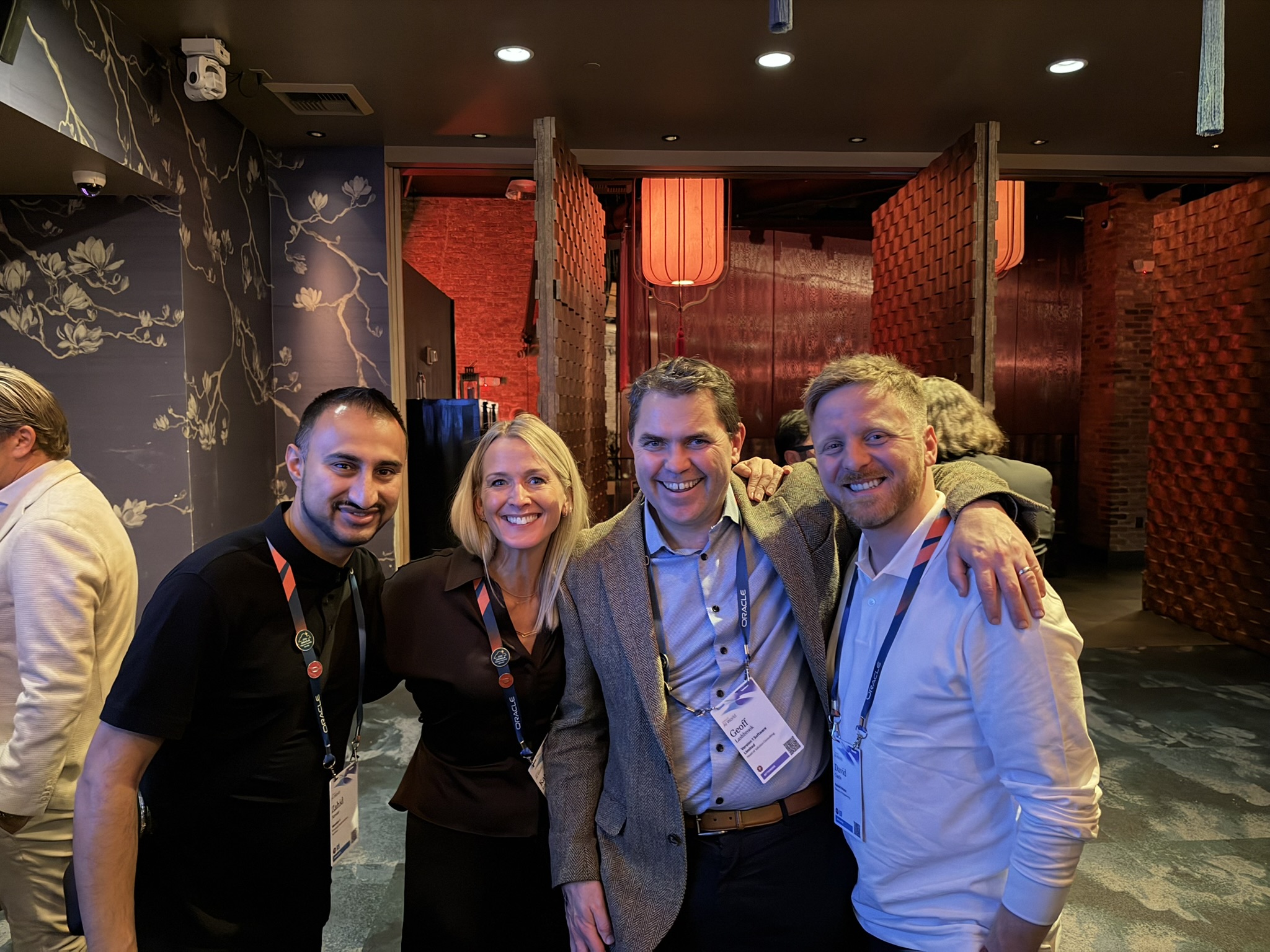
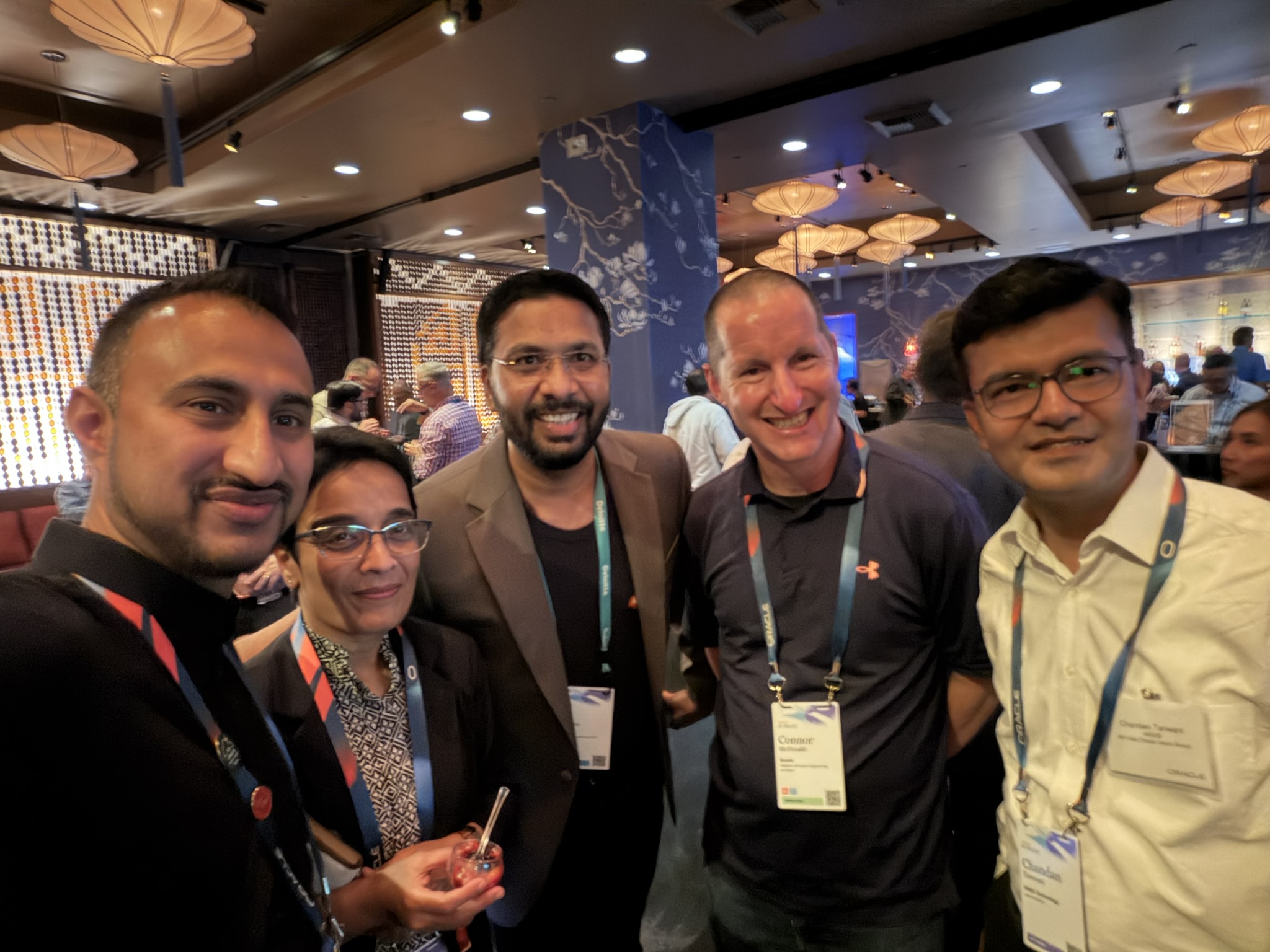
Madame Tussauds was definitely more entertaining 😎, but TAO still provided a great opportunity to catch up with friends, colleagues and customers, meet members of Oracle Product Management, and do plenty of networking. Got to meet, Kiran Tailor, Chandan Tanwani, Sai Penumuru, David Castle (Kobalt – Version 1 customer), Kate Edmunds, Geoff Lashbrook, Sara Narayan, Connor McDonald, Alex Blyth and Dominic Giles.

That’s Day 1 done!

Tomorrow is the first day of the actual conference, and I’m presenting in the first session at 8am alongside David Castle from Kobalt.

So, time for an early night. First time presenting at Oracle AI World tomorrow! Really looking forward to it! 😎👍🏽

If you found this blog post useful, please like as well as follow me through my various Social Media avenues available on the sidebar and/or subscribe to this Oracle blog via WordPress/e-mail.

Thanks

Zed DBA (Zahid Anwar)

Oracle AI World 2026 Day 0

Introduction

Oracle AI World is a little different for me this year, because for the first time, I’m presenting! 😎

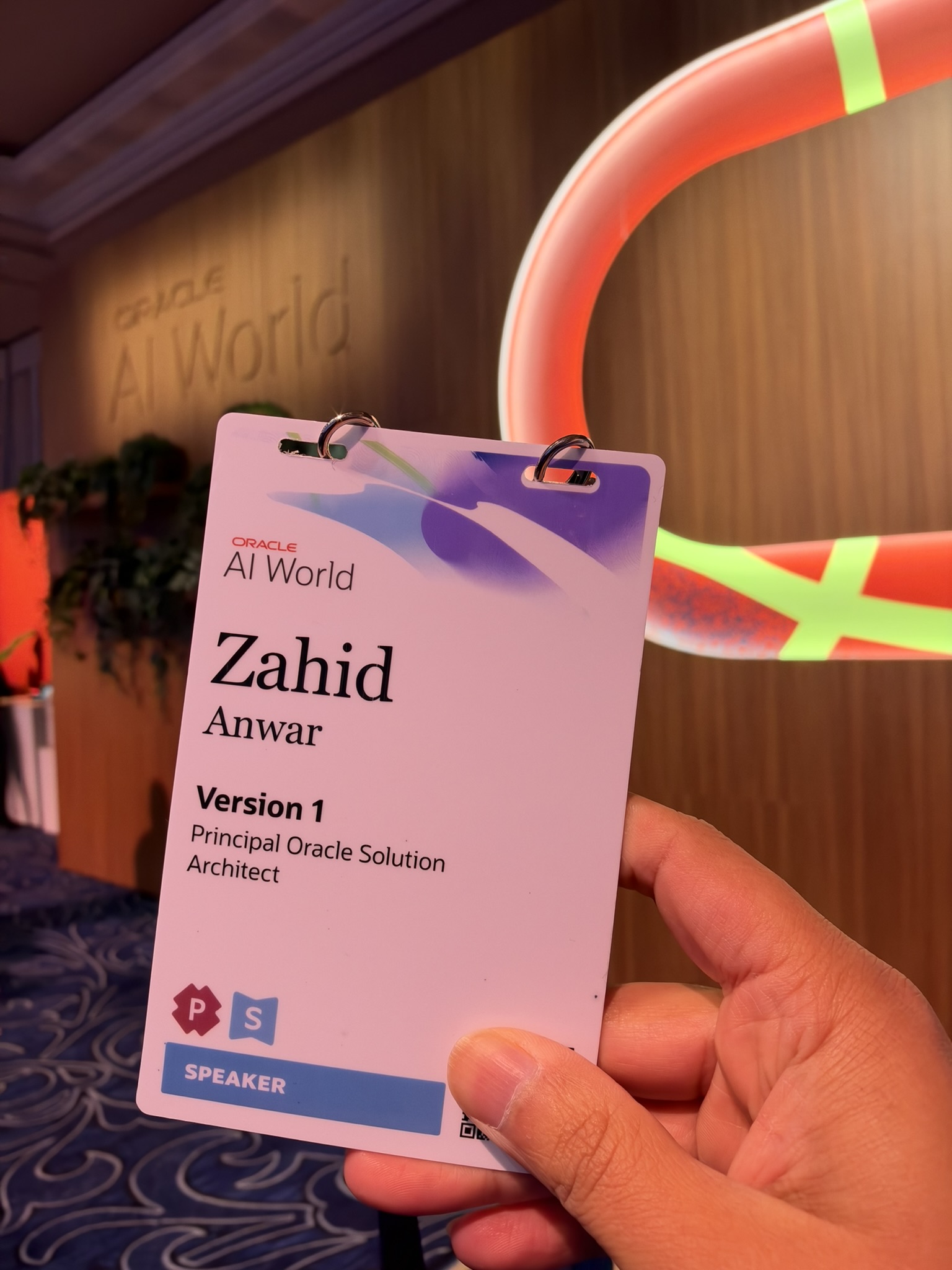
Normally, my complimentary ticket comes through the Oracle ACE Programme. This year, however, I got a complimentary speaker ticket, which feels pretty special! 🙏🏽

I’ll be presenting alongside David Castle from Kobalt Music, talking about their journey migrating to Oracle AI Database@AWS.

The session details are below, so if you’re attending this year, please come along and see us!

The Boring Migration: How to Move to Multicloud and Get Promoted, Not Paged [LRN1135]

A big thank you as well to my employer Version 1, for supporting me and covering my travel, accommodation and time.

The Flight to Atlanta

For the past four years, I’ve travelled to Oracle AI World via New York. This year, that flight wasn’t available, so I’m taking a slightly different route via Atlanta.

So, I set off from Manchester for the first leg of my journey to Atlanta.

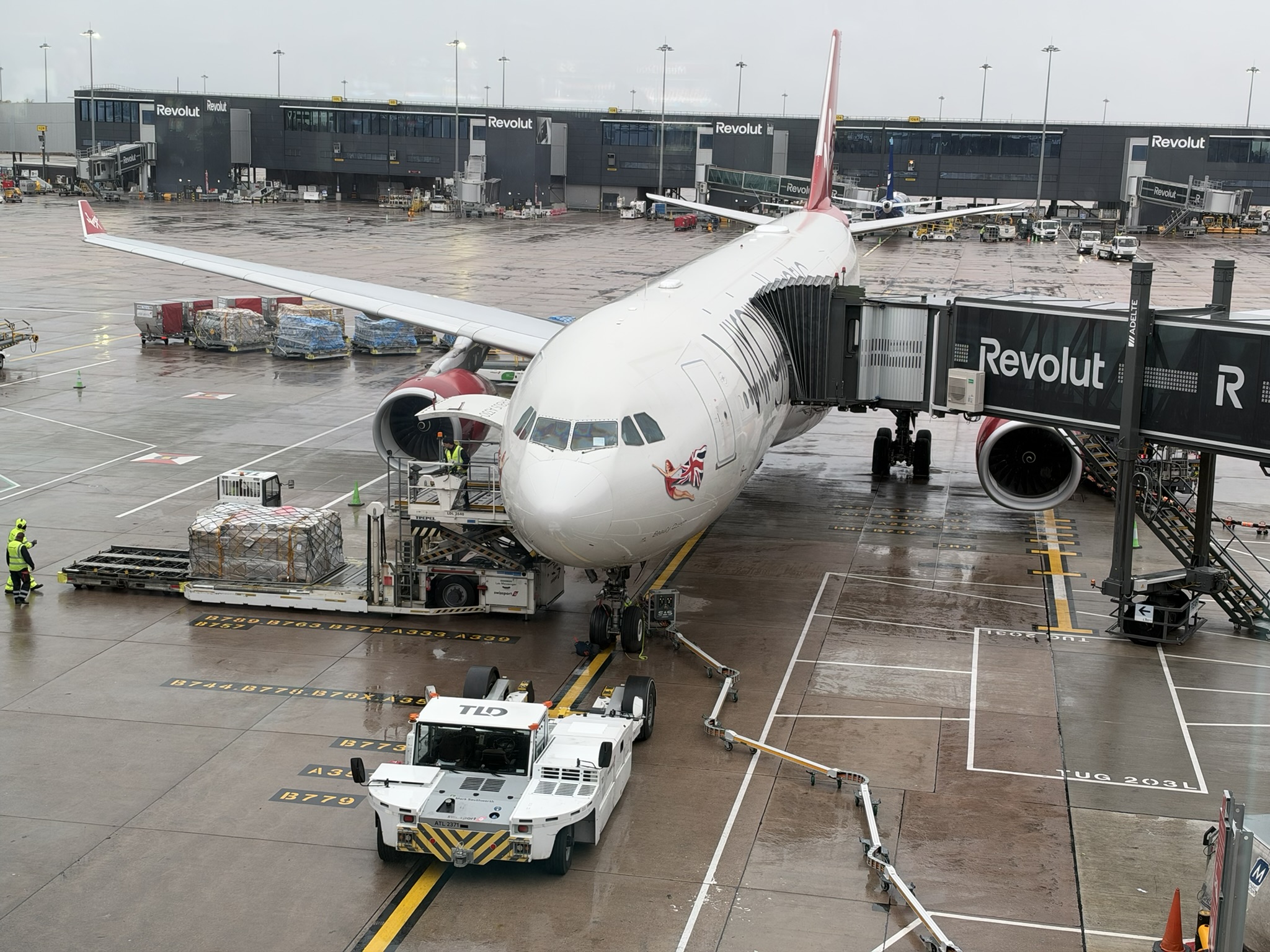
The first leg of the journey was a 9-hour flight from Manchester to Atlanta, flying with my usual airline, Virgin Atlantic.

Made it to Atlanta! Next stop, immigration. I’m used to this taking a while in New York, but Atlanta wasn’t too bad. Just under an hour to get through.

The Flight to Las Vegas

By this point, I was definitely starting to feel tired. After a 9-hour flight and a 3.5-hour layover, my body was telling me it was nearly midnight, even though it was only 7pm in Atlanta!

Next up was my 8:45pm flight to Las Vegas, and before long I was back in the air.

Landed! Pretty shattered by this point. I managed to get a bit of sleep on the flight, but I was trying to stay awake as much as possible so I could sleep on local time and hopefully get over the jet lag!

After a long journey, I finally made it to my home for the week, my usual Sahara Hotel. It’s at the end of the Monorail and has become my regular choice when I’m in Vegas, mainly because it helps keep the costs down compared with staying in the centre of the Strip.

That’s it for today! Tomorrow, it’s the Partner Summit, followed by the Database Appreciation Event.

Looking forward to kicking off Oracle AI World!

You can view my day 1 here.

If you found this blog post useful, please like as well as follow me through my various Social Media avenues available on the sidebar and/or subscribe to this oracle blog via WordPress/e-mail.

Thanks

Zed DBA (Zahid Anwar)
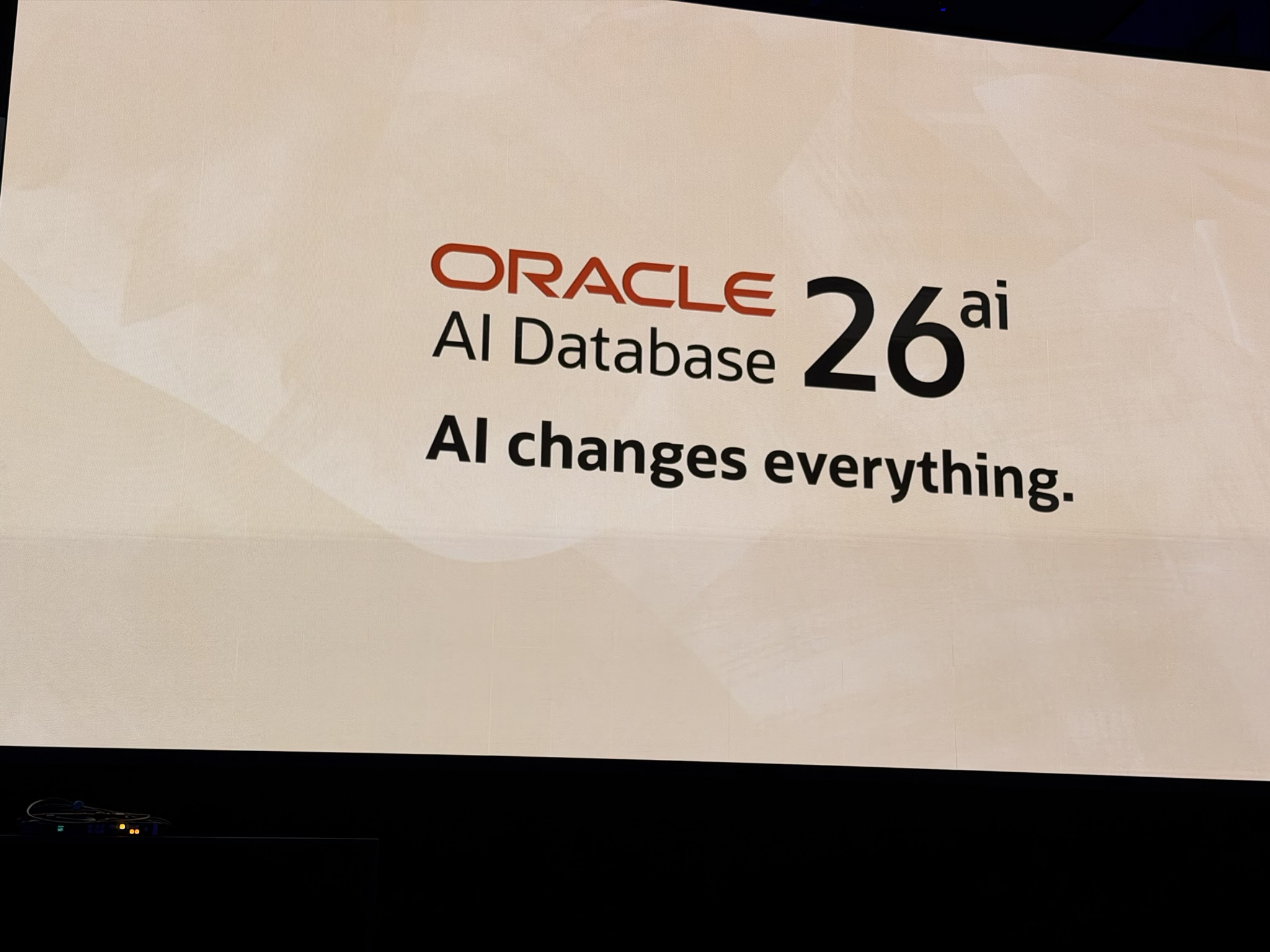
Oracle AI Database 26ai Released

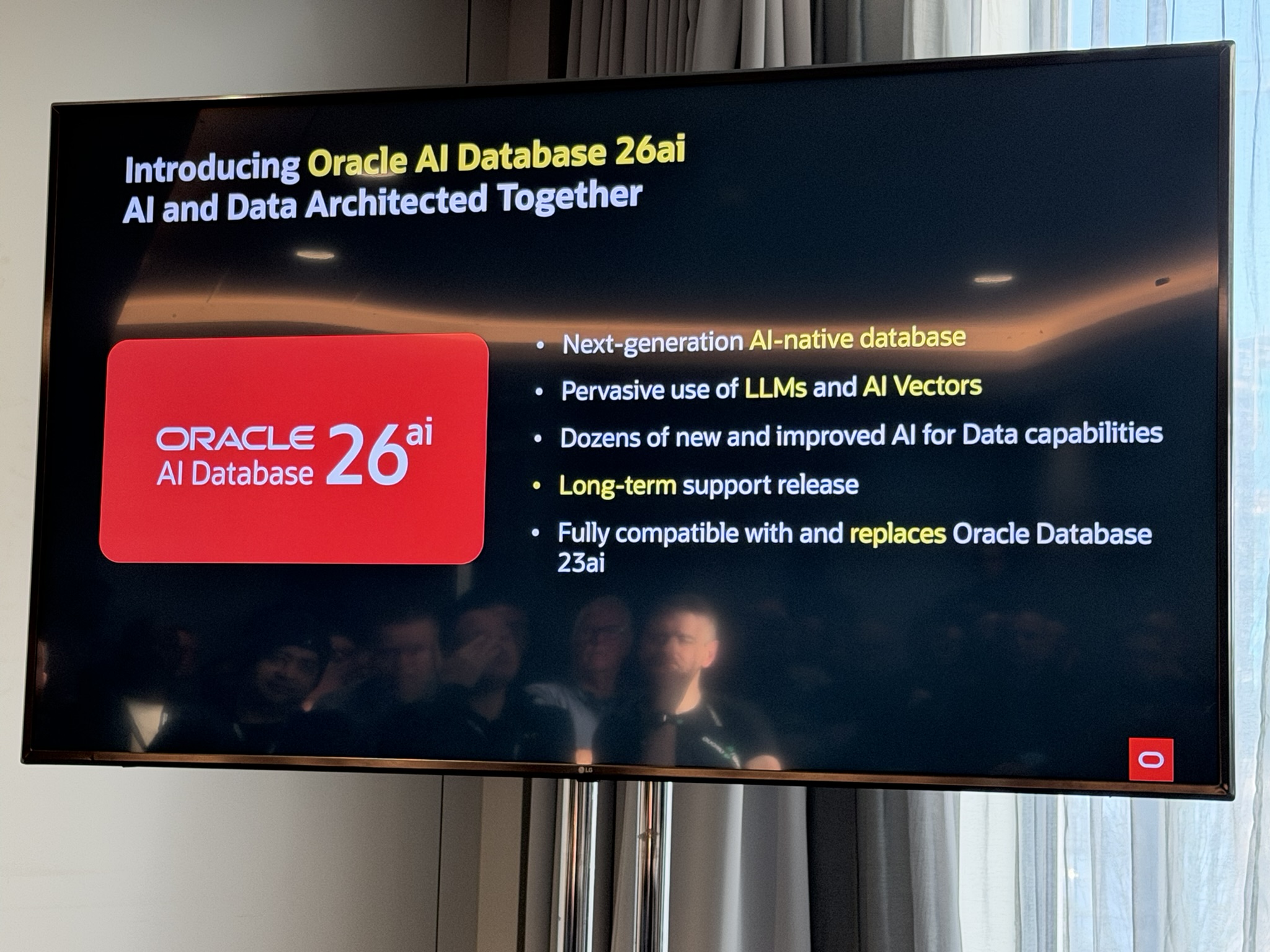
Announcement of Oracle AI Database 26ai

At Oracle AI World 2025, one of the biggest announcements from my perspective was the launch of Oracle AI Database 26ai, tying into Oracle’s vision for AI-driven data management. The official press release provides full details here, but the highlight came during Juan Loaiza (Executive Vice President, Oracle Database Technologies) keynote, titled: The “AI for Data” Revolution is Here – How to Survive and Thrive. In his session, Juan outlined how this new release integrates advanced AI capabilities directly into the database, architected for mission-critical workloads, and that the AI database includes dozens more major new AI capabilities. I’ve shared my thoughts and key takeaways from his keynote in a dedicated blog post, which you can read here.

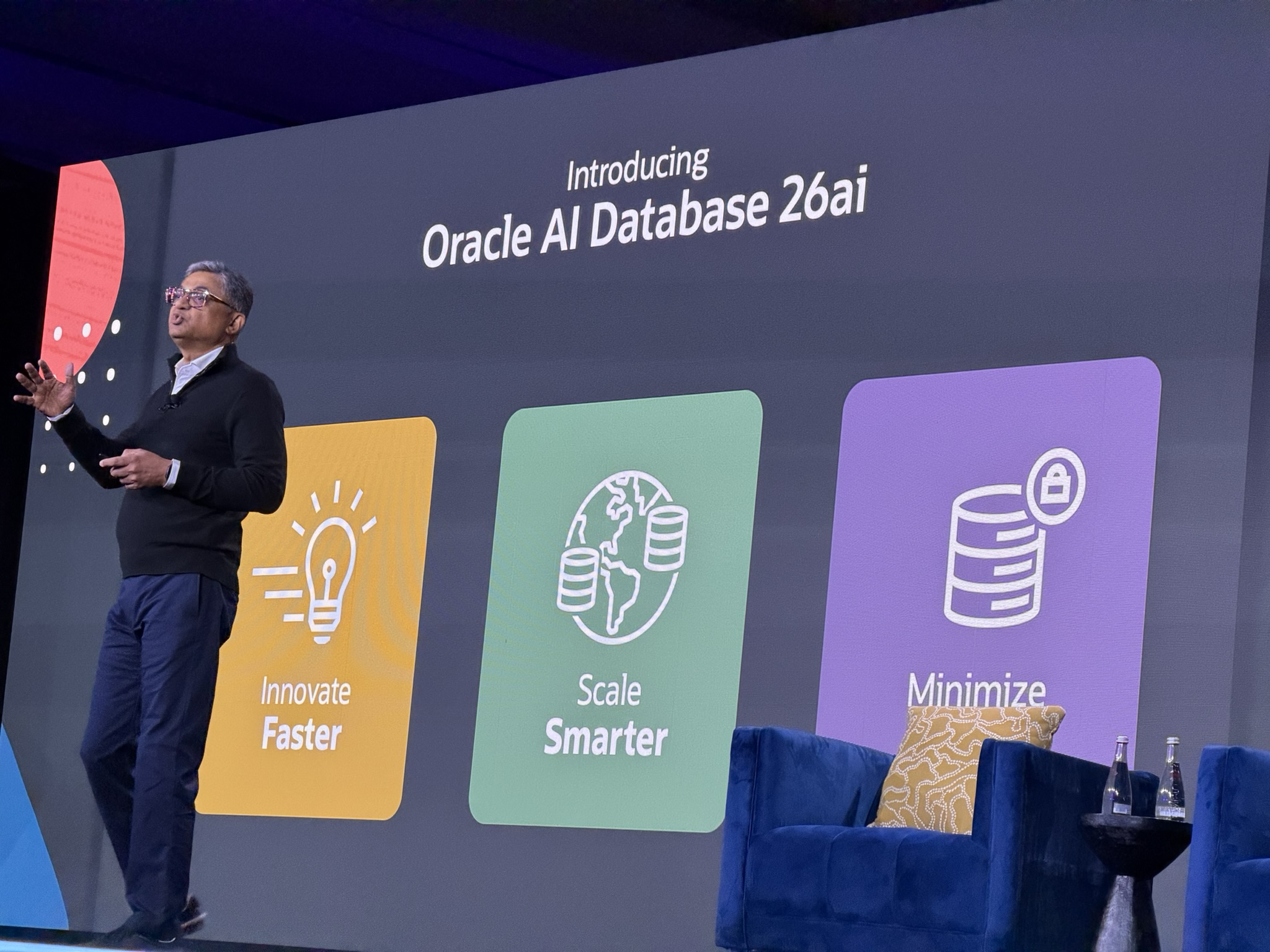
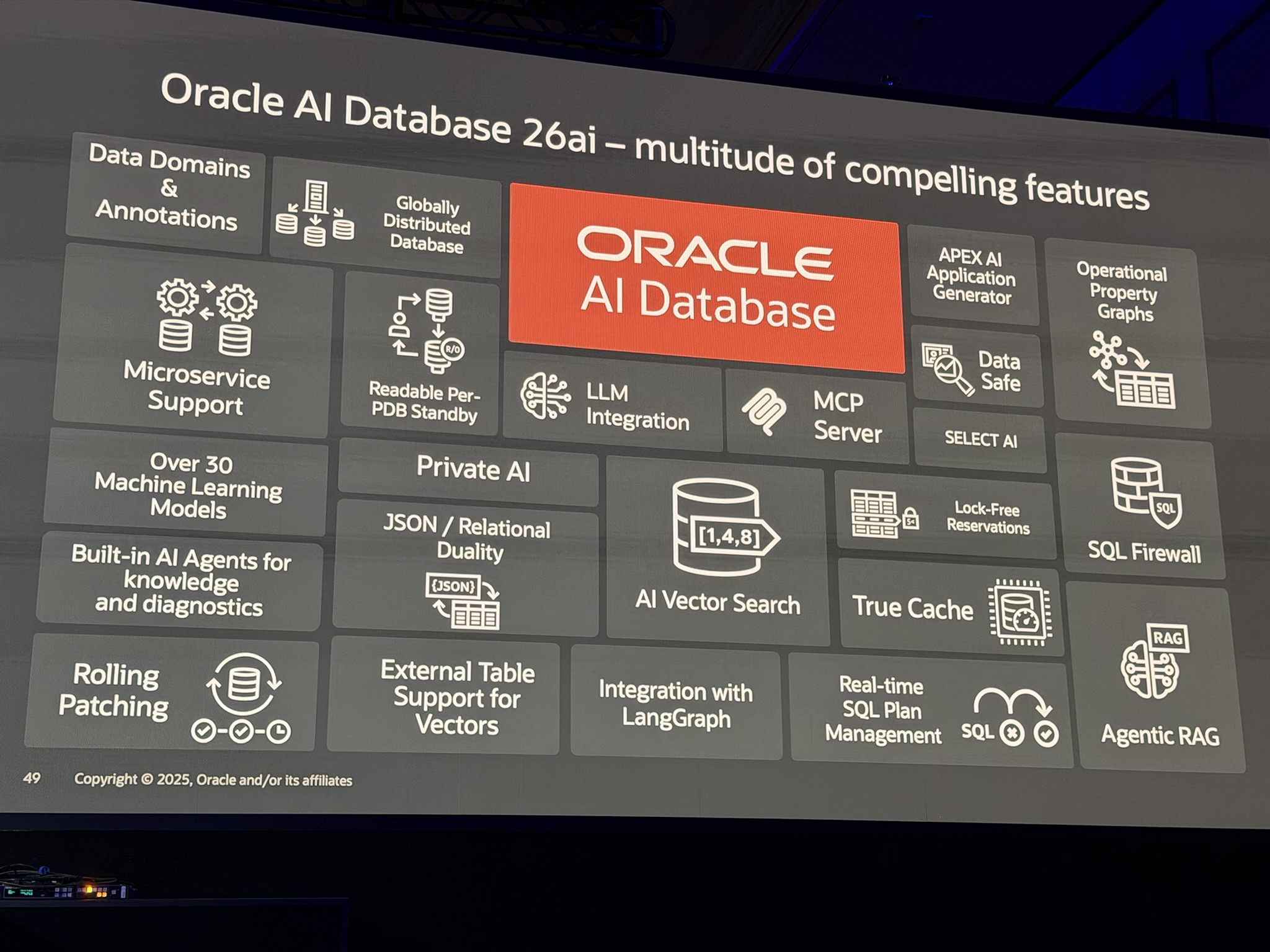
Hasan Rizvi, EVP, Database Engineering, Oracle also spoke about Oracle AI Database 26ai in his session “Oracle AI Database Directions: Innovate Faster, Scale Smarter and Minimize Risk”:

Is Oracle AI Database 26ai new release

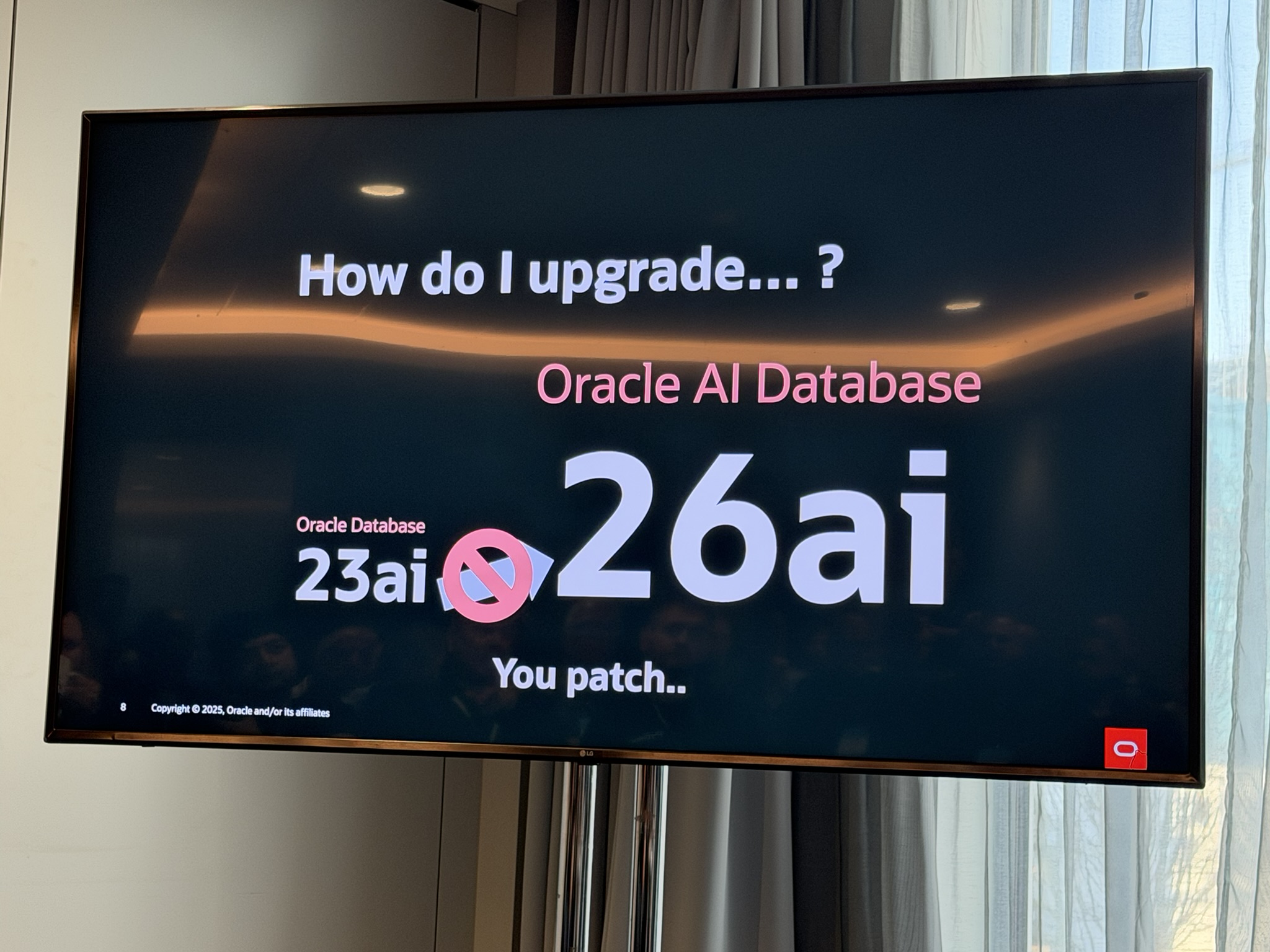
Interestingly, under the hood, Oracle AI Database 26ai is essentially 23ai, but it has been rebranded as 26ai. Why has Oracle done this? Because Oracle has packed so many new features and enhancements into this release that they consider it a major version upgrade. In fairness, this strategy works in their favour, as you’ll see later on in this blog post 😎.

It’s important to note that Oracle AI Database 26ai is delivered as a Release Update (RU) rather than a full version upgrade. This means an implicit upgrade is not required, making adoption simpler for existing customers. In fact, this RU effectively replaces RU 23.10, as illustrated below:

  • 23.8 – Oracle Database 23ai (April 2025)
  • 23.9 – Oracle Database 23ai (July 2025)
  • 23.26.0 (replacing 23.10) – Oracle AI Database 26ai (October 2025)
  • 23.26.1 – Oracle AI Database 26ai (January 2026)
  • 23.26.2 – Oracle AI Database 26ai (April 2026)

If you’re already on Oracle Database 23ai (blog post here), the transition to Oracle AI Database 26ai is straightforward, it’s simply a matter of applying the latest RU. For those on older versions, Oracle has made the upgrade path equally simple: you can move directly from 19c to Oracle AI Database 26ai, just as you would have upgraded to 23ai.

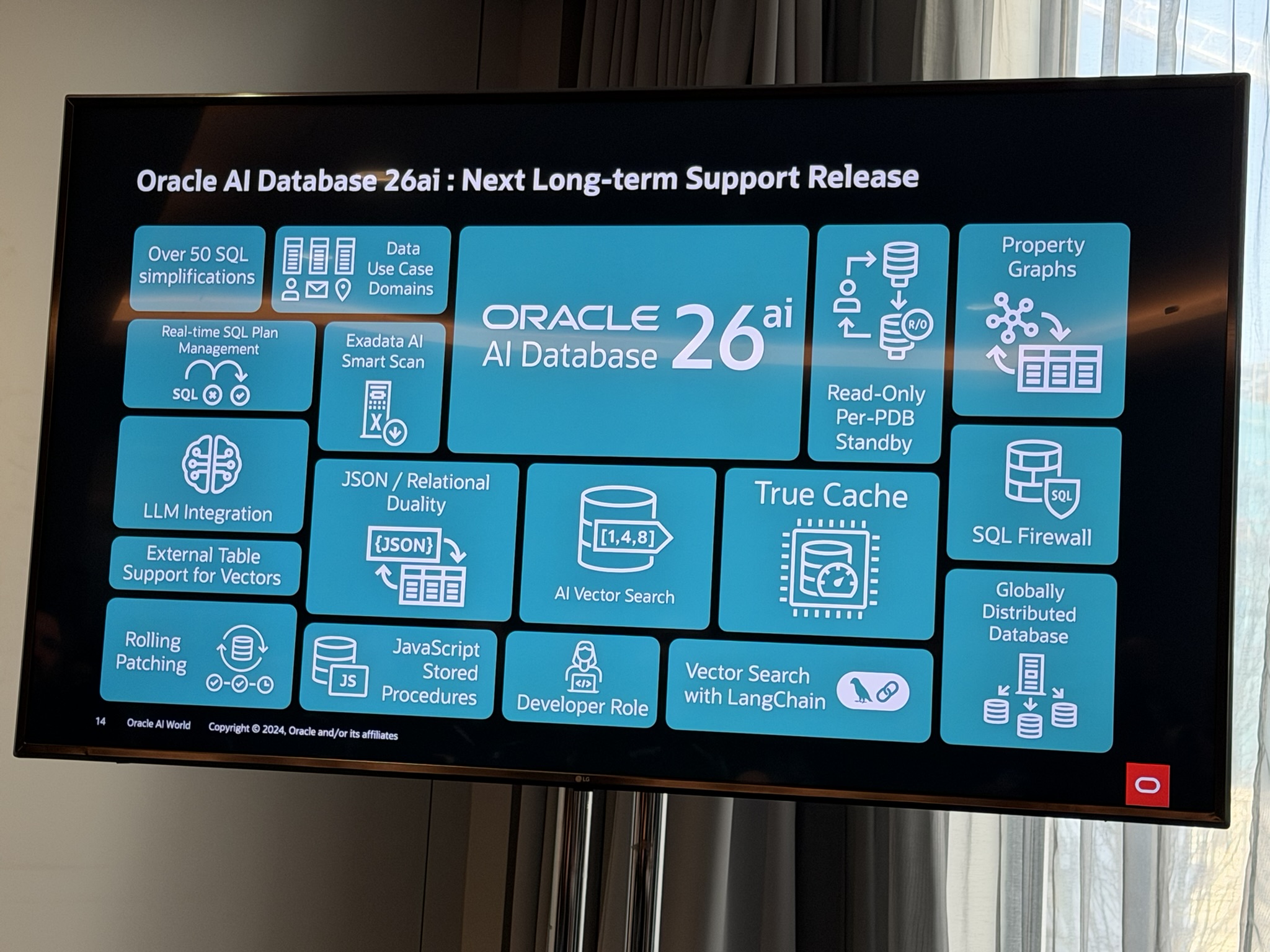
Oracle AI Database 26ai, will effectively be the replacement long-term support release:

For more info, see Mike Dietrich, Oracle Database Upgrade Product Manager, blog post here.

Where is Oracle AI Database 26ai available

As with the same narrative as Oracle Database 23ai, at the time of announcement, Oracle AI Database 26ai is available on:

  • Oracle Cloud: which includes OCI, Exadata Cloud@Customer, Dedicated Region, Oracle Database @ Azure | GCP | AWS
  • Oracle Engineered Systems: Oracle Exadata, Oracle Database Appliance (ODA)

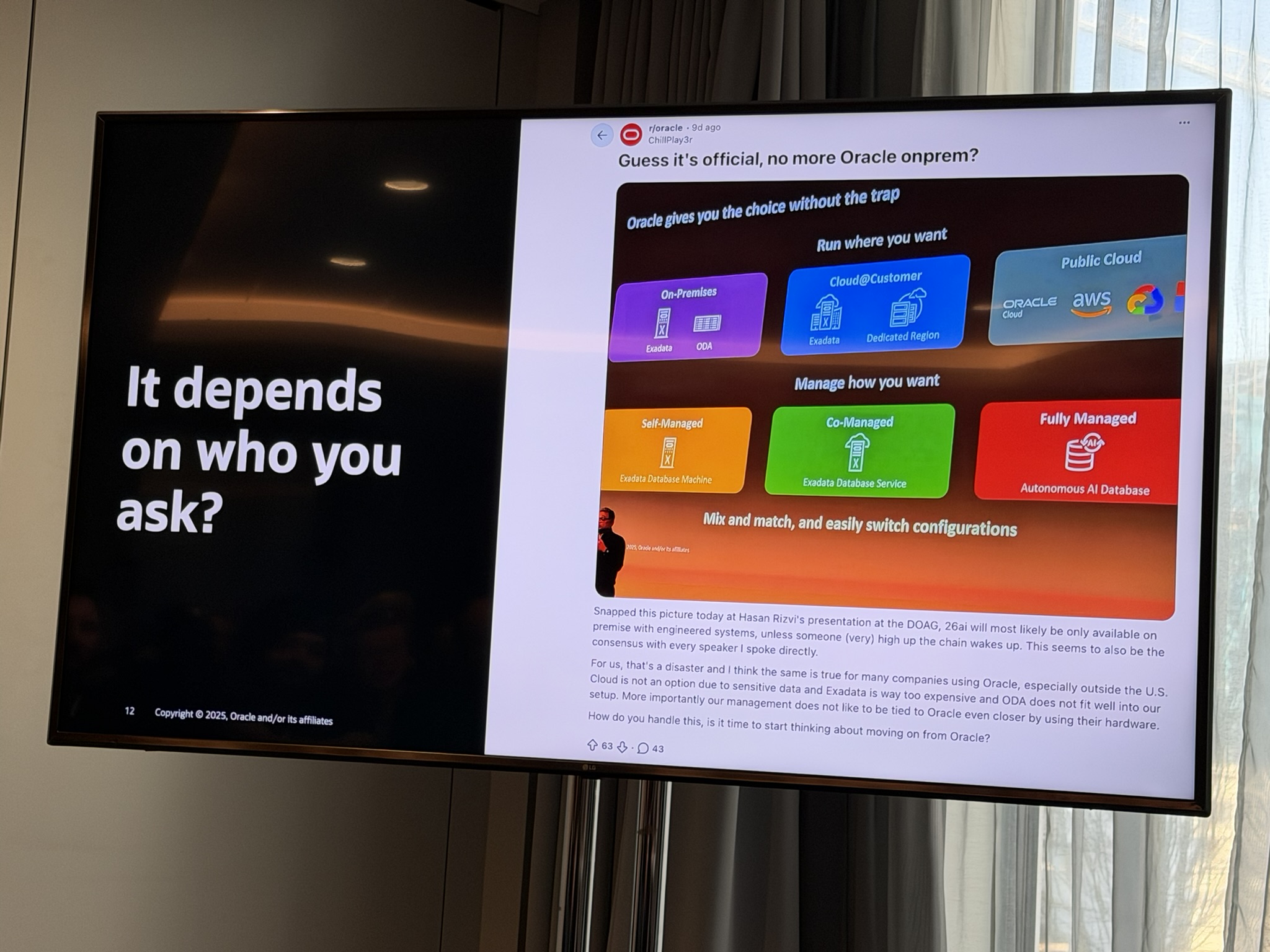
Will Oracle AI Database 26ai be available on-premises

This is the question on so many minds! Hopefully, you heard it here first: at the UKOUG Discover 2025 conference in Birmingham, UK, Dom Giles, Vice President of Product Management at Oracle, confirmed that on-premises was never off the cards, it was just a matter of when. This reassurance is significant for customers that rely on on-premises infrastructure, and shows Oracle’s continued commitment to hybrid and flexible deployment models.

This effectively debunks the online speculation suggesting that Oracle would abandon on-premises deployments for its latest database release, which caused quite a stir!

Just to be absolutely clear! Dom confirmed that an on-premises version of Oracle AI Database 26ai will be available, but he categorically did not provide a release date! His slide reinforced this point, by masking the date, meaning the timing is still to be announced.

This is purely my own speculation, but based on the naming convention of 26ai, I believe the on-premises release could arrive very soon 😁, potentially as early as January 2026! It seems logical that Linux would be the first on-premises platform to be available, given that it’s the standard for OCI, Engineered Systems, and was the environment offered during the beta programme. Other platforms would likely follow throughout 2026, completing the rollout and conforming to the new name 😎. Do you agree? Let me know your thoughts in the comments.

UPDATE: see next section for confirmed release date for on-premises 🥳

He concluded with Oracle AI Database 26ai is AI and data architected together, very similar to how hardware and software are architected together for Exadata and we know how well that went. Let’s hope the same success happens with this new release, bringing AI to your data!

Update: On-Premises Release Date Confirmed

Only matter of hours later, I saw that it was announced and my speculation of January 2026 for on-premises x86-64 is now confirmed 🥳

See Jenny Tsai-Smith (Senior Vice President, Product Management, Oracle) blog post confirming the release date here.

If you found this blog post useful, please like as well as follow me through my various Social Media avenues available on the sidebar and/or subscribe to this oracle blog via WordPress/e-mail.

Thanks

Zed DBA (Zahid Anwar)
Oracle AI World 2025 Day 4 Part 1 – Keynote Building the Cloud for You

If you missed my day 3 part 3, you can view it here.

Keynote: Building the Cloud for You

It was my final keynote at Oracle AI World, and I arrived early to secure my usual spot at the front.

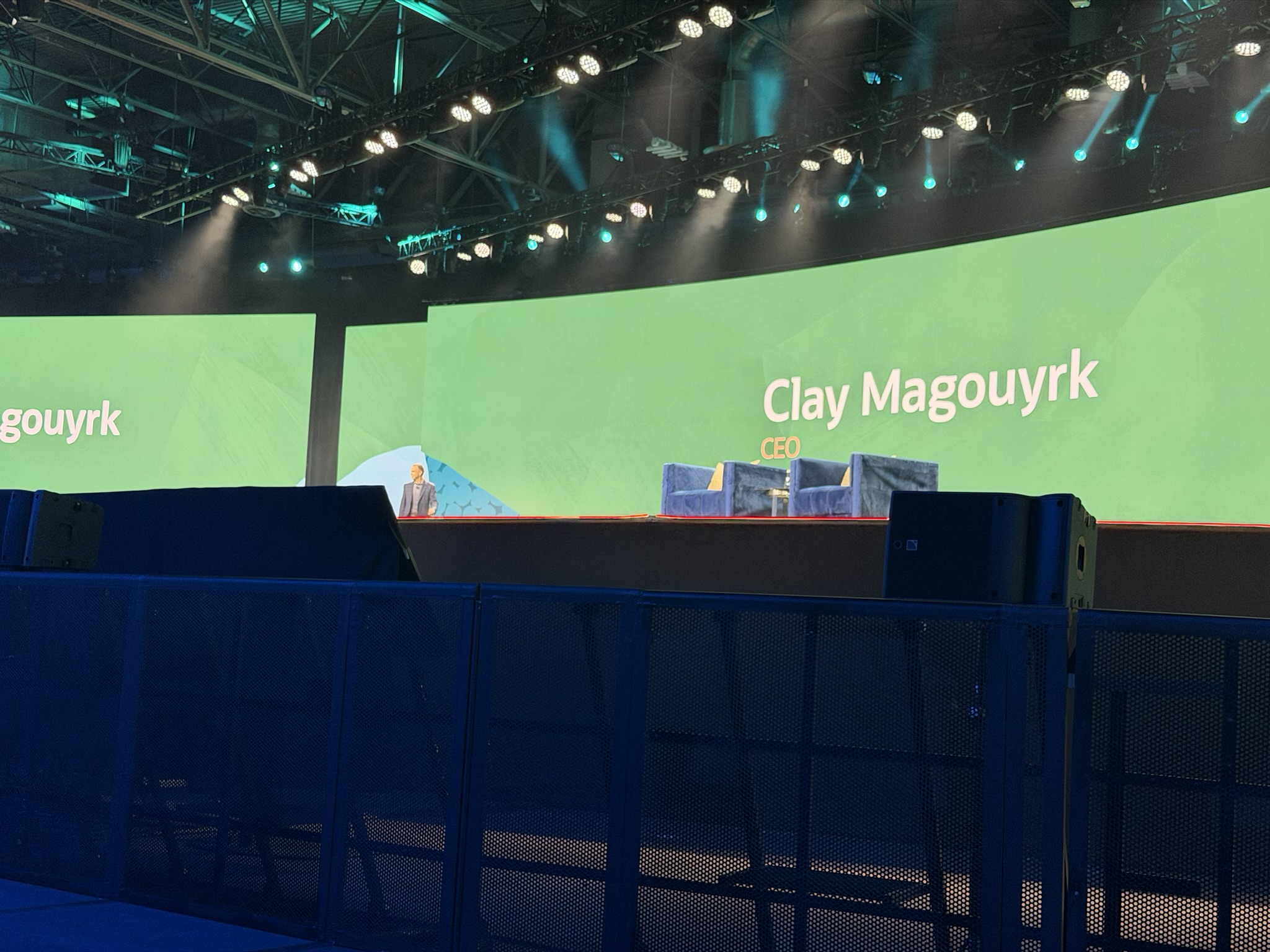
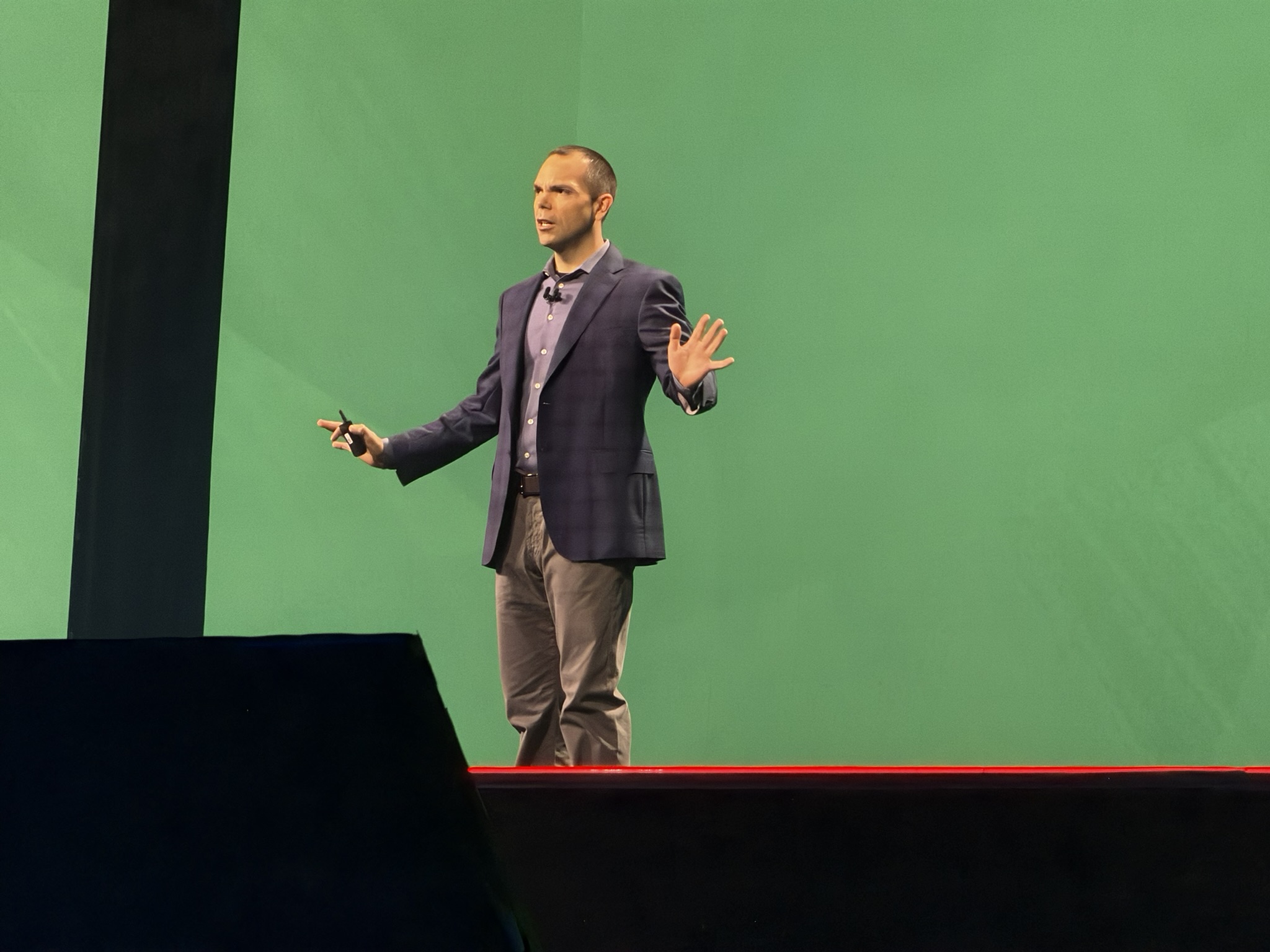
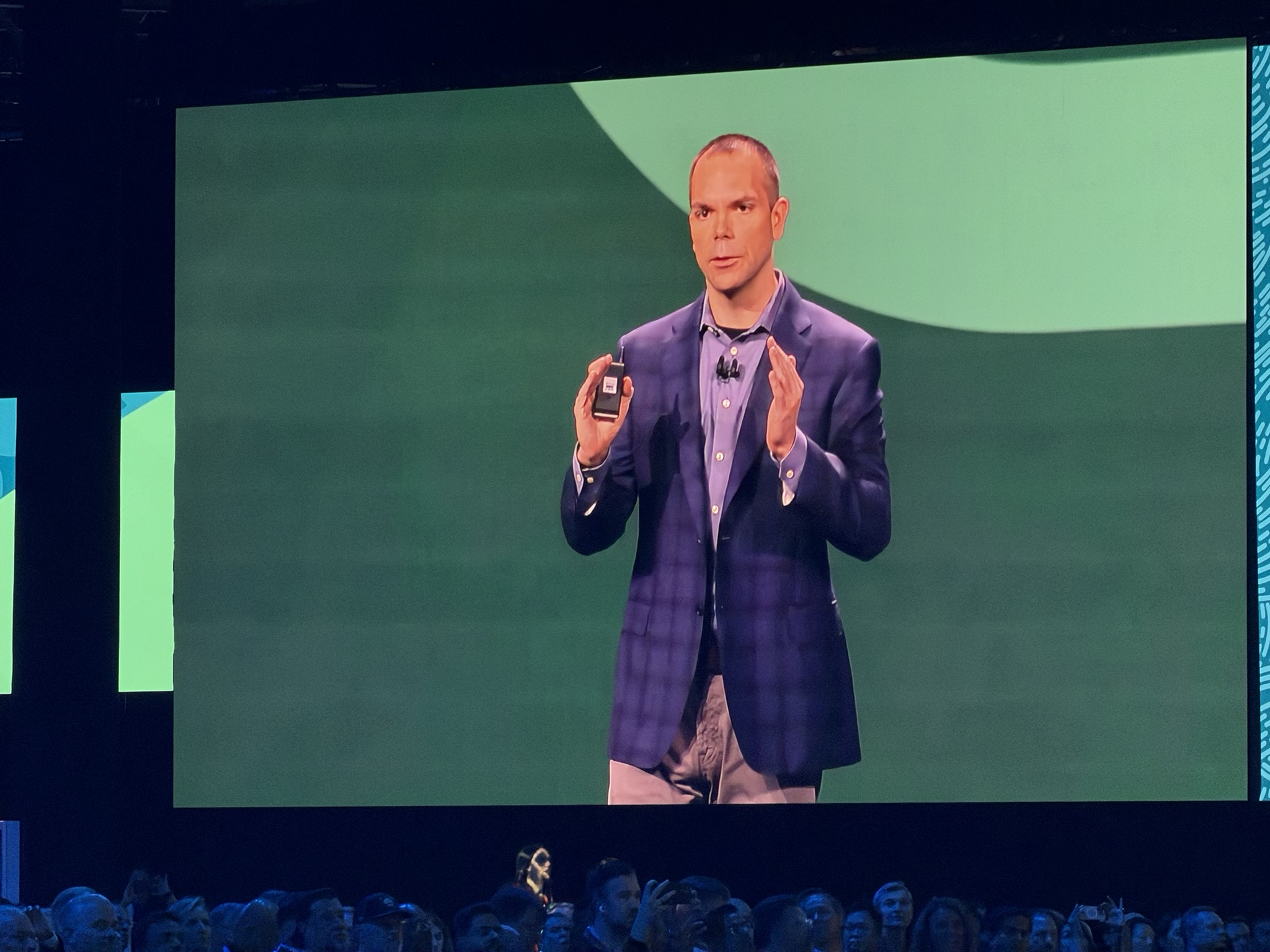
Clay Magouyrk, Oracle’s newly appointed CEO (formerly President of the OCI business), came onto the stage.

The OCI Mission and Foundational Principles

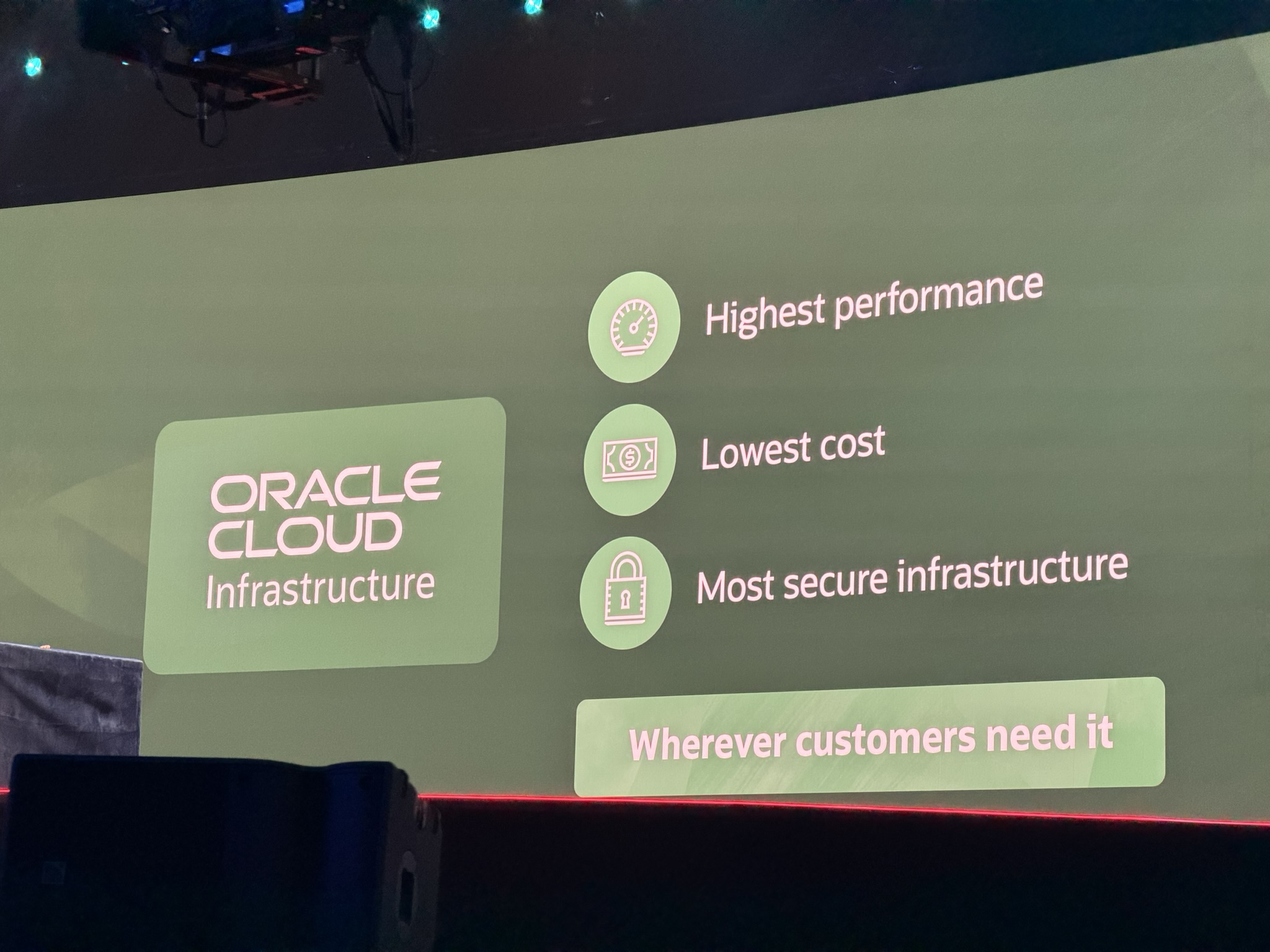
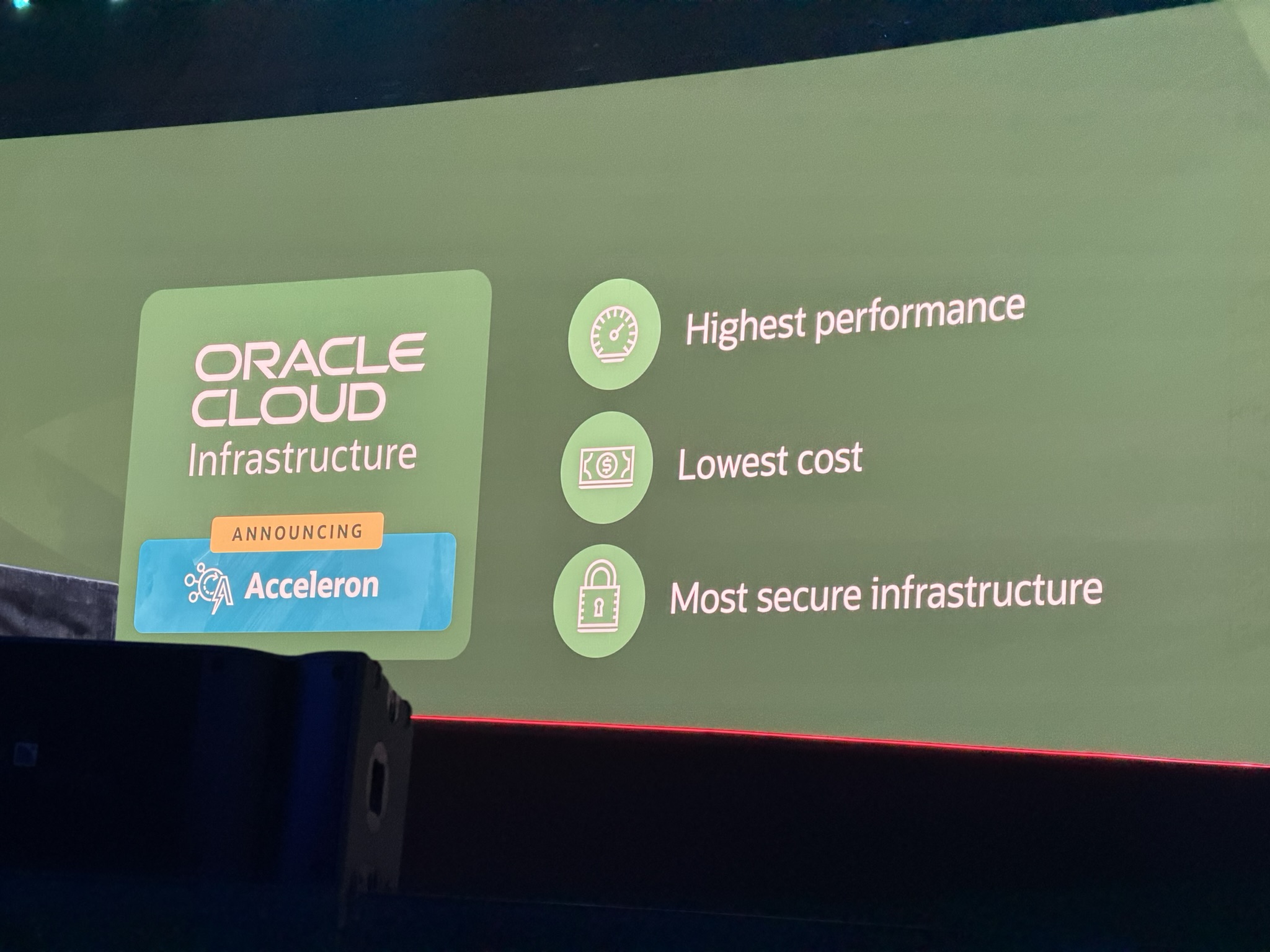
Clay explained that he joined Oracle to create the fourth major cloud provider by building Oracle Cloud Infrastructure (OCI). OCI was founded with a clear mission to deliver the highest performance, lowest cost, and most secure infrastructure possible, wherever the customers need it.

This is an absolute standard, not a relative benchmark against competitors. As Clay emphasised, “Our goal is not to be better than competitors. Our goal is to be the absolute best we can be.” This principle underpins OCI’s commitment to fundamental engineering and architectural purity.

OCI adopts an architecture-first philosophy, prioritising the strength and extensibility of its foundational layers. Cloud infrastructure is seen as a series of interdependent layers, where the resilience of the entire stack depends on those beneath it. This approach demands an architecture that anticipates future requirements and accommodates unknown hardware and software advancements over time.

Core Architectural Decisions and Differentiators

OCI’s commitment to its mission is reflected in a series of key architectural decisions that distinguish it from other cloud providers.

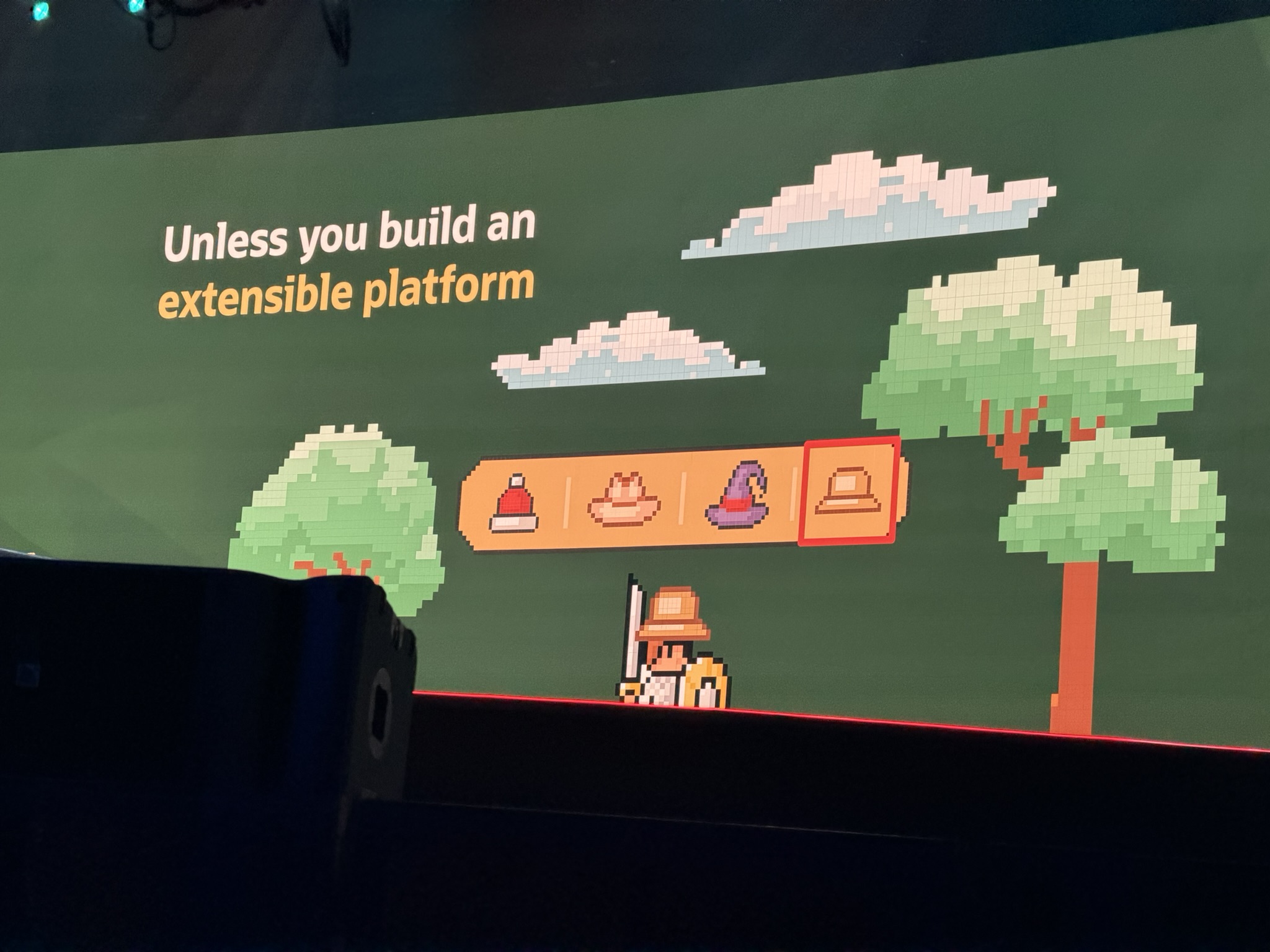
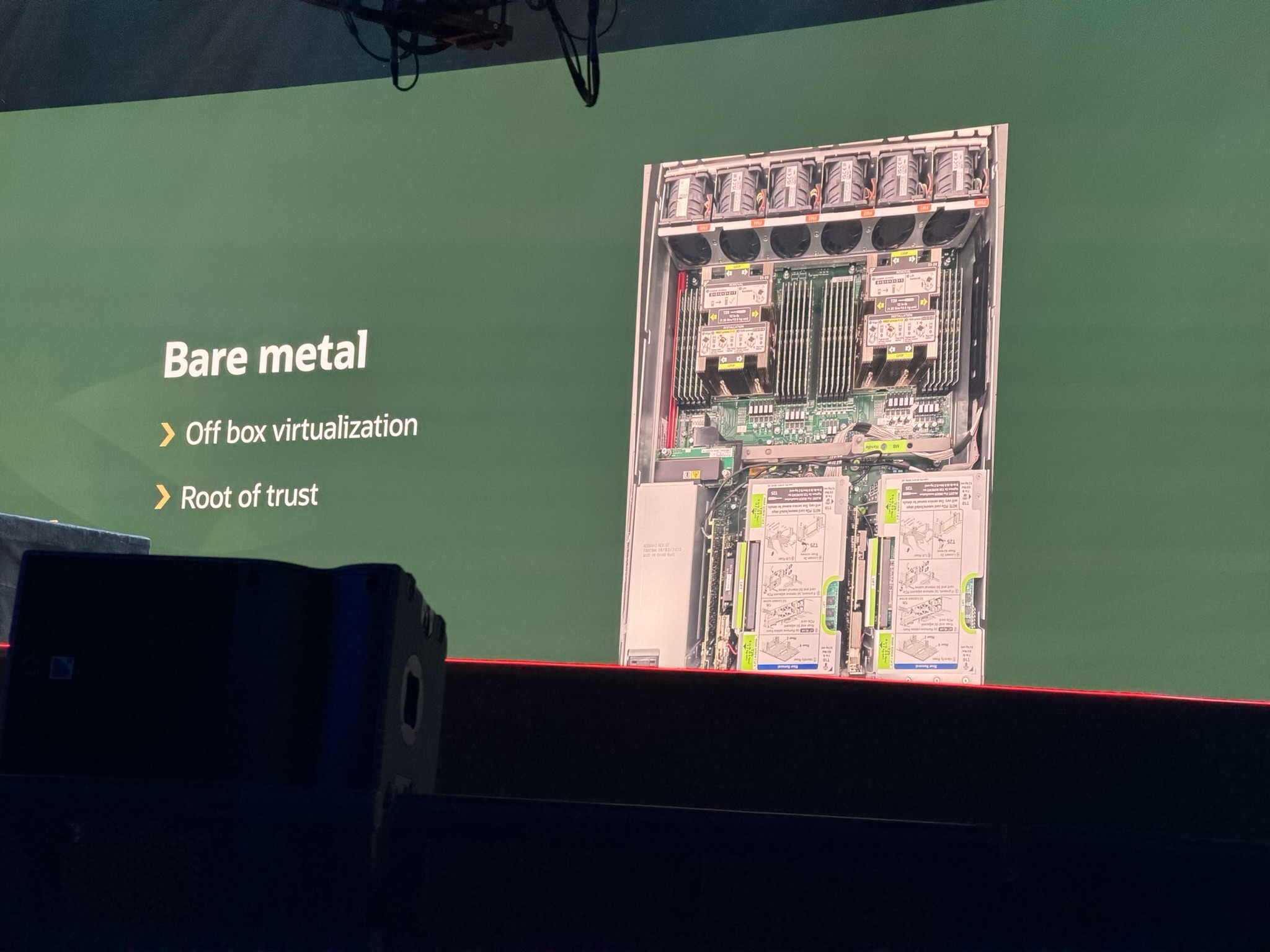
Bare Metal First: OCI was designed with bare metal servers as first-class citizens. This forced the invention of off-box network and storage virtualisation. The key benefits are: first, security, Oracle has no software on the customer’s machine, providing complete control; second, extensibility, OCI’s VM service is built directly on the bare metal service, enabling others to build platforms on top; third, flexibility, simplifies the integration of diverse hardware, including GPUs and other accelerators.

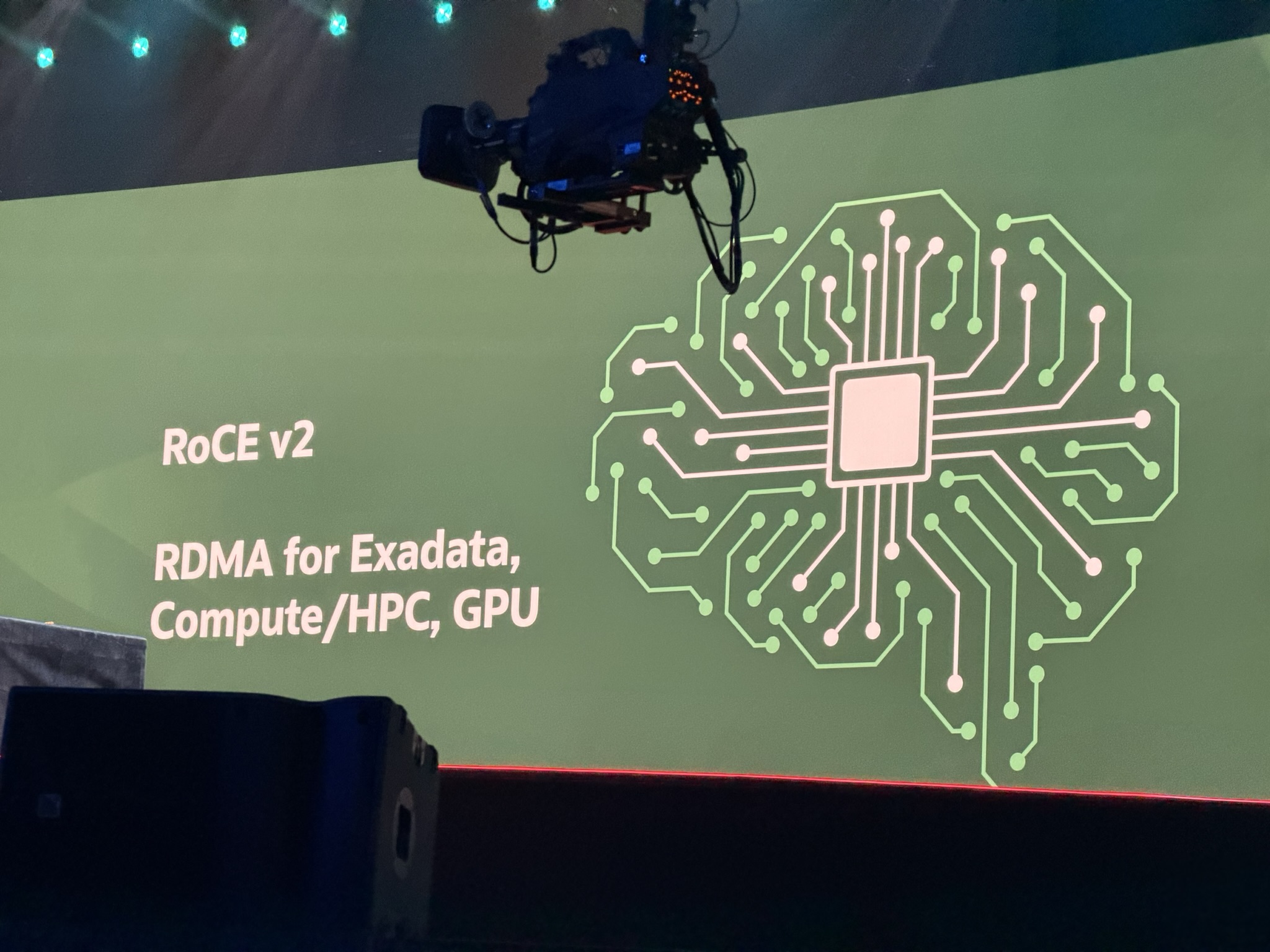
RDMA Networking: Early and comprehensive support for Remote Direct Memory Access (RDMA) networks was driven by Oracle Database requirements (RAC, Exadata) 😎. OCI developed a secure method to dynamically hard-partition RDMA networks. The key benefits are, first performance, delivers full RDMA benefits for High Performance Computing (HPC), GPU clusters, and high-performance database workloads, second security, provides multi-tenant security enhancements expected from a fully virtualised cloud.
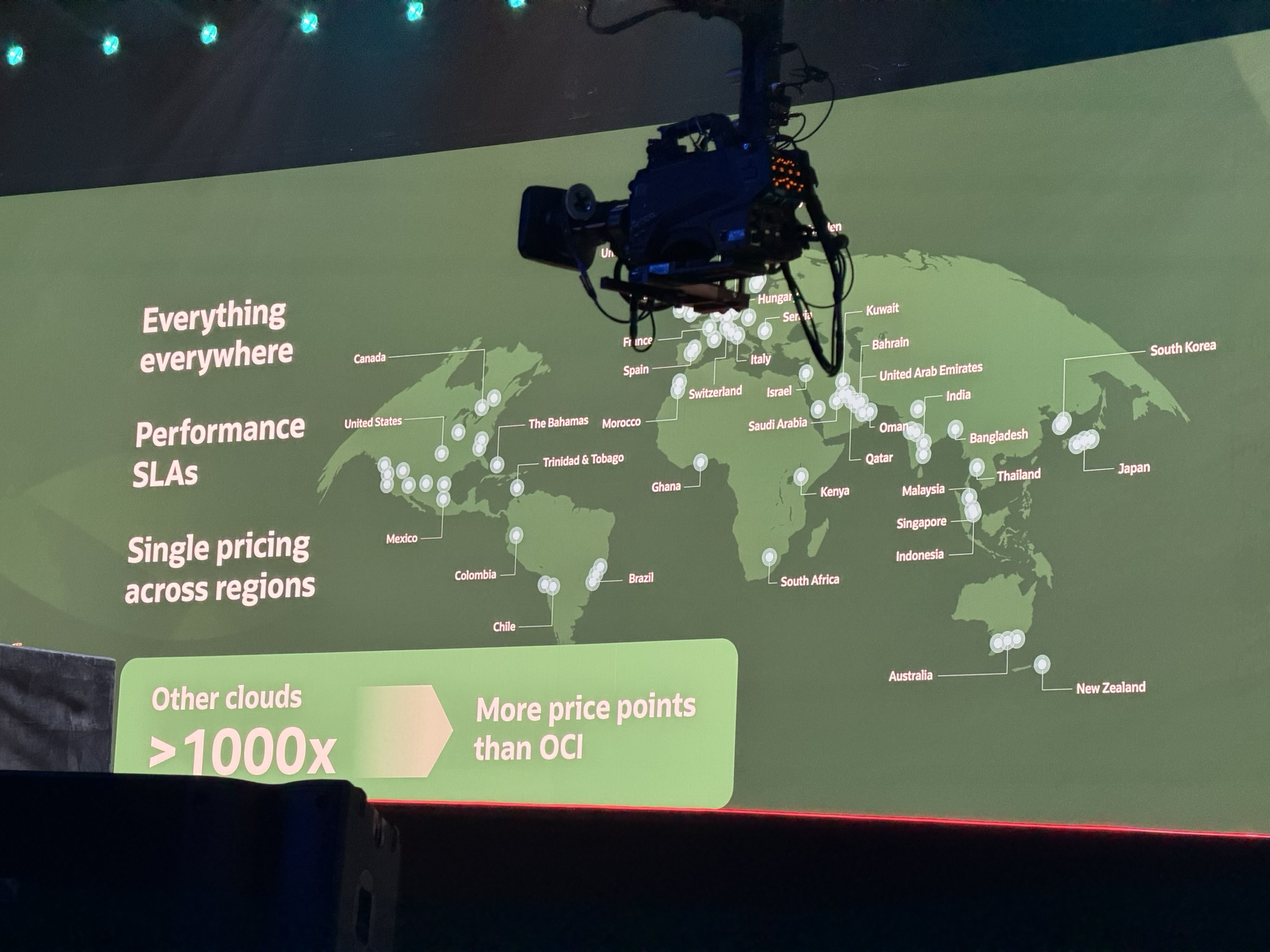
Universal Service Availability: All OCI services and hardware types are available in all regions! This eliminates the model where availability varies by location. The key benefit is simplicity, customers have a predictable and consistent experience regardless of region.

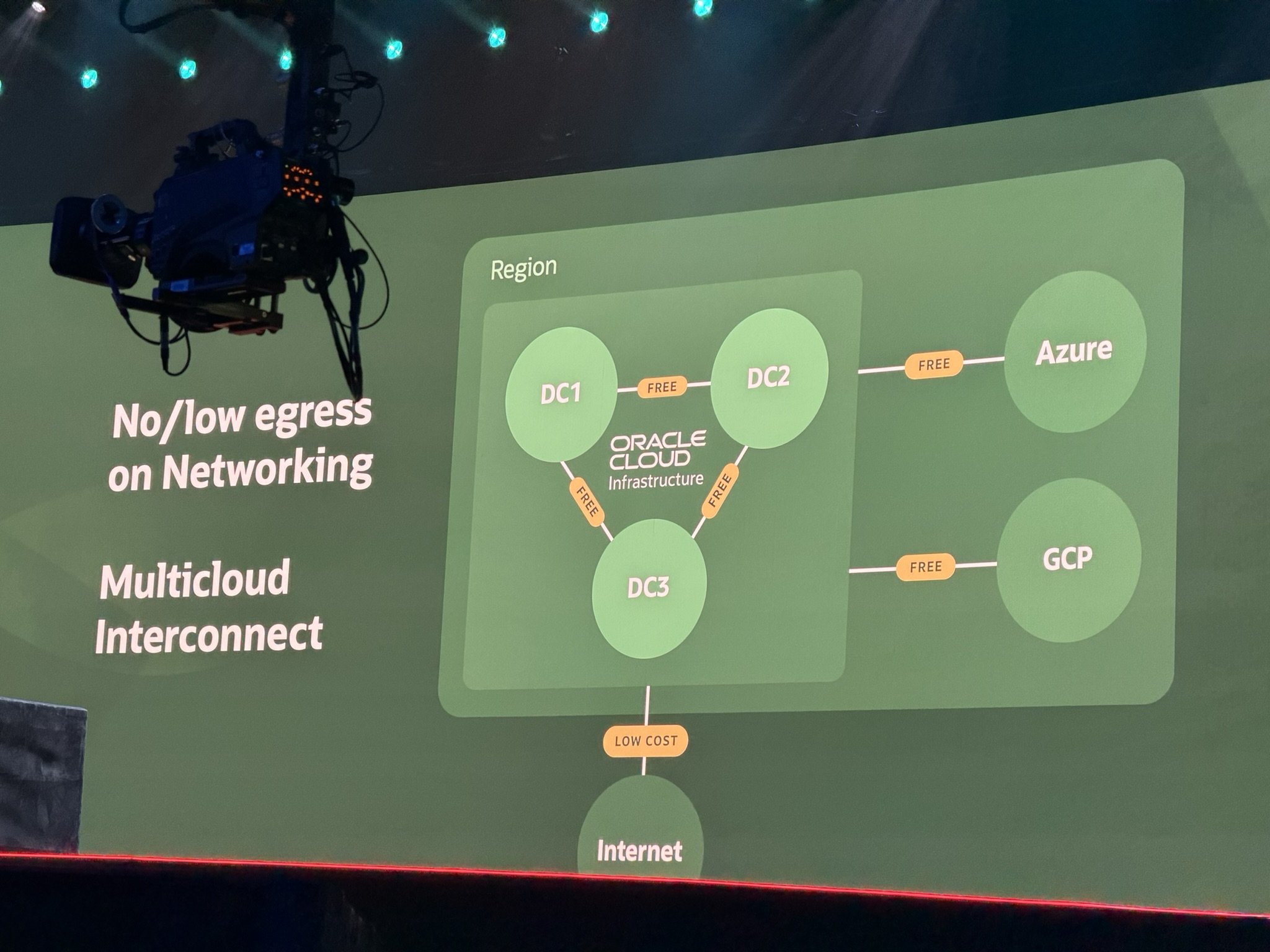
Simplified and Consistent Pricing: OCI employs a single, consistent price list across all regions. This approach extends to network costs. Key benefits are, first predictability, customers can easily understand and forecast their costs without complex tools/calculators, second cost savings, data transfer within a region is free! Internet egress fees are up to 10 times lower than competitors! Multi-cloud interconnects with partners like Microsoft and Google feature zero egress fees!

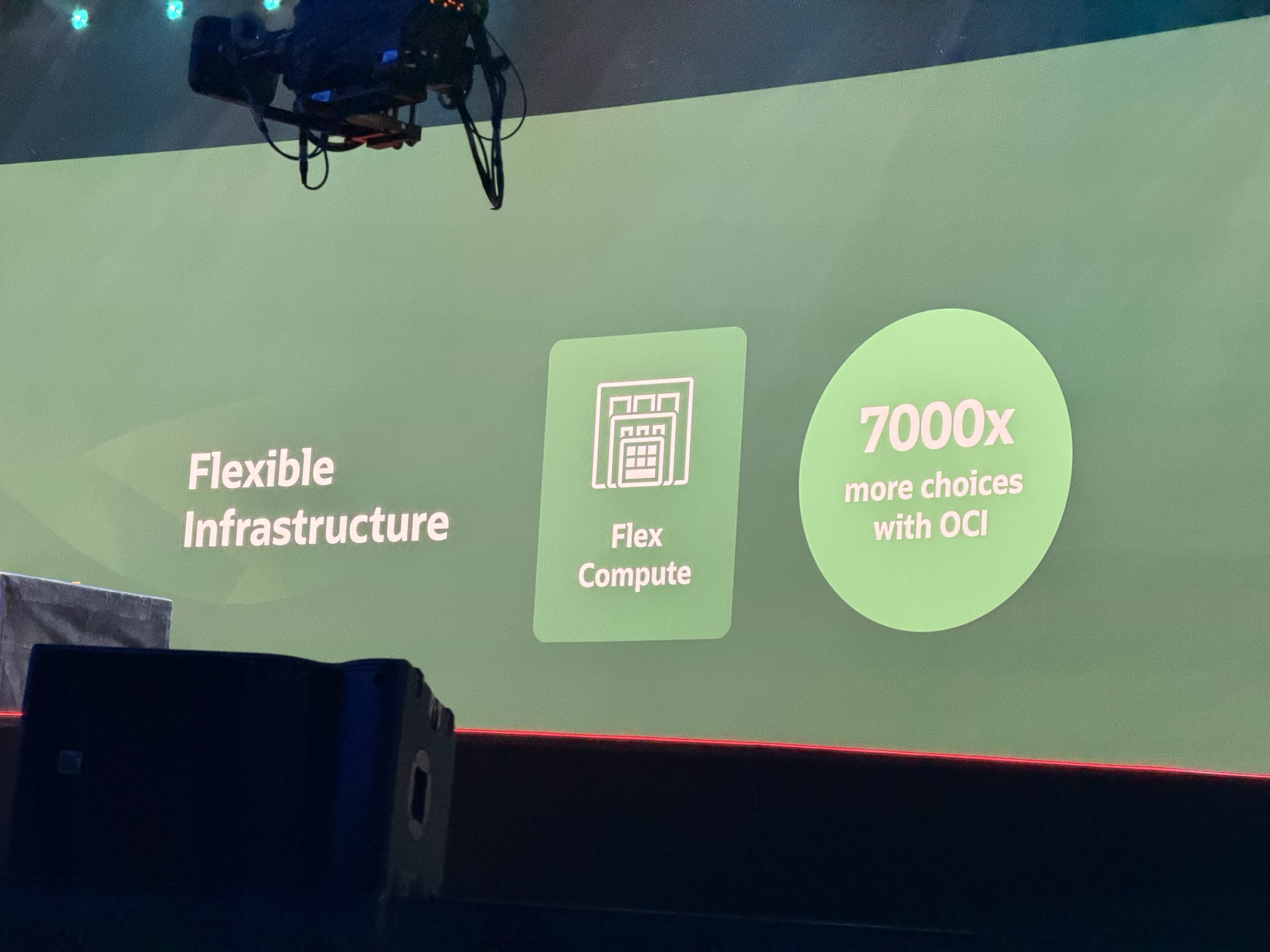
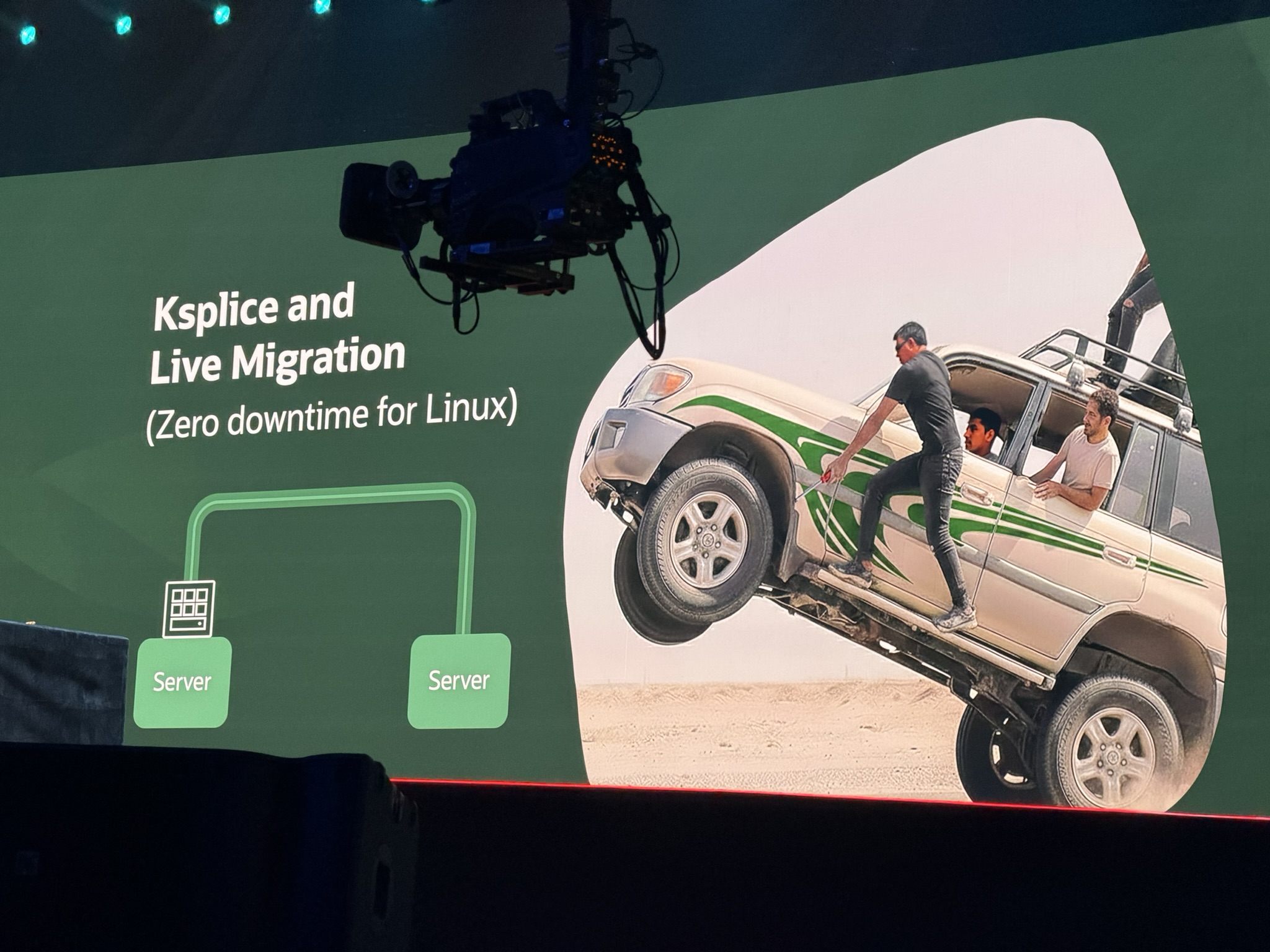
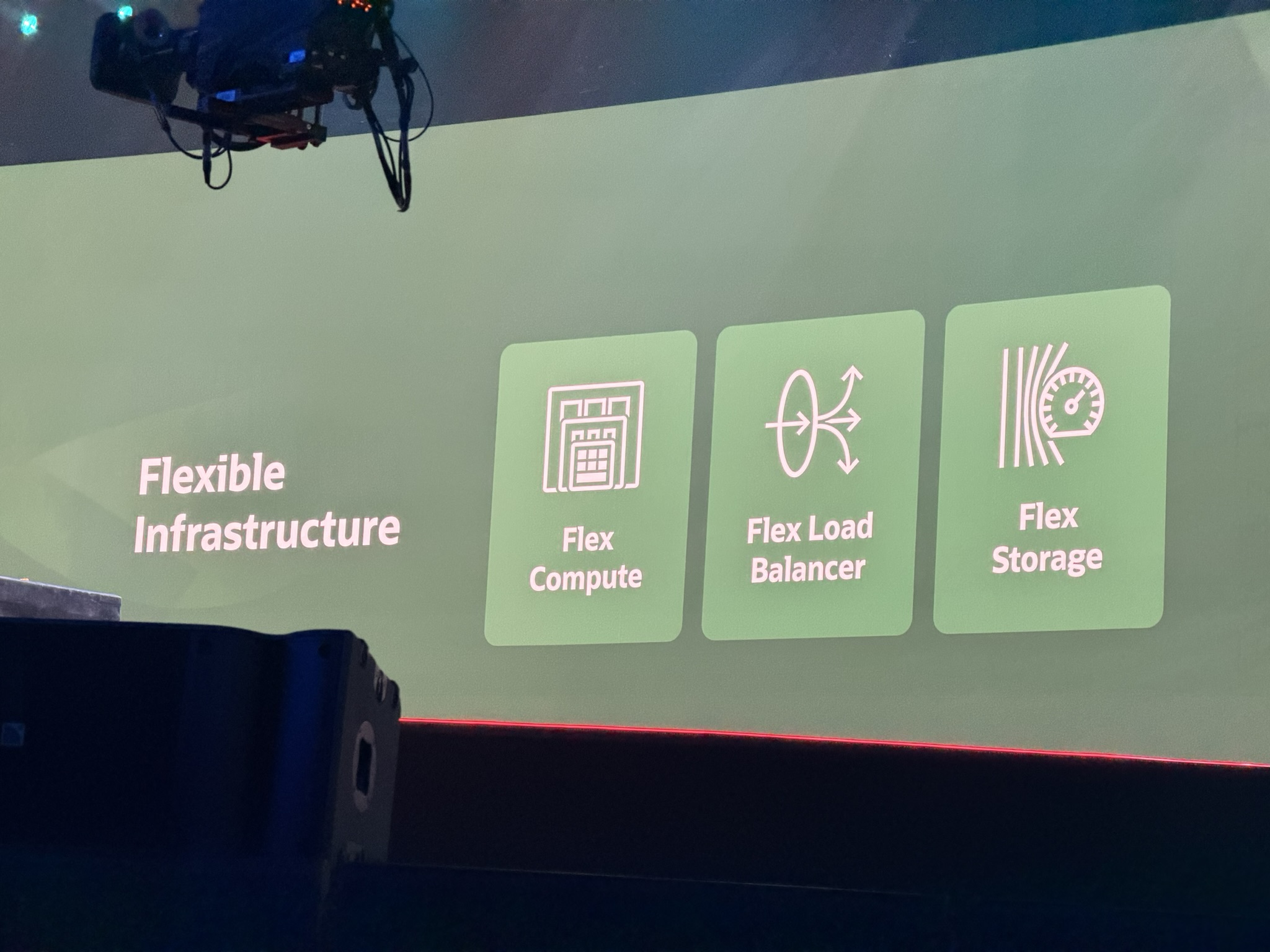
Flexible Infrastructure: Oracle designed its infrastructure building blocks for maximum flexibility. Customers can select exactly the cores and memory they need, with OCI offering 7,000 times more configuration options than competitors without added complexity, because each core and gigabyte of RAM is priced consistently. Storage is equally simple, instead of multiple block storage types, OCI provides a single option whose performance can be tuned dynamically in real time. This philosophy extends to VM availability. Oracle uses Ksplice for zero-downtime kernel upgrades and supports live migration for hardware maintenance without customer reboots, similar to VMware’s vMotion. These capabilities are also coming to Exascale for Exadata 😎.

Scalability (Up and Down): The architecture was designed to scale down as effectively as it scales up. This, combined with scalable operations, enables novel deployment models such as:

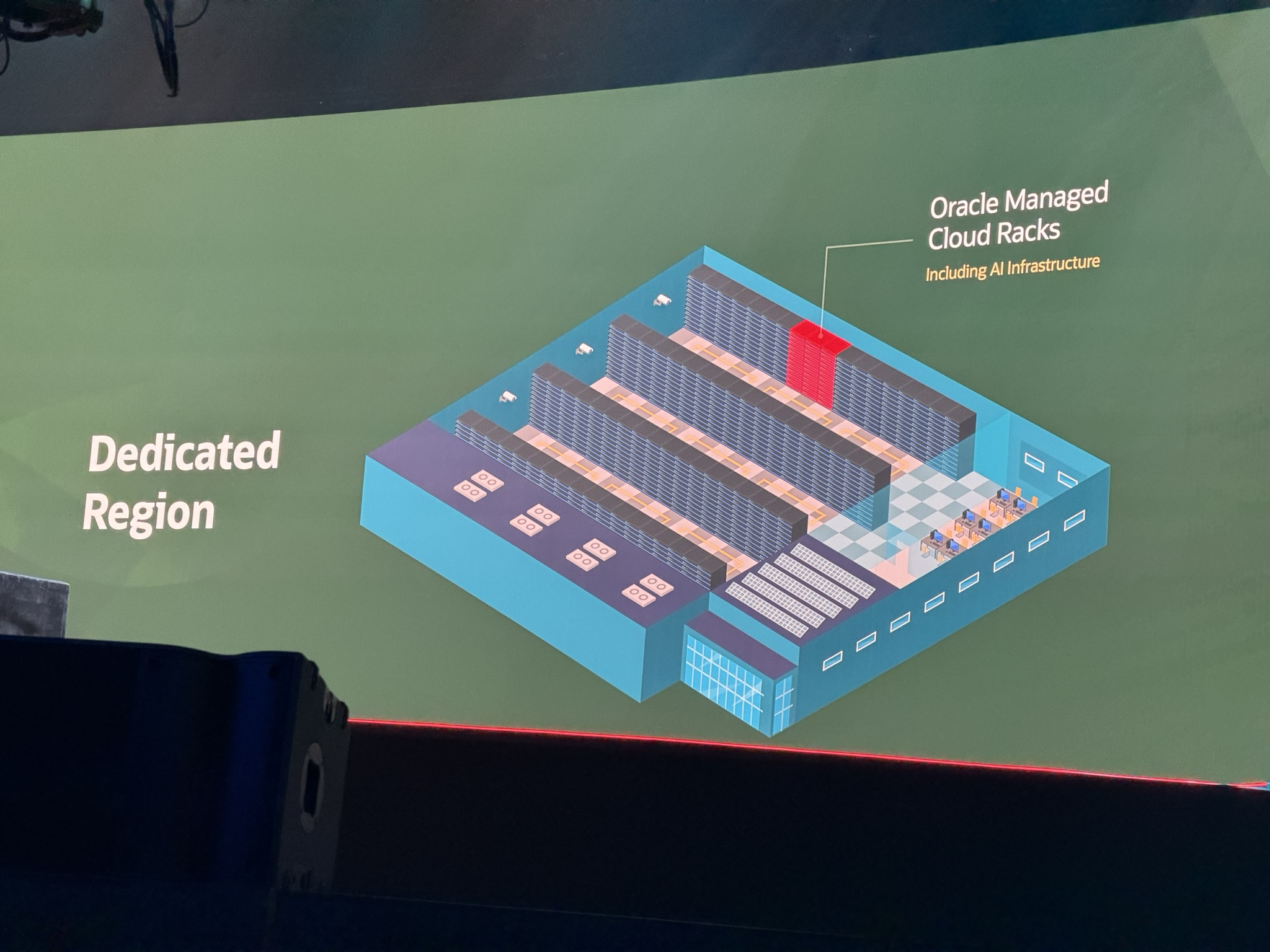
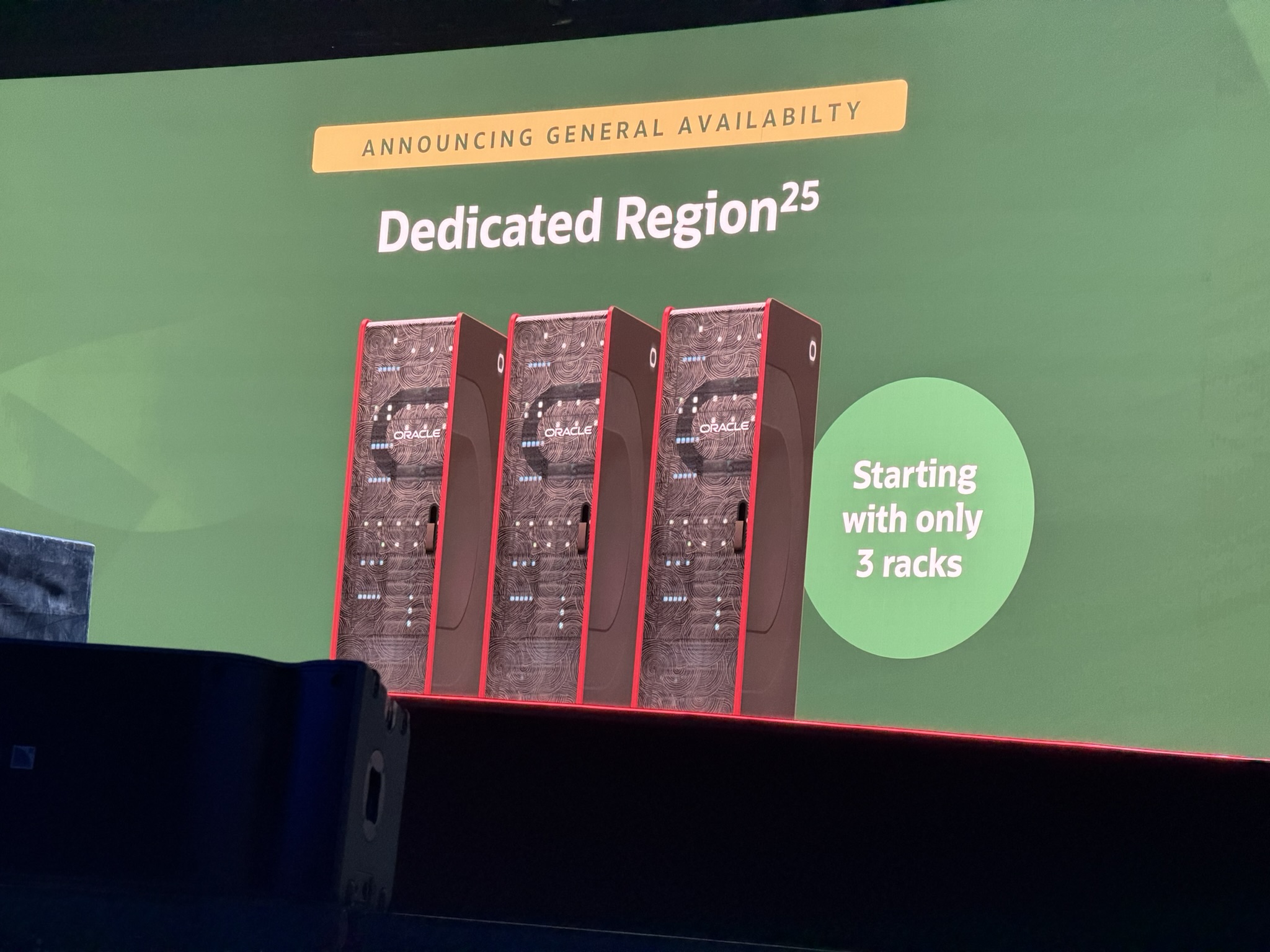
  • Dedicated Regions: the ability to scale down makes it feasible to provide dedicated cloud regions for individual customers in their own data centres with only three racks.
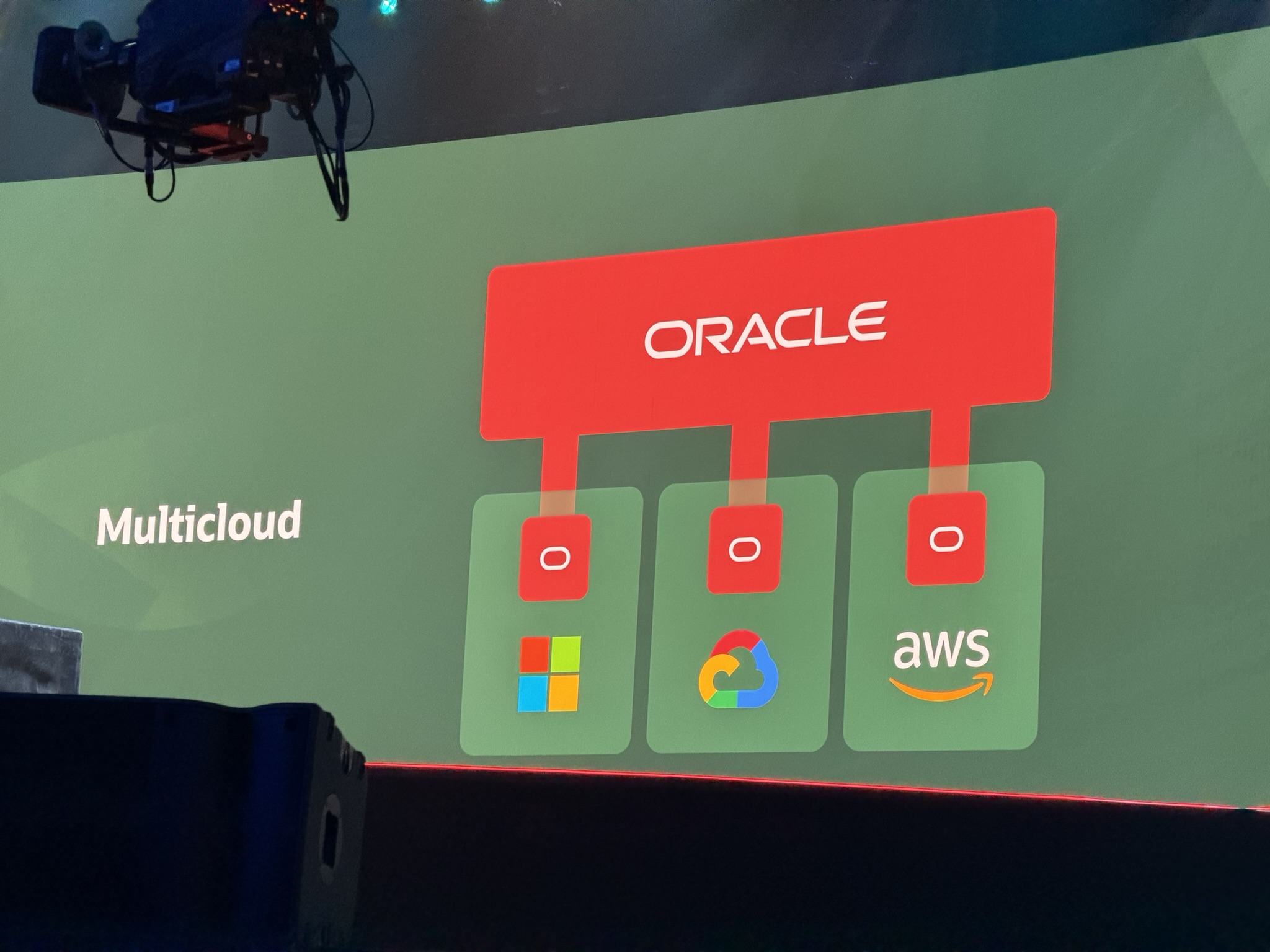
  • Multicloud presence: enables OCI to place its full data platform capabilities inside other cloud environments such as Azure, GCP and AWS.

TikTok: Engineering for Global Scale and Reliability

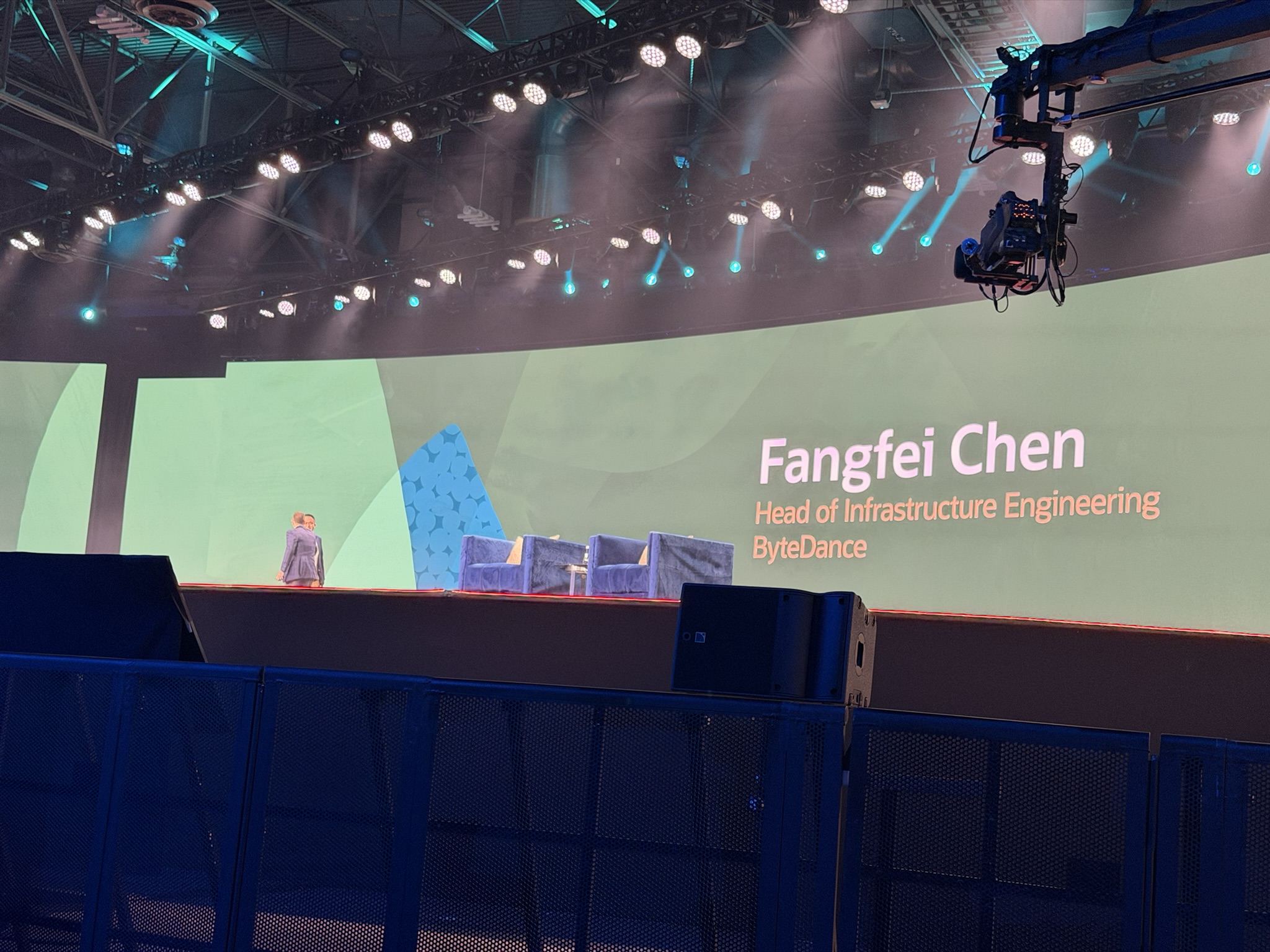
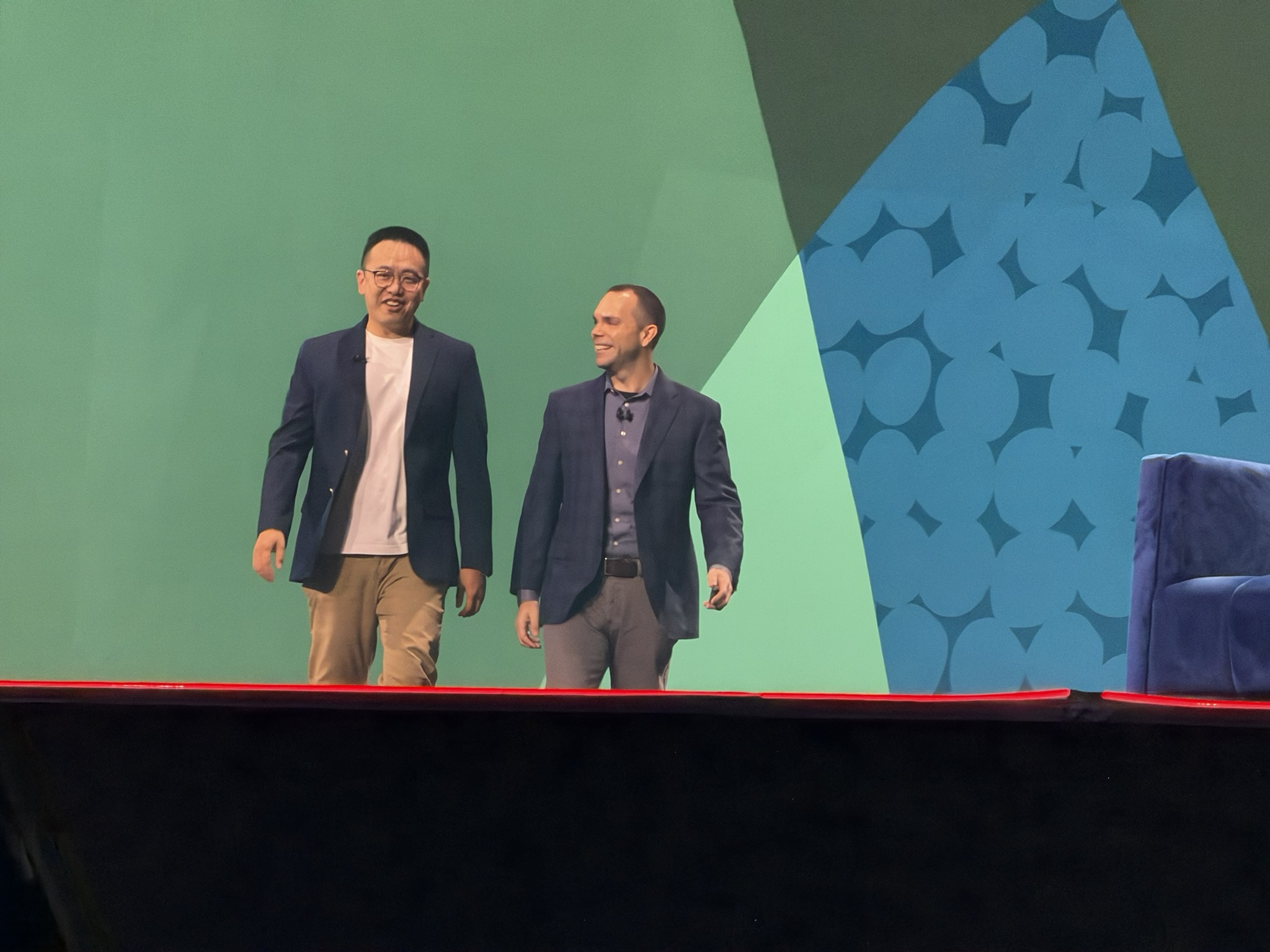
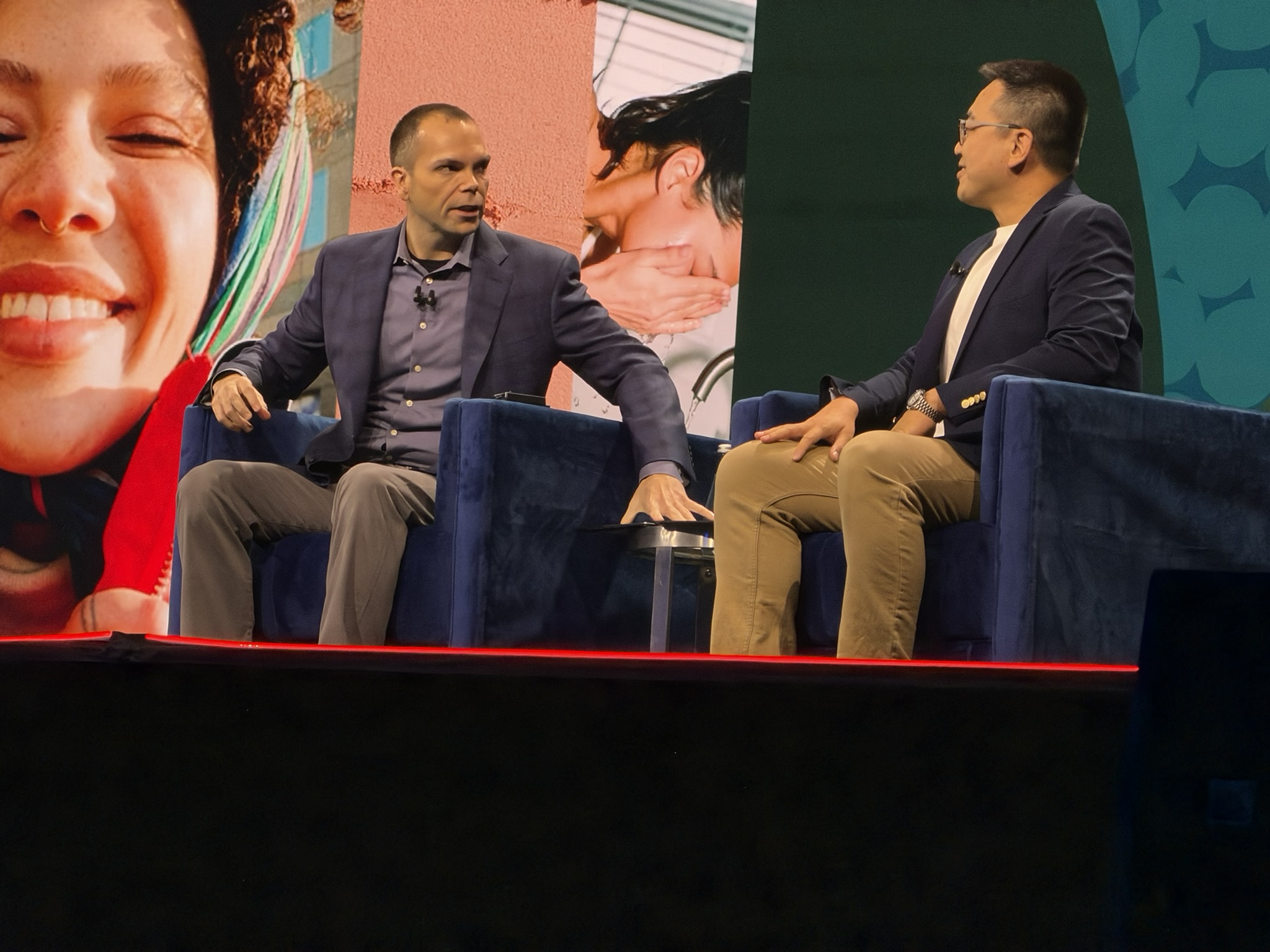
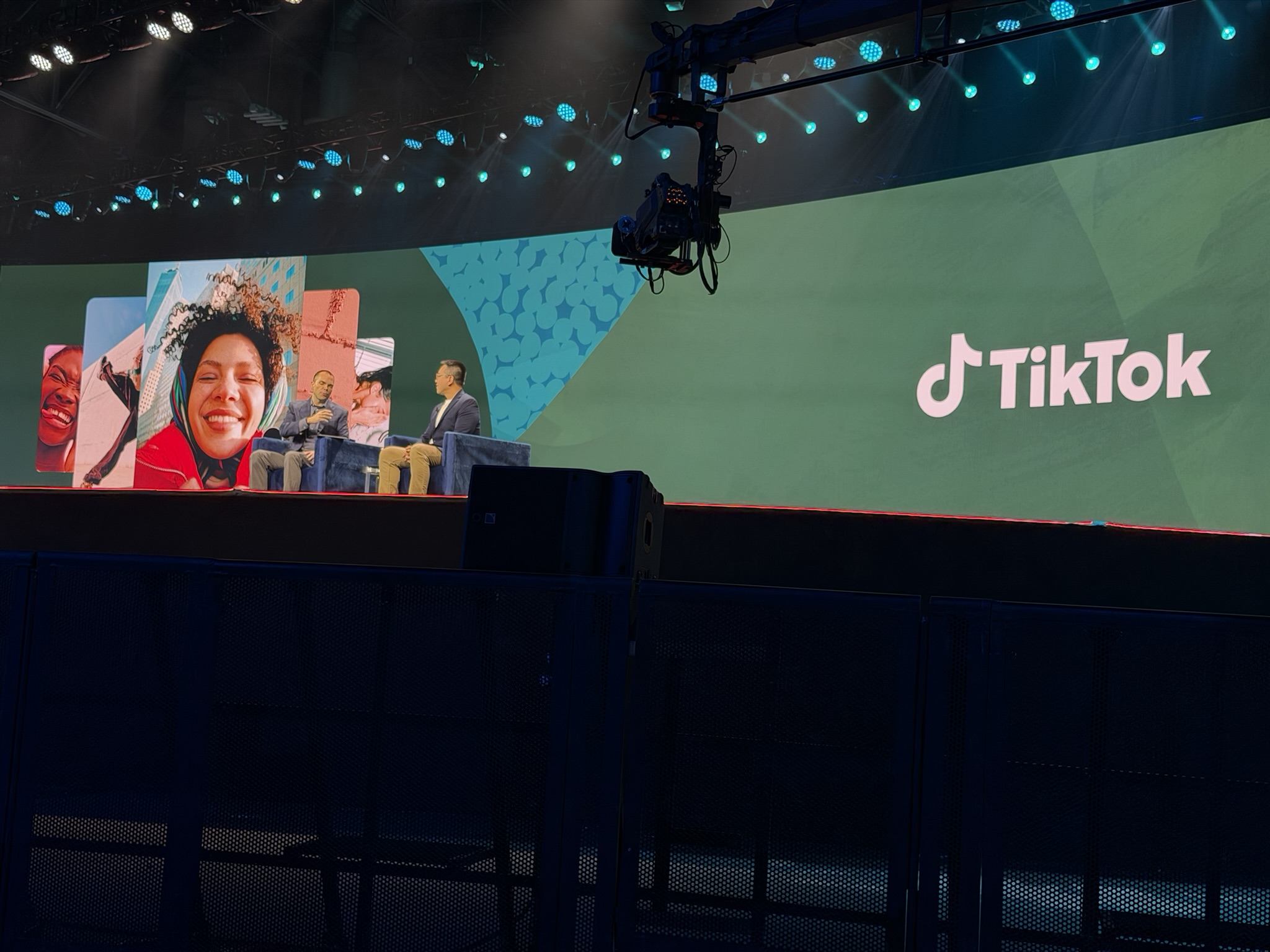
Clay then introduced Fangfei Chen, Head of Infrastructure Engineering at ByteDance, the company that owns TikTok to the stage.

Oracle’s long-standing partnership with ByteDance, the parent company of TikTok, demonstrates OCI’s capability to operate and co-engineer at an extreme scale. Over nearly five years, Oracle has expanded OCI globally to deliver the performance, scalability, and reliability required by ByteDance.

TikTok is a platform for creativity, serving over one billion global users, including 170 million in the US, and generating around 20 million videos daily. To support this scale, TikTok requires millions of servers, zettabytes of storage, and hundreds of terabits per second of network capacity! This necessitated deep integration with OCI at the network layer, driving Oracle to become the first to launch 100 Gbps and later 400 Gbps FastConnect interconnects. They designed the network fabric together to maintain and operate reliably at this scale.

TikTok Shop offers a unique shopping experience centred on live streams. During events like Black Friday, shopping activity can double. ByteDance collaborates with OCI to plan capacity and demand, thanking Oracle for its flexibility in ensuring resources are available when needed. Oracle plays a key role in keeping TikTok customers happy. TikTok is obsessed with customer experience, users love video, watch video, and engage deeply. All telemetry flows from the infrastructure, enabling proactive operations where Oracle and ByteDance teams work closely together.

Clay concluded the segment by saying “OCI and Oracle would not be where we are today without all of the opportunity and the learnings that we’ve had from serving you and your customers.”

Announcing Acceleron

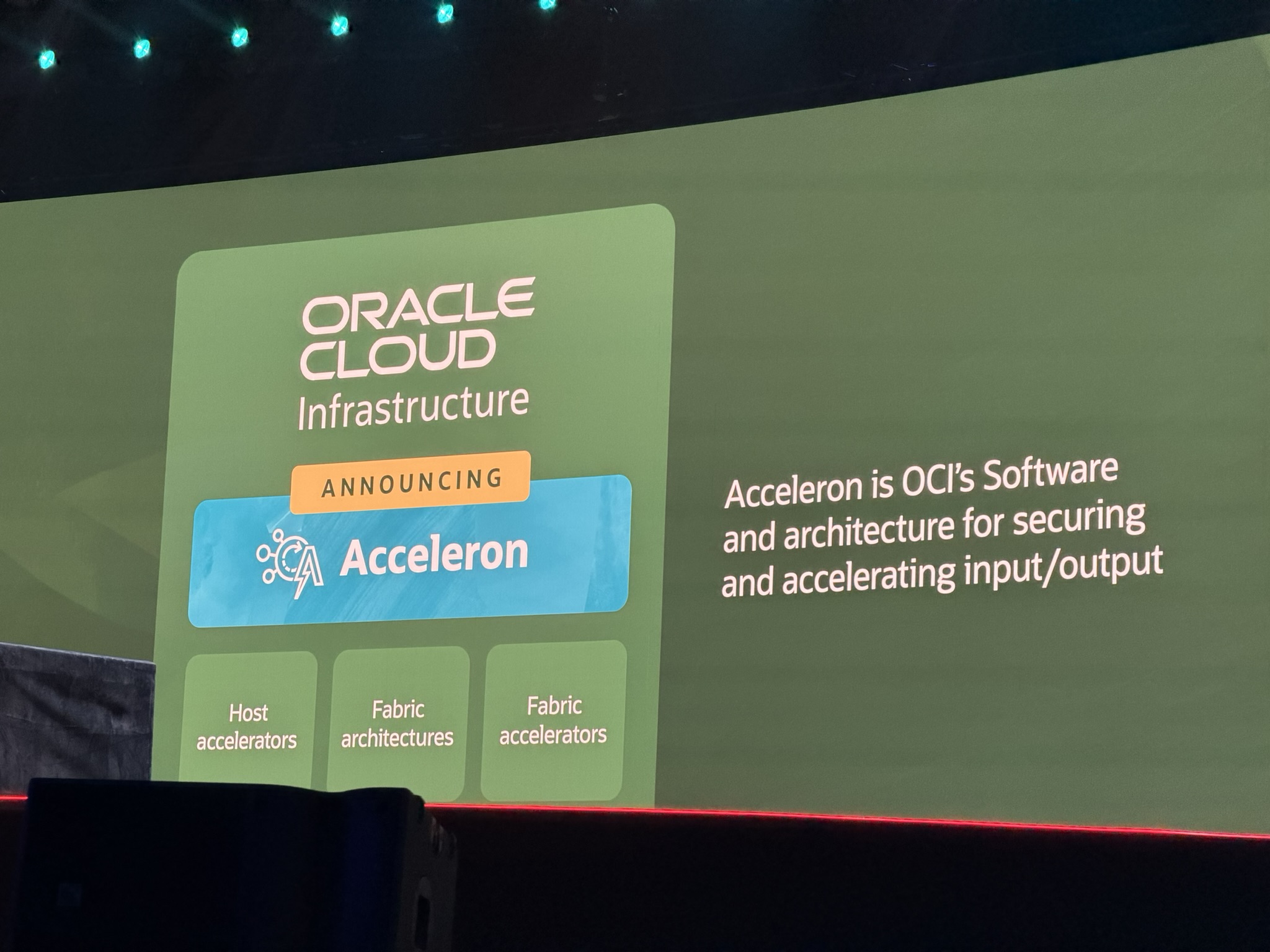
Acceleron is a multi-year project to upgrade OCI’s foundational software and architecture. It focuses on securing and accelerating input/output operations.


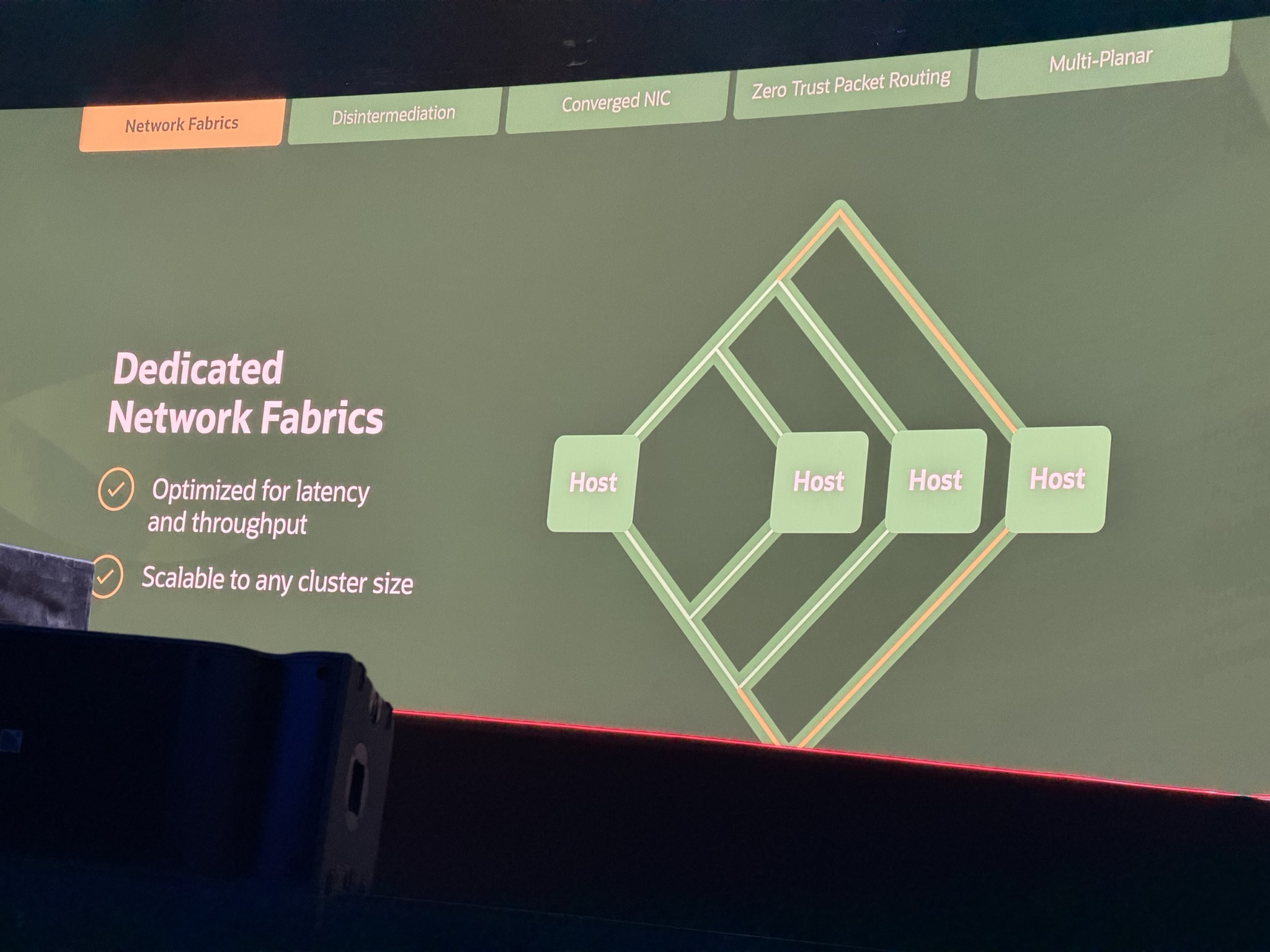
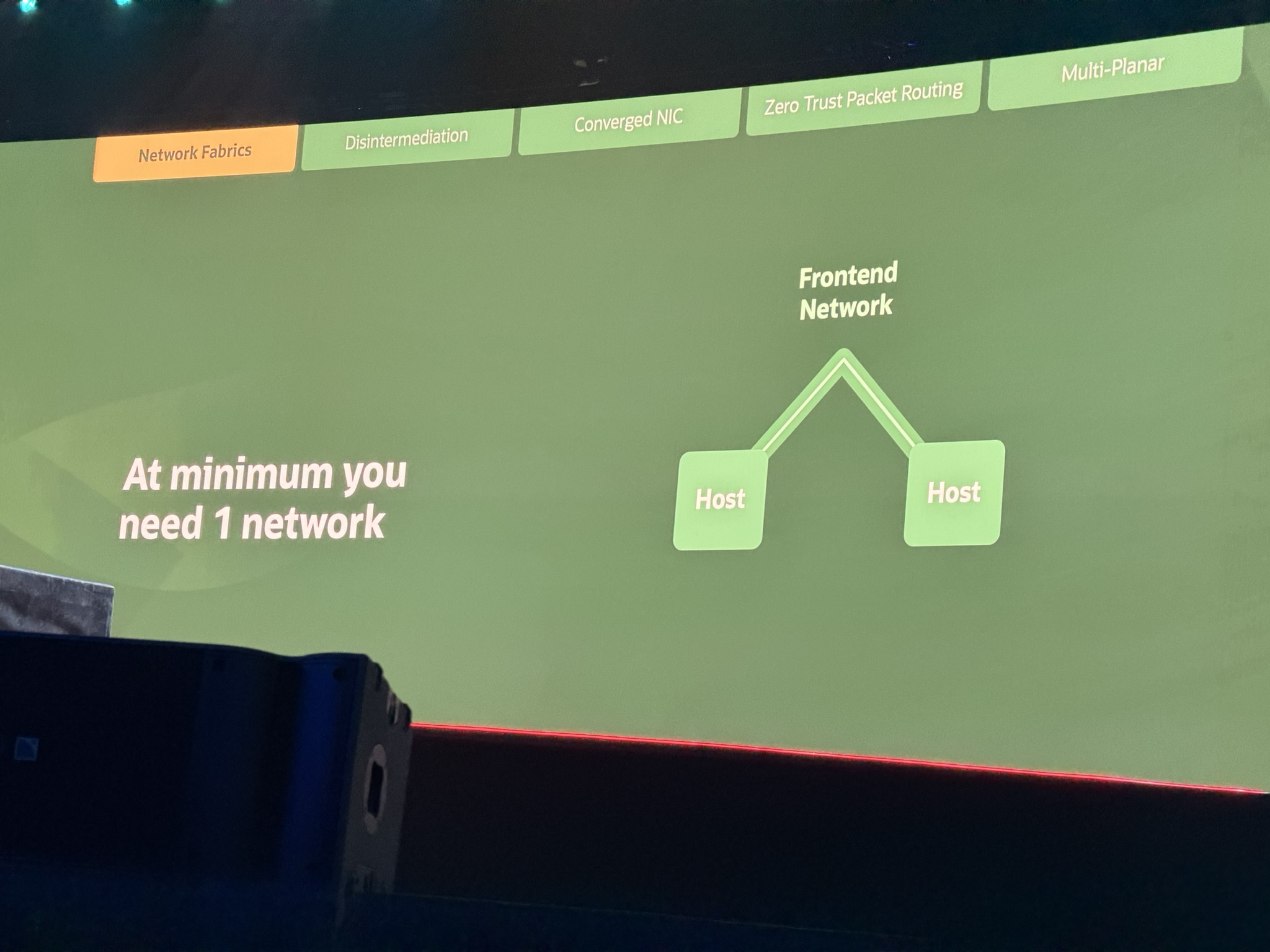
Dedicated Network Fabrics: OCI’s architecture provides a unified system for dedicated networks that can be optimised for either latency or throughput. These fabrics are securely hard-partitioned, delivering the performance of dedicated hardware with the security of a virtualised cloud. That scan scale to any cluster size.

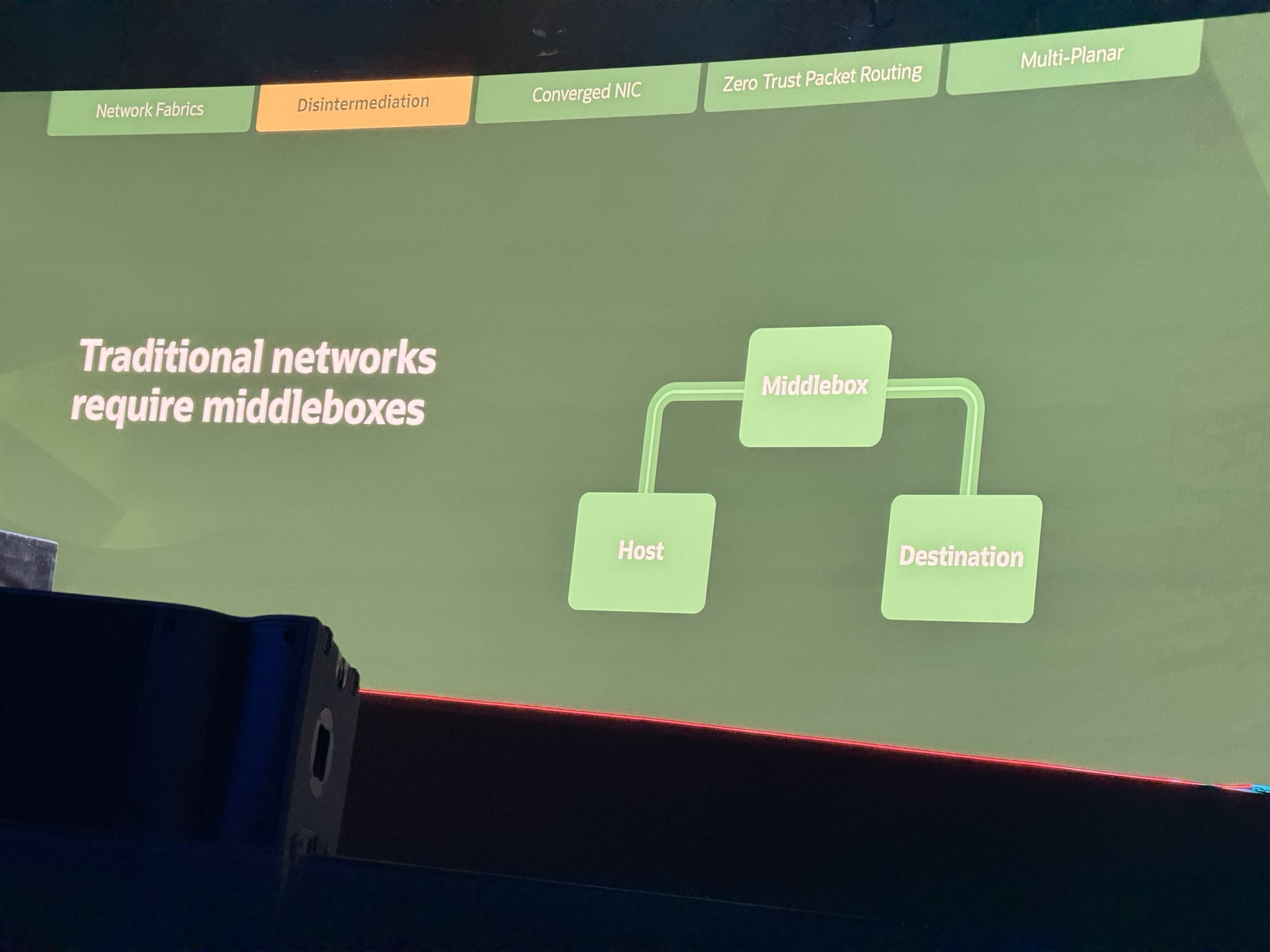
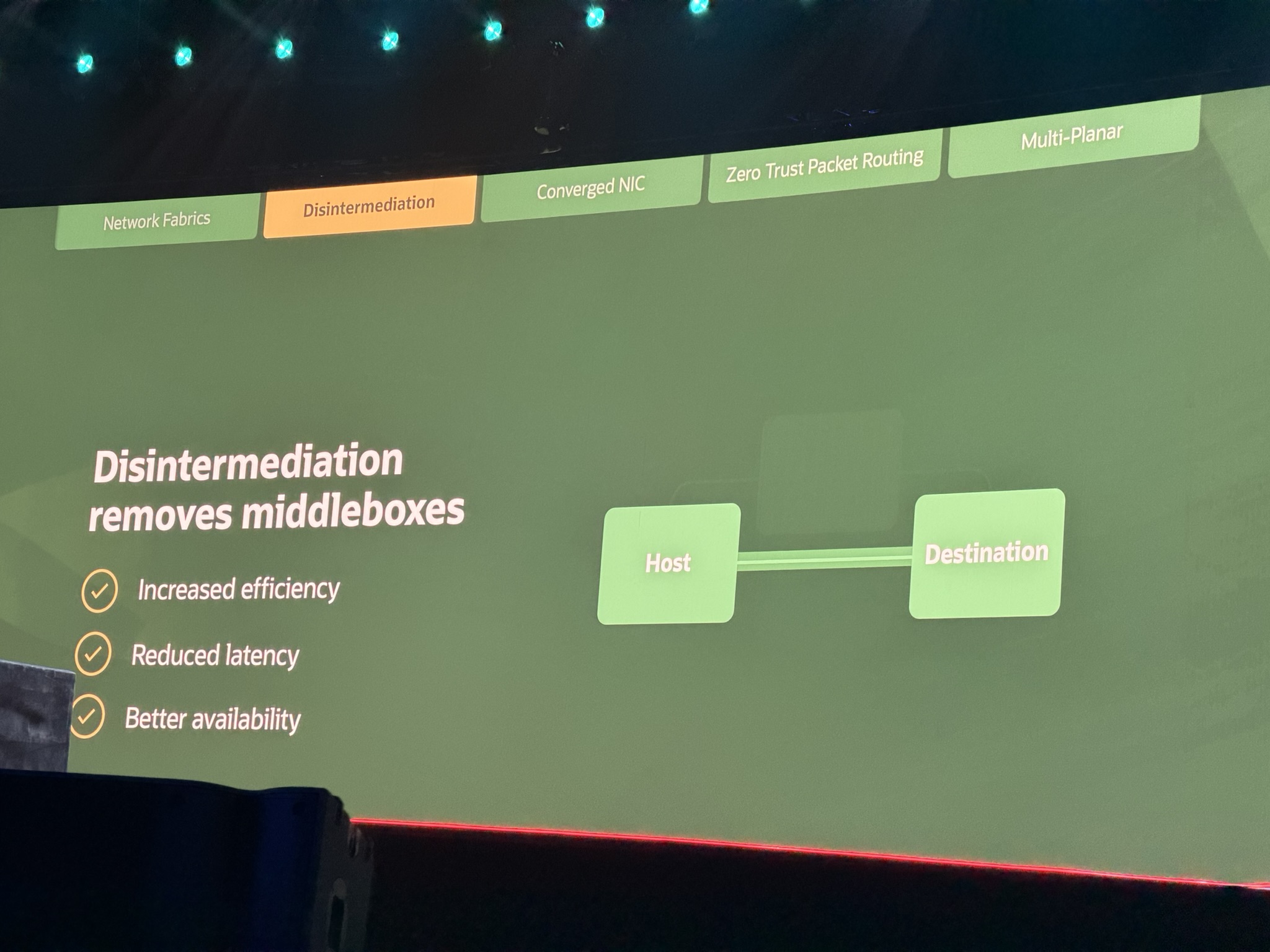
Disintermediation: This concept involves removing the “middle boxes” (physical or virtual) that traditionally handle advanced network functions. By integrating these functions into a flexible software architecture, OCI eliminates performance bottlenecks, reduces latency, and lowers costs, a key factor behind OCI’s low network pricing.

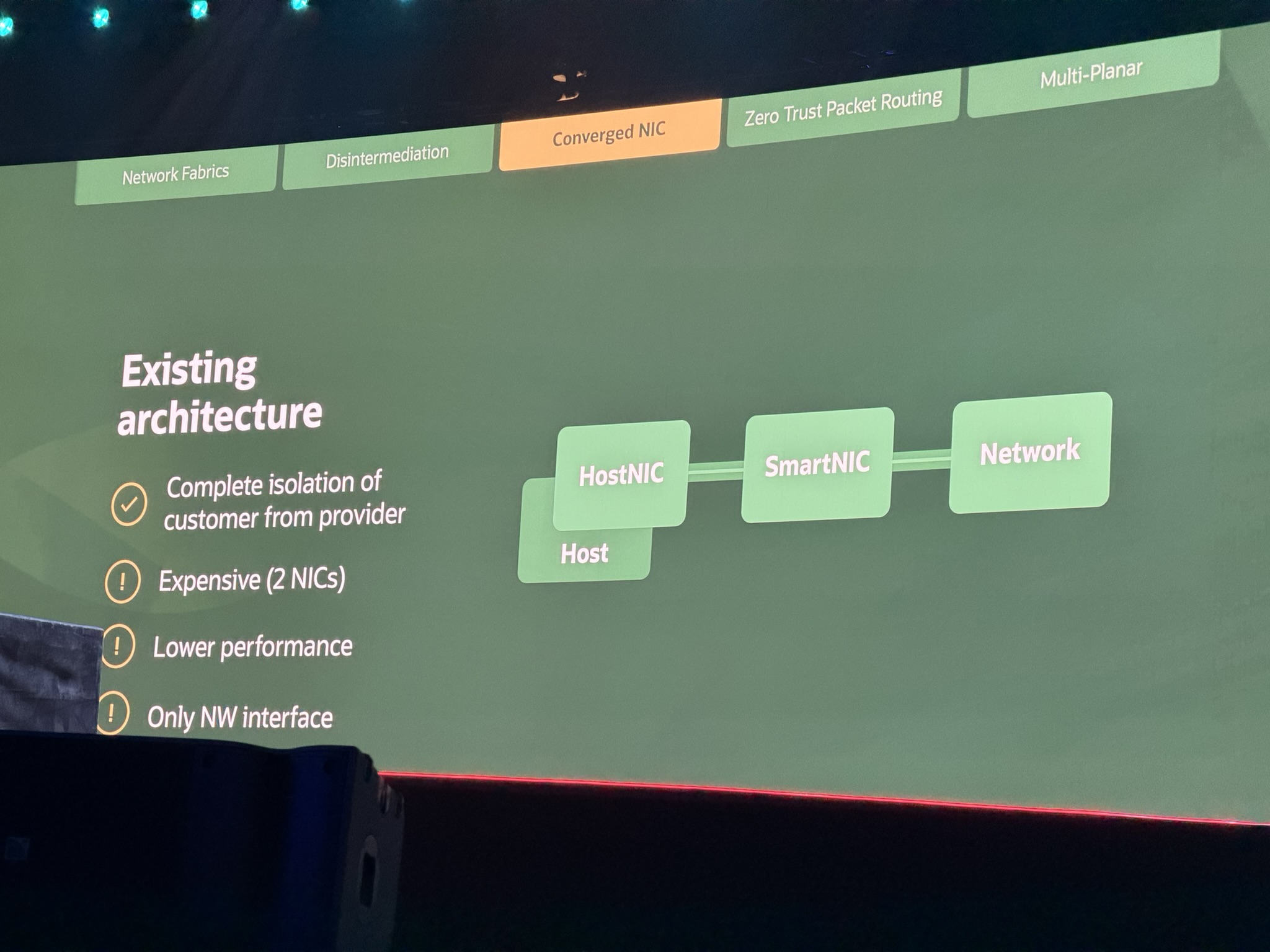
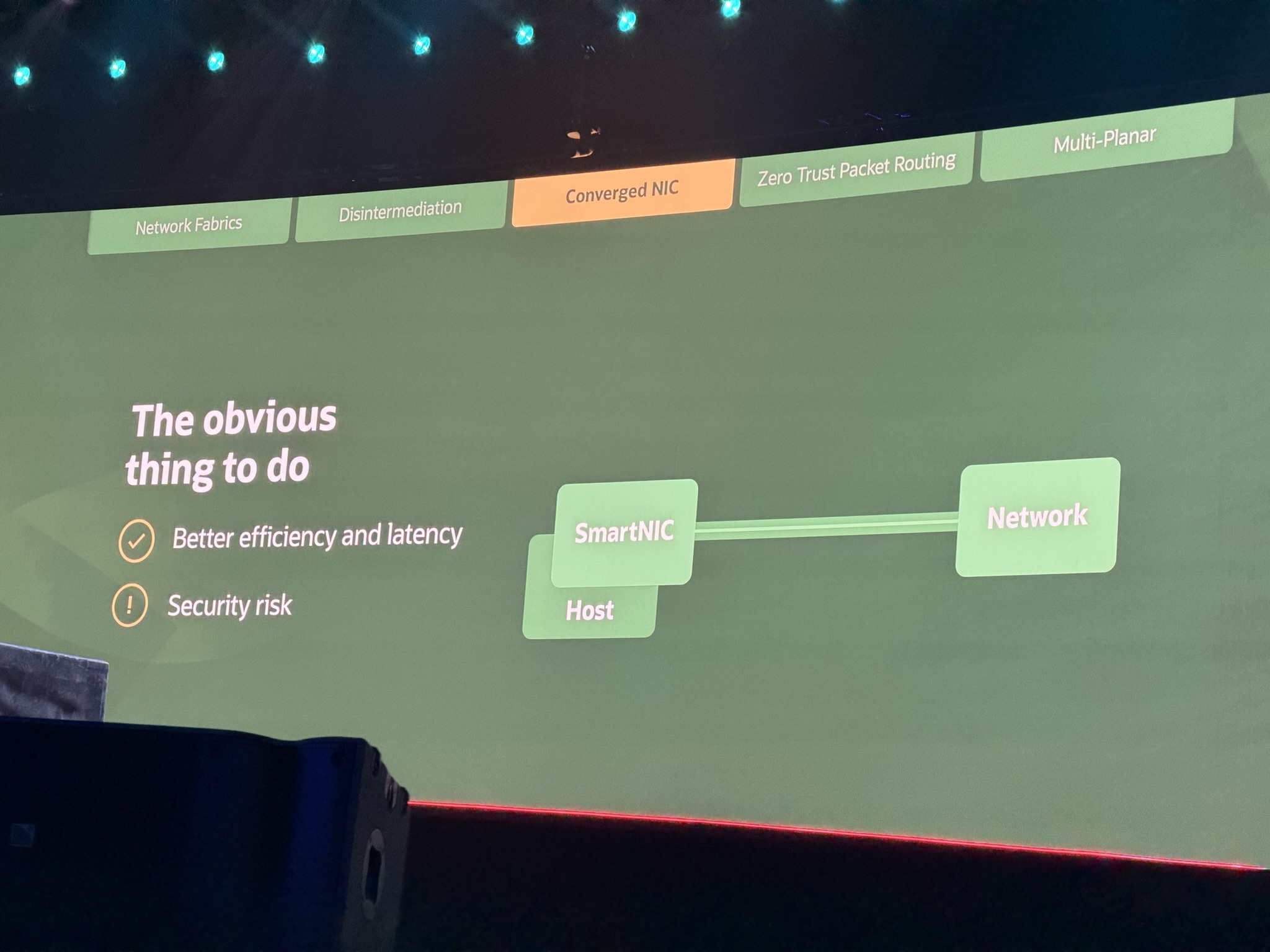
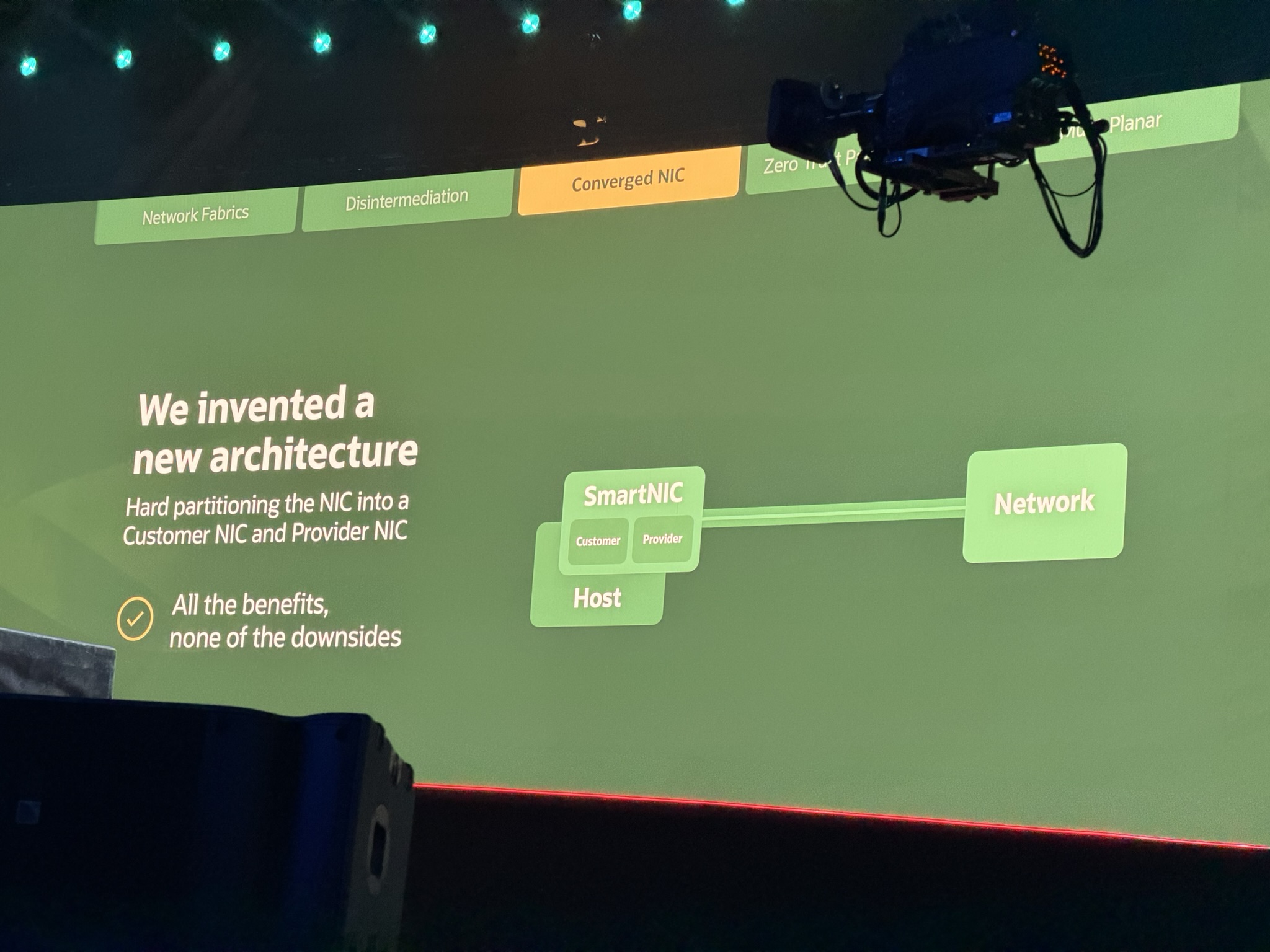
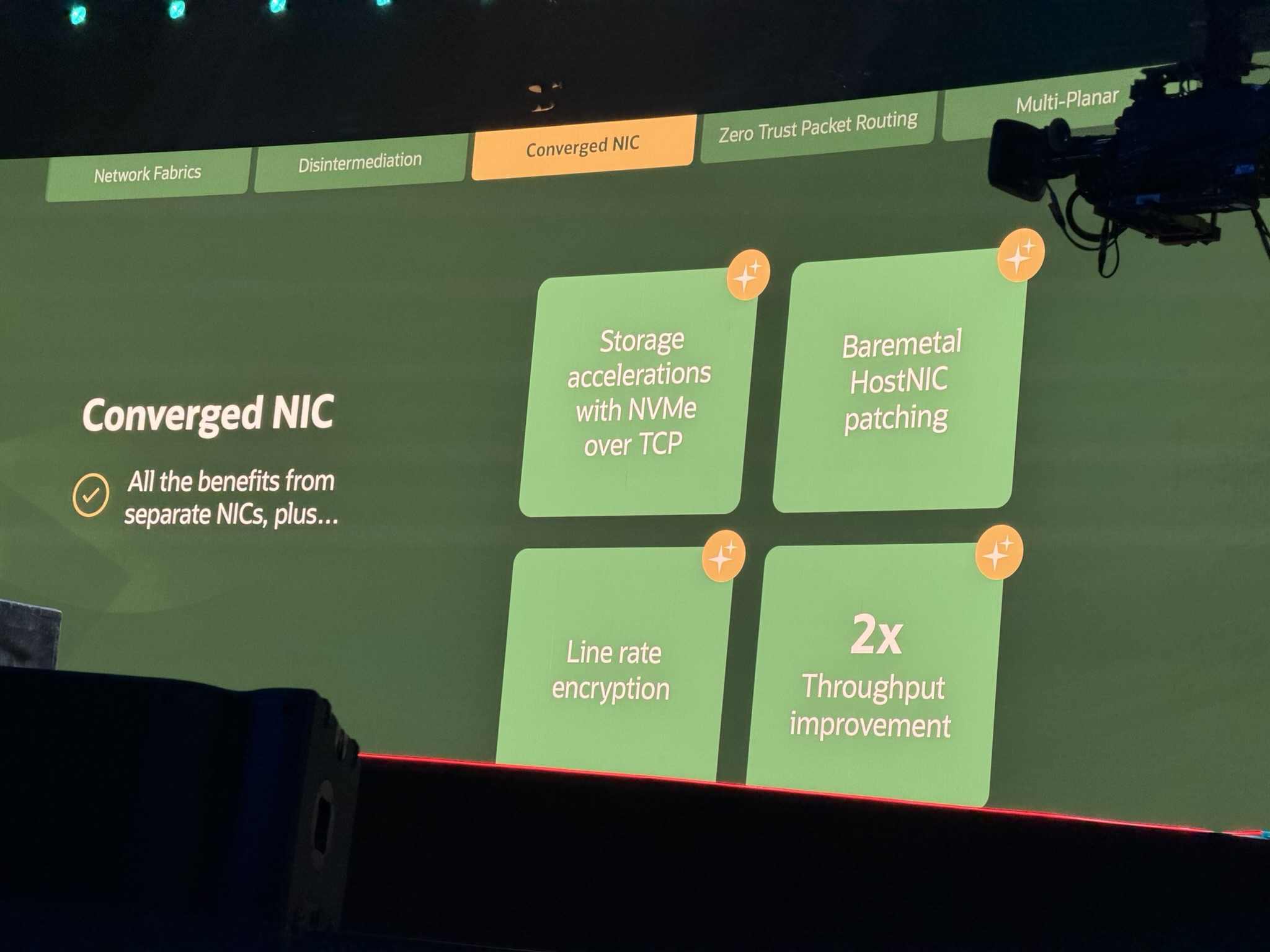
Converged NIC: In collaboration with AMD, OCI has designed a new architecture on a single smart NIC. It achieves security through hard partitioning, with dedicated cores and memory for both the customer-controlled NIC and the provider-controlled NIC. The benefits this provides:

  • Maintains the high security posture of a two-NIC system
  • Enables a direct NVMe interface for block storage
  • Provides line-rate encryption for all traffic
  • Allows for seamless patching of the host NIC, even on bare metal instances
  • Delivers up to twice the available throughput for compute instances

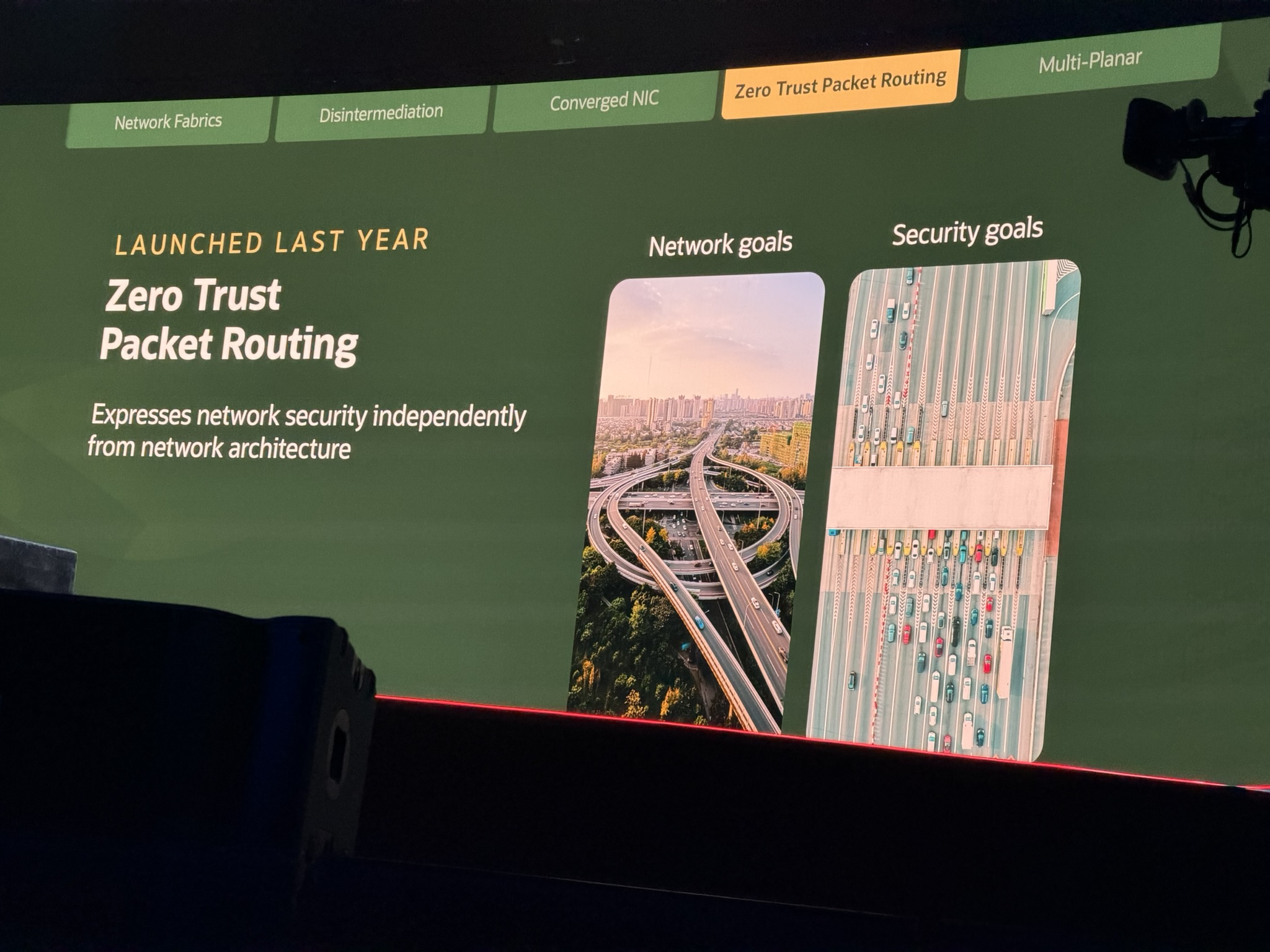
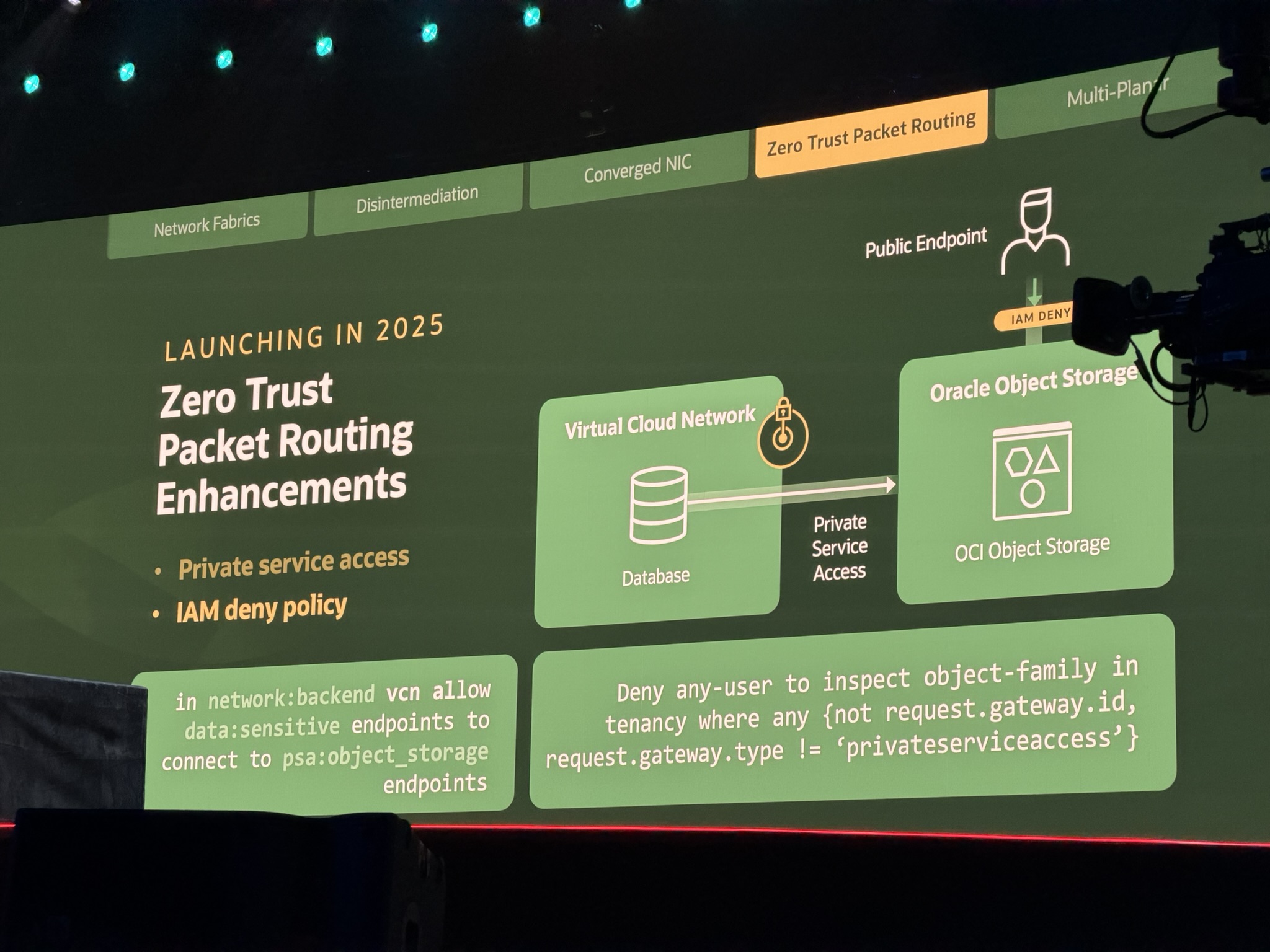
Zero Trust Packet Routing: This system decouples network security policy from the network architecture. Security rules are written in a dedicated policy language, making them easier to analyse and enforce. This prevents data exfiltration by creating explicit rules (for example allowing a database to access object storage only via a private endpoint) that are independent of network topology.


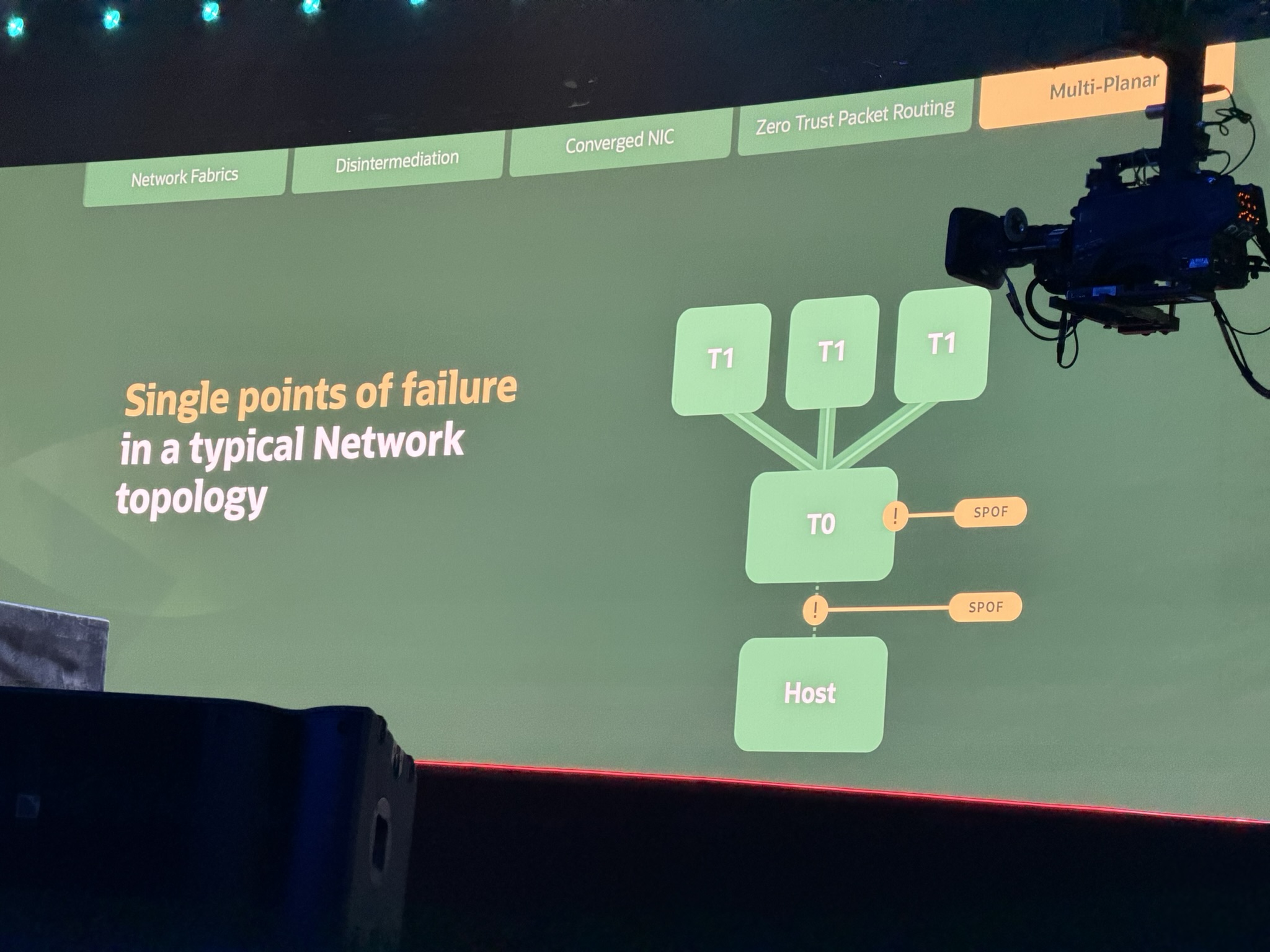
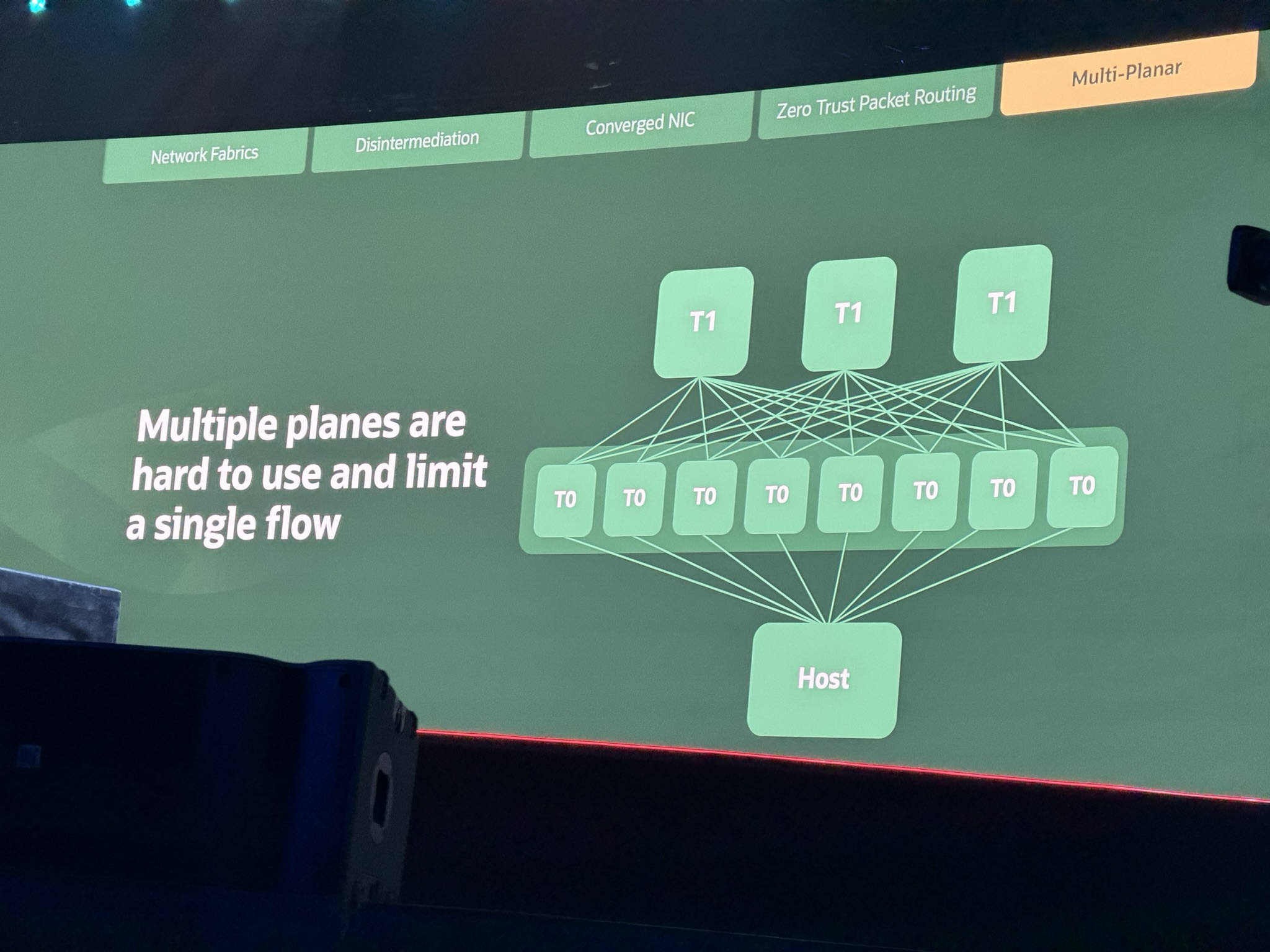
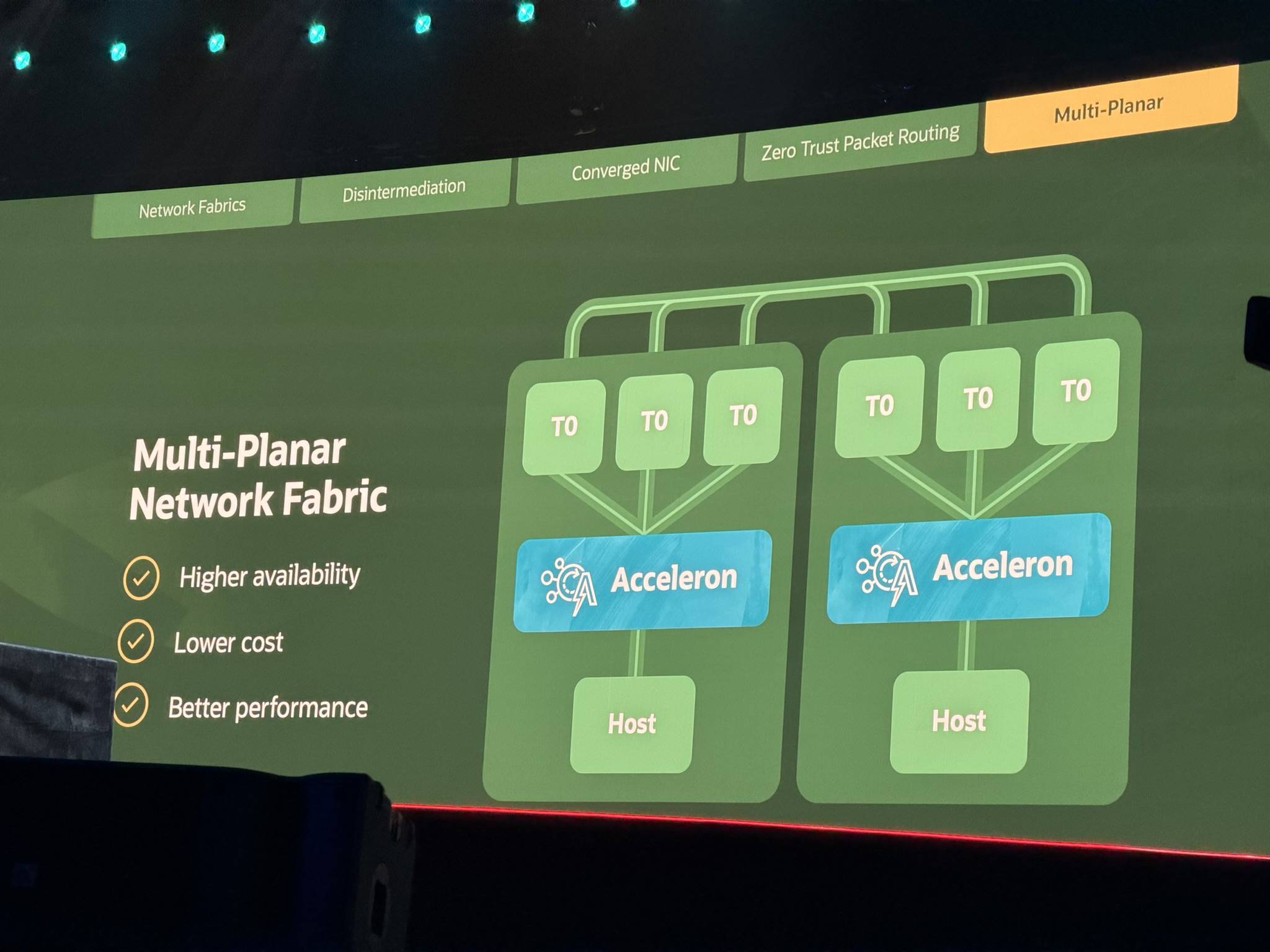
Multi-Planar Networks: OCI implements multiple redundant network planes behind the scenes while exposing a simple, single network plane to the host. The benefits this provides:

  • Higher Availability: Eliminates single points of failure
  • Lower Cost: Allows for the use of smaller switches
  • Better Performance: Results in fewer hops across the network
  • Ease of Use: Preserves simplicity for the user, who does not have to manage multiple interfaces

OpenAI: Industrialising Compute for the AI Frontier

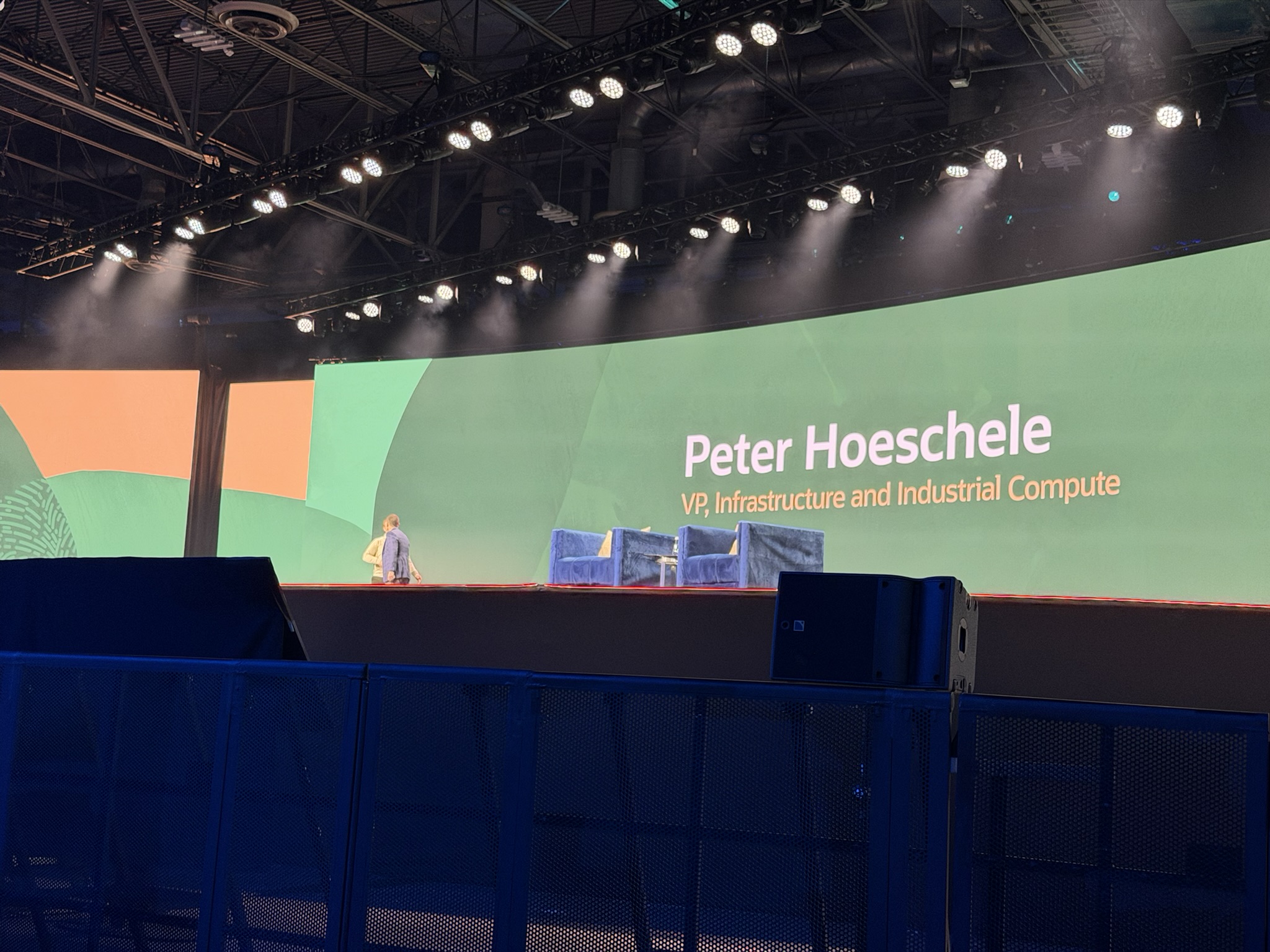
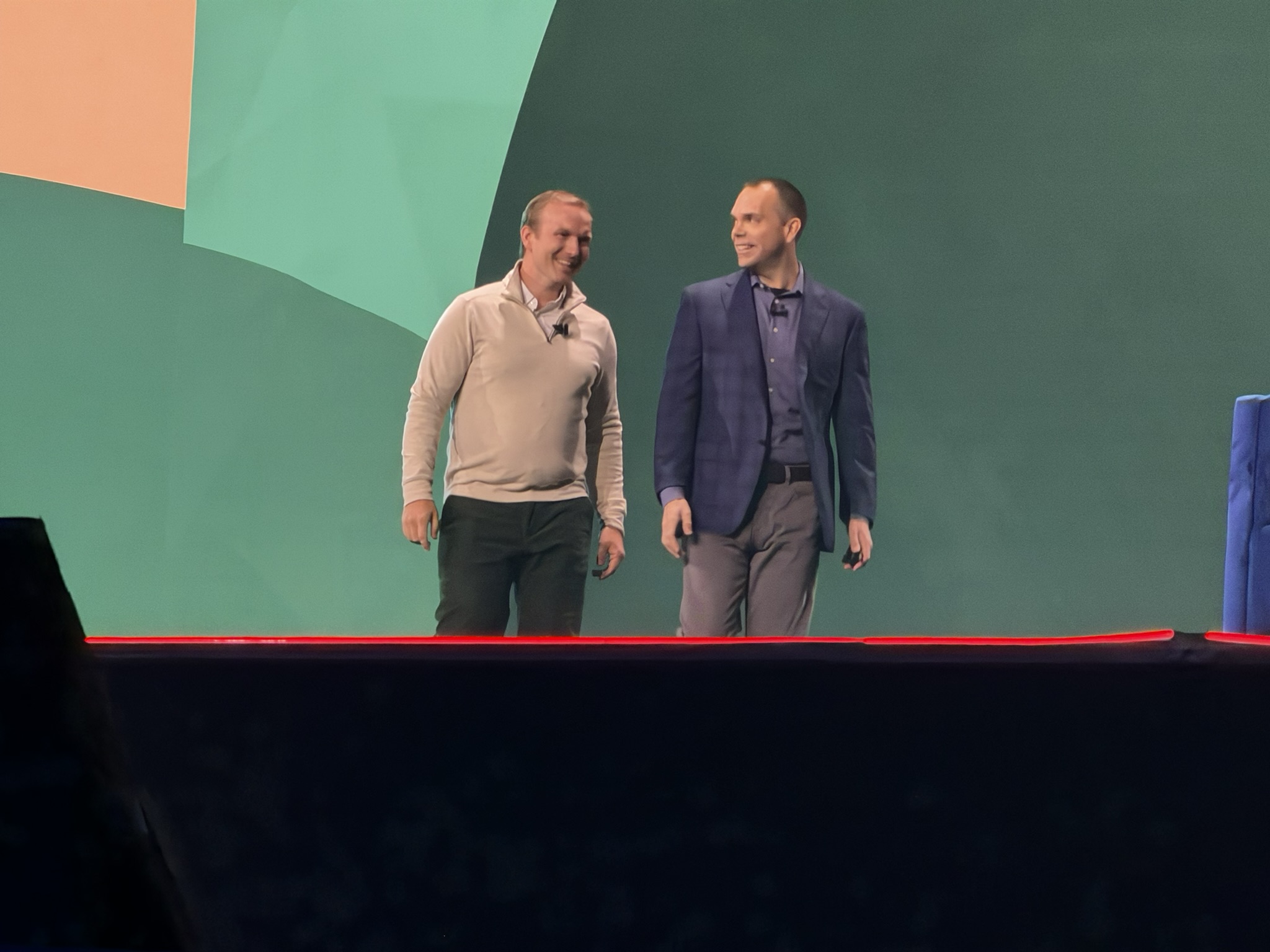
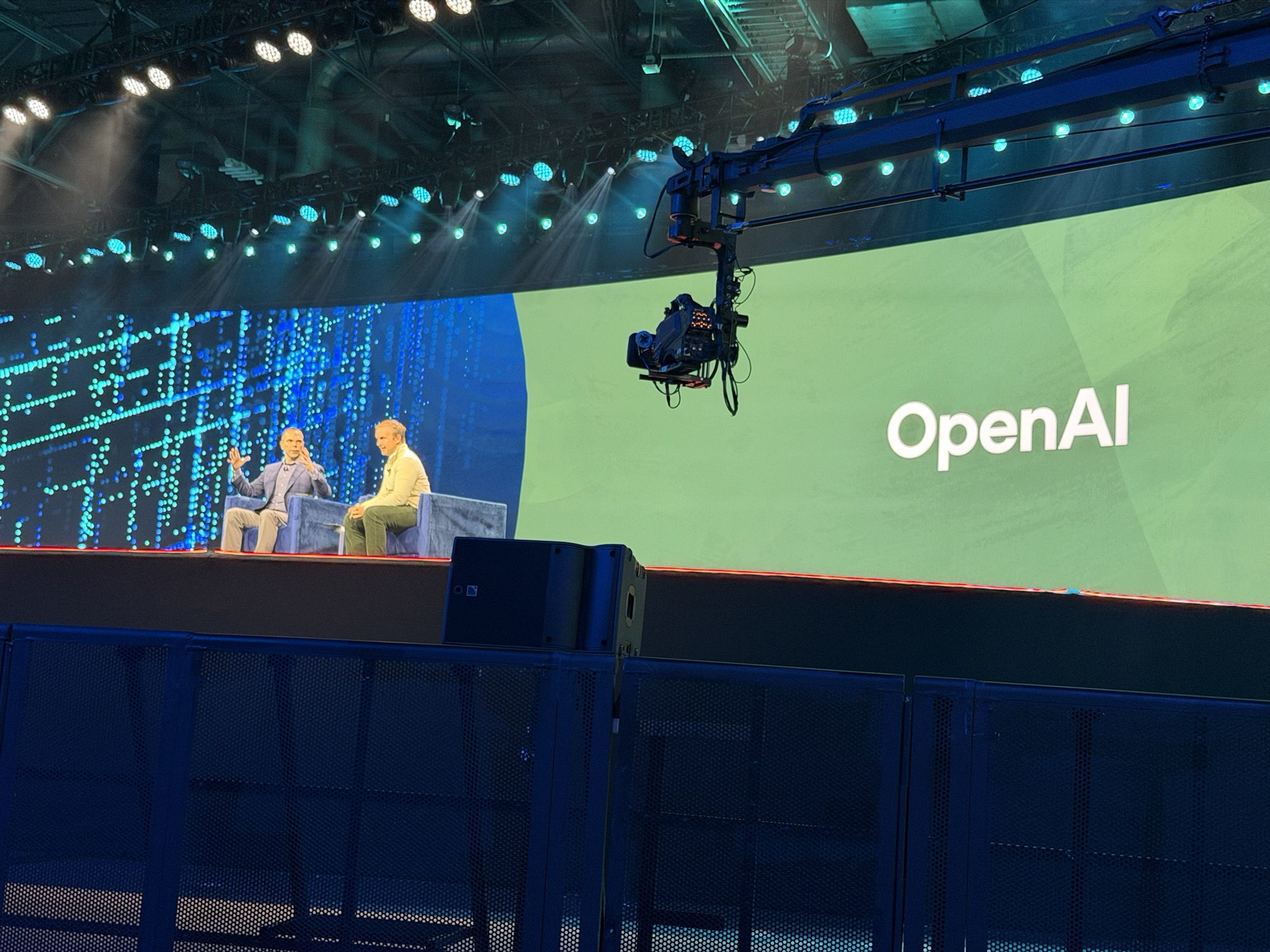
Clay then introduced Peter Hoeschele, Vice President of Infrastructure and Industrial Compute Engineering at OpenAI, to the stage.

When OpenAI needed additional capacity, Oracle stepped in, understood the requirements, and delivered 200 megawatts of data centre capacity. Typically, a facility of this scale takes four years to build, but Oracle brought it online in just 11 months.

Peter described the collaboration as truly inspiring. OpenAI is targeting 10x growth over the next two years, with additional capacity dedicated to training models and serving customers. Their guiding principle is simple, more compute leads to better models. To achieve this, they sought the best GPUs and the largest clusters possible. When OpenAI wanted to develop a new model, they lacked the ability to scale internally, but with OCI, they can. As OpenAI expands globally, Oracle ensures compliance with security and policy requirements, enabling seamless deployment whenever OpenAI enters a new region.

AI Data Platforms

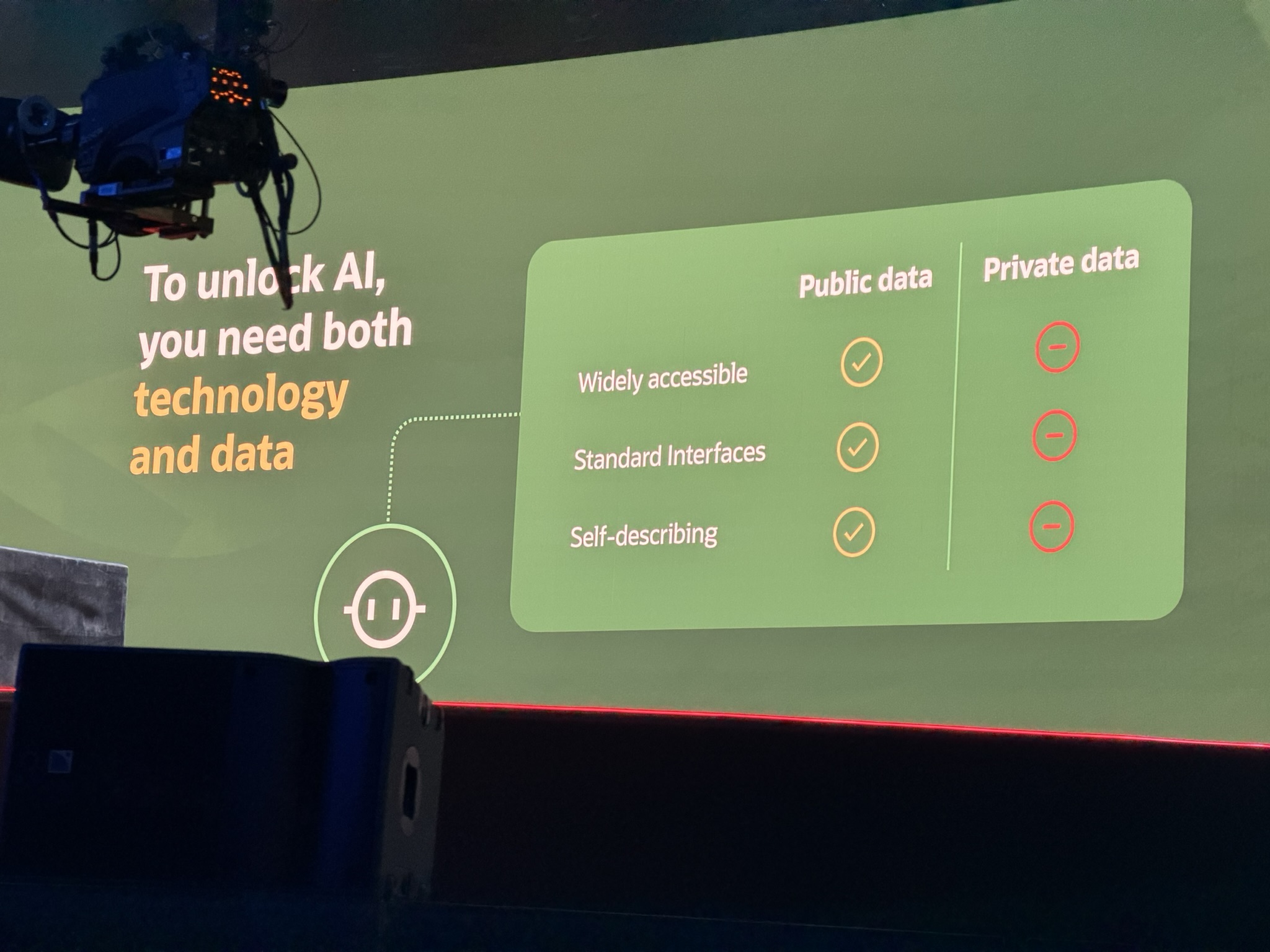
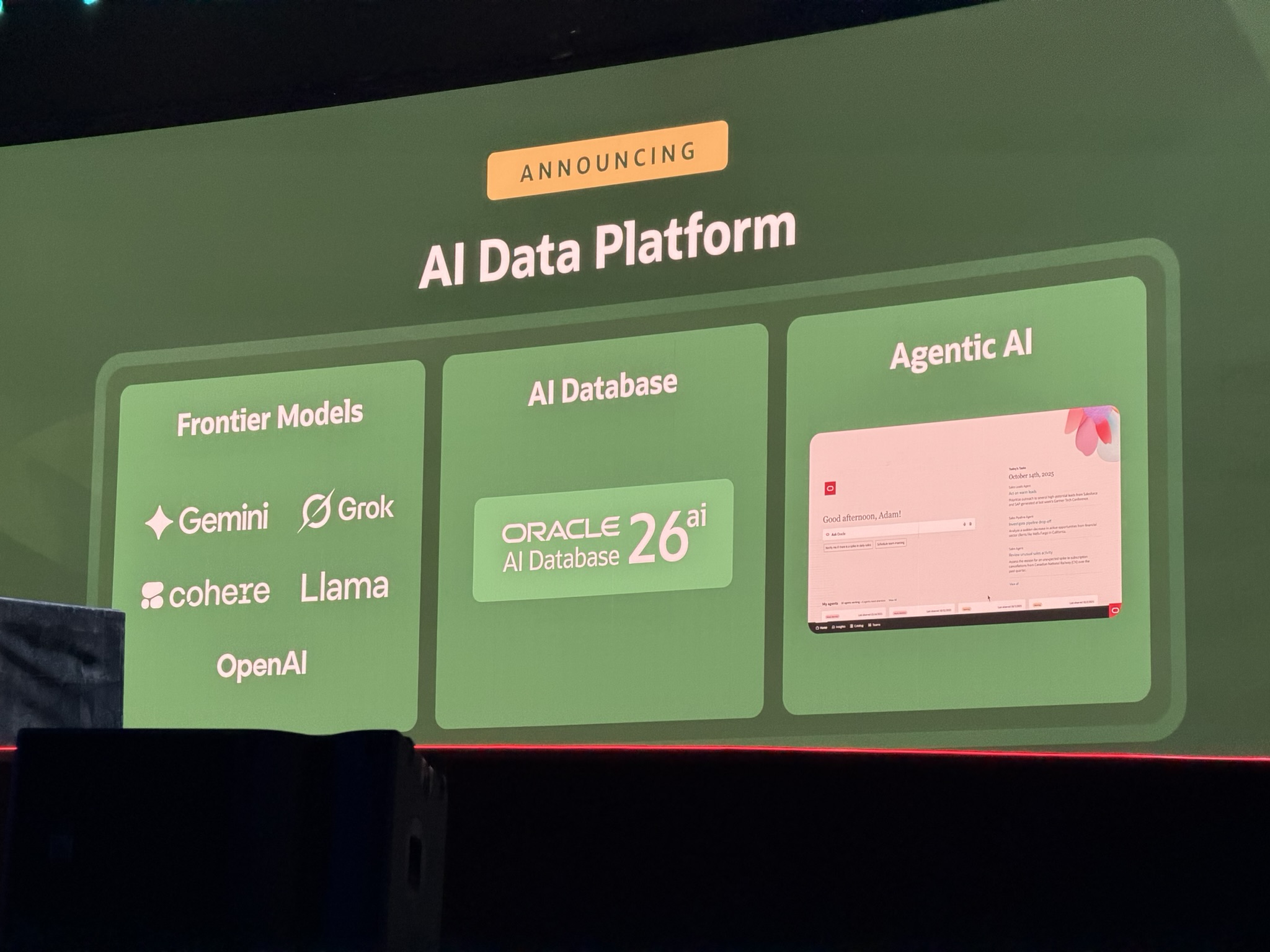
Clay concluded the keynote by announcing the AI Data Platform. He explained that unlocking AI requires both cutting-edge technology and access to data, both public and private.

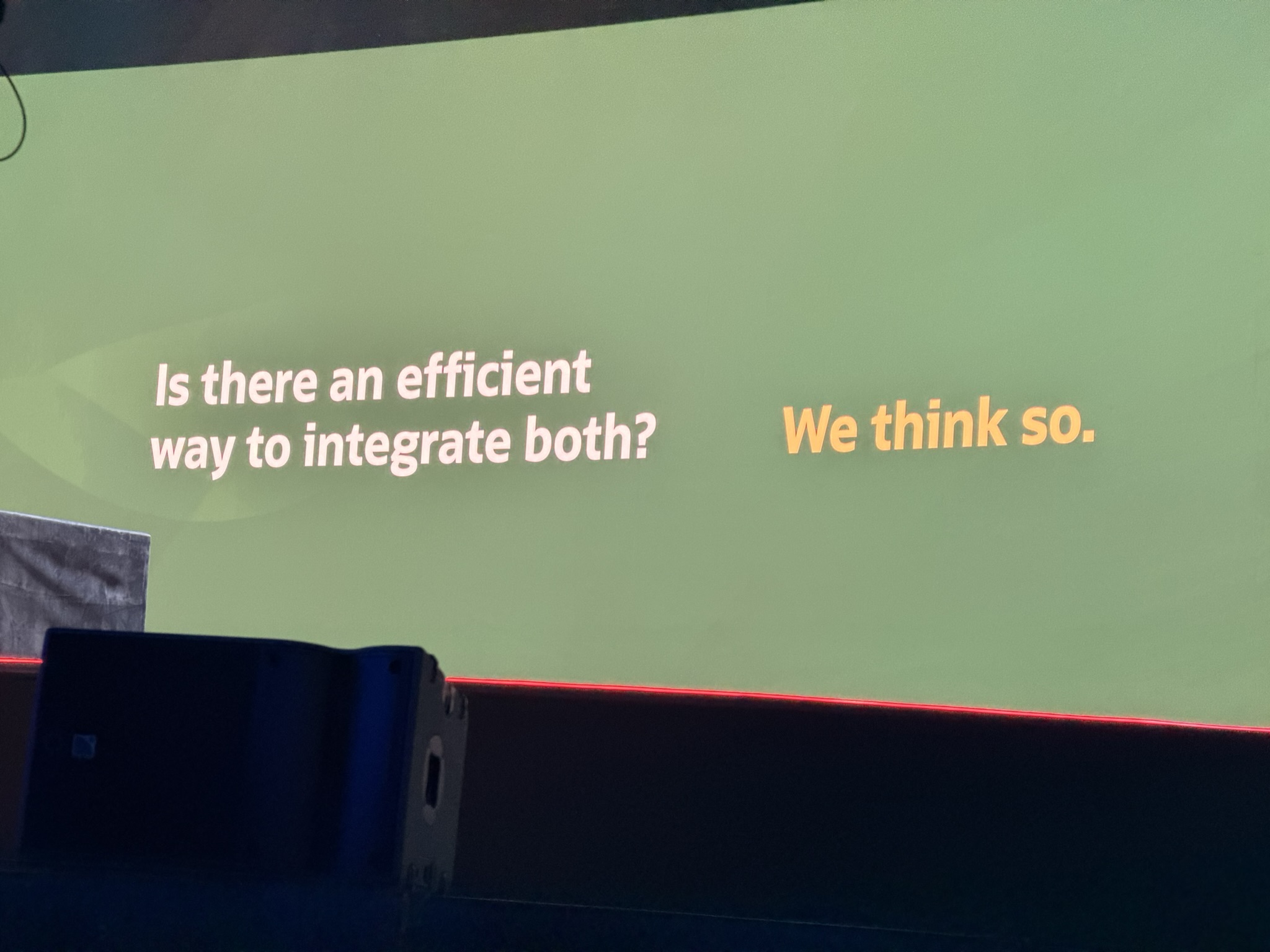
And how Oracle thinks there is an efficient way to integrate both.

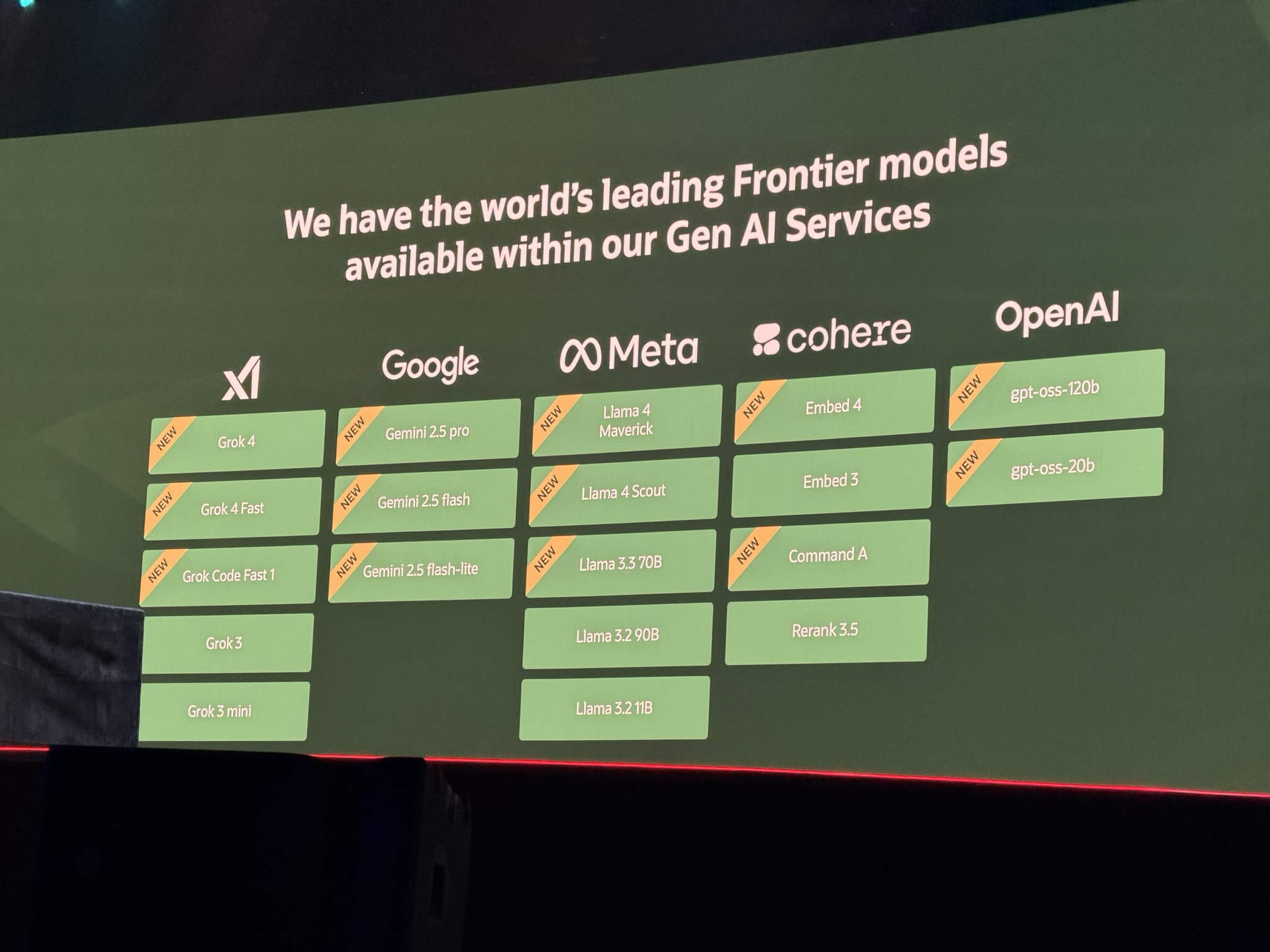
Firstly explaining how OCI has the world’s leading Frontier models available within OCI Gen AI Services.

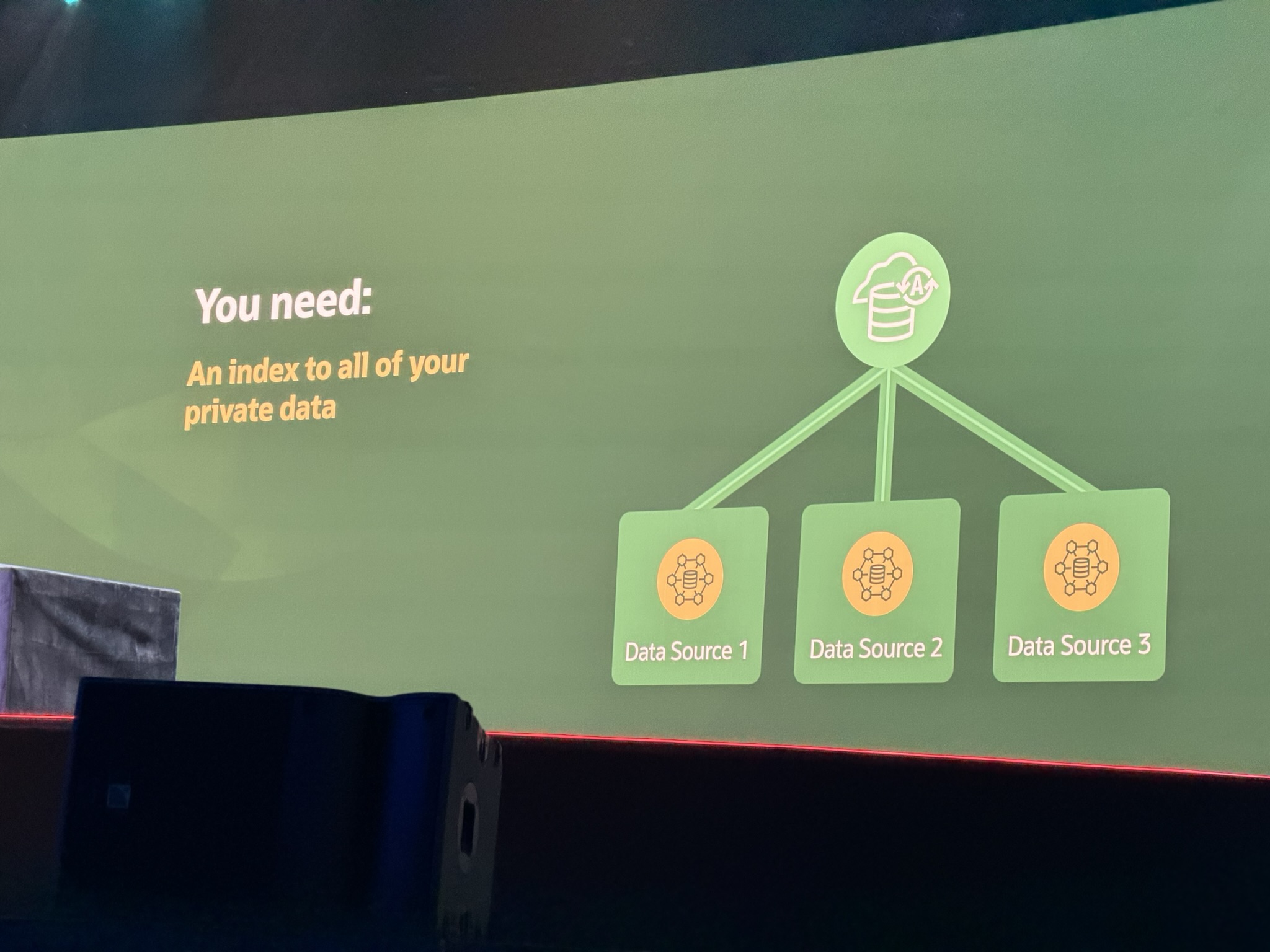
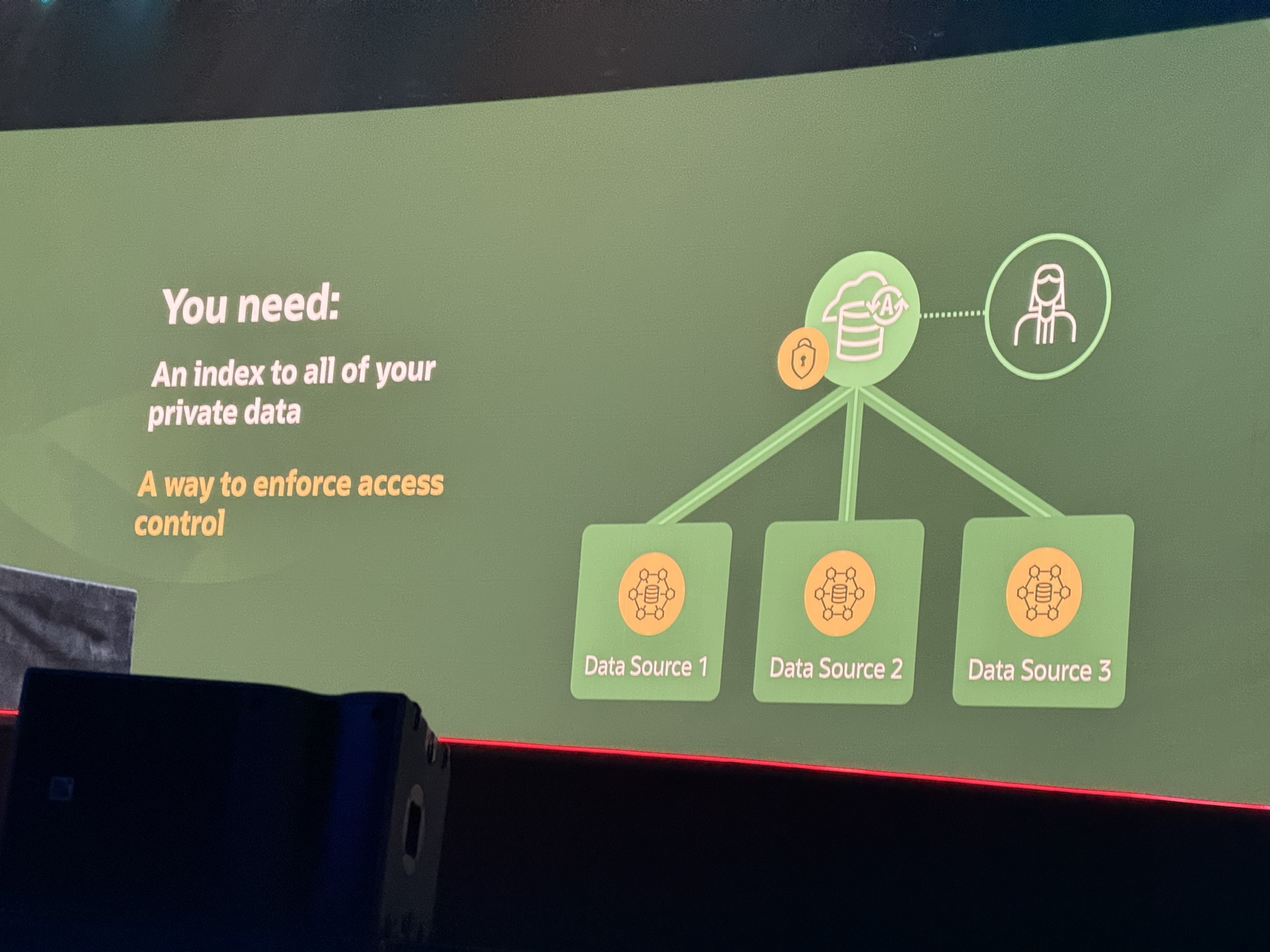
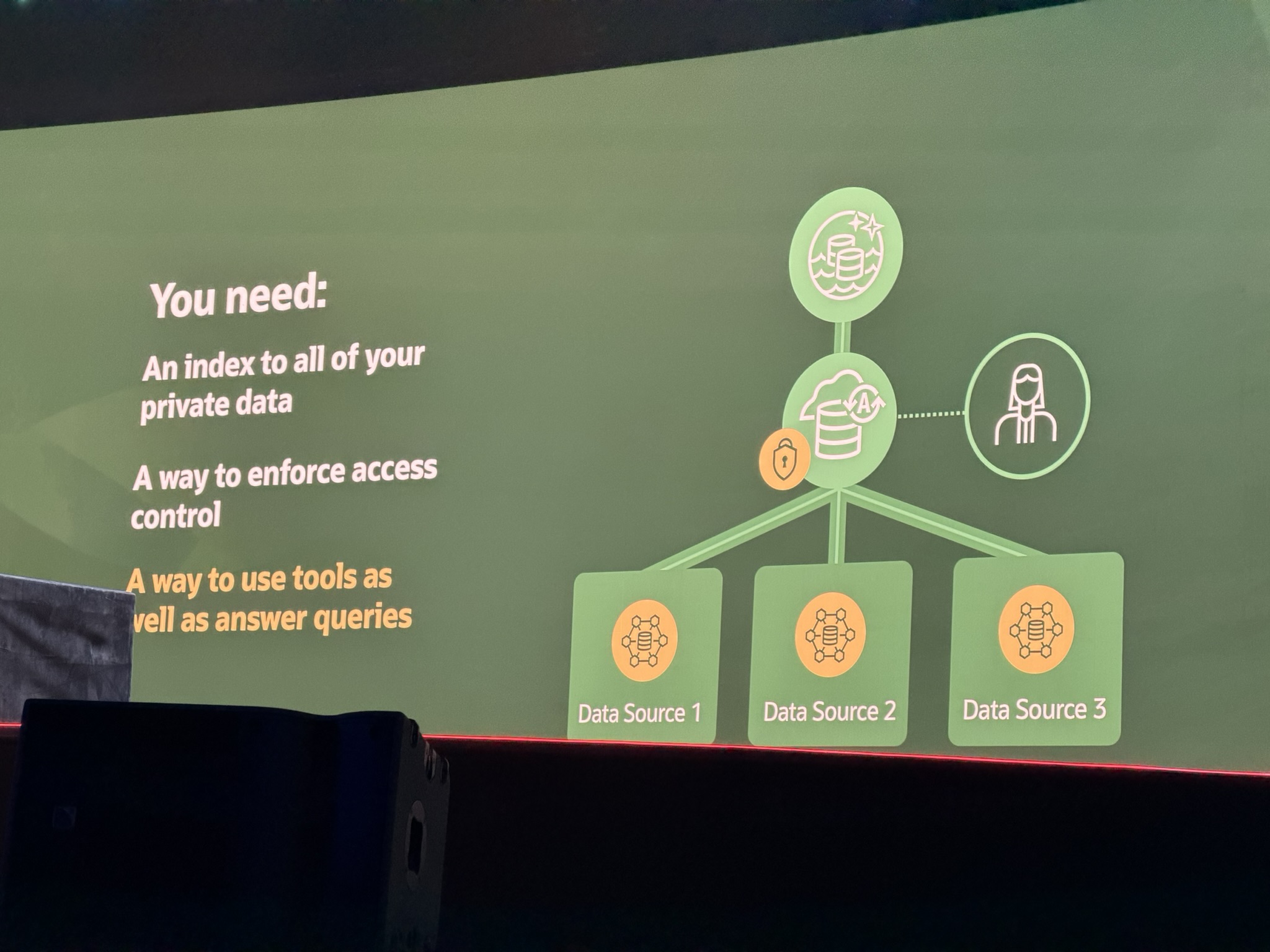
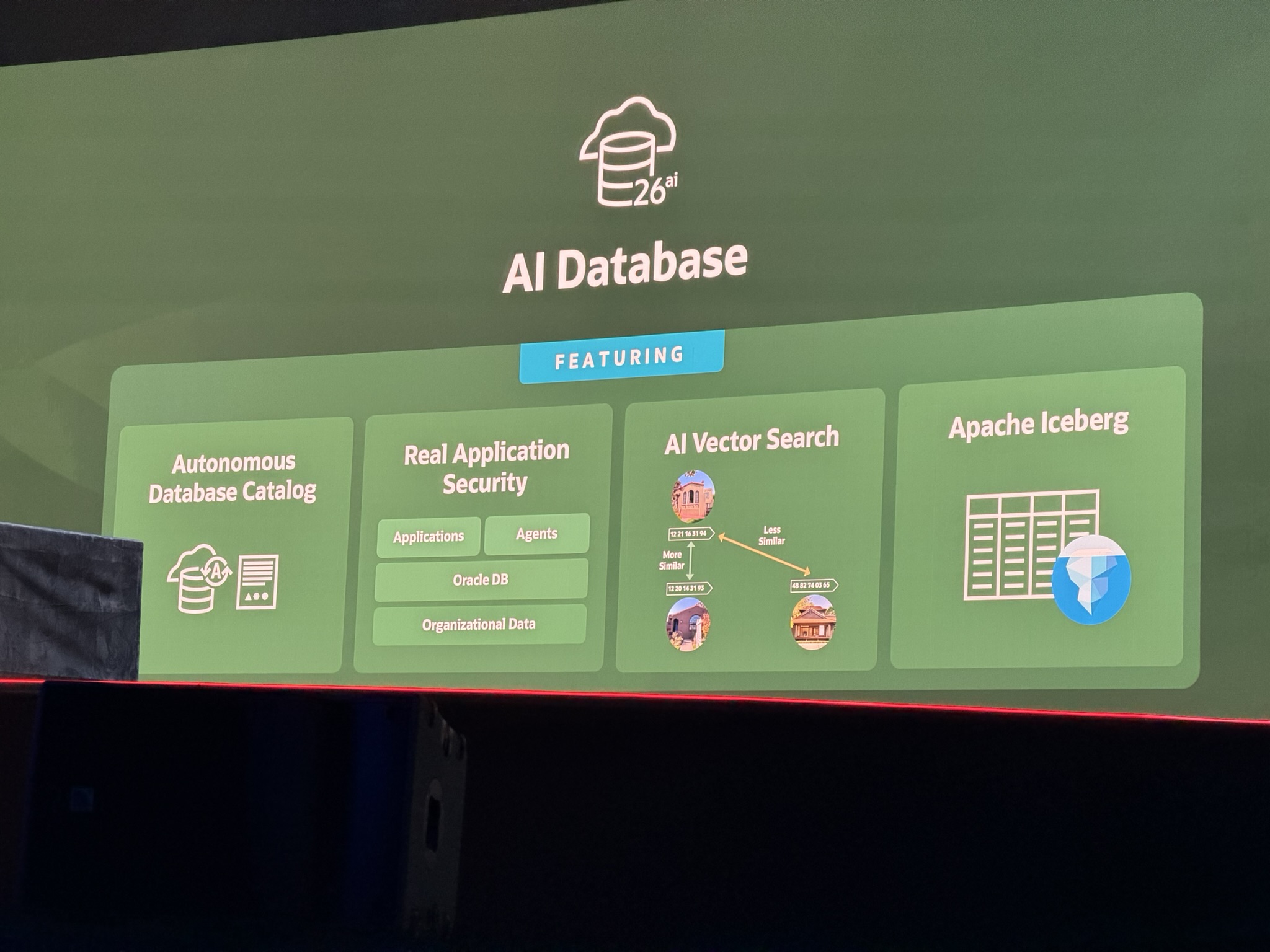
Your private data must be indexed, secured with enforced access controls, and integrated with Generative AI services to answer queries that combine public data overlaid with your private data powered by Oracle AI Database 26ai.

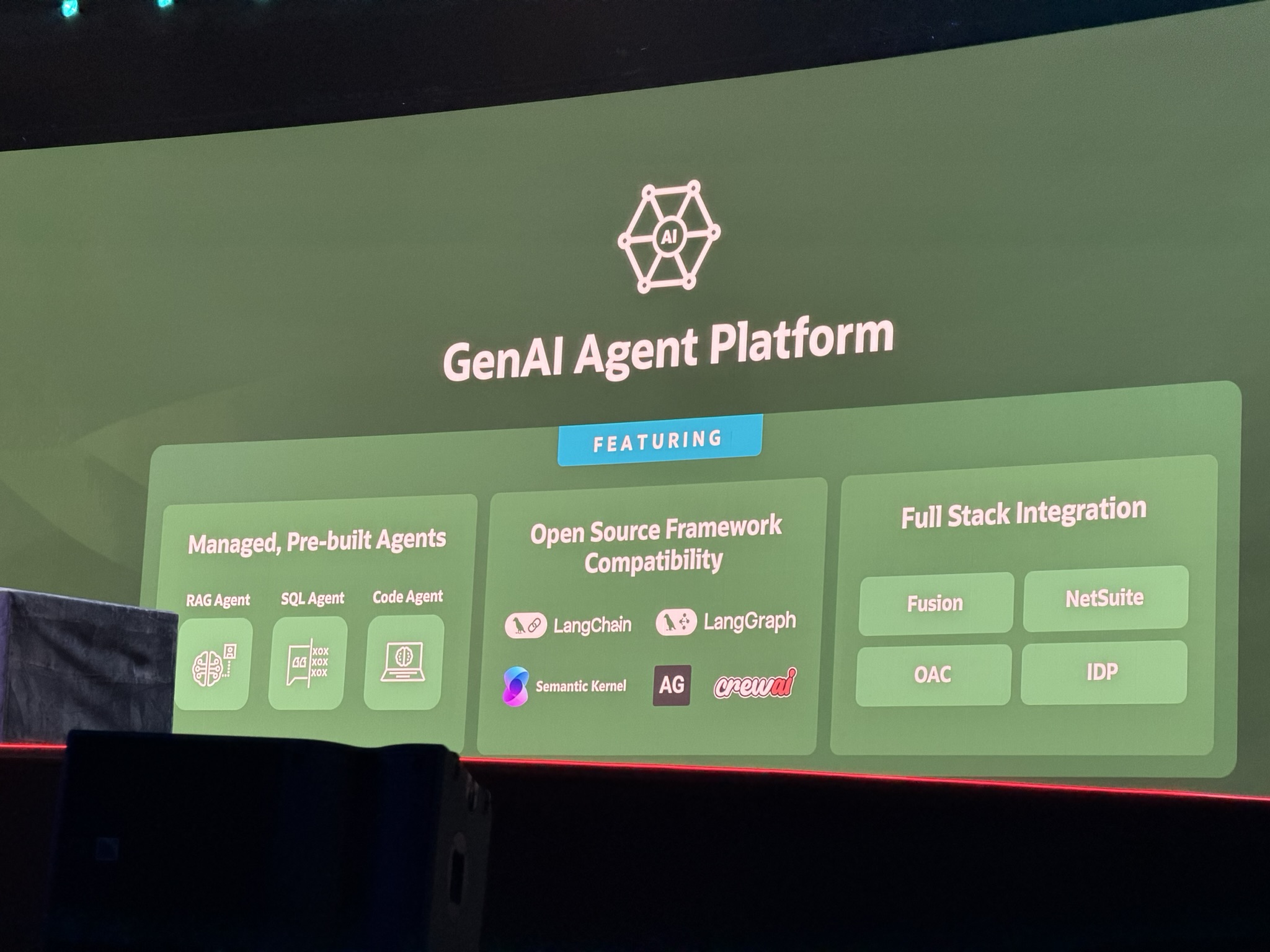
Clay also introduced the GenAI Agent Platform, which offers managed, pre-built agents for Retrieval-Augmented Generation (RAG), SQL, and code generation. It supports open-source frameworks such as LangChain, LangGraph, Semantic Kernel, AutoGen, and CrewAI, and provides full-stack integration with Oracle Fusion, Oracle Analytics Cloud (OAC), NetSuite, and Identity Provider (IDP) services.

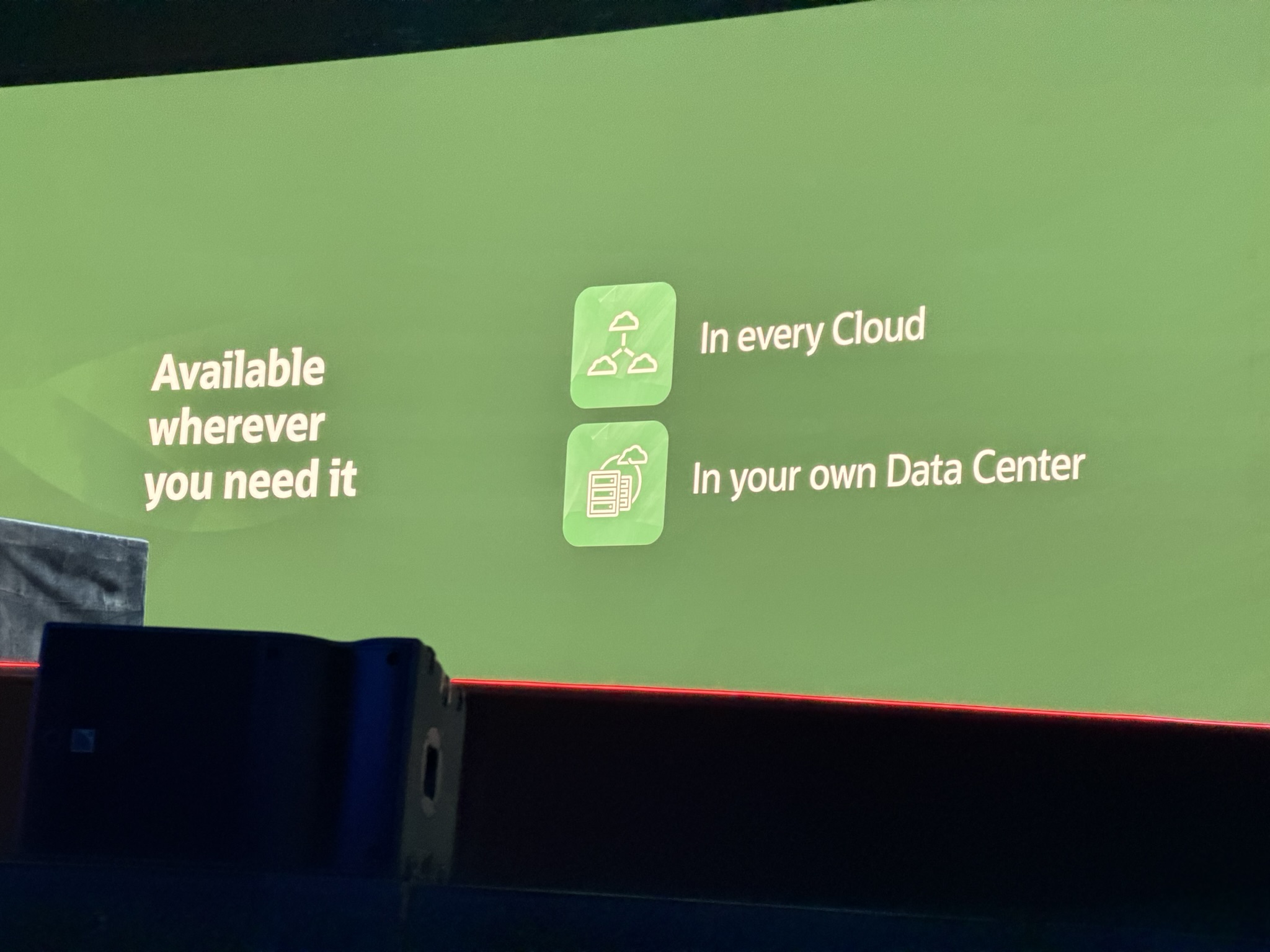
Available wherever you need it, whether in any cloud (via Oracle Database @ Multicloud) or in your own data centre.

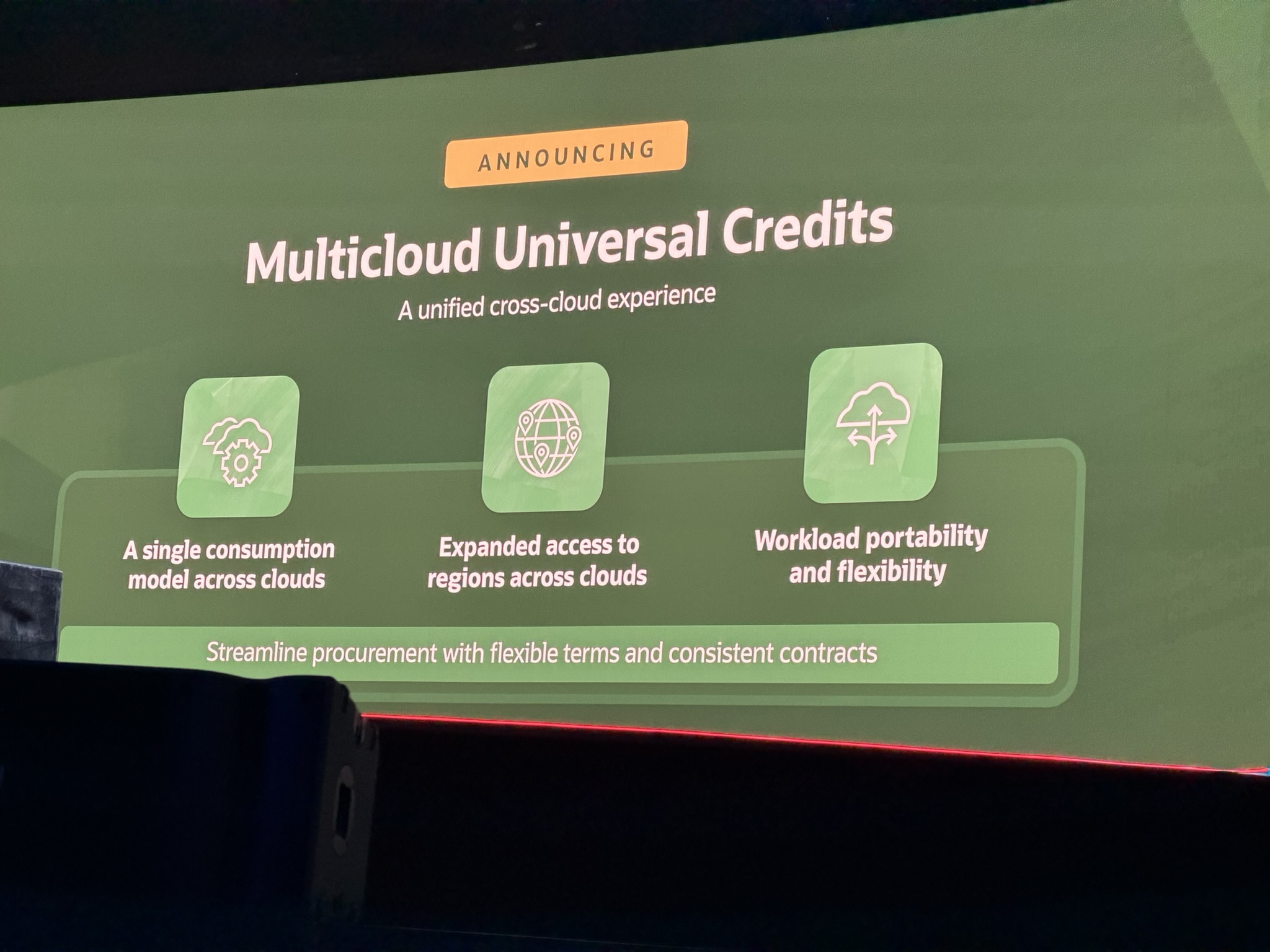
With this, he announced Oracle’s Multicloud Universal Credits, enabling a single consumption model across all clouds, pay Oracle once and use Oracle anywhere. This is especially appealing for multicloud customers seeking workload portability and the flexibility to apply credits wherever they need. More info here.

Clay’s final announcement was the General Availability (GA) of Dedicated Region 25, originally announced last year, as highlighted in my blog here.

If you found this blog post useful, please like as well as follow me through my various Social Media avenues available on the sidebar and/or subscribe to this Oracle blog via WordPress/e-mail.

Thanks

Zed DBA (Zahid Anwar)